

Health
Lagos Intensifies Surveillance as Adulterated Palm Oil Raises Food Safety Concerns
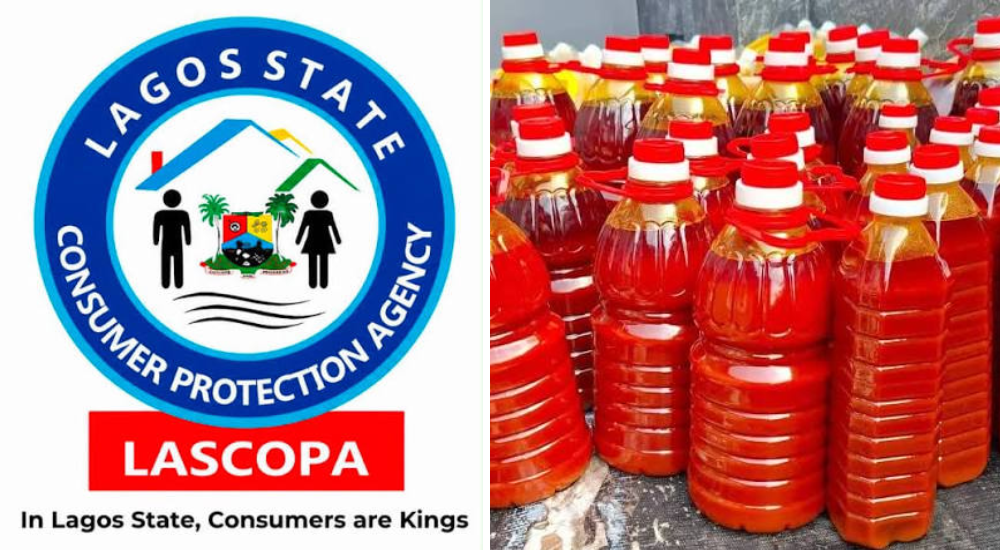
Lagos Intensifies Surveillance as Adulterated Palm Oil Raises Food Safety Concerns
The Lagos State Government has intensified surveillance of markets across the state following concerns over increasingly sophisticated forms of palm oil adulteration, including the alleged use of industrial dyes and other substances to alter the appearance of the widely consumed cooking oil.
The warning was issued by the Lagos State Consumer Protection Agency (LASCOPA) after a technical presentation at the Lagos State Food Safety Conference and Exhibition 2026, where experts examined emerging risks in the palm oil supply chain and ways of detecting adulterated products.
The presentation, titled “Palm Oil Adulteration: Emerging Risks, Detection Strategies and Regulatory Control,” was delivered by Dr Nurah Oseni, a senior lecturer in the Department of Food Technology at Auchi Polytechnic.
Oseni identified several factors that make palm oil vulnerable to adulteration, including its high trading volume, price differences, informal market practices and the perception among some consumers that a deeper red colour indicates better quality.
She raised particular concern over the reported use of Sudan and Azo dyes to artificially intensify the colour of palm oil.
The expert also identified the blending of palm oil with recovered or recycled oils, including spent cooking oil, and the use of combinations of adulterants designed to make detection more difficult.
Another concern is traceability fraud, involving practices such as falsifying product labels and batch records, which can make it difficult for regulators to establish the origin and movement of suspect products through the supply chain.
However, the warning does not mean that genuine palm oil is inherently unsafe or cancer-causing.
The health concern relates specifically to adulterated palm oil containing prohibited or potentially hazardous substances. Industrial Sudan dyes, for example, are not approved food colourants because of their established health risks.
The distinction is important because naturally produced palm oil can have varying shades of orange, red and yellow depending on the fruit, processing method and other factors.
Oseni therefore cautioned consumers against judging the safety or authenticity of palm oil solely by its colour.
READ ALSO:
- Saudi Arabia Rejects Nigeria’s Request for More 2027 Hajj Slots
- MURIC Warns FG: Any Move Against Atiku Now Lacks Tact
- Jetour T1 Storms Abuja as Automaker Accelerates Nigeria Expansion
She said simple visual examination could be used as an initial precaution, noting that genuine palm oil may separate into layers, with the lower portion appearing orange to reddish-yellow rather than uniformly deep red.
She nevertheless stressed that visual inspection cannot conclusively establish palm oil adulteration.
The expert also warned consumers against relying on the popular water test for palm oil, saying such household methods cannot scientifically confirm whether the product has been adulterated.
Laboratory analysis is required to establish the presence of prohibited dyes or other contaminants.
She recommended a tiered detection system involving risk-based screening, rapid physicochemical and spectroscopic tests and confirmatory laboratory analysis.
She also called for proper sampling and chain-of-custody procedures to ensure that laboratory results are reliable enough to support regulatory action.
Oseni proposed a five-stage surveillance model for Lagos — “Risk Map, Sample, Screen, Confirm and Act.”
The proposed system would involve identifying high-risk areas, collecting samples, carrying out preliminary screening, confirming suspected cases through laboratory testing and taking enforcement action where violations are established.
She also recommended the creation of an adulteration intelligence database and closer cooperation among processors, traders, laboratories, regulators, researchers and consumers.
The General Manager and Chief Executive Officer of LASCOPA, Afolabi Solebo, reaffirmed the agency’s commitment to protecting consumers from unsafe and substandard products.
Solebo urged Lagos residents to remain vigilant and report suspected cases of adulterated palm oil and unscrupulous trading through LASCOPA’s official channels.
He said market surveillance had been intensified across the state and warned that anyone found dealing in adulterated products would face appropriate enforcement action, including arrest and prosecution under relevant laws.
The latest warning comes against the backdrop of previous concerns about adulterated palm oil in Lagos markets.
Earlier this year, LASCOPA took enforcement action against a trader following concerns over allegedly adulterated palm oil, reinforcing the agency’s focus on the product and its potential risks.
The wider concerns have also attracted the attention of the National Agency for Food and Drug Administration and Control (NAFDAC).
NAFDAC Director-General, Professor Mojisola Adeyeye, has stressed that allegations about unsafe or adulterated food should be subjected to scientific testing and regulatory investigation before definitive conclusions are reached.
NAFDAC has also expressed concerns about the adulteration of palm oil with azo dyes and other hazardous contaminants, particularly products packaged and sold through informal markets.
The position places greater responsibility on state consumer protection and food safety agencies to strengthen market monitoring and enforcement within their jurisdictions.
Research into palm oil adulteration has highlighted the difficulty of identifying contaminated products through appearance alone. Adulterants can be used to make lower-quality palm oil appear more intensely red, exploiting consumer preferences for deeper colour.
The detection of such adulteration therefore requires appropriate analytical techniques rather than reliance solely on visual characteristics.
For consumers, food-safety experts and regulators recommend buying palm oil from trusted and traceable sources and reporting suspicious products rather than attempting to establish their safety through informal tests.
Unusual colour, odour, excessive sediments or other abnormal characteristics may justify further investigation, but none of these signs alone proves that palm oil is adulterated.
The issue also highlights a broader challenge facing the Nigerian food system: ensuring traceability and regulatory oversight in informal markets, where products can pass through several stages between producers, processors, wholesalers and retailers before reaching consumers.
At the Lagos food safety conference, stakeholders called for stronger enforcement, improved laboratory capacity, better traceability and greater cooperation among regulators, businesses and consumers.
LASCOPA’s intensified surveillance is consequently expected to focus on identifying specific cases of adulteration, collecting samples for proper testing and taking enforcement action where violations are confirmed.
Residents have meanwhile been encouraged to remain cautious when purchasing palm oil, avoid unverified claims about supposedly dangerous products and report suspected cases through official regulatory channels.
The Lagos government’s latest warning is therefore a call for greater vigilance over food safety and palm oil adulteration, rather than a blanket warning against consuming genuine palm oil.
Lagos Intensifies Surveillance as Adulterated Palm Oil Raises Food Safety Concerns













Health
WHO Declares Nigeria Ebola-Free, 52 Contacts Remain Under Surveillance

WHO Declares Nigeria Ebola-Free, 52 Contacts Remain Under Surveillance
The World Health Organisation has declared Nigeria free of active Ebola cases after the evacuation of country’s lone confirmed patient to Switzerland.
Health authorities however continue to monitor 52 contacts to prevent a possible spread of the deadly disease.
The WHO Regional Director for Africa, Dr Mohamed Janabi, announced this in a statement posted on his verified X handle on Monday, confirming that Nigeria would retain responsibility for monitoring 52 contacts, while Switzerland would take over the patient’s continued medical care and follow up with her husband.
Janabi said the patient was clinically stable after Nigerian medical teams successfully managed her through the acute phase of the illness and stabilised her condition before her evacuation.
“Nigeria is now Ebola-free following the evacuation of the index patient to Switzerland,” he said.
He added that Nigeria would maintain close follow-up of the 52 contacts, while Switzerland would assume responsibility for the continued management of the patient and the monitoring of contact number 53, her husband.
The development follows an earlier confirmation by the Nigeria Centre for Disease Control and Prevention that the country had recorded an imported Ebola case involving a patient from Uganda.
Following the confirmation, the NCDC placed 53 contacts under surveillance in Abuja as part of measures to track possible exposure and prevent further transmission.
Although the evacuation of the patient has removed the confirmed case from Nigeria, health authorities are expected to sustain surveillance of the identified contacts in line with established public health protocols.
The monitoring exercise remains critical to ensuring that any potential emergence of symptoms among those exposed is detected promptly and managed appropriately.
Ebola is a severe and often fatal disease that can spread through direct contact with the blood and other bodily fluids of an infected person or someone who has died from the disease.
Public health authorities typically rely on early detection, contact tracing, isolation and appropriate medical care to contain outbreaks and prevent further transmission.
With the index patient now receiving continued care in Switzerland, Nigeria’s immediate focus remains on monitoring the 52 contacts and ensuring that the outbreak does not lead to further infections.
Health
NAFDAC Busts Illegal Herbal Factory in Lagos, Arrests Manager Over Fake Registration Number

LAGOS — The National Agency for Food and Drug Administration and Control (NAFDAC) has uncovered a suspected illegal herbal product manufacturing facility in Agege, Lagos State, and arrested its manager over the alleged use of a falsified registration number on herbal products.
The agency disclosed the development on Wednesday, October 21, 2026, following an investigation triggered by a report published by The Guardian on October 10 concerning herbal products allegedly carrying fake NAFDAC registration numbers.
According to NAFDAC, its investigative team conducted surveillance before discovering three variants of Asheitu Adams Bitters bearing registration number A7-1827L.
However, checks through the agency’s NAFDAC Automated Product Administration and Monitoring System (NAPAMS) revealed that the registration number belonged to Greentol Cough Syrup, rather than the herbal bitters.
The agency said the discovery confirmed the fraudulent use of the registration number on the products.
During the operation, the company’s managing director and chief executive officer was reportedly absent, while the manager was arrested for further interrogation as investigations continued.
The Sun identified the arrested manager as 39-year-old Abdullazeez Saidu from Kano State. NAFDAC had not announced any court charges against him as of Wednesday.
READ ALSO:
- NELFUND Warns Schools: Student Loans Are Voluntary, Not Compulsory
- ‘I Never Asked Them to Abandon Loved Ones’ — Obi Clarifies Diaspora Remarks
- FG Confirms Ebola Case in Abuja, Identifies 44 Contacts
The agency urged members of the public to provide credible information about suspected illegal manufacturing activities to help strengthen enforcement efforts and protect consumers from potentially unsafe products.
NAFDAC provided the following channels for reporting suspected violations: its call centre numbers, 0800-1-623322 and 0700-1-623322, and the email address reforms@nafdac.gov.ng.
The discovery comes amid a series of enforcement operations by the agency against suspected counterfeit and adulterated products in Lagos and other parts of the country.
On October 14, NAFDAC reported uncovering a suspected facility at the International Trade Fair Complex in Lagos where expired alcoholic and non-alcoholic beverages were allegedly being repackaged for sale. The agency also reported seizures of suspected counterfeit alcoholic drinks in other operations.
The latest operation highlights concerns about the misuse of regulatory registration numbers, which consumers often rely on when assessing whether products have been registered for sale in Nigeria.
NAFDAC has repeatedly urged consumers to verify product registration details and report suspicious products or manufacturing activities.
The agency’s investigation into the Agege facility is ongoing, and further details about the products recovered, their distribution and any potential health effects have not been publicly disclosed.
NAFDAC Busts Illegal Herbal Factory in Lagos, Arrests Manager Over Fake Registration Number
Health
FG Confirms Ebola Case in Abuja, Identifies 44 Contacts

FG Confirms Ebola Case in Abuja, Identifies 44 Contacts
The Federal Government has confirmed a case of Ebola virus disease (EVD) in the Federal Capital Territory (FCT), Abuja, after laboratory tests returned positive for a woman who recently arrived in Nigeria from Uganda.
The Coordinating Minister of Health and Social Welfare, Professor Muhammad Ali Pate, announced the development on Tuesday, October 20, 2026, saying health authorities had identified 44 close contacts and commenced contact tracing to prevent further transmission.
According to the minister, the patient was admitted to a private hospital in Abuja, where she received medical attention for several days before the infection was confirmed. She is currently in isolation and receiving medical care.
The Federal Ministry of Health and Social Welfare is coordinating the response with the Nigeria Centre for Disease Control and Prevention (NCDC), the FCT Health Services Secretariat and other relevant authorities.
Public health teams are tracing and monitoring people who may have been exposed to the patient, including healthcare workers, other patients, caregivers and people who travelled with her.
The government said surveillance had been intensified, while the hospital where the woman received treatment was receiving support to strengthen infection prevention and control measures.
The minister urged public and private healthcare facilities across Nigeria to remain on high alert and promptly identify, isolate and report suspected cases to the appropriate public health authorities.
READ ALSO:
- Breaking: Afenifere Leader Pa Fasoranti Dies at 100
- Army Major, Soldiers Killed in ISWAP Ambush in Yobe State
- Chaos in Abeokuta as Algerian Fans Attack Coach, Vandalise Stadium After Rangers Defeat
Healthcare workers were also directed to maintain strict infection prevention and control practices to reduce the risk of exposure and protect patients and medical personnel.
Pate appealed to Nigerians to remain calm, vigilant and cooperative with health officials, stressing that early detection and prompt reporting were essential to containing the infection.
He noted that Nigeria had successfully contained an Ebola outbreak in 2014 and had experience and public health systems to respond to the current situation.
The government also urged anyone contacted during the tracing exercise, including passengers who may have travelled with the patient, to provide the necessary information and comply with official public health guidance.
Ebola virus disease is a serious illness that can spread through direct contact with the blood or other body fluids of an infected person who has developed symptoms, or through contaminated objects and materials.
Symptoms may include fever, severe weakness, headache, vomiting and diarrhoea. The incubation period ranges from two to 21 days.
Anyone who believes they may have been exposed and subsequently develops symptoms should contact public health authorities for guidance and avoid close contact with others while awaiting advice.
The NCDC operates a toll-free call centre on 6232, available 24 hours a day, seven days a week, for information and reports of suspected cases.
Nigeria’s latest case comes amid a wider Ebola outbreak affecting parts of Africa, including the Democratic Republic of the Congo and countries in East Africa. The NCDC had previously warned of the risk of imported infections and strengthened national preparedness measures.
The Federal Government said investigations and contact tracing were continuing, with further updates expected through the NCDC and the Presidential Task Force on Ebola Virus Disease.
Authorities have urged the public to rely on verified information, follow official health advice and avoid spreading unconfirmed reports as efforts continue to contain the infection.
FG Confirms Ebola Case in Abuja, Identifies 44 Contacts
-

 metro3 days ago
Bandits Demand Over ₦100m Ransom for 15 Abducted Islamiya Students in Niger
-

 metro3 days ago
FG’s N50,000 Relief: OPay Details Eligibility Check Process, Issues Strong Warning Against Scams
-

 International3 days ago
Musk Breaks Silence After $458M Gamble Backfires in Historic Democratic Sweep
-

 News3 days ago
Omoda and Jaecoo Race Past 1.4m Sales, Expand Push into AI, Electrification
-

 Politics3 days ago
Appeal Court Upholds INEC’s Recognition of Wike-Backed PDP Leadership, Dismisses Turaki Faction’s Suit
-

 International3 days ago
Abdul El-Sayed, Seven Other Muslims Make History In US Midterm Elections
-

 News3 days ago
Tinubu Reveals How He Worked As Taxi Driver In US Before Becoming Nigeria’s President
-

 Politics3 days ago
Rufai, Abati Clash Over Natasha’s Cash Empowerment Programme in Kogi