

metro
MSSN Demands Special Courts, Death Penalty for Kidnappers, Terrorists

MSSN Demands Special Courts, Death Penalty for Kidnappers, Terrorists
The Muslim Students’ Society of Nigeria (MSSN), Lagos State Area Unit, has called on the Federal Government to establish special courts to expedite the prosecution of kidnapping, terrorism, and banditry cases across the country. The group also advocated for the imposition of capital punishment on convicted offenders whose actions result in loss of life, describing the current security situation as a national emergency that demands urgent and decisive action.
Speaking during a press briefing on Monday in Lagos to mark the inauguration of the new leadership, the newly elected Amir (President) of MSSN Lagos, Dr. Ajibola Yusuf Salami, said Nigeria must move beyond merely condemning violent crimes and adopt sustainable measures to address the growing insecurity. He stressed that incidents of kidnapping, violent crimes, and attacks on communities continue to generate concern among citizens despite efforts by security agencies to tackle the challenges, adding that “educational institutions and student communities must never become vulnerable targets for criminal elements.”
Salami urged governments at all levels to establish special anti-kidnapping, terrorism, and banditry courts, fast-track the prosecution of suspects, strengthen collaboration among security agencies, deploy technology-driven security systems, and improve the protection of schools and student communities. He also advocated the imposition of the maximum penalties provided by law, including capital punishment where legally applicable, for convicted kidnappers, terrorists, and bandits whose actions result in loss of life and widespread terror.
Speaking from an Islamic perspective, Salami stressed that kidnapping, terrorism, and banditry are grave offences that contradict the teachings of Islam and the values of civilized societies. He cited Qur’an 5:32, which emphasizes the sanctity of human life, noting that Islam strongly condemns acts that endanger innocent people and destabilize communities. The MSSN Lagos president said those involved in kidnapping for ransom, attacks on communities, and acts of terror have departed completely from the principles of Islam and warned that “Nigeria cannot develop in an atmosphere of fear. Security must remain a national priority, and all stakeholders must work collectively to restore public confidence and safeguard lives and property.”
The inauguration coincided with the commencement of the 1448AH Hijrah year, which the organisation described as a period of renewal, leadership, and service. Salami said the new administration would draw inspiration from the lessons of the Hijrah, particularly resilience, strategic planning, unity, and commitment to positive societal transformation. He reaffirmed the society’s commitment to educational advancement, moral development, youth empowerment, and the welfare of Muslim students across Lagos State.
The new leadership is headed by Salami as Amir, with Ridwan Aderolu serving as Naibul Amir (Vice President), Hamzah Alagbe as Naibul Amir for Higher Institution Affairs, Abdulkabeer Taiwo Kuye as Naibul Amir for Graduate Members’ Affairs, and Muhammad Mustapha as General Secretary. The society also announced Hajia Rofiat Tijani as Amirah, leading the Sisters’ Circle, marking a significant step in inclusive representation within the organisation.
READ ALSO:
- CCII Warns Fayose: Stop Politicising Olubadan Stool, Fight Your Battles Alone
- 20-Year MMA2 Concession Battle Ends, Boosting Nigeria Aviation PPP Outlook
- Naira Strengthens Again, Narrowing Gap with Official Exchange Rate
On education, MSSN Lagos commended the Federal Government for establishing the Nigerian Education Loan Fund (NELFUND) , noting that the initiative has assisted many students facing financial difficulties to continue their studies. However, the organisation called for increased investment in educational infrastructure, teacher development, research, innovation, and student support programmes, as well as expanded scholarship schemes, bursaries, and targeted interventions for indigent students to prevent financial hardship from limiting access to quality education. The group warned that without sustained investment in education, Nigeria risks losing a generation of potential leaders and innovators.
The group further expressed concern over what it described as persistent violations of the rights of Muslim female students to wear the hijab in some public schools in Lagos State, seven years after a court judgment affirmed that right. According to the organisation, reports continue to emerge from some schools where Muslim female students are allegedly subjected to harassment, intimidation, or restrictions over the use of the hijab. It called on the Lagos State Ministry of Basic and Secondary Education, the Teaching Service Commission, and school administrators to ensure full compliance with the court ruling across all public schools, warning that continued violations could lead to legal action.
MSSN Lagos also urged Nigerian youths to reject internet fraud, drug abuse, gambling, examination malpractice, and other social vices, stressing that economic hardship cannot justify criminal behaviour. The organisation encouraged young people to embrace honesty, discipline, hard work, and accountability, while equipping themselves with entrepreneurial, technological, and vocational skills to thrive in an increasingly competitive global economy.
Looking ahead to the 2027 general elections, the society called on political leaders to place national interest above partisan considerations and urged political parties to focus on issue-based campaigns capable of promoting peaceful and credible elections. Salami expressed optimism about the future of Nigeria and its youth population, pledging that MSSN Lagos would continue to advocate educational advancement, religious freedom, responsible citizenship, and good governance. He further emphasized that the society would not relent in its advocacy for justice, fairness, and the protection of the rights of all Nigerians, regardless of religion or ethnicity.
MSSN Demands Special Courts, Death Penalty for Kidnappers, Terrorists












metro
Court Admits Supreme Court Judgment Against Emefiele in $4.5bn, N2.8bn Fraud Trial Despite Defence Objection

Court Admits Supreme Court Judgment Against Emefiele in $4.5bn, N2.8bn Fraud Trial Despite Defence Objection
LAGOS, NIGERIA — The Ikeja Special Offences Court has overruled an objection by former Central Bank of Nigeria (CBN) Governor, Godwin Emefiele, and admitted a certified true copy of a Supreme Court judgment into evidence in his ongoing $4.5 billion and N2.8 billion fraud trial.
Justice Rahman Oshodi, who presided over the proceedings on Friday, admitted the judgment as Exhibit L, ruling that it was a public document admissible in evidence.
The document reportedly concerns multiple properties forfeited to the Federal Government and allegedly linked to the former CBN governor.
The prosecution had sought to tender the Supreme Court judgment through its eighth witness, Alvan Gurumnaan, the lead investigator in the case.
However, Emefiele’s defence counsel opposed its admission, questioning its relevance and legal admissibility in the ongoing criminal proceedings.
READ ALSO:
- Tinubu Failed to Honour Our Agreement After I Took Political Risk for Him – Makinde
- Agunbiade Celebrates Wife, Raheem Adepeju, on M.Ed. Graduation from University of Ibadan
- ICPC Recovers ₦5.3bn in Seven States, FCT as LG Financial Probe Uncovers Irregularities
Emefiele is facing a 19-count charge bordering on alleged gratification, corrupt demands and abuse of office involving $4.5 billion and N2.8 billion.
He is standing trial alongside Henry Omoile, who faces a separate three-count charge over the alleged unlawful acceptance of gifts.
During Friday’s proceedings, the defence challenged the prosecution’s attempt to introduce the Supreme Court judgment, raising concerns about its relevance to the criminal trial and the circumstances surrounding the document’s presentation.
The defence also questioned the prosecution’s reliance on the judgment, which arose from a forfeiture-related matter.
In his ruling, Justice Oshodi dismissed the objections, holding that a certified true copy of a court judgment qualifies as a public document that can be admitted in evidence.
The judge explained that judgments are tendered in subsequent proceedings to establish what a court had previously decided, not to automatically import the evidence presented in the earlier case into a fresh trial.
He cited several judicial authorities, including David v. Friyisi Akperen (2000), Egwu v. Ezeubu (1992), Okoye v. Ogoji (1991) and Ademba v. Odizi (1999), in support of his position.
Justice Oshodi further held that the omission of certain ancillary details did not make the certified judgment incomplete or inadmissible.
Following the ruling, the court admitted the document as Exhibit L, with its use restricted to establishing the decisions previously reached by the Supreme Court concerning the disputed assets.
The development marks another stage in the prosecution’s presentation of evidence against the former CBN governor.
The court subsequently adjourned the case until December 17, 2026, for the continuation of cross-examination and further proceedings.
Court Admits Supreme Court Judgment Against Emefiele in $4.5bn, N2.8bn Fraud Trial Despite Defence Objection
metro
[ICYMI] Mohbad Was Killed Over DNA Dispute, His Friend Told Me – Father Alleges
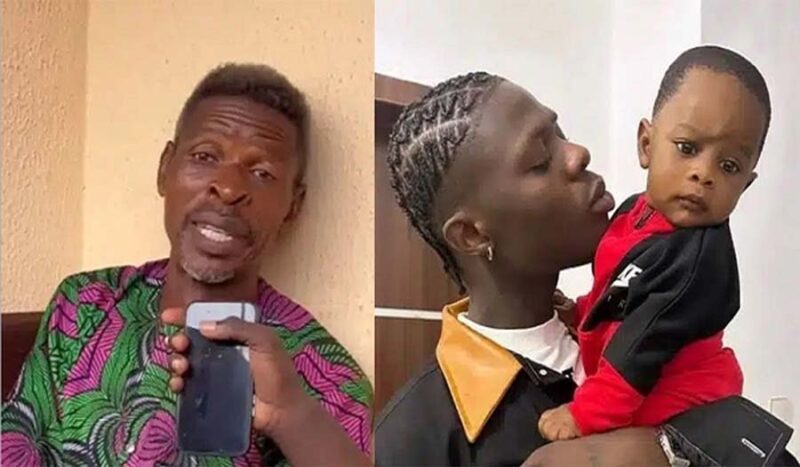
[ICYMI] Mohbad Was Killed Over DNA Dispute, His Friend Told Me – Father Alleges
LAGOS, Nigeria — Joseph Aloba, father of late Nigerian singer Ilerioluwa Aloba, popularly known as Mohbad, has alleged that his son was killed over issues surrounding DNA testing and paternity.
Aloba made the startling allegation during an emotional interview, claiming that a close friend of the late singer told him that the controversy over paternity was connected to his son’s death.
” Mohbad was killed because of DNA. I’m saying it now for the whole world to hear. Mohbad was killed because of DNA, his friend told me. He was killed because of paternity,” the bereaved father declared.
His claim has introduced another dimension to the controversy surrounding the circumstances of the singer’s death and the prolonged dispute within his family.
DNA Controversy Deepens
Mohbad died on September 12, 2023, at the age of 27, under circumstances that have continued to generate public debate and calls for justice.
Since his death, a protracted disagreement has emerged between his father and widow, Omowunmi Aloba, over the paternity of their son, Liam.
The dispute has also fuelled demands for a DNA test to establish the child’s biological paternity.
The controversy took another turn following reported court-ordered DNA sample collection involving parties connected to the dispute in October, although the outcome of the process remains a subject of public interest.
Father Seeks Public Support
During the interview, Joseph Aloba appealed to Nigerians and other well-meaning individuals to support his demand for justice and transparency over his son’s death.
He maintained that there were deeper issues surrounding the events that preceded the singer’s demise, pointing specifically to the alleged connection between the DNA controversy and the circumstances of his death.
However, his latest allegation has not been independently substantiated, and no official investigative finding has established that a DNA or paternity dispute was responsible for Mohbad’s death.
The allegation is therefore expected to generate further reactions as Nigerians continue to demand answers over the circumstances surrounding the death of the former Marlian Records singer.
Mohbad’s death remains a subject of public interest, with his family and supporters continuing to seek clarity and justice.
[ICYMI] Mohbad Was Killed Over DNA Dispute, His Friend Told Me – Father Alleges
metro
Oluwo Advised to Exercise Restraint, Emotional Intelligence Amid Osun Govt Controversy

Oluwo Advised to Exercise Restraint, Emotional Intelligence Amid Osun Govt Controversy
Public analyst, Lukman Raimi, urges monarch to embrace diplomacy, strengthen ties with government, prioritise peaceful coexistence and community development
A public analyst, Lukman Raimi, has advised the Oluwo of Iwo, Oba (Dr.) Abdulrasheed Adewale Akanbi, Telu I, to exercise emotional intelligence, strategic caution and restraint in his public engagements amid the controversy surrounding a reported cautionary letter issued to the monarch by the Osun State Government.
Raimi, who offered the advice in a public commentary, said the traditional ruler should avoid unnecessary verbal confrontations and adopt a more diplomatic approach in addressing issues capable of generating tension between the palace, the government and members of the public.
The analyst noted that the reported letter from the Osun State Government had generated mixed reactions, with some people welcoming the government’s intervention while others, particularly supporters of the monarch, expressed disagreement.
However, he said he belonged to neither camp, explaining that his intervention was intended to offer constructive advice to the monarch rather than take sides in the controversy.
According to him, understanding the relationship between traditional institutions and government authorities is essential to preserving the dignity and influence of the throne.
Raimi pointed out that state governments exercise statutory responsibilities over the appointment, recognition, regulation and remuneration of traditional rulers, subject to applicable laws.
He therefore urged the Oluwo to recognise the limits of traditional authority while appreciating the constitutional and statutory responsibilities of government.
Religious Convictions and Royal Restraint
Addressing the religious and cultural dimensions of the controversy, the analyst acknowledged that differences surrounding religion and cultural identity had generated tensions in parts of Yorubaland, including Iwo.
He maintained that the Oluwo had every fundamental right to affirm and practise his Islamic faith, stressing that the monarch should not be expected to apologise for his religious convictions.
Raimi also acknowledged that some critics of the monarch’s Islamic beliefs had allegedly resorted to provocative comments and derogatory remarks.
Nevertheless, he argued that such provocations should not compel a traditional ruler to engage in prolonged public exchanges or respond to every criticism.
Describing himself as a proud Muslim, Raimi said he admired the Oluwo’s commitment to Islam but believed that frequent public responses, the use of street slang and prolonged verbal exchanges were inconsistent with Islamic etiquette and the dignity expected of a traditional ruler.
He urged the monarch to demonstrate that religious commitment, cultural appreciation and peaceful coexistence could exist side by side.
‘A King Must Not Fight Like a Servant’
To reinforce his argument, Raimi invoked two Yoruba expressions which, according to him, capture the expectations of royal conduct.
He quoted the saying, “Oba kì í jagun bí ẹrú,” meaning that a king does not fight battles like a servant.
He also cited the expression, “Oluwo kò ṣe wò!” to emphasise the importance and dignity of the Oluwo’s throne.
The analyst argued that kingship comes with responsibilities that require wisdom, composure and the ability to rise above personal disagreements.
He further referenced prominent traditional rulers, including the Sultan of Sokoto, the Emir of Ilorin, the Emir of Kano, the Ooni of Ife, the Oba of Lagos, Oba Rilwan Akiolu, the Olubadan of Ibadanland and the Oba of Benin, as examples of monarchs whose public engagements, in his view, demonstrate the importance of measured communication.
According to Raimi, prominent traditional rulers often face criticism and insults but generally refrain from responding to every provocation because of the dignity associated with their offices.
He maintained that the Oluwo could protect his royal image and strengthen his influence by adopting a similar approach to public communication.
Analyst Recommends Meeting With Osun Governor
Beyond urging restraint, Raimi recommended that the Oluwo consider paying courtesy visits to the Osun State Governor and the Commissioner responsible for Chieftaincy Affairs.
He described such visits as important diplomatic gestures that could demonstrate institutional respect and a willingness to pursue constructive engagement.
According to him, direct engagement with government officials could help strengthen relationships, clarify possible misunderstandings, address misleading information and create opportunities for meaningful collaboration.
He suggested that rather than allowing disagreements to escalate through public exchanges, the palace should explore diplomatic channels capable of producing lasting understanding between the traditional institution and the state government.
Calls for Greater Focus on Community Development
Raimi also urged the monarch to devote greater attention to initiatives that would improve the welfare and development of people in Iwoland.
He specifically highlighted peaceful coexistence, charitable interventions, children’s mentorship, youth empowerment, support for widows and sustainable community development as areas deserving greater attention from the palace.
He advised the Oluwo to reposition himself as an ambassador of Islam, a proponent of the positive aspects of Yoruba culture, a father to all and a servant leader.
The analyst said the monarch had an opportunity to demonstrate that Islamic convictions, respect for Yoruba heritage and peaceful coexistence were not mutually exclusive.
He added that sustained commitment to these ideals would strengthen the Oluwo’s public image, enhance his royal legacy and elevate his standing beyond temporary controversies.
‘Royalty Must Be Defended With Wisdom’
Concluding his intervention, Raimi prayed for Allah’s guidance, patience and wisdom for the Oluwo, expressing hope that the monarch would enjoy a peaceful reign.
He also expressed confidence in the monarch’s personal appeal, ending his message with a humorous compliment about his handsome appearance.
“Long live the Oluwo! Long live Iwoland!” he declared.
His intervention comes amid continuing public discussions about the relationship between traditional institutions, religious identity and government authority in Osun State, with the analyst urging the Oluwo to embrace diplomacy and community-focused leadership as a means of strengthening his reign.
Oluwo Advised to Exercise Restraint, Emotional Intelligence Amid Osun Govt Controversy
-
 International2 days ago
US Lawmakers to Hold Fresh Hearing on Nigeria’s Insecurity, Christian Killings
-

 metro2 days ago
Court Orders Final Forfeiture Of 48 Properties Worth N212bn Linked To Malami
-

 metro2 days ago
Ogbomosoland Grand Chief Imam, Sheikh Teliat Ayilara II, Marks Five Years in Office
-

 News2 days ago
Tinubu’s Chicago Varsity Certificate Row: Omokri Challenges Journalists to Verify Fresh Allegations
-

 Auto2 days ago
After-Sales Support Will Define Future of Nigeria’s Auto Industry – Carloha Marketing Chief
-

 News1 day ago
BREAKING: Manchester United Sack Michael Carrick After Disastrous Start to Season
-

 metro2 days ago
Two Arrested as Police Recover ₦600,000, Nine Phones in Kano Robbery
-

 Sports2 days ago
Tinubu Rewards Flamingos With ₦100m Each After Historic World Cup Triumph