

metro
MURIC speaks on viral Kwara Arabic school video

Muslims in Kwara State and the general public have been urged to desist from jumping to conclusions on the viral video in which students of an Arabic school were severely beaten.
The Director and Founder of Muslim Rights Concern, Prof. Ishaq Akintola, spoke it in a statement on Monday.
Akintola said: “While we regard the punishment meted to the students as too harsh, we maintain that the action of the school authorities should not be judged in isolation. The fact that the parents requested the school to discipline their children must not be ignored.
“MURIC is also in possession of another video in which the students confessed that they engaged in shameful and unIslamic actions, namely, visiting a club, drinking alcohol, bathing themselves with alcohol, etc. These are horrible acts in which ordinary Muslims must not be involved.
“Arabic schools are the repository of morality and the vault of uprightness. They are the conscience of the Ummah. The offence committed by those students becomes more unacceptable when the actors are students of an Arabic school who are expected to be the epitome of morality and religiousity.
“The abyss of moral decadence into which the Nigerian society has fallen is responsible for most of the woes facing us in this country today. Nigerians now indulge their children. Family values and norms have been thrown to the winds. Parents allow their children to dictate to them. Instead of parents condemning waywardness in their children and punishing them for it, they now condone and collaborate.
“This is unlike in the past when a dirty slap from the mother alone will make the child shiver and he will start begging the mother not to tell his father when the latter returns home. The result was the sane society which we all miss today. Such disciplinary measures and the attendant morally upright children are expected to be found in Arabic schools today and that explains the raison d’etre for the disappointment expressed by the parents of those students. It explains why they asked the school authorities to deal with their children.
“Nigerians must brace up and understand where the authorities of the Kwara Arabic school are coming from? The students who received that beating were the black sheep in the school and they would have polluted others by taking them to the club if they had not been taught that bitter lesson. Who ever expected killings, kidnappings, rape and other vicious crimes in Northern Nigeria? It did not start in just one day.
“While we do not subscribe to merciless flogging, torture and other severe corporeal punishment, we make bold to say that children must be disciplined. MURIC will not encourage sparing the rod to spoil the child. Nigerians, nay Africans, must resist the temptation to embrace strange and obnoxious Western values.
“This is not London where a 5-year old child can call the police to arrest his mum for spanking him and all London police units will come racing to the house, blaring siren. This is not New York where a mother must seek permission from her 3-year old baby before the latter’s nappy can be changed. This is Nigeria, the heartbeat of Africa.
“We commend the parents of those children who instructed the school authorities to punish their children. Posterity will count them among Nigeria’s puritanists and disciplinarians. Those who are condemning the parents and the teachers today are those who will gladly encourage their own children and wards to participate in BBNaija’s shameful sex in public.
“MURIC stands with discipline and high moral values. The highhandedness in the punishment is regrettable but what do those erring students deserve? Should they be showered with pancake, shawarma and ice cream? They must be made to know the enormity of their shameful behaviour. The punishment may have been lighter though.
“In the light of the above, we urge Muslims in Kwara State and the general public to allow the Kwara State Government to investigate the incident. Government itself must adopt a middle road. We invite parents and guardians to discipline their children and wards promptly and proportionately.
“In view of the fact that many Muslims ran away from Arabic classes in the past due to fear of the cane, we advise Arabic schools to adopt the stick and carrot policy. They should use the stick lightly and sparingly but cajole their pupils with carrot, sweet and buscuits everyday.”
Eagle online







metro
SERAP Sues INEC Over ₦126bn Electoral Funds, Demands Full Accountability
SERAP Sues INEC Over ₦126bn Electoral Funds, Demands Full Accountability
The Socio-Economic Rights and Accountability Project (SERAP) has sued the Independent National Electoral Commission (INEC) over its alleged failure to account for more than ₦126.46 billion allocated for electoral operations, asking the Federal High Court in Abuja to compel the commission to disclose how the public funds were spent.
The lawsuit, filed last week and marked FHC/ABJ/CS/2507/2026, followed findings attributed to the Auditor-General of the Federation’s 2023 audited report, published on August 7, 2026. The reported irregularities relate mainly to transactions carried out in 2022, with some extending into 2023.
SERAP is seeking a court order compelling INEC to provide a detailed financial and documentary account of the funds, including the amounts released and paid, the beneficiaries, the contractors involved and the beneficial owners of the companies that received the payments.
The organisation also wants the commission to provide evidence that the goods and services covered by the transactions were delivered, explain how the electoral materials were used and disclose their present location and condition.
According to SERAP, the money was intended for the procurement of ballot boxes, electoral devices, sensitive election materials, result sheets, vehicles and accreditation equipment, as well as audit services, consultancy, digital archiving and other electoral operations.
The organisation said the Auditor-General’s report raised concerns about several transactions, including more than ₦112.15 billion allegedly paid for ballot boxes, electoral devices and other materials without competitive bidding or a Certificate of No Objection from the Bureau of Public Procurement (BPP).
READ ALSO:
- Akpabio Under Fire as Senators Move to Secure His Return as Senate President in 2027
- Lamine Yamal Shines as Barcelona Thrash Real Betis 5-2
- Tinubu Scraps Recruitment Waiver Requirement for Federal Universities
SERAP said the audit findings indicated that there was no evidence that the items had been procured. It also cited concerns that contracts were awarded to companies whose competence, experience, operational capacity, addresses and factory locations were reportedly unknown.
The Auditor-General reportedly raised the possibility that the funds had been diverted and recommended their recovery. However, the allegations remain subject to verification and do not, by themselves, establish that the entire amount was stolen.
Another transaction highlighted by SERAP involved approximately ₦1.06 billion allegedly paid for Toyota Prado TXL 2021-model vehicles without the required advertisement, competitive bidding, bid evaluation or procurement clearance.
The organisation also cited more than ₦3.13 billion allegedly paid to four contractors for ballot guides, sensitive materials and result sheets before the contracts were awarded. According to SERAP, the audit raised questions about the transactions and the possibility that the money had been diverted.
A further ₦9.24 billion was reportedly paid under 22 contracts covering similar goods and services. SERAP said the Auditor-General questioned whether the contracts had been split to circumvent procurement rules and whether payments had been made for items that were not supplied.
Other transactions cited in the lawsuit included ₦129.37 million paid to 19 accounting firms for financial audit services without sufficient supporting evidence, more than ₦504 million for accreditation devices under questioned procurement arrangements, and about ₦235.1 million paid to contractors for sleeping mats and digital archiving.
SERAP wants INEC to provide documentary and physical evidence showing that the electoral materials covered by the disputed payments were actually procured. It is also asking the court to compel the commission to identify the contractors, suppliers, consultants and public officials who authorised or processed the transactions.
The organisation further wants INEC to ensure that electoral equipment and other public assets covered by the audit findings are not disposed of, transferred, destroyed or written off in ways that could frustrate investigations, transparency or the recovery of public funds.
SERAP argued that Nigerians have a right to know how money appropriated for elections was managed, particularly as the country prepares for the 2027 general elections.
It maintained that transparency in electoral spending is necessary to protect public confidence in INEC and ensure that funds allocated for credible elections are used for their intended purposes.
The organisation cited provisions of the 1999 Constitution, as amended, national anti-corruption laws and Nigeria’s obligations under the United Nations Convention against Corruption in support of its demand for accountability.
The suit was filed on SERAP’s behalf by lawyers Kolawole Oluwadare, Kehinde Oyewumi and Andrew Nwankwo.
No hearing date had been announced as of Sunday, October 18, 2026.
The case follows an earlier demand by SERAP in September, when the organisation gave INEC seven days to explain the expenditure and called for investigations into transactions flagged by the Auditor-General.
The latest legal action seeks to compel the electoral commission to provide the requested information through a court order.
SERAP Sues INEC Over ₦126bn Electoral Funds, Demands Full Accountability
metro
Borno Highway Blast: Soldiers Killed as Military Vehicle Hits Landmine
Borno Highway Blast: Soldiers Killed as Military Vehicle Hits Landmine
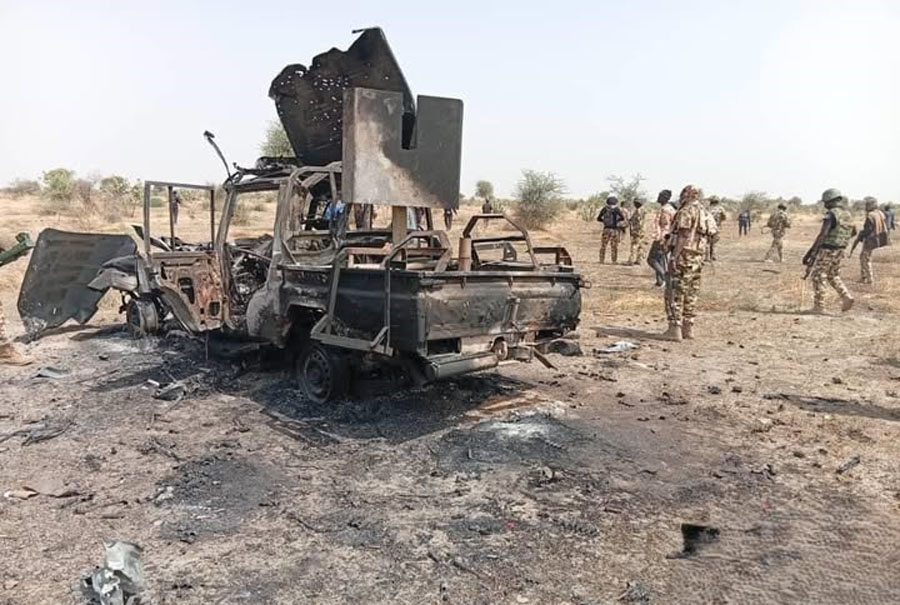
At least eight Nigerian soldiers have been killed after a military patrol vehicle struck a landmine along a highway in Borno State, north-east Nigeria.
The incident occurred on Saturday in Kinuba village, about 25 kilometres from Gamboru, near Nigeria’s border with Cameroon, according to defence sources cited by AFP.
The soldiers were reportedly travelling along the highway while inspecting members of an anti-insurgency militia involved in clearing thick vegetation beside the road when their vehicle ran over the explosive.
The blast killed all eight soldiers aboard the vehicle, while a militia member supervising the vegetation-clearing operation sustained shrapnel injuries.
READ ALSO:
- Kano: Soldiers Kill Two Kidnappers, Rescue Victim, Recover ₦10m
- Oyo Baby Trafficking Scandal: Mother, Doctor Arrested Over Alleged ₦2m Sale of Infant
- Nairobi Mother Says Husband Abandoned Her During Childbirth, Paid Dowry for Another Woman
A member of the militia, Ibrahim Liman, said the explosive had been planted on the dusty road and detonated remotely.
The attack was blamed on the Islamic State West Africa Province (ISWAP), an armed group that operates in the region and has repeatedly targeted security personnel and civilians.
The highway attack came amid renewed violence in Borno, where insurgents have continued to target military formations and patrols despite ongoing counter-insurgency operations.
The incident also occurred on the day the Chief of Army Staff, Lieutenant General Waidi Shaibu, visited Maiduguri, the state capital, following a separate attack on a military base that reportedly killed 15 soldiers and five members of the Civilian Joint Task Force.
ISWAP and its rival, Boko Haram, have increasingly used improvised explosive devices and landmines against military convoys and other road users in the North-East.
The latest incident underscores the continuing security risks along major highways in Borno, where thick vegetation can provide cover for insurgents to plant explosives and launch attacks on passing vehicles.
Borno Highway Blast: Soldiers Killed as Military Vehicle Hits Landmine
metro
Okonjo-Iweala: My Mother Was Kidnapped After I Uncovered $2.4bn Subsidy Fraud
Okonjo-Iweala: My Mother Was Kidnapped After I Uncovered $2.4bn Subsidy Fraud
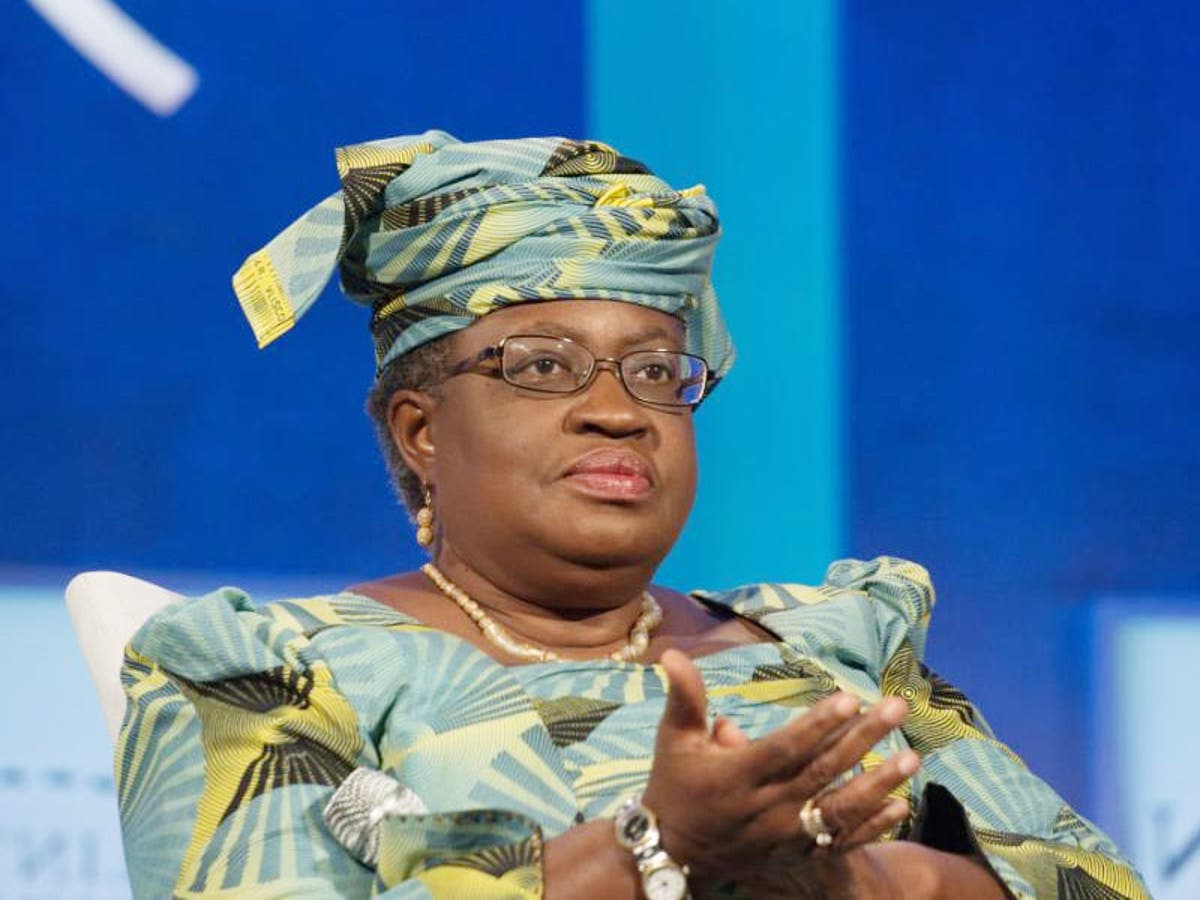
Ngozi Okonjo-Iweala, Director-General of the World Trade Organisation (WTO), has recounted how her efforts to expose an alleged $2.4 billion fuel subsidy fraud in Nigeria were followed by threats and the kidnapping of her mother in 2012.
Okonjo-Iweala, who was Nigeria’s finance minister under former President Goodluck Jonathan, said the kidnappers demanded that she resign from office and leave the country before her mother, Kamene Okonjo, would be released.
She said the abduction, which occurred in December 2012, subjected her family to five days of anguish and forced her to confront a painful choice between her public responsibilities and her mother’s safety.
According to her account, the crisis followed an investigation into suspicious claims submitted under Nigeria’s fuel subsidy programme. The investigation reportedly uncovered about $2.4 billion in fraudulent claims, prompting the government to withhold payments on the disputed transactions.
Okonjo-Iweala said she had raised concerns about the figures with the president and requested an audit of the accounts. After approval was granted, the review uncovered what she described as substantial fraud.
READ ALSO:
- Kano: Soldiers Kill Two Kidnappers, Rescue Victim, Recover ₦10m
- Oyo Baby Trafficking Scandal: Mother, Doctor Arrested Over Alleged ₦2m Sale of Infant
- Nairobi Mother Says Husband Abandoned Her During Childbirth, Paid Dowry for Another Woman
The former minister said the refusal to pay the disputed claims was followed by threats against her, before her mother was abducted from her home in Ogwashi-Uku, Delta State.
The kidnappers reportedly sought to pressure her into abandoning her position in government, making her resignation a condition for her mother’s release.
Okonjo-Iweala said the experience was devastating, admitting that she considered leaving office because her mother’s life was more important to her than her position.
She recalled that her father, the late Professor Chukwuka Okonjo, encouraged her not to surrender to blackmail and urged her to continue her work.
Her mother eventually escaped after spending five days in captivity, bringing the ordeal to an end.
The incident exposed the personal risks associated with efforts to investigate alleged financial abuses in Nigeria’s petroleum subsidy system, which had long been dogged by questions over payments to fuel importers and the verification of claims.
Okonjo-Iweala later became the first woman and first African to lead the WTO, taking office as Director-General in March 2021.
Okonjo-Iweala: My Mother Was Kidnapped After I Uncovered $2.4bn Subsidy Fraud
-

 metro3 days ago
₦130m Toyota Tundra Wrecked: Lagos Dealer Questions Police Over Suspect’s Release
-
 News3 days ago
₦200m Fake Alcohol Packaging Uncovered as NAFDAC Raids Aba Market
-
 metro2 days ago
Suspended Archbishop Ibezim Drags Anglican Primate to Court, Challenges Six-Month Leave
-
 Sports2 days ago
Real Madrid Demand Tebas’ Exit After Explosive Nazi Propaganda Row
-

 Entertainment2 days ago
ToluwaniSings’ Final Hours: Aide Reveals Desperate Search Across 8 Hospitals
-
 Politics2 days ago
2027: Kwankwaso Signals Fuel Subsidy Comeback as NDC Vows to Crash Petrol Prices
-
 metro2 days ago
Imodi-Ijebu Muslim Community Bets on 20 Chiefs to Drive Education, Economic Growth
-
 metro2 days ago
NAPTIP Raises Alarm as Parents Allegedly Trade Children for Sex, Arrests Woman in Abuja