
metro
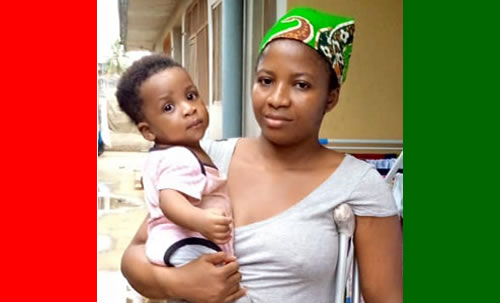
My 10-month-old baby reason I’ve not committed suicide – Amputee impregnated, dumped by Facebook lover
•Says mum also kicked her out
For Cynthia Amaka Okoro, a 28-year-old graduate of Physics and Electronics, life has not been fair. Amputated as a student and impregnated by an abusive partner, she now lives in utter despondency. Gbenga Aderanti writes.
READ ALSO:
- Gunmen kidnap DPO, demand N50m ransom in Edo
- Those who buried OAU student could provide clue on murder – Lawyer
- Notorious bandit terrorising Kaduna-Abuja Road killed inside hotel
Her facial appearance portrays her as one of the beautiful models advertising firms would love to introduce to their clients as the face of their beauty products. There is indeed no way anyone without a hint on her life story would imagine the vicissitudes of life she has had to pass through. Cynthia Okpara, a 28-year-old graduate of Physics and Electronics from Imo State Polytechnic, Umuagwo, became an amputee while she was still a student of the school. As if that was not enough, an abusive partner got her pregnant and she was thereafter rejected and disowned by her mother.
While she is grateful to her friend, who has been gracious to take her in as a squatter, she says the thought of suicide has not stopped crossing her mind and is only being held back by fear of what would become of her 10-month-old baby.
The Nation











metro
Recovered Funds: EFCC Hands Over ₦3.9bn Linked to Oil Sector Fraud
Recovered Funds: EFCC Hands Over ₦3.9bn Linked to Oil Sector Fraud
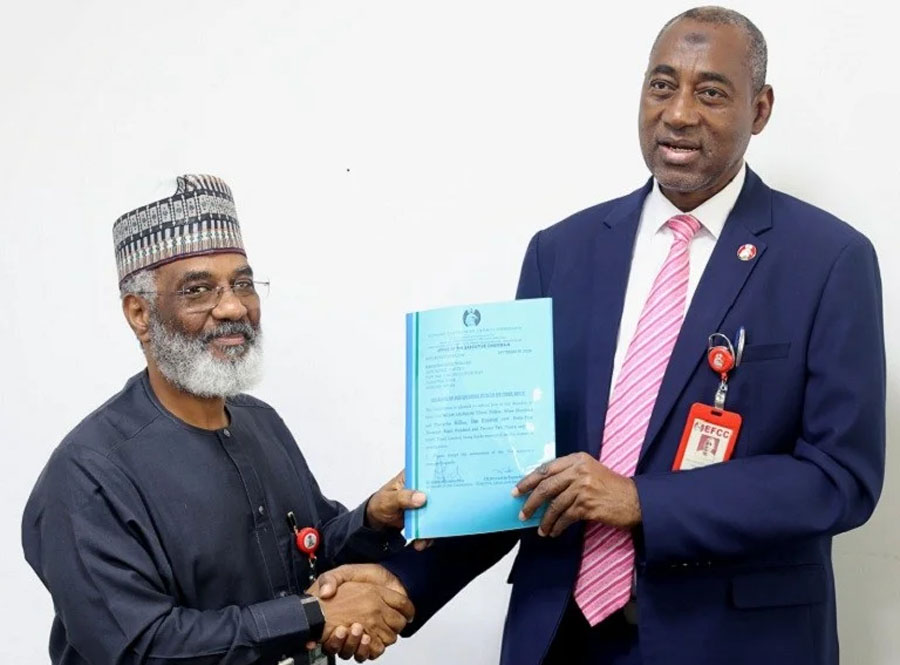
The Economic and Financial Crimes Commission (EFCC) has formally handed over ₦3,936,145,822 in recovered funds to the Nigerian National Petroleum Company Limited (NNPCL), reinforcing ongoing efforts to combat corruption and improve transparency within Nigeria’s oil and gas sector.
The official presentation took place on March 18, 2026, at the EFCC headquarters in Abuja, where the funds were handed over on behalf of EFCC Chairman Ola Olukoyede by the Commission’s Secretary, Mohammed Hammajoda.
According to the EFCC, the recovered sum was linked to fraudulent activities involving individuals connected to NNPCL, uncovered through extensive investigations. The agency noted that the recovery forms part of its broader mandate to trace, seize, and return proceeds of financial crimes to affected institutions and the Nigerian state.
Hammajoda reiterated the commission’s commitment to fighting financial and economic crimes, emphasizing that the EFCC remains dedicated to protecting public resources despite operational challenges. He stressed that sustained enforcement actions and recoveries are critical to strengthening governance and deterring corrupt practices.
READ ALSO:
- AU Rallies African Nations Against Terrorism as CDS Warns of ‘Enemies Within’
- Trump Says Israel Will Halt Further Strikes on Iran’s Gas Field
- 9 Things King Charles III Said About Nigeria
The handover highlights the importance of asset recovery, anti-corruption enforcement, and institutional accountability in safeguarding Nigeria’s economic resources, particularly in strategic sectors such as oil and gas.
Receiving the funds on behalf of NNPCL, Mumuni Dagazau, Executive Vice President (Downstream), described the development as a significant milestone in the company’s reform process. He said the collaboration between NNPCL and the EFCC reflects growing institutional synergy aimed at addressing internal vulnerabilities and improving oversight mechanisms within the national oil company.
Dagazau further reaffirmed NNPCL’s commitment to transparency, accountability, and compliance with governance standards. He added that continued cooperation with anti-graft agencies will help strengthen internal controls, enhance operational efficiency, and reduce financial leakages across the organization.
The recovery and return of the funds also align with broader government efforts to ensure that proceeds of corruption are recovered and reinvested into the economy. Authorities maintain that such actions are essential for improving public trust, strengthening institutions, and promoting responsible management of national resources.
Analysts say that sustained collaboration between agencies like the EFCC and major public enterprises such as NNPCL is vital for tackling systemic corruption, improving financial discipline, and ensuring that Nigeria’s revenue-generating sectors operate with greater accountability and transparency.
Recovered Funds: EFCC Hands Over ₦3.9bn Linked to Oil Sector Fraud
metro
AU Rallies African Nations Against Terrorism as CDS Warns of ‘Enemies Within’
AU Rallies African Nations Against Terrorism as CDS Warns of ‘Enemies Within’
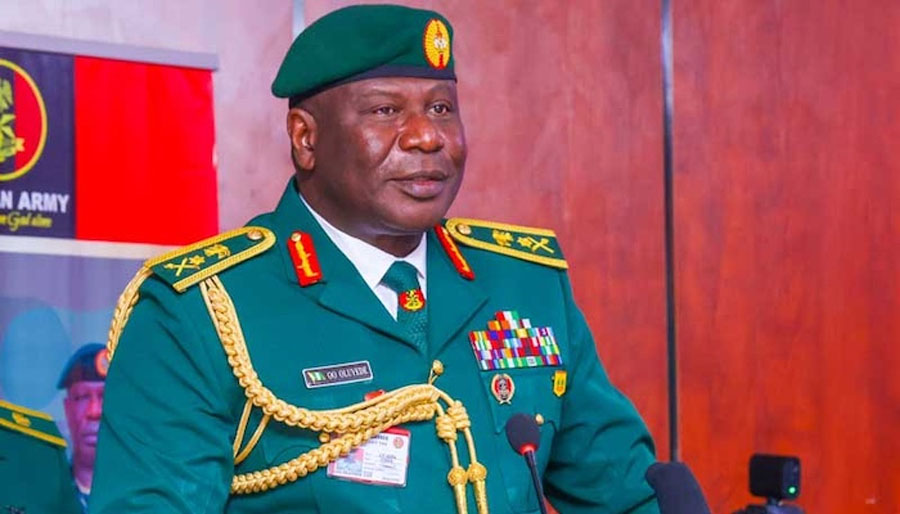
African Union has intensified efforts to strengthen collective security across the continent, calling on member states to deepen cooperation in intelligence sharing and regional defense as Nigeria’s Chief of Defence Staff, General Olufemi Oluyede raised concerns over internal collaborators aiding terrorist groups.
Speaking at a high-level security engagement, the AU urged African countries to improve border security, enhance military coordination, and expand intelligence-sharing networks to effectively counter the growing threat of terrorism in regions such as the Sahel and West Africa. The organisation stressed that coordinated action among member states remains critical to addressing the transnational nature of extremist violence.
The renewed push comes amid persistent insecurity across parts of Africa, where armed groups continue to exploit weak governance, porous borders, and socioeconomic challenges to expand their influence. Analysts note that the evolving tactics of terrorist organisations require equally adaptive and unified responses from governments and regional bodies.
Nigeria’s Chief of Defence Staff, General Olufemi Oluyede, warned that beyond external threats, the country faces significant risks from “enemies within”—individuals and networks operating domestically who support insurgent activities. According to him, these internal actors provide logistics, intelligence, and safe havens that enable terrorist operations and complicate military efforts.
READ ALSO:
- Trump Says Israel Will Halt Further Strikes on Iran’s Gas Field
- 9 Things King Charles III Said About Nigeria
- Barcelona Crush Newcastle 7-2 to Reach UCL Quarter-Finals
He explained that such internal collaboration undermines ongoing counterterrorism operations by weakening intelligence gathering and increasing operational uncertainty. Oluyede emphasized the need for stronger internal monitoring, improved inter-agency coordination, and strict accountability within the security system to address the threat effectively.
The CDS also called on citizens to play an active role in supporting national security by remaining vigilant and reporting suspicious activities to authorities. He noted that community cooperation is essential in identifying early warning signs and disrupting terrorist networks before they can execute attacks.
The AU echoed similar sentiments, highlighting the importance of community engagement as part of its broader continental strategy to combat terrorism. It urged governments to involve local populations in security awareness initiatives and encourage timely reporting of unusual activities.
Security experts at the engagement stressed that terrorism in Africa has become increasingly sophisticated, with groups forming cross-border alliances and leveraging modern communication tools. They argued that beyond military action, long-term solutions must include investments in education, economic opportunities, and governance reforms to address the root causes of radicalization.
The AU further encouraged the adoption of regional frameworks, particularly in high-risk zones such as the Lake Chad Basin and the Sahel, where multiple countries face interconnected security challenges. Coordinated regional strategies, experts say, will help close operational gaps exploited by terrorist groups.
As threats continue to evolve, both the African Union and Nigeria’s military leadership maintain that sustained cooperation, robust intelligence systems, and active citizen participation will be key to strengthening Africa’s overall counterterrorism strategy and ensuring long-term stability across the continent.
AU Rallies African Nations Against Terrorism as CDS Warns of ‘Enemies Within’
metro
Woman Sparks Debate After Sending ₦500,000 Tithe from ₦5m Cooperative Loan

Woman Sparks Debate After Sending ₦500,000 Tithe from ₦5m Cooperative Loan
A viral social media post has sparked widespread reactions after a woman reportedly sent part of a ₦5 million cooperative loan as tithe to her pastor immediately after the funds were disbursed.
The incident was shared on X (formerly Twitter) by user X (formerly Twitter) handle @kenkelewu, who claimed to be an eyewitness to the development.
According to the post, the woman contacted her pastor shortly after receiving the loan and requested the church’s account details. She then allegedly transferred ₦500,000—representing 10% of the loan—as tithe.
The X user further narrated that the decision prompted a personal reaction, stating that they distanced themselves from the woman afterward, maintaining only minimal social interaction.
READ ALSO:
- Tinubu Celebrates Nigeria-UK Ties in Historic Windsor Castle Speech
- Oil Prices Hit $110 as Iran Strikes Saudi, UAE, Qatar Energy Sites
- UCL: Liverpool Crush Galatasaray to Set Up PSG Clash
The story quickly gained traction online, with many users expressing mixed opinions about the appropriateness of paying tithe from borrowed funds. Some commenters argued that loans should not be treated as income, while others maintained that religious obligations remain a personal conviction regardless of the source of funds.
One user noted that not all inflows of money should be considered financial gain, emphasizing the difference between income and debt. Another commenter described tithing as a personal spiritual practice that should be voluntary rather than compulsory.
Others, however, criticized the decision, arguing that committing borrowed funds to religious giving could lead to financial strain, especially when repayment obligations are considered.
The incident has since fueled broader discussions around financial literacy, responsible borrowing, and the balance between religious practices and personal finance management.
Observers note that such cases often highlight the importance of understanding loan terms, repayment schedules, and prioritizing essential financial obligations before discretionary commitments.
As reactions continue online, the viral post remains a talking point, reflecting differing perspectives on faith, money management, and personal financial responsibility among social media users.
Woman Sparks Debate After Sending ₦500,000 Tithe from ₦5m Cooperative Loan

-

 metro2 days ago
Just In: Federal Govt Announces Public Holidays for Eid-el-Fitr
-

 metro18 hours ago
BREAKING: Eid-el-Fitr Date Confirmed in Saudi Arabia, Nigeria Awaits Sultan’s Decision
-
 News13 hours ago
Eid‑el‑Fitr in Nigeria Confirmed for Friday, March 20, 2026
-

 Railway3 days ago
BREAKING: Several Passengers Injured as Abuja–Kaduna Train Derails After Collision
-

 metro2 days ago
Zakatul Fitr: Rules, Amount, Timing and Distribution Before Eid al-Fitr
-

 metro3 days ago
Court Screens Video Showing NDLEA Allegedly Helping Cocaine Smugglers at Enugu Airport
-

 News2 days ago
Maiduguri Bombings: Shocking Trump–Tinubu Claim Goes Viral — Fact or Fabrication?
-

 metro18 hours ago
Court Confirms Nigerians’ Right to Record Police During Stop-and-Search Operations