
Education
NERDC releases approved subject list for revised school curriculum
NERDC releases approved subject list for revised school curriculum
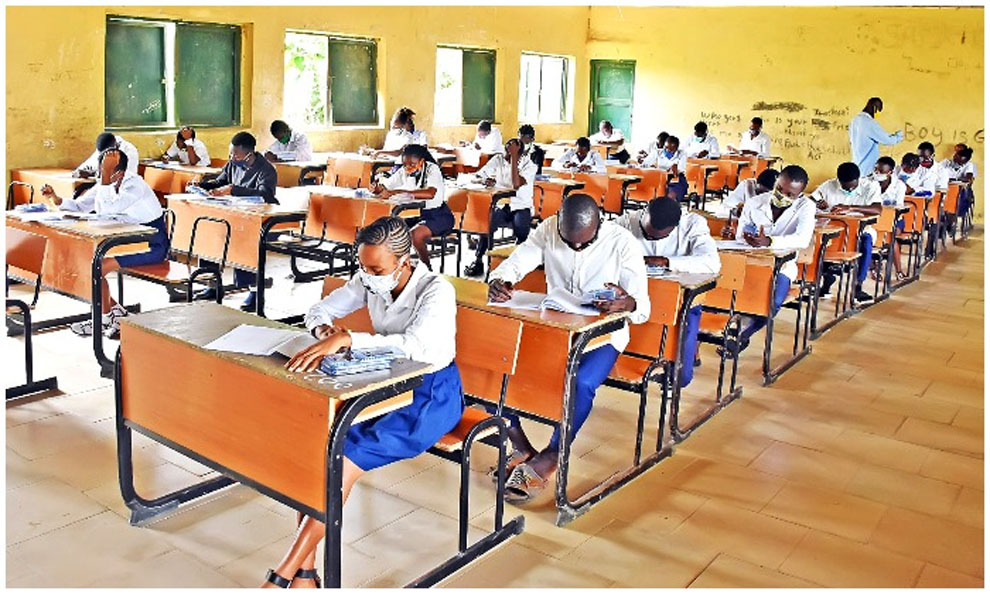
The Nigerian Educational Research and Development Council (NERDC) has released the official subject list for the country’s revised basic and secondary school curriculum.
Earlier, a senior special adviser to the president had shared excerpts from what was believed to be the then-unreleased curriculum document.
The excerpt showed mostly core subjects broken down into specific modules, including artificial intelligence, journalism, fact-checking, cybersecurity, and programming.
However, the NERDC has asked the public to disregard all other versions of the new curriculum circulating online.
In a communique signed by NERDC executive secretary, Salisu Shehu, it said that publishing the officially approved version became necessary to disprove what it described as “unauthentic versions.”
The council said a nationwide sensitisation and teacher capacity building has been scheduled for effective implementation.
It said implementation would commence at the beginning of each three-year education circle (Primary 1, Primary 4, JSS1 and SS1) as the revised curricula are unveiled.
READ ALSO:
- IPMAN calls off strike after agreement with Dangote, NUPENG
- Game changer: Spiro makes electric motobikes more accessible in Nigeria
- PDP To Natasha: Get ready to resume at Senate
See the full NERDC-vetted subject list below:
PRIMARY 1- 3
English Studies
Mathematics
Nigerian Languages (One Nigerian Language)
Basic Science
Physical & Health Education
CRS (For Christian Pupils Only) and IS (For Muslim Pupils Only)
Nigerian History
Social and Citizenship Studies
Cultural & Creative Arts (CCA)
Arabic Language (Optional)
NB: Minimum of 9 and maximum of 10 subjects
PRIMARY 4- 6
English Studies
Mathematics
Nigerian Languages (One Nigerian Language)
Basic Science and Technology
Physical & Health Education
Basic Digital Literacy
CRS (For Christian Pupils Only) and IS (For Muslim Pupils Only)
Nigerian History
Social and Citizenship Studies
Cultural & Creative Arts (CCA)
Pre-vocational studies
French (Optional)
Arabic Language (Optional)
NB: Minimum of 11 and maximum of 12 or 13 subjects
JUNIOR SECONDARY SCHOOL 1-3
English Studies
Mathematics
Nigerian Languages (One Nigerian Language)
Intermediate Science
Physical & Health Education
Digital Technologies
Christian Religious Studies (CRS) (For Christian Pupils Only)
Islamic Studies (IS) (For Muslim Pupils Only)
Nigerian History
Social and Citizenship Studies
Cultural & Creative Arts (CCA)
Trade subjects (Students to choose one trade subject)
- Solar Photovoltaic installation and maintenance
- Fashion design and garment making
- Livestock farming,
- Beauty and cosmetology
- Computer hardware and GSM repairs
- Horticulture and crop production
Business Studies
French (optional)
Arabic Language (Optional)
NB: Minimum of 12 subjects; Maximum of 13 or 14 subjects
SENIOR SECONDARY CURRICULUM OFFERING
Five Core and Compulsory
- English Language
- General Mathematics
- One Trade subject,
- Citizenship and Heritage Studies
- Digital Technologies
Science
- Biology
- Chemistry
- Physics
- Agriculture
- Further Mathematics
- Physical Education
- Health Education
- Foods & Nutrition
- Geography
- Technical Drawing
Humanities
- Nigerian History
- Government
- Christian Religious Studies,
- Islamic Studies
- One Nigerian language
- French
- Arabic
- Visual Arts
- Music
- Literature in English
- Home Management
- Catering craft
- Business
- Accounting
- Commerce
- Marketing
- Economics
One core trade subject (Students to choose one trade subject)
- Solar Photovoltaic installation and maintenance
- Fashion design and garment making
- Livestock farming
- Beauty and cosmetology
- Computer hardware and GSM repairs
- Horticulture and crop production
NERDC releases approved subject list for revised school curriculum








Education
JAMB Releases 2026 UTME Registration Guidelines, Highlights Common Profile Code, NIN Issues
JAMB Releases 2026 UTME Registration Guidelines, Highlights Common Profile Code, NIN Issues
The Joint Admissions and Matriculation Board (JAMB) has published comprehensive guidelines for the 2026 UTME registration, alongside a list of common challenges candidates may encounter during the process. The update, released on Sunday via the Board’s official X handle, is aimed at helping prospective applicants prepare ahead of the registration window.
According to JAMB, candidates must ensure that all personal information — including National Identification Number (NIN), email address, and A-Level results — is accurate before generating a profile code, as the data cannot be edited afterward. To obtain the profile code, candidates are required to send their 11-digit NIN to 55019 or 66019 in the correct format (e.g., NIN 00000011111).
Once generated, the profile code automatically links to biodata retrieved from the National Identity Management Commission (NIMC). Candidates must then proceed to any JAMB office or accredited CBT centre to complete their registration.
The board advised that E-PINs should only be purchased from approved vendors, including banks, online payment platforms, and authorised merchants at registration centres. Before submitting the final form, candidates are expected to double-check the registration template to ensure all details are correct.
READ ALSO:
- Nigeria Withdraws Fighter Jets as Benin Crushes Failed Coup Attempt
- Dozen Soldiers Held as Benin Govt Thwarts Coup Against President Patrice Talon
- Benin govt says coup attempt foiled as soldiers seize state TV, gunfire rocks Cotonou
JAMB warned that inaccurate or mismatched details may result in delays. Candidates with incorrect data are advised to update their records with NIMC ahead of registration and confirm that the corrections reflect on the portal — especially details such as name, date of birth, gender, and state of origin.
The board emphasised that email addresses and GSM numbers serve as unique identifiers and cannot be changed or shared. These must be functional before registration.
For candidates who encounter biometric issues, JAMB instructed them to report directly to the nearest JAMB office, adding that no CBT centre is permitted to forcibly complete registration without successful biometric capture. Candidates are also advised to ensure that dual screens are used during registration and that their passport photograph and biometrics are captured correctly.
JAMB listed some of the common errors noticed during profile code generation, including:
- Error 55019/66019 — caused by incorrect message format
- Number Already Registered — indicating the SIM is tied to another candidate’s profile
- Unable to Verify NIN — candidates should wait and try again
The 2026 JAMB UTME form will be available for sale from Friday, January 31, 2026, to Saturday, March 8, 2026.
JAMB Releases 2026 UTME Registration Guidelines, Highlights Common Profile Code, NIN Issues
Education
FG Clarifies WAEC Subject Selection, Says Students Free to Choose Across All Fields

FG Clarifies WAEC Subject Selection, Says Students Free to Choose Across All Fields
The Federal Government has issued a clear explanation on subject selection under the revised Senior Secondary School Curriculum as registration for the West African Examinations Council (WAEC) continues nationwide.
In a joint statement released on Saturday, the Minister of Education, Maruf Tunji Alausa, and the Minister of State for Education, Sa’id Suwaiba Ahmad, clarified that there is no restriction or exclusion attached to the choice of any approved subject.
“All subjects remain fully open for students to choose from, provided such choices are properly guided by the school authority, parents, or a certified school counsellor,” the ministers stated.
They explained that science students are free to pick subjects traditionally grouped under the arts or social sciences, while arts and social science students may also select science-based subjects. According to the ministers, the revised curriculum was designed to be flexible, student-centred, and supportive of diverse academic interests and career pathways.
READ ALSO:
- Court Orders Wike to Respond to Tonye Cole’s ₦40bn Defamation Suit
- CAC to Begin Nationwide Crackdown on Unregistered PoS Operators by January 2026
- Studies show menopause can reduce women’s memory, concentration by 40%
The government also clarified that the subject previously known as Information and Communication Technology (ICT) has now been renamed Digital Technology, stressing that the adjustment is only a change in nomenclature. The curriculum content remains intact, and students who offered ICT are fully qualified to register for Digital Technology in both internal and external examinations.
Addressing concerns over trade subjects, the Ministry noted that six have been officially approved.
“A student may register for any of these subjects if the school offers them and the student has been taught the subject. However, there is no obligation to register for a trade subject where a student has not been exposed to any of the six approved options,” the statement added.
Reaffirming its commitment to smooth and accurate examination processes, the Ministry urged parents, school owners, counsellors and examination bodies to rely on verified information and ensure proper guidance to all candidates.
The Federal Government assured that it will continue to promote seamless, well-coordinated WAEC registration across the country.
FG Clarifies WAEC Subject Selection, Says Students Free to Choose Across All Fields
Education
NECO grants full accreditation to schools in Burkina Faso to conduct SSCE, BECE exams
NECO grants full accreditation to schools in Burkina Faso to conduct SSCE, BECE exams
The National Examinations Council (NECO) has expanded its international operations with the accreditation of schools in Burkina Faso to conduct its flagship examinations, the Senior School Certificate Examination (SSCE) and the Basic Education Certificate Examination (BECE).
In a statement released in Abuja on Sunday, the council’s Acting Director of Information and Public Relations, Mr. Azeez Sani, confirmed that NECO granted full approval after a comprehensive assessment of selected institutions in the West African nation.
According to Sani, a NECO accreditation team evaluated the schools’ infrastructure and readiness by inspecting classrooms, laboratories, libraries, computer labs, workshops, examination halls, sports facilities and overall security architecture. The team also reviewed Continuous Assessment (CA) records, staffing levels, and the general learning environment before issuing approval.
“Following a thorough and detailed evaluation, the schools were granted full accreditation to host the SSCE and BECE,” Sani said.
READ ALSO:
- Four Dead, Ten Injured in Mass Shooting at Child’s Birthday Party in California
- White House Shooting: Suspect Once Worked With CIA as US Opens Full Terrorism Probe
- Nigerian army rescues 12 teenage girls abducted by Boko Haram in Borno state
He added that NECO’s expansion into Burkina Faso reflects its growing commitment to providing quality education assessment services across Africa. With this development, the council strengthens its goal of becoming a leading continental examination body serving both Nigerian and foreign students.
Sani further recalled that NECO recently established an examination centre in London, United Kingdom, adding to existing centres in Togo, Benin Republic, Niger Republic, Equatorial Guinea, Côte d’Ivoire, and Saudi Arabia.
Nigeria’s Ambassador to Burkina Faso, Amb. M.D. Galadima, applauded the development, describing it as a major relief for Nigerian families in the country. He noted that parents previously had to take their children to Saki, Oyo State, to register and sit for NECO exams — a process that posed security risks and imposed heavy financial burdens.
“With this accreditation, those risks are eliminated, and families can now save significant costs,” Galadima said, urging Nigerians in Burkina Faso to seize the opportunity by enrolling their children for NECO examinations.
Leader of the accreditation team, Dr. Uche Ezenwanne, said the approval now allows Nigerian students residing in Burkina Faso to write the SSCE and BECE without travelling back home.
NECO grants full accreditation to schools in Burkina Faso to conduct SSCE, BECE exams

-

 Sports2 days ago
2026 FIFA World Cup Draw: England Draw Croatia as Brazil Face Morocco in Tournament Opener
-

 News2 days ago
Akpabio sues Natasha for ₦200bn over sexual harassment allegations
-

 metro3 days ago
Tinubu Govt Eliminates More Terrorists Than Previous Administrations — Fani-Kayode
-

 Politics2 days ago
Osogbo Youth Group Condemns APC Over Disqualification of Adegoke SAN
-

 metro1 day ago
Nigerian woman sparks outrage for refusing chemotherapy despite ₦30 million donations over religious Beliefs
-

 metro2 days ago
Four Teenagers Killed in Banki Explosion as Borno Police Probe Deadly IED Blast
-

 Opinion3 days ago
Siyan Oyeweso: Lessons in virtue and vanity
-

 Entertainment3 days ago
DStv warns subscribers of possible loss of CNN, discovery, 10 other channels in 2026