

Meantime, no date has been fixed for the matter to be heard.
metro
Niger State drags FG to S’Court over 13% derivation
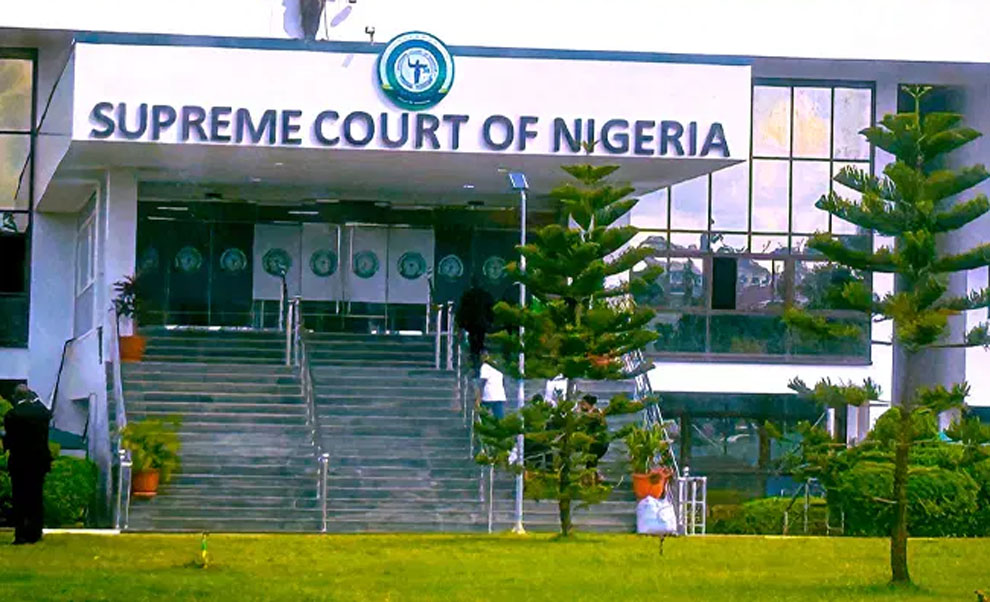
Niger State drags FG to S’Court over 13% derivation
Niger State Government has taken the Federal Government to the Supreme Court to challenge its omission as a beneficiary of the 13 per cent derivation.
The state, in the originating summons it filed through its team of lawyers led by Mr. Mohammed Ndarani, SAN, listed the Attorney-General of the Federation and Minister of Justice as the sole defendant in the case.
The plaintiff, among other things, urged the apex court to determine whether Niger State does not qualify to be classified among the states that produce natural resources and therefore is entitled to 13 percent derivation within the meaning of 162(2) of the 1999 Constitution, as amended.
It further prayed the court to interpret and apply section 232 (1) & (2) of the Constitution to compel its inclusion by FG, in line with the Enactment of Allocation of Revenue (Federation Account, etc.) Act, 2004.
The state alleged a failure to include remittances from proceeds of fiscal revenue generated and accrued through Hydroelectric Power dams within its territory, which it argued formed part of resources it contributes to the overall electricity generation to the national grid since 1968.
According to the plaintiff, it hosts four major hydroelectricity dams: Kainji Dam, Jebba Dam, Shiroro Dam and Zungeru Dam, which serve as a power house for electricity supply to various states in the country.
It argued that through these power stations, FG extended electricity supply to the Republics of Benin, Togo and Niger.
READ ALSO:
- FG reacts to Nigerians-must-go protests in Ghana
- World championship: Tobi Amusan, others face mandatory gender test
- NLC gives FG two weeks to refund deducted employees compensation
The state said its decision to list the AGF as the sole defendant in the matter was because he statutorily offers oversight legal advice function and represents the Federal Government, including the Accountant-General of the Federation.
It noted that the Accountant-General has the constitutional role of preparing the nation’s financial statements arising from collection and receipts of income, fees, rentals and taxes, as well as payments from the federation account.
“That the attorney general at all times is charged with legally advising and representing the Auditor-General of the Federation and the Revenue Mobilization Allocation and Fiscal Commission that oversees revenue accruing to, and disbursement of such funds from the Federation Account,” it argued.






metro
‘We Can’t Raise N1bn’ — Parents of Abducted Corps Members Beg Olubadan
‘We Can’t Raise N1bn’ — Parents of Abducted Corps Members Beg Olubadan
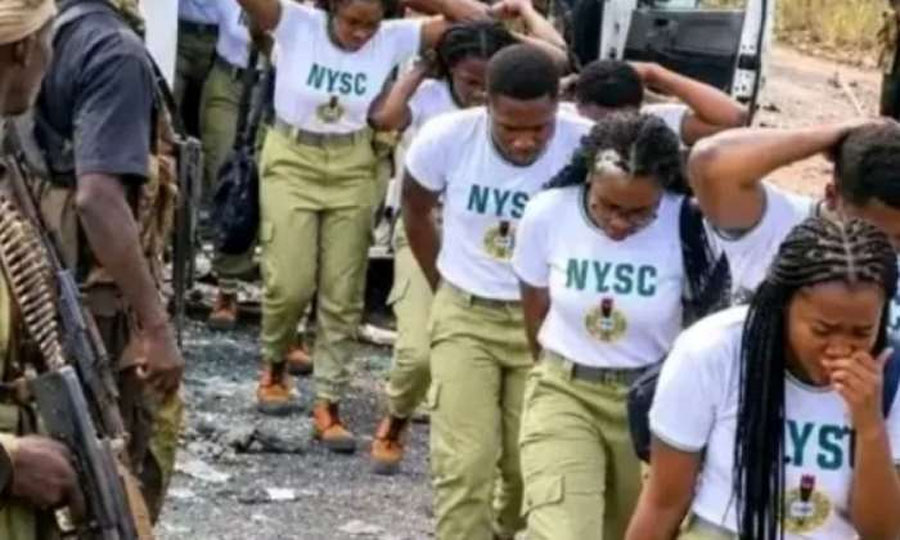
Parents of prospective NYSC members abducted in Imo State have appealed to the Olubadan of Ibadanland, Oba Rashidi Ladoja, for urgent help after their children were reportedly held for ransom.
The parents visited the Olubadan at his private residence in Bodija, Ibadan, on Saturday, seeking intervention following a reported N1 billion ransom demand.
According to the families, the abductors have been contacting them through the victims’ phones and demanding N50 million per victim. They reportedly gave the families 24 hours to raise the money, threatening that the victims could be harmed if the demand was not met.
The parents said they could not afford the ransom and appealed to Ladoja and the authorities to intervene.
“There is no way we can raise such an amount at this period. Baba, kindly assist us. Don’t let them kill our children,” they pleaded.
The NYSC-bound graduates were travelling from Ibadan to their orientation camps when gunmen attacked two buses along the Owerri-Onitsha Road around Umunoha in Mbaitoli Local Government Area of Imo State on Thursday, October 1.
READ ALSO:
- 2027: Atiku, Amaechi Reiterate Plan to Cut Petrol Prices
- 2027: Tompolo Mobilises Taraba for Tinubu, Donates 25 Campaign Vehicles
- Osun Iyaloja-General Row: Ataoja Explains Asindemade’s Reinstatement
There has been a discrepancy over the number of victims and the corresponding ransom figure. An earlier account put the number of abducted prospective corps members at 19, which would amount to N950 million at N50 million per person. However, the affected families later told the Olubadan that 20 graduates remained in captivity, putting the ransom demand at N1 billion.
The families were accompanied to the Olubadan’s residence by Oyo State Commissioner of Police, Olugbenga Abimbola, and the Aseyin of Iseyinland, Oba Sefiu Adeyeri.
Some of the parents also raised concerns about the transport company involved in the journey, accusing it of withholding information about the victims’ next of kin. They called for a thorough investigation into the circumstances surrounding the abduction.
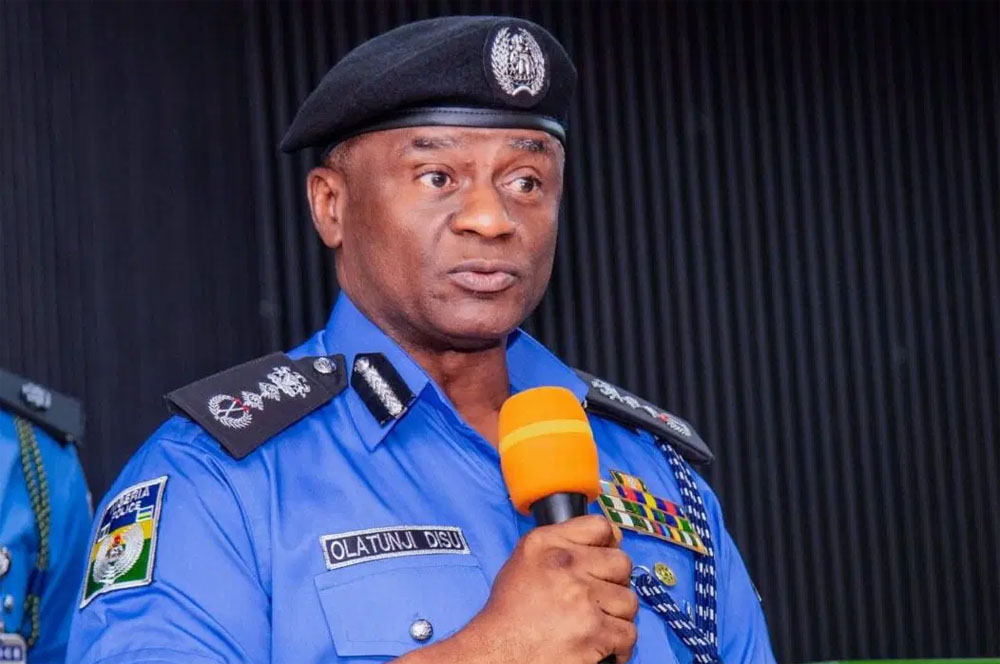
The Nigeria Police Force has intensified efforts to secure the victims’ release, with IGP Olatunji Disu deploying the Deputy Inspector-General of Police in charge of Operations, Shehu Nadada, to coordinate the operation in Imo State.
Security agencies have also located the suspected kidnappers’ hideout through drone surveillance but reportedly delayed an immediate assault after intelligence indicated that the camp could be protected with improvised explosive devices.
Ladoja assured the distressed families that efforts were being made to secure the safe return of their children, while the Oyo Police Command said it remained in contact with its Imo counterpart.
The incident has renewed concerns over the safety of graduates travelling to NYSC orientation camps, particularly along highways connecting different parts of the country.
‘We Can’t Raise N1bn’ — Parents of Abducted Corps Members Beg Olubadan
metro
Osun Iyaloja-General Row: Ataoja Explains Asindemade’s Reinstatement
Osun Iyaloja-General Row: Ataoja Explains Asindemade’s Reinstatement
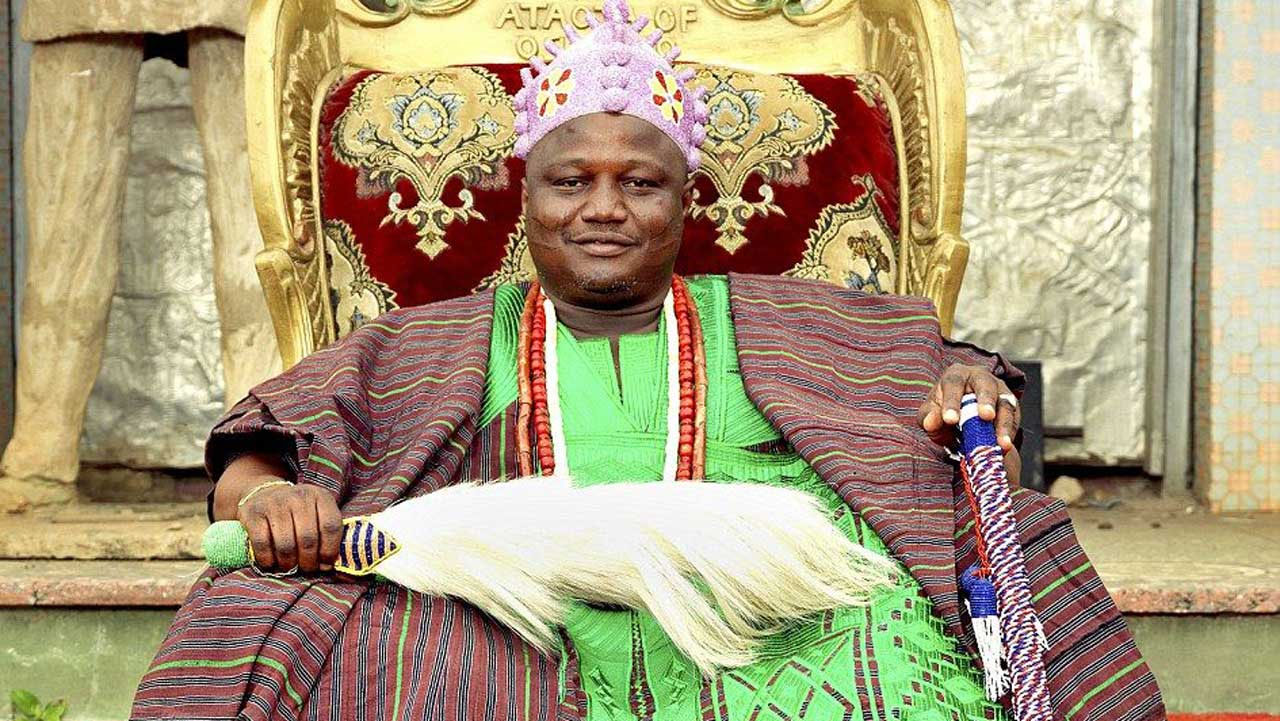
The Ataoja of Osogbo, Oba Jimoh Oyetunji Olanipekun, has explained his decision to reinstate Chief Awawu Asindemade as the Iyaloja-General of Osun State, amid a fresh disagreement with Governor Ademola Adeleke over who has the authority to occupy the position.
The controversy erupted after the traditional ruler announced Asindemade’s return to the position and restored her royal beads as Iyaloja-General.
In a video that circulated on Saturday, the Ataoja said he had previously instructed Asindemade to remain calm and support Governor Adeleke’s re-election bid during the August 15 governorship election.
According to the monarch, Asindemade complied with the request, prompting him to restore her to the position.
The Ataoja said he was the person with the authority to appoint the Iyaloja-General, adding that his decision was intended to promote peace between Asindemade and the governor.
READ ALSO:
- Ogun 2027: YPP, BOOT Reject Suit Withdrawal Against Adeola
- “Sometimes, I Wonder Why I Married My Husband” — Omotola
- State Police Bill Faces Hurdle as Only Four States Approve
The development, however, was immediately rejected by the Osun State Government, which maintained that Mrs Mary Oyebode remains the recognised Iyaloja-General of the state.
Governor Adeleke, through his spokesperson, Olawale Rasheed, said the authority to appoint the Iyaloja-General rests with the state government.
The governor said any appointment announced by another authority, including the Osogbo Royal Palace, had no legal effect and urged market associations and women across the state to disregard any announcement recognising another occupant.
The government maintained that Oyebode continues to enjoy its full recognition and support as the duly appointed Iyaloja-General of Osun State.
Asindemade previously occupied the position during the administrations of former governors Rauf Aregbesola and Adegboyega Oyetola before Adeleke replaced her with Oyebode in 2023.
The latest dispute has therefore revived the controversy over the Iyaloja-General appointment in Osun, with the Ataoja and the state government presenting different positions on who has the authority to determine the occupant of the office.
The Ataoja’s intervention has also highlighted the political dimension of the dispute, as his explanation linked Asindemade’s reinstatement to her reported support for Adeleke during the recent governorship election.
Governor Adeleke, meanwhile, has urged institutions and individuals to operate within their legally assigned mandates and avoid actions capable of disturbing peace in the state.
For now, Mrs Mary Oyebode remains the Iyaloja-General recognised by the Osun State Government, while Chief Awawu Asindemade has the backing of the Ataoja of Osogbo following the monarch’s declaration of her reinstatement.
Osun Iyaloja-General Row: Ataoja Explains Asindemade’s Reinstatement
metro
State Police Bill Faces Hurdle as Only Four States Approve
State Police Bill Faces Hurdle as Only Four States Approve
The push to establish state police in Nigeria is facing a fresh legislative hurdle, with only Edo, Osun, Oyo and Rivers states having so far approved the proposed constitutional amendment.
The development comes as several other State Houses of Assembly are either still studying the proposal, yet to begin deliberations or say they have not received the harmonised bill from the National Assembly.
The National Assembly transmitted the 1999 Constitution (Sixth Alteration) Bill, 2026 to the 36 state legislatures on September 16 for consideration and concurrence.
The state assemblies were asked to communicate their resolutions within 30 days. However, the 30-day period is an administrative target rather than a constitutional deadline.
Under Section 9 of the 1999 Constitution, a constitutional amendment requires the approval of at least two-thirds of the 36 state Houses of Assembly before it can proceed to the next stage.
This means at least 24 state legislatures must approve the proposed amendment.
With only four states currently on record as having approved the bill, 20 more state assemblies must give their concurrence for the constitutional threshold to be met.
In the South-West, Osun and Oyo have approved the proposal, while Ondo and Ekiti are still studying it. Ogun has constituted a committee to examine the bill before it is considered by the full House.
READ ALSO:
- Benue Boat Accident: One Dead, Eight Missing as Mourners’ Boat Capsizes
- Court Restricts Osun Accounts Over $13.9m Arbitration Award
- Tension as Kidnappers Threaten to Kill Abducted Oyo Corps Members
The Lagos State House of Assembly has previously endorsed the establishment of state police in principle and urged the 36 state legislatures to accelerate consideration of the constitutional amendment. However, its formal approval of the latest constitutional amendment package had not been publicly confirmed.
In Osun, lawmakers passed the bill clause by clause on September 22 without amendments and began arrangements to transmit their resolution to the National Assembly.
The Oyo State House of Assembly also passed the bill after considering its provisions clause by clause at plenary. The approval made Oyo the fourth state to formally endorse the proposed amendment.
In the South-South, Rivers and Edo have approved the amendment, while Cross River has commenced consideration after the bill passed its first reading.
The Delta State House of Assembly has confirmed receipt of the bill and is consulting stakeholders before taking a position, while Bayelsa had yet to formally debate or vote on the proposal.
In Rivers, lawmakers unanimously endorsed the amendment, with Speaker Martin Amaewhule saying the proposed framework would help strengthen Nigeria’s security architecture.
The proposal seeks to create a constitutional framework for State Police Services while retaining the Nigeria Police Force as the federal police service.
In the Northern states, the process has been slower. Some assemblies have received the bill but are yet to debate or vote on it, while others say the National Assembly has not formally transmitted the document to them.
READ ALSO:
- Oyo Corps Members Abductors Demand ₦950m Ransom, Threaten to Kill Victims
- Adeleke Rejects Ataoja Palace Appointment, Reaffirms Oyebode as Osun Iyaloja-General
- Flydubai Co-Pilot Attacked Captain With Axe in Attempted Terrorist Act, UAE Says
Kano, Kwara, Kebbi, Taraba and Gombe were among states that reported not having received the bill at the time of the latest checks.
Kogi had received the proposal but had yet to deliberate on it, while Yobe had received it but had not listed it for consideration. Borno had read the bill at plenary but had yet to take a position.
Plateau had commenced consideration, while Bauchi had constituted a committee to examine the proposal.
The proposed state police system is being promoted against the backdrop of persistent security challenges across Nigeria, including kidnapping, banditry, communal violence and other forms of criminality.
Supporters argue that decentralising policing would bring security operations closer to local communities, improve intelligence gathering and enable faster responses to threats.
However, concerns remain over funding, accountability, political interference and the possibility of state police being used for partisan purposes.
The proposed constitutional framework is therefore expected to address issues including national minimum policing standards and the relationship between state police services and the federal police structure.
For the amendment to move forward, the proposal must first secure the support of at least 24 of the 36 State Houses of Assembly.
With only four states having approved it so far, the proposed state police bill still faces a substantial legislative hurdle before Nigeria can move to the next stage of the constitutional amendment process.
State Police Bill Faces Hurdle as Only Four States Approve
-
 metro3 days ago
Workers to Begin Nationwide Warning Strike Over Petrol Price, Wage Award
-
 metro3 days ago
[UPDATED] Imo Highway Attack: 10 Rescued after Gunmen Abducted NYSC Prospective Members
-

 Entertainment2 days ago
Phyna Knocks Out Nkechi Blessing in Fourth Round, Wins ₦50m, New Car
-
 Business3 days ago
Dangote Sets 40-Month Deadline for $16bn East Africa Refinery in Kenya
-

 metro2 days ago
2027 Hajj: Nigeria Secures 10,000 Extra Slots, Allocation Hits 60,000
-

 metro22 hours ago
NYSC Kidnap: Abductors Demand N950m for 19 Prospective Corps Members in Imo
-
 News3 days ago
Atiku Challenges Tinubu’s Prosperity Claim, Says Nigerians Can Barely Afford to Live
-

 metro3 days ago
Nigeria at 66: MURIC Urges Unity, Peace, Justice Ahead of 2027 Elections