

News
Nigeria at 61: Full text of Buhari’s Independence Day speech
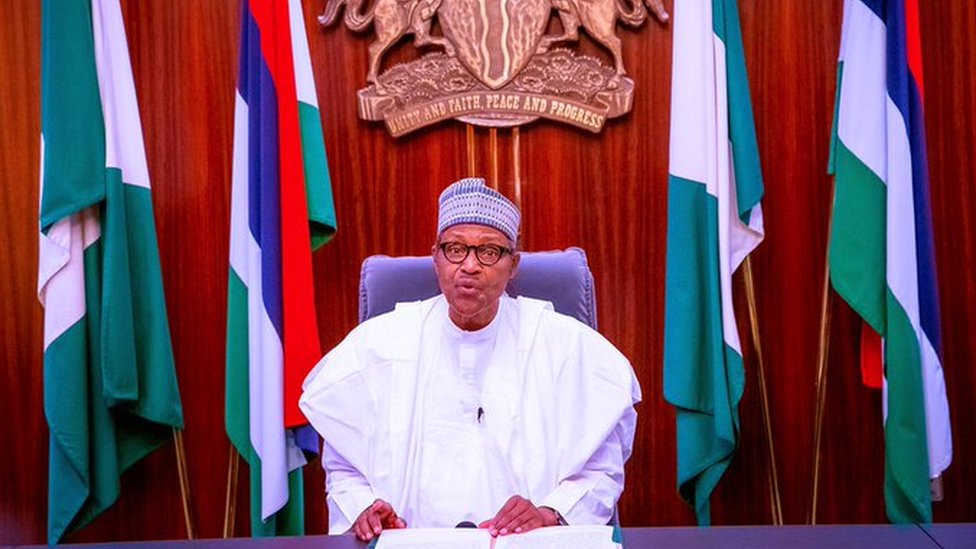
President Muhammadu Buhari on Friday reiterated his call for peace and unity in Nigeria. In his Independence Day speech, the President said all hands must be on deck for a prosperous nation. Buhari also reeled out his efforts and provided statistics of achievements in different sectors.
The full speech:
1. Citizens of Nigeria, it is with full gratitude to God that today, we celebrate Nigeria’s sixty first Independence Anniversary.
2. For 1st of October 1960 to happen, all hands were on deck. East, West, North all came together to celebrate freedom. Today should not only serve as a reminder of the day the British handed over the reins of power to Nigerians, but also unified Nigerians from all ethnic groups, religions and regions.
3. Today, despite the challenges we face, most Nigerians still maintain the spirit of 1st October. That positive outlook and determination to make Nigeria a peaceful and prosperous nation. It is due to this collective attitude that Nigeria doggedly continues to remain a united and indivisible nation.
4. Fellow Nigerians, the past eighteen months have been some of the most difficult periods in the history of Nigeria. Since the civil war, I doubt whether we have seen a period of more heightened challenges than what we have witnessed in this period.
5. Our original priorities for 2020 were to continue stabilising our economy following the deep recession while restoring peace in areas confronted with security challenges. But the COVID-19 pandemic and its devastating impact on all nations meant we needed to shift gears and re-strategise.
6. Nigerians came together as one to fight against COVID-19. It is this attitude and by the special grace of God, we continue to survive the pandemic as a nation and indeed, provide leadership and example at regional and international levels.
7. The doomsday scenario predicted for our country never came. Even as the Delta variant continues to spread, we have built the capacity we need to respond now and into the future.
8. I will therefore appeal to Nigerians not to take COVID lightly, adhere to public health and social measures, put your mask on and get vaccinated. We can control this pandemic, but it requires effort on everybody’s part. The investments we made in response to COVID-19 will also serve our country to tackle any future disease outbreaks or pandemics.
9. Despite the global inequity in access to vaccines, the Government of Nigeria has continued to explore all available options to ensure Nigerians have free access to safe and effective vaccines.
10. Some five million vaccine doses have been administered to Nigerians through efforts led by the National Primary Health Care Development Agency and we will continue to explore options for purchase or acquisition of vaccines such as through COVAX and the African Vaccine Acquisition Trust.
11. I will take this opportunity to remind the global community that the current state of access to COVID-19 vaccines is unacceptable. We cannot afford a situation where a handful of countries keep the global vaccine supply to themselves at the expense of other nations.
12. We must act now to accelerate equitable distribution of COVID-19 vaccines. This is the message I conveyed to the international community in New York last week.
13. As we push to source vaccines for our immediate needs, we shall invest more to support our pharmaceutical and research agencies to come up with ideas for locally developed vaccines. Should another pandemic arise in the future, Our question is simple; will Nigeria be ready?
14. Accordingly, I have directed the Ministries of Finance, Budget and National Planning, Health, Education and Science and Technology to work with Nigerian and International pharmaceutical companies and research organisations to enhance Nigeria’s domestic pharmaceutical capacity.
15. Already, the Nigerian Sovereign Investment Authority is raising a $200 million fund for this initiative that will complement the Central Bank of Nigeria’s ongoing N85 billion Healthcare Sector Research and Development Intervention Scheme to support local researchers in the development of vaccines and drugs to combat communicable and non-communicable diseases, including COVID-19.
Fellow Nigerians, this is just the beginning.
16. Similarly, on our approach to food security, I am proud to announce Nigeria has commenced its journey to pharmaceutical independence.
17. This journey, which will take years to achieve but will ultimately result in Nigerian based companies developing the Active Pharmaceutical substances and competence needed for us to make our own drugs and vaccines.
Fellow Nigerians,
18. As our economy continues to open after the COVID-19 related lockdowns, we have also seen the resurgence of insecurity in certain parts of the country.
19. In the last four months, the gallant men and women of the Military and Security Agencies have made tremendous progress in addressing these new security challenges. We are taking the fight to our enemies from all angles and we are winning.
20. Earlier this year, I launched the Integrated National Security and Waterways Protection Infrastructure, the Deep Blue Project, which is designed to secure Nigerian waters up to the Gulf of Guinea. I am happy to inform Nigerians that we have taken delivery of key assets for this project and very soon, its impact will be felt.
21. In the North East region alone, over eight thousand Boko Haram terrorists have surrendered.
22. To support our surge approach to fighting banditry, the Nigerian Armed Forces have recruited over 17,000 personnel across all ranks. Furthermore, I have also approved for the Nigerian Police Force to recruit 10,000 police officers annually over the next six years.
23. I am also pleased to note that most of the Air Force platforms we acquired over the past three years have started to arrive in Nigeria. These will positively impact our security operations in all parts of the country.
24. In line with section 14(2)(b) of the 1999 Constitution (as amended), the security and welfare of Nigerians continue to be the prime focus on which programmes and projects of our government revolves.
25. Therefore, as a Government, we are ready to arrest and prosecute all persons inciting violence through words or action. Our resolve for a peaceful, united and one Nigeria remains resolute and unwavering.
26. That said, our hope is not to fight for peace. We can always settle our grievances peacefully without spilling any blood.
27. I will therefore take this opportunity, on this special day that symbolises the unity and oneness of our great nation, to ask all Nigerians to embrace peace and dialogue, whatever your grievances.
28. The seeds of violence are planted in people’s heads through words. Reckless utterances of a few have led to losses of many innocent lives and destruction of properties.
29. Such unfiltered and unsubstantiated lies and hate speeches by a few evil persons must be stopped. Our media houses and commentators must move away from just reporting irresponsible remarks to investigating the truth behind all statements and presenting the facts to readers.
30. We must all come out and speak against the lies being peddled. At this point, I would want to sincerely appreciate the large number of our Traditional, Religious and Community leaders as well as other well-meaning Nigerians who, in their various fora are openly spreading the message of peaceful co-existence and conflict settlement through dialogue in their respective communities.
31. Nigeria is for all of us. Its unity is not negotiable. And its ultimate success can only be achieved if we all come together with a common goal of having peace and prosperity for our nation.
32. We shall continue to work on dialogue based solutions to address legitimate grievances. But we remain ready to take decisive actions against secessionist agitators and their sponsors who threaten our national security.
33. The recent arrests of Nnamdi Kanu and Sunday Adeyemo, and the ongoing investigations being conducted have revealed certain high-profile financiers behind these individuals. We are vigorously pursuing these financiers including one identified as a serving member of the national assembly.
Fellow Nigerians,
34. This is a clear example of how people abandon their national leadership positions for their selfish gains. Instead of preaching unity, they are funding and misleading our youth to conduct criminal acts that sometimes lead to unfortunate and unnecessary loss of lives and property.
35. As the so-called leaders run abroad to hide, our innocent youths are misled and left in the streets to fight for their senseless and destructive causes.
36. Government will continue, with greater level of peoples’ participation and in collaboration with our international partners, to improve the security architecture, reduce enabling environment for criminality to thrive and eliminate opportunities for terrorism financing.
37. Fellow Nigerians, our unrelenting effort at resolving an almost two-decade stalling on the management of our Petroleum resources and ensuring equitable consideration to our host communities has resulted in the enactment of the Petroleum Industry Act, 2021.
38. This Act not only overhauls the Institutional, regulatory and fiscal framework of the Petroleum Industry but also reduces the previous opacity associated with this sector.
39. This is the first step to the reforms as the process is a continuous one. Already, to further improve the governance framework, I have sought for an amendment of sections 11(2)(b) and 34(2)(b). We will also continue to review and amend as appropriate.
40. At this juncture, it is very appropriate that I salute the leadership and members of the Ninth Assembly for their patriotism, dedication to duty, candour and most importantly the dispatch with which they have enacted legacy legislations for this nation. I do not take such level of cooperation for granted and hope it continues for the overall efficiency of the Federal machinery.
41. Nigeria’s Roadmap on Local Refining is on track with the Commissioning of a Modular refinery in Imo State.
42. A second is scheduled for commissioning by the end of this year in Edo State and the third one in Bayelsa State by 2022.
43. In addition to the modular projects, we also have the two mega refinery projects coming up in Lagos and Akwa Ibom States.
44. As these refineries are commissioned, more employment opportunities are created and there would be increased petroleum products available for local consumption which will significantly reduce our reliance on importation.
45. In further demonstrating our plan to reduce our dependence on oil and tapping from our enormous gas resources, this administration remains committed to the “Decade of Gas” Initiative, which is aimed at bringing to focus the utilization of our huge gas resources.
46. Already, we are supporting and promoting various gas-based projects including NLNG Train 7 and the mega urea and ammonia projects in the South-South region.
47. As we continue to optimise and enhance our oil and gas sector, I am also proud and delighted to state that our economic diversification strategy remains on course with the persistent increase in Non-Oil Sector contribution to GDP.
48. We recovered from economic recession in quarter four of 2020 with a GDP growth rate of 0.11%, and grew by 0.51% and 5.01% in real terms in the first and second quarters of 2021.
49. The Agricultural sector remains key to our economic diversification efforts as the sector has been a consistent driver of the non-oil sector contributing 22.35% and 23.78% to the overall GDP in the first and second quarter of 2021.
50. We have seen significant private sector investments in almost all areas of the agricultural value chain. And these have continued even during the COVID-19 pandemic.
51. Unfortunately, as our food production capacity has increased, food prices have been going up due to artificial shortages created by middlemen who have been buying and hoarding these essential commodities for profiteering.
52. To address this, I am hereby directing the Ministry of Agriculture and Rural Development to rehabilitate the National Food Reserve Agency and also work with security agencies, the Nigerian Commodity Exchange, and the National Assembly to find a lasting solution to these disruptive and unpatriotic hoarding activities.
53. To further enhance food production, we have completed several new dams and are in the process of rehabilitating several River Basin Development Authorities to enhance ground water supply for rainfed agriculture as well as surface water for irrigation agriculture.
54. The water projects we completed between 2015 to 2020 have improved Nigerian’s access to potable water to 71% between 2015 and 2020. This means 12.5 million additional Nigerians now have direct access to potable water.
Fellow Nigerians,
55. This Government remains concerned by the significant transportation infrastructure deficit we have. Addressing the challenges our commuters and lorry drivers face on the motorways is still a high priority to us.
56. To complement our budgetary allocations, the Presidential Infrastructure Development Fund and the Road Infrastructure Development and Refurbishment Investment Tax Credit Scheme, we recently established a N15trillion Infrastructural Corporation of Nigeria Limited (INFRACO), which is expected to begin operation by the fourth quarter of this year.
57. INFRACO will also focus on leveraging resources on a public-private sector basis for infrastructural development in Nigeria.
58. We hope through these innovative programs, the additional cost burden on individuals and businesses because of inefficient logistics operations will be reduced and ultimately, eliminated.
59. We currently have over 13,000 kilometres of roads and bridges under construction all over the country of which a fair percentage have been completed.
60. As we fix our roads, we also continue to extend and upgrade Nigeria’s railway network with the notable opening of the Warri- Itakpe standard gauge rail line.
61. To increase capacity, we have introduced more locomotives, coaches and wagons including the establishment of a Wagon Assembly in Kajola, Ogun State.
62. The sea ports however still remain problematic. The effect of our various interventions to reduce the gridlocks and inefficiencies have been slower than expected.
63. However, the implementation of the Electronic Call-Up System as well as the conversion of the Lillypond Container Terminal to a Vehicle Transit Area will further enhance the ease of cargo evacuation.
64. Our prioritisation of developing Nigeria’s Digital Economy has positively impacted the contribution of the ICT sector to our GDP.
65. We hope our present efforts to ensure all Nigerians use a National Identification Number as well as our planned roll-out of the fifth generation (5G) network technology will ensure we stay in line with the global innovation curve as a Nation.
66. As we embrace the digital economy in Nigeria, we are fully aware of the prospects and the perils. Our policies have been developed to enable Nigerians to take advantage of the prospects and avoid the perils of digital technologies.
67. Social media is a very useful platform that has enabled millions of Nigerians to connect with loved ones, promote their businesses, socialise, and access news and other information.
68. However, recent events have shown that the platform is not just an innocuous platform for information dissemination.
69. Rather some users have misused the platform to organise, coordinate, and execute criminal activities, propagate fake news, and promote ethnic and religious sentiments.
70. To address these negative trends, the Federal Government of Nigeria suspended the operations of Twitter in Nigeria on June 5, 2021 to allow the Government put measures in place to address these challenges.
71. Following the suspension of Twitter operations, Twitter Inc. reached out to the Federal Government of Nigeria to resolve the impasse. Subsequently, I constituted a Presidential Committee to engage Twitter to explore the possibility of resolving the issue.
72. The Committee, along with its Technical Team, has engaged with Twitter and have addressed a number of key issues. These are:
a. National Security and Cohesion;
b. Registration, Physical presence and Representation;
c. Fair Taxation;
d. Dispute Resolution; and
e. Local Content.
73. Following the extensive engagements, the issues are being addressed and I have directed that the suspension be lifted but only if the conditions are met to allow our citizens continue the use of the platform for business and positive engagements.
74. As a country, we are committed to ensuring that digital companies use their platform to enhance the lives of our citizens, respect Nigeria’s sovereignty, cultural values and promote online safety.
75. Nigeria’s progressive diplomacy continues to manifest through growing numbers of highly placed Nigerians in positions of regional and global influences. Very recently, Nigeria won election for the position of Commissioner for the expanded Political, Peace and Security Affairs of the African Union.
76. Our persistent calls for a reorganized and reformed ECOWAS, to make the organization citizens-sensitive, paid off with the acceptance by the Authority of Heads of State and Governments of ECOWAS to commence the agreed reforms in the organization ahead of the next elections of the organization’s principal officers in December this year.
77. At the African Development Bank, World Trade Organization and indeed, the United Nations, footprints of Nigeria’s Diplomacy are clearly evident.
78. We remain confident that our goal of lifting 100million Nigerians out of poverty in 10 years is achievable.
79. Considering the positive impact of our Social Investment Programs, I recently approved an increase in the number of N-Power program beneficiaries from 500,000 to 1,000,000.
80. Out of this, 510,000 have started the programme while the competitive selection process for onboarding the outstanding 490,000 beneficiaries is in progress.
81. The National Home-Grown School Feeding Programme is currently being implemented in 35 States of the Federation and the FCT. Over 103,000 women have been engaged and empowered as cooks under the programme, while about 10 million pupils are being fed across public primary schools in the country.
82. To grant increased access to credit to the most poor and vulnerable, I have directed an increase in the disbursement of Government Enterprise and Empowerment Programme loans to an additional one million beneficiaries laying more emphasis on the smallholding farmers through the farmers Moni program.
Fellow Nigerians,
83. For far too long we have neglected the centrality of the civil service as the engine of governance and this has manifested in ineffective service delivery.
84. There is widespread discontent and disillusion about the efficiency and probity of our civil service.
85. It is for this reason that we are refocusing the Nigerian Civil Service to provide World class service to run our country.
86. The youths of this great country remain propellants for our today and provide guarantees that we would have a secure tomorrow.
87. It is for this reason that I remain focused on expanding opportunities for their participation in politics and governance.
88. Recent appointments of young people into positions of authority and their track record so far, gives me confidence that we need to bring more of them into governance and this I promise to do.
89. More specifically, to encourage Girl-Child Education, female scholarship schemes, life skills and digital literacy skills to boost girl’s enrolment, retention and completion of schooling, are all initiatives put in place to ensure gender balance in appropriately positioning our youths for positions of leadership.
90. The commitment of this Administration to the well-being of people living with disabilities remains unwavering.
91. Government recognises their contributions to development and I have, in this regard, directed that all relevant Government Agencies pay special attention to the peculiarities of different abilities in the implementation of policies and programmes.
92. Rape and Gender Based Violence remains a sore point in our Nation as in many countries worldwide and this was worsened during and after the outbreak of the COVID-19 pandemic.
93. We are currently engaging Heads of Courts to establish Specialised Courts for the speedy and seamless trial of Rape/Gender-Based offences especially to ensure that justice is done for child victims of sexual violence.
94. On the other hand, work has advanced in the reformation, reintegration and reunification of Minors involved in one crime or the other.
95. The reformation in our Correctional Services has manifested in an increase in modernised custodial centres and a transformation from strictly punitive to attitudinal changes so that criminals do not relapse into their previous lifestyle.
96. As we begin to celebrate our sixty one years as a Nation, we need to be conscious that Nigeria does not start and end with the Federal Government. This country is a great collective where Government at all arms and levels as well as the private sector, and more importantly individuals, have a role to play.
97. In particular, security is a bottom to top undertaking. Joining hands and hearts together would enable us to secure ourselves and our country.
98. I fully understand the anxiety of many Nigerians on the inability of this country to go beyond a never-ending potential for becoming a great nation to an actually great one.
99. A lot has been achieved in the last six years on many fronts: in infrastructure, social care, governance, Nigeria’s image and influence in Africa and the international community.
100. But critics misdiagnose incremental progress as stagnation. Since coming to power, this Administration has tackled our problems head-on in spite of the meagre resources. No government since 1999 has done what we have done in six years to put Nigeria back on track.
101. We shall continue to serve the country: listen to all and protect our democracy and country.
Thank you all and God bless the Federal Republic of Nigeria.






News
Jetour Nigeria displays hi-tech, luxury, art at Abuja Experience
Jetour Nigeria displays hi-tech, luxury, art at Abuja Experience
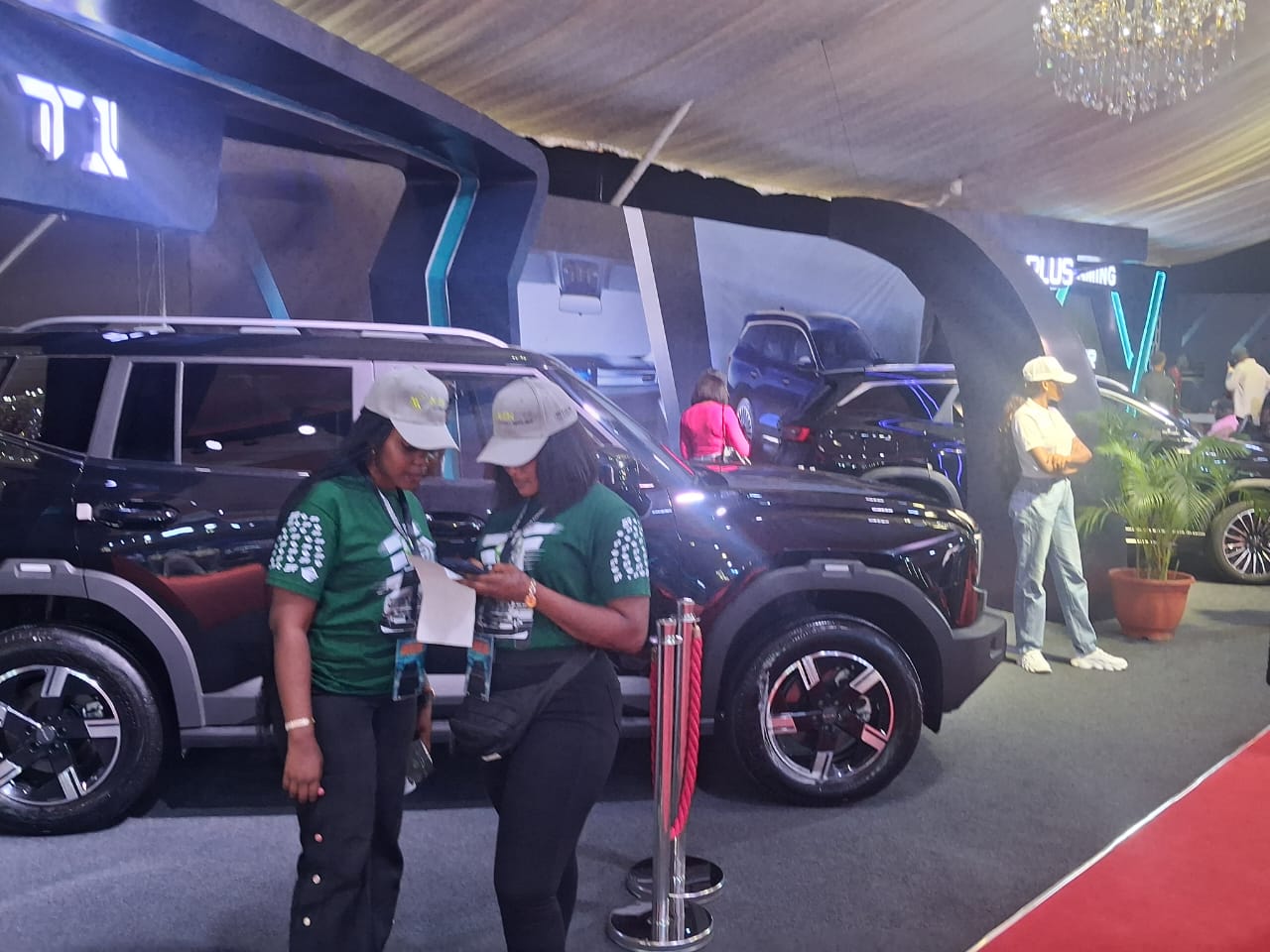
Jetour Nigeria has turned its Abuja Experience into a colourful fusion of hi-tech automobiles, luxury and art, attracting automobile enthusiasts, prospective buyers and art lovers to an exhibition designed to showcase a new dimension of motoring and lifestyle.
The three-day event, which opened on Tuesday at the Maha Event Centre, Area 8, Garki, Abuja, has brought together an impressive collection of Jetour SUVs and new-generation vehicles, alongside art displays that added colour and creativity to the automobile showcase.
Rather than a conventional vehicle exhibition, the Abuja Experience offered visitors an opportunity to interact with Jetour’s technology-driven vehicles, examine their luxury features and immerse themselves in an artistic presentation that appealed to both young and older enthusiasts.
Among the vehicles on display are the Jetour X50, X70 Plus, X70 PHEV, X90 Plus, T2, T2 PHEV, Dashing, Rely R8, G700, as well as the newly introduced T1 and F700.
The event, which ends today, Thursday, September 24, is the latest stage in Jetour Nigeria’s strategy of taking its products closer to customers while strengthening its presence in Abuja, the Federal Capital Territory and neighbouring states.
On the first day, discussions centred on Jetour’s product philosophy, technology, safety and the changing preferences of Nigerian motorists.
Speaking during the first panel session, Managing Director of New Era AutoVehicle Services, Kemi Koyejo, said Jetour’s growing product portfolio was designed to cater for the diverse needs of Nigerian motorists.
Koyejo described Jetour vehicles as a combination of luxury, safety and technology, stressing that there was “no one-size-fits-all product” because motorists have different needs and lifestyles.
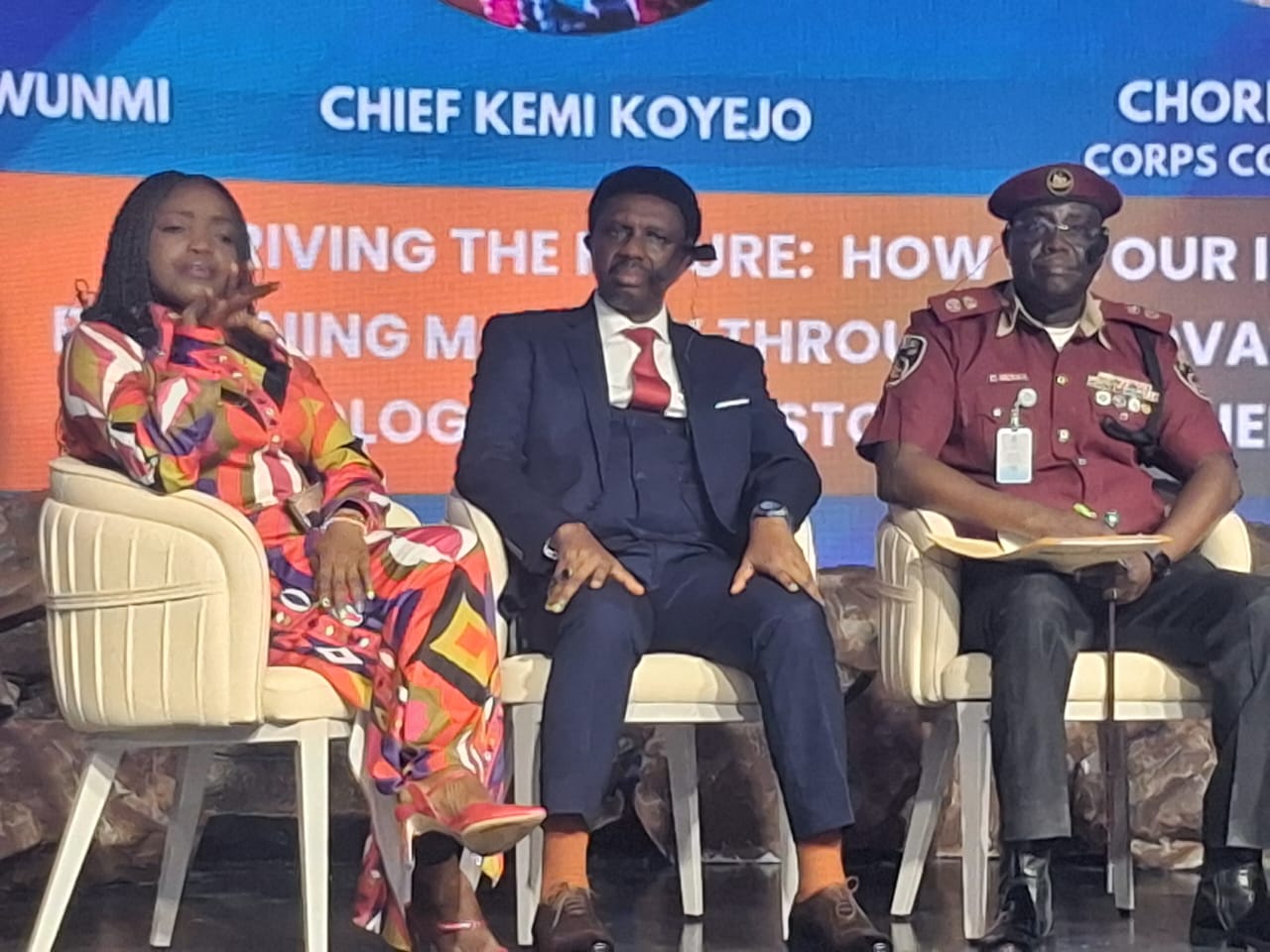
She explained the philosophy behind the Jetour name—“Jet plus Tour”—saying the brand was intentional about making mobility more enjoyable.
According to her, Jetour was “forward-looking”, with a product strategy covering petrol-powered vehicles, hybrids and plug-in hybrid technologies under its corporate tagline, “Drive Your Future.”
Executive Director, Elizade Nigeria Limited, Dr Ademola Philip-Adewunmi, identified after-sales support and spare-parts availability as critical to sustaining Jetour’s growth in Nigeria.
He disclosed that Jetour had sold about 1,000 units in Nigeria within three years, adding that motorists were increasingly researching and comparing vehicles before making purchasing decisions.
He said buyers now demanded a combination of aesthetics, technology, connectivity, performance and value for money.
Adewunmi also disclosed that Jetour vehicles come with a five-year or 150,000-kilometre warranty, while customers have access to trade-in opportunities.
On safety, Corps Commander Cherries Muta of the Federal Road Safety Corps said technologies deployed in Jetour vehicles, including sensors and driver-warning systems, could contribute to safer driving.
Art meets automobile
The second day introduced another dimension to the experience, as artworks were displayed alongside Jetour’s vehicles, creating a meeting point between automotive design, technology, luxury and contemporary art.
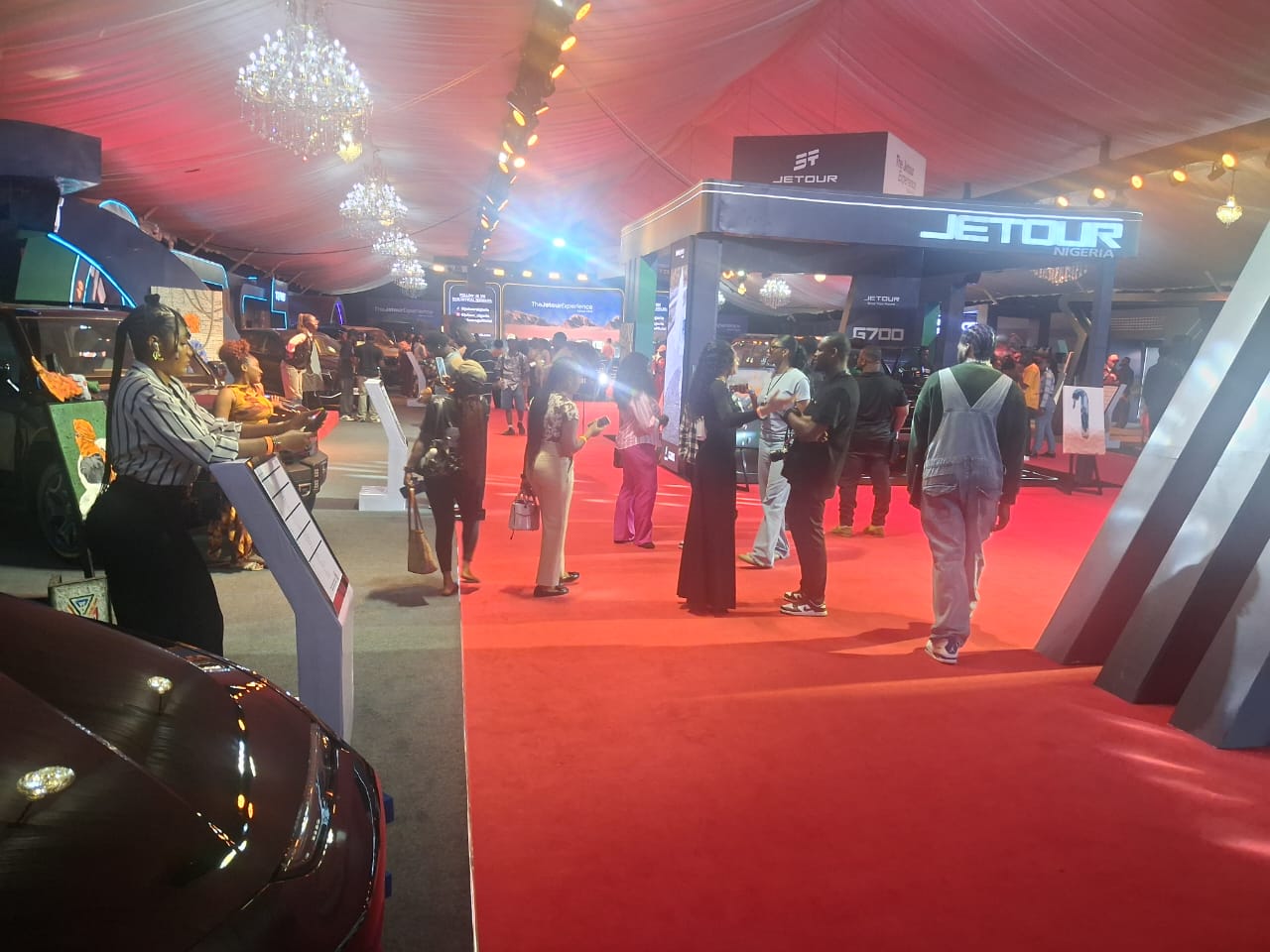
The art exhibition attracted an audience comprising young and older lovers of quality automobiles and art, with the producers explaining the concepts and intentions behind the works.
The presentation added a creative and cultural dimension to the automobile showcase, with visitors moving between the vehicles and artworks while engaging with the artists and exploring the ideas behind their creations.
The event also featured cultural performances and a second panel session focusing on mobility entrepreneurship and emerging opportunities across Nigeria.
Jetour Vice President, Yuan Anguo, thanked Nigerian customers for their confidence in the brand, assuring them that the company remained committed to developing its business in Nigeria and across Africa.
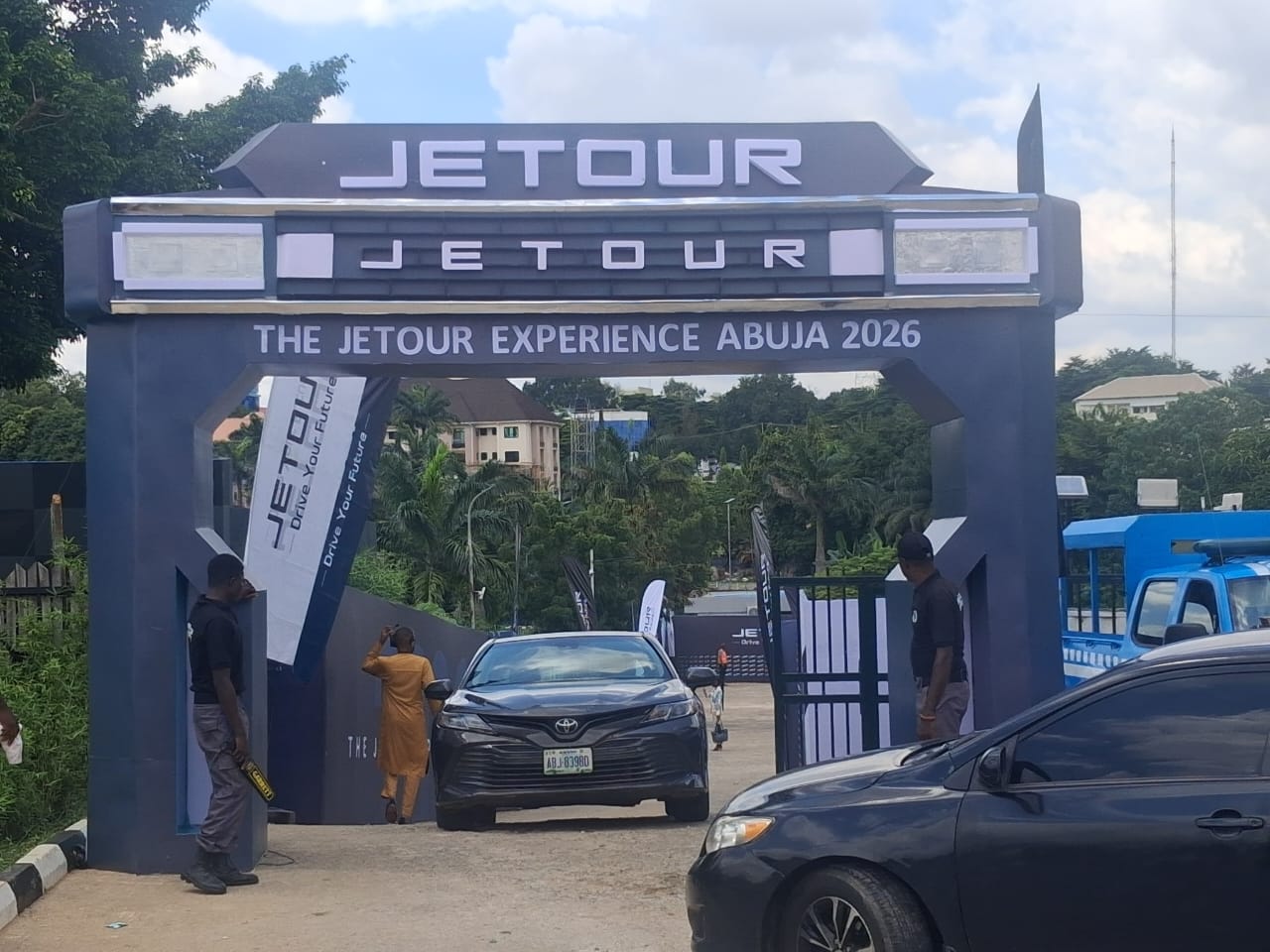
The Abuja Experience, according to the organisers, is part of Jetour Nigeria’s broader effort to deepen customer engagement, expand its market presence and present mobility not simply as transportation, but as an experience combining technology, comfort, lifestyle and creativity.
News
NLC Backs ₦500 Petrol Demand, Workers Propose ₦500,000 Salary
NLC Backs ₦500 Petrol Demand, Workers Propose ₦500,000 Salary
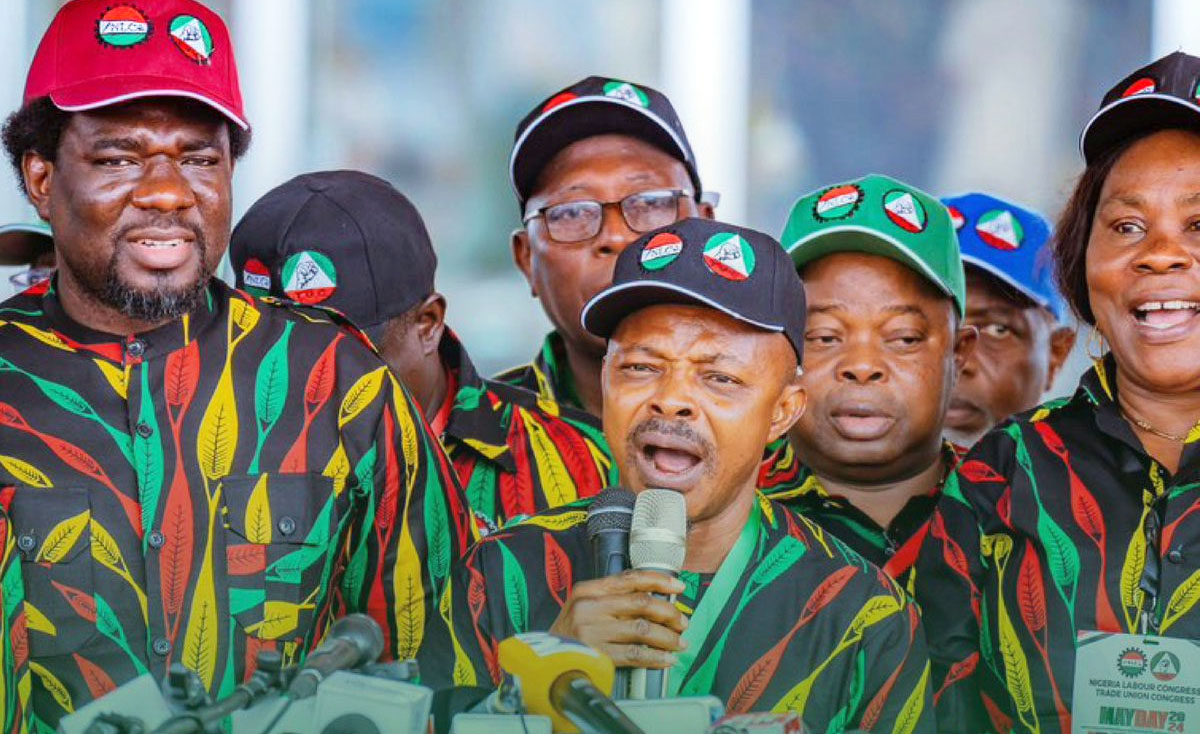
The Nigeria Labour Congress (NLC) has backed demands by public-sector workers for the Federal Government to reduce the price of petrol to ₦500 per litre, while the workers have proposed a minimum monthly salary of ₦500,000 for Grade Level 01, Step 1 officers under a new public-service salary structure.
The demands were contained in a letter by the Trade Union Side of the Joint National Public Service Negotiating Council (JNPSNC) to President Bola Ahmed Tinubu, amid renewed concerns over rising fuel prices and the worsening cost-of-living crisis.
The workers gave the Federal Government until September 30, 2026, to respond to their demands, which cover petrol prices, wage awards, salary reviews and negotiations for a new wage structure.
The JNPSNC called for an intervention capable of bringing the petrol pump price down to ₦500 per litre, arguing that the rising cost of fuel has significantly increased transportation expenses and contributed to higher prices of food and other essential goods and services.
The demand comes amid another increase in petrol prices in Nigeria, with pump prices rising in several parts of the country following higher crude oil prices in the international market.
The labour movement has argued that the impact of rising fuel costs extends beyond motorists, as increased transportation and energy expenses raise the cost of moving agricultural produce, manufacturing goods and other commodities.
The NLC has therefore called for measures to cushion workers and households from the effects of the latest price increases.
On wages, the JNPSNC proposed a new salary structure under which a Grade Level 01, Step 1 public servant would earn ₦500,000 monthly.
The figure is important because it is a proposal by the workers, not an approved national minimum wage.
The proposed ₦500,000 salary is also specifically linked to the public-service salary structure being sought by the JNPSNC ahead of January 2027. It should not be presented as though the Federal Government has agreed to increase Nigeria’s statutory national minimum wage to ₦500,000.
READ ALSO:
- UK Student Visa: 63 Countries Exempt From Proof of Funds, Nigeria Excluded
- Lagos Intensifies Surveillance as Adulterated Palm Oil Raises Food Safety Concerns
- Saudi Arabia Rejects Nigeria’s Request for More 2027 Hajj Slots
Nigeria’s current statutory national minimum wage remains ₦70,000 per month, following the 2024 wage agreement and legislation.
The workers are seeking negotiations for a new wage structure while also asking for an immediate Wage Award for employees at the Federal, State and Local Government levels as a short-term response to current economic pressures.
The proposed wage award is separate from the longer-term salary review and any future agreement on the national minimum wage.
The JNPSNC wants the National Salaries, Incomes and Wages Commission (NSIWC) to begin discussions with labour representatives and other stakeholders on the proposed wage award and salary adjustments.
The workers said rising inflation, transportation costs, food prices, housing expenses, healthcare costs and education fees had reduced the purchasing power of existing salaries.
They also called for salaries and allowances across the public service to be reviewed upward and for future salary adjustments to take inflation into account.
According to the workers, linking periodic salary reviews to inflation would help prevent employees’ earnings from losing substantial purchasing power between major wage negotiations.
The labour side also demanded subsidised transportation and affordable housing for public servants as part of measures to ease the pressure on workers.
On the petroleum sector, the workers backed calls for greater availability of crude oil in naira to local refineries, arguing that increased domestic refining and local crude supply could reduce exposure to international oil-market shocks.
The NLC has previously advocated measures to strengthen local refining and improve domestic energy security as part of efforts to reduce pressure on consumers.
The workers also rejected the idea of relying mainly on food palliatives to address the hardship, arguing that temporary relief does not adequately compensate for the loss of purchasing power caused by higher transportation and living costs.
They instead called for measures that would address the underlying drivers of the rising cost of living.
The latest demands come as the downstream petroleum market faces renewed price pressure despite increased domestic refining capacity.
Higher international crude prices have raised input costs for refiners, contributing to increases in the wholesale and retail prices of petrol.
The development has renewed debate over how much protection Nigeria’s expanding domestic refining capacity can provide against global oil-price movements.
For organised labour, however, the immediate concern is the effect of higher fuel prices on workers and households.
The JNPSNC expects the Federal Government to respond to its demands by September 30, while also looking ahead to negotiations for a new salary and wage framework from January 2027.
The council has indicated that it expects the President’s forthcoming Independence Day address to address some of the concerns raised by workers.
The proposed ₦500,000 salary therefore remains a labour demand awaiting negotiation and possible government consideration. It is not the current national minimum wage and does not mean that all Nigerian workers are automatically entitled to ₦500,000 monthly.
Similarly, the proposed ₦500 petrol price is a demand for government intervention and does not represent the current regulated or prevailing pump price across Nigeria.
The labour demands reflect growing pressure from organised workers for government action as households and businesses contend with higher fuel prices, transportation costs and living expenses.
NLC Backs ₦500 Petrol Demand, Workers Propose ₦500,000 Salary
News
MURIC Warns FG: Any Move Against Atiku Now Lacks Tact
MURIC Warns FG: Any Move Against Atiku Now Lacks Tact
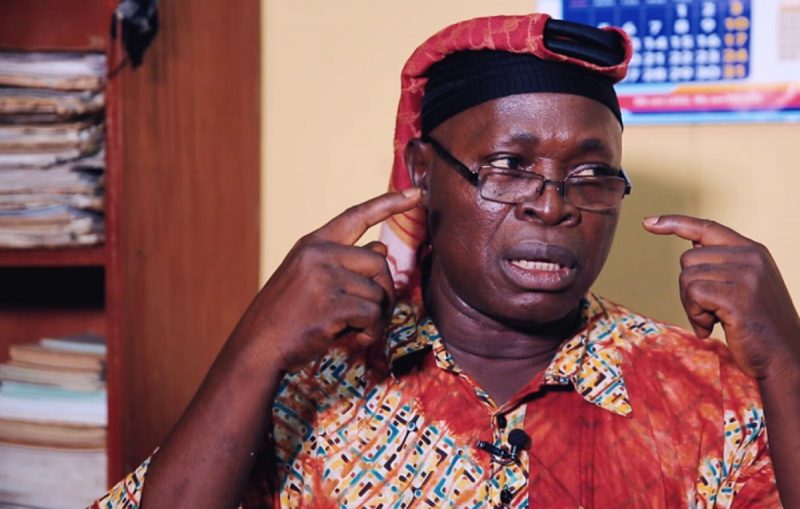
The Muslim Rights Concern (MURIC) has warned the Federal Government against any move to arrest, interrogate or otherwise take action against former Vice-President Atiku Abubakar over a fresh petition before the Economic and Financial Crimes Commission, saying such a step at this time could send the wrong signal to Nigerians.
The warning came as the controversy over a renewed call for the EFCC to investigate allegations dating back to Atiku’s tenure as Vice-President intensified, with opposition figures and the petitioner trading sharply different arguments over the matter.
In a statement issued on Tuesday, September 22, 2026, MURIC Founder and Executive Director, Professor Ishaq Akintola, said the government should exercise caution, particularly with the 2027 general elections approaching.
According to MURIC, the renewed allegations have assumed greater sensitivity because Atiku is now the presidential candidate of the African Democratic Congress and a leading opposition figure.
“We warn that such an attempt at this point in time will send the wrong signal to Nigerians,” the group said, adding that with the 2027 elections “at the doorsteps,” the Federal Government should carefully consider the consequences of any action against the former Vice-President.
MURIC described any such move as lacking tact and “short” of emotional intelligence, while urging the government to avoid conduct that could create the impression that state institutions were being used against political opponents.
The organisation also warned against what it described as a damaging “body language” capable of portraying Nigeria as a “banana republic.”
MURIC said that although the country had already lost some ethical ground, its democratic values and norms remained important safeguards that should not be compromised.
“Our corporate image in the global community is sinking fast,” the group added.
READ ALSO:
- JAMB Allows Candidates to Change Lost SIM, Email Addresses
- How Nigerians Can Get Federal High Court Affidavit Online Without Visiting Court
- Plateau Violence: Several Killed as Fresh Attacks Trigger Mass Exodus
The statement followed renewed controversy over a petition by former House of Representatives member, Ehiozuwa Agbonayinma, asking the EFCC to revisit allegations concerning Atiku’s activities while he was Vice-President.
Reports indicate that the petition relates to allegations investigated by the EFCC between 2005 and 2006. Agbonayinma reportedly gave the anti-graft agency a 14-day ultimatum to act and threatened legal action if the commission failed to respond.
Former Senator Dino Melaye has strongly opposed the renewed petition, describing it as an attempt to “resurrect the dead.” Melaye argued that the matter had previously been dealt with and questioned the basis for bringing it back almost two decades later.
The dispute, however, has escalated beyond the original petition, with Agbonayinma hitting back at Melaye and challenging him to produce documentary evidence for his claim that the allegations had been investigated and dismissed.
In a statement reported on September 20, Agbonayinma insisted that he was asking the EFCC to perform its statutory responsibility and argued that the substance of the allegations should be addressed rather than his personality or political affiliation.
“You cannot defend Atiku Abubakar from an EFCC petition by attacking me,” Agbonayinma was quoted as saying, while urging the anti-graft agency to determine whether the allegations warranted further investigation.
The renewed controversy has also brought attention to the distinction between a petition seeking investigation and a finding of criminal guilt. The existence of a petition does not, by itself, establish that the person named in it committed an offence.
There is also a historical legal dimension to the allegations. Reports on the previous proceedings state that a Lagos State High Court set aside an EFCC administrative indictment against Atiku in December 2006, while no criminal conviction against him resulted from the allegations.
Atiku has continued to deny wrongdoing and has challenged anyone with credible evidence against him to present it through the appropriate legal channels.
Meanwhile, there was no confirmed announcement from the EFCC, as of the latest reports reviewed, that it had arrested Atiku or formally invited him over the fresh petition. A separate and more recent EFCC investigation reported on September 20 concerns individuals connected to allegations surrounding the Mambilla Power Project, which is distinct from the 2005–2006 allegations at the centre of the present political dispute.
The MURIC intervention has therefore added a fresh dimension to an increasingly heated political controversy, with the organisation urging the Federal Government to exercise restraint and protect public confidence in Nigeria’s democratic institutions.
With the 2027 elections approaching, the dispute over the renewed EFCC petition is expected to remain a significant political issue, particularly if the anti-graft agency decides to take further steps.
For MURIC, however, the timing of any action is crucial. The organisation wants the Federal Government to ensure that whatever steps are taken by law-enforcement agencies are grounded in due process and do not create the perception of political persecution.
The group’s central warning is that Nigeria must guard its democratic reputation and avoid actions that could further erode public confidence in its institutions at a particularly sensitive period in the nation’s political calendar.
MURIC Warns FG: Any Move Against Atiku Now Lacks Tact
-
 News2 days ago
NLC Backs ₦500 Petrol Demand, Workers Propose ₦500,000 Salary
-

 Auto3 days ago
Jetour T1 Storms Abuja as Automaker Accelerates Nigeria Expansion
-
 Education3 days ago
JAMB Allows Candidates to Change Lost SIM, Email Addresses
-

 Politics2 days ago
Obi vs Soludo: ₦86.67bn Handover Figure Meets ₦127.37bn Debt Claim
-
 metro3 days ago
Kidnapped Female Police Officer Found Dead in Ebonyi as Suspect Leads Police to Remains
-

 International3 days ago
CNN, MS NOW, Politico Sue Trump Over White House Access Ban
-
 News3 days ago
MURIC Warns FG: Any Move Against Atiku Now Lacks Tact
-
 metro2 days ago
Saudi Arabia Rejects Nigeria’s Request for More 2027 Hajj Slots