

Business
Nigeria to stop exporting raw cocoa, says VP Shettima

Nigeria to stop exporting raw cocoa, says VP Shettima
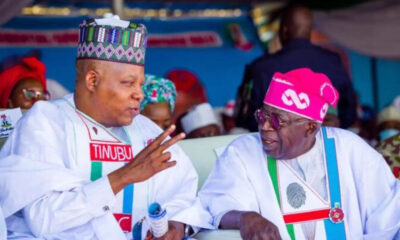
Vice President Kashim Shettima has reaffirmed the commitment of the Tinubu administration to revitalizing Nigeria’s cocoa industry and transforming the country’s agricultural sector into a globally competitive value chain.
Speaking on Monday during a meeting with a delegation from the World Cocoa Foundation (WCF), led by its president, Mr. Chris Vincent, at the Presidential Villa in Abuja, Shettima highlighted the government’s strategic vision for cocoa — moving Nigeria from being a raw producer to becoming a global processor and exporter of cocoa-based products.
In a statement by his spokesman, Stanley Nkwocha, he noted that it is in a bid to return to the drawing board in respect of revamping the nation’s cocoa industry that the Federal Executive Council (FEC) recently approved the establishment of a National Cocoa Management Board (NCMB).
“Let’s walk the talk. We used to be one of the world’s leading cocoa producers, but because of the advent of oil, we have been relegated to the background now.
“But we can reclaim that lost glory, and the President is fully committed to revitalising not only the cocoa industry but all agricultural value chains.”
Senator Shettima pointed out that the price of cocoa has skyrocketed globally, assuring that “with the Renewed Hope Agenda of President Bola Ahmed Tinubu,” Nigeria is poised to go “back to the drawing board.
READ ALSO:
- Why I gave Obasanjo $1m in 1998 – Orji Kalu
- Orji Kalu defends donning Tinubu-inspired cloth, says it’s Aba-made
- Police arrest parents, four others over assault of Ondo vice principal
“At our last Federal Executive Council (FEC) meeting, the government approved the establishment of the National Cocoa Management Board geared towards revitalising the cocoa industry and the whole cocoa value chain,” he added.
The Vice President stressed the need for Nigeria to start processing cocoa products, just as he told the WCF delegation that the nation has the manpower, with capable young Nigerians who are willing to take advantage of the job opportunities in the agricultural sector.
He said, “We don’t want to be producers of cocoa; we want to be processors of cocoa because a tonne of cocoa will fetch you $9,000 now, but processed cocoa will get you $30,000. If you turn them into chocolate bars, that might fetch you $50,000.
“So, we have the manpower, the average age of the nation is 17. We have very virile young men who are willing to work if they have the opportunity. So, I’m speaking from the heart; we are willing to partner with your organisation.”
VP Shettima also disclosed that he was already working on building a cocoa farm to lead by example, saying the passion is not driven by profit making, but by the desire to contribute to the social welfare of the country.
“I want to walk the talk. It is not even about the profit criteria; no. It’s about the social welfare criteria – employing people. Look, let me take you to my farm and you’ll be convinced that the new Nigerian leadership is actively involved and is itching to drive the process.”
The Vice President pledged Nigeria’s readiness to work with WCF, assuring that he would personally engage the governor of Taraba State to secure the 10,000 hectares in Kurmi local government area of the state for the WCF and other partners to expand their investments in the nation’s cocoa industry.
Earlier, the Vice President of the WCF, Mr Vincent, declared the Foundation’s readiness to work with the Nigerian government to revitalise the cocoa sector in Nigeria in line with the European Union’s sustainable regulations.
READ ALSO:
- Jay-Jay Okocha advises Osimhen on club to join
- WAEC faces N100bn lawsuit over midnight exams
- Atiku, El-rufai, Amaechi are power-hungry losers – APC
He said, “We are in the middle of a global cocoa supply shortage, and the prices have risen four times over the last three years. We are looking for new supplies of cocoa, sustainable cocoa in particular,” he stated, noting that the WCF represents the whole global cocoa supply chain, which includes the very biggest manufacturers of both chocolate and cocoa.
“The key thing here is that we have a clear alignment with industries which need to grow in supply sustainably, and I’m aware of the Nigerian State’s ambition to grow cocoa as a crop, and I know the opportunity is now. Because we are in a supply deficit, the next two to three years are an opportunity for growth,” he said .
Meanwhile, Nigeria is actively pursuing a massive $25 billion undersea gas pipeline project to supply gas to Europe.
This is just as Vice President Shettima has said, President Tinubu’s bold economic reforms have positioned Nigeria as a prime investment destination, especially in the energy sector.
Speaking on Monday during a meeting with Vitol Group, the world’s largest independent commodity trader, at the Presidential Villa, the Vice President said Nigeria’s leadership transformation under President
Tinubu represents an unprecedented opportunity for international investors.
He said, “Most importantly is the leadership. President Bola Ahmed Tinubu grew up in that ecosystem- energy and finance.
“In the past 25 years, we have not had a leader who has the courage to take far-reaching decisions as he has taken – the removal of fuel subsidy, the unification of the multiple exchange rates, and the tax reforms.”
The Vice President made a direct appeal to global investors, stating that “he (the President) is putting Nigeria on a new trajectory. This is where the action is, invest in Nigeria.”
VP Shettima described Nigeria’s gas sector as a beacon of stability and transparency amid global uncertainty. “The world is changing, and ours is actually a gas and not an oil economy. We have the eighth largest gas reserve in the world,” he said.
Earlier, the leader of the delegation, Chief Financial Officer of Vitol Group, Jeffrey Dellapina, said that Vitol has a long-term commitment to Nigeria.
“This has been an incredibly close and important country for Vitol for a very long time. We have participated in a lot of things from the downstream, financing, trading and government support when needed.”
“We do want to maintain an understanding that Vitol is committed, and we are always available to deploy capital when needed. We want to say that Vitol is committed to this country, and we want to stay in this country and evolve with you.”
Also, Vitol Group’s Head of Public Affairs, Murtala Baloni, noted that the company is currently enjoying a favourable business relationship with Nigerian companies and the government.
“We support the business of the government in ways that we can in the deployment of capital. We were one of the major funders of Project Gazelle, a crude oil-backed forward-sale finance facility by the Nigerian National Petroleum Company Limited (NNPC Limited), where we put in $300 million during the COVID-19 period,” he stated.
Also present at the meeting was Nigeria Country Manager for Vitol Group, Thomas de Montulé.
Nigeria to stop exporting raw cocoa, says VP Shettima










Business
EFCC, NMDPRA Raid Chinese-Linked Illegal Refinery in Ogun, Uncover 90,000-Litre Underground Tanks

EFCC, NMDPRA Raid Chinese-Linked Illegal Refinery in Ogun, Uncover 90,000-Litre Underground Tanks
Officials of the Nigerian Midstream and Downstream Petroleum Regulatory Authority (NMDPRA) and the Economic and Financial Crimes Commission (EFCC) have uncovered an illegal refinery allegedly linked to Chinese nationals at Ogere-Remo, Ikenne Local Government Area of Ogun State.
The facility, which occupies more than three hectares of land, was raided on Wednesday following intelligence gathered by the EFCC, revealing what investigators described as a well-fenced but unauthorised crude oil processing operation.
During the operation, the joint team discovered underground tanks suspected to have been used for heating and processing sludge oil, a waste product from refining, as well as substances believed to be Automotive Gas Oil (AGO), commonly known as diesel.
NMDPRA officials subsequently sealed the facility pending further investigation.
Speaking during the inspection, the Ogun State Coordinator of NMDPRA, Dr Atilola Akinyemi, said the facility was operating without approval or a licence from any recognised regulatory authority.
He disclosed that an underground storage installation behind the facility had an estimated capacity of more than 90,000 litres, alongside underground heating systems, water hydrants for cooling, locally fabricated tanks and silos designed for separating processed substances.
Describing the operation as illegal, Akinyemi said the operators appeared to possess technical expertise but had deliberately designed the facility to evade regulatory oversight.
“This facility you see here is very crude and completely illegal. This is not a refinery by any standard. It does not have a permit from any regulatory authority and its operations are unknown to the relevant authorities.
“They appear to be technically skilled people who have deliberately designed this facility to circumvent government regulations. When we examine their final product, it may look like diesel to the average person, but we cannot classify it as diesel until laboratory tests have been conducted,” he said.
The EFCC Zonal Director, Lagos Zonal Directorate 2, Bawa Usman Kaltungo, said the discovery pointed to a well-established illegal refining operation involving several stages of processing sludge into products resembling diesel.
“What we have seen here is an illegal refinery with a complete setup, featuring all the processes through which sludge passes before being converted into what is commonly referred to as diesel. Judging by the nature of this facility, it has been operating for years,” Kaltungo said.
He raised concerns over the growing involvement of foreign nationals in illegal industrial activities around the Ogere axis, recalling that 14 Chinese nationals were arrested in the area a week earlier over alleged illegal lithium processing.
According to him, investigations into the earlier operation revealed immigration irregularities, with some of the suspects allegedly lacking passports, while others were found to have overstayed their visas by about three months.
“Some of them had passports, while others did not. Even among those who had passports, we discovered that some of their visas had expired about three months earlier. Yet, there were still individuals operating there without passports,” he said.
Kaltungo vowed that those behind the illegal refinery would be identified and brought to justice.
Also speaking, the Director of the EFCC’s Department of Proceeds of Crime Management, Mr Gbolahan Latona, condemned the activities, warning that illegal operations of this nature undermine legitimate investments in Nigeria’s petroleum industry.
“Imagine allowing saboteurs like these to operate freely and undermine the efforts of legitimate investors like Dangote Refinery. Ultimately, it is Nigerians who will suffer,” Latona said.
The discovery comes amid renewed efforts by regulatory and law enforcement agencies to clamp down on illegal industrial operations, economic sabotage and activities capable of undermining investments in Nigeria’s oil and gas sector.
Auto
EXEED Sets Sights on Nigeria’s Luxury Car Market, Showcases Technology, Design Vision

EXEED Sets Sight on Nigeria’s Luxury Car Market, Showcases Technology, Design Vision
Versat Automobile Limited, the Nigerian representative of EXEED, is stepping up efforts to introduce the premium automotive brand to the country, offering prospective customers a closer look at its technology, design philosophy and vision for the future of mobility.
The move signals a new phase in EXEED’s Nigerian market entry, as the company seeks to establish its identity in an increasingly competitive premium vehicle segment where technology, performance, comfort and ownership experience are becoming important considerations for buyers.
Following its initial introduction to Nigeria in August, Versat Automobile is advancing the brand’s pre-launch activities by highlighting the philosophy and engineering thinking behind EXEED, a premium automotive marque within the Chery Automobile family.
Drawing on Chery’s extensive investment in automotive research and development, EXEED’s technology proposition covers vehicle architecture, powertrain engineering, intelligent cabin systems and connected driving technology.
However, the brand says its approach to innovation goes beyond simply adding more technological features to vehicles. Rather, it focuses on integrating intelligence, convenience, connectivity and performance to improve the overall driving experience and respond to the expectations of modern motorists.
Design is another major pillar of EXEED’s identity, with its vehicles combining distinctive exterior styling, lighting, detailing and cabin architecture with functionality and everyday usability.
The company’s approach reflects an evolving definition of premium mobility, where luxury is no longer determined solely by a vehicle’s appearance but also by how it feels, functions and interacts with occupants.
At the heart of the brand is its philosophy, Born for More, which is reinforced by what it describes as its Spirit of Exploration.
The philosophy is built around challenging conventions, looking beyond familiar boundaries and pursuing new possibilities. It targets customers who seek experiences beyond the ordinary and view mobility as more than simply moving from one destination to another.
Versat Automobile believes this positioning could resonate with Nigeria’s evolving premium automotive market, where buyers are increasingly considering technology, contemporary design, performance, comfort and the overall ownership experience when making purchasing decisions.
Christopher Irumudomon, General Manager, Sales, Versat Automobile Limited, said the introduction of EXEED was about presenting Nigerians with a different perspective on premium mobility rather than merely adding another vehicle brand to the market.
“The introduction of EXEED is about more than bringing another automotive brand to Nigeria. It is about introducing a different perspective on premium mobility, one that brings together technology, design, performance and the freedom to explore.
“EXEED has a distinctive philosophy and a clear vision for what it wants to represent, and we are excited to give Nigerians a closer look at the brand and what it has to offer,” he said.
As part of its broader engagement with the global technology and mobility ecosystem, the Versat team is also scheduled to participate in the International User Summit in China in October.
The visit is expected to provide opportunities for further engagement with Aimoga, a high-end robotics brand, highlighting the growing intersection between technological innovation, robotics and future mobility.
The engagement underscores the broader technological direction that EXEED seeks to associate with its premium brand identity.
Versat Automobile said further details about EXEED, including its products, technology and design philosophy, would be unveiled as the Nigerian pre-launch programme progresses.
Established in 2024, Versat Automobile Limited made its Nigerian market debut in 2026 with C&C Trucks and is building its portfolio around globally positioned automotive brands.
The company says its operations are guided by a commitment to performance, durability, quality, reliability and customer support, with EXEED representing its entry into the premium passenger vehicle segment.
For Nigeria’s automotive market, the forthcoming arrival of EXEED introduces another contender into the premium mobility conversation, with its eventual success likely to depend not only on the appeal of its technology and design but also on how effectively its Nigerian representative delivers on customer expectations.
Auto
Omoda, Jaecoo bet on warranty, after-sales support to win Nigerian car buyers

Omoda, Jaecoo bet on warranty, after-sales support to win Nigerian car buyers
Omoda and Jaecoo are stepping up investment in warranty protection, spare-parts distribution and after-sales services as the emerging automotive brands seek to strengthen customer confidence and establish a lasting presence in increasingly competitive global markets.
The strategy is particularly relevant to Nigeria, where concerns about spare-parts availability, maintenance costs, technical expertise and the reliability of after-sales support often influence decisions when purchasing new vehicles.
Beyond attractive designs, advanced technology and vehicle performance, motorists increasingly want assurances that their investments will remain protected long after driving their cars out of showrooms.
Recognising this changing customer expectation, Omoda and Jaecoo are expanding their international after-sales infrastructure and warranty programmes to improve the ownership experience and address some of the industry’s longstanding concerns.
In the United Kingdom, vehicles from the two brands come with a seven-year or 100,000-mile warranty, while batteries in electrified models enjoy eight-year coverage.
Although warranty conditions differ across markets, the programme underscores the brands’ emphasis on long-term ownership support and customer assurance.
The companies are also advancing their Super Hybrid System, which combines petrol and electric power to deliver improved fuel efficiency while retaining the convenience of conventional refuelling.
The technology is designed to address a major concern among motorists considering electrified vehicles, particularly those who want the benefits of electric mobility without depending entirely on charging infrastructure.
The Jaecoo J7 PHEV has already attracted considerable attention in the UK market, emerging as Britain’s best-selling new SUV in September.
It also secured a Guinness World Record for the lowest fuel consumption recorded by a plug-in hybrid production SUV during the UK Three Peaks Challenge.
Similarly, the flagship Jaecoo J8 combines 428 horsepower with all-wheel-drive capability and an electric-only driving range of more than 130 kilometres.
In Indonesia, a Jaecoo vehicle also secured a Guinness World Record after covering a verified distance of 1,660 kilometres on a single tank of fuel and battery charge, further highlighting the efficiency potential of the brand’s hybrid technology.
Beyond product development and performance achievements, the companies are strengthening the supply chain that supports vehicle ownership.
A major step in this direction was the opening of a 12,000-square-metre spare-parts distribution centre in Dubai’s Jebel Ali Free Zone in December 2024.
The facility stocks more than 20,000 different components to support parts distribution and improve service delivery.
The company has also indicated plans to establish similar facilities across different continents, with expansion already underway in South Africa.
For Nigeria, where the cost and availability of genuine spare parts can significantly affect vehicle ownership expenses, such investments could have important implications.
A dependable distribution network would help reduce the challenges associated with sourcing replacement components, while effective warranty administration and access to trained technicians could improve customer satisfaction and strengthen confidence in the brands.
As competition intensifies in Nigeria’s automotive market, the ability to provide reliable after-sales support could become just as important as introducing technologically advanced vehicles at competitive prices.
For Omoda and Jaecoo, the challenge will be to translate their growing international infrastructure and warranty commitments into accessible, consistent and responsive services for Nigerian customers.
Ultimately, winning the confidence of Nigerian motorists will require more than impressive vehicles and international performance records. It will depend on the brands’ ability to support customers throughout the entire ownership journey, from the first showroom visit to routine servicing and eventual replacement of parts.
-

 Sports2 days ago
Super Falcons Receive $100,000 Each as Tinubu Finally Fulfils WAFCON Pledge
-
 Politics2 days ago
APC Dumps Adeleke’s Campaign Structure, Unveils Separate 168-Member Council in Osun
-
 metro3 days ago
Three Dead, Five Rescued as Two-Storey Building Collapses in Osun
-

 metro2 days ago
Three Homeless Men Shot Dead in Midnight Attack at Lagos Bus Stop
-

 International3 days ago
Badenoch Rejects Slave Trade Apology, Says African Kingdoms Also Profited From Slavery
-

 metro3 days ago
Court Orders 18-Year-Old Fraudster To Pay ₦1.2m Over $800 Lottery Scam
-

 metro3 days ago
Contempt: Court Orders Arrest, Remands Lagos NURTW Chairman Sego, Secretary in Kirikiri
-

 metro3 days ago
Gunmen Intercept Family Car, Abduct Woman, Two Children, Release Husband in Abuja