

metro
Nigerians living abroad to pay N80,000 for BVN registration

Nigerians living abroad to pay N80,000 for BVN registration
Nigerians in the diaspora will be required to pay N80,000 ($50) to obtain a Non-Resident Bank Verification Number (NRBVN) remotely, according to findings by Nairametrics following the Central Bank of Nigeria’s (CBN) recent launch of the NRBVN platform.
The CBN, in collaboration with the Nigeria Inter-Bank Settlement System (NIBSS), launched the NRBVN platform to simplify the process for Nigerians living abroad to obtain their Bank Verification Number (BVN) remotely, eliminating the need for in-person verification.
The NRBVN initiative is seen as a major milestone in the CBN’s efforts to expand financial inclusion and integrate the Nigerian diaspora into the country’s economic activities.
In contrast to the required $50 fee payment for Nigerians living abroad, BVN registration is completely free for Nigerians who are living in the country.
Registration Process
To get an NRBVN, intending applicants are to visit nrbvn.com and sign up with their email address and password. After inputting that information, they will be required to get a verified QR code from Google Authenticator.
When that process is successful, they will be asked to verify the new account through a message sent to the email address used to register. Clicking the link from the email address, they will be required to log in with the password and directed to the terms and conditions page.
READ ALSO:
- 2025 UTME: JAMB launches emergency support centre for candidates
- Alliance betrayal: ISWAP kills 23 farmers, fishermen in Borno
- Five House Republicans stall Trump’s ‘big, beautiful’ tax bill
Next is the ‘consent’ page where applicants need to click on ‘accept’. From there, they will be directed to select user type among three options – Nigerian, no BVN; Nigerian, BVN; Nigerian by Descent.
After clicking on ‘Nigerian, no BVN’, the next page will display a list of required documents needed, which include a Nigerian passport (valid or expired), proof of foreign residency (Valid Foreign Passport, Residence Permit, Green Card etc.), and a utility bill, all compulsory.
Other optional requirements are a work permit and/or proof of employment, proof of tax payment in the country of residence, and foreign bank account statements.
Clicking on ‘next’ will take applicants to the application fee payment page, where it is clearly stated that “to finalize your registration, a payment of US$50 is required to process your application.”
By clicking ‘next’, you will be redirected to Tazapay’s secure payment gateway to complete your application fee payment.
Once the fee is paid and confirmed, applicants can then proceed to submit all required documents, enter personal details like name, address, and date of birth, and then click on ‘submit’.
Applicants will then undergo a liveness test to match their image with the provided documents and information. The next step will be to verify the phone number using an OTP sent to the phone number provided.
After that, the ‘summary’ page will display, containing all the applicant’s information. Once applicants confirm the information is correct, they can then submit.
READ ALSO:
- JAMB’s fiasco is horrible, but it’s not Unexampled, By Farooq A. Kperogi
- UTME: Father of candidate who committed suicide over low score speaks
- Jetour flaunts striking features of new DASHING in Nigeria
Ambitious $1 Billion Monthly Remittance Target
The CBN has set an ambitious target of $1 billion in monthly remittance flows, further boosting Nigeria’s foreign exchange reserves.
According to data obtained from the CBN, direct remittance inflows into Nigeria totalled $1.92 billion in 2024, reflecting a slight decline from the $1.98 billion recorded in the previous year.
CBN Governor, Olayemi Cardoso, expressed confidence that this goal is achievable, citing the increasing trust and convenience of formal remittance channels.
The launch of the NRBVN platform is expected to reduce the high cost of remittances, making remittance services more accessible and cost-effective for Nigerians abroad.
Reactions from Nigerians in the Diaspora
Nigerians resident abroad have reacted to the latest development with divergent opinions. While some believe the $50 fee is fair, others see it as a desperate move by the CBN to generate revenue for the government.
“I’ve flown from London to Nigeria to just go and do my BVN and get my bank account working,” Ikechukwu told Nairametrics.
“I think it’s fair in the sense that the option you’ve got is traveling back to Nigeria to do your BVN, and if you check the cost of your return flight ticket just to go and do your BVN, you will agree that it is fair.”
However, Tope sees it differently. He believes that there are other ways the government can make money.
“I think this is just a desperate move to generate revenue for the government. This same thing is done for free in Nigeria, why charge a fee for those living abroad, do they think we are plucking money here?” He queries.
Nigerians living abroad to pay N80,000 for BVN registration











metro
Chibok Girl Escapes After Eight Years in Boko Haram Captivity, Reveals 20 Classmates Still Held
Chibok Girl Escapes After Eight Years in Boko Haram Captivity, Reveals 20 Classmates Still Held
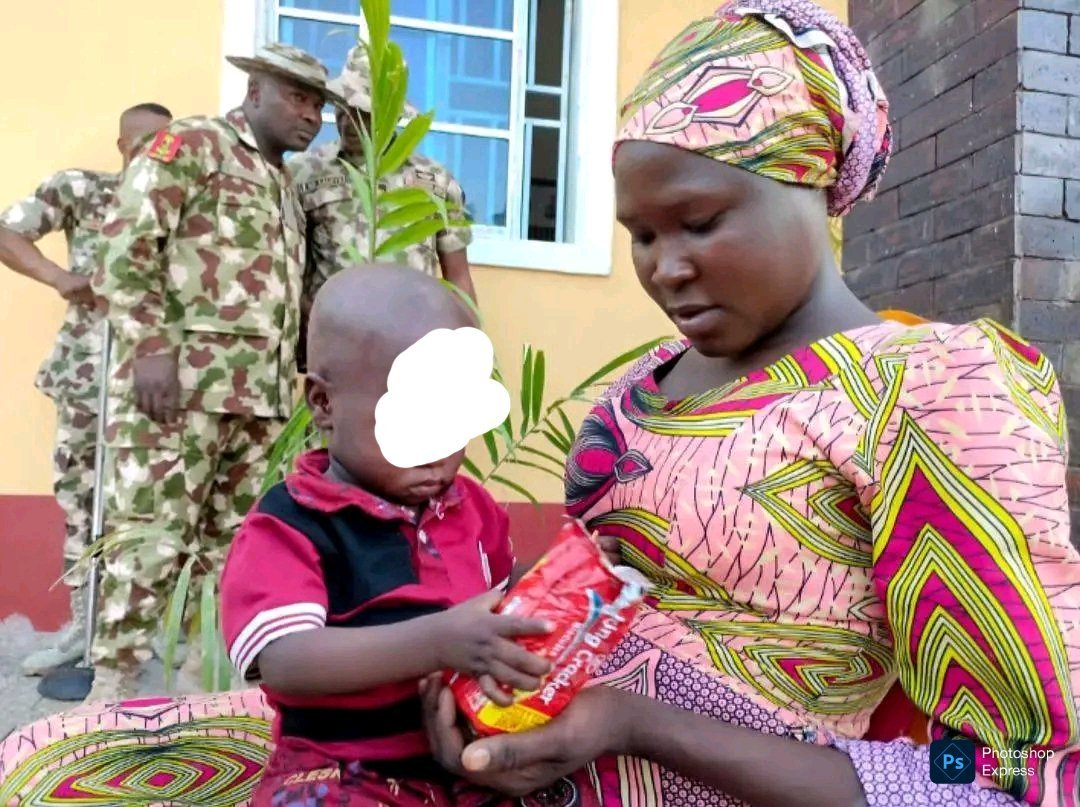
MAIDUGURI, Borno State — After spending eight harrowing years in Boko Haram captivity, a Chibok schoolgirl, Mary Dauda, has recounted how she outsmarted her captors and escaped from their hideout in the dreaded Sambisa Forest alongside her young child.
Mary, who was 18 when Boko Haram insurgents abducted 276 schoolgirls from Government Girls Secondary School (GGSS), Chibok, in April 2014, regained her freedom through a carefully planned escape that involved deceiving her captor and undertaking a dangerous journey towards Nigerian military positions.
Her escape has also renewed hopes for the recovery of other abducted Chibok schoolgirls, as she disclosed that more than 20 of her former classmates are still alive in captivity at the Gazuwa camp inside Sambisa Forest.
Mary said her decision to escape was particularly risky because the insurgents had repeatedly threatened to track down and kill anyone caught attempting to flee.
How Mary Outwitted Her Captors
Recounting the circumstances surrounding her escape, Mary explained that her opportunity came when she obtained permission from her captor, identified as Malam Ahmed, to visit a fellow Chibok woman living in Ngoshe town.
She was reportedly granted a one-week pass, which she used to execute her plan to escape from the insurgents’ territory.
Upon arriving in Ngoshe, Mary approached another Chibok woman, hoping they could undertake the dangerous journey to freedom together. However, the woman declined the offer, explaining that she was under strict surveillance by her insurgent husband following an earlier unsuccessful attempt to escape.
Undeterred by the setback, Mary decided to continue alone, despite the danger of being discovered by the insurgents.
During her journey, she encountered an elderly man who agreed to help guide her out of the insurgents’ enclave. However, because travelling during the day could expose them to detection by armed militants, the man advised her to wait until nightfall.
At about 8:00 p.m., he led her to the outskirts of Ngoshe and instructed her to remain hidden overnight before continuing her journey towards safety at daybreak.
Nigerian Soldiers Initially Suspected Suicide Bombing
Carrying her baby, Mary resumed her journey at dawn and headed towards positions occupied by Nigerian troops.
However, her arrival near the military perimeter initially triggered suspicion among the soldiers, who feared she could be a suicide bomber deployed by Boko Haram.
After maintaining a safe distance, Mary explained who she was and narrated her experience in captivity.
The soldiers subsequently verified her identity, took her and her child into protective custody and moved them to safety.
Her escape marked the end of eight years of captivity, during which she endured the harsh conditions imposed on abducted women and girls by the insurgents.
Over 20 Chibok Girls Still Alive in Captivity
In a particularly significant revelation, Mary and another rescued Chibok schoolgirl, Hauwa Joseph, disclosed that more than 20 of their former classmates are still alive in Boko Haram captivity.
The two women were reportedly rescued during military clearance operations around the Bama and Gwoza axis of Borno State.
According to their account, the remaining abductees are being held at the Gazuwa camp inside Sambisa Forest.
Mary expressed appreciation to the Nigerian military for securing her freedom but appealed to the Federal Government and security authorities not to abandon the other girls still trapped in the insurgents’ stronghold.
She urged the military to intensify operations aimed at rescuing the remaining captives and reuniting them with their families.
Military Confirms Identities of Rescued Chibok Girls
The Theatre Commander of the North-East Joint Task Force, Operation Hadin Kai, Major General Christopher Musa, confirmed the identities of Mary Dauda and Hauwa Joseph after their details were checked against the official register of missing Chibok schoolgirls.
He attributed their emergence from captivity to sustained military pressure on Boko Haram and Islamic State West Africa Province (ISWAP) fighters across Sambisa Forest, the Mandara Mountains and the Lake Chad Basin.
Musa said ongoing military operations under Operation Lake and Desert Sanity had disrupted insurgent supply routes and weakened their established strongholds, forcing some fighters out of previously entrenched positions.
The General Officer Commanding (GOC) 7 Division of the Nigerian Army, Major General Waidi Shuaibu, also disclosed that the rescued women and their children had undergone comprehensive medical assessments and received necessary medical attention.
He explained that arrangements were being made for their formal handover to relevant government authorities for rehabilitation, support and eventual reunification with their families.
A Painful Reminder of the Chibok Abduction
The latest rescue comes more than 12 years after the April 2014 abduction that shocked Nigeria and attracted international condemnation, triggering the global #BringBackOurGirls campaign.
Although several of the abducted schoolgirls have regained their freedom through military operations, escapes and negotiations, many others remain unaccounted for.
Mary’s account offers a fresh glimpse into the lives of women and girls still held by Boko Haram while reinforcing calls for sustained military operations to secure their release.
For the families who have spent years waiting for their daughters, the revelation that more than 20 Chibok schoolgirls are reportedly still alive in Sambisa Forest represents both a painful reminder of their prolonged ordeal and a renewed reason to hope for their return.
Chibok Girl Escapes After Eight Years in Boko Haram Captivity, Reveals 20 Classmates Still Held
metro
70-Year-Old Woman Survives 60-Foot Well Plunge in Lagos
70-Year-Old Woman Survives 60-Foot Well Plunge in Lagos
LAGOS, Nigeria — Residents of Oworonshoki in the Kosofe Local Government Area of Lagos State were thrown into panic on Sunday, November 22, following the dramatic rescue of a 70-year-old woman who survived a terrifying fall into a 60-foot-deep well.
The elderly woman reportedly plunged into the deep well accidentally, triggering an emergency rescue operation as residents rallied to save her from what could have been a fatal accident.
According to a report by *Vanguard*, the septuagenarian was eventually brought out alive after rescuers worked to pull her out of the deep, concrete-lined shaft.
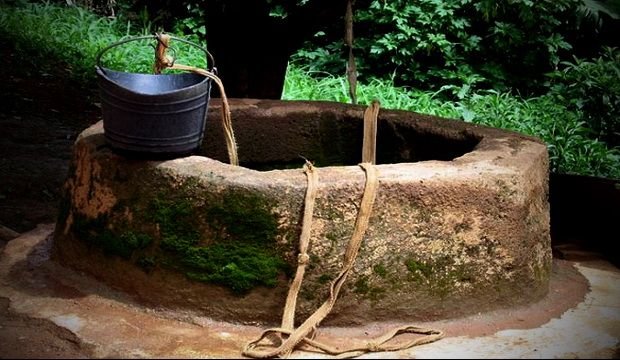
Footage from the rescue scene showed the frightening depth of the well, with heavy ropes lowered into its dark interior as efforts were made to retrieve the trapped woman.
The operation attracted attention from residents of the densely populated community, who watched anxiously as rescuers battled to bring the elderly woman to safety.
Against the odds, the rescue operation ended successfully, with the 70-year-old woman emerging alive from the 60-foot-deep well.
Her survival has been described as remarkable, considering the potentially fatal consequences of falling into such a deep shaft, particularly for someone of her age.
Although details surrounding the circumstances of the accident and the woman’s condition after the rescue were not immediately available, the incident has once again highlighted the dangers posed by uncovered or inadequately secured wells in residential communities.
The successful rescue brought an end to the frightening incident, leaving residents relieved that what could have turned into a tragedy ended with the woman being pulled out alive.
70-Year-Old Woman Survives 60-Foot Well Plunge in Lagos
metro
Terrorists Kill Muslim Worshippers, Village Head, Wife in Niger Attack, Burn Palace

Terrorists Kill Muslim Worshippers, Village Head, Wife in Niger Attack, Burn Palace
MINNA, Niger State — Terrorists have reportedly killed several Muslim worshippers, a village head and his wife during coordinated attacks on two communities in Borgu Local Government Area of Niger State, setting the traditional ruler’s palace ablaze and abducting an unspecified number of residents.
The deadly attacks, which occurred on Saturday, November 21, 2026, targeted Lumman-Ba’are and neighbouring Gada-Oli, also known as Gadan Oli, leaving several residents dead, homes destroyed and many others fleeing for safety.
The first assault reportedly occurred at about 5:00 a.m. when heavily armed gunmen stormed Lumman-Ba’are and opened fire on Muslim worshippers observing their early morning prayers.
The attackers reportedly shot dead the village head and his wife before setting the traditional ruler’s palace on fire. Several other residents were also killed, while an unspecified number of people were abducted.
A community source disclosed that the attackers struck while residents were gathered for their obligatory dawn prayers, shooting indiscriminately at people in the community.
The source put the death toll at 11, adding that children were among those killed in the attack. The incident reportedly triggered panic, forcing scores of residents to abandon their homes and flee to neighbouring communities for safety.
The violence reportedly spread to Gada-Oli later in the afternoon, around 2:00 p.m., when the gunmen launched another assault on the neighbouring community.
According to local accounts, the attackers struck while Muslim residents were observing their afternoon prayers, opening fire on worshippers and other villagers without regard for age or gender.
Several houses were reportedly set ablaze during the afternoon raid, although the exact number of people killed or injured in the attack had yet to be established as of the time of filing this report.
Following the attacks, the bodies of the slain village head and his wife were evacuated to New Bussa, the administrative headquarters of Borgu Local Government Area, where they were subsequently buried.
Confirming the Lumman-Ba’are attack, the spokesperson for the Niger State Police Command, SP Wasiu Abiodun, said the police received a distress report about the invasion at approximately 5:00 a.m. on Saturday.
Abiodun, however, gave an initial casualty figure of five, lower than the 11 deaths reported by community sources.
In a statement, the police spokesperson said: “On 21/11/2026 at about 5:00 a.m., a report received indicated that suspected armed men invaded Lumman-Ba’are village, Borgu LGA, and attacked the community, while about five persons reportedly lost their lives during the attack.”
He explained that joint security teams had been deployed to the affected community to restore normalcy and track down those responsible for the killings.
“Joint security teams have been deployed to the location, and efforts to apprehend the suspected perpetrators are ongoing. Further developments will be communicated,” Abiodun stated.
However, the police had yet to provide further details on the reported afternoon attack on Gada-Oli, the alleged burning of several houses or the number of residents abducted during the coordinated raids.
The discrepancy between the casualty figures provided by community sources and the police also leaves the actual death toll uncertain, as security authorities continue efforts to establish the full extent of the attacks.
Terrorists Kill Muslim Worshippers, Village Head, Wife in Niger Attack, Burn Palace
-

 metro2 days ago
FG’s ₦100,000 Family Grant: Eligibility, How to Apply and Payment Procedure Revealed
-
 Sports2 days ago
Ex-Super Eagles Captain Segun Odegbami Survives Death as Three Assailants Machete Him in Abeokuta Home
-

 metro2 days ago
Cleveland Girl, 11, Gets 7-Year Juvenile Sentence Over Rape, Attempted Murder of 5-Year-Old
-

 metro1 day ago
Hoodlums Descend on Tinubu’s Praise Singer Rarara at Abuja Mosque, Tear His Clothes
-

 metro2 days ago
Honesty Cost Lagos Taxi Driver His Job, Marriage After Returning ₦21,000 Passenger Left in His Cab
-

 metro2 days ago
Bandits Storm Rival Kidnappers’ Hideout, Free Abducted Victims in Shocking Video
-

 Politics2 days ago
Tinubu Personally Asked Me to Fight Governor’s Impeachment, Warned Democracy Could Collapse – Olanipekun
-

 Politics2 days ago
Just in: Court Sacks Ribadu, Orders INEC to Restore Suleiman as Adamawa ADC Candidate