
Health
Nightmares triple risk of early death, says new study

Nightmares triple risk of early death, says new study
A disturbing new study out of the UK has revealed a hidden killer lurking in dreams. If you suffer from regular nightmares, you could be three times more likely to be dead a decade earlier than the average person, the new study has suggested.
Weekly nightmares were also found to be a stronger indicator of an early death than smoking, obesity, poor diet, and little physical activity. Children and adults with frequent nightmares also showed faster biological ageing, which accounted for approximately 40 per cent of the explanation for the increased risk of early death.
From the study, even monthly nightmares were linked to faster ageing and increased mortality, compared to those who rarely or never have them.
Researchers from Imperial College London and the Dementia Research Institute say experiencing frequent nightmares may be an ominous signal of premature death—tripling the risk of dying before age 70.
The research found that weekly nightmares were more strongly linked to early death than well-known culprits like tobacco use, poor diet, and lack of exercise. Adults and children who frequently experienced nightmares also showed signs of accelerated biological ageing—suggesting that the worst dreams may wear people down on a cellular level.
READ ALSO:
- Tinubu woos Kwankwaso after Ganduje resignation as APC chairman
- UN chief calls for enforcement of Gaza ceasefire
- 2 dead, 15 injured in Nabatieh following intense Israeli airstrikes
Dr Abidemi Otaiku, the lead investigator, explained that nightmares provoke intense stress reactions that mimic life-threatening situations.
“Our brains don’t always know the difference between a nightmare and reality. They trigger real physiological responses—elevated heart rate, sweating, and adrenaline—that can take a toll night after night,” Otaiku said.
Involving data from over 185,000 people tracked over 19 years, the study is the first to link the frequency of bad dreams with long-term mortality. Adults reporting at least one nightmare per week were three times more likely to die early. Children weren’t spared either: those with frequent night terrors also showed faster biological decline.
According to the study, even monthly nightmares carried risk. Compared to those with peaceful sleep, occasional bad dreamers still showed signs of biological stress and reduced lifespan. The impact, researchers said, appears tied to poor sleep quality and chronic spikes in the stress hormone cortisol.
But hope isn’t lost. Experts recommend lifestyle changes like cutting down on watching horror movies, practising stress management, and improving sleep hygiene. Therapies such as Image Rehearsal Therapy—in which individuals rewrite the endings of their nightmares—and Cognitive Behavioural Therapy for Insomnia (CBT-I) have shown promising results in reducing both bad dreams and their long-term health effects.
Nightmares triple risk of early death, says new study






Health
Studies show menopause can reduce women’s memory, concentration by 40%

Studies show menopause can reduce women’s memory, concentration by 40%
Women going through the menopause may experience a significant decline in memory, concentration, and the ability to carry out daily tasks, with research suggesting a drop of up to 40 per cent in cognitive performance. This revelation was highlighted at a recent international conference on women’s health.
Experts warn that as many as four in ten women could be affected, making it increasingly difficult to manage work responsibilities or daily routines. Researchers also note that younger women may experience temporary concentration difficulties at certain points in the menstrual cycle due to hormonal changes, performing better when oestrogen levels peak just before ovulation.
Professor Martha Hickey, an obstetrics and gynaecology expert at Melbourne University, told the American Society for Reproductive Medicine in Boston that compelling evidence now links menopause with declines in attention span, learning ability, and memory function. She identified possible causes, including a drop in oestrogen levels and sleep disruption from night sweats and hot flushes.
READ ALSO:
- South Africa Horror: Gunmen Kill 11 in Pretoria Hostel Shebeen Attack
- Ex-AGF Abubakar Malami denies allegations of terrorism financing, calls report misleading
- Nigerian woman sparks outrage for refusing chemotherapy despite ₦30 million donations over religious Beliefs
“Oestrogen decline during the menopause may affect key areas of the brain responsible for memory and concentration, including the hippocampus, midbrain, and prefrontal cortex,” Professor Hickey said. Brain scans have shown changes in these regions in menopausal women, though she noted that previous research likely underestimated the effects due to less sensitive testing methods.
Professor Hickey is currently studying 105 women in the US undergoing oophorectomy (surgical removal of ovaries), which induces menopause, to further explore cognitive effects. Earlier studies, including a 2001 survey of 12,450 US women, found that post-menopausal women were 40% more likely to report forgetfulness. Another US study involving 16,000 women found that four in ten admitted to experiencing memory problems.
The average age of menopause is 52, although it can occur in the 30s or 40s. The condition is marked by the cessation of ovarian oestrogen production, which also leads to mood swings, hot flushes, and night sweats.
Studies show menopause can reduce women’s memory, concentration by 40%
Health
Scientists Identify Key Immune “Exhaustion Switch,” Opening New Path for Powerful Cancer Treatments
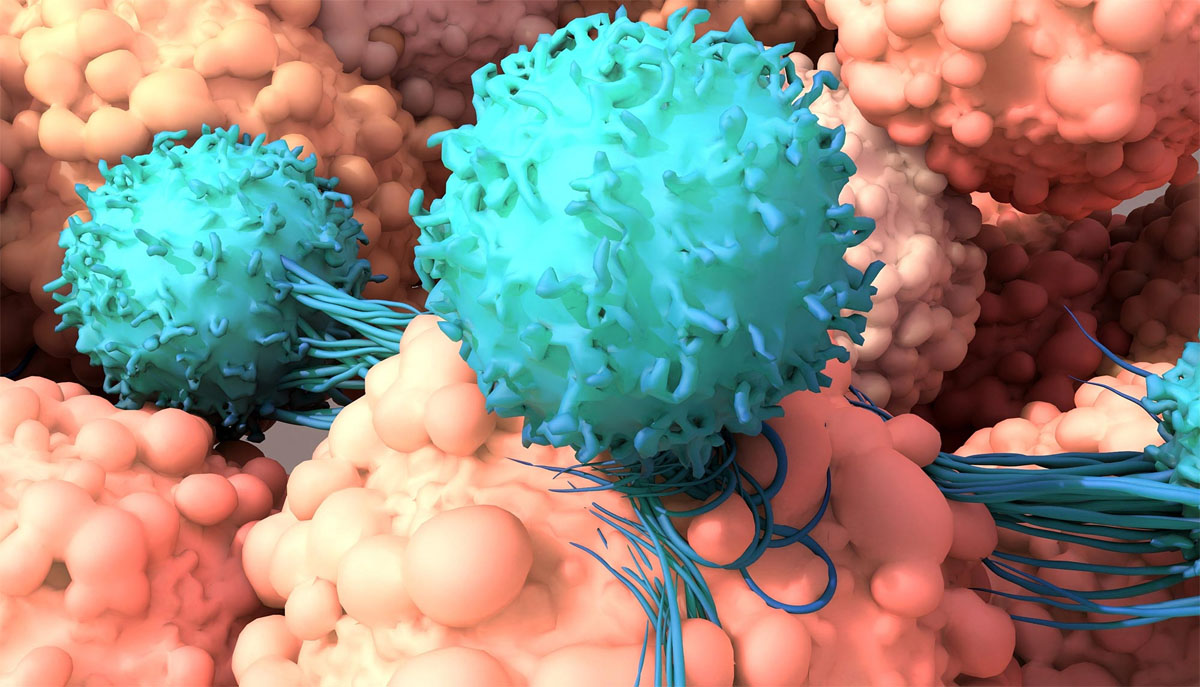
Scientists Identify Key Immune “Exhaustion Switch,” Opening New Path for Powerful Cancer Treatments
In a major scientific breakthrough that could transform cancer care, researchers at Weill Cornell Medicine have uncovered how tumours weaken the body’s immune defences—and how blocking that process can supercharge treatment. The findings, published in Nature Immunology, reveal a critical pathway that drives T cell exhaustion, a major obstacle in modern cancer immunotherapy.
According to the study, cancer cells exploit a molecular signal to drain T cells of their strength, reducing their ability to attack tumours. By blocking this signal, scientists were able to keep T cells active and dramatically enhance their tumour-fighting capacity.
“Our dream is to revive exhausted T cells so the immune system itself can defeat cancer. This discovery brings that future closer,” said co-senior author Dr. Taha Merghoub, noting that T cell exhaustion limits the long-term success of immunotherapies even in patients who initially respond well.
READ ALSO:
- Turkey Football Betting Scandal: 46 Arrested as Match-Fixing Probe Widens
- Four Teenagers Killed in Banki Explosion as Borno Police Probe Deadly IED Blast
- Osimhen Scores Brace as Galatasaray Edge Samsunspor 3-2 in Turkish Super Lig Thriller
The researchers focused on CD47, a protein known as the immune-evading “don’t eat me” signal used by cancer cells. Unexpectedly, the team discovered that T cells also produce CD47—and its levels surge when T cells become exhausted. Tests in mice revealed that animals lacking CD47 developed slower-growing tumours, showing the protein plays a powerful internal role in immune suppression.
Tumours appear to worsen this phenomenon by releasing thrombospondin-1, a protein that binds to CD47 and further weakens T cells. “Remove CD47 or thrombospondin-1, and T cells stay strong,” Merghoub said.
To counter this mechanism, researchers tested TAX2, a peptide that prevents CD47 and thrombospondin-1 from interacting. Mice treated with TAX2 displayed slower growth of melanoma and colorectal tumours, more active T cells, and stronger immune responses. TAX2 also significantly enhanced the effectiveness of PD1 immunotherapy, one of the most widely used cancer treatments.
Lead author Dr. Chien-Huan Weng described TAX2 as a “proof-of-concept,” adding that further work is underway to create safe and targeted ways to block this newly identified exhaustion pathway in human patients.
Scientists say the approach could form a powerful standalone therapy or boost existing immunotherapies, marking one of the most promising advances yet in the fight against cancer.
Scientists Identify Key Immune “Exhaustion Switch,” Opening New Path for Powerful Cancer Treatments
Health
Nigeria joins global ICH elite as NAFDAC achieves full international regulatory Status

Nigeria joins global ICH elite as NAFDAC achieves full international regulatory Status
Nigeria has recorded a major milestone in global health regulation as the National Agency for Food and Drug Administration and Control (NAFDAC) has secured full membership of the International Council for Harmonisation of Technical Requirements for Pharmaceuticals for Human Use (ICH). The achievement positions Nigeria among the world’s most advanced national regulatory authorities and marks a transformative step for the country’s pharmaceutical sector.
The announcement was made during the ICH Assembly held in Singapore, where Nigeria was confirmed as the 24th out of only 25 national regulatory authorities (NRAs) globally recognised for their commitment to harmonised international pharmaceutical standards.
NAFDAC Director General, Prof. Moji Adeyeye, described the development as a “historic breakthrough for Nigeria and the African continent,” noting that full membership would significantly boost the availability of high-quality, safe, and effective medicines for Nigerians.
READ ALSO:
- Supreme Court Strikes Out Osun Suit on Withheld Local Govt Allocations
- DSS Arrests Doctor Providing Medical Support to Bandits in Kwara State
- BREAKING: Rivers Assembly Speaker, 15 Members Defect From PDP to APC
She said:
“Full ICH membership means Nigerians will have better access to high-quality medicines. It confirms that our regulatory scientists can stand shoulder-to-shoulder with the best in the world.”
Nigeria’s journey to full ICH status began in 2022 after the agency secured Observer status and later participated in the 2023 ICH meeting in Vancouver, Canada, where NAFDAC made a formal presentation as part of the evaluation process.
Over the last two years, NAFDAC underwent extensive capacity-building, including training on multiple ICH guidelines, membership in expert working groups, and the hosting of a major international workshop in Lagos in April 2025 on the ICH M13A Bioequivalence Guideline.
Adeyeye credited the agency’s success to a “methodical and structured approach,” supported by Northeastern University, Boston, and the Bill & Melinda Gates Foundation.
Nigeria’s Ambassador to Singapore, H.E. Omayuli Francisca Kemi, praised NAFDAC for demonstrating “leadership, resilience, and expertise” in earning a place on the global regulatory stage.
Full ICH membership grants NAFDAC authority to contribute directly to the formulation of international pharmaceutical standards, while enhancing Nigeria’s capacity to regulate medicines, accelerate access to innovative therapies, and improve confidence in local pharmaceutical manufacturing.
Adeyeye also acknowledged the Federal Government for extending her tenure, saying the continuity was crucial to achieving this milestone.
“We will continue to safeguard the health of the nation—now with the full strength of the ICH global community behind us,” she declared.
NAFDAC expressed appreciation to President Bola Ahmed Tinubu, the Minister of Health and Social Welfare, and its international partners for their support. The agency reaffirmed its commitment to full implementation of ICH standards, strengthening Nigeria’s regulatory system, and advancing pharmaceutical innovation and production.
Nigeria Joins Global ICH Elite as NAFDAC Achieves Full International Regulatory Status

-

 metro3 days ago
Senate Launches Emergency Probe into Widespread Lead Poisoning in Ogijo, Lagos/Ogun
-

 Sports1 day ago
2026 FIFA World Cup Draw: England Draw Croatia as Brazil Face Morocco in Tournament Opener
-

 News1 day ago
Akpabio sues Natasha for ₦200bn over sexual harassment allegations
-

 metro3 days ago
Ned Nwoko vows legal action against rising online harassment, criminal defamation
-

 metro2 days ago
Tinubu Govt Eliminates More Terrorists Than Previous Administrations — Fani-Kayode
-

 metro1 day ago
Nigerian woman sparks outrage for refusing chemotherapy despite ₦30 million donations over religious Beliefs
-

 metro1 day ago
Four Teenagers Killed in Banki Explosion as Borno Police Probe Deadly IED Blast
-

 Opinion2 days ago
Siyan Oyeweso: Lessons in virtue and vanity