

metro
No One Can Live on N70,000, Not Even a Newborn – Sowore
No One Can Live on N70,000, Not Even a Newborn – Sowore
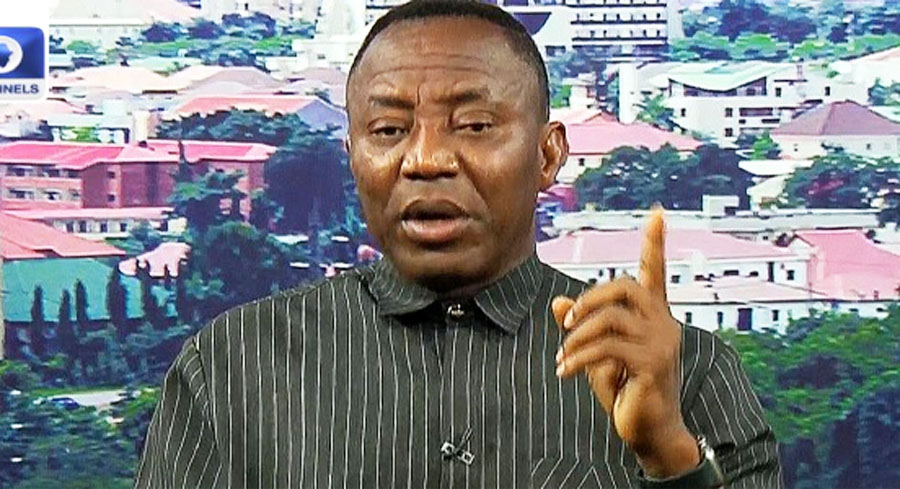
The African Action Congress (AAC) presidential candidate for the 2027 general election, Omoyele Sowore, has declared that no Nigerian can realistically survive on the current N70,000 minimum wage, insisting that even his proposed N500,000 wage would be inadequate amid the country’s soaring cost of living.
Sowore made the remarks on Friday morning while appearing as a guest on Rapid FM in Rivers State. The activist and former presidential candidate was defending his long-standing proposal for a N500,000 minimum wage when the presenter questioned whether increasing workers’ salaries could worsen inflation by putting more money into circulation without a corresponding increase in productivity. Sowore firmly rejected this argument, stating that Nigeria’s inflation was primarily being driven by the rising cost of production and government policies rather than workers’ wages. He said the N70,000 minimum wage was grossly inadequate for workers to meet their most basic needs, including food, transportation, accommodation and clothing.
“There’s nobody technically, or realistically, that can live on N70,000 a month, even a newborn baby,” Sowore said. He added that his proposed N500,000 minimum wage should not be regarded as excessive given current economic realities. “Even the N500,000 I’m proposing, in my view, it’s too small. But just for the sake of argument, say, okay, let’s pay people just enough to be able to make a living. That’s what the proposal is about,” he said.
READ ALSO:
- Defence Minister Musa accuses El-Rufai of deliberately planning Southern Kaduna killings
- Kano Rainstorms: Nine Lives Lost, Over 4,500 Displaced
- Atiku, X user clash over Almajiri crisis, street begging
Sowore argued that Nigeria was experiencing what economists describe as “cost-push inflation”, which occurs when rising production and input costs drive up the prices of goods and services. “It’s driven by cost. The type of inflation we have is called cost-push inflation. And it is because the cost of production is very high,” he said. According to him, rising electricity tariffs have contributed significantly to the increase in the cost of production across the country. “You know how much electricity tariffs have jumped in the last three years,” he said. He also linked the rising cost of transportation to the removal of the petrol subsidy by the Federal Government, noting that the increase in fuel prices had translated into higher transportation costs for workers, businesses and consumers.
“It is caused by transportation cost. As a result of the removal of fuel subsidy, wherever you were going for N500 before, it became N2,000. That’s the cost of your inflation,” he said. He further blamed the depreciation of the naira and Nigeria’s heavy dependence on imported goods for worsening the economic situation. “When they just came and floated the naira, at the same time they removed subsidy. That’s the cause of inflation,” he said. Sowore argued that reducing inflation would require the government to tackle the high cost of electricity, transportation and production rather than suppressing workers’ wages. “If you want to change the direction of that inflation, you have to deal with this. You have to reduce electricity tariff. You have to bring back fuel subsidy. That would then force down the cost of transportation and reduce the cost of production,” he said.
The AAC candidate illustrated his argument by comparing Nigeria’s domestic production costs with those of other countries, warning that high energy and transportation costs could eventually make it cheaper to import basic commodities than produce them locally. “It is easier for you to import garri – I just want to be ridiculous by saying from China, than to produce it in Rivers State now because the cost of production of garri in China is lower,” he said. He said Nigeria must make its productive sector more competitive by reducing energy and transportation costs while providing reliable infrastructure for businesses and industries.
Sowore also rejected the argument that higher wages should be tied to concerns over workers’ productivity. He said workers enter into contractual relationships with employers to provide labour in exchange for adequate compensation, while employers and supervisors should be responsible for monitoring productivity. “As long as you come to work as a contract, and you work from, say, 8 o’clock to 2pm or 4pm, I’m going to pay you enough money to enable you to survive,” he said. “The argument as to whether the civil servants are doing work or not is not the argument we are having. That one is regulatory. That is the job of the supervisor,” he added.
READ ALSO:
- Court restrains Lizzy Anjorin from posting Priscilla Ojo’s son’s photos
- NBA controversy: VDM apologises to security agencies over ‘unknown gunmen’ remarks
- LASU: Mother allegedly assaults daughter’s roommate, student rushed to LASUTH with eye injury
Sowore also questioned the disparity between the earnings of ordinary workers and the allowances, security details, convoys and other benefits enjoyed by political office holders. He argued that government could afford to improve workers’ wages by reducing what he described as wasteful spending and the high cost of governance. “What has the Nigerian worker done wrong to you that you cannot take a little bit now?” he asked. He criticised the use of large convoys by governors and other public officials, questioning the necessity of some government expenditure. “I don’t understand till tomorrow why a governor who is living in his house in Port Harcourt, to go to his office needs an outrider,” Sowore said. “I don’t know why a governor should commission a project in the first place. If a project is completed, it should be commissioned by use,” he added. The presidential candidate also questioned the large security votes allocated to governors, saying such expenditure should be scrutinised and redirected where necessary. “We waste so much money,” he said.
Using food costs as an example, Sowore demonstrated why the current minimum wage was already insufficient to cover workers’ daily meals. “If you eat three times a day, and you are eating N500 food, you eat N1,500. When you go to work or not, you will eat,” he said. “Multiply N1,500 by 30 days in a month. Are we not already past N70,000? Are you not going to transport yourself? Are you not going to wash your clothes?” He said the debate should therefore focus on whether workers could actually survive on their salaries rather than whether N500,000 was too much. “That is the argument. It’s very simple,” he said. Sowore insisted that reducing the cost of governance could help fund better wages and improve workers’ ability to remain productive. “If you don’t want people to work, you don’t want them to go to work, then don’t hire people to work for you. But the moment you have that contract, there’s so much work for you,” he said. “The moment you have that contract, you must ensure that their living conditions are at least able to support their motivation or their ability to get to work and back,” Sowore added.
Sowore’s remarks come amid growing calls from labour unions for a comprehensive wage review. At the Nigeria Rights of Workers Summit 2026 held in Birnin Kebbi in early August, the Nigeria Labour Congress (NLC) and Trade Union Congress (TUC) formally demanded a N500,000 minimum wage, aligning with Sowore’s long-standing position. The unions argued that the current N70,000 wage had been overtaken by economic realities. NLC Deputy President Adewale Adeyanju stated that the current N70,000 minimum wage “can no longer adequately respond to the realities confronting Nigerian workers, particularly with the rising cost of living.” The NLC and TUC said the period agreed for the last minimum wage review had expired in July, making it necessary to commence fresh negotiations with the Federal Government.
Additionally, the Federal Workers Forum has written to President Bola Tinubu and the National Assembly, demanding an immediate increase in the federal minimum wage from N70,000 to N300,000, arguing that the current salary structure can no longer sustain civil servants amid Nigeria’s cost-of-living crisis. The forum also proposed a maximum salary of N1.5 million for Level 17 officers, describing the current wage structure as “suicidal” for federal workers. According to a recent BudgIT report, workers in Nigeria’s most expensive states are left with as little as N7,261 a month after meeting the minimum cost of a healthy diet. The report showed that in Ekiti State, an estimated N62,739 of the N70,000 monthly wage was required to feed an adult adequately, exposing the weakness of judging wage adequacy simply by whether monthly income exceeds the cost of food.
No One Can Live on N70,000, Not Even a Newborn – Sowore







metro
Former Delta Governor Emmanuel Uduaghan Dies at 71, Three Days to 72nd Birthday
Former Delta Governor Emmanuel Uduaghan Dies at 71, Three Days to 72nd Birthday
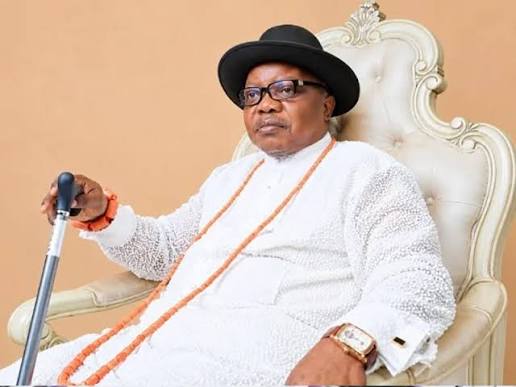
ASABA — The political landscape of Delta State and Nigeria at large was thrown into mourning on Monday following the demise of former Governor, Dr. Emmanuel Eweta Uduaghan, who passed away at the age of 71.
According to a statement released by his family, the former two-term governor died in the early hours of Monday, October 19, 2026, following a brief illness. His passing comes just three days shy of his 72nd birthday, as he was born on October 22, 1954.
The family’s statement, signed by Toju Anire Uduaghan, described the death as an “immeasurable loss.” They remembered the late politician as a “source of strength, a father figure, a beloved brother and uncle, and a respected elder” whose life and service touched countless people across Delta State and the nation.
A Legacy of Service
Dr. Uduaghan leaves behind a robust political legacy that spanned over a decade and a half in the public service of Delta State.
He began his political career as the Commissioner for Health between 1999 and 2003 under the administration of Governor James Ibori. His administrative acumen saw him elevated to the position of Secretary to the State Government (SSG) from 2003 to 2007, a role in which he played a pivotal part in the state’s governance structure.
In 2007, he successfully contested and won the governorship seat, succeeding his mentor, Ibori. He was re-elected for a second term, governing the oil-rich state until 2015. During his tenure, Uduaghan was widely known for his “Delta Beyond Oil” economic diversification agenda, an initiative aimed at shifting the state’s economic dependence from crude oil to agriculture, infrastructure, and human capital development. He was also fondly referred to as the “Talk and Do” governor due to his penchant for completing projects.
Outpouring of Grief
Following the announcement, tributes have begun to pour in from across the country. Political associates, friends, and constituents have taken to social media and traditional media to express their shock and sorrow at the passing of the former governor.
Many recall his time in office as a period of relative peace and infrastructural growth in Delta State. His family has requested privacy during this difficult time as they mourn the loss of their patriarch.
Funeral arrangements are expected to be announced by the family in the coming days.
Former Delta Governor Emmanuel Uduaghan Dies at 71, Three Days to 72nd Birthday
metro
Farmers-Herders Clash in Abuja Leaves Three Dead as Houses, Shops Burn
Farmers-Herders Clash in Abuja Leaves Three Dead as Houses, Shops Burn
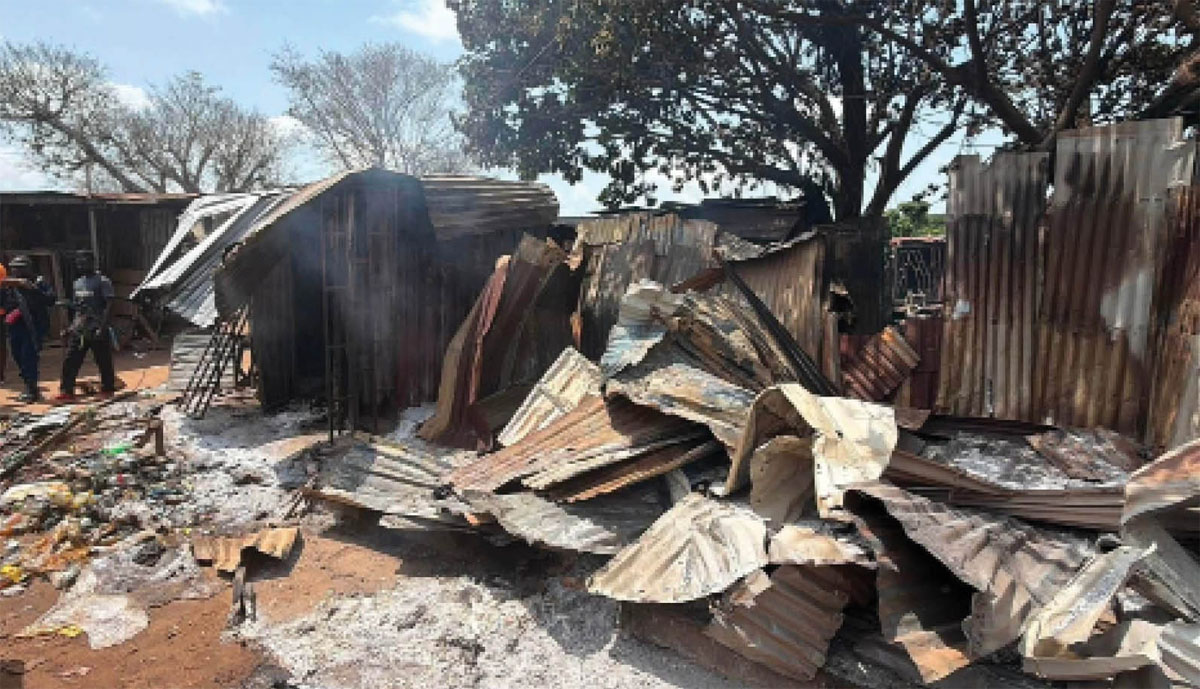
At least three people have reportedly been killed in a renewed farmers-herders clash in Paikon-Kore community, Gwagwalada Area Council of the Federal Capital Territory (FCT), with several others injured and properties destroyed.
The violence, which reportedly began on Saturday afternoon and continued until Sunday morning, October 18, left houses, shops and a motorcycle burnt, while goods in the affected shops were destroyed.
However, another report put the death toll at five, with eyewitnesses saying both farmers and herders were among those killed. The exact number of casualties had yet to be officially confirmed as of the time of reporting.
A resident, Danlami Ibrahim, said the latest confrontation began after cattle allegedly entered a groundnut farm containing crops that were yet to be harvested.
According to him, the farm owner confronted the herders, leading to an argument that escalated into violence. One of the herders allegedly attacked a farmer with a cutlass, severing one of his hands.
The incident reportedly triggered anger among residents and led to retaliatory attacks in which three herders were said to have been killed. Several other people sustained injuries and were taken to hospitals in Gwagwalada for treatment.
READ ALSO:
- Nollywood Mourns as Actress, Beauty Queen Tenia Abraham Dies at 32
- FG Challenges World Bank’s 124% Debt-to-Revenue Warning, Cites Rising Income
- Mbappé Runs Riot as Real Madrid Crush Sevilla 4-1 Ahead of El Clásico
The Secretary of the Miyetti Allah Cattle Breeders Association of Nigeria (MACBAN), Gwagwalada Area Council chapter, Mohammed Usman, confirmed that three herders had died, although he said he was still gathering information about the number of injured people.
Usman said he had informed the Gwagwalada Area Council chairman, Kasim Mohammed Ikwa, about the incident.
Ikwa visited the affected community on Sunday alongside the Divisional Police Officer, SP Aaron H. Kaura, and other security personnel. He condemned the violence and called on residents to remain calm.
The council chairman said a stakeholders’ meeting would be convened to address the crisis and identify ways to prevent further clashes. He urged farmers, herders, youths and community leaders to embrace dialogue and avoid retaliatory attacks.
Ikwa also advised farmers whose crops were damaged by cattle to report such incidents to security agencies rather than resort to self-help. He urged residents to cooperate with security personnel deployed to restore peace.
The FCT Police Command spokesperson, SP Josephine Adeh, had yet to publicly respond to enquiries about the incident as of the time of the report.
The latest violence follows previous confrontations in Paikon-Kore and neighbouring communities, including a clash in August that reportedly left a farmer with a severed hand and three other people with machete injuries.
Recurring disputes over cattle grazing, destruction of crops, access to farmland and grazing routes have fuelled tensions between farming and herding communities across parts of the FCT.
Herders have also complained about the encroachment of designated grazing areas by farms, housing estates and other developments, while farmers have repeatedly raised concerns about livestock entering their fields and destroying crops.
The Federal Government has identified the FCT as one of the priority areas for efforts to address farmers-herders conflicts. The Ministry of Livestock Development has also announced plans to work with the FCT Administration and pastoralist groups to rehabilitate grazing reserves and improve livestock management.
Security analysts have called for stronger early-warning systems, impartial law enforcement, compensation for damaged crops and effective mediation to prevent local disputes from escalating into deadly violence.
The latest clash has renewed concerns about the safety of rural communities around Abuja and the need for a lasting solution to recurring disputes between farmers and herders.
Farmers-Herders Clash in Abuja Leaves Three Dead as Houses, Shops Burn
metro
Ogun House Fire Horror: Husband Arrested After Wife Dies Following Domestic Dispute

Ogun House Fire Horror: Husband Arrested After Wife Dies Following Domestic Dispute
Police in Ogun State have arrested a 56-year-old man, Madarikan Emehinola, following the death of his 40-year-old wife, Igbagbo Erobe, in a house fire in Igbo-Edu, Ogun Waterside Local Government Area.
The incident, suspected to be a case of arson, reportedly occurred at about 8:30pm following a domestic dispute, according to an eyewitness quoted by PUNCH Metro.
The Ogun State Police Command said the incident was reported at the Abigi Divisional Police Headquarters on Sunday, October 18, 2026, after information was received that a residential building had been set ablaze, resulting in the woman’s death.
The suspect was subsequently arrested as investigators began efforts to establish the circumstances surrounding the tragedy.
The eyewitness account suggests that the fire occurred after a disagreement between the couple. However, the precise sequence of events leading to the fire, the cause of the blaze and whether it was deliberately set have yet to be conclusively established by the police.
The deceased’s body has been deposited at a mortuary for a post-mortem examination to help determine the cause of death and provide further evidence for the investigation.
READ ALSO:
- NLC, Falana Mobilise Nigerians Against Petrol Price Hike, Mount Pressure on Tinubu Govt
- Buhari Feared Tinubu Presidency, Resisted Pressure to Back Him – Baba-Ahmed Claims
- NAFDAC Probes Corps Member’s Death at Enugu Camp as Fake Drug Claims Emerge
The police said the case was being processed for transfer to the State Criminal Investigation Department (SCID), Eleweran, Abeokuta, for a more detailed investigation.
The Commissioner of Police in Ogun State, Bode Ojajuni, assured residents that the matter would be investigated thoroughly and professionally in accordance with the law.
He reiterated the command’s commitment to protecting lives and property and ensuring that allegations involving serious crimes receive appropriate investigative attention.
The police also urged members of the public to report suspicious activities and provide credible information that could assist investigators in establishing what happened.
Although the incident is being investigated as suspected arson, the available information has not conclusively established how the fire started or the motive behind it. The eyewitness account of a domestic dispute is an allegation that investigators will need to examine alongside other evidence.
The outcome of the post-mortem examination and further police inquiries is expected to provide additional information about the woman’s death.
The suspect’s arrest does not establish guilt. He remains entitled to due process as investigators work to determine the circumstances surrounding the fatal fire.
Ogun House Fire Horror: Husband Arrested After Wife Dies Following Domestic Dispute
-
 metro3 days ago
Suspended Archbishop Ibezim Drags Anglican Primate to Court, Challenges Six-Month Leave
-

 metro3 days ago
Imodi-Ijebu Muslim Community Bets on 20 Chiefs to Drive Education, Economic Growth
-
 metro3 days ago
NAPTIP Raises Alarm as Parents Allegedly Trade Children for Sex, Arrests Woman in Abuja
-

 News2 days ago
FG Draws Red Line on Fuel Subsidy, Warns of Naira Crisis if Reforms Are Reversed
-
 News3 days ago
Tinubu Reappoints INEC Commissioner, Nominates Six Others Ahead of 2027 Elections
-

 metro3 days ago
DSS Arrests Maina’s Fugitive Son in Abuja After Six Years on the Run
-

 Auto3 days ago
Tesla’s Flying Roadster Rekindles Race to Put Cars in the Sky
-

 Entertainment3 days ago
Toyin Abraham Breaks Silence as Leaked Audio Sparks Fresh Nollywood Feud