

metro
Omokri faults U.S. talkshow host on alleged killing of Christians

Omokri faults U.S. talkshow host on alleged killing of Christians
No genocide against Christians, Omokri tells popular US tv talk show host, Maher
Former presidential aide, Mr Reno Omokri, has refuted a claim made by a popular United States (U.S.) political talk show host, Mr Bill Maher, that Christians are being targeted and killed in Nigeria.
Based on a viral video in which a man with a Nigerian accent claimed that over 500,000 Christians were killed in the country last year, Maher, a comedian who hosts the longest-running talk show in the US, Real Time with Bill Maher, asserted that a systematic genocide was happening in Nigeria.
The offensive video was circulated by international X influencers, including Radio Genoa, an anti-Islamic personality, who stokes negative sentiments against the Muslim faith.
However, Omokri, in a statement yesterday, rebutted Maher’s claim, asserting there was no basis for the assertion. He said that the claim contradicted the widely accepted figures on terrorism and violent crime deaths worldwide.
He countered, “Mr Maher ought to know that there is an apolitical global body with the mandate to report on deaths from insecurity and terrorism worldwide, and that is the Institute for Economics and Peace, which annually publishes the Global Terrorism Index, which calculates how many people were killed from terror, insecurity, war, and conflicts in the world.
READ ALSO:
- Otedola to Tinubu: Make fuel subsidy report public, name those who looted funds
- RTEAN appoints Henry Ugwu as national secretary general
- Nigeria secures $750m World Bank loan for broadband expansion, health security
“According to the Institute’s 2024 Global Terrorism Index, a total of 8,352 people died from terror and insecurity last year. Even when you add this to the 36,000 civilians the United Nations says were killed by armed conflicts globally in the same year, you will agree with me that it is preposterous to allege that half a million Christians were killed in Nigeria last year, or Mr Maher’s more conservative figure of 100,000.”
Accusing comedian Maher, who is neither a Christian nor has visited Nigeria, of mischief and falsehood peddling, Omokri stated that the situation in Nigeria has been exaggerated.
“To be sure, we do face a challenge with insecurity in Nigeria, caused by banditry and farmer/herder clashes in the Northwest and Middle Belt, and an Islamic insurgency in the Northeast, which has largely subsided and is in its final stages,” he said.
Omokri explained that President Bola Tinubu’s administration had directly addressed the issue of insecurity in the country, noting that those responsible for terrorism and banditry are being arrested, prosecuted, and neutralised.
He recalled that Kabiru Sokoto, the mastermind behind the St. Theresa Catholic Church Christmas Day bombing on 25 December 2011 in Madalla, Niger State, which killed 37 Christians, had been convicted.
He also recalled that those responsible for the attack on St. Francis Xavier Catholic Church in Owo, Ondo State, on 5 June 2022, have also been apprehended and are now facing prosecution.
READ ALSO:
- Security of Gulf states under threat, warns ex-Saudi envoy
- Four killed during shooting arson attack on Michigan church
- APC blames Atiku for Nigeria’s security woes
Omokri emphasised that over 16 notorious bandits who caused trouble for Nigerians in the Northwest and North-east, including Kachalla Ali Kawaje, Kachalla Halilu Sububu, Kachalla Damina, Kachalla Dangote, Kachalla Jafaru, Kachalla Barume, Kachalla Shehu, and Tsoho, have been neutralised.
Additionally, the former presidential aide observed that victims of terrorism and banditry included both Christians and Muslims, explaining that more of the latter had been killed as violence subsided.
He stated, “According to the Armed Conflict Location and Event Data, ACLED, in the last decade, Nigeria has experienced the highest number of deaths from insecurity in the Northwest of the country, which is the heartland of Islam in Nigeria and the seat of the Sokoto Caliphate, the headquarters for Islamic leadership in the country.
“According to the ACLED, between 2010 and 2023, 13,485 people have died in these attacks, with the vast majority being Muslims. Bad enough. But nowhere near 500,000, or 100,000.”
Omokri explained that the initial intention of the terrorists was to spark a religious war, which was frustrated by the maturity of Christian leaders, including Pastor Ayo Oritsejafor, who dissuaded Christians from retaliating against the violence on their brothers.
“The point of this treatise is simply to dispel the propaganda spread by either ignorant or mischievous persons about a genocide or regicide in Nigeria. Such a thing is the figment of the imagination of those making such wild and dangerous claims,” the former aide to former President Goodluck Jonathan said.
Omokri faults U.S. talkshow host on alleged killing of Christians








metro
Niger Police Arrest Five Over Alleged Plot to Sacrifice Biological Children for Wealth
Niger Police Arrest Five Over Alleged Plot to Sacrifice Biological Children for Wealth
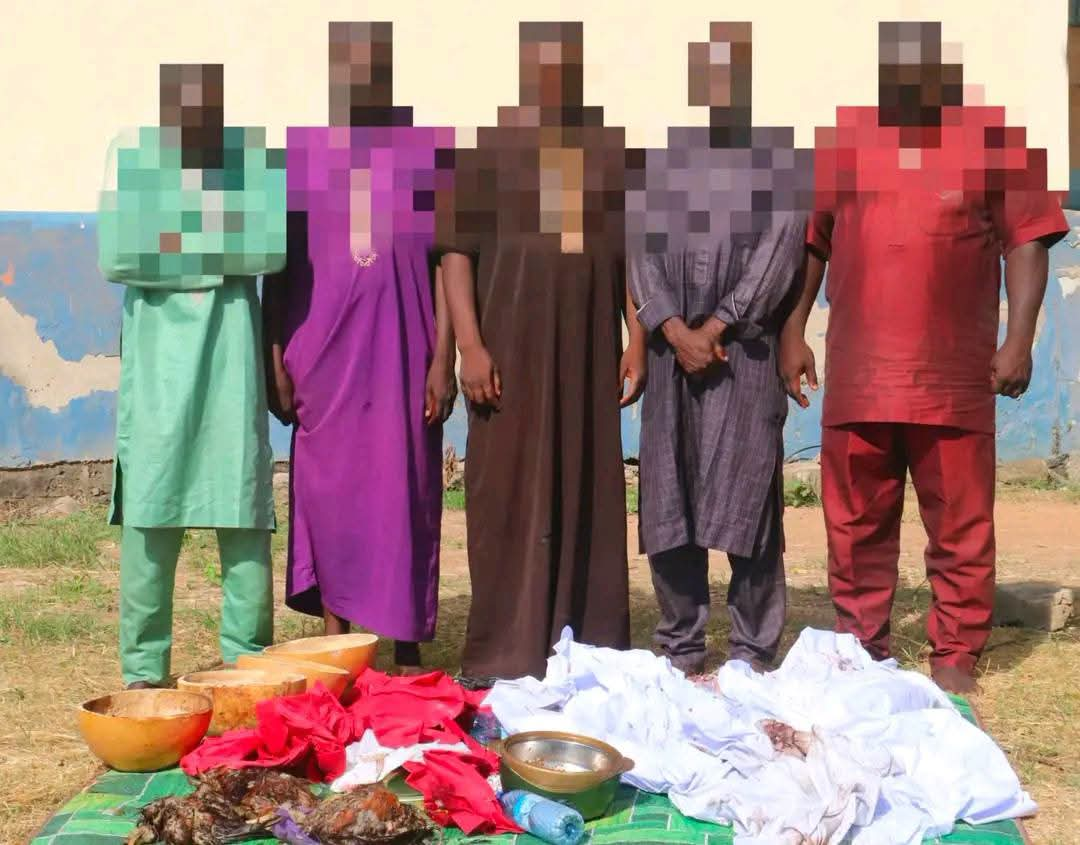
The Niger State Police Command has arrested five suspects, including four fathers accused of offering their biological children for money rituals in exchange for wealth.
The suspects were reportedly apprehended while allegedly preparing to perform a money ritual at an isolated compound in the Garima area of Bosso, Minna, following an intelligence report received by police operatives.
The Police Public Relations Officer, SP Wasiu Abiodun, disclosed this in a statement issued in Minna, saying the operation was carried out on October 27, 2026, at about 8:30pm.
According to him, operatives of the Anti-Kidnapping Unit, while on routine patrol around Bosso, received information about suspected ritual activities taking place at an isolated compound in Garima.
The officers reportedly stormed the location and arrested five men, identified as Mohammed Idris Dogara, 57, from Nasarawa State but residing in Bosso; Aliyu Sule, 25; Abubakar Abdullahi, 40, both of New Garima; Ibrahim Mohammed Hamisu, 43; and Shehu Abubakar, 40, a native doctor from Maikunkele.
Items recovered from the scene included blood-stained red and white clothing, four calabashes, two live chickens, three slaughtered chickens, a blood-stained knife and a large mat on which the suspected ritual materials were arranged.
The police said preliminary investigations revealed that four of the suspects — Ibrahim, Abubakar, Aliyu and Mohammed — had approached the native doctor to perform money rituals for them using a human skeleton allegedly discovered during mining activities.
However, the native doctor reportedly declined their request, insisting that he did not offer such services.
The four men allegedly persisted and offered their biological children as sacrifices in exchange for different sums of money.
Following their insistence, the native doctor reportedly instructed each of them to procure a chicken and meet at a designated location for the ritual.
The police said the suspects were arrested while allegedly carrying out the activities. Aliyu Sule was reportedly found holding a blood-stained knife and preparing to slaughter his chicken, while three other suspects had already slaughtered theirs.
The command added that the suspects had confessed to the allegations and were undergoing further investigation before being charged to court.
Meanwhile, the police statement did not disclose the identities or ages of the children allegedly offered for the ritual, or whether they had been located and placed under protective care.
It also remained unclear whether any of the children had been exposed to immediate danger or whether the alleged ritual had progressed beyond the slaughtering of the chickens.
The circumstances surrounding the alleged discovery of the human skeleton and its intended use in the ritual were also not fully explained by the police.
metro
NNPCL Slashes Petrol Price By Up To ₦80, Sells At ₦1,325 Per Litre In Abuja

NNPCL Slashes Petrol Price By Up To ₦80, Sells At ₦1,325 Per Litre In Abuja
ABUJA — Motorists in Abuja have received some relief following a downward adjustment in petrol pump prices by the Nigerian National Petroleum Company Limited (NNPCL), with its retail outlets now dispensing the product at ₦1,325 per litre in parts of the Federal Capital Territory.
The reduction, which followed a recent adjustment in the petrol pricing structure by the Dangote Petroleum Refinery, represents a decrease of between ₦45 and ₦80 per litre compared with the previous prices charged by NNPCL retail outlets.
According to a report by DAILY POST published on Wednesday, November 4, 2026, a market survey showed that NNPCL filling stations in Abuja and neighbouring areas had adjusted their pump prices from between ₦1,370 and ₦1,405 to ₦1,325 per litre.
The new price was reportedly implemented at the company’s retail outlets in Gwarimpa and along the Kubwa Expressway.
A fuel attendant at one of the affected NNPCL filling stations confirmed the development, explaining that the downward adjustment took effect on Wednesday afternoon.
The latest reduction comes amid renewed movements in Nigeria’s downstream petroleum market, where changes in the prices of petrol supplied by domestic refineries and depot operators continue to influence retail pump prices.
Barely two days before the adjustment, Dangote Petroleum Refinery reportedly reduced its petrol gantry price to ₦1,215 per litre, prompting expectations that filling stations would review their retail prices downward.
The development had raised hopes among motorists that the reduction in the refinery’s wholesale price would translate into cheaper petrol at filling stations across the country.
However, the impact has not been uniform across locations, as petrol prices continue to fluctuate among different marketers.
In Lagos, for instance, separate market checks reported by Vanguard showed that NNPCL and MRS filling stations were selling petrol at approximately ₦1,360 per litre, while some independent marketers charged between ₦1,365 and ₦1,370.
The differing prices highlight the competitive and changing nature of Nigeria’s deregulated downstream petroleum market.
Although the latest adjustment offers some relief to motorists patronising the affected NNPCL outlets in Abuja, it remains unclear whether the company will extend the new price to all its filling stations nationwide.
For now, motorists in Abuja can take advantage of the reduced price at the affected outlets, while consumers elsewhere will have to monitor developments in their respective locations as petroleum marketers continue to adjust their pump prices.
NNPCL Slashes Petrol Price By Up To ₦80, Sells At ₦1,325 Per Litre In Abuja
metro
Dogo Gide Throws Spanner in Islamic State’s Expansion Plans, Forces Terrorists to Retreat in North-West Nigeria
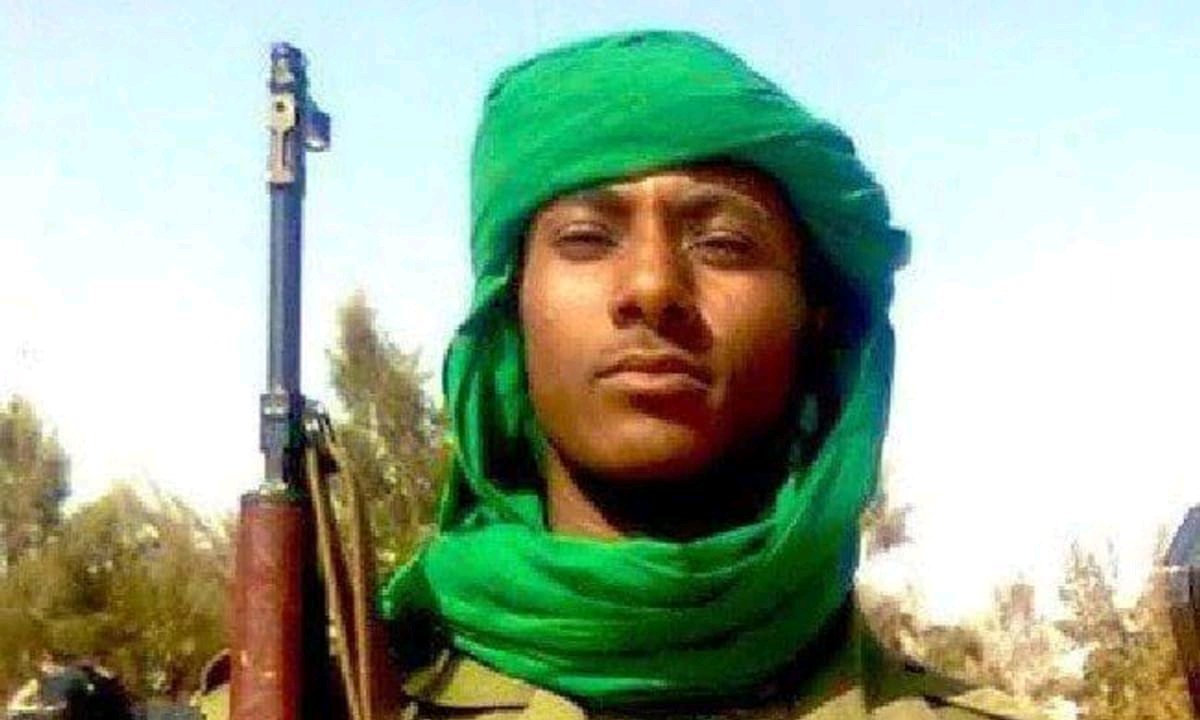
Dogo Gide Throws Spanner in Islamic State’s Expansion Plans, Forces Terrorists to Retreat in North-West Nigeria
A notorious Nigerian bandit kingpin, Dogo Gide, has reportedly emerged as a major obstacle to the expansion of the Islamic State Sahel Province (ISSP) in north-western Nigeria, after confronting the terror group over attempts to establish control in territories dominated by armed bandit groups.
The development represents another significant dimension of the increasingly complicated security situation in northern Nigeria, where criminal bandit groups and internationally affiliated terrorist organisations are competing for territorial influence, recruits and control of local communities.
According to a report published by Daily Post on Wednesday, November 4, 2026, security analyst Brant Philip disclosed that Dogo Gide had frustrated the Islamic State’s expansion efforts following a confrontation with its fighters around the middle of 2026.
Philip, in an analysis shared on X, reportedly explained that ISSP had spent the past two years attempting to establish stronger relationships with armed groups operating across Sokoto, Zamfara and Niger states.
The organisation reportedly approached several bandit groups, seeking to persuade their members to abandon their existing criminal networks, embrace its extremist ideology and become part of its wider terrorist campaign.
While some groups in Zamfara and Sokoto reportedly accepted the overtures and joined the Islamic State’s network, others resisted the attempts to bring them under its control.
Philip further disclosed that ISSP fighters had defeated several bandit groups in northern Zamfara, subsequently taking over their camps, weapons and vehicles.
However, the group’s expansion reportedly encountered a formidable challenge when its fighters came into confrontation with Dogo Gide, one of the most influential bandit warlords operating in north-western Nigeria.
According to the analyst, Gide’s resistance presented one of the most significant obstacles to the Islamic State’s efforts to extend its influence into the region.
Dogo Gide’s confrontation with ISSP is particularly significant given his previous associations with jihadist groups operating in Nigeria.
A January 2026 research publication by the Combating Terrorism Center (CTC) at the United States Military Academy, West Point, examined the complicated relationship between powerful bandit leaders and jihadist organisations seeking to expand their influence in Nigeria.
The study, titled Kachallas and Kinship: Understanding Jihadi Expansion and Diffusion in Nigeria, identified Dogo Gide as an influential warlord whose relationship with extremist groups had historically been opportunistic rather than based on firm ideological commitment.
Researchers explained that Gide had previously maintained relationships with jihadist factions, including Ansaru and the faction led by Sadiku, while using such associations to strengthen his influence among fellow bandits and in his dealings with local communities.
However, the relationship eventually deteriorated as the jihadist groups attempted to extend their authority over territories controlled by his fighters.
The research documented confrontations between Gide’s group and Ansaru in 2024, as well as clashes with Sadiku’s faction in early 2025.
According to accounts cited by the researchers, the jihadists wanted Gide to embrace their ideology and surrender control of his territory, but he rejected the demands, insisting that outsiders could not take over areas controlled by local armed groups.
The study further explained that Gide had become increasingly determined to protect his territorial influence against jihadist encroachment.
The Islamic State Sahel Province is an affiliate of the global Islamic State terrorist organisation, with its traditional operational strongholds across parts of Mali, Niger and Burkina Faso.
However, the group has increasingly sought to extend its activities into north-western Nigeria, exploiting insecurity, weak border controls and existing networks of armed groups.
Security assessments by the Centre for Strategic and International Studies (CSIS) have also identified the growing activities of ISSP in Nigeria, particularly through its connections with militant networks operating around the Niger-Nigeria border.
The group’s activities have raised concerns about the possible convergence of Sahel-based terrorist organisations and Nigeria’s longstanding banditry crisis.
Research by the Combating Terrorism Center has similarly highlighted how jihadist organisations attempt to establish relationships with local armed groups to gain access to territory, recruits, resources and logistical support.
However, the researchers cautioned that powerful bandit leaders are not necessarily willing to surrender their independence or territorial authority to foreign or externally based extremist organisations.
The reported confrontation involving Dogo Gide illustrates the complex relationship between banditry and terrorism in Nigeria’s north-west.
Although both criminal bandits and jihadist organisations engage in armed violence, kidnapping and attacks on communities, their objectives and interests are not necessarily identical.
For powerful warlords such as Gide, maintaining territorial control and influence over local armed networks remains a major consideration.
Consequently, attempts by jihadist organisations to impose ideological authority or absorb independent bandit groups can trigger violent resistance.
Nevertheless, resistance from powerful bandit leaders does not automatically eliminate the threat posed by jihadist organisations.
The January 2026 West Point study specifically cautioned that although Dogo Gide has the capacity to complicate jihadist expansion in core bandit territories, extremist networks could continue establishing themselves in other parts of western Nigeria.
For Nigeria’s security agencies, the emerging situation presents another challenge in the fight against insecurity: confronting criminal banditry while preventing internationally affiliated terrorist organisations from exploiting existing armed networks to establish deeper roots in the country.
The reported confrontation between Dogo Gide and ISSP therefore underscores an important reality: the battle for influence in north-western Nigeria is no longer simply between security forces and bandits, but increasingly involves competing armed organisations seeking control of the region.
Dogo Gide Throws Spanner in Islamic State’s Expansion Plans, Forces Terrorists to Retreat in North-West Nigeria
-

 International3 days ago
Iran Unveils ‘We Will Kill Trump’ Billboard in Tehran Amid Rising Tensions With US
-

 Politics3 days ago
Tinubu’s Re-election: Osun APC Leaders Reject Oyebamiji-Led Campaign Council
-

 metro2 days ago
FG’s N50,000 Relief: OPay Details Eligibility Check Process, Issues Strong Warning Against Scams
-

 metro2 days ago
Bandits Demand Over ₦100m Ransom for 15 Abducted Islamiya Students in Niger
-
 International3 days ago
Trump Shocks Israel, Announces End To $4bn Annual US Military Aid
-

 International2 days ago
Australia Under Pressure To Scrap $368bn US-UK Nuclear Submarine Deal As Inquiry Warns Of China War
-

 International3 days ago
Tourist Killed, Three Injured as Two Helicopters Collide Near Mount Everest in Nepal
-

 Politics3 days ago
2027: ‘Hardest Part Of Economic Reforms Over, Next Tinubu Term Will Be Harvest’ – Shettima