
metro
One in four tested Nigerian men not biological father – DNA report

One in four tested Nigerian men not biological father – DNA report
A new report from Smart DNA, Nigeria’s leading DNA testing centre, has revealed that one in every four Nigerian men who undergo paternity testing is not the biological father of the child in question, a statistic that continues to send shockwaves through the country’s evolving family landscape.
The company’s 2025 Annual DNA Testing Report, which covers the period from July 2024 to June 2025, offers a sobering reflection on the intersections of trust, family, migration, and modern science in Nigeria.
Despite a slight decrease from 27% in 2024 to 25% in 2025, the high rate of paternity exclusion remains disturbingly consistent, sustaining what experts are now calling a quiet but growing social crisis.
“These findings are not just about science; they speak volumes about trust, relationships, and the economic and emotional realities of Nigerian families today,” Elizabeth Digia, Operations Manager at Smart DNA Nigeria said.
One of the most jarring revelations in this year’s report is the disproportionate rate of paternity rejection among firstborn sons.
A staggering 64% of firstborn males tested were found to have no biological relation to their presumed fathers, making them the most likely group to return negative results.
This figure dwarfs the rates seen in later-born children, painting a complex psychological and social picture.
Firstborn daughters also showed higher-than-average rejection rates, though not as dramatically as sons. This trend may hint at an unspoken cultural phenomenon where early relationships, pre-marital pregnancies, or strategic partner selection are factors at play. It also raises pointed questions about how fatherhood is initially claimed and socially accepted, especially in patriarchal societies where male lineage is often tied to legacy, inheritance, and family name continuity.
READ ALSO:
Beyond family drama, Nigeria’s current mass emigration movement—popularly dubbed the “Japa” wave—has triggered a 13.1% surge in immigration-related DNA testing, according to the report. This marks a historic increase in testing for visa applications, dual-citizenship verifications, and family reunification abroad. With growing numbers of Nigerian families preparing for or adjusting to life in the diaspora, many are turning to DNA services to legally validate familial ties—especially when processing foreign documentation for minors. “DNA testing is now a gateway not just to truth, but to opportunity,” Digia noted. “We’re seeing parents use this as a safeguard—essentially, a form of biological passport for their children.”
Men remain overwhelmingly at the center of the paternity inquiry ecosystem, accounting for 88.2% of all test initiations. This near-monopoly on demand reflects a society where women are often excluded from questioning lineage, and men shoulder both the emotional and financial consequences of uncertainty. Notably, older men (aged 41 and above) were the most frequent clients, initiating 45.5% of all tests, suggesting that financial stability may empower them to finally confront long-held suspicions. At the same time, the majority of children tested (58.6%) were under the age of five—indicating that in many cases, doubts arise early and parents are acting quickly to establish the truth. The gender of the child also appears to matter: 53.8% of those tested were male, highlighting an enduring bias toward confirming male lineage. This may be rooted in traditional views that prioritize the male child in matters of succession and family identity.
While Lagos continues to lead in testing volume with 69% of all samples, its internal landscape is shifting. The Mainland-to-Island balance has tilted, with Island locations like Lekki and Ajah seeing increased testing activity—likely reflecting the upward mobility of Lagos residents and the growing influence of the Island’s more affluent communities. Top testing locations included Lekki (20.3%), Yaba (15.8%), Ajah and Ikorodu (10.5% each), and Surulere and Ikeja (9% each).
Ethnic representation within the data offers another layer of complexity. Yoruba clients made up 53% of all testing cases, followed by Igbo clients at 31.3%. Surprisingly, Hausa participation remains minimal at 1.2%, despite their significant population nationally. This disparity may reflect cultural taboos, religious sensitivities, or lower awareness and acceptance of DNA testing in Northern Nigeria.
READ ALSO:
- Bello Turji’s men kill villagers, abduct dozens in Sokoto raids
- Boko Haram founder’s son arrested in Chad
- Bandits kill community leader after prayers in Kwara
The new data also showed that most tests are quiet, personal – and not legally driven. This means that the vast majority of tests—83.7%—were conducted for “peace of mind” rather than legal proceedings. This confirms a hidden but widespread culture of suspicion and silent inquiry into family truths. Court-mandated tests, by contrast, made up only 1.4% of cases. Equally telling is that 80% of tests involved only one child, suggesting most clients are focused on a single case of doubt, rather than conducting a blanket investigation across all children. This speaks to the specificity—and often the secrecy—surrounding these tests.
Despite the scale and implications of these findings, experts are worried that Nigeria still lacks legislation on paternity fraud, unlike countries such as South Africa where legal protections exist for men misled about biological parenthood. The absence of clear legal recourse continues to leave thousands of men without support or restitution after years of emotional and financial investment in children they later discover are not theirs. The report recommends urgent policy reform, alongside the integration of DNA testing into family health services and public education campaigns to counter myths and normalize open paternity conversations.
The 2025 Smart DNA Nigeria Annual Report does more than quantify paternity doubts—it exposes a society in quiet upheaval, grappling with trust, evolving family dynamics, and the unforgiving truth offered by modern science. At its core, this isn’t just a health or legal issue—it is a national conversation waiting to happen. “Behind every statistic is a human story—of doubt, betrayal, clarity, or relief. Our mission is not just to deliver answers, but to handle them with the compassion and confidentiality our clients deserve,” Digia concluded.
One in four tested Nigerian men not biological father – DNA report







metro
Sokoto Officials Deny Mosque Attack as Bandits Kill Five in Gatawa Raid

Sokoto Officials Deny Mosque Attack as Bandits Kill Five in Gatawa Raid
Chairman of Sabon Birni Local Government Area in Sokoto State, Ayuba Hashimu, has dismissed viral reports alleging that bandits attacked a mosque in the council area, killing an Imam and several worshippers.
Some online platforms had circulated claims that armed bandits stormed a mosque in Sabon Birni, murdered the Imam and congregants, and abducted others.
However, Hashimu, speaking by telephone, described the reports as entirely false.
“I don’t know any mosque that was attacked, not to talk of killing of an Imam and worshippers. The story is false,” he stated.
A member of the state legislature representing the area, Hon. Aminu Boza, also debunked the claims, insisting that no mosque attack occurred on Saturday.
READ ALSO:
- Benin govt says coup attempt foiled as soldiers seize state TV, gunfire rocks Cotonou
- BREAKING: Soldiers Announce Coup in Benin Republic, Declare President Patrice Talon Removed
- Nigerian Army Suspends Retirements for Officers Amid Nationwide Security Emergency
“I don’t know how they got their story, but it is not true. No mosque was attacked by bandits,” he said.
While officials denied the alleged mosque incident, a separate early morning assault on Gatawa town within the same LGA resulted in five deaths and left one person critically injured.
A resident, who spoke on condition of anonymity, told Daily Trust that six people — including two married women, two teenage girls and two young boys — were abducted by attackers suspected to be bandits.
“The bandits invaded our community around 1:30 a.m. and started shooting sporadically. Our vigilantes engaged them, but four of them paid the supreme price on the spot. Two others sustained gunshot injuries and were taken to the hospital, but one later died,” the resident said.
He added that the attackers also stole livestock as they fled.
“We heard them exchanging fire with security agents, but none of the abducted persons was rescued,” he recounted.
Sokoto Officials Deny Mosque Attack as Bandits Kill Five in Gatawa Raid
metro
FG Begins Recovery of 157 Almajiri Schools
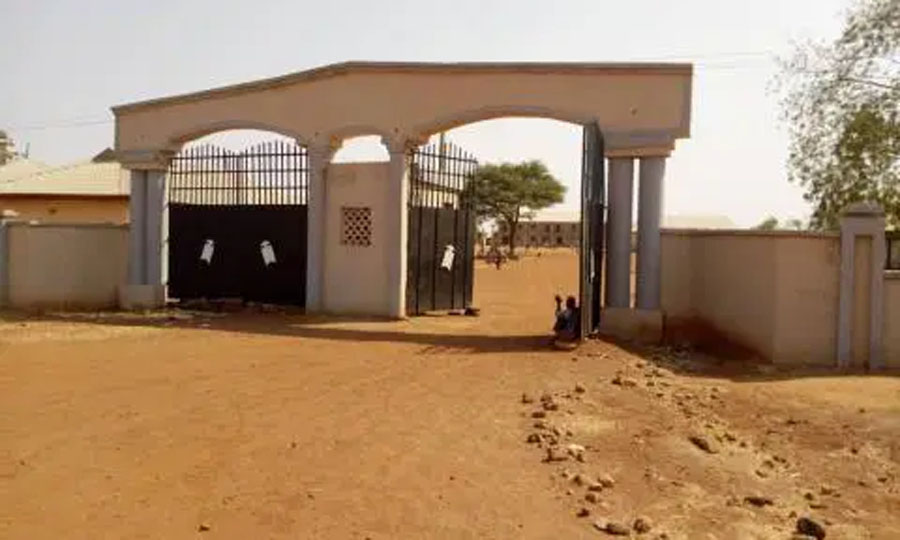
FG Begins Recovery of 157 Almajiri Schools
The Federal Government has commenced the official recovery of 157 model Almajiri schools built during the administration of former President Goodluck Jonathan, in a renewed push to overhaul Almajiri education across the country.
The move was confirmed by Nura Muhammad, spokesperson for the National Commission for Almajiri and Out-of-School Children Education (NCAOOSCE), during an interview in Abuja on Sunday. He described the recovery process as a crucial step toward fully revamping and institutionalising Almajiri education.
Muhammad explained that the effort follows the establishment of a legally backed national body now responsible for all Almajiri-related programmes — a structure he said was missing during earlier reform attempts.
READ ALSO:
- Benin govt says coup attempt foiled as soldiers seize state TV, gunfire rocks Cotonou
- BREAKING: Soldiers Announce Coup in Benin Republic, Declare President Patrice Talon Removed
- Nigerian Army Suspends Retirements for Officers Amid Nationwide Security Emergency
While commending former President Jonathan for constructing the schools, which he described as “a noble and well-intentioned stride toward modernising the system,” Muhammad noted that the previous initiative struggled due to weak policy implementation, including inadequate engagement with Alarammas, the traditional Qur’anic teachers who play a central role in the Almajiri system.
He added that the lack of a strong institutional framework — with the project operating only as an initiative under the Federal Ministry of Education — contributed to its challenges.
According to him, the Commission is now strengthened by law and guided by the newly adopted National Policy on Almajiri Education, positioning it to deliver sustainable reforms.
Muhammad expressed confidence that harmful practices linked to the Almajiri system would be addressed, emphasising that all recovered schools would soon be fully under the Commission’s control and rehabilitated to serve their original purpose.
FG Begins Recovery of 157 Almajiri Schools
metro
Delta State Police Arrest Suspects in Killing of Retired Justice Ifeoma Okogwu

Delta State Police Arrest Suspects in Killing of Retired Justice Ifeoma Okogwu
The Delta State Police Command has made a significant breakthrough in the investigation into the murder of retired Justice Ifeoma Okogwu in Anambra State, arresting key suspects linked to the case.
Spokesperson SP Bright Edafe disclosed on Sunday that operatives of the Homicide Section of the State Criminal Investigation Department (CID), acting on credible intelligence, apprehended 25-year-old security guard Godwin Mngumi on 6 December 2025. Mngumi allegedly murdered the retired judge, and authorities also recovered the deceased’s mobile phone from him.
READ ALSO:
- Nigerian Army Suspends Retirements for Officers Amid Nationwide Security Emergency
- Dangote urges wealthy Nigerians to invest in industries, not luxury cars, private jets
- Mohamed Salah Slams Liverpool Boss Arne Slot, Hints at Anfield Exit Ahead of AFCON Departure
According to Edafe, Mngumi confessed to inviting a friend, Nnaji Obalum, and another accomplice — who remains at large — to the residence where the crime was committed. Obalum has since been arrested, while a manhunt continues for the third suspect.
The arrests mark a major step forward in the effort to bring all perpetrators of the high-profile murder to justice.
Delta State Police Arrest Suspects in Killing of Retired Justice Ifeoma Okogwu

-
 metro3 days ago
Senate Launches Emergency Probe into Widespread Lead Poisoning in Ogijo, Lagos/Ogun
-

 Sports1 day ago
2026 FIFA World Cup Draw: England Draw Croatia as Brazil Face Morocco in Tournament Opener
-

 metro3 days ago
Ned Nwoko vows legal action against rising online harassment, criminal defamation
-

 News1 day ago
Akpabio sues Natasha for ₦200bn over sexual harassment allegations
-

 metro2 days ago
Tinubu Govt Eliminates More Terrorists Than Previous Administrations — Fani-Kayode
-

 metro1 day ago
Four Teenagers Killed in Banki Explosion as Borno Police Probe Deadly IED Blast
-
 Opinion2 days ago
Siyan Oyeweso: Lessons in virtue and vanity
-

 metro20 hours ago
Akpabio denies filing new ₦200bn lawsuit against Natasha