

metro
Police Launch Investigation as Three Children Die at Anambra Native Doctor’s Residence

Police Launch Investigation as Three Children Die at Anambra Native Doctor’s Residence
Tragedy strikes Ideani community as three children are confirmed dead and a fourth fights for life after being discovered unconscious at a female traditional healer’s residence. The suspect, known as “Ezenwanyi,” is now in police custody.
AWKA, Nigeria – A quiet community in Anambra State has been plunged into mourning after the lifeless bodies of three children were discovered at the residence of a female native doctor in Umuoduba Village, Ideani, Idemili North Local Government Area. The tragic incident, which unfolded in the early hours of Wednesday, August 5, 2026, has left residents reeling as they grapple with unanswered questions about how four young children ended up unconscious inside the compound of a woman popularly known in the area as “Ezenwanyi.” Three of the children – believed to be between the ages of 6 and 15 – were confirmed dead by medical doctors upon arrival at the hospital. A fourth child, who was found still breathing, remains in critical condition and is currently receiving emergency medical care.
According to eyewitness accounts, residents of Umuoduba Village raised the alarm after discovering the children lying unconscious within the female native doctor’s residential premises. The compound, which also serves as a livestock farm housing pigs and poultry birds, became the scene of a frantic rescue operation. A resident, who spoke on condition of anonymity, described the harrowing moment, stating that the four children were found unconscious in the woman’s compound, with three already lifeless when they were discovered, while the fourth child was still breathing and was rushed to the hospital. The resident added that the incident has left everyone in the community in shock. Community leaders and local security personnel quickly mobilized, and the fourth child was rushed to a nearby hospital by residents before emergency responders could arrive. The identities of the deceased children and their relationship to the suspect have not yet been established.
READ ALSO:
- Explosion kills ISWAP bombmakers, foreign IED experts in Borno
- Alleged Coup Mastermind Suggested Approaching Wike for Funding, Court Documents Show
- High Power Bills Force BUK to Halt Electric Vehicle Charging on Campus
The Anambra State Police Command confirmed the incident, stating that operatives attached to the Ogidi Police Division responded immediately after receiving a distress call. In an official statement, the Police Public Relations Officer, SP Tochukwu Ikenga, expressed the command’s profound sadness over the discovery, explaining that upon receipt of the information, the rescue team led by police operatives rushed the victims immediately to a hospital for emergency medical attention. He regretted that three of the children were certified dead by medical doctors, while the fourth victim is currently receiving treatment in a critical condition. The female suspect, identified locally as Ezenwanyi, was arrested and taken into custody by police operatives in collaboration with community leaders. She is currently being held at the Ogidi Police Division, while the State Criminal Investigation Department (SCID) has taken over the case for a comprehensive, intelligence-driven, and evidence-based investigation.
Videos circulating on social media showed the Divisional Police Officer (DPO) of Ogidi Division, accompanied by community leaders, local security personnel, and the President-General of Ideani Community, Chief Paul Okoye, inspecting the premises shortly after the incident. The footage also captured the suspect leading security operatives around different sections of the compound, including shrines and residential areas, as stunned residents watched from a distance. Also present at the scene was the Chairman of Idemili North Local Government Area, Mr. Stanley Nkwoka, who joined the inspection team.
As of the time of filing this report, several critical questions remain unanswered, including the identities and ages of the children, which have not been officially released, and what their relationship was with the suspect. Community members have speculated that the children may have been workers at the residence or possibly relatives, but these claims remain unverified. The cause of their deaths also remains unclear, as autopsy results are pending, with the bodies having been deposited in a mortuary for preservation and further examination. The police spokesperson expressed hope that the surviving child’s testimony, subject to medical recovery and clearance, would provide crucial clues to unravel the circumstances surrounding the tragedy.
SP Tochukwu Ikenga extended the command’s condolences to the bereaved families and the entire Ideani community, urging residents to remain calm, avoid spreading unverified information, and allow investigators to conduct their work without interference. He reiterated that the Anambra State Police Command expresses profound sadness over this incident and urged the public to avoid spreading unverified information while allowing investigators to conclude their work, adding that further updates will be provided as the investigation progresses.
The tragedy has sent shockwaves through Ideani and beyond, with many residents struggling to come to terms with the loss of three young lives. The incident has also reignited conversations about the activities of traditional healers and the safety of children in communities across Anambra State. As the investigation continues, the community waits for answers – and justice – for the three children whose lives were cut short in such heartbreaking circumstances.
Police Launch Investigation as Three Children Die at Anambra Native Doctor’s Residence











metro
Niger Police Arrest Five Over Alleged Plot to Sacrifice Biological Children for Wealth
Niger Police Arrest Five Over Alleged Plot to Sacrifice Biological Children for Wealth
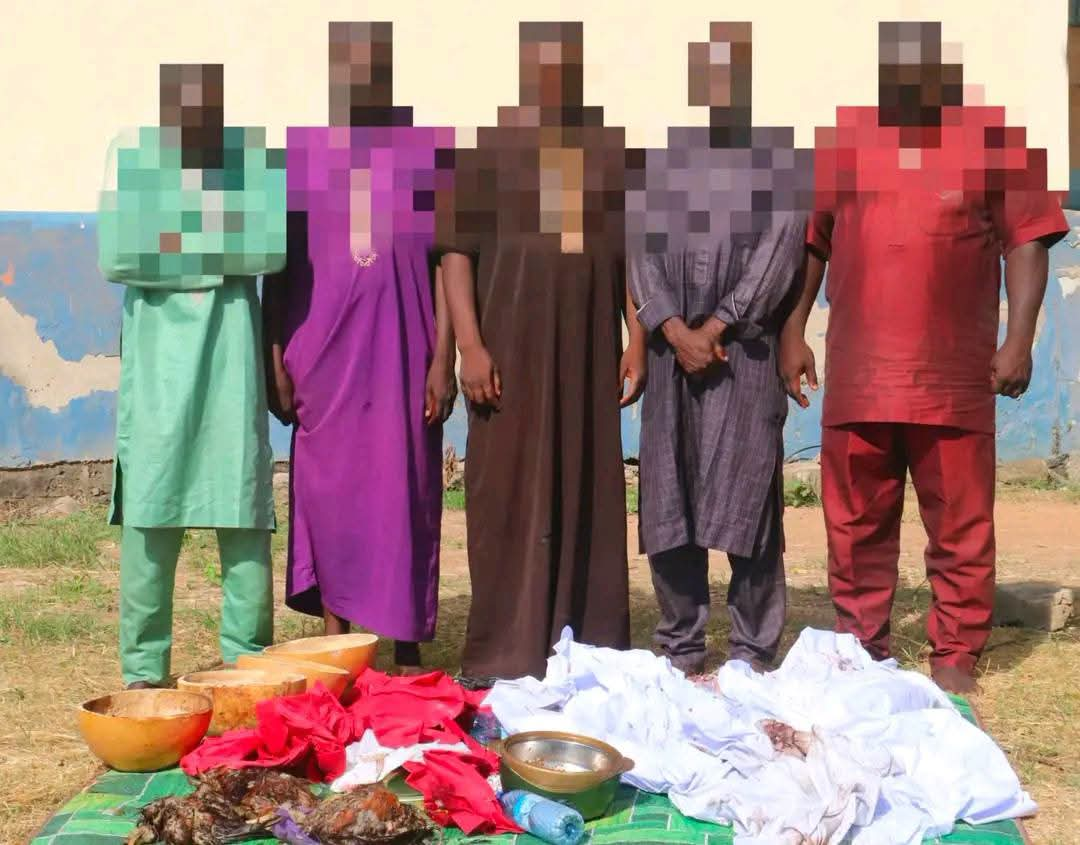
The Niger State Police Command has arrested five suspects, including four fathers accused of offering their biological children for money rituals in exchange for wealth.
The suspects were reportedly apprehended while allegedly preparing to perform a money ritual at an isolated compound in the Garima area of Bosso, Minna, following an intelligence report received by police operatives.
The Police Public Relations Officer, SP Wasiu Abiodun, disclosed this in a statement issued in Minna, saying the operation was carried out on October 27, 2026, at about 8:30pm.
According to him, operatives of the Anti-Kidnapping Unit, while on routine patrol around Bosso, received information about suspected ritual activities taking place at an isolated compound in Garima.
The officers reportedly stormed the location and arrested five men, identified as Mohammed Idris Dogara, 57, from Nasarawa State but residing in Bosso; Aliyu Sule, 25; Abubakar Abdullahi, 40, both of New Garima; Ibrahim Mohammed Hamisu, 43; and Shehu Abubakar, 40, a native doctor from Maikunkele.
Items recovered from the scene included blood-stained red and white clothing, four calabashes, two live chickens, three slaughtered chickens, a blood-stained knife and a large mat on which the suspected ritual materials were arranged.
The police said preliminary investigations revealed that four of the suspects — Ibrahim, Abubakar, Aliyu and Mohammed — had approached the native doctor to perform money rituals for them using a human skeleton allegedly discovered during mining activities.
However, the native doctor reportedly declined their request, insisting that he did not offer such services.
The four men allegedly persisted and offered their biological children as sacrifices in exchange for different sums of money.
Following their insistence, the native doctor reportedly instructed each of them to procure a chicken and meet at a designated location for the ritual.
The police said the suspects were arrested while allegedly carrying out the activities. Aliyu Sule was reportedly found holding a blood-stained knife and preparing to slaughter his chicken, while three other suspects had already slaughtered theirs.
The command added that the suspects had confessed to the allegations and were undergoing further investigation before being charged to court.
Meanwhile, the police statement did not disclose the identities or ages of the children allegedly offered for the ritual, or whether they had been located and placed under protective care.
It also remained unclear whether any of the children had been exposed to immediate danger or whether the alleged ritual had progressed beyond the slaughtering of the chickens.
The circumstances surrounding the alleged discovery of the human skeleton and its intended use in the ritual were also not fully explained by the police.
metro
NNPCL Slashes Petrol Price By Up To ₦80, Sells At ₦1,325 Per Litre In Abuja

NNPCL Slashes Petrol Price By Up To ₦80, Sells At ₦1,325 Per Litre In Abuja
ABUJA — Motorists in Abuja have received some relief following a downward adjustment in petrol pump prices by the Nigerian National Petroleum Company Limited (NNPCL), with its retail outlets now dispensing the product at ₦1,325 per litre in parts of the Federal Capital Territory.
The reduction, which followed a recent adjustment in the petrol pricing structure by the Dangote Petroleum Refinery, represents a decrease of between ₦45 and ₦80 per litre compared with the previous prices charged by NNPCL retail outlets.
According to a report by DAILY POST published on Wednesday, November 4, 2026, a market survey showed that NNPCL filling stations in Abuja and neighbouring areas had adjusted their pump prices from between ₦1,370 and ₦1,405 to ₦1,325 per litre.
The new price was reportedly implemented at the company’s retail outlets in Gwarimpa and along the Kubwa Expressway.
A fuel attendant at one of the affected NNPCL filling stations confirmed the development, explaining that the downward adjustment took effect on Wednesday afternoon.
The latest reduction comes amid renewed movements in Nigeria’s downstream petroleum market, where changes in the prices of petrol supplied by domestic refineries and depot operators continue to influence retail pump prices.
Barely two days before the adjustment, Dangote Petroleum Refinery reportedly reduced its petrol gantry price to ₦1,215 per litre, prompting expectations that filling stations would review their retail prices downward.
The development had raised hopes among motorists that the reduction in the refinery’s wholesale price would translate into cheaper petrol at filling stations across the country.
However, the impact has not been uniform across locations, as petrol prices continue to fluctuate among different marketers.
In Lagos, for instance, separate market checks reported by Vanguard showed that NNPCL and MRS filling stations were selling petrol at approximately ₦1,360 per litre, while some independent marketers charged between ₦1,365 and ₦1,370.
The differing prices highlight the competitive and changing nature of Nigeria’s deregulated downstream petroleum market.
Although the latest adjustment offers some relief to motorists patronising the affected NNPCL outlets in Abuja, it remains unclear whether the company will extend the new price to all its filling stations nationwide.
For now, motorists in Abuja can take advantage of the reduced price at the affected outlets, while consumers elsewhere will have to monitor developments in their respective locations as petroleum marketers continue to adjust their pump prices.
NNPCL Slashes Petrol Price By Up To ₦80, Sells At ₦1,325 Per Litre In Abuja
metro
Dogo Gide Throws Spanner in Islamic State’s Expansion Plans, Forces Terrorists to Retreat in North-West Nigeria
Dogo Gide Throws Spanner in Islamic State’s Expansion Plans, Forces Terrorists to Retreat in North-West Nigeria
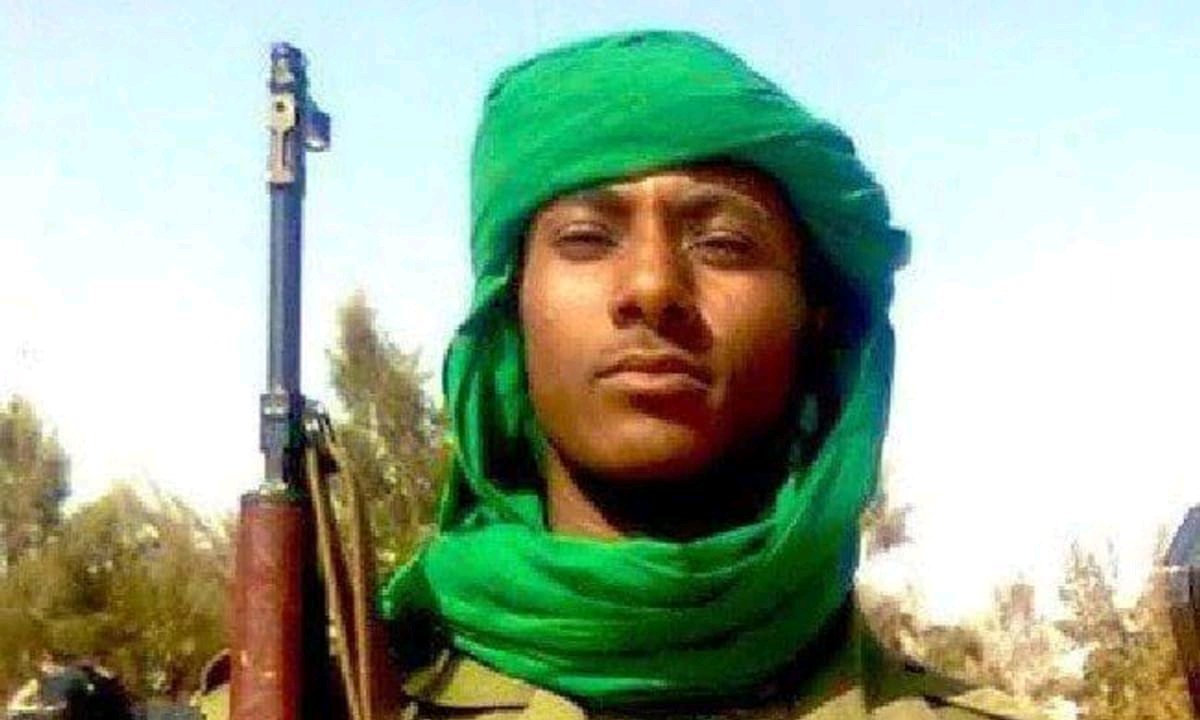
A notorious Nigerian bandit kingpin, Dogo Gide, has reportedly emerged as a major obstacle to the expansion of the Islamic State Sahel Province (ISSP) in north-western Nigeria, after confronting the terror group over attempts to establish control in territories dominated by armed bandit groups.
The development represents another significant dimension of the increasingly complicated security situation in northern Nigeria, where criminal bandit groups and internationally affiliated terrorist organisations are competing for territorial influence, recruits and control of local communities.
According to a report published by Daily Post on Wednesday, November 4, 2026, security analyst Brant Philip disclosed that Dogo Gide had frustrated the Islamic State’s expansion efforts following a confrontation with its fighters around the middle of 2026.
Philip, in an analysis shared on X, reportedly explained that ISSP had spent the past two years attempting to establish stronger relationships with armed groups operating across Sokoto, Zamfara and Niger states.
The organisation reportedly approached several bandit groups, seeking to persuade their members to abandon their existing criminal networks, embrace its extremist ideology and become part of its wider terrorist campaign.
While some groups in Zamfara and Sokoto reportedly accepted the overtures and joined the Islamic State’s network, others resisted the attempts to bring them under its control.
Philip further disclosed that ISSP fighters had defeated several bandit groups in northern Zamfara, subsequently taking over their camps, weapons and vehicles.
However, the group’s expansion reportedly encountered a formidable challenge when its fighters came into confrontation with Dogo Gide, one of the most influential bandit warlords operating in north-western Nigeria.
According to the analyst, Gide’s resistance presented one of the most significant obstacles to the Islamic State’s efforts to extend its influence into the region.
Dogo Gide’s confrontation with ISSP is particularly significant given his previous associations with jihadist groups operating in Nigeria.
A January 2026 research publication by the Combating Terrorism Center (CTC) at the United States Military Academy, West Point, examined the complicated relationship between powerful bandit leaders and jihadist organisations seeking to expand their influence in Nigeria.
The study, titled Kachallas and Kinship: Understanding Jihadi Expansion and Diffusion in Nigeria, identified Dogo Gide as an influential warlord whose relationship with extremist groups had historically been opportunistic rather than based on firm ideological commitment.
Researchers explained that Gide had previously maintained relationships with jihadist factions, including Ansaru and the faction led by Sadiku, while using such associations to strengthen his influence among fellow bandits and in his dealings with local communities.
However, the relationship eventually deteriorated as the jihadist groups attempted to extend their authority over territories controlled by his fighters.
The research documented confrontations between Gide’s group and Ansaru in 2024, as well as clashes with Sadiku’s faction in early 2025.
According to accounts cited by the researchers, the jihadists wanted Gide to embrace their ideology and surrender control of his territory, but he rejected the demands, insisting that outsiders could not take over areas controlled by local armed groups.
The study further explained that Gide had become increasingly determined to protect his territorial influence against jihadist encroachment.
The Islamic State Sahel Province is an affiliate of the global Islamic State terrorist organisation, with its traditional operational strongholds across parts of Mali, Niger and Burkina Faso.
However, the group has increasingly sought to extend its activities into north-western Nigeria, exploiting insecurity, weak border controls and existing networks of armed groups.
Security assessments by the Centre for Strategic and International Studies (CSIS) have also identified the growing activities of ISSP in Nigeria, particularly through its connections with militant networks operating around the Niger-Nigeria border.
The group’s activities have raised concerns about the possible convergence of Sahel-based terrorist organisations and Nigeria’s longstanding banditry crisis.
Research by the Combating Terrorism Center has similarly highlighted how jihadist organisations attempt to establish relationships with local armed groups to gain access to territory, recruits, resources and logistical support.
However, the researchers cautioned that powerful bandit leaders are not necessarily willing to surrender their independence or territorial authority to foreign or externally based extremist organisations.
The reported confrontation involving Dogo Gide illustrates the complex relationship between banditry and terrorism in Nigeria’s north-west.
Although both criminal bandits and jihadist organisations engage in armed violence, kidnapping and attacks on communities, their objectives and interests are not necessarily identical.
For powerful warlords such as Gide, maintaining territorial control and influence over local armed networks remains a major consideration.
Consequently, attempts by jihadist organisations to impose ideological authority or absorb independent bandit groups can trigger violent resistance.
Nevertheless, resistance from powerful bandit leaders does not automatically eliminate the threat posed by jihadist organisations.
The January 2026 West Point study specifically cautioned that although Dogo Gide has the capacity to complicate jihadist expansion in core bandit territories, extremist networks could continue establishing themselves in other parts of western Nigeria.
For Nigeria’s security agencies, the emerging situation presents another challenge in the fight against insecurity: confronting criminal banditry while preventing internationally affiliated terrorist organisations from exploiting existing armed networks to establish deeper roots in the country.
The reported confrontation between Dogo Gide and ISSP therefore underscores an important reality: the battle for influence in north-western Nigeria is no longer simply between security forces and bandits, but increasingly involves competing armed organisations seeking control of the region.
Dogo Gide Throws Spanner in Islamic State’s Expansion Plans, Forces Terrorists to Retreat in North-West Nigeria
-

 International3 days ago
Iran Unveils ‘We Will Kill Trump’ Billboard in Tehran Amid Rising Tensions With US
-

 Politics3 days ago
Tinubu’s Re-election: Osun APC Leaders Reject Oyebamiji-Led Campaign Council
-

 metro2 days ago
FG’s N50,000 Relief: OPay Details Eligibility Check Process, Issues Strong Warning Against Scams
-

 metro2 days ago
Bandits Demand Over ₦100m Ransom for 15 Abducted Islamiya Students in Niger
-
 International3 days ago
Trump Shocks Israel, Announces End To $4bn Annual US Military Aid
-

 International2 days ago
Australia Under Pressure To Scrap $368bn US-UK Nuclear Submarine Deal As Inquiry Warns Of China War
-

 International3 days ago
Tourist Killed, Three Injured as Two Helicopters Collide Near Mount Everest in Nepal
-

 Politics3 days ago
2027: ‘Hardest Part Of Economic Reforms Over, Next Tinubu Term Will Be Harvest’ – Shettima