

metro
Police Shake-Up: IGP Disu Redeploys 10 AIGs in Major Leadership Reshuffle Across Eight States
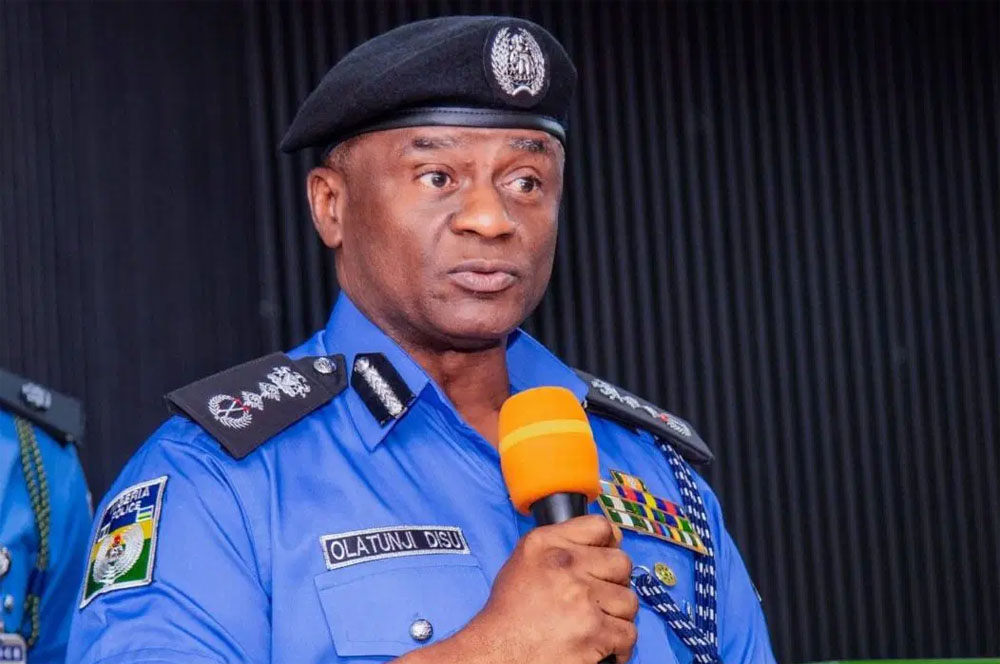
Police Shake-Up: IGP Disu Redeploys 10 AIGs in Major Leadership Reshuffle Across Eight States
The Inspector-General of Police, IGP Tunji Disu, has approved the immediate redeployment of 10 Assistant Inspectors-General of Police (AIGs) to strategic commands, departments, and formations across eight states and the Federal Capital Territory, in a major shake-up aimed at strengthening operational efficiency and reinforcing the Force’s command structure.
The directive was contained in a police wireless signal issued by the Force Secretariat, Abuja, on Monday, July 27, 2026, and marked “Most Immediate”. The message, referenced TH.5361/FS/FHQ/ABJ/SUB.7/X Posting Senior Officers, was circulated to all major police departments, zonal commands, state commands, specialised formations, and training institutions for immediate implementation.
The development comes barely a week after Disu decorated 13 new AIGs at the Force Headquarters in Abuja, charging them to uphold professionalism across their various formations. The Police Service Commission (PSC) had earlier approved the promotion of 13 Commissioners of Police to the rank of AIG, alongside 17 Deputy Commissioners of Police promoted to CP and 63 other senior officers advanced to higher ranks. Among the newly decorated AIGs are Obono Nnaghe Itam, Bassey Samuel Ewah, Osagie John Agans-Irabor, Monday Agbonika, Iyamah Daniel Edobor, Isah Danladi Nda, Akaninyene Ifebem Ezima, Livingstein Ikioye Orutugu, Bello Rashid Afegbua, and Betty Enekpen Otimenyin.
READ ALSO:
- Over 40 Bandits, 8 Commanders Killed as Security Forces Repel Katsina Attack
- Gunmen Kill 5 Siblings, 25 Others in Midnight Attack on Kaduna Community
- Hoodlums Invade ATBU Female Hostel, Rob Students of Over 50 Phones, Valuables
Under the new postings, AIG Polycarp Emeka Nwonyi was posted to Zone 9 Command in Umuahia, while AIG Obono Nnaghe Itam was redeployed as Commandant of the Police Staff College in Jos. AIG Bassey Samuel Ewa was posted to Zone 15 Command in Maiduguri, and AIG Osagie John Agans-Irabor was deployed to Zone 3 Command in Yola. AIG Monday Agbonika was posted to Zone 5 Command in Benin, while AIG Daniel Edobor Iyamah was redeployed to the Department of Operations at Force Headquarters, Abuja. AIG Isah Danladi Nda was posted to the Force Criminal Investigation Department Annex in Kaduna, and AIG Akaniyene Ifebem Ezima was redeployed to the Nigeria Police Force National Cybercrime Centre in Abuja. AIG Bello Rashid Afegbua was posted to Zone 6 Command in Calabar, while AIG Betty Enekpen Otimenyin was deployed to Zone 8 Command in Lokoja. The postings take immediate effect, and the Force Headquarters has directed departments responsible for personnel records, establishment, and computer documentation to update their records to reflect the new postings.
Speaking to The Whistler, a source familiar with the development said more shake-ups could be expected within the Nigeria Police Force, noting that the IGP has pledged not to tolerate abuse of positions or power. “The IG has reiterated his commitment to reforming the Nigerian Police Force. Going forward, more shake-ups will be seen. Officers will no longer be comfortable in positions. This will encourage administrative growth and positive policing across the Nigerian Police Force at all levels,” the source said. The source further noted that before the current administration, some AIGs and DIGs had remained in charge of certain formations for extended periods, and the IGP’s reform efforts would address this to encourage administrative growth. Although the source did not attribute the prolonged stay of officers in such positions to corruption or abuse of office, it was noted that the confidence that could come with overstaying in a particular position could undermine operational effectiveness.
In a remarkable milestone for Cross River State, three of its sons were simultaneously elevated to the prestigious rank of AIG, marking the first time in the history of the Nigeria Police Force that three officers from the same state attained the rank at the same time. The three officers are AIG Akaninyene Ezima from Biase Local Government Area, AIG Nnaghe Itam from Yakurr Local Government Area, and AIG Bassey Ewah from Etung Local Government Area. A reception organised in their honour at the Nigeria Police Resource Centre in Abuja attracted prominent Cross River leaders, including Senator Eteng Jones Williams and other public officials. Former Commissioner of Police, Barr. Lawrence Alobi, who served as Chairman of the occasion, commended the officers for their years of dedicated and selfless service to the nation, describing the simultaneous elevation as unprecedented.
Police Shake-Up: IGP Disu Redeploys 10 AIGs in Major Leadership Reshuffle Across Eight States









metro
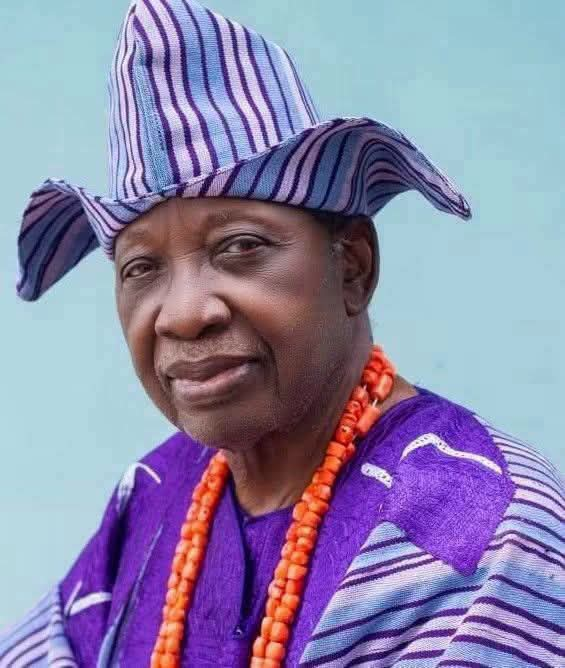
Oyo Govt Draws Battle Line With Soun, Rejects Suspension of Ogbomoso Balogun
Oyo Govt Draws Battle Line With Soun, Rejects Suspension of Ogbomoso Balogun
The state government insists Dr Saka Adegbite Balogun remains the recognised Balogun of Ogbomosoland, citing the Chiefs Law, while the palace reportedly maintains that the chief was suspended over an oath-of-allegiance dispute.
The Oyo State Government has challenged the purported suspension of Dr Saka Adegbite Balogun as the Balogun of Ogbomosoland by the Soun of Ogbomoso, Oba Ghandi Afolabi Olaoye, insisting that the action is inconsistent with the state’s chieftaincy law.
The government reaffirmed Dr Balogun as the duly recognised holder of the traditional title and urged members of the public to disregard reports suggesting that he had been removed from office.
The position was contained in a press release dated October 23, 2026, and signed by the Commissioner for Local Government and Chieftaincy Matters, Hon. Ademola Ojo.
In the statement, the government said it had taken note of media reports concerning the reported action against the Balogun by the paramount ruler of Ogbomosoland.
Citing Section 26(1) of the Chiefs Law of Oyo State, Cap. 28, 2000, Ojo maintained that the authority to appoint, suspend or depose a recognised Part II chieftaincy holder rests exclusively with the state governor.
He consequently questioned the legality of the action attributed to Oba Olaoye, arguing that it was contrary to the existing legal framework regulating traditional council operations in the state.
The commissioner stated, “By virtue of the provision of CAP 28, Section 26(1) of the Chiefs Law of Oyo State (2000), the power to appoint, suspend and depose a Part II Recognised Chieftaincy holder is vested exclusively on the Executive Governor of the State.”
He described the reported action against Dr Balogun as an aberration under the law, stressing that the state government continued to recognise him as the Balogun of Ogbomosoland.
“In the light of this, Dr Saka Adegbite Balogun is the duly recognised Balogun of Ogbomosoland,” the commissioner declared.
The government therefore called on members of the public to disregard any purported removal of the chief.
The intervention has brought the disagreement over the Balogun title into sharper focus, raising questions about the respective powers of traditional rulers and the state government in the administration of recognised chieftaincy matters.
Reports preceding the government’s statement indicated that Oba Olaoye had issued an indefinite suspension order against Dr Balogun in a letter dated October 20, 2026.
The monarch reportedly based the decision on the chief’s alleged failure to sign an oath of allegiance to the throne, which the palace considers a requirement for the proper assumption and exercise of responsibilities attached to the title.
However, the state government’s position centres on the statutory authority it says governs the suspension or removal of a recognised Part II chieftaincy holder.
The Balogun’s family also reportedly faulted the palace’s action, claiming that it received the suspension letter without prior communication, a query or an opportunity for dialogue.
According to a report by Nigerian Tribune, the family, through the secretary of the Balogun Chieftaincy House, Balogun Olajire Raufu, appealed to the state government to intervene in the dispute.
The family also alleged that Dr Balogun and his entourage had been denied access to the palace on two occasions during traditional homage proceedings. These claims have not been independently established in this report.
The dispute has therefore exposed a disagreement over both the circumstances surrounding the suspension and the authority to take such action against a recognised chief.
While the Soun’s reported decision was linked to the oath-of-allegiance issue, the Oyo State Government has maintained that the status of a recognised Part II chieftaincy holder is governed by the provisions of the state’s Chiefs Law.
The government’s statement, however, did not indicate that a court had ruled on the dispute, nor did it announce any separate judicial determination of the competing positions.
For now, the state government’s position is that Dr Saka Adegbite Balogun remains the duly recognised Balogun of Ogbomosoland, despite the reported suspension by the Soun.
The palace’s reported explanation and the government’s intervention leave the dispute unresolved, with any further clarification or legal action potentially determining the next stage of the disagreement.
Oyo Govt Draws Battle Line With Soun, Rejects Suspension of Ogbomoso Balogun
metro
IKEDC Blames National Grid for Two-Week Power Crisis in Ishaga, Oke-Ayo

IKEDC Blames National Grid for Two-Week Power Crisis in Ishaga, Oke-Ayo
Residents battle water scarcity, intense heat as electricity supply dwindles to minutes
Residents of Ishaga and Oke-Ayo communities in Iju-Ishaga, Lagos State, have endured about two weeks of erratic electricity supply, with the Ikeja Electric Distribution Company (IKEDC) attributing the situation to reduced power allocation from the national grid.
The prolonged power shortage has disrupted daily activities, leaving residents struggling to cope with the intense heat and difficulties accessing water, particularly in households that depend on electricity to pump water.
In response to a formal complaint by a journalist and resident of Oke-Ayo, Abdulfatai Ayobami Ibrahim, the manager of IKEDC’s Iju Undertaking said the reduction in electricity supply across the company’s network was caused by a shortfall in power allocated to it from the national grid.
The manager explained that electricity distribution companies could only distribute the volume of power made available to them through the transmission network, adding that any reduction at the generation or transmission stages directly affected electricity supply to consumers.
According to the manager, IKEDC is engaging relevant stakeholders, including the Transmission Company of Nigeria (TCN), to secure an improved allocation and restore normal electricity supply as soon as possible.
In a public notice issued by the company, IKEDC apologised for the inconvenience caused by the reduced supply hours, assuring customers that it was working with relevant stakeholders to improve power availability.
The company also said it remained committed to distributing the available electricity as efficiently and equitably as possible across its network, while promising to keep customers informed of significant developments.
However, residents of Ishaga and Oke-Ayo have continued to face the consequences of the erratic supply, which, according to Ibrahim, has become particularly distressing over the past two weeks.
In his complaint to the manager, Ibrahim said electricity sometimes returned for barely five to 10 minutes before going off again, while on other occasions, supply was restricted to between two and three hours in the early morning, usually between 1am and 5am.
He explained that the situation had become increasingly unbearable, with residents sometimes spending the entire day without electricity.
Giving an account of the immediate situation when he submitted the complaint, Ibrahim said the last electricity supply to his community had been in the early hours of the previous day, with power cut off shortly after 8am. He said supply had not returned since then.
The journalist noted that the problem extended beyond the absence of electricity, as many households relied on power to pump water for domestic use.
He said prolonged outages had consequently made access to water difficult for affected families, compounding the hardship associated with the prevailing heat.
Ibrahim expressed concern about the impact of the situation on families, children, elderly residents and other vulnerable members of the community, particularly in the absence of clear information about when electricity supply would improve.
Seeking clarification, he asked IKEDC to explain the cause of the persistent outages, whether they were connected to technical faults, load allocation, maintenance activities or other operational challenges.
He also requested details of the measures being taken to address the situation and when residents could reasonably expect an improvement in supply.
Responding, the manager reiterated that the current challenge was linked to reduced electricity allocation from the national grid rather than an issue the distribution company could resolve independently.
He explained that the electricity supply chain comprised generation, transmission and distribution, noting that distribution companies depended on the quantity of electricity supplied through the transmission network.
“Whenever there is a reduction in power supply from the generation or transmission level, it directly affects the quantity of electricity available for distribution to our customers,” the manager explained.
He added that the company was engaging relevant stakeholders to improve its allocation and ensure better electricity supply to customers.
IKEDC also appealed to customers to exercise patience and understanding, while expressing regret over the inconvenience caused by the development.
Despite the explanation, the responses did not provide a specific timeline for the restoration of improved electricity supply in Ishaga and Oke-Ayo or identify a date by which residents could expect relief.
Ibrahim urged the company to sustain communication with affected communities and take practical steps to ensure that available electricity was distributed in a manner that would ease the hardship being experienced by consumers.
He stressed that although electricity distribution could be affected by technical and operational challenges, prolonged outages without timely and adequate information often left consumers frustrated and uncertain.
The journalist said transparent communication between electricity distribution companies and the communities they serve was essential to building public trust and keeping consumers informed about developments affecting their daily lives.
The power crisis in the affected communities comes amid wider concerns over electricity availability, with IKEDC’s explanation pointing to constraints in the volume of power allocated to its network from the national grid.
For residents of Ishaga and Oke-Ayo, however, the immediate concern remains when electricity supply will become more stable and when households struggling with heat and water shortages will receive relief.
As of the time of the exchange, IKEDC had said it was engaging TCN and other relevant stakeholders to improve supply, but had not announced a definite timeline for a return to normal electricity distribution in the affected communities.
IKEDC Blames National Grid for Two-Week Power Crisis in Ishaga, Oke-Ayo
metro
School Bus Driver Turns Kidnapper, Collects ₦503,000 Ransom, Rapes 14-Year-Old Delta Student
School Bus Driver Turns Kidnapper, Collects ₦503,000 Ransom, Rapes 14-Year-Old Delta Student
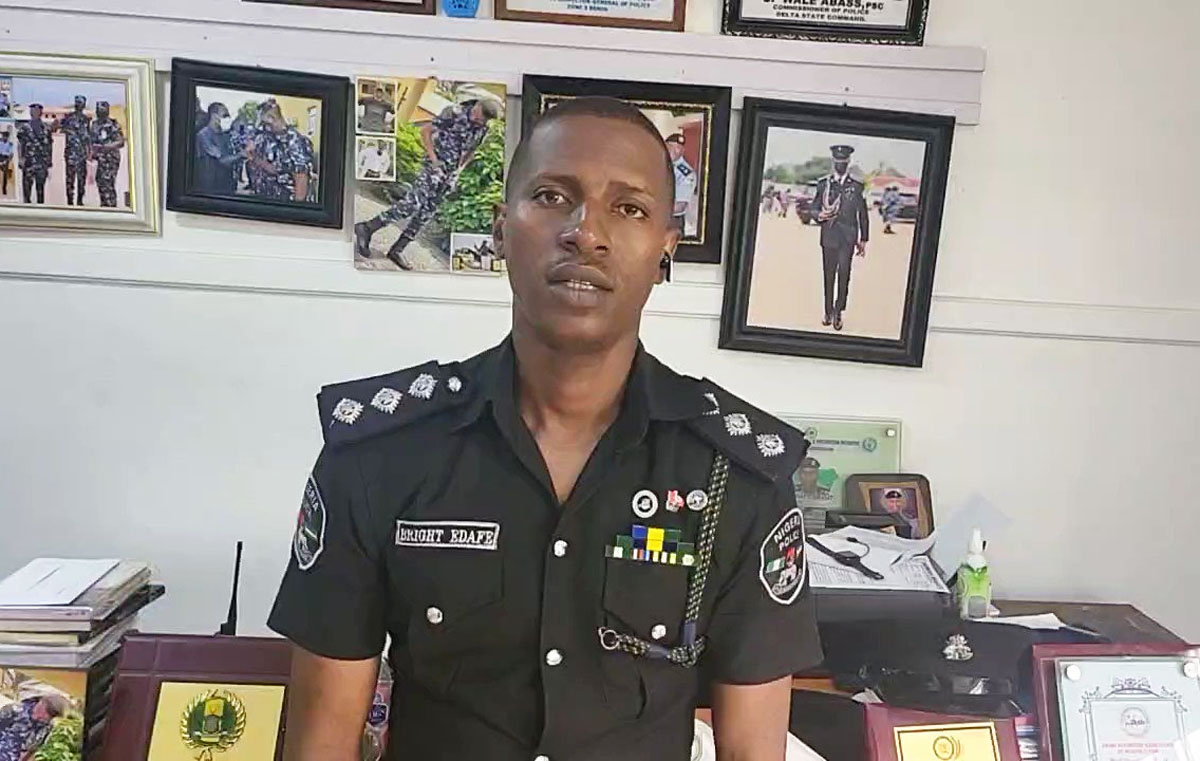
SAPELE, DELTA STATE — The Delta State Police Command has arrested a 28-year-old school bus driver, Onome Lucky Ughagha, for the horrific kidnapping and sexual assault of a 14-year-old female student in Sapele, after extorting a ransom from her desperate father.
According to a statement by the Command’s Public Relations Officer, SP Bright Edafe, the nightmare unfolded on October 20, 2026, when the victim’s father reported that his daughter was abducted while preparing for school .
Police investigations revealed that Ughagha, who was entrusted with the safety of the minor, contacted the father and demanded a ransom of ₦503,000, threatening to kill the girl if the money was not paid . Following the payment, the suspect allegedly abandoned the traumatized teenager along Oton Road in Sapele, where she was reunited with her family .
Medical examinations later indicated that the minor had been sexually assaulted . The suspect had abandoned the school bus and fled the scene, prompting an intense manhunt by operatives of the Sapele Area Command .
Acting on credible intelligence, police traced Ughagha to his hideout in the Ajimele area of Sapele, where he was arrested on October 23, 2026 . During preliminary interrogation, the suspect reportedly confessed to his involvement in the crime .
The school’s principal and vice-principal have been invited for questioning as investigations continue . Ughagha is currently being transferred to the State Criminal Investigation Department (SCID) in Asaba for further investigation .
Delta State Commissioner of Police, Samuel Erale, condemned the incident, reaffirming the command’s commitment to protecting children from violence and exploitation . He assured the public that the investigation would be thorough and urged school authorities and transport operators to exercise greater vigilance in safeguarding children .
School Bus Driver Turns Kidnapper, Collects ₦503,000 Ransom, Rapes 14-Year-Old Delta Student
-

 News3 days ago
EFCC Opens Recruitment for Nigerians, Sets Age Limits for Four Job Categories
-
 News3 days ago
41 Days in Bandits’ Den: Five Islamic Clerics Still Held After Tinubu Re-Election Prayer Trip
-
 Politics3 days ago
2027: Remi, Seyi Tinubu Reportedly Differ Over APC Youth Mobilisation
-
 Politics2 days ago
2027: APGA Chairman Says South-East Must Back Tinubu to Secure Igbo Presidency
-
 Politics3 days ago
Igbo Presidency: Soludo Tells South-East to Back Tinubu for Future Power Shift
-
 metro3 days ago
Police Arrest Suspect Eight Months After Retired Teacher’s Killing in Ogun
-

 Entertainment2 days ago
Tope Alabi Threatens Pastor With Lawsuit Over Toluwanisings’ Death Claims
-

 Sports3 days ago
Kane Beats Yamal to Win Major Football Award Ahead of Ballon d’Or Ceremony