

News
Poor Nigerians Are Primary Beneficiaries of Tinubu’s Reforms — Presidential Aide
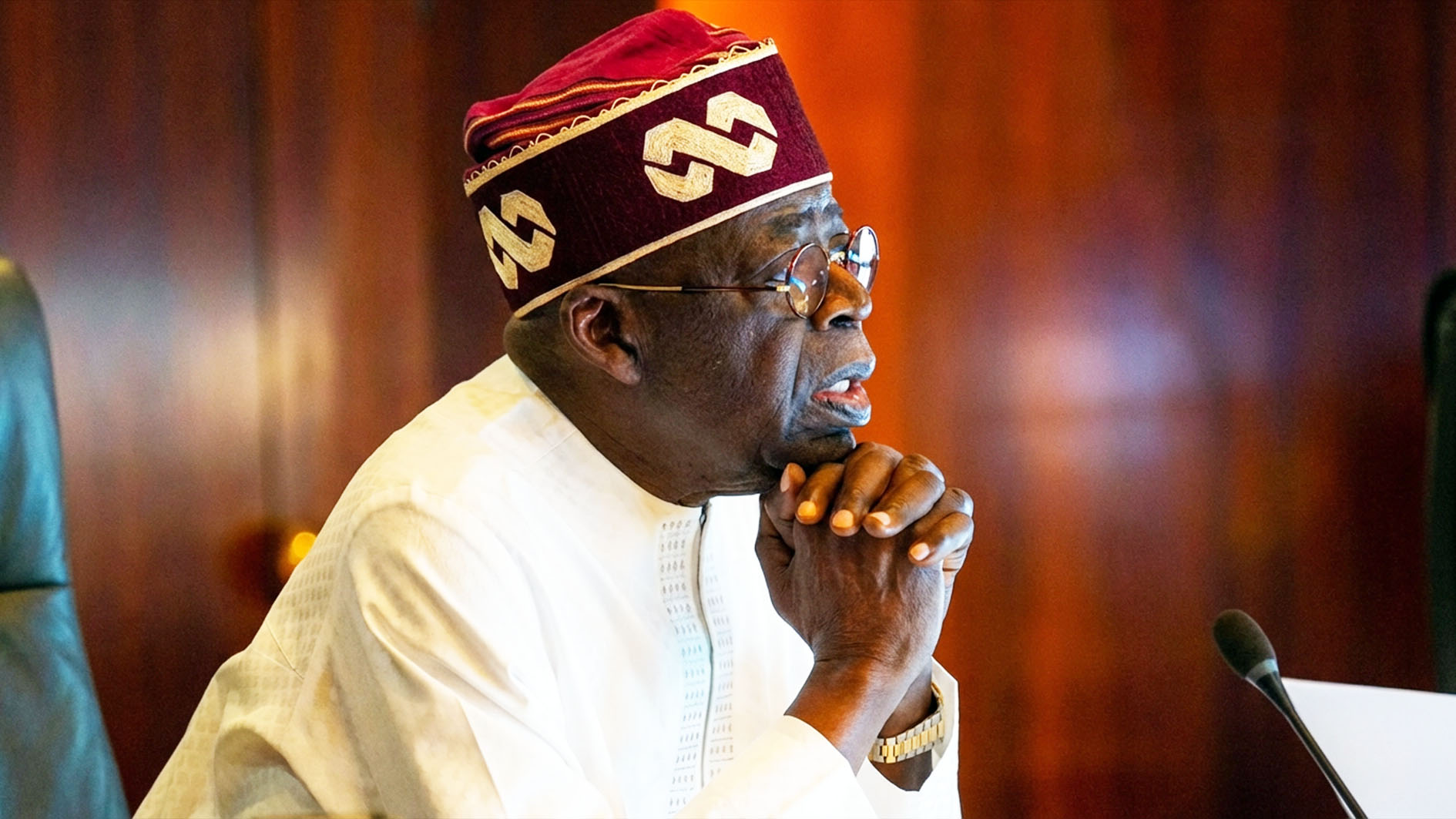
Poor Nigerians Are Primary Beneficiaries of Tinubu’s Reforms — Presidential Aide
Special Adviser to President Bola Tinubu on Media and Public Communication, Daniel Bwala, has said that the poor are the primary beneficiaries of the policies introduced by the Tinubu administration. Bwala made the assertion on Tuesday during an interview on Arise Television’s ‘Prime Time’ programme, where he highlighted several government initiatives aimed at improving the lives of ordinary Nigerians.
According to him, the Nigerian Education Loan Fund (NELFUND) has provided opportunities for more than one million students from low-income families to pursue higher education. “We talk about over one million beneficiaries of NELFUND. These are not children of the rich. These are children of the poor who, without the intervention, may not be able to achieve their dreams. That is a direct impact on the poor person,” he said.
The presidential aide also pointed to the administration’s Compressed Natural Gas (CNG) initiative, describing it as a programme that has brought relief to many Nigerians through reduced transportation costs. “When we talk about transportation and what the CNG initiative has done, you need to go to the streets and see for yourself. We went to the streets and talked to people, and all they are asking is that there should be more investments in that field,” he added.
On healthcare, Bwala cited government interventions such as free caesarean section services and a 50 per cent subsidy on dialysis treatment, arguing that such measures are targeted at vulnerable Nigerians. “When we talk about healthcare and the caesarean section programme, I was here the other time and talked about the 50 per cent subsidy on dialysis. These are poor people because rich people do not need that. As a matter of fact, most of the rich are abroad,” he said. Bwala maintained that every major policy introduced by the current administration has been designed to directly benefit low-income Nigerians.
READ ALSO:
- Portable Rejects EFCC Invitation Over Alleged Naira Abuse at Son’s Naming Ceremony
- Nnamdi Kanu: US Congress Calls for Diplomatic Engagement with Nigeria
- Five Suspects Face Judgment Today Over Owo Church Massacre
Beyond the figures cited by Bwala, official data from the Federal Government shows that the Nigerian Education Loan Fund has recorded over 1.7 million applications as of March 2026, with more than 1.1 million students confirmed as beneficiaries. Total disbursements have reached ₦206.29 billion, comprising approximately ₦128.84 billion paid directly to institutions for tuition and ₦77.45 billion paid to students as upkeep allowances. The Minister of Education, Dr Tunji Alausa, has described NELFUND as a transformative intervention in the education sector, noting that the scheme has cost the Federal Government over ₦1.1 billion, while over 160,000 youths have also been trained in digital skills. The Acting Vice Chancellor of the Federal University of Technology, Ilaro, Dr Mikhail Akinde, confirmed that his institution had received about ₦32 million to support approximately 233 students through the programme.
The Presidential Initiative on Compressed Natural Gas and Electric Vehicles (Pi-CNG & EV) has been rolled out across more than 28 states, with the Federal Government launching the Northern Corridor of the programme in Kano State on May 14, 2026. Vice President Kashim Shettima, represented at the launch by Senator Ibrahim Hassan Hadejia, stated that the transition to CNG and electric mobility is not only an energy policy but also an economic strategy aimed at reducing costs and supporting long-term development. “Transportation costs affect everything — food prices, manufacturing, logistics and the lives of ordinary Nigerians. The President understood that Nigeria could not continue depending entirely on expensive traditional fuel systems while sitting on over 200 trillion cubic feet of gas reserves,” Shettima said. The Executive Chairman of the initiative, Ismaeel Ahmed, disclosed that over $2 billion in investment commitments had been attracted under the programme, with more than 58 refuelling stations supported, thousands of CNG buses and tricycles deployed, and over 7,000 Nigerians trained. Over 300 conversion partners have been onboarded nationwide, including 41 centres in Kano State alone.
READ ALSO:
- Real Madrid Reach €20m Agreement for Inter Milan Star Denzel Dumfries
- Enugu Police Kill Two Kidnappers, Recover AK-47 Rifle, Beretta Pistol in Separate Raids
- He Has Lost His Mind — Oyo Govt Slams Fayose Over School Kidnapping Claims
President Tinubu had earlier approved a reduction in the cost of kidney dialysis from ₦50,000 to ₦12,000 per session in federal hospitals across the country. The subsidy is already being implemented in major federal hospitals across the six geopolitical zones, including the University College Hospital (UCH), Ibadan; Lagos University Teaching Hospital (LUTH), Lagos; University of Benin Teaching Hospital (UBTH), Benin; and the University of Maiduguri Teaching Hospital (UMTH), Maiduguri, among others. According to a report by Radio Nigeria, the subsidised dialysis programme and the Comprehensive Emergency Obstetrics and Newborn Care (CEmONC) , which provides free emergency caesarean sections, have been yielding fruitful results. At the Abubakar Tafawa Balewa University Teaching Hospital (ATBUTH) in Bauchi, the Obstetrics and Gynaecology Department conducted 755 Caesarean sections paid for by the federal government between January and June 2025. One beneficiary of the free caesarean section service, Asma’u Ibrahim, described the federal government’s initiative as a “lifesaver,” noting that affording a theatre fee of over ₦100,000 had been a major challenge given the country’s economic situation. Kidney failure patients interviewed at the ATBUTH Renal Centre also expressed gratitude for the subsidy, with one patient, Musa Abdullahi Jingir, stating that he now prefers to spend ₦17,000 on transport to access the subsidised service in Bauchi rather than pay ₦50,000 per session in Jos.
Beyond the initiatives highlighted by Bwala, the Federal Government has also expanded its social protection programmes under the Household Prosperity and Empowerment Cash Transfer Programme (HOPE-CT) . The Minister of Humanitarian Affairs and Poverty Reduction, Dr Bernard Doro, disclosed in a press conference that over 9.2 million households across the nation’s six geopolitical zones have benefited from the initiative, with approximately ₦688 billion disbursed between November 2023 and February 2026. Beneficiaries receive ₦75,000 distributed over three tranches, with the government now targeting an expansion to 15 million vulnerable Nigerians. Notably, 5.3 million women, representing 58.7 per cent of beneficiaries, have so far benefited from the initiative, a move described as a deliberate policy to empower women and improve household well-being.
While defending the administration’s policies, Bwala acknowledged that many Nigerians are yet to feel the full impact of the economic reforms due to the country’s large population and limited resources. He described the process as “slow, steady, and consistent” and urged citizens to manage their expectations. “The answer is simply population and resources. The population is over 230 million. The resources we have, however, the increased revenue is not enough. Growth will have to be slow. But it will be slow, steady, and consistent. That is what we take pride in,” Bwala said. He added that the effect of increased government revenue is already being experienced through increased allocations to states, which has resulted in state-level implementations impacting local communities. “There are states you can point at tangible results dealing with hunger by the provision of food and agricultural materials,” he noted.
The administration’s supporters argue that the reforms were necessary to address long-standing economic problems and place the country on a stronger financial footing. Official data shows that Nigeria’s net foreign-exchange reserves have risen significantly, while the stock market has recorded a nearly fivefold rise. Capital inflows rose by almost 90 per cent in 2025, with foreign portfolio investment carrying much of the increase. As debates over the state of the economy continue, the Presidency maintains that its policies are beginning to produce positive results and that ordinary Nigerians are already benefiting from key intervention programmes. The administration is expected to continue highlighting programmes such as NELFUND, healthcare subsidies, CNG transportation initiatives, cash transfers, and affordable housing as evidence of its commitment to improving the lives of Nigerians, particularly those in lower-income communities.
Poor Nigerians Are Primary Beneficiaries of Tinubu’s Reforms — Presidential Aide










News
Akpabio Under Fire as Senators Move to Secure His Return as Senate President in 2027
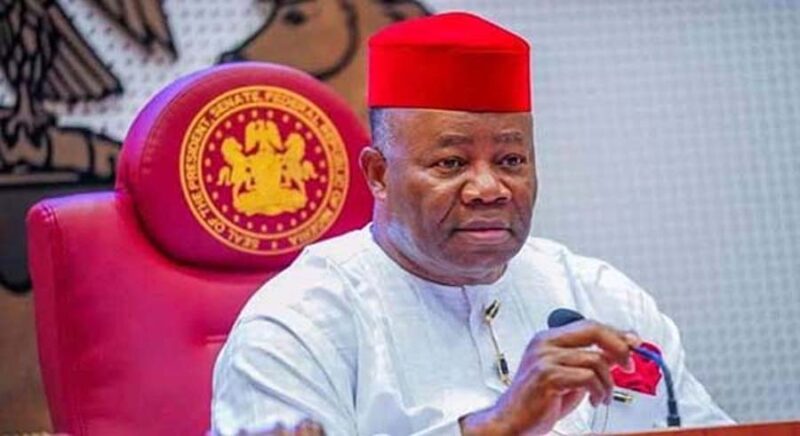
Senate President Godswill Akpabio is facing growing criticism over efforts to secure another term in office, following a controversial move by the current Senate to endorse the return of its leadership in the 11th National Assembly.
The controversy erupted after senators declared that there was “no vacancy” in the Senate presidency, a position critics have described as undemocratic and an attempt to influence the leadership of a future legislature before Nigerians elect a new National Assembly.
The development has intensified political discussions ahead of the 2027 general elections, with questions being raised about the independence of the legislature, the authority of incoming senators and the growing contest for control of the Senate.
At its sitting on Thursday, October 15, 2026, the Senate backed Akpabio’s return as Senate President in the next National Assembly, which is expected to be inaugurated in June 2027.
The motion was moved by Senate Chief Whip Tahir Monguno and seconded by Senator Cyril Fasuyi. It received majority support through a voice vote.
The resolution also endorsed Deputy Senate President Barau Jibrin and other principal officers for another term, subject to their re-election into the Senate.
However, the move has drawn objections from critics who argue that the leadership of the 11th Senate should be determined by the lawmakers elected into the chamber, rather than through a resolution adopted by the outgoing Senate.
READ ALSO:
- Lamine Yamal Shines as Barcelona Thrash Real Betis 5-2
- Tinubu Scraps Recruitment Waiver Requirement for Federal Universities
- FG Begins Rollout of 3,700 Telecom Towers to Connect 20m Nigerians
One of the critics, identified as Epelle in reports, described the move as an affront to democratic principles, arguing that the Senate presidency was not a hereditary position that could be reserved for an incumbent.
Epelle maintained that the office must be contested and decided by senators in accordance with the rules and democratic procedures governing the National Assembly.
The Legislative Advocacy Network (LAN) has also opposed the move. Its coordinator, Benjamin Joseph, argued that the leadership of the next National Assembly should emerge from considerations such as legislative performance, institutional independence and public confidence, rather than political loyalty or the desire to retain existing officeholders.
The criticism centres on whether the current Senate can legitimately declare its leadership positions effectively reserved before the next general election and the inauguration of a new legislature.
Although the resolution signals support for Akpabio within the current Senate, it does not automatically guarantee his return. The next Senate will have its own membership, and its elected members will determine who occupies the offices of Senate President and Deputy Senate President.
Akpabio has meanwhile stepped up efforts to secure political backing for his second-term ambition. At the inauguration of the APC Presidential Campaign Council, he appealed to President Bola Ahmed Tinubu to support his bid to return as Senate President in 2027.
His appeal has added another dimension to the debate over the influence of the Presidency and the ruling All Progressives Congress (APC) in determining the leadership of the National Assembly.
Akpabio has also warned governors against seeking other political offices while still occupying their current positions. The remarks were widely interpreted as a warning directed at Imo State Governor Hope Uzodimma, who is seeking election to represent Imo West Senatorial District in 2027.
Uzodimma’s senatorial ambition has fuelled speculation about a possible contest for the Senate presidency if he wins a seat in the next National Assembly. Reports have also highlighted opposition from Federal Capital Territory Minister Nyesom Wike, who has said he would not support Uzodimma’s reported ambition to lead the Senate.
The emerging rivalry underscores the political calculations surrounding the next Senate leadership, particularly within the APC, where support from party leaders and influential political figures could shape negotiations but cannot replace the formal choice of senators.
For Akpabio, securing another term will depend not only on his political alliances but also on winning re-election to the Senate and obtaining the support of enough senators-elect when the 11th National Assembly convenes.
The backlash over the “no vacancy” resolution has therefore placed the question of Senate leadership in 2027 at the centre of a wider debate about legislative independence, internal democracy and the right of a new parliament to choose its own presiding officers.
As the election approaches, the contest is likely to intensify, with Akpabio’s supporters seeking to consolidate their position and critics insisting that the next Senate presidency must be decided by the lawmakers elected to serve in the 11th National Assembly.
Akpabio Under Fire as Senators Move to Secure His Return as Senate President in 2027
News
2027: ADC Faction Disowns Atiku, Rejects G-100 Alliance Amid Party Crisis
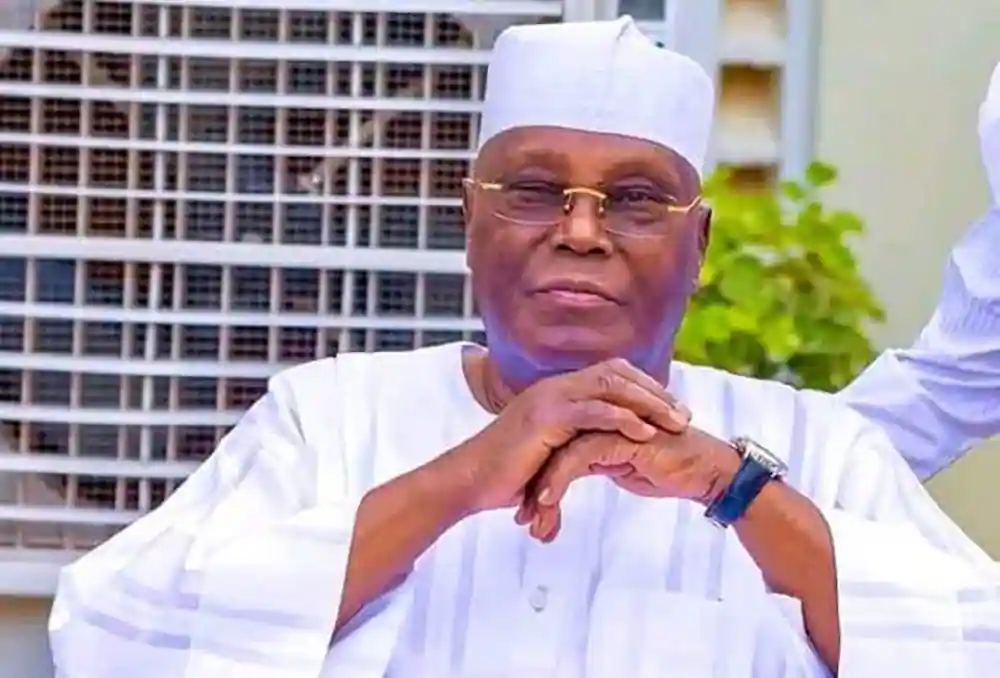
ABUJA — A fresh leadership dispute has emerged within the African Democratic Congress (ADC) after a faction led by Nafiu Bala Gombe disowned former Vice-President Atiku Abubakar as its presidential candidate for the 2027 general elections and rejected any alliance with the G-100 opposition coalition.
The faction insisted that it would not allow its political platform to be used to advance arrangements it had not authorised, warning Atiku and individuals associated with the G-100 against presenting him as its flagbearer.
In a statement, Gombe accused some elements within the G-100 coalition and Atiku of allegedly attempting to pressure the faction into a political alliance or merger ahead of the elections.
He maintained that the faction would protect the party’s identity, organisational structure and political independence rather than surrender its platform to the ambitions of individual politicians.
“The African Democratic Congress is NOT, and will NOT, be in any alliance, merger, or coalition with any political party ahead of the 2027 general elections,” the faction declared.
Gombe also issued a direct warning to Atiku, urging the former vice-president to stop presenting himself as the faction’s presidential candidate or speaking on its behalf.
The development comes amid continuing divisions over the leadership and direction of the ADC as opposition politicians explore ways to challenge the ruling All Progressives Congress (APC) in 2027.
READ ALSO:
- Omoda, Jaecoo Storm Europe as Global Sales Surge 123% to 73,421
- 16-Year-Old Girl Recounts Horror of Hookup Encounter, Says Man Threatened Her With Knife, Acid
- Ex-Super Eagles Coach Westerhof Battles Colon Cancer in Critical Condition, Wife Seeks Help
The G-100 initiative has been involved in discussions aimed at improving cooperation among opposition forces, including proposals for a common platform or a single presidential candidate capable of mounting a stronger challenge to the ruling party.
However, the discussions have encountered resistance from political figures unwilling to abandon their presidential ambitions in favour of a consensus candidate.
Atiku’s position within the ADC has also become a point of contention between rival factions. While the Gombe-led group rejects his candidacy, the faction led by former Senate President David Mark has recognised him as its presidential candidate.
The ADC’s publicly available announcements previously stated that Atiku won its presidential primary and that his name, alongside that of former Rivers State governor Rotimi Amaechi as running mate, was submitted to the Independent National Electoral Commission (INEC).
The competing claims underscore the importance of distinguishing the Gombe faction’s position from that of the rival ADC leadership. The latest statement does not, by itself, establish that the entire party has withdrawn its endorsement of Atiku.
Meanwhile, the ADC’s National Publicity Secretary, Bolaji Abdullahi, said the party’s discussions facilitated by the G-100 were focused on electoral cooperation rather than necessarily producing a single presidential candidate.
The clarification highlights the differences between efforts to coordinate opposition parties and proposals requiring individual candidates to withdraw from the presidential race.
For Atiku, who is seeking another opportunity to contest Nigeria’s highest political office, the controversy presents an additional challenge as opposition groups negotiate their strategies ahead of the 2027 elections.
The dispute also raises questions about the ADC’s ability to maintain unity while managing rival leadership claims, coalition negotiations and competing political interests.
With the election approaching, the resolution of the party’s internal disagreements could prove significant to its preparations and its prospects of presenting a united opposition front.
For now, the Gombe-led faction has maintained that it will pursue its political objectives independently and will not accept an alliance or candidate arrangement it considers unauthorised.
2027: ADC Faction Disowns Atiku, Rejects G-100 Alliance Amid Party Crisis
News
16-Year-Old Girl Recounts Horror of Hookup Encounter, Says Man Threatened Her With Knife, Acid

16-Year-Old Girl Recounts Horror of Hookup Encounter, Says Man Threatened Her With Knife, Acid
A 16-year-old girl, identified as Christiana, has recounted a frightening experience during a purported hookup encounter, alleging that a man she met produced a knife and a bottle of acid before asking her to choose between the two.
The teenager narrated her experience during an interview with Sahara TV, in a video reportedly shared by online news platform Newsvista.
According to Christiana, her involvement in the hookup business began after a woman allegedly approached her with a promise of helping her secure employment. She claimed, however, that the arrangement led her into a potentially life-threatening situation.
Recounting the incident, the teenager said the encounter took a frightening turn at about 1 a.m. when the man allegedly brought out a knife and acid.
“He brought out a knife and acid at 1 a.m. and told me to choose one,” she said.
Her account has raised concerns about the risks confronting minors who may be lured into exploitative situations through promises of employment or other opportunities.
Christiana’s narration also highlights concerns about the vulnerability of young girls who may be exposed to violence and exploitation by adults who take advantage of their circumstances.
The circumstances surrounding the alleged incident, including the location where it occurred, how the teenager escaped and the identity of the man involved, were not established in the account provided.
READ ALSO:
- Ex-Super Eagles Coach Westerhof Battles Colon Cancer in Critical Condition, Wife Seeks Help
- NRC Denies Ticket Racketeering, Says Abuja-Kaduna Rail Demand Exceeds Seats by 10-Fold
- FG Draws Red Line on Fuel Subsidy, Warns of Naira Crisis if Reforms Are Reversed
It was also unclear whether the woman Christiana accused of introducing her to the arrangement had been identified or whether the police had begun investigating the allegations.
The interview has generated reactions on social media, with calls for the circumstances surrounding the teenager’s experience to be investigated and for those responsible, if identified and found culpable, to be held accountable.
The incident underscores the importance of protecting minors from exploitation and ensuring that allegations of threats and violence against children are promptly reported to the appropriate authorities.
Parents, guardians and child-protection advocates have repeatedly stressed the need to provide young people with safe channels to seek employment and assistance, while encouraging them to report suspicious approaches and potentially dangerous encounters.
However, the allegations require independent verification, and no conclusion can be drawn about the identities or culpability of those involved without further investigation.
As of the time of writing, no official statement from law enforcement concerning the specific incident was available in the information provided.
16-Year-Old Girl Recounts Horror of Hookup Encounter, Says Man Threatened Her With Knife, Acid
-

 metro2 days ago
₦130m Toyota Tundra Wrecked: Lagos Dealer Questions Police Over Suspect’s Release
-

 News2 days ago
₦200m Fake Alcohol Packaging Uncovered as NAFDAC Raids Aba Market
-
 metro1 day ago
Suspended Archbishop Ibezim Drags Anglican Primate to Court, Challenges Six-Month Leave
-
 Sports2 days ago
Real Madrid Demand Tebas’ Exit After Explosive Nazi Propaganda Row
-
 metro3 days ago
Former Senator Bello Mandiya Found Dead in Bathroom Three Days After Fall
-

 Entertainment2 days ago
ToluwaniSings’ Final Hours: Aide Reveals Desperate Search Across 8 Hospitals
-

 metro1 day ago
Imodi-Ijebu Muslim Community Bets on 20 Chiefs to Drive Education, Economic Growth
-
 Politics2 days ago
2027: Kwankwaso Signals Fuel Subsidy Comeback as NDC Vows to Crash Petrol Prices