

Education
Preparing Students for University, Work in Changing World, By Cambridge
Preparing Students for University, Work in Changing World, By Cambridge
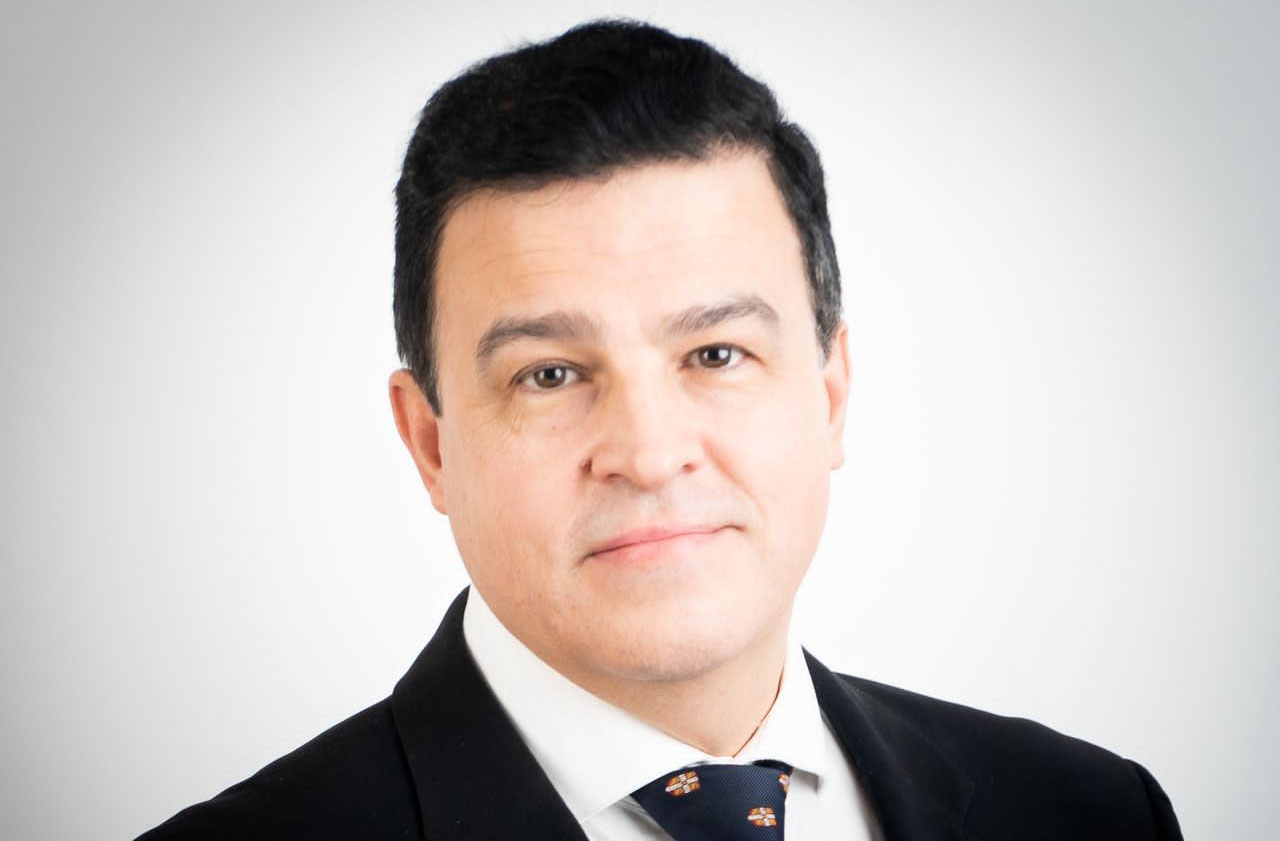
Juan Visser
The transition from secondary school to tertiary education is becoming an increasingly important test of whether education systems are preparing young people not only for university admission but also for independent learning, critical thinking and the changing world of work.
For many students, moving from the structured environment of school into higher education represents a fundamental shift. At university, learners are expected to take greater responsibility for their studies, conduct research, interrogate evidence, manage their time and participate confidently in academic discussions.
This means the challenge for schools extends beyond helping students secure admission. They must also ensure that learners possess the academic habits, intellectual confidence and transferable skills required to succeed after gaining entry.
The demand for tertiary education has grown substantially worldwide. UNESCO data indicates that approximately 264 million students are enrolled in higher education globally, more than twice the number recorded at the beginning of the century.
The expansion reflects the growing recognition of higher education as a pathway to economic mobility, wider opportunity and the development of skills required to support national economies.
However, increasing access has also exposed a significant challenge: the gap between university admission and preparedness for higher-level learning.
Research by the Council for Aid to Education and the Organisation for Economic Co-operation and Development (OECD) found that approximately 57 per cent of students entering tertiary education were not proficient in critical thinking and written communication.
The implication is significant for education policymakers, schools, teachers and parents. Preparation for higher education cannot begin when a student arrives on a university campus. It must start much earlier, particularly during the secondary-school years when academic behaviours and intellectual capabilities are being formed.
According to education experts, traditional approaches that place heavy emphasis on memorisation and examination performance are increasingly insufficient for the demands of universities and modern workplaces.
Students need to learn how to analyse information, challenge assumptions, assess evidence, solve unfamiliar problems and develop independent conclusions.
READ ALSO:
- Federal Workers Urge Finance Ministry to Pay Delayed Allowances, Promotion Arrears
- Nigeria Wins $3.38bn Mambilla Arbitration Battle As ICC Rejects Sunrise Claims
- 2027: Tinubu May Mediate Wike-APC Governors Rift In France
International curricula such as Cambridge IGCSE and Cambridge International AS & A Levels provide one model of how secondary education can develop these capabilities.
The programmes emphasise enquiry-based learning, encouraging students to engage with concepts, test ideas and formulate their own perspectives rather than simply recall information.
At the IGCSE level, students are introduced to structured enquiry through analytical reading, evidence-based argument and problem-solving across a broad range of subjects.
These foundations are subsequently developed at AS and A Level, where students are expected to evaluate competing viewpoints, synthesise information from different sources and communicate their arguments with clarity and precision.
Such competencies closely reflect the demands of tertiary education, where students are increasingly expected to navigate large amounts of information, distinguish credible evidence from weak sources and formulate independent positions.
The emphasis, therefore, is not simply on what students learn but also on how they learn.
Critical thinking and problem-solving are treated as transferable capabilities that can be applied across academic disciplines and real-life situations. Students are encouraged to make reasoned judgements, construct coherent arguments and approach unfamiliar challenges with greater confidence.
Independent learning is equally important.
University students are expected to manage their time, organise academic workloads, locate and evaluate resources and take responsibility for their own progress. Where these habits have already been developed in secondary school, students are better positioned to cope with the autonomy and complexity of tertiary education.
Research by the International Education group at Cambridge University Press & Assessment, titled Preparing Learners to Thrive in a Changing World, reinforces the importance of these capabilities.
The study found that students and teachers regard self-management skills as critical to future success, while also identifying them among the most difficult skills to teach and learn.
From managing time and maintaining focus to adapting to change and working independently, such capabilities are increasingly essential not only for university but also for employment and adult life.
The changing labour market has further increased the importance of transferable skills. The World Economic Forum’s Future of Jobs Report 2025 identified analytical thinking as the leading core skill among employers, while resilience, flexibility and agility were also among the most highly valued core skills. The report also identified creative thinking, technological literacy, curiosity and lifelong learning among skills expected to remain increasingly important.
This suggests that education systems must increasingly focus on producing learners who can adapt, think critically, solve problems and apply knowledge in unfamiliar environments.
The objective, therefore, should be to develop curious and resilient learners capable of continuing to learn long after they have completed formal education.
Evidence of the potential of this approach can also be seen in the Outstanding Cambridge Learner Awards, which recognise exceptional performance in Cambridge assessments across more than 40 countries.
Students in South Africa are among those who receive the awards annually, demonstrating strong examination performance, extensive subject knowledge and the ability to perform under demanding, internationally benchmarked assessment conditions.
Internationally recognised qualifications can also provide students with greater flexibility.
In countries including Nigeria, Ghana and South Africa, Cambridge International AS & A Levels are recognised by local universities through established admission processes. This enables students to pursue higher education within their home countries while benefiting from internationally benchmarked secondary qualifications.
The combination gives learners greater choice, allowing them to balance local educational opportunities with international aspirations.
Ultimately, however, the purpose of secondary education should extend beyond university admission.
Whether students proceed to university, professional qualifications, entrepreneurship or vocational careers, they require confidence, adaptability and the ability to continue learning.
The transition from classroom to campus should therefore be understood as more than a change of location. It is a transition from guided learning to greater intellectual independence.
By cultivating the ability to learn, think critically, manage responsibilities and adapt to change, schools can better prepare young people for the demands of tertiary education and the wider economy.
By the completion of their secondary education, students should possess more than examination certificates and subject knowledge. They should have developed the habits of mind required to navigate uncertainty, assess competing ideas, solve problems and continue acquiring knowledge throughout their lives.
For education systems confronting rapidly changing economic and technological realities, the priority is increasingly clear: prepare learners not merely to pass examinations or enter university, but to succeed wherever their education takes them.
Cambridge University Press & Assessment, part of the University of Cambridge, said its International Education group works with schools globally to build education around knowledge, understanding and skills.
Through the Cambridge Pathway, which provides a framework from ages three to 19, the organisation offers qualifications including Cambridge IGCSE, International AS & A Levels and the AICE Diploma, alongside learning resources, support and research-based insights.
The broader objective, it said, is to equip learners with the confidence and capabilities to meet the opportunities and challenges of a rapidly changing world.
Juan Visser is Regional Director, Sub-Saharan Africa, International Education, Cambridge University Press & Assessment.
Preparing Students for University, Work in Changing World, By Cambridge












Education
FG Releases Eight-Month Arrears After SSANU Strike Threat

FG Releases Eight-Month Arrears After SSANU Strike Threat
The Federal Government has released eight months’ salary arrears owed members of the Senior Staff Association of Nigerian Universities (SSANU), less than 48 hours after the union issued a 14-day ultimatum threatening an indefinite strike.
SSANU had issued the ultimatum over the implementation of the 2026 FGN/SSANU Agreement and demanded payment of outstanding entitlements, warning that failure to act would lead to a “total, comprehensive and indefinite strike action.”
The union’s demands included payment of outstanding Consolidated University Teaching and Tertiary Institutions Salary Structure (CONTTA) arrears calculated from January 1, 2026.
It also demanded payment of two months’ salaries withheld during the 2022 industrial action, as well as one-year arrears arising from the approved 25 per cent and 35 per cent salary increases.
READ ALSO:
- Yobe: 9-Year-Old Boy Burns Stepmothers, Brothers To Death In Revenge Attack
- 2027: Donald Duke Pledges To Bring Petrol Price Down To N300 Per Litre
- Olu of Warri Denies N2.7tn Pipeline Deal, Demands Evidence From Dokubo
Confirming the release, SSANU National President, Mohammed Haruna Ibrahim, said members would begin receiving alerts reflecting the payment.
Ibrahim commended the Minister of Education, Tunji Alausa, for intervening in the matter and facilitating the release of the funds.
However, the payment does not resolve all of the union’s outstanding demands. SSANU has maintained that the government must settle the remaining arrears and ensure full implementation of the 2026 agreement.
The development has nevertheless eased an immediate threat of disruption in the Nigerian university system, coming just days after the union warned of a nationwide industrial action.
SSANU has urged affected members to liaise with their respective university managements to ensure that the released funds are properly and promptly paid.
The latest development comes amid continuing concerns over university workers’ salaries, arrears and welfare, as well as the implementation of agreements between the Federal Government and university-based unions.
FG Releases Eight-Month Arrears After SSANU Strike Threat
Education
Why JAMB Is Taking UTME To Canada — Registrar Explains

Why JAMB Is Taking UTME To Canada — Registrar Explains
The Joint Admissions and Matriculation Board (JAMB) has explained why it is taking the Unified Tertiary Matriculation Examination (UTME) to Canada, saying the move is aimed at expanding access to Nigerian tertiary education rather than making money.
JAMB Registrar, Professor Segun Aina, said the board is working to establish a UTME examination centre in Ottawa, Canada, from 2027 to enable eligible Nigerians living in Canada and other parts of North America to sit the examination without travelling to Nigeria solely for the exercise.
The planned centre followed Aina’s visit to the Nigerian High Commission in Ottawa, where discussions were held on arrangements for conducting the examination.
JAMB said the initiative is part of its effort to make the Nigerian university admission system more accessible to Nigerians in the diaspora, particularly those seeking admission into universities and other tertiary institutions in Nigeria.
“For Nigerians in Canada, the UTME is coming closer to home,” the board said while announcing the plan.
However, the decision has generated questions over the likely number of candidates who would use the centre and whether establishing an examination facility in Canada would be financially viable.
Responding to such concerns, Aina said the number of candidates was not the primary consideration for establishing foreign examination centres.
READ ALSO:
- FULL LIST: NAF Releases Names Of 25 Victims Killed In Ondo Crash
- Supreme Council For Sharia Secretary-General Nafiu Baba-Ahmed Dies
- Former NADECO Leader Ralph Obioha Dies At 80
He explained that JAMB currently conducts the UTME in about 10 foreign countries as a service to improve access to education, adding that the board also conducts examinations in correctional service centres for the same reason.
According to the registrar, Nigerians relocate abroad for different reasons, while children of Nigerian public servants posted overseas may also need to sit the UTME without returning to the country specifically for the examination.
Aina said the absence of a JAMB examination centre in North America had previously made it difficult for prospective candidates in the region to participate in the UTME locally.
He added that JAMB does not necessarily need to acquire or rent a permanent building or employ a new workforce to establish the Ottawa centre.
The registrar explained that the board works with Nigerian diplomatic missions in countries where it conducts overseas examinations, using temporary spaces within high commission premises and relying on diplomatic mission staff to assist with the exercise.
Aina also said no money had been spent on the proposed Canadian centre so far.
He explained that his visit to Canada coincided with a conference and that he used the opportunity to initiate discussions with the Nigerian High Commission about the proposed examination arrangement.
JAMB‘s spokesperson, Fabian Benjamin, also defended the initiative, saying more than 100 prospective candidates in Canada had already indicated interest in sitting the examination there.
The proposed Ottawa centre is expected to serve eligible Nigerians in Canada as well as those in other parts of North America who wish to gain admission into Nigerian tertiary institutions.
JAMB said the move would reduce the barriers faced by Nigerians abroad and strengthen their connection with the country’s education system.
The board also said the initiative would provide an opportunity to showcase Nigerian tertiary education internationally and create more pathways for Nigerians in the diaspora to pursue higher education in Nigeria.
The proposed JAMB Canada centre is expected to commence operations with the 2027 UTME.
Why JAMB Is Taking UTME To Canada — Registrar Explains
Education
World Teachers’ Day: Ogun Residents Demand Better Pay, Equipped Schools for Teachers

World Teachers’ Day: Ogun Residents Demand Better Pay, Equipped Schools for Teachers
As Nigeria marked the 2026 World Teachers’ Day, residents of Ogun State have called on the government to improve teachers’ welfare, increase remuneration and provide adequate facilities in public schools, insisting that celebrating educators must translate into tangible improvements in their working conditions.
The demand was made by callers on Eagle 102.5 FM’s Frontline programme on Monday, October 5, during a discussion on teachers’ welfare and their contributions to education and community development. The programme featured the Chairman of the Ogun State Teaching Service Commission (TESCOM), Apostle Abiodun Sanyaolu.
Contributors stressed that teachers remain central to the development of children and the nation’s human capital, arguing that their responsibilities deserve better financial rewards, improved working conditions and a more conducive teaching and learning environment.
A caller from Ilese-Ijebu described teachers as the foundation of society, noting that their influence extends beyond the classroom to shaping children’s character, knowledge and future prospects.
Describing teachers as “the pillar of everything in life,” the caller urged the government to prioritise their welfare, arguing that educators must be adequately supported to deliver on their responsibilities.
“The welfare of the teachers is very, very important. The government should look at it and make sure that teachers are given a good welfare system so that they will be proud of doing what they are doing,” she said.
She also called for increased investment in school facilities, warning that constructing classrooms without providing the necessary equipment and learning materials would leave schools ill-equipped to deliver quality education.
“It’s not just only the structure alone. They should put in the necessary things that are supposed to be in the school,” she added.
The caller’s remarks highlighted the need for a comprehensive approach to educational development, encompassing not only physical infrastructure but also the resources required by teachers and students for effective teaching and learning.
Another contributor, Olu Ogunike, called for better remuneration for teachers, arguing that their salaries and conditions of service should reflect the critical role they play in national development.
“Teaching should be one of the well-paying work in the country,” Ogunike said, stressing that teachers lay the foundation for virtually every other profession.
He argued that the quality of a country’s workforce depended significantly on the quality of its teachers, adding that improved financial rewards would help enhance the status and attractiveness of the profession.
The contributions reflected growing public expectations that governments should match their recognition of teachers with practical measures to improve their welfare and the quality of education.
Speaking on the programme, TESCOM Chairman Sanyaolu described teachers as important stakeholders in community development, noting that their influence extends beyond academic instruction to shaping the moral, social and intellectual development of children.
According to him, every child taught by an educator eventually becomes part of the wider community, making teachers indispensable to the social and economic advancement of Ogun State.
Sanyaolu acknowledged, however, that more work remained to be done in the state’s education sector, despite the reforms and interventions introduced by the government.
“We still have a lot to do. There is a lot that is still ongoing, and we will continue to work to ensure that the gains recorded in the education sector are sustained,” he said.
His remarks underscored the continuing challenge of consolidating improvements in education while addressing concerns about teachers’ welfare, school infrastructure and the resources available for effective learning.
The callers’ demands also highlighted the connection between teachers’ working conditions and students’ educational outcomes.
They argued that better remuneration could boost teachers’ morale, while well-equipped classrooms, adequate learning materials and modern teaching resources would strengthen their ability to deliver quality education.
Similarly, improved welfare could help make teaching more attractive to qualified professionals and encourage greater commitment to the profession, particularly at a time when schools require skilled and motivated educators to prepare young people for the demands of a changing economy.
The 2026 World Teachers’ Day celebration therefore provided an opportunity to reflect on both the contributions of educators and the challenges confronting the profession.
For the contributors on Eagle 102.5 FM’s Frontline programme, the message was clear: public recognition of teachers must go beyond annual celebrations to include improved pay, better welfare packages, adequate school facilities and sustained investment in professional development.
They maintained that supporting teachers was not merely a reward for their service but also a necessary investment in the future of Ogun State and the country at large.

-

 metro2 days ago
Ondo Air Tragedy: Soldiers, Families Among 32 Killed In NAF Crash
-

 metro2 days ago
Gunmen Open Fire At Lagos Bus Stop, Kill NURTW Member, Injure Three
-
 News3 days ago
President Tinubu Mourns 32 NAF Personnel in Ondo Jet Crash, Orders Immediate Probe
-
 metro3 days ago
No Survivors Found in Ondo NAF Plane Crash — Ondo Governor
-

 Politics3 days ago
2027: Ajaero Questions Tinubu, Atiku, Obi’s Economic Approach, Highlights Adebayo’s Ideas
-

 metro2 days ago
Ogun Crash: Nine Die As Bus Collides With Truck On Ijebu-Ode-Ore Road
-
 metro2 days ago
Supreme Council For Sharia Secretary-General Nafiu Baba-Ahmed Dies
-

 metro2 days ago
UCH CMD: After Decades Without Muslim, Agunbiade Demands Fair Chance