

metro
Presidency breaks silence on Tinubu’s US FOIA case, denies criminal trial

Presidency breaks silence on Tinubu’s US FOIA case, denies criminal trial
The Presidency has clarified that the ongoing Freedom of Information Act (FOIA) litigation involving President Bola Ahmed Tinubu before a United States federal court is a civil dispute over access to government records and does not constitute a criminal case against the Nigerian President.
The clarification was issued by Bayo Onanuga, Special Adviser to the President on Information and Strategy, amid renewed controversy over records sought from the Federal Bureau of Investigation (FBI) and Drug Enforcement Administration (DEA) concerning Tinubu.
According to the Presidency, the case before the US District Court for the District of Columbia does not amount to a criminal charge or trial, and no court has found Tinubu guilty of any criminal offence.
“For clarity, the matter is a civil records-disclosure dispute under the United States Freedom of Information Act. It is not a criminal case against President Bola Ahmed Tinubu, nor has the court found him guilty of any criminal wrongdoing,” the statement said.
The Presidency said the matter dates back to 2022, when Aaron Greenspan submitted FOIA requests to several US government agencies seeking records relating to Tinubu.
It said some agencies withheld records or declined to confirm or deny whether certain records existed, prompting Greenspan to file Civil Action No. 23-1816 before the US District Court for the District of Columbia in 2023.
READ ALSO:
- Ex-Benue councillor remanded for allegedly pushing woman into fire
- 20-year-old arrested over alleged gang-rape of 19-year-old woman in Ogun
- Ebonyi Man Stages Own Kidnap, Demands N25m Ransom From Family — Police
The court subsequently allowed Tinubu to intervene in the proceedings, giving him an opportunity to assert his interests concerning the disclosure of records.
The Presidency also referred to a February 4, 2003 letter from the American Consulate in Lagos to the then Inspector-General of Police, Tafa Balogun, concerning an FBI records search relating to Tinubu.
According to the Presidency, the letter stated that the FBI search found no criminal arrest records, wants or warrants for Tinubu, who was then Governor of Lagos State.
The issue has resurfaced amid renewed public debate over historical US records concerning Tinubu and events dating back to the early 1990s.
The Presidency further explained that some US law enforcement agencies initially relied on what is known as the “Glomar defence” in responding to the FOIA requests.
A Glomar response allows a government agency, in certain circumstances, to refuse to confirm or deny whether particular records exist where acknowledging their existence could itself reveal information protected under law.
According to the Presidency, the US District Court subsequently granted summary judgment in favour of several agencies, including the CIA, Executive Office for United States Attorneys, Department of State, Department of the Treasury and Internal Revenue Service, effectively removing them from the remaining dispute.
It said certain aspects involving the FBI and DEA remained under consideration.
The Presidency said the FBI and DEA subsequently produced 399 pages of records pursuant to the court’s directions, although portions of the documents were redacted.
READ ALSO:
- Federal Workers Demand N300,000 Minimum Wage as Cost of Living Bites Harder
- IPMAN Plans Petrol Price Review as Dangote Refinery Raises Depot Cost
- FBI Arrests Podcaster Over Alleged Threats to Kill President Trump
The plaintiff later challenged the agencies’ decisions to redact portions of the records and sought access to the unredacted material.
The FBI and DEA, through the US Department of Justice, opposed the request, relying on several exemptions contained in the US FOIA.
The exemptions cited include protections for information relating to grand jury proceedings, certain surveillance-related information, attorney-client and attorney-work-product privileges, law-enforcement records, personal privacy, confidential sources and investigative techniques.
The Presidency said Tinubu also relied on FOIA Exemption 7(C), which protects personal information contained in law-enforcement records where disclosure could constitute an unwarranted invasion of personal privacy.
It stressed that the release or withholding of government records under FOIA does not, by itself, establish criminal liability.
“The release or withholding of records under FOIA does not, by itself, establish criminal liability. The case concerns access to government records and the proper application of statutory exemptions,” the Presidency said.
It added that the current proceedings do not amount to a criminal prosecution, criminal trial or judicial finding against Tinubu.
Rather, the remaining dispute centres on whether the FBI and DEA lawfully redacted portions of the records produced in response to the FOIA requests.
The Presidency said the case remains before Judge Beryl A. Howell of the US District Court for the District of Columbia, who will determine the outstanding issues based on the court filings, evidence, applicable US law and arguments presented by the parties.
“The Nigerian media should note that this case is exclusively within the control of Judge Beryl A. Howell of the United States District Court. She will determine its outcome, based on the evidence, applicable law, and the parties’ arguments,” the statement said.
The Presidency also rejected recent comments by Karl Von Batten, arguing that he and his client were not parties to the FOIA proceedings.
It accused Von Batten of inaccurately portraying himself and his client as central figures in the case.
“Recent public commentary by Mr. Karl von Batten has inaccurately portrayed him and his client as central to the proceedings. Neither is a party to the case,” the Presidency said.
According to the Presidency, the plaintiff has until September 11, 2026, to file opposition and responses to processes filed by the defendants and Tinubu as an intervenor.
It added that the FBI, DEA and Tinubu would have until September 18, 2026, to respond to any processes filed by the plaintiff.
The Presidency urged the Nigerian media and the public to distinguish between the actual court proceedings and political commentary surrounding the case.
It maintained that the court, rather than political actors, would determine whether the disputed redactions complied with US law.
The clarification, however, does not determine what information may ultimately be contained in the portions of the FBI and DEA records that remain redacted. It also does not constitute a judicial finding about whether any historical investigation involving Tinubu existed.
Instead, the Presidency’s position is that the current US court proceedings are civil FOIA litigation over access to government records, rather than a criminal prosecution of Tinubu.
The court is expected to determine whether the FBI and DEA were legally entitled to withhold or redact the disputed portions of the records under applicable US law.
Presidency breaks silence on Tinubu’s US FOIA case, denies criminal trial









metro
Gunmen Open Fire At Lagos Bus Stop, Kill NURTW Member, Injure Three
Gunmen Open Fire At Lagos Bus Stop, Kill NURTW Member, Injure Three
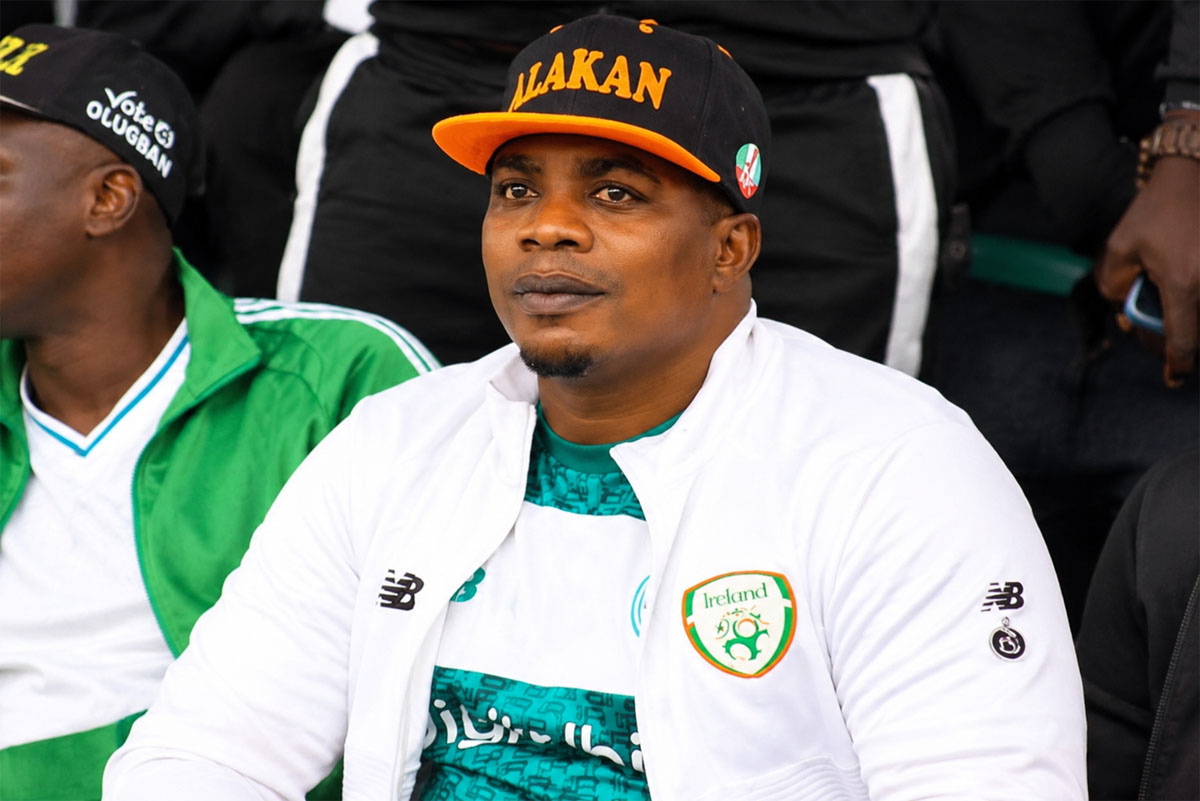
A member of the National Union of Road Transport Workers (NURTW), identified as Kamoru Omokoye, popularly known as Zobo, has been shot dead at Abijo Bus Stop in the Ibeju-Lekki area of Lagos State.
Omokoye was reportedly attacked around 9am on Sunday by two men who arrived at the bus stop in an unregistered Lexus RX 350 before opening fire on him.
A police source who confirmed the incident said the victim was shot in the head during the attack. The assailants reportedly sped away immediately after the shooting.
Omokoye was rushed to the Federal Medical Centre, Epe, for treatment but was pronounced dead by a doctor on duty.
Following the incident, detectives visited the scene and combed the area as part of efforts to identify and arrest those responsible for the Lagos bus stop shooting.
The Lagos State Police Public Relations Officer, Abimbola Adebisi, also confirmed the incident, saying the command had commenced an investigation.
READ ALSO:
- Ondo Air Tragedy: Soldiers, Families Among 32 Killed In NAF Crash
- Court Orders NDLEA to Produce Enugu Airport Duty List in Abba Kyari Cocaine Trial
- President Tinubu Mourns 32 NAF Personnel in Ondo Jet Crash, Orders Immediate Probe
While the police source described the attackers as suspected cultists, the exact motive for the killing has not been officially established.
An anti-cultism advocacy platform, Naija Confra, reported that Omokoye was sitting at a drinking spot near the bus stop when the attackers arrived and opened fire. The report said other people at the location fled as the gunmen shot at the gathering.
At least three other people were reportedly wounded in the shooting.
Omokoye was said to have previously worked around Awoyaya Bus Stop before moving to GRA Bus Stop. He was also reportedly the father of an eight-month-old child.
The latest incident has heightened concerns about violent attacks around transport corridors and public gathering points in parts of Lagos State, particularly where criminal or cult-related activities have previously been reported.
Police authorities have yet to announce any arrest in connection with the killing.
The investigation is expected to focus on identifying the attackers, establishing their motive and determining whether the killing was linked to a cult-related dispute, a transport-union conflict or another criminal motive.
Residents have also been urged to provide useful information to the police that could assist in identifying those responsible for the killing of the NURTW member.
Gunmen Open Fire At Lagos Bus Stop, Kill NURTW Member, Injure Three
metro
Ondo Air Tragedy: Soldiers, Families Among 32 Killed In NAF Crash
Ondo Air Tragedy: Soldiers, Families Among 32 Killed In NAF Crash
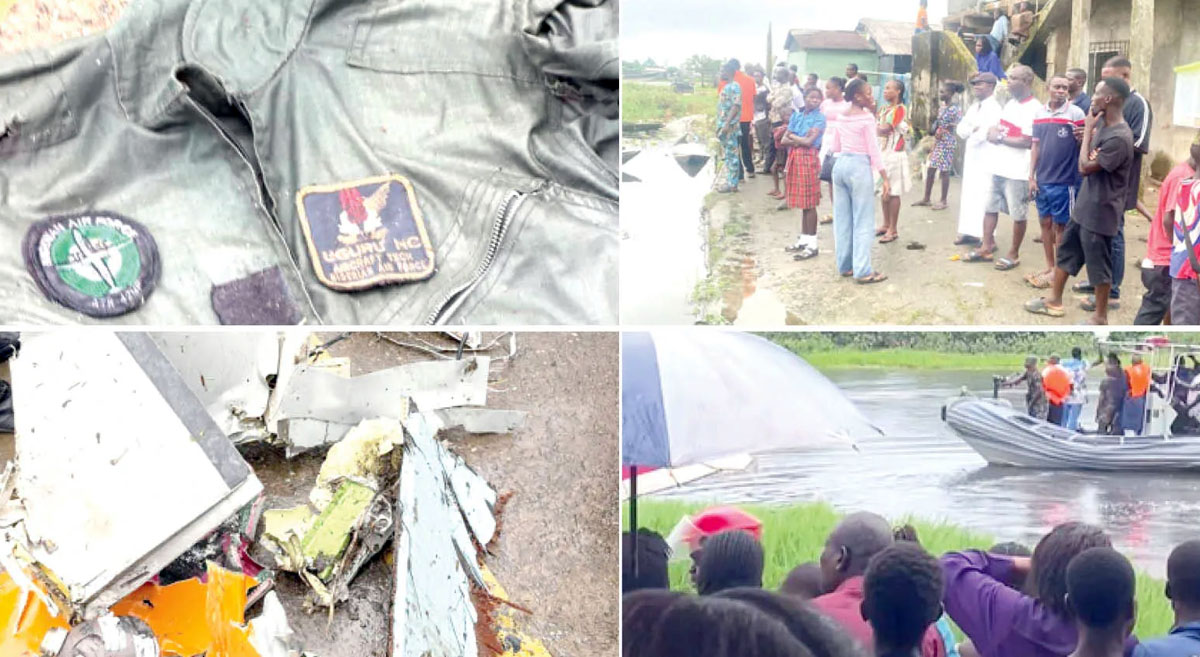
A Nigerian Air Force (NAF) aircraft has crashed in Igbokoda, Ondo State, killing all 32 people on board, including military personnel, family members and seven crew members.
The aircraft, an ATR-42, was carrying 25 passengers and seven crew members when it crashed into a swampy area opposite the Naval Base in Igbokoda, Ilaje Local Government Area, on Monday morning.
The aircraft was reportedly travelling from Benin, Edo State, to Lagos on a routine military mission when communication with air traffic controllers was lost at about 9:13 a.m.
Efforts to re-establish contact with the aircraft reportedly failed before the aircraft disappeared from radar. Its wreckage was later located in the difficult-to-access swamp near the naval facility.
The victims included Nigerian military personnel and members of their families, with reports indicating that some of the family members were children returning to school. The presence of family members on the flight has added to the grief surrounding the Ondo plane crash.
The crash site, located in a swampy and waterlogged area, posed significant challenges to rescuers and recovery teams. Military personnel, emergency responders and local residents were involved in efforts to reach the wreckage and recover the victims.
Ondo State Governor Lucky Aiyedatiwa confirmed that no survivor had been found at the crash site. Responders reportedly recovered parts of the aircraft, military uniforms and identity cards from the area while efforts continued to retrieve the wreckage.
READ ALSO:
- Court Orders NDLEA to Produce Enugu Airport Duty List in Abba Kyari Cocaine Trial
- President Tinubu Mourns 32 NAF Personnel in Ondo Jet Crash, Orders Immediate Probe
- Tragedy Strikes FMC: Medical Director Loses Two Daughters—A Doctor and a Pharmacist—Within 48 Hours
The exact cause of the NAF aircraft crash remains unknown.
Early reports raised the possibility of adverse weather conditions, while another account suggested that the aircraft could have suffered a technical or mechanical problem. Neither explanation has been established as the cause of the crash, and officials have urged the public to await the outcome of the investigation.
The loss of communication between the aircraft and air traffic controllers is expected to form a major part of the investigation, alongside the aircraft’s maintenance history, technical condition, weather conditions, flight-control communications and data from the aircraft’s flight recorder.
President Bola Ahmed Tinubu has ordered a thorough investigation into the NAF plane crash, directing the Nigerian Air Force to establish what led to the tragedy.
Tinubu expressed condolences to the families of the victims and the Nigerian Armed Forces, describing the incident as a painful loss to the country.
The President also declared three days of national mourning for the Air Force personnel killed in the crash and directed that national flags be flown at half-mast across the country.
The Nigeria Safety Investigation Bureau (NSIB) has indicated its readiness to provide technical assistance to the military investigation if requested. Because the aircraft was operated by the military, the primary investigation is expected to be handled by the Nigerian Air Force.
Investigators are expected to examine the aircraft’s flight data, maintenance records and communication with air traffic control to determine what happened during the final stages of the flight.
The Nigerian Air Force is also expected to release the names of the deceased after completing the process of notifying their families.
The Ondo NAF crash is one of the deadliest recent military aviation accidents in Nigeria and has renewed concerns about the safety, maintenance and operational readiness of military aircraft.
For now, attention remains focused on the recovery of the victims, identification of those who died and the investigation that will determine how the aircraft carrying 32 people came down in the Ondo wetlands.
Ondo Air Tragedy: Soldiers, Families Among 32 Killed In NAF Crash
metro
Court Orders NDLEA to Produce Enugu Airport Duty List in Abba Kyari Cocaine Trial
Court Orders NDLEA to Produce Enugu Airport Duty List in Abba Kyari Cocaine Trial
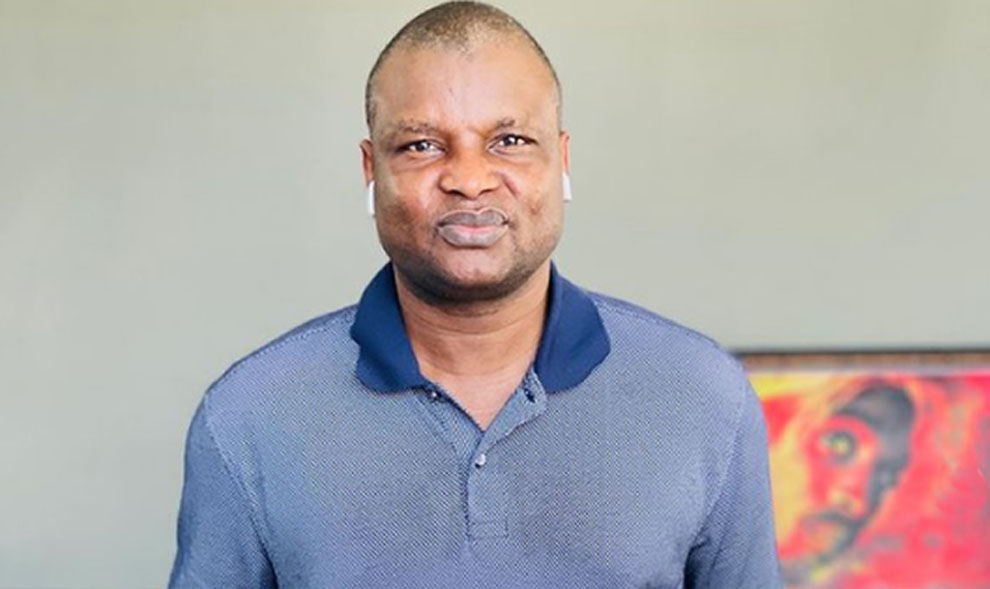
The Federal High Court in Abuja has ordered the Chairman of the National Drug Law Enforcement Agency (NDLEA) to produce the duty roster of personnel deployed to Akanu Ibiam International Airport, Enugu, on January 19, 2022—the day a cocaine consignment central to the Abba Kyari drug trial was intercepted. The ruling marks a significant development in a case that has drawn national attention and raised questions about airport security and inter-agency coordination in Nigeria’s fight against drug trafficking.
Justice Emeka Nwite issued the order on Monday during the continuation of the trial of suspended Deputy Commissioner of Police Abba Kyari and four other suspended officers of the Police Intelligence Response Team (IRT). The defendants are facing charges of alleged tampering with 21.35kg of cocaine and are standing trial on counts of conspiracy and obstruction in the illegal dealing and importation of the substance. They have all pleaded not guilty.
Julius Mba, counsel to Kyari and Inspector Simon Agirgba, told the court that the defence had filed a subpoena duces tecum—a legal order requiring a person or organisation to produce specific documents or evidence. The subpoena directs the NDLEA boss to present certified true copies of the duty roster for personnel deployed to the Enugu airport on the date in question. According to Mba, the document is essential to help the defence establish its case and demonstrate how the cocaine consignment allegedly passed through airport security.
READ ALSO:
- Benue Boat Mishap: Catholic Priest Among Four Dead, Nine Missing
- Rivers Police Arrest OSPAC Operative Over Alleged Killing, Secret Burial
- Adeleke Signs New Law to Regulate Motor Parks Across Osun
The court session also addressed the absence of the defence’s second witness, John Nwonke, who was expected to continue his testimony. Nwonke, who had been subpoenaed to appear, was not in court. His lawyers presented a letter dated October 2 stating that he was ill and unable to attend. The development prompted a sharp exchange between the defence and prosecution.
NDLEA counsel Joseph Sunday strongly opposed the adjournment request, urging the court to foreclose Nwonke’s evidence. He argued that the defence had failed to comply with an earlier order directing the witness to appear on Monday. Sunday also questioned the medical letter, noting that it did not disclose the nature of the illness or the hospital where Nwonke was receiving treatment. He told the court the prosecution was “not aware of any subpoena,” adding: “We don’t conduct trial by ambush.”
In his ruling, Justice Nwite declined to foreclose the witness’s evidence immediately. While he observed that Nwonke’s letter was not convincing enough to justify the adjournment, he adjourned the case until October 7, 2026, in the interest of justice. The judge warned that failure of the witness to appear on that date would lead to the foreclosure of his testimony. He also directed counsel to the first to fifth defendants to submit the names of witnesses they intend to call before the next hearing.
The trial had resumed after an indefinite adjournment in May due to Justice Nwite’s shortlisting for elevation to the Court of Appeal. The defence has been calling witnesses in an effort to establish that NDLEA operatives facilitated the passage of convicted drug traffickers through airport security. In a video played in court in March, convicts Chibunna Umeibe and Emeka Ezenwanne alleged that their photographs were sent ahead to NDLEA officers at the airport to ensure they were cleared without proper screening. The testimony forms part of the defence’s broader argument that the defendants were not the architects of the alleged obstruction.
Kyari and his co-defendants—Sunday Ubua, Bawa James, Simon Agirgba, and John Nuhu—remain at the centre of one of the most closely watched corruption and drug trafficking trials in Nigeria’s recent history. The case has sparked widespread debate about accountability within Nigeria’s law enforcement agencies and the effectiveness of inter-agency cooperation in combating drug crime.
The case was adjourned to October 7, 2026, for further defence proceedings.
Court Orders NDLEA to Produce Enugu Airport Duty List in Abba Kyari Cocaine Trial
-
 metro3 days ago
NYSC Kidnap: Abductors Demand N950m for 19 Prospective Corps Members in Imo
-

 Politics3 days ago
2027: Oshiomhole Dares Opposition Over ₦500 Petrol Promise, Says APC Will Take Argument to Nigerians
-
 metro2 days ago
‘I Thought I Was Dead’ — Hairstylist’s Daring Escape From Kidnappers After Benin-Ore Ambush
-
 metro3 days ago
Amaechi: Tinubu’s Policies Made My Mother’s Drugs Unaffordable
-
 metro3 days ago
Tension as Kidnappers Threaten to Kill Abducted Oyo Corps Members
-
 metro3 days ago
N500 Petrol, Wage Award: Public Sector Workers Begin Warning Strike
-

 Entertainment3 days ago
Less Than Four Months After Wedding, Jarvis Threatens Peller With Lawsuit Over Second-Wife Plan
-

 Politics3 days ago
Wike to Amaechi: What Did You Bring to Rivers After 24 Years in Power?