

International
Qatar says Netanyahu must be ‘brought to justice’ over strikes
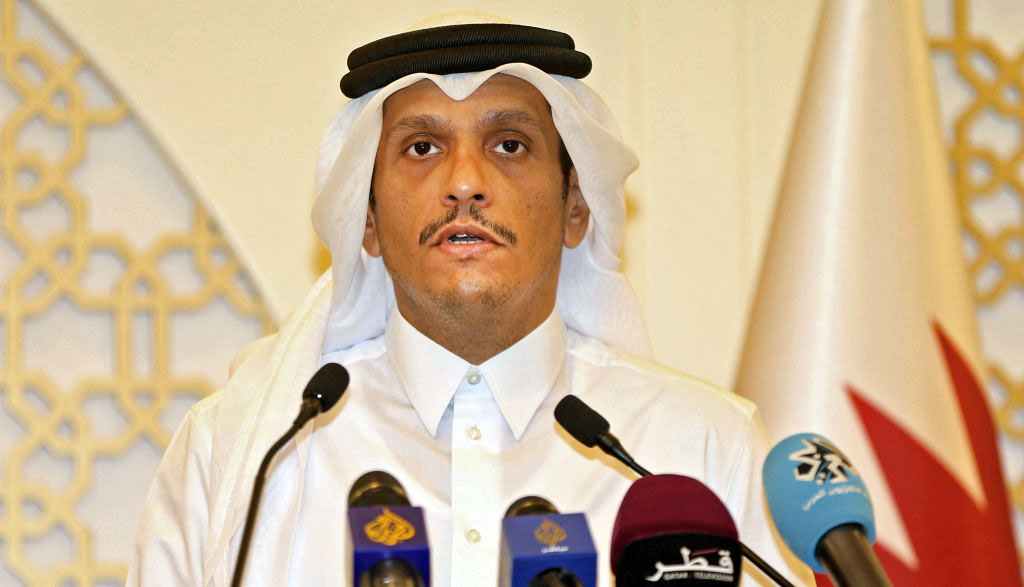
Qatar says Netanyahu must be ‘brought to justice’ over strikes
DOHA: Qatar’s prime minister warned Wednesday that an unprecedented Israeli strike in Doha targeting Hamas killed hope for Gaza hostages, calling for Israeli leader Benjamin Netanyahu to be “brought to justice.”
His comments came a day after deadly strikes targeted Hamas leaders in Qatar — a US ally — a first in the oil-rich Gulf that rattled a region long shielded from conflict.
“I think that what Netanyahu has done yesterday, he just killed any hope for those hostages,” Qatari Prime Minister Sheikh Mohammed bin Abdulrahman Al Thani told CNN.
Doha is “reassessing everything” around their involvement in future ceasefire talks and discussing next steps with Washington, he added in comments cited in CNN’s live blog after an interview with the broadcaster.
The attack, just three months after Iran launched a retaliatory strike on a US air base in Qatar, also cast serious doubt on Qatar-mediated Gaza ceasefire talks and undermined security reassurances to the Gulf from key ally Washington.
Earlier Wednesday, Defense Minister Israel Katz vowed that Israel would “act against its enemies anywhere” while Netanyahu urged Qatar to expel Hamas officials or hold them to account, “because if you don’t, we will.”
Qatar has hosted Hamas’s political bureau since 2012 with Washington’s blessing, and has been a key mediator in Gaza talks alongside Egypt and the United States.
READ ALSO:
- Businesses suffer as national grid collapses again
- INEC recognises Mark, Aregbesola as ADC chairman, secretary
- Tinubu to address world leaders at UN General Assembly Sept 24
Israel’s military said it struck Houthi targets in Yemen on Wednesday, including in the capital Sanaa, killing 35 people according to the militants.
Palestinian militant group Hamas said six people were killed in Tuesday’s strikes in Qatar, but its senior leaders had survived, affirming “the enemy’s failure to assassinate our brothers in the negotiating delegation.”
The White House said Trump did not agree with Israel’s decision to take military action.
Trump said he was not notified in advance and when he heard, asked his envoy Steve Witkoff to warn Qatar immediately — but the attack had already started.
Israel’s ambassador to the United Nations, Danny Danon, sought to justify the decision, telling an Israeli radio station: “It was not an attack on Qatar; it was an attack on Hamas.”
‘Shaken conscience of world’
Hamas political bureau member Hossam Badran said Israel “represents a real danger to the security and stability of the region.”
“It is in an open war with everyone, not just with the Palestinian people,” he said.
In Gaza City on Wednesday, the Israeli military destroyed another high-rise building as it intensified its assault on the territory’s largest urban center, despite mounting calls to end its campaign.
The military issued an evacuation warning to those living in and around the Tiba 2 tower, before later saying it had “struck a high-rise building that was used by the Hamas terrorist organization.”
AFP images showed huge plumes of smoke billowing into the sky as the residential tower in western Gaza City crashed to the ground.
READ ALSO:
- Trump scolds Israeli PM Netanyahu over Qatar strikes
- Tragedy in Onitsha, pregnant woman killed, seven injured in market clash
- Crisis brews over new NOUN VC selection, top aspirant name omitted from list
In the aftermath, young girls rushed to pick dust-covered dough out of the rubble.
Siham Abu Al-Foul told AFP she couldn’t take anything with her when the army issued the evacuation orders.
“They brought down the tower and we came running and there was nothing left… Everything we fixed in two years was gone in a minute.”
The Israeli military said it had struck 360 targets since Friday and vowed that it would “increase the pace of targeted strikes” in the Gaza City area in the coming days.
The Gaza war has created catastrophic humanitarian conditions for the population of more than two million, with the United Nations last month declaring a famine in Gaza City and its surroundings.
EU chief Ursula von der Leyen said she would push to sanction “extremist” Israeli ministers and curb trade ties over the dire situation.
“What is happening in Gaza has shaken the conscience of the world,” she said.
‘Not thrilled’
Israel’s targeting of Hamas leaders in Qatar sparked international condemnation.
Trump said he was not notified in advance of the Israeli strikes and was “not thrilled about the whole situation.”
“I view Qatar as a strong Ally and friend of the US, and feel very badly about the location of the attack,” he said in a social media post, adding Hamas’s elimination was still a “worthy goal.”
Canada said it was reassessing its relationship with Israel following the Doha strikes.
Hamas’s October 2023 attack resulted in the deaths of 1,219 people, mostly civilians, according to an AFP tally based on Israeli figures.
Of the 251 hostages seized during the assault, 47 remain in Gaza, including 25 the Israeli military says are dead.
Israel’s retaliatory offensive has killed at least 64,656 Palestinians, most of them civilians, according to figures from the health ministry in Hamas-run Gaza that the UN considers reliable.










International
Oil Prices Slide as Trump Announces Fresh Iran Talks, Easing Supply Fears

Oil Prices Slide as Trump Announces Fresh Iran Talks, Easing Supply Fears
Global oil prices fell sharply in early Asian trading on Monday after United States President Donald Trump announced fresh negotiations with Iran, raising hopes of easing tensions in the Middle East and restoring normal shipping through the strategically vital Strait of Hormuz.
Brent crude, the international oil benchmark for September delivery, dropped 4.69 per cent to $83.81 a barrel as of 2250 GMT on Sunday, while the US benchmark, West Texas Intermediate (WTI), declined 4.67 per cent to $80.72.
The decline followed Trump’s announcement on Sunday that Washington would resume diplomatic engagement with Tehran instead of pressing ahead with major military strikes against the Islamic Republic.
READ ALSO:
- Political Realignments: Kwankwaso Receives APC Defectors into NDC in Kano
- DSS, Vigilantes Ambush, Kill Notorious Bandit Kingpin Idi Abasu Aiki, Over 60 Fighters in Katsina
- Nigeria Shines in Commonwealth Games, Tops Africa with 10 Gold Medals
“Now what we’re doing is we’re talking to them in the form of a negotiation. It begins tomorrow afternoon,” Trump said, without disclosing the venue or those expected to participate in the talks.
Oil markets have remained highly volatile since the conflict between the United States, Israel and Iran escalated in late February, disrupting traffic through the Strait of Hormuz—a critical maritime corridor for global crude oil and liquefied natural gas exports.
The renewed diplomatic push has fuelled optimism that the waterway could soon reopen fully, reducing the risk of prolonged disruptions to global energy supplies.
Adding to the positive sentiment, Iran said on Sunday that it was close to reaching an agreement with Oman on establishing a new shipping arrangement through the Strait of Hormuz, a development that could further stabilise oil exports from the region.
Oil Prices Slide as Trump Announces Fresh Iran Talks, Easing Supply Fears
International
Hamas Accepts US-Backed Disarmament Plan as Trump Unveils Gaza Peace Roadmap
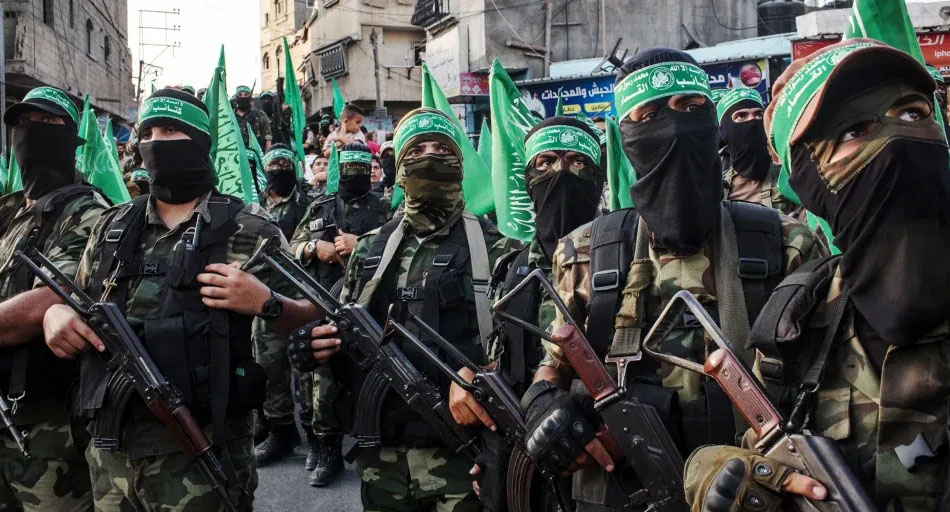
Hamas Accepts US-Backed Disarmament Plan as Trump Unveils Gaza Peace Roadmap
- A landmark agreement could reshape the future of Gaza, but Israel’s official response remains pending as key details hang in the balance.
In a significant diplomatic breakthrough, the Palestinian group Hamas has formally accepted a United States-backed proposal aimed at ending the 10-month-long war in the Gaza Strip. The agreement, unveiled by U.S. President Donald Trump, outlines a phased roadmap that includes the group’s complete disarmament and a gradual withdrawal of Israeli troops from the territory. The announcement, made on Friday, marks one of the most substantial developments since the October ceasefire. However, the deal remains conditional, and Israel has not yet issued an official response, leaving the international community in a state of cautious optimism.
Under the proposed framework, Hamas has agreed to surrender its weapons to the National Committee for the Administration of Gaza (NCAG) , a Palestinian governing body established under the Trump-administration-led Board of Peace initiative. The disarmament process is designed to be phased and verifiable, beginning with an initial phase where Hamas police forces are expected to hand over light weapons to the NCAG within the first two weeks. This would be followed by a second, more extensive phase lasting between 200 and 350 days, during which the full decommissioning of heavy weapons, tunnels, depots, and weapons production facilities would take place under strict international oversight. The roadmap follows a “zero trust” model, meaning each phase of disarmament must be independently verified before the next step of Israeli military withdrawal can proceed. Echoing this cautious approach, Nickolay Mladenov, the Board of Peace’s High Representative for Gaza, emphasized that “withdrawal must move in lockstep with decommissioning,” underscoring the need for synchronized and carefully monitored implementation.
For Hamas, the decision represents a difficult but necessary concession aimed at alleviating the suffering of Palestinian civilians. Ghazi Hamad, a member of the group’s negotiating team, described the move as a sacrifice made for the sake of the people in Gaza, to save them from continued killing and displacement. He further clarified that Israel will not intervene in the disarmament process, which will be solely managed by the NCAG. However, a senior Hamas official stressed that full implementation of the agreement depends on Israel fulfilling its prior commitments under the initial ceasefire, which include ending all military attacks, withdrawing forces to October 2025 positions, and significantly increasing humanitarian aid deliveries into the besieged territory.
READ ALSO:
- FG to phase out electricity subsidy from 2027 as power sector debts rise
- At least 43 migrants die as 49,000 cross into Spain’s Ceuta enclave
- Segun Aina assumes office as JAMB registrar, vows to protect examination integrity
As of this report, Israel’s government has not formally responded to the proposal, and its position remains a critical unknown. An Israeli political source indicated that the current framework does not “satisfactorily” address Israel’s core demand for the complete demilitarisation of the Gaza Strip. The source also reiterated that Prime Minister Benjamin Netanyahu’s recent meeting with President Trump in Washington did not include discussions on the Gaza conflict, casting doubt on the level of Israeli engagement with the plan. Another major sticking point is the so-called “Yellow Line” buffer zone, with an Israeli official insisting there would be no withdrawal from this area before Hamas is fully disarmed. Despite these reservations, the U.S. has expressed confidence that Israel will ultimately adhere to the 20-point plan, with one official noting that President Trump would be “very, very disappointed” if it did not.
The agreement was brokered by a coalition of international mediators, including Egypt, Qatar, and Turkey, who have been engaged in months of difficult negotiations. Egypt’s state-linked Al-Qahera News reported that Cairo is expected to host another meeting to advance discussions on the second phase of the truce, signaling continued diplomatic momentum. A diplomatic source familiar with the negotiations emphasized the roadmap’s commitment to unity and order, stating that “there will be no exceptions for certain weapons or certain people,” and that the goal is to establish “one authority, one law, one weapon.” The roadmap also includes a verification mechanism designed to monitor compliance by both parties, ensuring accountability and transparency throughout the entire process.
Despite the diplomatic progress, hostilities have persisted on the ground, underscoring the fragility of the current situation. Gaza’s health authorities reported that Israeli airstrikes on Thursday killed at least four people, including two children, even as negotiations advanced. The humanitarian situation in Gaza remains dire, with widespread displacement, acute food insecurity, and a collapsing healthcare system that has left thousands without access to basic medical care. The success of the agreement hinges not only on political will from all parties but also on tangible, on-the-ground improvements in the daily lives of Palestinian civilians, many of whom have been displaced multiple times since the conflict began.
The focus now shifts from negotiation to implementation, with the Board of Peace confirming in a post on X (formerly Twitter) that the NCAG will “soon begin a phased transition toward full authority.” Key milestones to watch include Israel’s official response to the proposal, which could shape the entire trajectory of the deal; the actual start of the weapons handover process; the deployment of an International Stabilization Force to work alongside a new Palestinian police force; and meaningful progress on humanitarian aid and reconstruction efforts that could help stabilize the region. Each of these steps carries significant weight and will be closely monitored by the international community.
This agreement represents a rare moment of compromise in a conflict marked by decades of violence and deep-seated mistrust. However, the path forward is fraught with challenges, and the “zero trust” approach reflects the profound suspicions that persist on both sides. Any misstep, whether a delay in weapons handover or a disagreement over troop withdrawal, could unravel the entire framework and plunge the region back into conflict. For now, the world watches and waits, with hopes pinned on a process that remains as fragile as it is historic. As Mladenov aptly put it, “What happens next matters even more. Implementation and verification have to be real.”
Hamas Accepts US-Backed Disarmament Plan as Trump Unveils Gaza Peace Roadmap
International
At least 43 migrants die as 49,000 cross into Spain’s Ceuta enclave
At least 43 migrants die as 49,000 cross into Spain’s Ceuta enclave
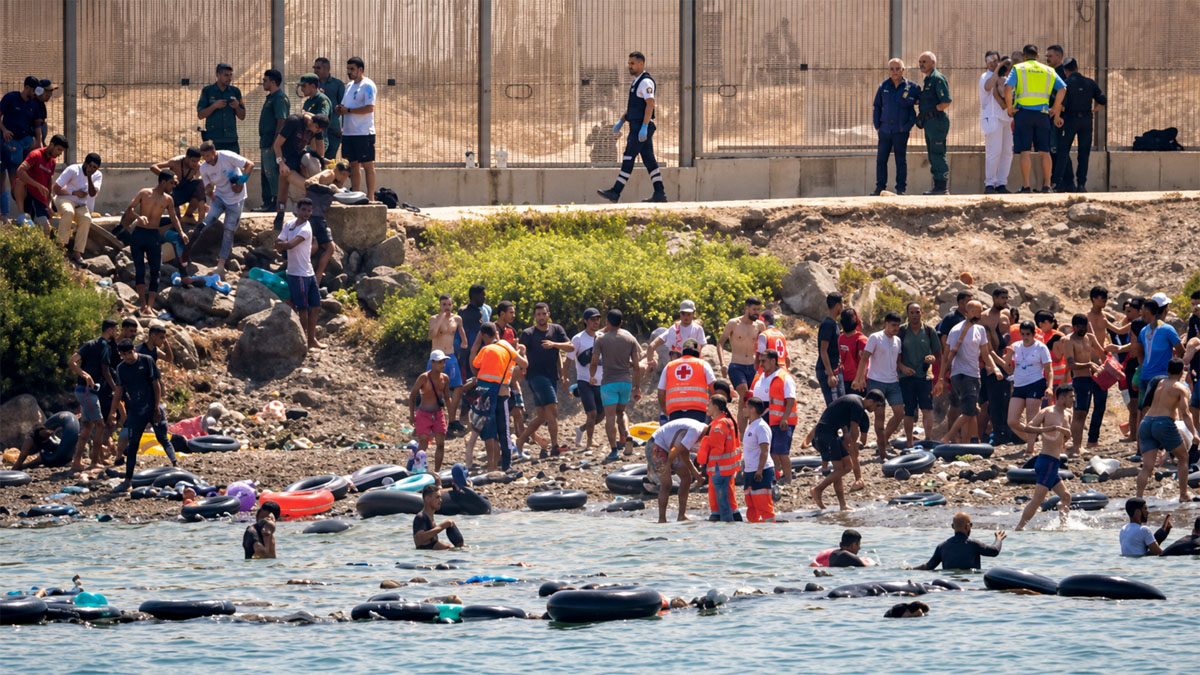
At least 43 migrants have died during a massive and chaotic attempt to enter Spain’s North African enclave of Ceuta from neighbouring Morocco, as tens of thousands of people crossed the border by land and sea.
Spanish authorities estimated that about 49,000 migrants entered Ceuta within 24 hours, creating an unprecedented pressure on the enclave’s security agencies, emergency services and reception facilities. The scale of the influx was significant for a territory with a population of about 80,000 people. (reuters.com)
Many of those attempting to reach Ceuta reportedly entered through coastal routes, with some swimming around border barriers from the Moroccan side. Others moved towards land crossings and border fences separating the Spanish territory from Morocco.
The large movement included men, women, children and families, according to reports from the area.
Authorities said several people died during the dangerous crossings, while emergency teams carried out rescue and recovery operations along the coastline.
The reported death toll has increased from the initial figure of 18 as authorities continued to assess the situation and recover bodies. The number may be subject to further updates as rescue and identification operations continue. (The Guardian)
READ ALSO:
- Segun Aina assumes office as JAMB registrar, vows to protect examination integrity
- Rivers police arrest 50-year-old man over alleged defilement of two minors
- Tyla drops Lagos from A*POP World Tour amid boycott calls, concert threats
Spanish and Moroccan authorities moved to contain the situation by reinforcing security around the border and coordinating efforts to prevent additional large-scale crossings.
Spain deployed additional security personnel to support the Civil Guard, while military units and armoured vehicles were positioned in areas around the border.
The Spanish government said it had regained control of the situation, with many of those who crossed into Ceuta returning to Morocco as authorities worked to restore normal movement around the enclave. (reuters.com)
Spanish Prime Minister Pedro Sánchez described the mass crossing as a serious challenge and called for coordinated action to protect the border while addressing the humanitarian consequences of the crisis.
The development has also drawn attention from European leaders, with concerns raised over border security, migration management and the safety of people attempting dangerous crossings. (The Guardian)
The cause of the sudden surge remains unclear.
Authorities are expected to examine whether misinformation, organised migration networks, economic pressures or other factors contributed to the unusually large movement towards Ceuta.
The crisis comes after Ceuta experienced increased migration pressure in the weeks leading up to the mass crossing. Spanish authorities had earlier reported a rise in the number of people attempting to enter the enclave by swimming from Morocco. (El País)
Ceuta and the nearby Spanish enclave of Melilla are located on the northern coast of Africa and share land borders with Morocco.
The two territories are among the main routes used by migrants seeking to enter Spain and, by extension, the European Union.
Migration attempts through the area have frequently resulted in deaths and injuries because of strong currents, difficult sea conditions, border barriers and overcrowding during large movements.
The latest incident has renewed calls for stronger cooperation between Spain and Morocco, improved border management and safer measures to protect people undertaking dangerous migration journeys.
Humanitarian groups have also stressed the need to ensure that people in vulnerable situations, including children and families, receive emergency assistance and access to appropriate protection.
Authorities are expected to provide further updates on the number of deaths, injuries, missing persons and people who remain in Ceuta as emergency and border-control operations continue.
At least 43 migrants die as 49,000 cross into Spain’s Ceuta enclave
-

 Education2 days ago
ICYMI: Court orders JAMB, CBT centre to pay ₦10m over forced removal of candidate’s hijab during UTME
-

 News7 hours ago
Oloyede clears air on JAMB’s ₦36m ‘snake swallowed money’ controversy
-

 Education2 days ago
Oyo Muslim Leaders Receive Saudi Delegation, Intensify Drive for Muslim College of Nursing
-
 News3 days ago
FG to phase out electricity subsidy from 2027 as power sector debts rise
-

 News3 days ago
CJN orders lawyers to stop using ‘Barrister’ before their names
-

 Auto2 days ago
Policy Bottlenecks Threaten Nigeria’s Clean Mobility Drive, LCCI Warns
-

 metro3 days ago
Catholic Priest Found Dead in Kogi After Machete Attack as Police, Govt Launch Investigations
-

 metro3 days ago
Osun Guber: IGP Deploys New Election CP as INEC Identifies 11 Flashpoint LGAs