

metro
REVEALED: Inside the intelligence-led operation that forced Oyo kidnappers to flee

REVEALED: Inside the intelligence-led operation that forced Oyo kidnappers to flee
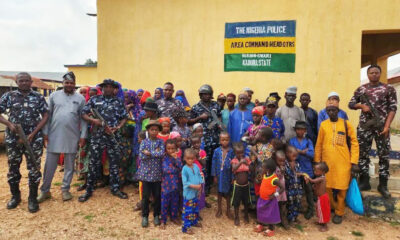
Fresh details have emerged on how a coordinated joint security operation forced the kidnappers of abducted Oyo schoolchildren and teachers to abandon their captives and flee deep into the forest, bringing an end to one of Nigeria’s most high-profile school abductions in recent years.
The successful rescue, which ended the victims’ 56-day captivity, followed an intensive intelligence-led operation involving troops of the Nigerian Army, operatives of the Department of State Services (DSS), the Nigeria Police Force, the Office of the National Security Adviser (ONSA) Tactical Team, the Inspector-General of Police Intelligence Response Team (IRT), the Police Air Wing and local vigilantes.
According to security sources familiar with the operation, the rescue mission was carefully planned to prevent harm to the abducted pupils and teachers while cutting off escape routes used by the kidnappers.
Security operatives reportedly advanced through the forest from different directions over several days, combing difficult terrain and engaging suspected members of the kidnapping gang in separate encounters that disrupted their movement and weakened their ability to hold on to the captives.
One of the security sources disclosed that the operation intensified after intelligence gathered from local vigilantes and community members helped security personnel identify areas frequently used as hideouts by criminal groups.
“What happened was that while the soldiers were trekking through the forest searching for where the children were being held, they kept encountering some of the kidnappers on different routes and neutralising them.
“Initially, they thought the kidnappers would all be together with the children. But as the operation intensified, they discovered that the kidnappers had split into different groups and were fleeing through different routes,” the source explained.
According to the source, the local vigilantes provided valuable information that proved crucial to the operation because they possessed extensive knowledge of the forest and the movement of criminal elements within the area.
“The local vigilantes gave them useful information. They told them that anyone found in that section of the forest was most likely part of the criminal network because innocent people don’t operate there.
READ ALSO:
- Trump says US will ‘completely decimate’ Iran if he is assassinated
- Tinubu upgrades Federal Polytechnic to specialised university
- How Nigeria will benefit from state police – IGP
“That intelligence helped the security team. Some of the kidnappers exchanged gunfire with the troops, while others escaped through different routes.”
The source further disclosed that security personnel spent several days inside the forest carrying out painstaking search operations before eventually locating the area where the victims were being held.
“They had been inside the bush for days carrying out the operation. They continued combing the forest until they eventually got to where the children and teachers were being kept.”
By the time the troops reached the location, the kidnappers had reportedly abandoned the victims in a desperate attempt to evade capture.
“When they finally got there, there wasn’t a single kidnapper left. They had abandoned the children and teachers and escaped through different routes because of the pressure from the security operation.
“They had already met some of the kidnappers on the way and killed some of them. The remaining ones fled, leaving the victims behind because they could no longer safely move them.”
The source identified members of the rescue team as troops from the 2 Division of the Nigerian Army, operatives of the Office of the National Security Adviser Tactical Team, personnel of the Nigeria Police Force Air Wing, members of the Inspector-General of Police Intelligence Response Team (IRT) and other specialised security units working under the coordination of the National Security Adviser.
“It was a joint task force. But the people who really led the operation were the NSA Special Squad, although military personnel and other security agencies also participated because they were all working under the coordination of the National Security Adviser,” the source added.
The Presidency had earlier confirmed that all the surviving abducted pupils and teachers had been rescued.
Special Adviser to the President on Information and Strategy, Bayo Onanuga, announced the development, saying the victims regained their freedom through a coordinated operation carried out by the nation’s security agencies.
He subsequently disclosed that eight suspected kidnappers were arrested during the rescue mission and are currently in the custody of the Department of State Services (DSS), while several other members of the gang were neutralised.
Onanuga also revealed that no ransom or prisoner exchange was involved in securing the victims’ release, dismissing reports suggesting that the Federal Government negotiated with the kidnappers.
According to him, one of the notorious kingpins whose release had reportedly been demanded by the abductors remains in government custody and is being prosecuted for terrorism-related offences.
President Bola Tinubu commended the military, the DSS, the Nigeria Police Force and intelligence agencies for the successful operation, describing it as a major victory against criminal elements terrorising communities.
The President also directed relevant government agencies to provide immediate medical attention, trauma counselling, rehabilitation and other forms of humanitarian support to the rescued pupils and teachers as they recover from their ordeal.
The victims were abducted on May 15, 2026, after heavily armed gunmen attacked three schools in Yawota and Ahoro-Esiele communities in Oriire Local Government Area of Oyo State.
The coordinated attacks targeted Baptist Nursery and Primary School, Yawota, Community Grammar School, Ahoro-Esiele, and L.A. Primary School, Esiele, where dozens of pupils and teachers were marched into nearby forests at gunpoint.
The attack claimed the life of Assistant Headmaster Joel Adesiyan, who was shot while attempting to protect the children. Another teacher, Michael Oyedokun, was later killed while in captivity, a development that intensified public outrage and heightened pressure on security agencies to secure the release of the remaining victims.
The kidnapping triggered nationwide condemnation, protests by parents, labour unions, teachers and civil society organisations, while the Nigeria Union of Teachers (NUT) embarked on an industrial action that disrupted academic activities across Oyo State.
During the crisis, President Tinubu approved the deployment of specialised security personnel and authorised the recruitment of 1,000 forest guards to strengthen security across vulnerable forest corridors in Oyo State as part of broader efforts to combat kidnapping and banditry.
Although security agencies are yet to release a comprehensive operational report detailing every aspect of the mission, the rescue has been widely described as one of the most successful intelligence-led hostage rescue operations carried out in Nigeria in recent years.
Investigations are continuing as security agencies intensify efforts to apprehend the remaining members of the kidnapping syndicate and dismantle criminal networks operating within forests across the South-West.
REVEALED: Inside the intelligence-led operation that forced Oyo kidnappers to flee










metro
EFCC Wins ₦132m Money Laundering Case as Court Orders Forfeiture of Lagos Properties

The Economic and Financial Crimes Commission (EFCC) has secured the conviction of Lagos-based businessman Onatayo Pelumi over alleged money laundering involving approximately ₦132 million, with the Federal High Court in Lagos ordering the forfeiture of two properties and ₦8 million to the Federal Government.
Justice Osiagor of the Federal High Court, Lagos, convicted Pelumi on five counts relating to the retention of proceeds of unlawful activities in bank accounts maintained with Guaranty Trust Bank (GTBank) and Zenith Bank.
According to the EFCC, the charges covered various sums allegedly retained in the accounts between January 2023 and June 2026, despite the defendant’s knowledge that the funds were proceeds of unlawful activities.
The commission did not provide further details about the specific unlawful activities from which the money was allegedly derived.
In his judgment, Justice Osiagor sentenced Pelumi to three years’ imprisonment, with an option of a ₦300,000 fine, on the first count.
READ ALSO:
- Hardship: ACF Gives Tinubu Three Months to Deliver Relief, Demands Clear Timelines
- Adamawa Mourns as Fufore Loses Second Council Chairman in 18 Months
- Police Launch Manhunt After Fresh Attacks, Kidnappings Rock Four Nigerian States
For each of the remaining four counts, the court imposed five years’ imprisonment, with an option of a ₦300,000 fine per count.
However, the judge directed that all the prison terms run concurrently, meaning they are served at the same time rather than consecutively.
The court also ordered the forfeiture of two half-plots of land in Lagos and ₦8 million held in Pelumi’s Zenith Bank account to the Federal Government of Nigeria.
The properties covered by the forfeiture order are a half-plot of land at No. 23 Michael Ayorinde Street, Abule-Egba, and another half-plot at No. 1 Yisa Street, Meiran, both in Lagos State.
In addition to the prison sentences and forfeiture orders, Pelumi was directed to undertake seven days of community service.
The conviction followed prosecution by the EFCC’s Lagos Zonal Directorate 1 as part of its efforts to investigate and prosecute financial crimes involving the retention of funds linked to unlawful activities.
The case also highlights the commission’s use of asset-forfeiture proceedings to recover money and property connected to financial crime cases.
The EFCC did not disclose additional details about the source of the funds beyond the allegations contained in the five-count charge.
EFCC Wins ₦132m Money Laundering Case as Court Orders Forfeiture of Lagos Properties
metro
Hardship: ACF Gives Tinubu Three Months to Deliver Relief, Demands Clear Timelines
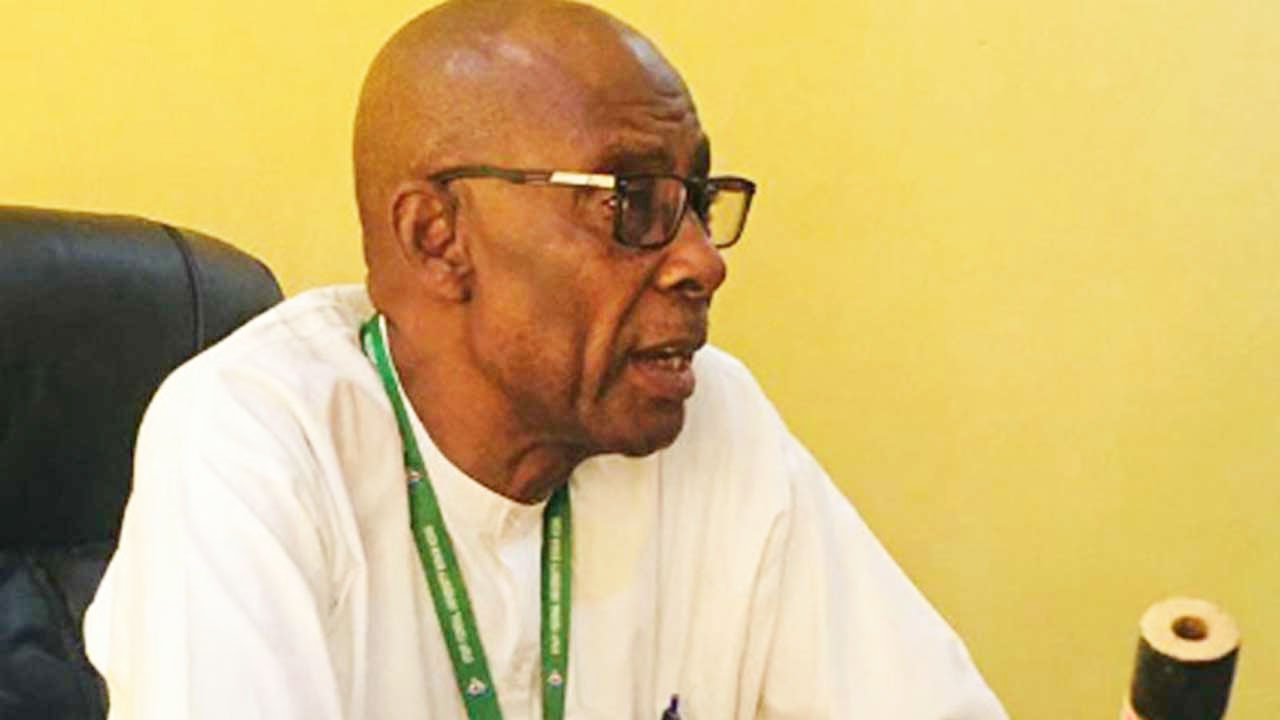
The Arewa Consultative Forum (ACF) has urged President Bola Ahmed Tinubu to introduce measures to ease the economic hardship facing Nigerians within three months, while demanding clear timelines and measurable targets for improving living conditions.
The forum said the Federal Government should move beyond repeated assurances that economic conditions would improve and provide specific commitments showing when Nigerians could begin to experience meaningful relief.
The ACF’s Publicity Secretary, Professor Tukur Mohammed-Baba, made the call during an interview with ARISE News on Thursday, October 8, 2026, according to media reports.
Mohammed-Baba said the administration needed to be more transparent about the effects of its economic reforms and acknowledge areas where the outcomes had fallen short of expectations.
He argued that government policies should be assessed not only by their stated objectives but also by their effects on households, businesses and the wider population.
The ACF spokesman cited the rising cost of living, declining purchasing power, increasing rents, higher transportation expenses and electricity bills as some of the pressures confronting Nigerians. He also identified poor road infrastructure and persistent insecurity as challenges affecting citizens’ welfare.
READ ALSO:
- Adamawa Mourns as Fufore Loses Second Council Chairman in 18 Months
- Police Launch Manhunt After Fresh Attacks, Kidnappings Rock Four Nigerian States
- Cross River Seals 58 Schools in Crackdown on Unapproved Education Centres
According to him, the government should explain how it intends to address these problems and establish clear benchmarks against which its performance can be measured.
Mohammed-Baba called on the Tinubu administration to outline what it expects to achieve within one, two and three years, arguing that measurable targets would enable Nigerians to assess progress rather than rely solely on official assurances.
He also urged the government to acknowledge the difficulties associated with its economic policies and communicate more openly with citizens about the challenges and expected outcomes.
The ACF spokesman maintained that the government should not expect Nigerians to endure prolonged hardship without a clear indication of when relief measures would take effect.
He said three months should be enough for the administration to introduce measures capable of reducing some of the immediate pressures on households, even if broader economic recovery would require more time.
The forum also called for greater accountability from political leaders, arguing that the sacrifices demanded of citizens should be matched by a commitment from public officials to responsible governance and improved service delivery.
Mohammed-Baba’s comments add to the ongoing debate over the impact of the Tinubu administration’s economic reforms, particularly the pressure that higher living costs have placed on households and small businesses.
The government has defended its reforms as necessary to address longstanding economic challenges. However, the ACF’s position underscores the need for clear communication about the expected benefits of the policies and practical measures to cushion their immediate effects.
On the 2027 general elections, Mohammed-Baba said the ACF would assess political parties and candidates based on their commitment to good governance, accountability, anti-corruption, equity and fairness.
He said the forum’s position would be guided by the quality of leadership and the ability of political actors to promote responsible governance rather than automatic support for any particular political party.
The ACF’s central demand is for the Federal Government to establish clear deadlines, measurable objectives and practical steps for reducing hardship, enabling Nigerians to judge progress by tangible improvements in their daily lives.
Hardship: ACF Gives Tinubu Three Months to Deliver Relief, Demands Clear Timelines
metro
Adamawa Mourns as Fufore Loses Second Council Chairman in 18 Months
Adamawa Mourns as Fufore Loses Second Council Chairman in 18 Months
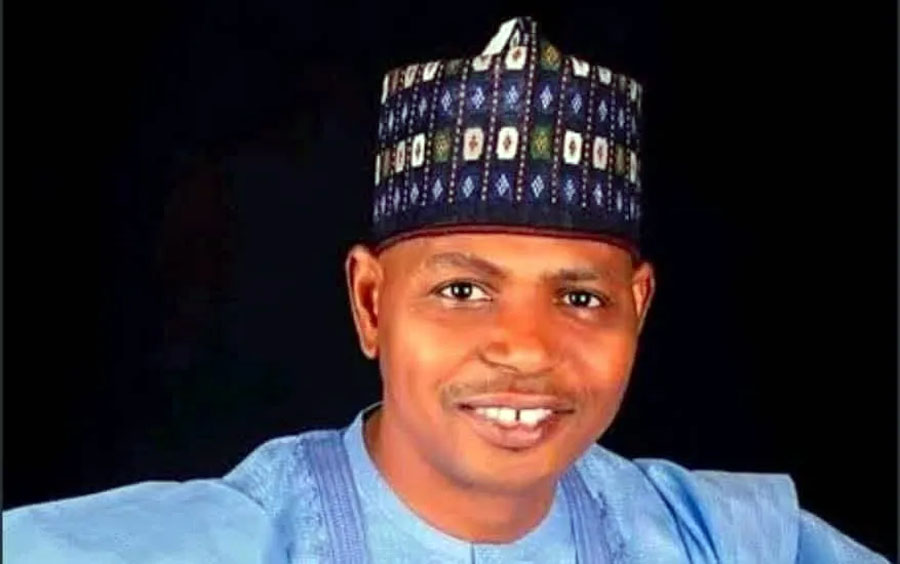
The Chairman of Fufore Local Government Area of Adamawa State, Dr Yahaya Sa’idu, has died less than three months after assuming office, in a development that has plunged the council and its residents into mourning.
Sa’idu reportedly died at a hospital in Kaduna following a brief illness. According to Ahmed B. Yusha’u, the council’s Information Officer, the chairman died at about 1 a.m. on Saturday, October 10, 2026.
His death came approximately 18 months after his predecessor, Shuaibu Babas, also died while serving as chairman of the council, making the latest development another significant loss for the Fufore community.
The news of Sa’idu’s death was confirmed in a condolence message by Aliyu Boya Wakili, the member of the House of Representatives representing Fufore/Song Federal Constituency.
Wakili expressed sadness over the death, describing it as a major loss to the people of Fufore and Adamawa State. He prayed for Allah to forgive the deceased’s shortcomings, accept his good deeds and grant him Aljannatul Firdaus.
He also extended condolences to the late chairman’s family, associates and constituents, urging them to find strength and comfort during the difficult period.
READ ALSO:
- Police Launch Manhunt After Fresh Attacks, Kidnappings Rock Four Nigerian States
- Cross River Seals 58 Schools in Crackdown on Unapproved Education Centres
- INEC Raises Alarm Over Fake APC Result Naming Okorocha, Seeks DSS, Police Probe
The Adamawa State chapter of the Association of Local Governments of Nigeria (ALGON) also mourned Sa’idu’s death. The association’s state chairman, Titus Obadiah, described him as a committed leader who served his community.
Obadiah sympathised with the bereaved family, friends, political associates and residents of Fufore, praying for comfort and strength for everyone affected by the loss.
The Adamawa State Police Command also expressed condolences to the deceased’s family, the Fufore community and the state government. The condolence message was signed by the command’s Police Public Relations Officer, SP Suleiman Yahaya Nguroje.
Other political figures who reportedly mourned Sa’idu included Senator Aminu Iya Abbas, representing Adamawa Central Senatorial District, and Ahmad Lawan, a senior special assistant on security to Governor Ahmadu Umaru Fintiri.
Sa’idu was sworn in as Fufore local government chairman on July 15, 2026, on the platform of the Peoples Democratic Party (PDP). His death occurred less than three months after he began his tenure.
His predecessor, Shuaibu Babas, died on April 23, 2025, while in office. Babas’s death was followed by a succession process that eventually led to his deputy, Peace Samson Audu, being sworn in as substantive chairman in May 2025.
The successive deaths have prompted fresh expressions of grief among political stakeholders and residents of Fufore, who are mourning the loss of two council leaders within approximately 18 months.
As tributes continue to emerge, details of Sa’idu’s funeral arrangements were yet to be formally confirmed in the reports available at the time of publication.
The circumstances surrounding his reported brief illness have not been publicly detailed beyond the information provided by the council’s Information Officer.
Adamawa Mourns as Fufore Loses Second Council Chairman in 18 Months
-
 metro3 days ago
[UPDATED] 20 NYSC Prospective Corps Members Freed After Seven Days in Captivity
-
 metro2 days ago
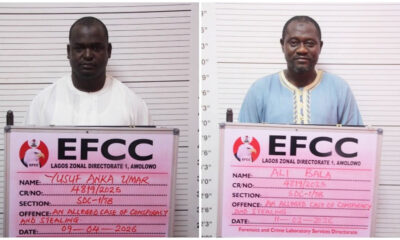
EFCC Re-Arraigns Two Over Alleged £110,000 Money Laundering, ₦500m Fraud
-

 Africa2 days ago
FBI Raids Ghana Scam Centre, Detains Over 130 in $10m Fraud Probe
-
metro2 days ago
How Parents Raised Millions to Free 20 Abducted NYSC Members
-

 Sports3 days ago
Ronaldo Pays Emotional Tribute to Messi After Argentina Farewell
-

 metro2 days ago
[UPDATED] Lagos Train Crash: 55-Year-Old Motorist Survives as Honda Car Is Wrecked at PWD Crossing
-

 News2 days ago
World Bank Raises Nigeria Growth Forecast, Demands More Jobs, Poverty Reduction
-

 metro3 days ago
NAF Crash: NYSC-Bound Graduate, Only Son, Among 25 Victims