

Health
Robbers plucked out my eyes because I had no money to give them, says 49-year-old PhD holder living with blindness
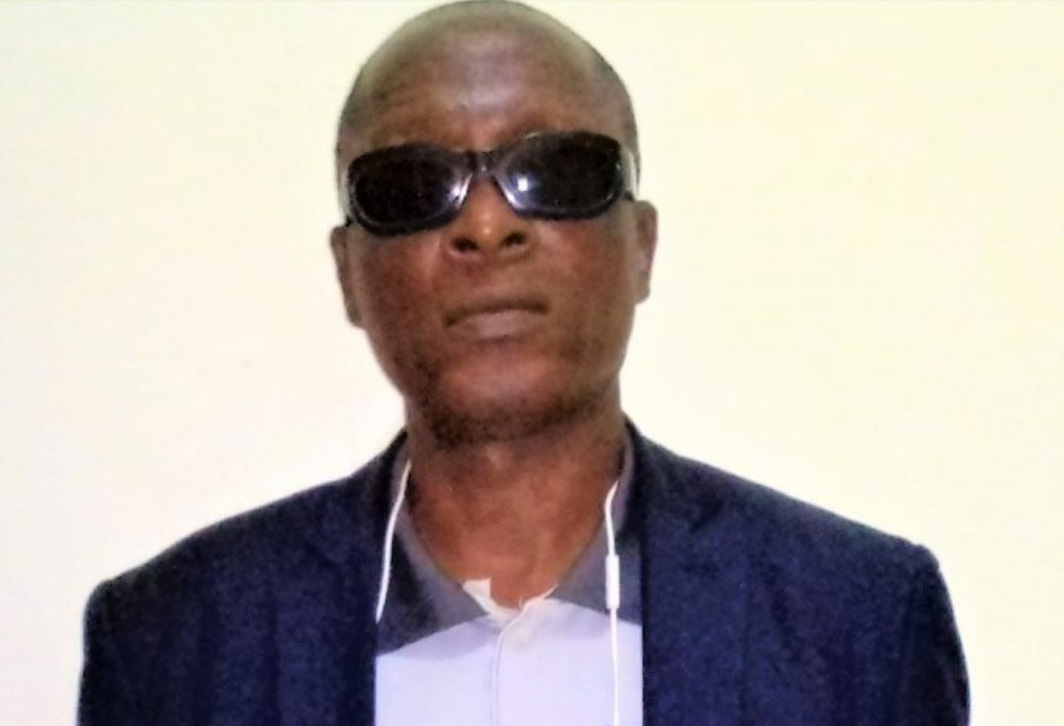
Dr. Michael Ebonhor was not born blind but lost his two eyes at the age of 23, when armed robbers attacked him and plucked out his eyes. The Guidance Counsellor shares with ANGELA ONWUZOO his traumatic experience and how he refused to allow disability to rob him of his dream of becoming a PhD holder.
July 20, 1995 remains a day Dr. Michael Ebonhor will not forget in a hurry. It was a sad and horrific day for him. It was a day that armed robbers plunged him into a world of darkness by plucking out his two eyes, simply because he had no money to give them when they came to rob his neighbourhood.
The robbers, numbering about six, had struck that fateful day and raided his room when he was a 200-level Geography and Social Studies student at the Tai Solarin College of Education (now Tai Solarin University of Education) , Ijebu Ode, Ogun State.
While Ebonhor’s roommate was lucky to have escaped the furry of the robbers who had come with dangerous weapons, including guns and machetes by running away, the Delta State indigene was not that lucky, as the robbers descended on him for not having money to give to them.
The horrific experience was made more traumatic because he was the one struggling to pay his school fees and fend for himself while schooling. He was working part-time as a bus conductor as a student.
Ebonhor, however, even after the unfortunate encounter with the robbers, vowed not to let his loss of sight truncate his dream of becoming a PhD holder.
Although Ebonhor’s blindness was shocking and sudden and was greeted with sadness by his family, the father of two said he has overcome the regret of losing his sight in such a manner, noting that he has no bitterness for the robbers that blinded him. He said will even forgive his assailants if they are eventually arrested by the police.
I was the only one injured because I had no money
Sharing his traumatic experience with PUNCH HealthWise, Ebonhor who is now a Guidance Counselling Officer with the Federal Ministry of Education, Ogun State, said, “I was not born blind. It happened on July 20, 1995. Then, I was 23 and a 200 level student of Tai Solarin College of Education, Ijebu Ode, Ogun State. I was studying Geography and Social Studies at the college and was living off-campus.
“So, that fateful night, a group of armed robbers came to our neighbourhood and raided about six buildings. My building was the fifth that they raided.
When they entered my room, they demanded money. I had a roommate and he was the first person to be dragged out by the robbers. But he was able to escape. When they pursued him up to a distance and could not get him, they came back for me and I didn’t have money to give them.
“When they could not find anything, they asked me to come out and lay on the ground. I was surrounded by six men. Two were holding guns, two were holding cutlasses and the other two were holding an iron.
They used the guns to hit me on the head and used a machete to torture me and in the end, they plucked out my two eyes.
Sadly, I was the only one that was injured during that robbery attack. Those of them that had money and gave it to them were not injured. They were not hurt.”
I was unconscious for hours after my eyes were plucked out
Ebonhor told our correspondent that he nearly lost his life during the attack as he became unconscious for several hours before help came his way.
More traumatic was when he woke up and saw darkness everywhere, wondering how he would sojourn in life without sight in his prime.
“In the morning, my neighbours took me to a nearby hospital where I was given first aid and later I was transferred to the Olabisi Onabanjo University Teaching Hospital (OOUTH), Sagamu, Ogun State.
“I was hospitalised for six months. When the attack happened, I became unconscious. But after some hours, I woke up. So, when I woke up, I saw total darkness and when I realised that my two eyes were gone, I was so devastated.
“Initially, the doctors would come and tell me not to worry, assuring me that all would be well.
“When I asked the chief consultant about my fate, she kept telling me all would be fine. But to what extent, she could not answer.
“Now, there was a day I was taken to the bathroom by a nurse and I hit my shoulder on the wall. That made me shed tears. I just wondered how somebody that was agile and independent would suddenly be led by people here and there. I just imagined how I would be relying on people for my movement.
“So, I asked the doctor after that experience if my eyes would function again and he wondered what brought about the question. I told him that someone wanted to donate an eye for me.
“It was then that the doctor told me that he had to be frank with me, that my eyes were gone and there was no remedy.
“He told me that even if someone donated an eye for me to see again, the nerves connecting my eyes and the brain had been damaged.
“So, nobody can donate an eye for me that will work”, Ebonhor narrated.
I prayed for four days and God asked me to forgive the robbers
He went on, “At that moment, my emotions dropped. For the next two days, I stopped taking my drugs in the hospital. I was not eating regularly.
“From the report, the chief matron had to send for my pastor. The pastor came and with a lot of religious counselling, my mood started changing for good. He asked me to pray to God and ask why the robbery attack happened.
“So, I prayed for four days and the inspiration came. And God asked me to forgive my assailants. From that moment, my mood changed and I forgave them, since God wanted me to forgive them. From the moment I did so, I started getting support from students and staff of Tai Solarin College of Education – my school. And that saved me from an extreme reaction.
“The college rose in support for me. When the incident happened, it was reported to the Odogbolu Police Division in Ogun State and the police conducted series of investigations. But, to date, no arrest has been made. Even if the assailants were arrested today, I would forgive and preach Christ to them.”
Journey of coping with blindness
Six months after the guidance counsellor was discharged from OOUTH, he was sent to a special school for rehabilitation, to enable him to cope with his new phase of life and to be able to live independently again with the right support.
He said, “After I was taken care of medically at the teaching hospital, I went for rehabilitation at the Federal College of Education (Special), Oyo State where I learnt how to do my chores and live independently again despite the disability.
“The college authority kept on visiting me from time to time. And they facilitated the movement of my transcript from the college (TASUED) to Federal College of Education (Special), Oyo State.
“They supported me with money also. Basically, I can say that their support is what has been keeping me going.”
Ebonhor said he vowed not to allow the sad incident to stop his journey of education halfway, even as the unfortunate development brought pain to his parents who had been happy that he overcame poverty to send himself to school.
My blindness brought sadness to my parents
“My parents felt so bad about it. They were not happy. They felt that as a hard-working and jovial young man, I would now depend on others to survive. They felt I would not be able to continue with my education. So, it brought a lot of sadness to them,” he added.
Continuing, Ebonhor said, “When I finished the rehabilitation in Oyo State, my transcript had to be transferred from Tai Solarin College of Education to Federal College of Education (Special), Oyo State, where I completed my National Certificate in Education in Social Studies in 1998.
“From there, I proceeded to Olabisi Onabanjo University, where I did Guidance and Counselling in Education. From there, I proceeded for my masters in 2003.
“In 2007, I commenced my PhD programme in Applied Psychology in OOU. By 2014, I had completed the programme. After that, I got a job with the Federal Ministry of Education between 2015 and 2016. But before then, I was working as a Guidance Counsellor at Mayflower School, in Okene, Kogi State. It has been my dream to have a “doctor” attached to my name and I am happy that my dream has come true, despite living with a disability.”
Getting married was not easy, I suffered rejection
Speaking about his marital life, the guidance counsellor who is also Chairman, Employment Committee, Nigeria Association of the Blind, said getting married was not easy for him as he suffered a lot of rejection from the ladies he approached as a result of his vision loss.
He, however, succeeded in 2005 after several unwavering efforts.
“Getting married was not easy. I got married in 2005. Prior to that time, I had approached some ladies for marriage but it didn’t work out as a result of rejection, owing to my disability.
“I suffered a lot of rejection. But I met my wife in Mayflower School,in 2003, where I was working as a Guidance Counsellor. She teaches in that school and isn’t living with a disability.
“Sometimes, when I was going to work, she would side-guide me and that was how we developed an interest in each other. My wife is from Oyo State. By the grace of God, the marriage has been doing fine and we have two kids,” he said.
Disability does not give me any cause for regret
Asked if he has any regret in life, occasioned by his sudden blindness, Ebonhor noted, “The only regret I have concerning this disability is my inability to play football. That is the only thing. As I am here now, I am into farming. There is nothing that able people can do that I cannot do, except driving.
“Disability does not give me any cause for regret but rather I feel that it has made me who I am today. It’s a blessing in disguise for me. Why am I saying this? Prior to my blindness, I used to come to Lagos from Tai Solarin College of Education to come and work as a bus conductor before I could pay my school fees.
“I started doing that from junior secondary school because my parents had no money to pay my school fees and I had vowed to go to school. So, I am happy that my dream finally came true, despite all odds.”
Punch Healthwise








Health
Fiji Declares National HIV Emergency as Diagnoses Surge Sixteenfold
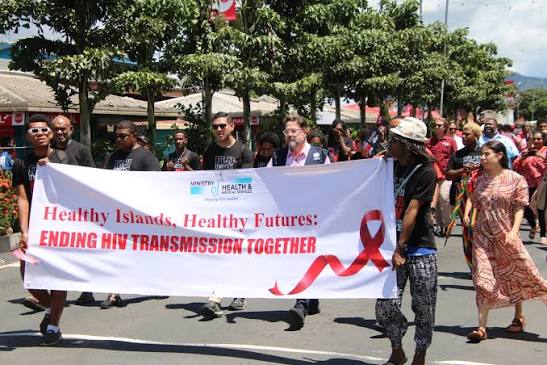
Fiji Declares National HIV Emergency as Diagnoses Surge Sixteenfold
Authorities launch a multi-agency public health campaign to expand free testing, treatment, and harm-reduction services
Fiji has announced a nationwide health response to address a significant rise in HIV cases and ensure that all residents can access essential medical care.
On Wednesday, Health Minister Dr. Atonio Lalabalavu shared the emergency declaration, explaining that national agencies are joining forces to provide rapid medical support, expand testing, and protect community well-being across the islands.
Official reports indicate that about one in every 60 adults in Fiji currently lives with HIV, following an increase in new infections over recent years. Health specialists explain that the virus spreads primarily through intimate sexual contact and shared needles among individuals using illicit substances.
Additionally, routine screenings revealed that two out of every 100 expecting mothers carry the virus, highlighting an urgent need for early maternal healthcare to protect newborns from infection.
To safeguard public health, authorities are delivering free daily treatments, distributing protective preventive medications, and setting up clean needle programs to stop infections before they start.
Furthermore, global partners, including Australia, New Zealand, India, and United Nations health bodies are providing financial resources and medical supplies to back the local effort.
By encouraging open community conversations and delivering accessible healthcare without judgment, health workers aim to ensure that everyone receives the care and dignity they deserve.
Fiji Declares National HIV Emergency as Diagnoses Surge Sixteenfold
Health
Adamawa Health Officials Report 20 Deaths from Suspected Diphtheria Cases
Adamawa Health Officials Report 20 Deaths from Suspected Diphtheria Cases
Parents and caregivers are advised to seek early medical help and update childhood vaccinations as response teams expand outreach.
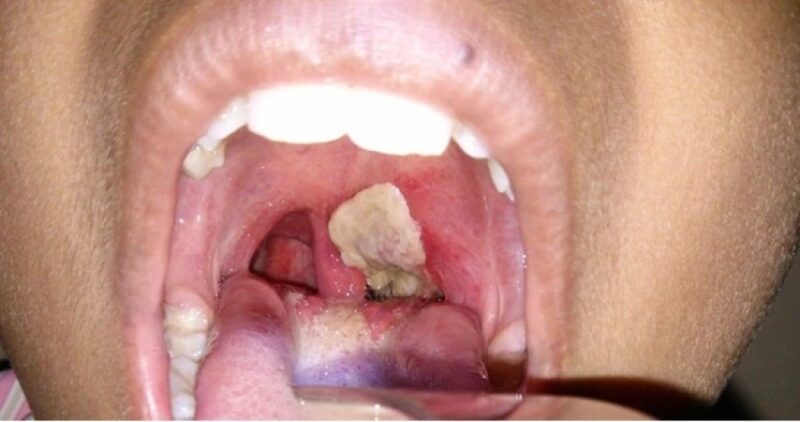
Health authorities in Adamawa State are responding to a diphtheria outbreak that has caused 20 deaths across 13 local government areas. Speaking on Wednesday, State Epidemiologist Jones Steven Kadabiyu confirmed that health workers have recorded 126 suspected cases throughout the state, with six patients currently receiving medical care in local hospitals.
Diphtheria is a serious bacterial illness that spreads through airborne droplets from coughing or close personal contact. It mainly affects the throat and airway, causing sore throats, mild fevers, swollen neck glands, and difficulty swallowing or breathing.
READ ALSO:
- Kara Bridge Repairs, Multiple Crashes Trigger 14-Hour Gridlock on Lagos-Ibadan Expressway
- 2027: Court Gives Atiku Seven Days to Serve Tinubu Through APC in Eligibility Suit
- 2027: Northern Students Back Tinubu, Pledge Campus-to-Campus Mobilisation
Health officials emphasized that the biggest risk to patients has been waiting too long to visit a health center, as some families try informal remedies at home first before seeking professional medical attention.
The state government is working alongside health partners to track new cases, provide specialized antibiotics and treatments, and protect medical workers and family members.
Officials stressed that while diphtheria can affect people of any age, young children are the most vulnerable to serious complications. Parents and guardians are strongly encouraged to ensure their children are up to date on their routine vaccines and to visit the nearest clinic immediately if anyone develops throat swelling or breathing issues.
Adamawa Health Officials Report 20 Deaths from Suspected Diphtheria Cases
Community
Monarch Dies Shortly After Being Rescued From Kwara Kidnappers
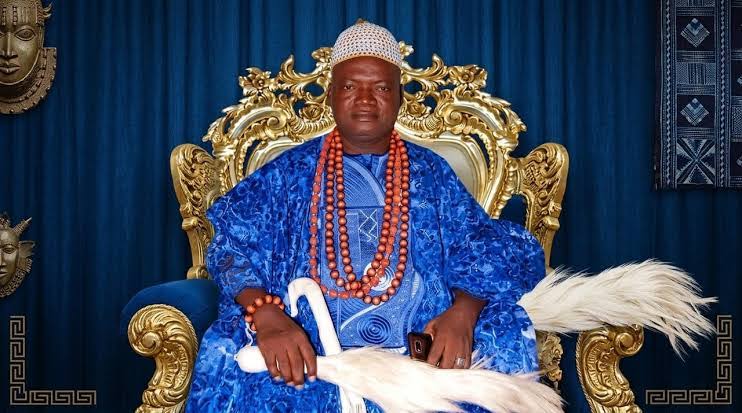
The Onigbesi of Igbesi Land in Kwara State, Oba Moses Oyinloye Iwedunmoye I, has died days after he was rescued from kidnappers.
The monarch passed away in the early hours of Saturday at a hospital, according to his son, Prince Olasunkanmi, who said his father had been receiving treatment following a brief illness.
“Yes, the news is true. He died after a brief illness following his release. We took him to the hospital, hoping he would survive, but he died there very early this morning,” Olasunkanmi said.
Oba Iwedunmoye was abducted on August 22 when armed men invaded Igbesi community in Isin Local Government Area.
He regained his freedom five days later after security forces launched an operation around the Elerin/Ijomu-Oro area, where three kidnapped victims were found.
The rescue followed a report received at the Oro Police Station from a vigilante member, who alerted authorities after one of his colleagues was shot while operating in the bush.
A combined team of police officers, soldiers and vigilantes was subsequently deployed to the area.
Police said the suspected kidnappers engaged the team in a gun battle after spotting the advancing operatives. One alleged kidnapper was killed during the exchange, while others escaped into the surrounding area.
The security team continued the search and eventually located the three victims, who were evacuated for medical treatment.
News of the monarch’s death was announced by Bisi Fakayode, National President of Omo Ibile Igbomina, who mourned the traditional ruler and prayed for the repose of his soul.
The circumstances surrounding the monarch’s illness and death have not been publicly disclosed beyond his family’s account that he fell ill after his release.
-

 Politics3 days ago
2027: Northern Lecturers Back Tinubu, ASUU Disowns Endorsement
-
 metro3 days ago
Police Arrest Mother Over Alleged Brutal Abuse of 7-Year-Old Girl in Anambra
-

 Sports2 days ago
‘I Was Never the Chosen One’ — Dembele Responds to Mbappe
-

 International1 day ago
Islamic Council Condemns Attempted Attack on Holy City of Mecca
-

 Education2 days ago
JAMB Moves 2027 UTME Time — Here’s What Candidates Need To Know
-

 metro2 days ago
Lagos Power Outage: Ikeja Electric Blames TCN as Businesses, Homes Groan
-
 News1 day ago
Keep Politics Out of My Office — Ogbomoso Grand Chief Imam Warns Politicians, Bloggers
-
 Politics2 days ago
2027: APC Governors Reject Wike’s Rainbow Coalition, Insist on Party Loyalty