

Politics
S’Court dismisses PDP suit against Oyetola’s participation in Osun election

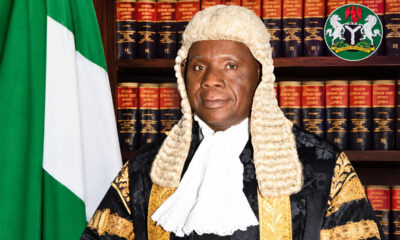
The Supreme Court has dismissed an appeal by the Peoples Democratic Party (PDP) seeking to restore the nullification of the participation of forner Osun state Governor, Gboyega Oyetola and his deputy Benedict Alabi in the July 16, 2022 governorship election.
A five-member panel of the Supreme Court led by Justice Centus Nweze held that the appeal by the PDP lacked merit and directed the counsel to the PDP Kehinde Ogunwumiju to withdraw it.
READ ALSO:
- BREAKING: CBN Issues fresh directive to banks on new naira notes
- Support hijab to suppress urge for nudity, crime – Muslim groups
- CBN governor, bank chiefs on a collision course over amount of new notes
The court held that the PDP could not, under the law,question the process leading to the emergence of Oyetola and Alabi as candidates of the All Progressives Congress (APC) in the election.
Recall that Justice Emeka Nwite of the Federal High Court in Abuja had in a judgment on September 30, 2022, nullified the participation of Oyetola and Alabi in the governorship election on the grounds that their nomination forms were endorsed by an acting Chairman of APC, who was also a serving governor of Yobe State, Mai Mala Buni.
Justice Nwite’s judgment was set aside by the Court of Appeal, Abuja in a judgment in December last year, a decision the PDP appealed to the Supreme Court.








Politics
2023 Election: Tinubu’s Camp Dares Obi to Produce Evidence He Won Presidential Poll

President Bola Ahmed Tinubu’s campaign council has challenged Peter Obi, the presidential candidate of the Nigeria Democratic Congress (NDC), to provide evidence to support his claim that he won the 2023 presidential election.
The challenge followed comments attributed to Obi during a recent BBC interview, in which he reportedly maintained that he won the election but acknowledged that he had no evidence to substantiate his claim.
The council’s spokesperson, Dele Alake, criticised Obi’s position in a statement on Friday, October 9, 2026, arguing that the claim contradicted the official results declared by the Independent National Electoral Commission (INEC).
Alake maintained that INEC declared Tinubu the winner of the February 25, 2023 presidential election and that the outcome was subsequently upheld by the Presidential Election Petition Tribunal and the Supreme Court.
READ ALSO:
- [UPDATED] Lagos Train Crash: 55-Year-Old Motorist Survives as Honda Car Is Wrecked at PWD Crossing
- How Parents Raised Millions to Free 20 Abducted NYSC Members
- Lasaco Assurance Retains A(NG) Rating as Revenue Rises 35.2% to N30.8bn
He challenged Obi to produce evidence to support his assertion rather than continue making claims about the outcome of the election.
The 2023 presidential election was contested by several major candidates, including Tinubu of the All Progressives Congress (APC), Atiku Abubakar of the Peoples Democratic Party (PDP) and Obi, who contested under the Labour Party.
According to INEC’s declared results, Tinubu received 8,794,726 votes, Atiku secured 6,984,520 votes, while Obi polled 6,101,533 votes.
The election results triggered legal challenges from opposition candidates, with the courts eventually upholding Tinubu’s victory.
The latest exchange has brought renewed attention to the disputed 2023 election as political parties and prominent politicians position themselves ahead of the 2027 general election.
2023 Election: Tinubu’s Camp Dares Obi to Produce Evidence He Won Presidential Poll
Politics
‘Mad People’: Presidency Fires Back at Amaechi Over Tinubu Re-Election Remarks
‘Mad People’: Presidency Fires Back at Amaechi Over Tinubu Re-Election Remarks
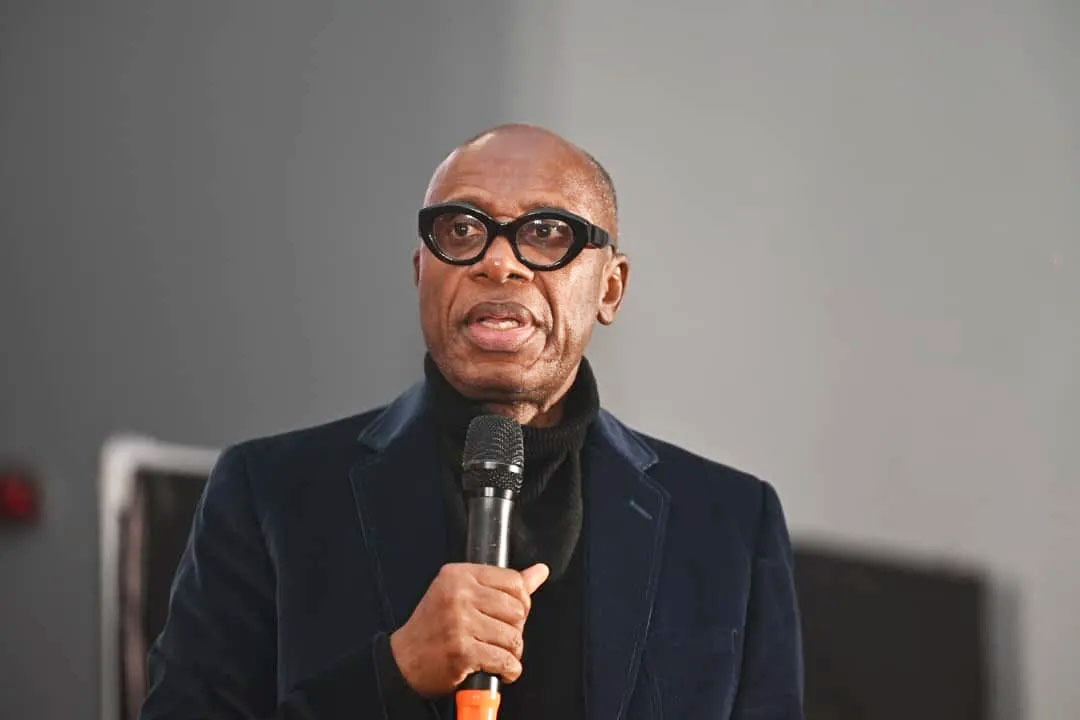
The Presidency and the Edo State chapter of the All Progressives Congress (APC) have criticised former Rivers State governor Rotimi Amaechi after he declared that only “mad people” would vote for President Bola Tinubu in the 2027 general election.
Amaechi, the African Democratic Congress (ADC) vice-presidential candidate, made the remark on Thursday, October 8, 2026, during an ADC town hall meeting in Benin City, Edo State, where he urged residents to reject Tinubu’s re-election bid.
The former transportation minister also accused supporters campaigning for Tinubu of having questionable motives, linking their support for the President to the hardship Nigerians have experienced under his administration.
“They are going about saying, ‘Vote Tinubu, vote Tinubu.’ Only thieves will vote for Tinubu,” Amaechi said.
He added that the 2027 election would reveal how many Nigerians he described as “mad” would support the President.
“If Edo people vote for Tinubu, that means Edo people are mad. If you are not mad, Tinubu should not win here,” he said.
Amaechi’s comments drew a sharp response from Temitope Ajayi, Senior Special Assistant to the President on Media and Publicity, who described the former governor as a careless and irresponsible speaker.
Ajayi questioned Amaechi’s credibility, accusing him of making inflammatory statements for political purposes rather than engaging in constructive debate about the country’s challenges.
The presidential aide also referred to Amaechi’s recent comments about his late mother, arguing that the former governor had inappropriately used a family tragedy to criticise the administration.
READ ALSO:
- ‘What Happens on Day 31?’ Atiku Slams Tinubu’s 30-Day Fuel Discount as Election-Laced Package
- Ronaldo Breaks Silence on Portugal Row as Pelé, Maradona Comparison Sparks Meme Frenzy
- [UPDATED] Lagos Train Crash: 55-Year-Old Motorist Survives as Honda Car Is Wrecked at PWD Crossing
Amaechi had alleged that the economic hardship associated with Tinubu’s policies made it difficult for him to afford the medication his mother needed before her death. His mother, Ezinne Amaechi, died on July 16, 2026, at the age of 89.
Ajayi challenged Amaechi’s account by referring to expenses he said the former governor had incurred on his family, including his daughter’s education in the United Kingdom and his mother’s funeral. He argued that these expenditures contradicted the financial difficulties Amaechi had described.
The presidential aide also questioned Amaechi’s political influence, citing his previous role as director-general of former President Muhammadu Buhari’s presidential campaigns in 2015 and 2019.
According to Ajayi, the APC failed to secure 10 per cent of the votes in Rivers State during those elections, despite Amaechi’s prominent position in the campaign organisation.
He argued that the former governor’s electoral record raised questions about his ability to attract votes for the ADC and described him as a potential burden on the opposition party’s presidential ticket.
Ajayi further said the Presidency did not consider every political statement worthy of an official response, but maintained that Amaechi’s remarks deserved scrutiny.
The Edo APC also rejected the former governor’s comments, insisting that residents were capable of making independent decisions about whom to support in the 2027 election.
The party’s Publicity Secretary, Peter Uwadiae-Igbinigie, said Amaechi was entitled to his opinion but argued that voters should not be insulted because of their political preferences.
He described Edo residents as politically informed and defended their support for Governor Monday Okpebholo and the APC.
Uwadiae-Igbinigie also defended Tinubu’s economic reforms and pointed to what he described as infrastructure development in Edo State as reasons voters should consider supporting the President.
He dismissed the ADC as a collection of politicians whose influence had declined, while expressing confidence that Tinubu would receive substantial support in the state.
The Edo APC spokesman said the party had set a target of 2.5 million votes for Tinubu in Edo State in the 2027 presidential election, attributing the target partly to the relationship between the state government and the Federal Government.
Amaechi’s criticism of Tinubu comes amid mounting political debate over the administration’s economic policies, particularly the removal of petrol subsidies and the resulting pressure on household spending.
The former governor has repeatedly criticised the President’s economic direction, arguing that rising living costs have made life increasingly difficult for Nigerians. His latest remarks reflect the ADC’s efforts to challenge the ruling party ahead of the next general election.
The Presidency and the Edo APC, however, have focused their responses on Amaechi’s language, personal credibility and political record rather than accepting his characterisation of Tinubu’s supporters.
The exchange highlights the increasingly confrontational tone of political debate ahead of the 2027 election, with both the ruling party and opposition figures using public appearances to challenge each other’s policies, records and electoral appeal.
As campaigning gathers momentum, the disagreement also raises questions about the place of personal attacks in political communication and whether debates over economic policy can remain focused on the issues affecting voters.
Ultimately, Edo residents and other Nigerian voters will determine their preferred candidates at the ballot box in 2027.
‘Mad People’: Presidency Fires Back at Amaechi Over Tinubu Re-Election Remarks
Politics
2027: ADC Vows to Collate, Share Polling-Unit Results Despite INEC Warning
2027: ADC Vows to Collate, Share Polling-Unit Results Despite INEC Warning
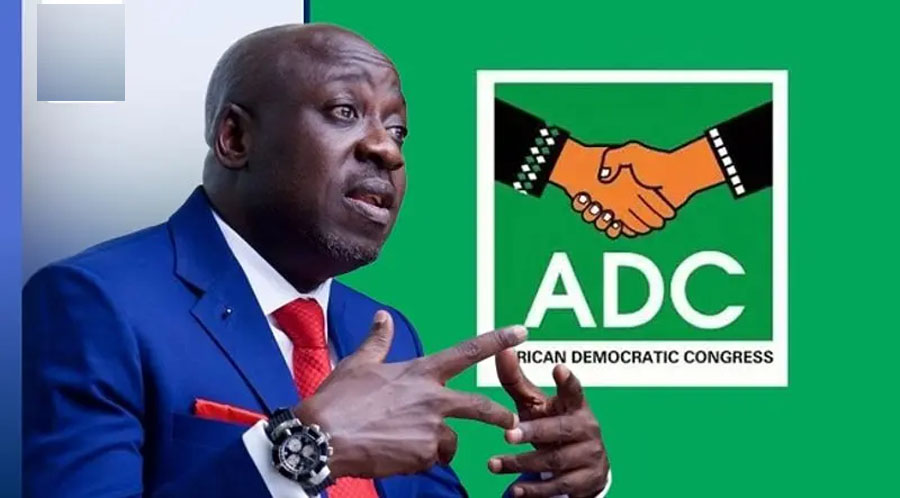
The African Democratic Congress (ADC) has vowed to independently document, collate and share polling-unit results during the 2027 general elections, despite a warning from the Independent National Electoral Commission (INEC) against the publication of privately collated results.
The ADC said its plan is aimed at protecting votes cast for its candidates and ensuring that results announced at the end of the electoral process reflect the figures recorded at polling units.
The party’s National Publicity Secretary, Bolaji Abdullahi, said the ADC recognised INEC’s statutory responsibility to collate and officially declare election results, but maintained that citizens and political parties have the right to collect and share information, including election results.
Abdullahi’s position followed a recent warning by INEC Chairman, Professor Joash Amupitan, against the sharing of privately collated election results.
The ADC argued that independently gathering and publishing polling-unit figures does not prevent INEC from carrying out its constitutional responsibility to conduct the election, collate official results and declare winners.
Under Nigeria’s electoral system, INEC conducts the official collation and declaration process through various levels, from the Registration Area and Local Government Area to state and, for the presidential election, the national level.
READ ALSO:
- Court Grants Alleged Fake JAMB Registrar N50m Bail, Sets Strict Conditions
- NESREA to Honour Lagos Baale After Dramatic Rescue of Endangered Sea Turtle
-
How Six Members of a Family Were Murdered in Oyo
The ADC said its independent collation would provide its candidates and supporters with their own record of results from polling units and allow them to compare those figures with results emerging through the official process.
The party has previously said its decision was influenced by the 2023 general elections, when concerns arose over the electronic transmission of results to the INEC Result Viewing Portal (IReV).
Abdullahi had said the party would no longer rely solely on INEC to protect its votes, arguing that political parties must put their own mechanisms in place to monitor results from polling units through the collation process.
The ADC has also raised concerns about the appointment of Returning and Collation Officers for the 2027 elections.
In September, the party called on INEC to review the use of academics who had openly expressed support for political candidates in sensitive electoral positions.
It argued that people who had publicly taken partisan positions should not subsequently be assigned responsibilities involving the collation of results or declaration of winners in elections contested by their preferred candidates.
The party urged INEC to publish the names of proposed Returning and Collation Officers ahead of the elections to allow political parties and members of the public to raise concerns about possible conflicts of interest.
The latest dispute has placed renewed focus on the distinction between independent election monitoring by political parties and the official collation and declaration of results, which remains the responsibility of INEC.
The ADC maintains that its planned collection and publication of polling-unit figures is intended to promote transparency and protect its votes, rather than replace INEC’s official declaration.
As preparations for the 2027 elections intensify, the disagreement highlights the growing debate over how political parties, election observers and citizens should independently monitor results while preserving INEC’s legal authority over the official electoral process.
2027: ADC Vows to Collate, Share Polling-Unit Results Despite INEC Warning
-

 metro2 days ago
[UPDATED] 20 NYSC Prospective Corps Members Freed After Seven Days in Captivity
-
 Politics3 days ago
‘No Decent Wages, No Credible Elections’ — Sowore Threatens 2027 Boycott
-

 metro3 days ago
Seven Years With Parkinson’s: Man Seeks N65m for Brain Surgery in Türkiye
-
 Politics3 days ago
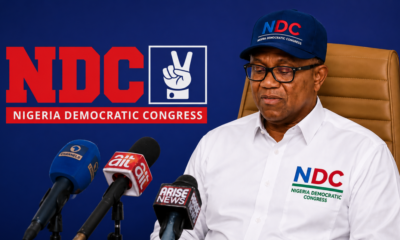
2027: Obi Makes U-Turn, Vows to Restore Fuel Subsidy If Elected
-

 Africa1 day ago
FBI Raids Ghana Scam Centre, Detains Over 130 in $10m Fraud Probe
-

 metro2 days ago
Yayi, Adebule, Muslim Leaders, Others for Imodi-Ijebu Turbaning, ₦1bn Fundraiser
-

 metro2 days ago
EFCC Re-Arraigns Two Over Alleged £110,000 Money Laundering, ₦500m Fraud
-

 Politics3 days ago
2027: Galadima Alleges APC Offering N50m, N200m to Lawmakers to Step Aside