

International
Second Houthi Strike in Two Days Kills One at Riyadh Airport
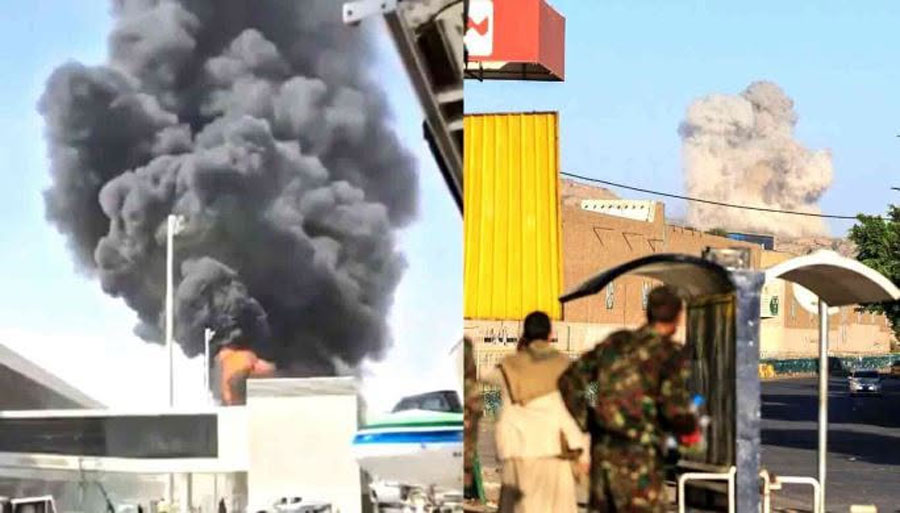
Saudi Arabia is facing mounting security concerns after a second consecutive day of attacks on Riyadh’s King Khalid International Airport left one person dead and 11 others injured, following an earlier strike that killed at least 13 people and wounded more than 300.
The latest attack occurred on Sunday, October 11, 2026, when a projectile struck Terminal 4 at the airport in the Saudi capital. The country’s General Authority of Civil Aviation confirmed that the person killed was a Pakistani resident, while the 11 injured people were taken to hospitals for treatment.
The incident came less than 24 hours after another deadly attack on the airport, prompting renewed fears about the safety of passengers, airport workers and other civilians as tensions involving Saudi Arabia and Yemen’s Houthi movement intensified.
Saudi authorities began assessing the damage and inspecting airport facilities after the latest strike. Airport operations had already been disrupted following Saturday’s attack, with reports indicating that the closure was extended while officials reviewed security conditions and determined when flights could safely resume.
The attacks have raised serious concerns about the vulnerability of Saudi Arabia’s aviation infrastructure, particularly as the Houthis have threatened further strikes against airports and other strategic facilities in the kingdom.
The death toll from Saturday’s attack was initially reported at 12, with more than 300 people injured. India’s embassy in Saudi Arabia later confirmed that an Indian citizen had died from injuries sustained in the incident, bringing the reported toll to at least 13 deaths from that attack alone. The additional fatality reported on Sunday brings the combined reported death toll from the two incidents to at least 14.
READ ALSO:
- 2027 Elections: Atiku Demands Names of INEC Ballot Printers, Questions Secret Contracts
- ₦8.7bn Erosion-Control Budget Gap Raises Questions as Anambra Gullies Expand
- Fuel Subsidy May Ease Hardship Today, But Could Cripple Nigeria’s Economy Tomorrow — FG
The figures relate to separate attacks and should not be confused with the 11 people injured in Sunday’s incident.
The Houthi movement, which is aligned with Iran and controls large parts of northern Yemen, claimed responsibility for attacks on Saudi targets. Its military spokesperson, Yahya Saree, said the group had carried out operations involving missiles and drones against airports and facilities belonging to Saudi energy giant Aramco.
The Houthis identified King Khalid International Airport in Riyadh and King Fahd International Airport near Dammam among their targets. The group also warned airlines and passengers against using Saudi airports and airspace, threatening further operations as the confrontation escalated.
Saudi authorities reported additional security incidents during the same period. The Saudi-led coalition said air defences intercepted a cruise missile near King Khalid International Airport. A drone was also intercepted in the Eastern Province, while a ballistic missile reportedly launched towards Khamis Mushait was intercepted.
Emergency alerts were issued in Abha, southern Saudi Arabia, although civil defence authorities later said the immediate danger had passed.
Reports also indicated that King Fahd International Airport in Dammam came under attack on Sunday evening. Officials said damage assessments and safety inspections were under way, although the full extent of the damage was not immediately clear.
The incidents have heightened concerns that the attacks could extend beyond Riyadh to other parts of Saudi Arabia, threatening civilian infrastructure and complicating efforts to maintain normal aviation operations.
The repeated strikes are particularly alarming because Riyadh’s airport was reportedly targeted several times within a five-day period. The pattern has intensified pressure on Saudi authorities to strengthen air defences and protect critical infrastructure against further missile and drone attacks.
Saudi Arabia has long supported Yemen’s internationally recognised government in its conflict with the Houthis. The latest attacks have increased the risk of renewed confrontation between Riyadh and the armed group, potentially undermining efforts to contain the wider regional crisis.
Pakistan’s Prime Minister, Shehbaz Sharif, condemned the attack on Riyadh airport and expressed solidarity with Saudi Arabia. He called for an end to attacks on civilians and critical infrastructure, warning of the wider implications for regional security and stability.
The attacks have also raised concerns about international air travel, given Saudi Arabia’s importance as a regional aviation hub and a destination for millions of travellers, including religious pilgrims. Any prolonged closure of major airports could disrupt passenger movements, airline schedules and international connections.
Beyond aviation, the escalation could have implications for global energy markets and maritime trade. Saudi Arabia is a major oil producer, while the wider conflict has raised concerns about security along important shipping routes, including the Red Sea and Bab el-Mandeb Strait, which connects the Red Sea with the Gulf of Aden.
Sustained attacks on transport and energy infrastructure could increase shipping risks, insurance costs and pressure on supply chains, although the extent of any economic impact would depend on the duration and scale of the escalation.
Saudi authorities now face the immediate challenge of assessing damage, restoring airport operations safely and protecting passengers and aviation facilities against further attacks. The Houthis’ warning of additional strikes has added uncertainty over when normal air travel can resume and whether other strategic locations could become targets.
The latest incidents underscore the growing threat to civilian infrastructure as regional tensions intensify, with potential consequences for Saudi Arabia’s security, international aviation, maritime trade and the wider Middle East.
Second Houthi Strike in Two Days Kills One at Riyadh Airport












International
Iran Flogs Singer, Four Others 74 Times Over Hijab-Free Performance

Iranian singer flogged over hijab-free concert
The punishment followed a video of Ahmadi’s “Caravanserai Concert”, recorded in December 2024 at the historic Deir-e Gachin Caravanserai near Qom and released online.
The performance, staged without a live audience, showed the singer wearing a sleeveless black dress with her hair uncovered while singing alongside male musicians, in defiance of Iran’s compulsory hijab regulations and restrictions on women performing publicly.
The video attracted millions of views on YouTube and drew attention to restrictions on women’s freedom of expression and participation in public cultural activities in the Islamic Republic.
Iranian authorities subsequently opened a criminal case against Ahmadi and members of her production team over what officials described as an illegal performance that violated religious and legal standards.
A criminal court in Qom convicted nine people in June over what it described as offending public decency through the production and dissemination of immoral content online. The defendants denied the accusations.
An appeals court upheld the sentences in September, including the flogging punishment and two-year restrictions on artistic activities and foreign travel.
READ ALSO:
- Nollywood Legend Pete Edochie Dies at 79 After Battle With Prostate Cancer
- BREAKING: Court Sacks Omo-Agege as NDC Senatorial Candidate, Orders INEC to Remove His Name
- Fraud, Drugs, Money Laundering: US Targets 157 Nigerians for Deportation
It was unclear what happened to the other four people sentenced in the case, as reports confirmed the flogging of Ahmadi and four members of her team.
The enforcement of the punishment reportedly came after lawyers unsuccessfully sought to overturn the verdict, reduce the sentences or secure a suspension of the flogging.
One of the lawyers told the BBC that the defence team had exhausted efforts to stop the punishment but was unable to prevent its immediate enforcement.
The case has renewed criticism of Iran’s treatment of women, particularly artists who challenge compulsory dress regulations and restrictions on female performances.
Women in Iran are required to observe the country’s hijab rules, while solo public singing by women is restricted, particularly in performances before mixed-gender audiences.
The restrictions have remained a major flashpoint since the 2022 protests following the death of Mahsa Amini, a young Kurdish-Iranian woman who died in custody after being arrested over alleged dress-code violations.
Human rights organisations have repeatedly condemned flogging as cruel, degrading and a violation of international human rights standards, urging Iranian authorities to abolish corporal punishment and end restrictions on women’s rights.
Ahmadi’s punishment has further fuelled outrage among artists, activists and supporters of women’s rights, who say the prosecution reflects the authorities’ continued efforts to suppress artistic freedom and punish women who challenge compulsory hijab laws.
Iranian singer flogged over hijab-free concert
International
Fraud, Drugs, Money Laundering: US Targets 157 Nigerians for Deportation

Fraud, Drugs, Money Laundering: US Targets 157 Nigerians for Deportation
The United States government has listed 157 Nigerians on its immigration enforcement register for possible deportation over various alleged criminal offences, including fraud, money laundering, drug-related crimes, identity theft, assault and offences involving children.
The latest update by the US Department of Homeland Security (DHS) added 24 Nigerians to its controversial Worst of the Worst register, bringing the total number of Nigerians featured on the list to 157.
The development was reported on Tuesday, November 24, 2026, following an update to the DHS website, which features foreign nationals arrested by the US Immigration and Customs Enforcement (ICE) over serious criminal allegations.
According to information published by the department, the newly listed Nigerians were arrested in different locations across the United States over offences ranging from financial crimes and drug-related violations to weapons offences and child cruelty.
Among those named is Emmanuel Omowaiye, arrested in Richmond, Texas, over alleged mail fraud, while Laurene Onwuka was arrested in Chantilly, Virginia, over fraud by impersonation.
Olusegun Shonekan, arrested in Newark, New Jersey, was listed over wire fraud, while Olusegun Olaseni was arrested in Greencastle, Indiana, over the alleged sale of amphetamine.
Others include Peter Ude, arrested in Atlanta, Georgia, over wire fraud, and Newton Jemide, arrested in Fort Dix, New Jersey, over alleged wire fraud, conspiracy and mail fraud.
The register also features Shedrack Umukoro, arrested in Yazoo City, Mississippi, over money laundering; Olasoji Akinbode, arrested in Kearny, New Jersey, over fraud by impersonation; and Oluwatosin Afolabi, arrested in Conroe, Texas, over fraud.
READ ALSO:
- Uduere Killings: Ughelli Chairman Accuses Omo-Agege’s Camp of Triggering Deadly Clash, Demands IGP Probe
- ‘Shame on You’: Fayose Blasts Nigerian Youths Over Poor Protest Turnout
- KWAM 1 Warns Tinubu Over Economic Hardship, Says Nigerians Should Not Suffer to Death
Alameen Adetunji Tokosi, arrested in Chicago, Illinois, was listed over heroin possession, while Joshua Ipoade, arrested in Atlanta, Georgia, was named over wire fraud.
Another Nigerian, Michael Orji, arrested in Oxford, Wisconsin, was listed over several alleged offences, including weapons-related violations, fraud, identity theft, wire fraud, falsely claiming US citizenship and money laundering.
Other Nigerians on the updated register include Ahmadu Apooyin, arrested in Baltimore, Maryland, over a cocaine-related offence; Teslim Kiriji, arrested in Yazoo City, Mississippi, over money laundering; and Onomen Uduebor, arrested in Seattle, Washington, over identity theft.
Charles Ochi and Daniel Eta, both arrested in White Deer, Pennsylvania, were listed over money laundering and wire fraud, respectively.
The list further includes Ifeanyi Ibennah, arrested in Tampa, Florida, over alleged cruelty towards a child; Kazeem Runsewe, arrested in Thomson, Illinois, over wire fraud; and Fatiu Lawal, arrested in Lompoc, California, also over wire fraud.
Others are Justin Akubueze, arrested in Orem, Utah, over money laundering; Moyinoluwaseun Okeowo, arrested in Orlando, Florida, over larceny, forgery and concealing stolen property; Babajide Oluwaseun Faseyi, arrested in Alden, New York, over assault; and Bright Eigbedion, arrested in Lompoc, California, over money laundering.
The DHS said the register was part of President Donald Trump’s administration’s efforts to remove foreign nationals involved in serious criminal activities from the United States.
In its description of the initiative, the department said it was fulfilling Trump’s promise to remove what it described as the “worst of the worst criminal aliens” from the country.
The agency explained that the register highlights foreign nationals arrested by ICE over serious criminal activities, including drug and weapons offences, violent crimes, fraud and the misuse or theft of public benefits.
The number of Nigerians featured on the register has increased significantly in recent months. Reports indicated that 124 Nigerians were listed in July, while the figure rose to 134 in September before the latest additions brought it to 157.
However, the DHS has not disclosed specific deportation dates for the Nigerians listed or provided detailed information about the immigration status of each individual.
Importantly, inclusion on the register should not automatically be interpreted as proof of conviction for every offence listed. The descriptions reflect information published by US immigration authorities, while the criminal and immigration proceedings involving the individuals may differ.
The latest development comes amid the Trump administration’s intensified immigration enforcement and efforts to remove foreign nationals it considers to pose serious criminal or public safety concerns.
Fraud, Drugs, Money Laundering: US Targets 157 Nigerians for Deportation
International
Iran Unveils Twin-Missile Launcher, Sends Fresh Warning To US
Iran Unveils Twin-Missile Launcher, Sends Fresh Warning To US
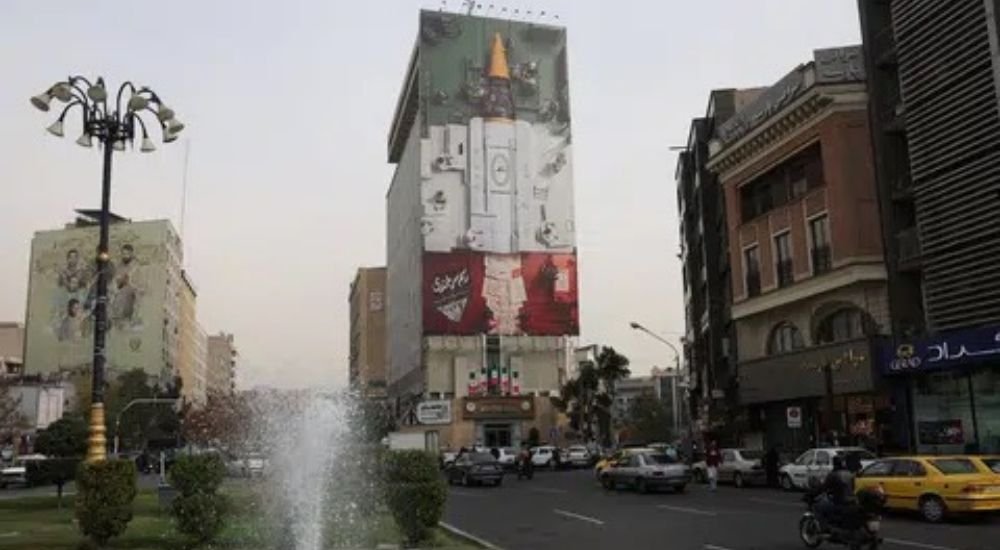
Iran has showcased a new dual-missile launcher capable of firing two missiles simultaneously, while its military commanders issued fresh warnings to the United States amid escalating tensions and concerns over a possible renewal of hostilities.
The newly displayed weapon, reportedly designed to launch two liquid-fuelled missiles at the same time, was unveiled during an inspection of an underground missile facility by senior commanders of Iran’s Islamic Revolutionary Guard Corps (IRGC).
Iranian state television broadcast footage of IRGC Commander-in-Chief Ahmad Vahidi and Aerospace Force commander Seyed Majid Mousavi touring the underground installation, where several missile systems, launchers and other military equipment were displayed.
The unveiling is seen as part of Tehran’s efforts to demonstrate that its military capabilities and missile infrastructure remain operational despite previous attacks targeting its weapons facilities.
During the visit, Vahidi issued a defiant warning to Iran’s adversaries, suggesting that the consequences of confronting the country were only beginning.
Mousavi also claimed that Iran had significantly expanded its military capabilities between recent periods of conflict, with the development of new weapons and systems designed to strengthen its defence and deterrence capabilities.
READ ALSO:
- Gombe: Three Killed, 13 Injured as Alleged Military Shooting Sparks Outcry
- Jimmy Odukoya Sues Sister, Church Trustees Over Removal as Senior Pastor
- UNILAG Gets 10 CNG Buses as FG Expands Campus Transport Scheme to 60 Institutions
The commanders’ remarks accompanied footage of missile launchers, military equipment and extensive underground tunnels, highlighting Iran’s efforts to protect its weapons infrastructure from potential airstrikes.
Iranian state media described the newly displayed launcher as an advancement in the country’s missile development programme, although detailed technical information about its range, accuracy and operational capabilities was not independently established.
Reports surrounding the unveiling also highlighted improvements in Iranian missile guidance technology, including systems designed to operate without relying entirely on the United States-developed Global Positioning System (GPS).
The latest demonstration comes amid continuing tensions between Iran and the United States, particularly over Tehran’s military activities, nuclear programme and regional influence.
Iran has repeatedly warned that any renewed military attack against its territory would attract retaliation, while the United States has maintained pressure on Tehran over issues relating to regional security and nuclear proliferation.
The unveiling also follows previous Iranian announcements showcasing underground missile installations containing ballistic and cruise missile systems.
Tehran has increasingly presented these underground facilities as an important component of its military strategy, arguing that they provide protection for weapons stockpiles and launch systems against aerial attacks.
The latest display appears intended to reinforce Iran’s message that it retains the military capacity to respond to external threats, even after previous attacks on its defence infrastructure.
However, the actual performance and combat effectiveness of the newly displayed dual-missile launcher remain unclear, as the technical claims made by Iranian authorities have yet to receive independent verification.
The development is likely to attract further international attention as Washington and Tehran continue to navigate a tense relationship, with concerns that another military confrontation could have wider consequences for security across the Middle East.
Iran Unveils Twin-Missile Launcher, Sends Fresh Warning To US
-
 metro1 day ago
Oyoland Grand Chief Imam Moves to End Feud, Seeks Reconciliation Among Markaziyya, Adabiyyah, Mahdul ‘Arabi
-

 metro3 days ago
‘I Paid My Ex-Husband Before He Slept With Me’ – Islamic Preacher Kaola Makes Shocking Revelation
-

 News2 days ago
Omokri Arrives in Mexico to Assume Duty as Nigerian Ambassador, Thanks Govt for Ministerial Reception
-

 Politics2 days ago
Uduere Killings: Ughelli Chairman Accuses Omo-Agege’s Camp of Triggering Deadly Clash, Demands IGP Probe
-

 metro2 days ago
Tinubu Gives Igboho Fresh Security Mandate Across South-West
-

 metro2 days ago
‘Shame on You’: Fayose Blasts Nigerian Youths Over Poor Protest Turnout
-

 Politics3 days ago
‘Tinubu Must Go’: Protesters Storm INEC HQ, Demand Electoral Accountability
-

 International1 day ago
Iran Flogs Singer, Four Others 74 Times Over Hijab-Free Performance