

News
Senate begins moves to harmonise NIN, BVN, other identity platforms
Senate begins moves to harmonise NIN, BVN, other identity platforms
The Senate advocates for integrating the National Identification Number (NIN), Bank Verification Number (BVN), and other digital identity platforms into a unified system. Salisu Shuiab, Chairman of the Senate Committee on ICT, Cyber Crimes, highlighted this during a discussion with the Federal University of Agriculture, Abeokuta.
Shuiab emphasized that a single identity system is crucial for national security and anti-corruption efforts. He criticized the fragmented approach, citing it as wasteful and detrimental to security measures.
He said a unified digital identity system would also help the Federal government plan its various intervention programmes through equitable distribution of resources.
“I can assure Nigerians that the era where you have silos, one individual being a dimension in different places, is not only a waste, it also contributes to insecurity and indeed even corruption.
READ ALSO:
- Pregnant woman among nine people injured in Lagos gas explosion
- UCL: Vinicius scores double as Real Madrid hold Bayern Munich in semi-final showdown
- Binance founder bags jail term in US
“We are making a move to harmonise our identity database. We have engaged the relevant ministries—the Ministry of Communication Digital Economy, the Ministry of Industry, and even the CEO of the National Identity Management Commission—to ensure that a Nigerian who has registered with NIMC and has a national identity number is recognised across all platforms, whether for passport purposes, driver’s license, or the various interventions that the federal government is making.
“You cannot have a digital economy without a reliable digital identity, and digital identity starts with harmonising our database to ensure that one individual is recognised across all the systems,” Shuiab said.
He called for a partnership between FUNAAB and his office on training rural farmers in agricultural production.
In his remarks, the Vice Chancellor of the FUNAAB, Prof. Olusola Kehinde, said he would be willing to partner with relevant agencies to ensure food security in the country.
Senate begins moves to harmonise NIN, BVN, other identity platforms








News
Tinubu Reappoints INEC Commissioner, Nominates Six Others Ahead of 2027 Elections
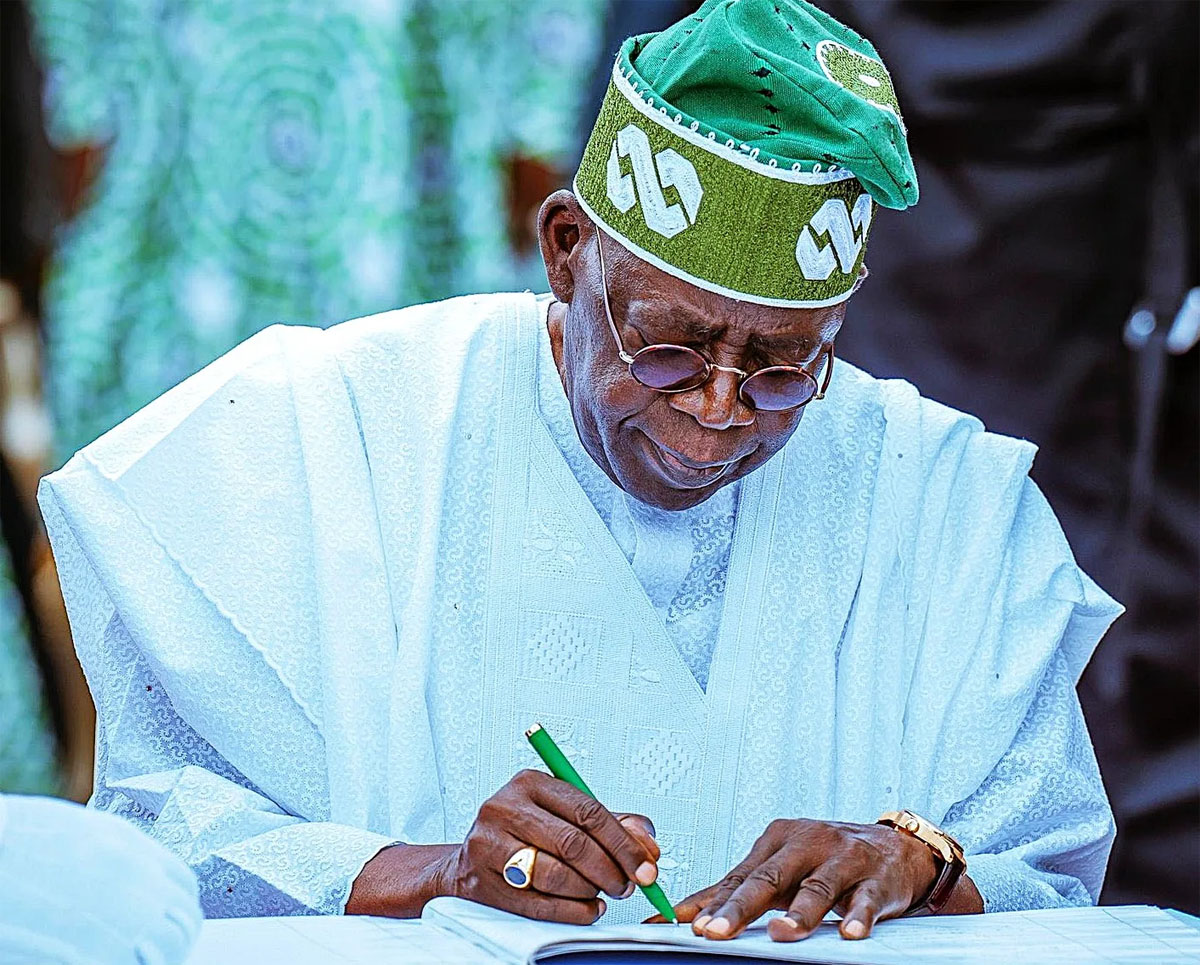
President Bola Ahmed Tinubu has reappointed Dr Bala Bila as a National Commissioner of the Independent National Electoral Commission (INEC) and nominated six other officials to fill vacancies in the electoral body ahead of the 2027 general elections.
The nominations cover four National Commissioner positions and two Resident Electoral Commissioner (REC) positions. All six nominees are expected to undergo screening and confirmation by the Senate before assuming their respective offices.
The Presidency announced the appointments in a statement issued on Friday, October 16, 2026, by Bayo Onanuga, Special Adviser to the President on Information and Strategy.
According to the statement, the nominations became necessary following the expiration of the tenures of serving officials, leaving vacancies within the electoral commission.
Among the nominees is Professor Mustapha Aliu, who has been nominated to replace Professor Abdullahi Zuru as the National Commissioner representing the North-West.
Bashir Muhammed Umar was nominated to replace Professor Muhammad Adamu as the National Commissioner representing the North-Central zone.
READ ALSO:
- Imodi-Ijebu Muslim Community Bets on 20 Chiefs to Drive Education, Economic Growth
- Imodi-Ijebu Muslim Community Bets on 20 Chiefs to Drive Education, Economic Growth
- Suspended Archbishop Ibezim Drags Anglican Primate to Court, Challenges Six-Month Leave
Tinubu also nominated Mrs Oluwatoyin Babalola, the current Resident Electoral Commissioner in Osun State, as the National Commissioner representing the South-West. She is expected to succeed Professor Cornelius Ajayi, whose tenure expires on October 24, 2026.
For the Resident Electoral Commissioner positions, the President nominated Dr Samuel Akinjide Akinleye, a retired permanent secretary, to represent Ekiti State.
Zahradden Basiru Sanusi, from Jigawa State, was nominated to replace Professor Saidu Ahmed Babura as a Resident Electoral Commissioner.
Meanwhile, Tinubu reappointed Bala Bila to continue serving as the National Commissioner representing the North-East.
The President urged the Senate to expedite the screening and confirmation process to enable INEC to fill the vacancies ahead of the forthcoming general elections, which the Presidency says are scheduled for January 2027.
The appointments come as INEC prepares for the next general elections, with the commission responsible for managing electoral activities, including voter registration, political party compliance, candidate nominations and the conduct of national elections.
The Senate’s consideration of the nominees will determine when the newly nominated officials can formally assume their respective positions.
With the 2027 elections approaching, the appointments are part of efforts to fill vacant positions within the electoral body and ensure that its leadership structure is in place ahead of the polls.
The nominations do not take effect as confirmed appointments until the required Senate screening and confirmation process has been completed.
Tinubu Reappoints INEC Commissioner, Nominates Six Others Ahead of 2027 Elections
News
State Police Bill to Reach National Assembly in Two Weeks – Presidency
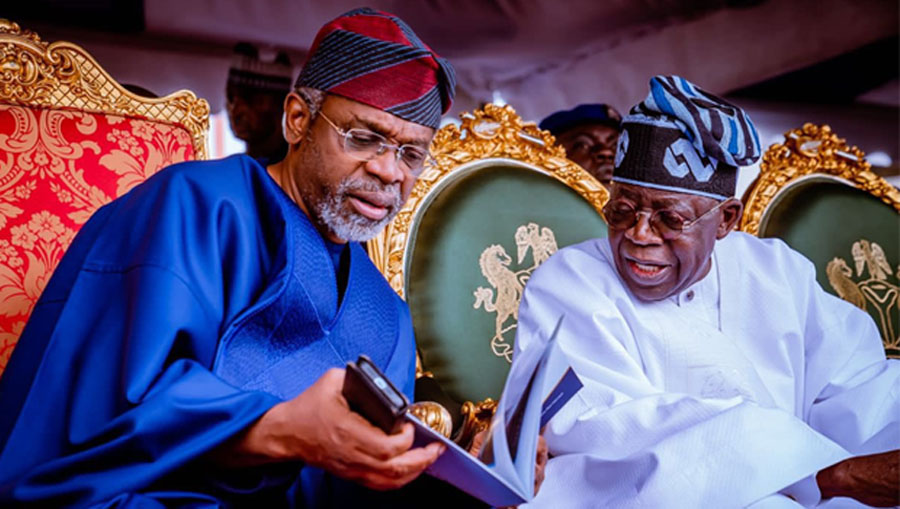
The Federal Government has said the proposed National Policing Bill, which will provide the operational framework for establishing state police in Nigeria, is about 90 per cent ready and is expected to be transmitted to the National Assembly within two weeks.
Chief of Staff to President Bola Ahmed Tinubu, Femi Gbajabiamila, disclosed this on Thursday, October 15, 2026, after a meeting of the Presidential Working Group on the National Policing Bill at the State House in Abuja.
Gbajabiamila, who chairs the working group, said the committee was close to completing its assignment but needed to address a few outstanding issues, including observations submitted by state governors, before forwarding the proposed legislation to lawmakers.
“The National Policing Bill is more or less ready for transmission to the National Assembly. We will probably have one more meeting after this to cross the t’s and dot the i’s and make sure every area is covered. So, we are 90% ready,” he said.
He added that the committee expected to conclude the remaining work within approximately a week, although the Presidency said the bill would be transmitted within two weeks.
“The governors have one or two observations, and we should be ready in about a week or so,” Gbajabiamila stated.
The Chief of Staff described the proposed legislation as “the most consequential Bill of the administration so far”, noting that the working group had undertaken extensive deliberations since its steering committee began meeting on August 3.
The meeting brought together key government officials and security stakeholders, including Nigeria Governors’ Forum Chairman and Kwara State Governor AbdulRahman AbdulRazaq, Ogun State Governor Dapo Abiodun, Kaduna State Governor Uba Sani and Inspector-General of Police Tunji Disu.
READ ALSO:
- Troops Crush Lakurawa Enclave in Sokoto, Kill Fighters, Destroy Terrorist Camps
- Kaduna Kidnapping: Couple, Six-Month-Old Baby Regain Freedom After Nine Days in Captivity
- IPOB Reaches Out to Hausa, Northern Groups in Fresh Push for Biafra Referendum
Representatives of the Federal Ministry of Justice, the Nigerian Bar Association and the Office of the National Security Adviser also participated in the deliberations.
The proposed law is intended to establish the legal and operational framework needed to implement state police, allowing state governments to establish their own police services alongside the existing federal police structure.
The move is part of the Tinubu administration’s efforts to reform Nigeria’s security architecture amid persistent challenges, including kidnapping, banditry, terrorism, communal violence and other violent crimes.
Supporters of decentralised policing argue that state police could improve local intelligence gathering, shorten emergency response times and enable officers to respond more effectively to security threats within their communities.
However, the proposal has also raised concerns about possible political interference, funding disparities between states, human rights safeguards and the risk that governors could misuse state police against political opponents.
The National Policing Bill is distinct from the constitutional amendment required to permit states to establish their own police forces. The proposed legislation is intended to provide the practical rules, standards and safeguards for operating the system, while the constitutional amendment must complete the required approval process.
Both chambers of the National Assembly have approved the constitutional amendment proposal, but it still requires ratification by at least 24 of Nigeria’s 36 State Houses of Assembly before the constitutional change can take effect.
Gbajabiamila acknowledged concerns about the pace of ratification by state legislatures, with reports indicating that only a limited number of states had approved the amendment at the time of the meeting.
He nevertheless expressed confidence that the process would continue, insisting that there was broad national support for the reform.
“I see no reason why anyone will want to have a rethink on it,” he said.
The committee is expected to use its remaining deliberations to address the governors’ observations and ensure that the proposed legislation provides a workable structure for cooperation between federal and state police services.
The framework is also expected to clarify operational standards, accountability requirements and the relationship between the different levels of policing once the constitutional process is completed.
The planned transmission of the bill marks another step in a reform effort that has featured prominently in Nigeria’s security debate. However, the announcement does not mean that state police can begin operating immediately. The necessary constitutional approvals and legislative processes must still be completed before the proposed system can be implemented.
If the timeline announced by the Presidency is met, lawmakers could begin considering the National Policing Bill in the coming weeks, bringing Nigeria closer to a decentralised policing structure intended to address the country’s diverse security challenges.
State Police Bill to Reach National Assembly in Two Weeks – Presidency
News
IPOB Reaches Out to Hausa, Northern Groups in Fresh Push for Biafra Referendum
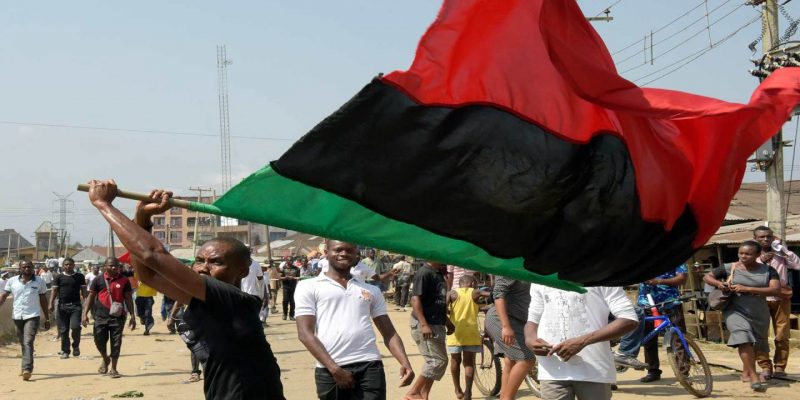
The Indigenous People of Biafra (IPOB) has declared solidarity with the Hausa people and other northern ethnic nationalities, insisting that their pursuit of political freedom and self-determination does not conflict with its campaign for an independent Biafran state.
The separatist group made its position known in a statement issued on Friday, October 16, 2026, by its Media and Publicity Secretary, Emma Powerful, on the directive of its Directorate of State.
IPOB said its declaration followed what it described as a solidarity statement by northern youths and the Northern Nigeria Rescue Movement (NNRM). It welcomed the reported development, arguing that communities across Nigeria could cooperate on shared concerns, including insecurity, poverty, political marginalisation and the need for accountable governance.
However, the extent of support for the reported declaration among northern youths and the wider Hausa population has not been independently established.
The group, whose leader Nnamdi Kanu remains in detention, maintained that the quest for Biafran independence should not be interpreted as hostility towards the Hausa people or other ethnic nationalities.
“Onyendu’s message is clear, consistent, and universal: the pursuit of freedom for one people must never be interpreted as hatred for another,” Powerful said.
IPOB argued that the political aspirations of the Biafran people and the Hausa nation could coexist, insisting that one community should not be expected to surrender its identity or political interests for another to achieve its objectives.
“The freedom of Biafrans and the emancipation of the Hausa nation are not mutually exclusive aspirations. No people should have to remain subordinate for another people to be free,” the statement added.
The organisation also rejected what it described as attempts to portray Kanu and the Biafran movement as enemies of northern communities. It alleged that ethnic and religious divisions had been used to prevent Nigerians from recognising shared concerns about governance and economic hardship.
READ ALSO:
- MURIC Warns EFCC Over Atiku Probe, Says Timing Could Heighten Political Tension
- ToluwaniSings’ Final Hours: Aide Reveals Desperate Search Across 8 Hospitals
- Real Madrid Demand Tebas’ Exit After Explosive Nazi Propaganda Row
According to IPOB, Kanu had repeatedly discussed the political aspirations of the Hausa people during broadcasts on Radio Biafra, including what the group described as the need for greater political agency, cultural confidence and historical dignity.
The organisation said ordinary Nigerians across different regions faced challenges that should not automatically be blamed on particular ethnic groups. It called for broader discussions about the political arrangements governing the country and whether they adequately reflect the interests of its diverse communities.
A central element of the statement was IPOB’s renewed demand for an internationally supervised referendum on self-determination. The group argued that ethnic nationalities should have a democratic opportunity to determine their political future, including consideration of regional autonomy, voluntary federations or other governance arrangements.
IPOB listed the Hausa, Kanuri, Tiv, Berom, Nupe, Igala, Jukun, Angas, Bachama, Idoma, Zuru, Ebira, Gbagyi, Tangale and Borgu communities among the groups whose aspirations it said deserved recognition.
The organisation maintained that the size of an ethnic group should not determine its political rights or its ability to influence decisions affecting its future.
“Population density does not dictate human dignity,” the statement said.
IPOB also cited the 2014 National Conference, convened under former President Goodluck Jonathan, arguing that its discussions on restructuring and regional autonomy could provide useful reference points for debates about Nigeria’s political future.
The group further invoked former President Olusegun Obasanjo’s criticism of governance structures inherited from colonial rule, saying African countries should develop political systems suited to their circumstances.
It urged other ethnic nationalities to participate in discussions about self-determination, political representation and constitutional restructuring, saying it was willing to work with communities pursuing what it described as freedom, peace and mutual respect.
“Freedom is the most precious gift Almighty God gave to humanity, and no human being or artificial colonial arrangement should deny any people that right,” the statement said.
The declaration comes amid continuing debate over Nigeria’s unity, separatist movements, regional autonomy and the country’s constitutional structure. IPOB has campaigned for the independence of Biafra, a proposed state associated principally with the South-East, while the Nigerian government has opposed the separatist campaign and proscribed the organisation.
Although IPOB has framed its latest statement as an appeal for solidarity among ethnic nationalities, its position does not establish that the Hausa people or other northern communities have collectively endorsed the group’s objectives. Further clarification from the NNRM and the northern groups reportedly involved would be needed to establish the precise terms of their declaration and whether any formal cooperation has been agreed.
For now, IPOB says its message is that the pursuit of Biafran independence should not be interpreted as opposition to the Hausa or other ethnic communities. It is calling for wider engagement on how Nigeria’s diverse nationalities can address their political concerns and determine their preferred future within or outside existing governance arrangements.
IPOB Reaches Out to Hausa, Northern Groups in Fresh Push for Biafra Referendum
-

 metro1 day ago
₦130m Toyota Tundra Wrecked: Lagos Dealer Questions Police Over Suspect’s Release
-

 metro3 days ago
Osogbo Cultism Crackdown: Six Suspects Arrested as Police Recover Drugs, Charms
-

 metro3 days ago
Money Rituals: Four Arrested in Kwara Over Suspected Human Parts
-

 News1 day ago
₦200m Fake Alcohol Packaging Uncovered as NAFDAC Raids Aba Market
-

 metro2 days ago
Outrage as Residents Scoop Groundnut Oil From Lagos Tanker Crash Scene
-
 metro2 days ago
Borno Woman Jailed Two Years for Sexual Exploitation of 16-Year-Old Girl
-

 International3 days ago
Houthi Missile Targeting Riyadh Shot Down as Debris Injures Four, Damages 15 Homes
-

 Sports3 days ago
Yamal Inspires Barcelona Comeback to Sink Osimhen’s Galatasaray