

International
Several U.S. Warplanes Crash in Kuwait Amid Ongoing Iranian Strikes

Several U.S. Warplanes Crash in Kuwait Amid Ongoing Iranian Strikes
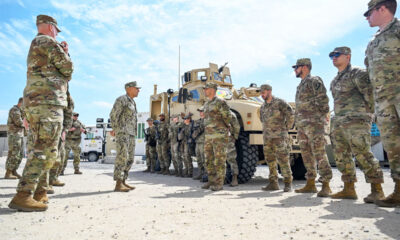
Several U.S. military warplanes crashed in Kuwait on Monday, March 2, 2026, amid ongoing Iranian retaliatory strikes across the Gulf region, Kuwait’s Ministry of Defence confirmed.
According to the ministry, all aircrews survived, were safely evacuated, and were taken to hospitals for evaluation. Their condition is reported as stable, and an investigation into the cause of the crashes is underway.
The United States Central Command (CENTCOM) stated that three F‑15E Strike Eagle fighter jets were mistakenly shot down by Kuwaiti air defence systems during heightened aerial operations, marking a friendly-fire incident amid the ongoing U.S.–Iran conflict.
READ ALSO:
- Wike Blasts Kingibe Over FCT Council Election Remarks
- Israeli Airstrikes Kill 31 in Lebanon as Hezbollah Loses Senior Figures
- Nigeria to Receive Breakthrough HIV Prevention Drug This Month – NACA
Smoke was also reported near the United States Embassy in Kuwait City, though officials have not confirmed any direct strike on the compound. The embassy issued a security alert advising people to avoid the area due to continuing threats from missiles and drones.
The crashes coincide with Iran’s third consecutive day of retaliatory attacks following U.S. and Israeli strikes on Iranian territory, targeting military bases, infrastructure, and strategic sites across Gulf countries, including UAE, Qatar, and Bahrain. Iranian strikes have already resulted in civilian casualties, injuries, and property damage.
Kuwaiti authorities reported that debris from intercepted Iranian missiles and drones caused minor injuries to workers at the Mina Al-Ahmadi refinery. Kuwaiti air defence systems reportedly intercepted several incoming projectiles, helping prevent further casualties.
The incident highlights the risks of airspace misidentification in a region where multiple allied and hostile forces are operating simultaneously. Analysts warn that such events could escalate tensions further, particularly as Iran continues targeting U.S. and allied military assets in the Gulf.
The ongoing conflict has prompted heightened security measures across Gulf states, including embassy alerts and travel advisories, as concerns grow over the potential for a broader regional confrontation.
Several U.S. Warplanes Crash in Kuwait Amid Ongoing Iranian Strikes












International
White House Reaffirms US Policy Recognising Only Two Genders

The White House has reaffirmed the United States government’s policy recognising only two sexes, male and female, under President Donald Trump’s administration.
The administration restated its position in a message published on its official X account on Friday, November 6, 2026, declaring that the United States government officially recognises only two genders.
“It is the official policy of the United States government that there are only two genders: male & female,” the White House stated.
The latest declaration reinforces Trump’s position on gender identity and his administration’s efforts to make biological sex the basis for federal government policies, official documents and administrative procedures.
Trump formally established the policy on January 20, 2025, through an executive order titled Defending Women From Gender Ideology Extremism and Restoring Biological Truth to the Federal Government.
Under Section Two of the executive order, the President declared that it was the policy of the United States to recognise two sexes, male and female.
The directive defined sex as an individual’s unchangeable biological classification as either male or female, distinguishing it from gender identity.
READ ALSO:
- ‘Stop Blaming Us’, APC Tells Atiku, ADC Over Court Judgment
- Atiku to Tinubu: You Cannot Use Courts to Escape Nigerians’ Verdict
- University Funding Crisis: States Beg FG to Take Over Cash-Strapped Institutions
It also instructed federal agencies to adopt the definitions when interpreting and implementing federal laws, regulations and government policies.
Among other measures, the executive order directed government agencies to review and remove official statements, policies, regulations and communications considered inconsistent with the administration’s position.
It further required federal agencies to ensure that official forms requesting information about an individual’s sex provided only male and female options.
The policy marked a significant departure from measures introduced under former President Joe Biden, whose administration expanded federal recognition of gender identity in several areas of government operations.
In 2022, the Biden administration introduced an X gender marker option on US passports, allowing applicants who did not identify as male or female to select the alternative designation.
Trump’s executive order sought to reverse such measures and restore biological sex as the basis for federal government recognition.
The administration has maintained that the policy is intended to protect sex-based rights and ensure consistency in the interpretation of federal laws.
However, the policy has generated considerable debate over transgender rights, gender identity, discrimination and the legal recognition of transgender and non-binary people in the United States.
The White House’s latest declaration did not announce a new executive order or additional regulatory measures but reaffirmed the administration’s existing position on an issue that continues to attract political, legal and social debate.
White House Reaffirms US Policy Recognising Only Two Genders
International
US Offers $20m Reward, Relocation for Information on Iran’s Nuclear Programme
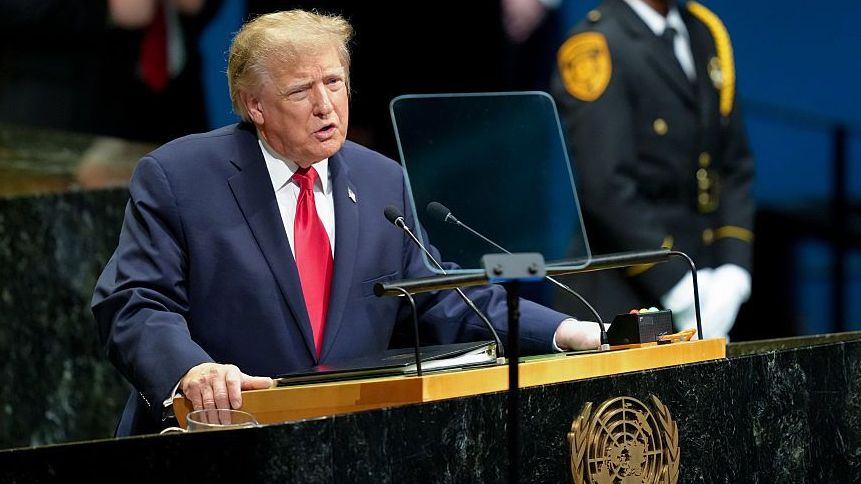
The United States has announced a reward of up to $20 million, alongside the possibility of relocation, for anyone who provides credible information about Iran’s nuclear programme, including its facilities, equipment and personnel.
The offer was announced by the US Department of State through its Rewards for Justice programme and publicised by the US Central Command (CENTCOM) on Friday, November 6, 2026.
According to the announcement, the reward covers information about Iran’s nuclear facilities, equipment and individuals associated with the programme, including members of the scientific community.
The US is also seeking intelligence about the movement of any of the facilities, equipment or personnel connected to the programme.
The Rewards for Justice programme said the offer could provide informants with up to $20 million and the possibility of relocation, although it did not specify the exact criteria for determining the amount payable for particular information.
The initiative is part of Washington’s efforts to obtain intelligence on Iran’s nuclear activities amid continuing tensions between the two countries over Tehran’s nuclear ambitions.
In explaining the decision, the US State Department referred to concerns raised by the International Atomic Energy Agency (IAEA) about Iran’s uranium enrichment activities and its compliance with international nuclear safeguards.
The department said the IAEA reported in 2025 that Iran was enriching uranium to 60 per cent purity, a level significantly higher than the enrichment required for most civilian nuclear applications and relatively close to the 90 per cent generally associated with weapons-grade uranium.
READ ALSO:
- ‘Stop Blaming Us’, APC Tells Atiku, ADC Over Court Judgment
- Atiku to Tinubu: You Cannot Use Courts to Escape Nigerians’ Verdict
- University Funding Crisis: States Beg FG to Take Over Cash-Strapped Institutions
According to the US government, further enrichment of Iran’s existing stockpile could potentially produce enough material for several nuclear weapons.
Washington also accused Tehran of failing to meet its safeguards obligations to the IAEA, saying the agency had lost what it described as its “continuity of knowledge” regarding Iran’s production and inventory of important nuclear components, including centrifuges.
Centrifuges are machines used to enrich uranium by increasing the concentration of the uranium-235 isotope.
The United States maintains that Iran’s nuclear activities pose a security concern, although Tehran has consistently insisted that its nuclear programme is peaceful and intended for civilian purposes.
The Rewards for Justice programme was established in 1984 under the US government’s national security rewards initiative. It is administered by the State Department’s Bureau of Diplomatic Security and offers financial incentives for information that protects American lives and advances US national security interests.
The latest offer comes amid continuing diplomatic efforts to address the nuclear dispute and prevent further escalation of the conflict involving the United States and Iran.
US President Donald Trump has repeatedly claimed that American military operations have severely damaged Iran’s nuclear capabilities. However, Washington continues to seek intelligence about the programme, including the location of facilities and the activities of individuals connected to it.
Trump said on Friday that Iran was interested in reaching an agreement with Washington, adding that discussions were ongoing.
Iranian President Masoud Pezeshkian has also indicated that his government remains interested in resolving the crisis through dialogue.
The latest $20 million offer signals that the United States is continuing to pursue intelligence on Iran’s nuclear infrastructure even as diplomatic efforts to address the dispute remain underway.
US Offers $20m Reward, Relocation for Information on Iran’s Nuclear Programme
International
Abdul El-Sayed, Seven Other Muslims Make History In US Midterm Elections
Abdul El-Sayed, Seven Other Muslims Make History In US Midterm Elections
Muslim Candidates Also Secure State Senate Seats In New York, Illinois And Georgia
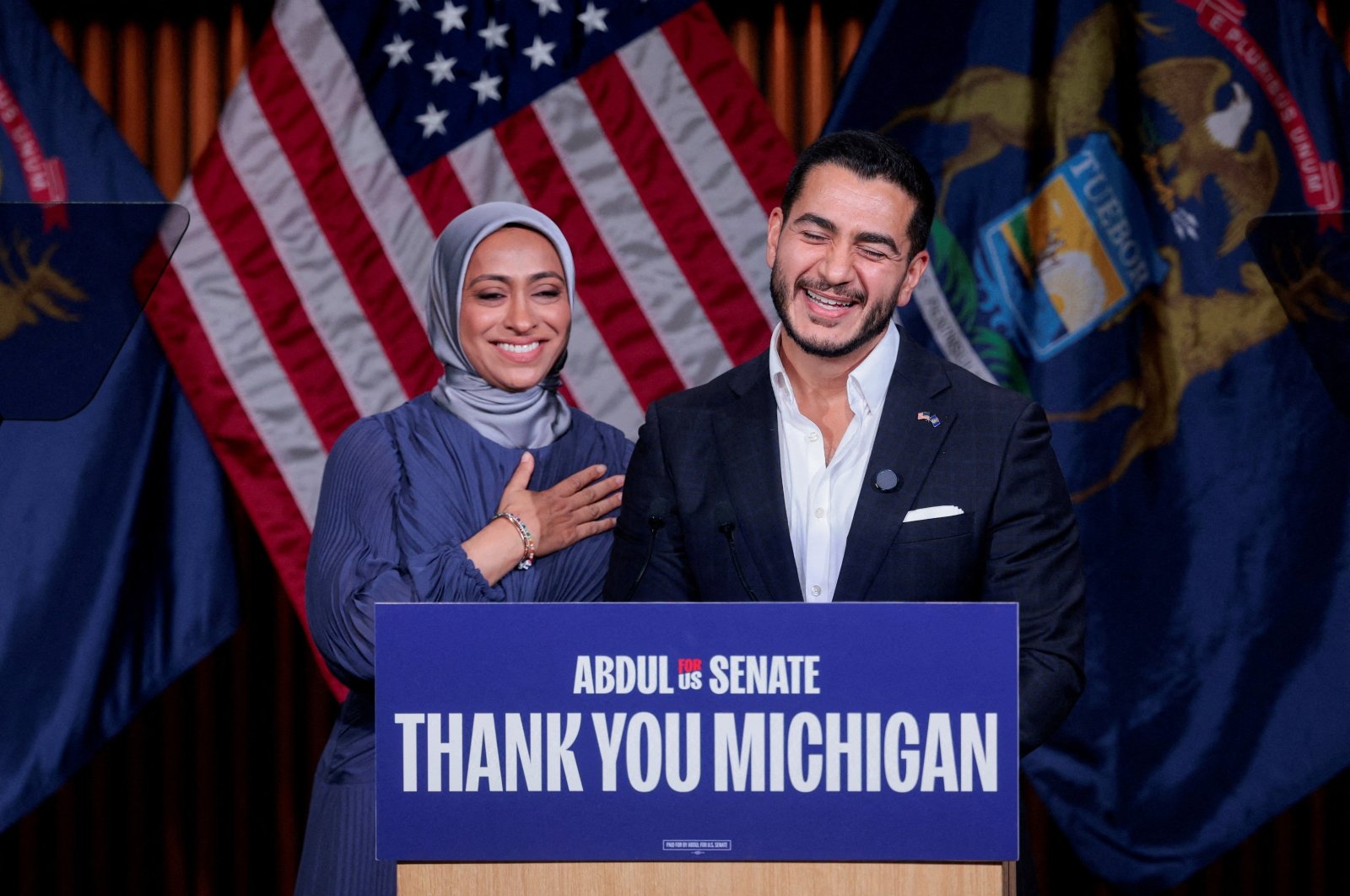
WASHINGTON, United States — Muslim candidates have recorded significant electoral victories in the November 3, 2026, United States midterm elections, with Democrat Abdul El-Sayed making history as the first Muslim elected to the US Senate, while at least seven other Muslim candidates secured seats in the House of Representatives.
The electoral successes, which also saw Muslim politicians win state legislative positions across different parts of the country, represent a significant development in the political participation and representation of Muslim Americans.
El-Sayed’s victory in Michigan’s Senate election stands out as one of the most remarkable achievements of the elections, breaking a longstanding barrier for Muslim representation in the upper chamber of the US Congress.
The physician and former public health official defeated Republican challenger Mike Rogers in the contest, securing a seat in the Senate and making history as the first Muslim American elected to the institution.
His victory adds a new dimension to the growing influence of Muslim politicians in American public life, particularly at a time when debates over immigration, civil rights, healthcare and US foreign policy continue to shape the country’s political landscape.
Beyond El-Sayed’s historic achievement, Muslim candidates also recorded notable victories in the House of Representatives.
Among them is Congresswoman Ilhan Omar, who secured re-election in Minnesota’s 5th Congressional District.
Omar, one of the most prominent Muslim politicians in the United States, has remained a major voice in congressional debates involving immigration, healthcare, civil rights and American foreign policy.
Another incumbent, Rashida Tlaib, also retained her seat representing Michigan’s 12th Congressional District.
Tlaib, who has consistently advocated Palestinian rights and criticised US military support for Israel, remains one of the most recognisable Muslim lawmakers in the American legislature.
Democratic Congressman André Carson equally secured another term representing Indiana’s 7th Congressional District, extending his presence as one of the longest-serving Muslim members of the US Congress.
In California, Lateefah Simon won re-election in the 12th Congressional District, while Adam Hamawy secured victory in New Jersey’s 12th Congressional District.
Hamawy’s victory is particularly significant because he becomes the first Muslim to represent New Jersey in the US Congress.
Another notable winner was Darializa Avila Chevalier, who secured New York’s 13th Congressional District.
The congressional victories bring the number of Muslim candidates elected to the US House of Representatives to at least six, in addition to El-Sayed’s historic Senate victory.
Muslim women also recorded significant achievements in state legislative elections.
In New York, Aber Kawas won the State Senate’s 12th District, marking an important milestone for Palestinian-American political representation.
Similarly, Nabeela Syed secured victory in Illinois State Senate District 26, defeating Republican incumbent Darby Hills.
In Georgia, Palestinian-American politician Ruwa Romman also won the State Senate District 7 contest, further strengthening Muslim representation in the state’s political institutions.
The victories came amid a major political shift in Washington, with Democrats recording significant gains in the midterm elections, creating fresh political challenges for President Donald Trump’s Republican administration.
The elections were contested against the backdrop of intense debates over the economy, immigration, healthcare, civil liberties and America’s foreign policy, particularly its relationship with Israel and the Palestinian question.
Muslim candidates have increasingly become visible in these debates, with several advocating policies involving civil rights, humanitarian assistance, healthcare access, immigration and social justice.
Reports published after the elections indicated that at least 36 Muslim candidates had won or were leading in various federal, state and local contests, although some results remained subject to further counting and verification.
The Council on American-Islamic Relations (CAIR) had earlier tracked more than 160 Muslim-American candidates seeking elective positions across different levels of government.
The latest victories therefore represent another important chapter in the political participation of Muslim Americans, whose representation has continued to expand in America’s democratic institutions.
With El-Sayed’s historic Senate victory, the successes of Muslim congressional candidates and the emergence of other Muslim lawmakers in state legislatures, the 2026 midterm elections have delivered a significant boost to Muslim political representation in the United States.
However, unofficial election projections and results remain subject to formal certification by the relevant electoral authorities.
Abdul El-Sayed, Seven Other Muslims Make History In US Midterm Elections
-

 metro3 days ago
₦50,000 Relief Fund: FG Reveals Criteria for Selecting Beneficiaries
-

 News3 days ago
BREAKING: Court Sacks David Mark-Led ADC Exco, Nullifies Atiku’s 2027 Presidential Candidacy
-

 News3 days ago
Sultan Honours MURIC Founder Ishaq Akintola for Decades of Religious Rights Advocacy
-

 Politics3 days ago
Trouble in ADC as Momodu, South-West Leaders Raise Alarm Over Atiku Campaign
-

 metro2 days ago
NNPCL Slashes Petrol Price By Up To ₦80, Sells At ₦1,325 Per Litre In Abuja
-

 Insurance3 days ago
Continental Reinsurance Strengthens IPO Appeal As Major Shareholder Commits To Five-Year Stake Retention
-
 News2 days ago
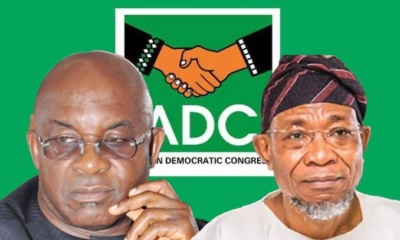
ADC Heads to Appeal, Insists Mark, Aregbesola Remain Party Leaders Despite Court Ruling
-

 News2 days ago
Tinubu’s Visit: One Feared Dead, Several Injured as APC Women’s Bus Collides With Security Vehicle in Uyo