

metro
New electricity tariff insensitive, wicked – NLC, showdown imminent
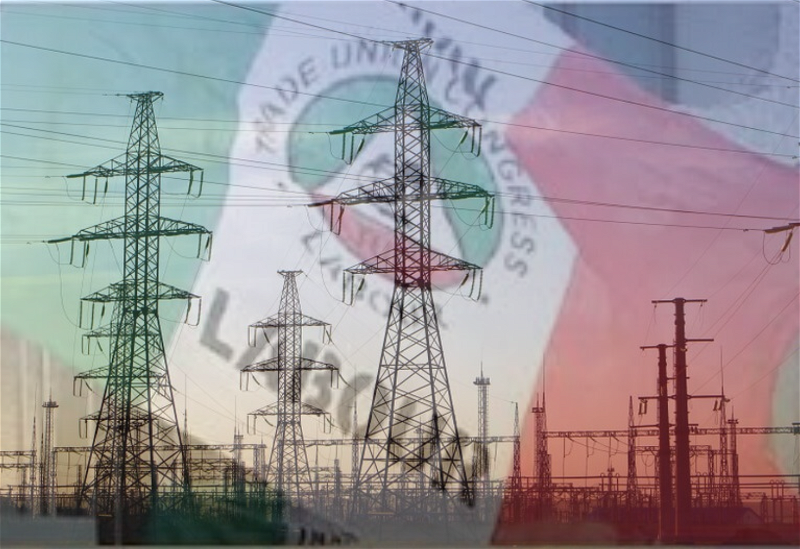
New electricity tariff insensitive, wicked – NLC, showdown imminent
- Manufacturers kick, ActionAid says govt will bear consequences of its actions
The stage appears set again for another round of showdown between the organised labour and the government over the latest increase in the tariff of electricity announced on Wednesday by Nigerian Electricity Regulatory Commission (NERC).
The Nigeria Labour Congress (NLC) and manufacturers among other groups have rejected the new tariff hike.
The NERC in announcing the tariff hike said consumers in the Band A classification would pay N225 for kilowatt hour (kwh) instead of N68, being charged before before Wednesday.
The commission said the increase was made based on consultations with the 11 electricity distribution companies (Discos).
It also stated that it was due to the Federal Government’s failure to pay over N2.9 trillion that would accrue by the end of 2024 as electricity subsidy after preventing them from applying cost reflective tariff.
Consumers under the Band A feeders are those enjoying an average of 20 hours of power supply daily, amounting to pay about N135, 000 monthly.
NERC’s Vice Chairman, Musiliu Oseni, said on Wednesday in Abuja that the increase would affect only 15 per cent of the 12 million electricity consumers. It is expected to take effect immediately.
In it’s reaction, the NLC described the new electricity tariff hike as insensitive and wicked.
It said this would further impoverish the already pauperised Nigerians battling the hardship caused by the fuel subsidy removal.
Daily Trust quoted Head of Information at the NLC headquarters, Benson Upah, as saying the labour would take a position on the “chaotic” policy after appropriate organs of the movement meet.
He said, “The government’s decision is not only insensitive, it is callous. It will further pauperise consumers, especially workers whose wages are fixed and insufficient.
“It similarly makes the operating environment more hostile for manufacturers with potential for an astronomical rise in cost of goods and services or in the worst-case scenario, more closures and loss of jobs.
“The only people who stand to gain from this mindless social violence against the people are the World Bank and IMF. Pity! We will get back to you on that (next step) after the appropriate organs decide.”
Country Director, ActionAid Nigeria, Andrew Mamedu, said the government should recognise that its decision to remove the fuel subsidy contributed to the current situation.
“Therefore, the government should be prepared to bear the brunt of these policy decisions without unduly passing on the burden to Nigerian citizens.
“It is important to note that energy security is one of the major areas that contribute to national security and welfare, which explains why nations guide their energy sector seriously and are always up and doing ensuring its availability and affordability,” he said.
A former chairman of NERC, Sam Amadi, said the electricity tariff increase would cause power theft and corruption.
He said the government should allow a special window for the distribution companies to access dollars at a preferential rate.
President of the Nigerian Association of Chambers of Commerce, Industry, Mines, and Agriculture, Dele Kelvin Oye, in a statement, said, “While the commission’s efforts to enhance metering and protect consumers from over-billing are commendable, the tariff hike, influenced by the rise in natural gas base prices, has implications for the cost of operations across businesses that already face a fragile economic recovery.
“We understand the necessity of aligning energy costs with market realities to foster sector investment and sustainability, nevertheless, we stress the importance of considering the broader economic impact on industries and the timing of such adjustments.
“NACCIMA continues to advocate for a transparent and gradual approach in policy implementation, emphasizing the need for broad stakeholder engagement to mitigate adverse effects on business competitiveness and consumer prices.’’











metro
Bandits Demand Over ₦100m Ransom for 15 Abducted Islamiya Students in Niger

Bandits Demand Over ₦100m Ransom for 15 Abducted Islamiya Students in Niger
Suspected bandits who abducted 15 students of an Islamiya school in Niger State have reportedly demanded more than ₦100 million for their release, heightening fears over the safety of the children and prompting fresh calls for urgent government intervention.
The victims were reportedly kidnapped while assisting their teacher, Malam Aminu Bako, in harvesting maize on his farm in Tungan-Bako village, Rafi Local Government Area of Niger State, during the weekend.
The teacher disclosed that the armed men had contacted community leaders to communicate their ransom demand, leaving parents and residents increasingly worried about the fate of the abducted children.
According to reports, the kidnappers initially believed the victims were students of government-owned schools. However, a parent, identified as Malam Adamu, said community representatives informed the abductors that the children attended an Islamiya school.
Adamu explained that the bandits had demanded more than ₦100 million before being informed about the actual identity of the school.
The teacher, who confirmed the ransom demand, also appealed to the Federal Government and Niger State Government to urgently intervene and ensure the safe return of the students.
Bako expressed concern that the children might be facing harsh conditions in captivity, revealing that information gathered through local vigilantes suggested they were still being held somewhere within Niger State.
According to him, the students were reportedly locked inside an isolated building guarded by heavily armed men.
“We heard that they were still within Niger State, locked in a building, probably without food. We are worried; we want the authorities to come to our aid to rescue them,” he said.
The teacher maintained that the situation required urgent intervention by the military and other security agencies, warning that community vigilantes might not have the capacity to confront the heavily armed kidnappers.
He also expressed dissatisfaction with what he described as the limited government presence since the incident, saying the affected families and school management had largely been left to depend on local vigilantes for information and assistance.
Bako disclosed that the acting chairman of Rafi Local Government Area and the Divisional Police Officer were the only government officials who had visited the community following the abduction.
He said the absence of further engagement from the state government had increased anxiety among parents, who had continued to approach him for updates on their children’s whereabouts and safety.
“We are also worried that nobody has visited us from the state government, at least to give us hope that something is being done to ensure their release,” he added.
The teacher consequently appealed to the authorities to demonstrate greater commitment towards securing the students’ freedom, stressing that the community needed more than assurances.
Meanwhile, the Niger State Police Command has confirmed the abduction, although its preliminary account differed slightly from the number of victims identified by the teacher.
The Police Public Relations Officer, SP Wasiu Abiodun, said suspected bandits invaded Tungan-Bako village and abducted some people working on a farm.
According to him, preliminary police information indicated that about 14 of the victims were Islamiya school students who had accompanied their instructor to harvest maize.
Abiodun, however, assured that joint security operations were ongoing to rescue the abducted persons.
The police assurance came amid concerns from residents, who maintained that local vigilantes were the only security personnel visibly involved in efforts to trace the abductors.
The Commissioner for Homeland Security in Niger State, Justin Maurice Magaji, was reportedly unavailable for comments when contacted, as he was attending a State Executive Council meeting.
The teacher subsequently released the names of the 15 students reportedly taken away by the bandits.
They are Hassana Isah, Aliya Ahmad, Hajara Musa, Hauwa’u Abubakar, Halima Yahaya, Asma’u Jamilu, Radiya Salisu, Aminatu Salisu, Aisha Bello, Rahinatu Sani, Aminatu Alhassan, Nafisa Ayuba, Bilkisu Adamu, Salaha Abdullahi and Hajara Salisu.
The reported discrepancy between the 15 names released by the teacher and the 14 Islamiya students mentioned in the police account has also raised questions about the exact number of victims.
The latest development has renewed concerns over the persistent activities of armed bandits in parts of Niger State, particularly attacks targeting rural communities and vulnerable residents.
For the families of the abducted students, however, the immediate priority remains the safe return of their children.
They are calling on the Federal Government, Niger State Government and security agencies to intensify rescue operations and ensure that the children are reunited with their families without further delay.
Bandits Demand Over ₦100m Ransom for 15 Abducted Islamiya Students in Niger
metro
FG’s N50,000 Relief: OPay Details Eligibility Check Process, Issues Strong Warning Against Scams
FG’s N50,000 Relief: OPay Details Eligibility Check Process, Issues Strong Warning Against Scams
Lagos, Nigeria — Following the Federal Government’s introduction of the N50,000 relief package, leading financial technology platform, OPay, has released comprehensive guidelines on how customers can verify their eligibility for the funds. The company has simultaneously issued a stern warning to users regarding the rise of fraudulent schemes targeting beneficiaries.
In a statement released on Tuesday, November 3, 2026, and reported by Punch, OPay clarified the procedural steps for Nigerians to determine if they qualify for the government’s financial intervention. The move comes as millions of citizens seek clarity on accessing the relief aimed at cushioning economic hardship.
How to Check Eligibility
According to OPay, the verification process is designed to be seamless and accessible directly through the OPay mobile application. Customers are advised to log into their updated OPay app to access the dedicated section for the Federal Government’s relief program.
The fintech giant explained that users will be required to provide specific details to verify their status. Once logged in, customers can navigate to the designated “Government Relief” or notification tab where the eligibility checker is situated. The system cross-references the user’s verified identity (such as their Bank Verification Number, BVN, and National Identification Number, NIN) with government databases to confirm qualification.
Strict Warning Against Fraudsters
In a critical advisory, OPay warned customers to remain vigilant against scammers who are leveraging the news of the N50,000 relief to defraud unsuspecting citizens. The company emphasized that it will never ask customers to pay a fee or provide sensitive information over the phone to claim the relief.
“OPay urges all Nigerians to be cautious. The N50,000 relief is a government initiative, and no fee is required to check eligibility or receive funds,” a representative stated. “We will never ask for your OPay PIN, passwords, or OTPs via phone calls, text messages, or social media. Beware of fake links claiming to be from OPay or the government.”
Security Tips for Users
To ensure safety, OPay advised users to follow these guidelines:
· Use Only the App: Only check your eligibility through the official OPay mobile application.
· Protect Your Data: Never share your ATM card details, OPay PIN, or One-Time Passwords (OTPs) with anyone.
· Ignore Suspicious Links: Do not click on links received via SMS or WhatsApp claiming to offer the N50,000 relief.
· Verify Information: Always confirm information through OPay’s official customer service channels or verified social media pages.
The company reaffirmed its commitment to the financial security of its customers and stated that it is working closely with relevant government agencies to ensure a smooth and transparent disbursement process for eligible beneficiaries.
For those who may face difficulties checking their eligibility, OPay has encouraged customers to contact their customer care team through the in-app support feature.
FG’s N50,000 Relief: OPay Details Eligibility Check Process, Issues Strong Warning Against Scams
About Newstrends.ng:
Newstrends.ng is your premier source for breaking news, business, and technology updates in Nigeria and across the globe.
metro
‘I Went to My Pastor for Deliverance, Ended Up in Bed With Him’ – Lady Recounts Encounter

‘I Went to My Pastor for Deliverance, Ended Up in Bed With Him’ – Lady Recounts Encounter
A Nigerian woman has sparked controversy on social media after recounting an alleged sexual encounter with her former pastor during a deliverance session.
The unidentified woman reportedly made the revelation during a video interview shared by social media platform NewsVista, claiming that what began as a visit to seek spiritual intervention eventually ended in a sexual encounter.
In the viral clip, the woman expressed confusion over how the incident happened, insisting that she still struggles to understand how a session she had expected to be devoted to prayer and deliverance turned into an intimate encounter.
The interview has since attracted attention online, with the allegation raising concerns about the relationship between religious leaders and members who approach them for spiritual guidance and counselling.
Although details surrounding the alleged incident remain unclear, the woman’s account has triggered discussions about the responsibility of religious leaders to maintain professional and ethical boundaries while attending to vulnerable members of their congregations.
Some social media users have criticised the alleged conduct, arguing that pastors and other religious leaders occupy positions of trust and should not exploit their spiritual authority or the vulnerability of people seeking assistance.
Others have called for religious organisations to strengthen accountability measures and introduce safeguards for private counselling and deliverance sessions.
However, the identity of the pastor, the church involved and the location where the alleged incident occurred have not been disclosed.
It is also unclear when the alleged encounter took place or whether the woman has made any formal complaint to the relevant authorities.
NewsTrends.ng cannot independently verify the circumstances surrounding the woman’s account. The allegation should therefore be treated as unverified pending further details or an official response from the person concerned.
The development has once again drawn attention to the need for accountability, transparency and appropriate boundaries in religious counselling, particularly where individuals place their trust in spiritual leaders for help with personal challenges.
‘I Went to My Pastor for Deliverance, Ended Up in Bed With Him’ – Lady Recounts Encounter
-

 Sports2 days ago
Super Falcons Receive $100,000 Each as Tinubu Finally Fulfils WAFCON Pledge
-
 Politics2 days ago
APC Dumps Adeleke’s Campaign Structure, Unveils Separate 168-Member Council in Osun
-
 metro3 days ago
Three Dead, Five Rescued as Two-Storey Building Collapses in Osun
-

 metro2 days ago
Three Homeless Men Shot Dead in Midnight Attack at Lagos Bus Stop
-

 International3 days ago
Badenoch Rejects Slave Trade Apology, Says African Kingdoms Also Profited From Slavery
-

 metro2 days ago
Contempt: Court Orders Arrest, Remands Lagos NURTW Chairman Sego, Secretary in Kirikiri
-

 metro2 days ago
Court Orders 18-Year-Old Fraudster To Pay ₦1.2m Over $800 Lottery Scam
-

 News3 days ago
Tinubu Approves SUVs for FCT Traditional Rulers, Four Buses for Youths, says Wike