
Opinion
Siyan Oyeweso: Lessons in virtue and vanity
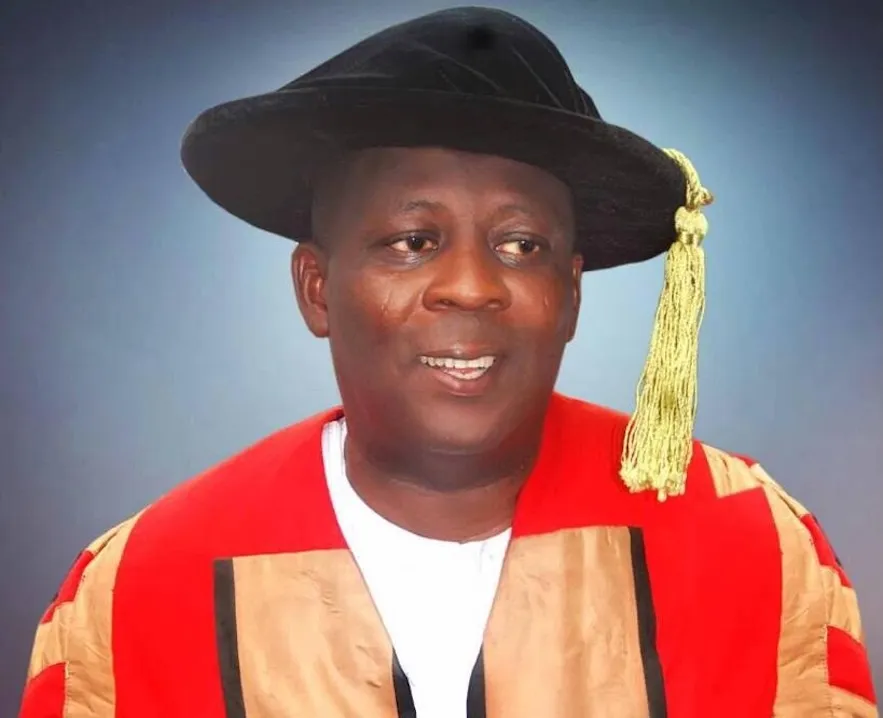
Siyan Oyeweso: Lessons in virtue and vanity
Tunde Odesola
(Published in The PUNCH, on Friday, December 5, 2025)
H-o-r-r-o-r!? The lamp has gone out in the ancestral grove. Frightening darkness reigns. I step inside the grove, I grope on staggering steps. The gourd is broken. I saw its shattered pieces. I stagger. I can feel the wet wood, torn drum, snapped beads, burning ice, soundless speech, blind sight, lifeless breath, static motion and cold fire. I call out to the deep, but the deep does not call back. The deep is silent. The deep has become a mound. The light has gone out in the grove. Everything is cold.
Don’t our ancestors say if the load refuses to stay on the ground and rejects being hung, there’s yet a place to place it? I refuse to bury. I will perform the rites and turn back the hands of time. I beseech thee, owners of the land, heed my pleading just this once, because when the dead is invoked in the street, it is the living that answers (Ti a ba pe oku ni popo, alaye lo n dahun). Abdulgafar Siyan omo Oyeweso ooooo! Please, answer me, hearken to my chant and heed my plea. Come! Cone back, please! It is me, your little aburo, Tunde, that is calling. It is I, Odesola, your disciple.
Baba Ibeta, I refuse to refer to you in the past tense. Prof, please, I need you to do just one thing for me, real quick. I need you to remember our discussions before sickness struck. Remember our discussions when sickness struck. The one million naira you gave me on your sickbed lies doggo in my account, untouched. You said I should use it for the publication of a full-page colour advert in PUNCH for Prof Olu Aina, who is billed to bag an honorary doctorate from the Obafemi Awolowo University, Ile-Ife, the prestigious citadel of learning, which you oversee as the Pro-Chancellor and Chairman of Council. From the one million naira, you said I should place radio advertisements to announce the degree to be bestowed on the emeritus Professor Aina, Nigeria’s pioneer and distinguished scholar of Technical and Vocational Education, on December 13, 2025. I have long finished the artwork on The PUNCH advert, which you approved. I was awaiting the radio jingle being handled by ace broadcaster, Oyesiku Adelu. Now, I shall return the N1,000,000.00 to Iya Ibeta because the bowstring has snapped, and the bow has become a mere stick. Ọsán ja, ọrún dọpa.
Bọ̀dá Gàfárù, your humanity is gripping. What manner of man, lying prostrate on a sickbed, would remember to honour the living with his own money? What manner of man, stricken by a stroke, would give out N1,000,000.00 to honour a senior academic, two months before the event was to take place? What manner of man would hover between life and death, and still bend over backwards for the living? That manner of man can only be Siyan Oyeweso. He loves his fellow men and women far more than himself.
READ ALSO:
- Court Rules Only Lawyers Can Represent Nnamdi Kanu, Rejects Brother’s Appearance
- Imo Economic Summit: Aliko Dangote Vows to Become State’s Largest Investor
- NSCDC rejects VIP protection requests from senators as demand surges after police withdrawal
Ẹ̀gbọ́n mí àtàtà, I weep bitter tears because I know you do not deserve to go. You do not want to embark on that returnless ‘Àrè Mabò’ journey. As your life hangs by a thread and we pray for your recovery, you said you would be grateful if the Almighty Allah gave you a second chance. You express the desire to write a book, “Siyan Oyeweso: Life After Stroke.” Also, you hope to take delivery of one of your earliest books, “Journey From Epe: A Biography of S.L. EDU,” which is out of print, but is being reprinted. Your book on Ile-Ife and the one on Ikorodu are undergoing proofreading. It’s your dream to see them to the press. In the throes of death, you still cater for the whole family. Now, Iya Ibeta is a widow. Your two-year-old triplets are fatherless. Oh Allah, this grief is unbearable.
I weep because I have whined with you in the days of famine and wined with you in the days of flourish. I’m with you in defeat and in victory. I witnessed the way you took defeat like a sportsman and celebrated victory with humility. I gnash because you are the ‘opomulero’ pillar behind my literary garden, even though I was never a pupil in the four walls of your classroom. I am the acolyte who sits at your feet after work.
Baba Òyé, I remember how we first met. Our first-ever meeting ended in a fight. That was at the palace of the 12th Timi Agbale of Ede, the late Oba Tijani Oladokun Ajagbe Oyewusi, the Agboran II, in the early 2000s. That fateful day, Oyeweso didn’t come to the palace to fight, nor did I, but the PUNCH spirit of fearless candour overtook me as I challenged what I saw as overpresumption.
Oyeweso had come to address a news conference, whose exact purpose I can’t recall, but the conference was certainly in the interest of Ede, the illustrious town Oyeweso lived for. I came to the news conference as PUNCH reporter from Osogbo, the state capital. And katakátá burst when it was question time.
Then, I was new to Osun State, having just been transferred from the Lagos headquarters of PUNCH. Oyeweso had answered a couple of questions from faces familiar to him within the Osun Correspondents chapel and was in a hurry to attend another assignment on behalf of the town. I raised my hand to ask a question. Exuding confidence and convivality, Oyeweso said everything there was to know lay in the press release shared to journalists at the conference. “No more questions, please,” he said. Anger boiled inside me. Who is this palace jester, I thought.
READ ALSO:
- Edo Assembly Moves to Arrest Obaseki, Others Over MOWAA, Radisson Hotel Probe
- Three Top Contenders to Replace William Troost-Ekong as Super Eagles Captain
- Ned Nwoko vows legal action against rising online harassment, criminal defamation
“I can’t come all the way from Osogbo to be told not to ask questions here,” my anger boiled over. All heads turned in my direction, eyes piercing to see if there was a tag on my clothes suggesting I was a member of the union of road transport workers. “From where did this one stray?” the looks asked. But I continued, “I’m not going to write any story from this press release if you don’t answer my question!” Heads turned away from me to Oyeweso, who didn’t show he was rattled. He smiled, held the right hem of his agbada and folded it on his right shoulder. He did a similar folding to the left hem of his agbada, beaming his trademark ‘ẹ̀rù òbodò’ smile.
Then a journalist whispered, “He is Professor Oyeweso!” “So what!?” I shot back outside the earshot of Oyeweso. “My dear brother from PUNCH newspapers,” he began, sugar in his voice, “I do not mean to evade questions, far from it. If you know me, you would know I enjoy talking. In fact, I talk for a living. But the Timi, Oba Tijani Oyewusi, has just sent me an urgent text, demanding I run an errand, and I don’t want to keep him waiting. I’ll leave my numbers with you, so you cakl and ask any question as I run the king’s errand, please.”
That was the day our journey began. You were still a professor at Lagos State University then. This was before the Olagunsoye Oyinlola administration established the multi-campus Osun State University, and you moved back to your home state. You are the inaugural Provost, College of Humanities and Culture, UNIOSUN. Twice, you vied for the post of Vice Chancellor, UNIOSUN, and lost not for lack of competence, but to power play. The next day after each loss, you dust yourself up and trudge on as if nothing had happened.
To understand the Oyeweso enigma, picture a vehicle shaft connecting the two opposite wheels. This is why the late Ooni of Ife, Oba Okunade Sijuwade, and the late Alaafin of Oyo, Oba Lamidi Adeyemi, opened their palace doors to his erudition even though both monarchs hardly saw eye to eye on many issues. Baba Iremide’s charm infects the political board. This is why he was embraced by both Governor Oyinlola and Rauf Aregbesola, two gladiators from different political camps. Despite being from Ede, the hometown of the popular Adeleke family, Baba Adekunle stayed true to his political ideals, pitching his tent with the BATified All Progressives Congress. Their differing political alignments notwithstanding, Oyeweso did not spoil Ede, his hometown, because he was going to Ẹ̀dẹ̀, the hallway. This is why the Adeleke family maintained the communal bond by supporting him on his sickbed. Minister of Marine and Blue Economy, Alhaji Adegboyega Oyetola, supported Oyeweso before and during the sickness. In fact, it was Oyetola, aka Baba Jeje, who recommended Oyeweso for the post of Pro-Chancellor and Chairman of Council, Obafemi Awolowo University, Ile-Ife.
Your uncommon equanimity is the reason why I gave you my support when you expressed the desire to vie for the House of Representatives ticket in Ede-North-Ede-South-Egbdore-Ejigbo federal constituency. When that also fell through, I became a thorn in the flesh of Oyetola, whom I called morning, day and night, urging him to reward Oyeweso with a position. One day at a public function, an exasperated Oyetola saw Oyeweso and said, “Prof, tell Tunde Odesola to unclasp his fingernails on my neck o. I have told him repeatedly that you shall get an appointment, but he won’t leave me alone. Ha!” Shortly after the encounter, Oyeweso called me, and said, “Tunde,” I answered, “Sir!” Oyewso said, “Please, unclasp your fingernails on Oga’s neck o. We were at a function today, and Oga said, “So fun Tunde Odesola pe ko tu ekanna lorun mi o.” We both laughed. Aside from me pestering Oyetola, Baba Oluwasikemi would surely have a couple of other voices putting in words of recommendation on his behalf. So, his appointment was a collective victory for sagacity, hard work, resilience and vision.
Oyeweso was initially appointed Pro-Chancellor and Chairman of Council of the Federal University of Lokoja, Kogi State, before he was later announced as the Pro-Chancellor and Chairman of Council, OAU, in June last year. Therefore, it is not out of place to say that death did not allow Oyeweso to enjoy the fruit of his labour, affirming the philosophical thought that the world is a vanity fair. I do not believe in this philosophical thought; I believe Oyeweso’s life tramples vanity to affirm virtue.
READ ALSO:
- Senate Launches Emergency Probe into Widespread Lead Poisoning in Ogijo, Lagos/Ogun
- Court of Appeal Affirms Ruling Barring VIO from Seizing Vehicles or Fining Motorists
- FG secures release of three Nigerians detained in Saudi Arabia
This is why Oyeweso blends perfectly into any setting – be it rural or urban, academic or marketplace. When you see him on the street, he could pass for a nobody. But when he mounts the podium, you hear an oracle of history. This virtue is what endears Oyeweso to the masses, and I suspect, it is one of the reasons why some of his colleagues despise him – they believe he mixes with every Tom, Dick and Harry. To this tribe of his colleagues, an academic should possess raised shoulders, a back haunched by the weight of poring over books, and a nose in the air.
I haven’t come out of mourning the Owa of Igbajo, Oba Adegboyega Famodun, when the Oyeweso disaster hit below the belt.
Where will I find another soulmate? Though we were born sired by different parents in the February of different years, Oyeweso took me as his blood brother, confiding in me his innermost wishes and fears. Who will call me “Prof Tunde? Who will come to my house unannounced? Oyewso would call my wife and say, “Hello, ma; Tunde o sun ile loni o. Odo mi lo ma sun” – “Tunde is not sleeping at home today. He’s sleeping in my house.” Then we would begin the intellectual rigour of writing and editing late into the night. The Nation Correspondent, now an oba, Kabiyesi Adesoji Adeniyi, Prince Wale Olayemi, my childhood friend, Abiodun Idowu, a psychiatrist, Temitope Ajani Fasunloye, Ismaeel Uthman, among others, participated in the rigour Oyeweso took us through – analysing and discussing. We did not do this on empty stomachs. There was plenty to eat and drink. At times, when Prof eventually allows you to go home, all you want to do is just go home and sleep. At times, I ran away from him. When I ran from him, he appeared in my house or office unannounced and says, “Ha, I caught you.”
Who would host a party for my promotion? Who would host a party for my homecoming? Death has crept upon us and taken our most prized jewel away. Oyeweso. I woke up that day around 6 a.m. I checked my phone. I saw your picture on Professor Samuel Gbadebo Odewumi’s reel. I told myself, Prof Odewumi is probably celebrating your recuperation. Still in bed, I scrolled and saw a post by Saturday Tribune Editor, Lasisi Olagunju, announcing your death.
Frantically, I checked Osun WhatsApp platforms. And there I saw the news of your passing into eternity. I then noticed I had received many calls and texts. It was dawning, but I was denying. I called. I asked questions. I blamed the Nigerian healthcare system, saying Oyeweso wouldn’t have died if he lived in an advanced country. I cited the misdiagnosis of the late Mohammed Fawehinmi in Nigeria, following his auto accident. But my oga and Managing Director/Editor-in-Chief, Mr Adeyeye Joseph, reminded me that the legendary Gani Fawehinmi, Mohammed’s father, was misdiagnosed in England.
So, I kept my mouth shut. And submitted to the will of Allah. Ina Lilah Waina Allah Rajun. Baba mi, I never thought I would ever write this about you. If tears could wake up the dead, you would be in our arms today. Orun re ire o, oko Nike.
Email: tundeodes2003@yahoo.com
Facebook: @Tunde Odesola
X: @Tunde_Odesola
Siyan Oyeweso: Lessons in virtue and vanity


Opinion
Tinubu, el-Rufai and the cobra
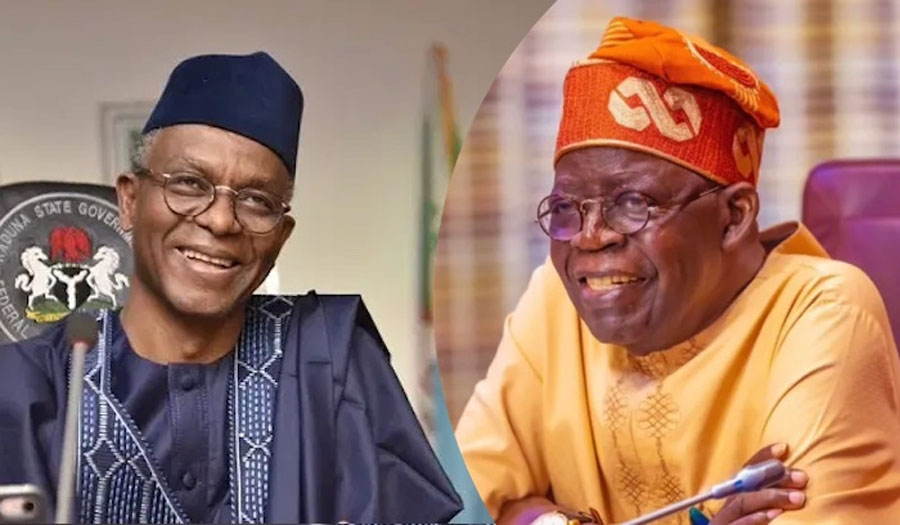
Tinubu, el-Rufai and the cobra
Tunde Odesola
(Published in The PUNCH, on Friday, February 20, 2026)
If they were not venomous, snakes would probably garland the necks of the rich and the influential to delineate social class. With a body handwoven by its Creator, the snake is the most awesome creature, epitomising engineering fluidity among wildlife. Its fleeting mobility, intricate symmetry, stretchy sinews, delicate precision and frightening fatality define a brute created without hurry.
If the Creator, in His infinite creativity, had swapped the rabies of the dog for the venom of the snake, the faintest bark would have sent feet fleeing, sticks wielding, and alarum bells ringing. Armed with just rabies as a weapon, the snake would have been handpickable like snails after rainfall; slithering and spitting alone do not deter like venom strike. Meat and skin, snakes are attractive.
If its venom was exchanged for rabies, the snake would probably have been Man’s best friend, barking through a slit mouth and narrow throat, without a noise. Before closing production on the evening of the Sixth Day, God assessed His production line; behold all things were bright and beautiful. So, he rested on the Seventh Day.
But Man and snake are not friends; one strikes the head, the other strikes the heel. This eternal enmity results in deaths within both camps, with the human casualty dripping with grief, while snakedom is griefless – Ọ̀dájú lọmọ ejò.
On the last day of January 2026, fast-rising soprano singer, Ifunanya Nwangene, curled up in bed, enjoying a sleep in her Abuja apartment. Later, a cobra crawled into bed with her. Ifunanya probably felt the snake crawl over her arm, and she tried to move her arm away from the uninvited visitor. When the cobra sensed that the arm, which was inanimate a while ago, was slowly becoming animate, it panicked and lashed out, sinking its fangs into the songbird’s wrist. With that split-second strike, the cobra blew out Ifunanya’s candles.
In minutes, a numbing pain in the wrist woke the songster up. She saw the bite and the swelling. Frantic, she made a call to her father, uncle and friends. This must be a bad dream, Ifunanya thought. Wake up, wake up, girl! But the Nightingale was slipping away. Death has crept in right in the safety of her room.
Following Ifunanya’s death, the BBC, in a February 7, 2026, story headlined “A singer’s tragic death highlights Nigeria’s snakebite problem,” reveals the controversy that trailed Ifunanya’s death. In the report, Ifunanya’s father, Christopher Nwangene, accused the Federal Medical Centre, Jabi, Abuja, of unprofessional treatment and lacking antivenom when she was rushed to the hospital. But the hospital refuted the allegations in a clap back, insisting that it had enough antivenom in stock and that Ifunanya received good treatment. The Chief Medical Director of the FMC, Saad Ahmed, explained that Ifunanya arrived over two hours after the snakebite. Ahmed’s allegation, however, beggars belief and raises the question: why would Ifunanya’s uncle and friend separately go in search of antivenoms and, indeed, buy some, if the hospital had the antidote?
READ ALSO:
- American Woman, 64, Alleges Embassy Mocked 27-Year-Old Fiancé Before Visa Denial
- Epstein, Ex-Israeli PM Named in Alleged Profiteering From Boko Haram Crisis
- CBN Policies, Foreign Inflows Drive Naira to Two-Year Peak
A nationwide backlash left a populace lamenting the preventable loss of a special talent. Christopher said the hospital’s medical staff should not have removed the tourniquet tied to her wrist to limit the venom from spreading to other parts of her body when the hospital did not have enough antivenom. Though the use of a tourniquet is no longer advisable as treatment for snakebite because it can cause tissue damage and increase the risk of amputation, Ifunanya’s father insisted that it was better for her daughter to be amputated than to die.
In its characteristic fire brigade method, the Nigerian Senate, without setting a timeline, called on the Federal Ministry of Health and the National Agency for Food and Drug Administration and Control to ensure hospitals across the country were stocked with safe, effective and affordable antivenoms. The Senate’s hollow directive typifies the futility of an imam’s rumbling stomach when presented with a dish of pork.
The lack of direction and commitment in the Senate directive on antivenom explains the lackadaisical legislation the nation gets when issues involve the masses, while diligence and speed attend legislation on issues that directly benefit lawmakers like constituency projects, car purchase and accommodation. The energy and time deployed by the Senate leadership under High Chief Godswill Akpabio to fight the Soyoyo from Kogi State, Senator Natasha Akpoti-Uduaghan, encapsulates the NFA metaphor of my youth. In my secondary school days, unserious students were called NFA, an acronym for No Future Ambition. Can the Nigerian masses attest that their National Assembly yesterday, today or tomorrow truly has people-oriented ambition, except talk loudly, cackle heartily, defect, and look towards the Presidency for patronage?
The venom economy, when measured through anti-venom and venom-derived therapeutics, is a multi-billion-dollar, fast-growing global market with respectable profitability driven by healthcare demand, innovation, and rising global incidence of venomous encounters. Nigeria, with its multitude of youth unemployment should tap into the global-venom market, but its clueless political class will not ensure any life-changing policy to push unemployment back.
When he was Health Minister six years ago, a former Speaker of the Lagos House of Assembly, Dr Olorunnimbe Mamora, described as ‘epidemic proportions’, the 20,000 snakebites recorded annually in Nigeria. That was six years ago. Today, the Toxinological Society of Nigeria says snakebite cases in Nigeria annually have climbed up to 43,000, making the need to produce antivenoms locally a matter of national duty. The Association of Community Pharmacists of Nigeria estimates that the country spends about $12million yearly importing antivenoms. A vial of imported antivenom, according to the BBC,costs between N45,000 and N80,000, necessitating the need for local production, export and job creation. But in Mamora’s alarm lay an underlying potential for the country to partake in the multi-billion-dollar global venom market, which included participants like scorpions, spiders, wasps, ants, etc.
The BBC report states that Nigeria’s snakebite “epidemic proportions” is “compounded by a critical shortage of affordable antivenom, which needs to be stored in fridges – often impossible in areas with unreliable electricity”. However, herbal medicine produced locally by traditional medicine practitioners does not need refrigeration. A 2005 study, “Effect of Annona senegalensis rootbark extracts on (cobra) Naja nigricotlis venom in rats,” published in the peer-reviewed Journal of Ethnopharmacology, showed the relative effectiveness of the rootbark of African custard apple in treating cobra venom.
READ ALSO:
- Edo Governor Okpebholo Names Mercy Johnson-Okojie Special Adviser
- Many Feared Dead as Suspected Lakurawa Militants Attack Kebbi Communities
- AMAC Polls Shock: Another PDP Candidate Withdraws from FCT Race, Backs APC
While the nation grappled with insecurity, hunger and poverty, there came a rumble from outside Aso Rock. A little mallam, Nasir el-Rufai, sat on a huge pile of peddles, singing a Fulani song, pelting the roof of the Villa with his pebbles. Aso Rock panicked. The embers of a recent coup are still glowing. When a fly perches on the scrotal sack, caution becomes the first commandment.
I daresay the former Kaduna State governor was the most vocal vendor of the Bola Tinubu electoral commodity to the North when members of the Fulani hegemony were afraid to openly side with the presidential candidacy of Tinubu while President Muhammadu Buhari reigned. Short men and daring deeds.
When everyone was afraid of Buhari, El-Rufai showed dogmatic courage and stood by his belief. And Tinubu won. After Tinubu’s victory, el-Rufai danced to Kizz Daniel’s Buga song with Tinubu over dinner. While Tinubu was bugga-ing in owambe fashion, el-Rufai was waltzing to Buga in the Fulani stick-across-the-neck dance style. I watched the dance again today. Laugh catch me. Between Tinubu and el-Rufai, someone was scratching their nose with the head of a cobra.
Before or after the deceitful dance, Tinubu publicly begged el-Rufai to come and work in his administration, and el-Rufai said he would work on a part-time basis because he had some personal issues to attend to. When Tinubu was compiling his list of ministers, el-Rufai also submitted his cv, but his name was shockingly flagged by security agencies.
I do not know what the mallam did to offend Jagaban, but I guess the President is just uncomfortable with the personality of the former governor. He probably sees Nasir as a stormy petrel who would be uncontrollable if allowed into the cabinet. The moral question that bubbles up from the depth of virtueless politics, therefore, is: “Why enlist el-Rufai to fight your battle when you knew you were going to dump him?”
Well, Nigerian politics lacked virtue before, during, and after the days of el-Rufai as Kaduna governor. In the murky waters of politics, fish eats fish, dog eats dog, snake eats snake. Tinubu is eating today; he might be eaten tomorrow.
So, when you see El-Rufai vehemently criticise Tinubu, e get why. No bi because of God. When Tinubu abuses Abubakar Atiku, na cruise. When Peter Obi knack Tinubu apako, na content. If Atiku tear Tinubu, na paddy-paddy matter. Dem all sabi wetin dem dey do. Dem go fight, dem go settle.
Nigerians love sports, especially football. In Brazil, football employs 3.3 million people, generating about $2bn annually. In the 2023/2024 season, the Premier League generated $6.34billion. Nollywood and the Nigerian music world, without government initiative, have grown to international repute, generating millions of dollars.
So, instead of our elected politicians and public officials snaking from one party to another in almajeri fashion, there should be a concerted national effort geared towards providing the dividends of democracy to the masses. Perhaps they have forgotten what the dividends of democracy are, here they are: security, healthcare, education, employment, welfare, infrastructure, etc.
Email: tundeodes2003@yahoo.com
Facebook: @Tunde Odesola
X: @Tunde_Odesola
Tinubu, el-Rufai and the cobra
Opinion
El Rufai’s Arise News mind game with Ribadu, By Farooq Kperogi

El Rufai’s Arise News mind game with Ribadu, By Farooq Kperogi
El Rufai’s Arise News mind game with Ribadu, By Farooq Kperogi
Opinion
Oshiomhole: Behold the 13th disciple of Christ
Oshiomhole: Behold the 13th disciple of Christ

-

 International1 day ago
Canada Opens New Express Entry Draw for Nigerian Workers, Others
-
 News2 days ago
Korope Drivers Shut Down Lekki–Epe Expressway Over Lagos Ban (Video)
-

 Health2 days ago
Ramadan Health Tips: Six Ways to Stay Hydrated While Fasting
-
 News14 hours ago
Police to Arrest TikToker Mirabel After She Recants False Rape Claim
-

 Politics8 hours ago
Peter Obi Launches ‘Village Boys Movement’ to Rival Tinubu’s City Boys Ahead of 2027
-
 metro1 day ago
Osun Awards 55.6km Iwo–Osogbo–Ibadan Road Project to Three Contractors
-

 Entertainment2 days ago
Actress Destiny Etiko Breaks Silence on Alleged Nollywood Betrayal
-

 International16 hours ago
Epstein, Ex-Israeli PM Named in Alleged Profiteering From Boko Haram Crisis