

metro
Soldiers Avenging Colleague’s Murder Burn 70-Year-Old Man With His House in Cross River

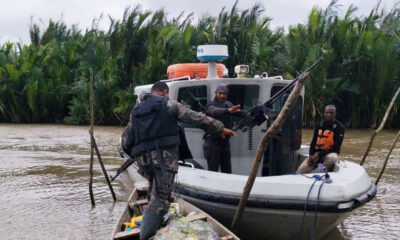
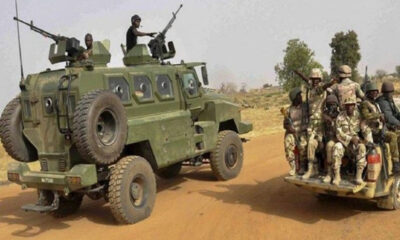
Kommy Offem, a public servant, has narrated how officers of the Nigerian Army burnt Cletus Ofem, her 70-year-old father, to death in his house in Nko, Yakurr Local Government Area of Cross River State.
Offem told FIJ that the soldiers stormed her father’s house at about 7 pm on Sunday, took the doors off their hinges and set the house ablaze with him inside.
She said there had been rumours that the soldiers would storm the village for reprisal attacks, but her father waved the thought off.
“When my parents knew the soldiers were coming, they packed some clothes to use in the coming days if they ran. Later, a chief advised them not to run away but lock themselves inside the house, which they did,” Offem told FIJ.
“Moments later, the soldiers started destroying people’s property, and my mother saw it first-hand. She told my father to leave, but he decided to stay back and lock himself in the house.”
Offem stated that her mother had to run for her life while her father, who had arthritis, stayed back in the house.
She said the soldiers broke through the windows and doors of the house but did not see anyone since her father had locked himself in his room before setting the building on fire.
“When they did not see anyone in the house, they set it on fire,” Offem said.
READ ALSO:
- Electricity operators not delivering set targets to face penalties, Nigerian govt says
- Ndidi returns as Foxes begins pre-season training
- Prosecutor Insists Ekweremadu Trafficked 15-Year-Old as Court Adjourns Until July 7
She stated that her mother was still running for her life when she saw a heap of smoke.
“She did not know the flame was from her house until it became so big that people were shouting,” she said.
“But as the soldiers left the immediate area and moved to another area, my mother came out only to realise that the burning house was her house.”
She said due to the circumstances surrounding his death, her her father was to be buried immediately, according to some traditional rites.
However, the soldiers prevented his burial from taking place until Wednesday, she said. The traditional rites were to be carried out by men alone, but the soldiers did not allow anyone to enter the house until Wednesday evening.
“Now, we have buried him. But apart from a generator, there was nothing left in the house and store. Whether they were burnt or stolen, no one knows,” she said.
Offem said that the soldiers were in her community to avenge the death of one of their comrades killed by the youths.
According to her, the Federal Government sent the soldiers to manage the age-old land crisis existing between her community and Onyadama community, but the Nko youths allegedly killed one of them.
“I heard that youths from my village allegedly shot a soldier. This is why they have been going about doing reprisal attacks,” she said.
FIJ learned that as of now, soldiers have killed at least 10 people and displaced several others in Nko community.
FIJ contacted Tope Aluko, the army spokesperson for Cross River, but she directed our reporter to a video clip of Lucky Irabor, Nigeria’s Chief of Defence Staff , on the issue.
In an Arise TV programme held on Wednesday, Irabor said the soldiers did not destroy people’s property but tried to apprehend the youths who shot a commander of the army.
FIJ also called Onyema Nwachukwu, Nigerian Army’s spokesperson, but he did not answer them. He had also not replied to a text sent to him at press time.









metro
Tinubu Targets Lower Transport Fares From October 1 as CNG Programme Expands
Tinubu Targets Lower Transport Fares From October 1 as CNG Programme Expands
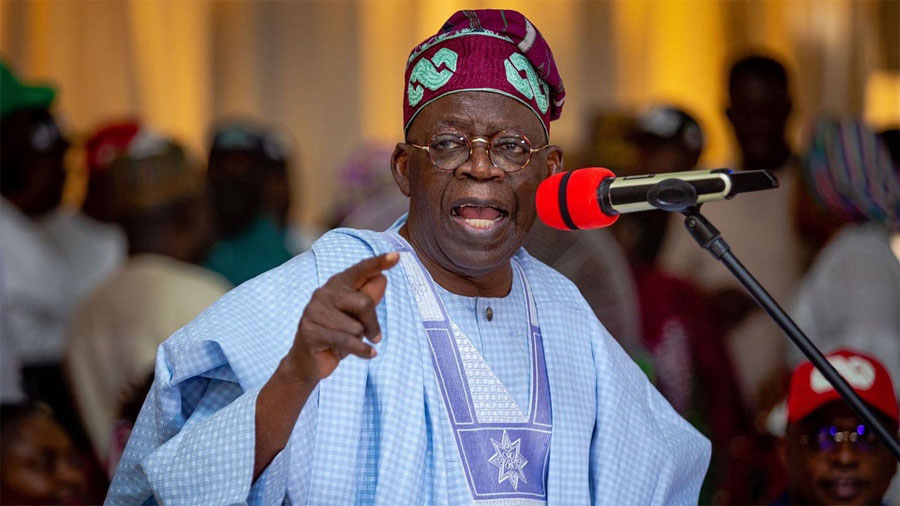
President Bola Ahmed Tinubu has directed the 36 state governments to accelerate the National Affordable CNG Transit Programme, with the Federal Government targeting measurable reductions in transportation fares from October 1, 2026.
Tinubu disclosed this in a statement on Saturday, September 19, saying the target followed his August 27 meeting with the governors, where they agreed that more Nigerians should begin to experience lower transportation costs from October.
An implementation committee was subsequently established under the Nigeria Governors’ Forum (NGF) and chaired by Kwara State Governor and NGF Chairman, AbdulRahman AbdulRazaq, to coordinate the rollout.
The committee is working with the Presidential Initiative on Compressed Natural Gas and Electric Vehicles (Pi-CNG & EV), state governments and other stakeholders to identify priority transport corridors, determine appropriate interventions and put the necessary arrangements in place.
The President said the push had become more urgent because of renewed disruptions to global energy supplies, which are putting pressure on petrol and diesel prices and increasing transportation costs.
According to Tinubu, Nigeria cannot control developments in global energy markets but can reduce its exposure to such shocks by making greater use of its abundant natural gas resources.
He said the Federal Government had spent the past three years developing a CNG transportation ecosystem, with more than 120,000 vehicles converted to CNG, over 400 certified conversion centres and more than 90 CNG refuelling stations currently available across the country.
The Presidential Initiative says more than 7,700 technicians have also been trained as part of the effort to expand vehicle conversion capacity and support the growing CNG network.
READ ALSO:
- Oyo Police: Student Who Died by Suicide Was Charged With Assault, Not ₦8,000 Debt
- Delta Police Intercept Sienna With Military Uniforms, Suspected Drugs
- Jehovah’s Witnesses Adjust Blood Transfusion Rules, Allow Personal Choice
Tinubu said the government would continue expanding CNG infrastructure and conversion capacity while encouraging state governments, transport unions, vehicle manufacturers, commercial operators and private investors to participate in the programme.
The President also cited existing deployments in different parts of the country as evidence of how alternative-energy transportation can reduce commuting costs.
In Borno State, he said CNG-powered and electric public transport services carry commuters for between ₦50 and ₦100 on routes where commercial operators charge between ₦300 and ₦600.
In Kaduna State, Tinubu said 100 CNG-powered buses provide free transportation on major routes and carried about 3.2 million passengers in their first year, saving commuters more than ₦3.5 billion in transport costs.
In Oyo State, he said the deployment of CNG buses to Pacesetter Transport reduced the Lagos-Ibadan fare from about ₦8,000 to ₦3,200 during the initial deployment.
The President also cited Adamawa State, where alternative-energy transport services had reduced fares by as much as 50 per cent, from ₦8,000 to ₦4,000.
In Enugu State, the deployment of 100 CNG buses reduced the Enugu-Nsukka fare from ₦2,500 to ₦1,500, according to Tinubu.
In Plateau State, government-supported buses reportedly carry about 13,000 commuters daily at ₦200, compared with commercial fares of more than ₦500.
Through a partnership with the National Union of Road Transport Workers (NURTW), the President said passengers using CNG-converted commercial vehicles on several Abuja routes were benefiting from fare reductions of about 40 per cent.
He said the fare on the Area 1-Gwagwalada route had fallen from ₦1,500 to ₦900, while Nyanya dropped from ₦700 to ₦420 and Wuse from ₦400 to ₦240.
On the Suleja-Abuja route in Niger State, Tinubu said passengers were paying about ₦550 compared with approximately ₦800 previously.
In Abia State, he said 40 electric buses had been deployed with fares subsidised by 50 per cent.
READ ALSO:
- Ogun 2027: APC Highlights Adeola’s Projects, Challenges Adebutu
- Akpabio Links Okowa’s APC Defection to EFCC Investigation
- Barau Sacks Aide Over ‘Abba Must Go’ Social Media Posts
Tinubu said the examples showed that cheaper energy could translate into lower transport costs when the savings were passed on to commuters.
However, the October 1 target is not structured as a single uniform fare applicable to every route across Nigeria.
The Pi-CNG & EV has said implementation will proceed through state-by-state engagement, with individual states expected to identify their busiest transport corridors and determine the infrastructure and interventions required.
At a stakeholder meeting on September 10, several states reported progress on CNG and electric-mobility projects.
Niger State, for instance, had procured 200 CNG buses, with 35 already operational, alongside 11 electric-vehicle charging stations.
Abia State had deployed 40 electric buses and 20 charging stations and planned to increase its fleet to 100 buses by December.
Ogun State had acquired 1,500 electric motorcycles and more than 20 battery-swap stations, while Cross River State had deployed 720 electric vehicles, including buses and motorcycles.
Delta State reported 13 operational vehicle-conversion centres and four CNG stations, with 50 CNG buses expected to join its transport system.
Adamawa State had signed an agreement for 2,000 electric tricycles, while Anambra State had identified six priority transport corridors and was preparing to train 1,000 young people in vehicle conversion.
Benue State had also trained technicians and established a conversion centre.
The states are expected to establish implementation teams covering transport, energy and related sectors and work directly with the Pi-CNG & EV on the rollout.
They have also been asked to identify priority interventions that can realistically be delivered around the October 1 target.
The programme is expected to rely heavily on private-sector participation, with state investment promotion agencies working towards a common framework for attracting investment into CNG and electric-vehicle infrastructure.
Despite the progress reported by the government, implementation has also generated questions from transport stakeholders.
Transport unions previously complained that they had not been adequately consulted and said they were yet to receive clear implementation guidelines for the proposed fare reductions.
The Pi-CNG & EV subsequently clarified that the programme would be implemented progressively and on a state-by-state basis rather than through a blanket nationwide directive.
This means the actual reduction experienced by commuters from October 1 is likely to depend on the availability of CNG buses and converted vehicles, refuelling infrastructure, state subsidies, fleet deployment and agreements with transport operators.
Tinubu has therefore urged governors to work closely with transport unions and commercial operators, support vehicle conversion and fleet deployment, and facilitate the infrastructure required to make the programme effective.
He also directed the states to ensure that savings generated from cheaper energy are reflected in the fares paid by passengers.
The President further rejected calls for a return to the petrol subsidy regime, arguing that the government should instead accelerate the development of alternative energy sources and reduce Nigeria’s exposure to international energy-price movements.
With October 1 approaching, the Federal Government’s focus is now on converting the existing CNG and electric-mobility investments into tangible savings for commuters.
For passengers, the effectiveness of the programme will ultimately be measured by whether the expansion of CNG transportation results in lower fares on the routes they use daily.
Tinubu said the Federal Government would continue to support the expansion of CNG infrastructure, conversion capacity and access while creating an enabling environment for states, transport operators, manufacturers and private investors to participate.
The President said Nigeria had the gas resources and was building the infrastructure needed to expand cheaper transportation options, but urged the states to move faster so that more Nigerians could begin to benefit from lower fares.
Tinubu Targets Lower Transport Fares From October 1 as CNG Programme Expands
metro
Stray Bullet Kills 400-Level IBBU Student During Land Dispute in Niger

Stray Bullet Kills 400-Level IBBU Student During Land Dispute in Niger
A 400-level student of Ibrahim Badamasi Babangida University, Lapai (IBBU), Isma’il Ishaq Magaji, has been killed by a stray bullet during a land dispute in Wawa, Borgu Local Government Area of Niger State.
Magaji, a student of the Department of Public Administration, reportedly died on Thursday after he was struck by a bullet amid gunfire linked to the dispute in the community.
The university confirmed his death in a statement issued by its Deputy Registrar, Information, Baba Akote, on Saturday.
According to the university, the student was caught in the incident when the dispute over land escalated and gunfire broke out in Wawa.
Magaji’s death has thrown the IBBU community into mourning, particularly as he was a 400-level student who was reportedly approaching the completion of his undergraduate studies.
The Vice-Chancellor of the university, Professor Mohammed Sulaiman, expressed condolences to Magaji’s family, classmates, friends and associates.
Sulaiman described the incident as a painful loss to the university community and prayed for strength for the deceased student’s family and the repose of his soul.
The Vice-Chancellor also appealed to the communities involved in the land dispute to embrace dialogue, restraint and peaceful coexistence, warning against actions that could lead to further loss of lives.
READ ALSO:
- Oyo Police: Student Who Died by Suicide Was Charged With Assault, Not ₦8,000 Debt
- Delta Police Intercept Sienna With Military Uniforms, Suspected Drugs
- Jehovah’s Witnesses Adjust Blood Transfusion Rules, Allow Personal Choice
Details surrounding the shooting remain limited, but earlier accounts indicated that gunfire erupted in Wawa after the land disagreement reportedly escalated.
There were also reports that security personnel were operating in the area when the shooting occurred and that Magaji was hit by a bullet during the incident.
However, the circumstances surrounding the source of the fatal bullet have not been fully established publicly.
While some earlier accounts linked the shooting to a military operation reportedly responding to the dispute, there was no immediate public confirmation from the Nigerian Army identifying the personnel involved or accepting responsibility for the bullet that killed the student.
The latest confirmation from IBBU establishes that Magaji was killed by a stray bullet during the land dispute but does not identify who fired the shot.
Magaji was reportedly in Wawa after returning from the university when the incident occurred.
A coursemate, Yahaya Gambo Lawal, described him as a calm, friendly and accommodating person whose death had shocked his colleagues.
Lawal said the student was a promising member of the university community and expressed sadness that he would not be able to complete his studies.
The incident has raised fresh concerns about the danger posed to civilians when land disputes escalate into armed confrontations.
Beyond the immediate loss of life, such incidents can expose residents who are not directly involved in disputes to potentially fatal violence.
The university has therefore called for peaceful resolution of the dispute and restraint among the parties involved.
The circumstances that led to the shooting, including the identities of those involved, the source of the bullet and whether any formal investigation has commenced, remain to be clarified.
For the IBBU community, Magaji’s death represents the loss of a student who was reportedly close to completing his university education.
His death has also left his family, classmates and friends mourning as calls continue for dialogue and peaceful resolution of the Wawa land dispute to prevent further violence.
Stray Bullet Kills 400-Level IBBU Student During Land Dispute in Niger
metro
Oyo Police: Student Who Died by Suicide Was Charged With Assault, Not ₦8,000 Debt
Oyo Police: Student Who Died by Suicide Was Charged With Assault, Not ₦8,000 Debt
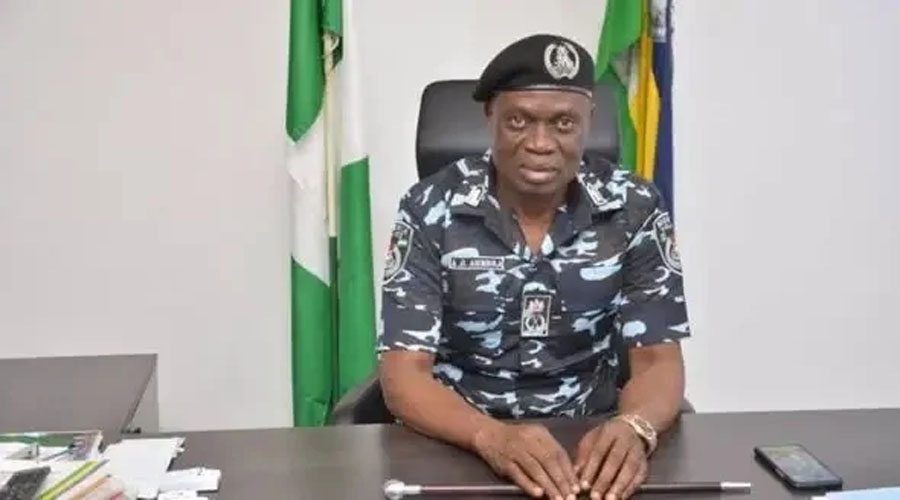
The Oyo State Police Command has denied that it arrested and prosecuted 30-year-old student Al-Amin Mohammed over an outstanding ₦8,000 debt, saying he was instead charged with assault and malicious damage following a dispute with a female Point-of-Sale (POS) operator.
The clarification followed reports about Mohammed’s detention and subsequent death by suicide three days after his release from the Agodi Correctional Centre, Ibadan.
Mohammed died on September 17, 2026, three days after he was released from custody. His family had alleged that he was arrested and taken to court following a dispute over an ₦8,000 balance owed to a POS operator and that the experience left him distressed.
However, the police described the claim that Mohammed was arrested and charged because of the ₦8,000 debt as false, unfounded and misleading.
According to the Command, Mohammed initially approached the POS operator to collect ₦23,000 in cash, with the understanding that he would transfer the same amount to her through a POS transaction.
The police said the operator handed him the money, but he allegedly left without completing the transfer or returning the cash.
After efforts to recover the money, Mohammed reportedly returned ₦15,000, leaving an outstanding balance of ₦8,000.
The police said the POS operator subsequently took possession of Mohammed’s mobile phone pending repayment of the balance.
The dispute later escalated, according to the Command, when Mohammed allegedly went to the complainant’s residence at about 10pm on September 8, 2026.
The police alleged that he assaulted the woman and, during the confrontation, damaged her Airtel SIM registration machine, which was valued at ₦177,000.
READ ALSO:
- Delta Police Intercept Sienna With Military Uniforms, Suspected Drugs
- Jehovah’s Witnesses Adjust Blood Transfusion Rules, Allow Personal Choice
- Ogun 2027: APC Highlights Adeola’s Projects, Challenges Adebutu
Members of the community reportedly intervened in an attempt to settle the dispute, but the effort failed. Mohammed was subsequently handed over to vigilantes, who brought him and the complainant to the police station.
The Command said officers heard both sides and made a further attempt to resolve the matter amicably, but the complainant insisted on pursuing the case in court.
The police therefore said Mohammed was charged with assault and malicious damage, rather than with owing the ₦8,000.
The Command also clarified that the student’s continued detention at the correctional centre was not a decision by the police to hold him over the debt.
According to the police, Mohammed was granted bail after his arraignment but remained at the Agodi Correctional Centre because he could not immediately meet the conditions imposed by the court. He was released after the bail conditions were eventually fulfilled.
Mohammed’s family, however, has given a different account of the events.
His mother, Simiat Mohammed, said her son had borrowed ₦23,000 from the POS operator and repaid ₦15,000, leaving the ₦8,000 balance.
She said the operator seized his mobile phone over the outstanding amount and that Mohammed later returned to retrieve it.
The family disputed the police account that he assaulted the woman and damaged her equipment, maintaining that the confrontation occurred in the course of the dispute over his phone.
The family said Mohammed was subsequently detained and taken to court before being remanded at the correctional centre. His parents later stood as sureties to secure his release.
According to his mother, Mohammed’s condition changed significantly after he returned home on September 14.
She said he became withdrawn, ate little and repeatedly complained about the humiliation he believed he had suffered after being arrested, taken to court and remanded.
Three days after his release, Mohammed reportedly ingested a poisonous substance and later died.
His family has called for an investigation into the circumstances surrounding his arrest, detention, court proceedings and death.
The police, however, cautioned against drawing a direct causal link between the criminal case and Mohammed’s death without verified evidence.
The Command said the circumstances surrounding his death should be established through an appropriate investigation rather than through what it described as an inaccurate or incomplete account.
The case has therefore left competing accounts of how the dispute escalated from an ₦8,000 outstanding balance into a police case.
While the family links Mohammed’s ordeal to the debt dispute, the police maintain that the criminal proceedings were based on allegations of assault and damage to a ₦177,000 SIM registration machine.
The available accounts establish that the ₦8,000 was connected to the original financial transaction, but they differ over the circumstances that followed, including the alleged assault, property damage and the events leading to Mohammed’s detention.
The circumstances surrounding Mohammed’s death and whether any direct connection exists between the events remain matters for further investigation.
Oyo Police: Student Who Died by Suicide Was Charged With Assault, Not ₦8,000 Debt
-

 metro3 days ago
Niger Mosque Abductions: Terrorists Execute 30 of 500 Captive Muslim Worshippers
-
 Business3 days ago
Fuel Prices Climb to ₦1,500 per Litre Across Nigeria, Sparking Calls for Urgent Action
-

 News3 days ago
OAU Investigates Death of Final-Year Student as Police Begin Probe
-
 News2 days ago
ECOWAS Biometric Card Expands as Seven Countries Begin Rollout
-

 Business3 days ago
NCAA Moves Against Airlines Over Rising Flight Delays
-

 Politics3 days ago
Aisha Buhari Visits Atiku Amid Opposition Coalition Activities
-
 Interview3 days ago
He Does Not Lose Elections”: Abdulmumin Jibrin Predicts 65% Landslide for Tinubu in 2027
-
 metro2 days ago
FG Suspends Niger NSCDC Commandant As 37 Suspected Illegal Miners Die In Custody