

metro
Suspect narrates why he killed sugar mummy in Delta
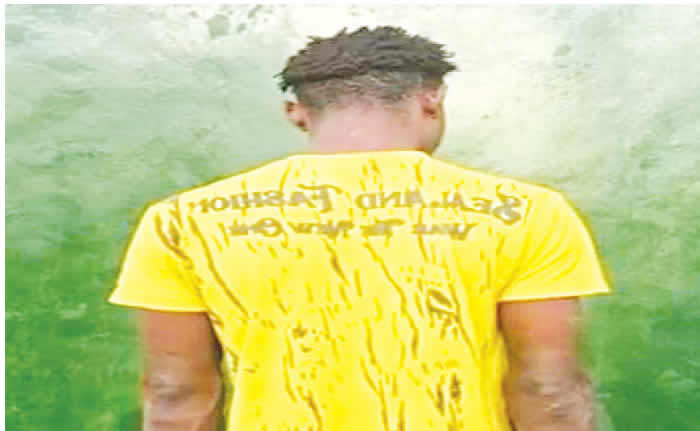
Suspect narrates why he killed sugar mummy in Delta
The suspect arrested in connection with the murder of a lady, Glory Akpaku, in Delta State, Akpoveta School, has narrated how he allegedly killed the victim by stabbing her multiple times.
According to an interrogation video shared on X.com by the Delta State Police Public Relations Officer, Bright Edafe, on Monday, the suspect disclosed that the victim was his sugar mummy before her demise.
PUNCH Metro gathered from the video that things went sour between Akpoveta and the late Akpaku over the sum of N100,000 he allegedly kept with the deceased for safekeeping, but which the deceased allegedly refused to give him when he needed the money.
The suspect claimed that he had gone to Akpaku to demand the money but, instead of receiving it, she insisted that she would give it to him after returning from the market.
The suspect narrated further that he threatened the victim to report their relationship to her son, but the victim threatened back that if he did so, she would not give him the money in her custody.
He added that the threat from his alleged lover infuriated him, which led him to stab her with a knife in the neck, hand, and stomach.
READ ALSO:
- We may shut down Nigeria’s economy over cybersecurity levy – TUC
- Just in: EFCC arraigns ex-court registrar over N3.8m fraud
- Bride cancels wedding as groom insists on living in family house
Akpoveta narrated in pidgin English (now translated), “She asked me to save some money with her and that she would return the money to me later. But when I needed the money, she refused to give it to me. Rather, she became angry.
“She asked me to escort her to the market, and I thought she would give me the money, but she insisted that she would give it to me after she returned from the market.
“I told her that I would tell her child, and she said if I told the child, she would not return my money. While she was going in front, I took a knife that I had with me and stabbed her in the neck, hand, and stomach.”
The suspect stated further that he regretted his action but blamed the devil for it.
Reacting to the confession, Edafe urged members of the public to learn from it.
The PPRO wrote, “I share stories like this so we can learn from the mistakes of others. So this suspect allegedly murdered his sugar mummy over her failure to give him back the money she was helping him save. When asked why he did it, he said, ‘NA DEVIL WORK’.”
Meanwhile, giving further updates on the incident, the PPRO noted that the incident happened in April and the suspect would be charged in court upon the conclusion of the ongoing investigation.
“The incident happened in April. He will be charged in court as soon as the investigation is concluded,” Edafe concluded.
Suspect narrates why he killed sugar mummy in Delta








metro
Oyo Police: Student Who Died by Suicide Was Charged With Assault, Not ₦8,000 Debt
Oyo Police: Student Who Died by Suicide Was Charged With Assault, Not ₦8,000 Debt
The Oyo State Police Command has denied that it arrested and prosecuted 30-year-old student Al-Amin Mohammed over an outstanding ₦8,000 debt, saying he was instead charged with assault and malicious damage following a dispute with a female Point-of-Sale (POS) operator.
The clarification followed reports about Mohammed’s detention and subsequent death by suicide three days after his release from the Agodi Correctional Centre, Ibadan.
Mohammed died on September 17, 2026, three days after he was released from custody. His family had alleged that he was arrested and taken to court following a dispute over an ₦8,000 balance owed to a POS operator and that the experience left him distressed.
However, the police described the claim that Mohammed was arrested and charged because of the ₦8,000 debt as false, unfounded and misleading.
According to the Command, Mohammed initially approached the POS operator to collect ₦23,000 in cash, with the understanding that he would transfer the same amount to her through a POS transaction.
The police said the operator handed him the money, but he allegedly left without completing the transfer or returning the cash.
After efforts to recover the money, Mohammed reportedly returned ₦15,000, leaving an outstanding balance of ₦8,000.
The police said the POS operator subsequently took possession of Mohammed’s mobile phone pending repayment of the balance.
The dispute later escalated, according to the Command, when Mohammed allegedly went to the complainant’s residence at about 10pm on September 8, 2026.
The police alleged that he assaulted the woman and, during the confrontation, damaged her Airtel SIM registration machine, which was valued at ₦177,000.
READ ALSO:
- Delta Police Intercept Sienna With Military Uniforms, Suspected Drugs
- Jehovah’s Witnesses Adjust Blood Transfusion Rules, Allow Personal Choice
- Ogun 2027: APC Highlights Adeola’s Projects, Challenges Adebutu
Members of the community reportedly intervened in an attempt to settle the dispute, but the effort failed. Mohammed was subsequently handed over to vigilantes, who brought him and the complainant to the police station.
The Command said officers heard both sides and made a further attempt to resolve the matter amicably, but the complainant insisted on pursuing the case in court.
The police therefore said Mohammed was charged with assault and malicious damage, rather than with owing the ₦8,000.
The Command also clarified that the student’s continued detention at the correctional centre was not a decision by the police to hold him over the debt.
According to the police, Mohammed was granted bail after his arraignment but remained at the Agodi Correctional Centre because he could not immediately meet the conditions imposed by the court. He was released after the bail conditions were eventually fulfilled.
Mohammed’s family, however, has given a different account of the events.
His mother, Simiat Mohammed, said her son had borrowed ₦23,000 from the POS operator and repaid ₦15,000, leaving the ₦8,000 balance.
She said the operator seized his mobile phone over the outstanding amount and that Mohammed later returned to retrieve it.
The family disputed the police account that he assaulted the woman and damaged her equipment, maintaining that the confrontation occurred in the course of the dispute over his phone.
The family said Mohammed was subsequently detained and taken to court before being remanded at the correctional centre. His parents later stood as sureties to secure his release.
According to his mother, Mohammed’s condition changed significantly after he returned home on September 14.
She said he became withdrawn, ate little and repeatedly complained about the humiliation he believed he had suffered after being arrested, taken to court and remanded.
Three days after his release, Mohammed reportedly ingested a poisonous substance and later died.
His family has called for an investigation into the circumstances surrounding his arrest, detention, court proceedings and death.
The police, however, cautioned against drawing a direct causal link between the criminal case and Mohammed’s death without verified evidence.
The Command said the circumstances surrounding his death should be established through an appropriate investigation rather than through what it described as an inaccurate or incomplete account.
The case has therefore left competing accounts of how the dispute escalated from an ₦8,000 outstanding balance into a police case.
While the family links Mohammed’s ordeal to the debt dispute, the police maintain that the criminal proceedings were based on allegations of assault and damage to a ₦177,000 SIM registration machine.
The available accounts establish that the ₦8,000 was connected to the original financial transaction, but they differ over the circumstances that followed, including the alleged assault, property damage and the events leading to Mohammed’s detention.
The circumstances surrounding Mohammed’s death and whether any direct connection exists between the events remain matters for further investigation.
Oyo Police: Student Who Died by Suicide Was Charged With Assault, Not ₦8,000 Debt
metro
Delta Police Intercept Sienna With Military Uniforms, Suspected Drugs
Delta Police Intercept Sienna With Military Uniforms, Suspected Drugs
The Delta State Police Command has intercepted a Toyota Sienna allegedly conveying military camouflage uniforms, boots, hats and cartons of suspected illicit drugs, arresting the driver in the process.
The interception was carried out on Friday, September 18, 2026, by operatives of the command’s Anti-Cult Unit (CACU), Asaba, following intelligence about the movement of the vehicle from Onitsha in Anambra State towards Ondo State.
The police said operatives mounted surveillance along the anticipated route and intercepted a green Toyota Sienna with registration number KP 527 AAA at about 4:50am.
The vehicle was allegedly driven by Isaac Urji, 45, from Abia State, who was arrested after the search.
According to the police, officers recovered cartons of substances suspected to be Tramadol and other illicit drugs, alongside military camouflage uniforms, boots and hats.
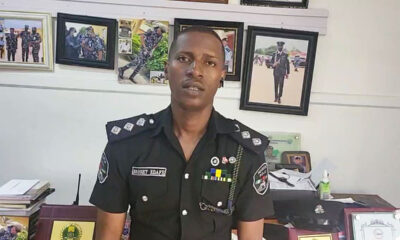
The Delta State Police Public Relations Officer, SP Bright Edafe, disclosed the development in a statement made available to journalists in Warri on Saturday.
Edafe said investigation had commenced to determine the source and intended destination of the recovered items and identify other people who may have been connected with the consignment.
The interception comes amid a wider crackdown by the command on kidnapping, cultism, illicit drugs and illegal firearms across Delta State.
In a separate operation on September 18, operatives of the Special Anti-Kidnapping Unit (SAKU), Sector III, Ubulu-Uku, arrested two suspected cultists at Alisheme Community in Ika South Local Government Area.
READ ALSO:
- Jehovah’s Witnesses Adjust Blood Transfusion Rules, Allow Personal Choice
- Ogun 2027: APC Highlights Adeola’s Projects, Challenges Adebutu
- Akpabio Links Okowa’s APC Defection to EFCC Investigation
The suspects, identified as Destiny Okafor, 18, and Sunday Bryan, 22, were allegedly linked to cultism and kidnapping-related activities.
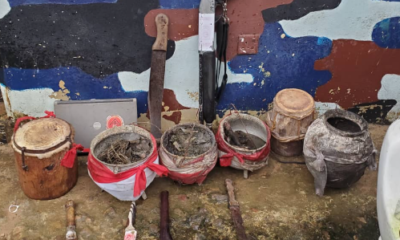
Police said preliminary investigations indicated that the two suspects identified themselves as members of the NBM Confraternity. Officers reportedly recovered a locally fabricated single-barrel gun, a battle axe, two cutlasses, mobile phones and a laptop.
In another operation on September 15, police and other security personnel conducted a cordon-and-search operation around Ogboli Quarter and other areas of Issele-Uku in Aniocha North Local Government Area following intelligence about suspected cult activities.
Four suspected cultists were arrested during the operation, while police said they recovered two locally made pistols, one pump-action gun and six live cartridges.
The arrests and recoveries are part of the Delta Police Command’s intelligence-led operations targeting criminal activities across the state.
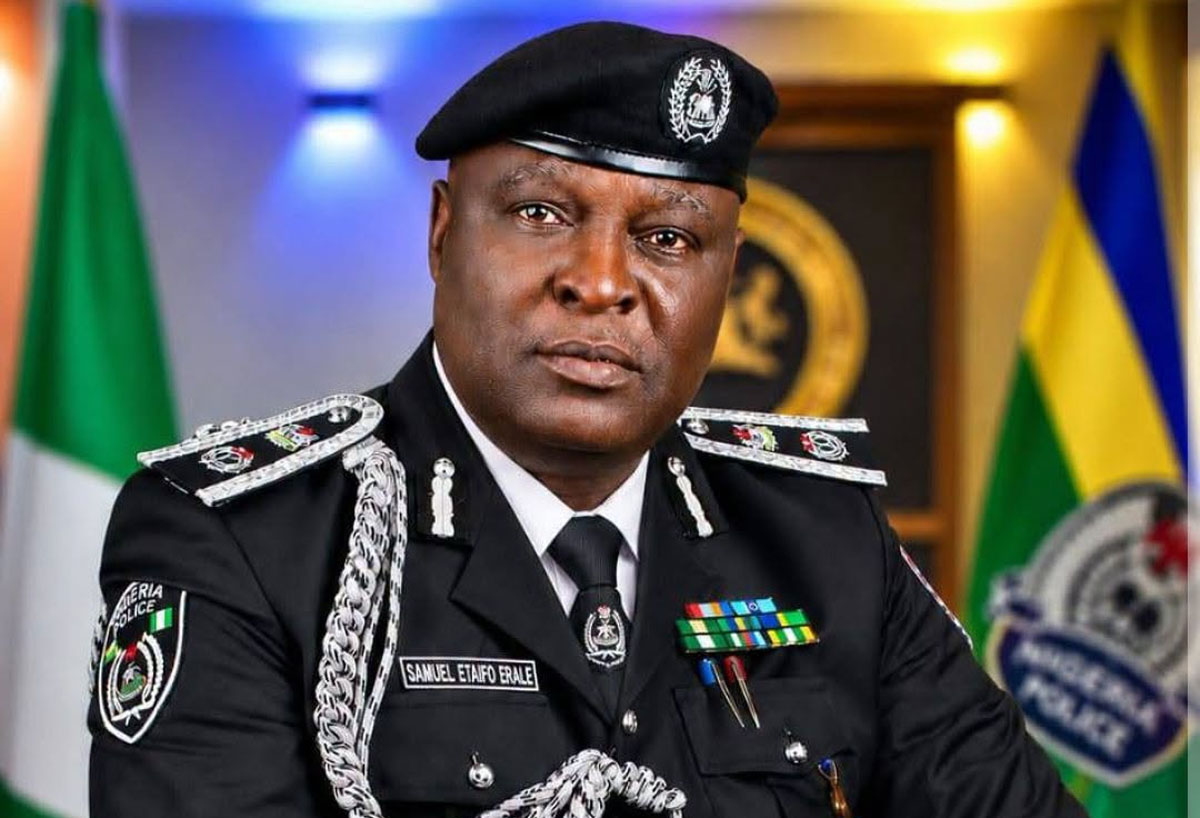
The Commissioner of Police, CP Samuel Erale, said the command would sustain operations against kidnapping, cultism and the proliferation of illegal firearms.
He also urged residents to continue providing credible information to security agencies, assuring the public that information supplied to the police would be treated confidentially.
Meanwhile, the driver arrested in connection with the intercepted Sienna remains in police custody as investigators work to establish the circumstances surrounding the movement of the military uniforms and suspected illicit drugs.
The police have not announced any charges against the suspect, and the investigation is expected to determine whether other individuals were involved in the consignment.
Delta Police Intercept Sienna With Military Uniforms, Suspected Drugs
metro
Jehovah’s Witnesses Adjust Blood Transfusion Rules, Allow Personal Choice
Jehovah’s Witnesses Adjust Blood Transfusion Rules, Allow Personal Choice
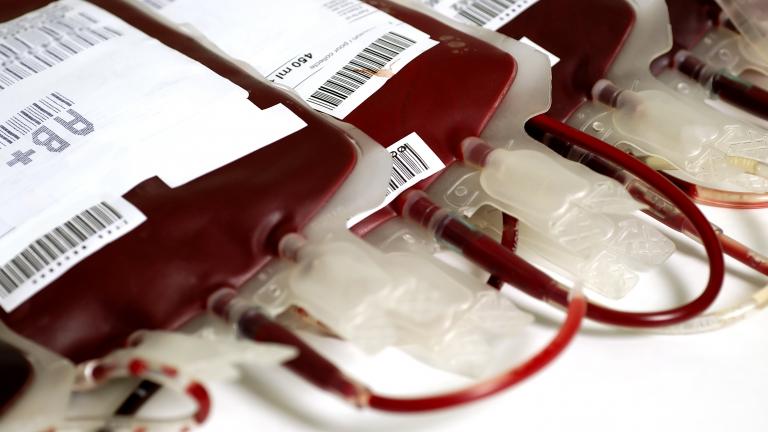
The Jehovah’s Witnesses have announced a major adjustment to their longstanding blood transfusion policy, allowing individual members to decide according to personal conscience whether to accept or donate four major blood components.
The new position covers red blood cells, white blood cells, plasma and platelets derived from another person’s blood. The decision was announced by the organisation’s Governing Body on Friday, September 18, 2026, from its World Headquarters in Warwick, New York.
Under the revised policy, members can personally decide whether to accept medical treatment involving any of the four components. They can also decide whether to donate blood for the production of components or fractions intended for another person’s treatment.
The organisation stressed that its prohibition on whole-blood transfusions remains unchanged. The position is based on its interpretation of the biblical instruction to “abstain from blood.”
Jehovah’s Witnesses said decisions involving the four components are now matters of individual conscience, meaning local congregations are not to interfere with or judge members over such choices.
International spokesman Paul Gillies said the organisation continued to regard blood and life as sacred while recognising that decisions concerning the four components should be made personally by individual Witnesses.
READ ALSO:
- Ogun 2027: APC Highlights Adeola’s Projects, Challenges Adebutu
- Akpabio Links Okowa’s APC Defection to EFCC Investigation
- Barau Sacks Aide Over ‘Abba Must Go’ Social Media Posts
The adjustment follows a policy clarification announced in March 2026 concerning the use of a member’s own blood during medical procedures. That position also left the decision to individual conscience where blood is removed, stored and subsequently returned during treatment.
According to the organisation, the latest decision reflects its interpretation that the Bible does not specifically address whether members should accept the four primary blood components in medical treatment.
The organisation said its members seek professional medical care and do not practise faith healing. It also said healthcare professionals should discuss individual decisions concerning blood components directly with patients and respect those choices.
The medical uses of the components vary. Red blood cells can be used to replace blood lost through surgery or serious injury, while platelets help manage certain bleeding conditions. Plasma is used in several treatments involving bleeding and clotting disorders, while white blood cells have more specialised clinical applications.
The Associated Press reported that the revised policy permits members to receive products derived from donated blood while retaining the prohibition on whole-blood transfusions.
Jehovah’s Witnesses said the organisation has more than nine million members worldwide, with congregations in more than 200 countries and territories.
The September decision represents a significant change in the organisation’s approach to the four major blood components, with responsibility for accepting or donating them now placed on individual members.
The ban on whole-blood transfusions, however, remains in place.
Jehovah’s Witnesses Adjust Blood Transfusion Rules, Allow Personal Choice
-

 metro3 days ago
Niger Mosque Abductions: Terrorists Execute 30 of 500 Captive Muslim Worshippers
-

 Business2 days ago
Fuel Prices Climb to ₦1,500 per Litre Across Nigeria, Sparking Calls for Urgent Action
-

 News3 days ago
OAU Investigates Death of Final-Year Student as Police Begin Probe
-
 News2 days ago
ECOWAS Biometric Card Expands as Seven Countries Begin Rollout
-
 metro3 days ago
US-Based Nigerian Lawyers Disbarred: Full List of Fraud, Theft and Misconduct Cases
-
 Politics3 days ago
Aisha Buhari Visits Atiku Amid Opposition Coalition Activities
-

 Business2 days ago
NCAA Moves Against Airlines Over Rising Flight Delays
-
 Interview3 days ago
He Does Not Lose Elections”: Abdulmumin Jibrin Predicts 65% Landslide for Tinubu in 2027