

metro
The intriguing power play behind Obasa’s resurrection

The intriguing power play behind Obasa’s resurrection
32 distraught and disgruntled lawmakers of the Lagos State House of Assembly may never have envisaged that Mudashairu Obasa whom they removed on the 13th day of January, 2025, would ever make a comeback. If the 13th January event was a burial for Obasa, his reinstatement on the 3rd of March was a resurrection; a triumphal re-entry.
When his “sins” were recounted by his colleagues and keen watchers of the events at the Assembly, it was easy to think that the political grave of Obasa had been dug, his tombstone constructed and a conspicuous epitaph etched on it.
The said sins included his alleged disrespect for Governor Babajide Sanwo-Olu and Deputy Governor Obafemi Hamzat; his alleged allocation of N17 billion to construct a special gate; the alleged spending of N200 million being spent on a thanksgiving event that never took place; the alleged move by him to abrogate the 37 Local Council Development Areas, and general high-handedness.
Although Obasa claimed his removal did not follow the laid down rules, his embattled colleagues told him to tell that to the marines while insisting on their support for Mojisola Meranda the former Deputy Speaker whom they had elected to replace him.
But signs that some of the gods that control Lagos politics, were uncomfortable with the development, emerged when a member of the Governance Advisory Council (GAC), Anthony Adefuye, in an interview, sided with Obasa. Adefuye had said, “What he’s (Obasa is ) saying is that he was illegally removed and the procedure was faulty and I agree with him.”
However, there were others who seemed to have favoured the actions of the lawmakers who removed Obasa. Musiliu Obanikoro, a former federal minister and also a member of the GAC, took Adefuye up on his comment.
READ ALSO:
- Ghanaian MPs reintroduce controversial anti-LGBT bill
- Hisbah arrests Muslims for eating, selling food during Ramadan fasting hours
- FG reveals reason for delay in direct payment of allocations to LGs
He said, “The statement of Senator Adefuye on the removal of the former Speaker, Mudashiru Obasa, is very unfortunate, childish and inconsequential.”
“Senator Adefuye’s comment shouldn’t have come up. As leaders, if there are serious issues of this magnitude, rushing to make press statements or personal statements on such issues is unbecoming.”
While powerful stakeholders understood the reasons for Obasa’s removal, they were uncomfortable that there were no “proper consultations” before his colleagues ousted him.
President Bola Tinubu, it was learnt, was particularly miffed over the development. Although some of the excesses of Obasa had been reported to him by some political bigwigs in Lagos, he was caught off-guard over his removal. While it is true that he had reportedly reprimanded Obasa for his alleged dishonour of Sanwo-Olu, he did not expect that his political godson would be so disgraced out of the office.
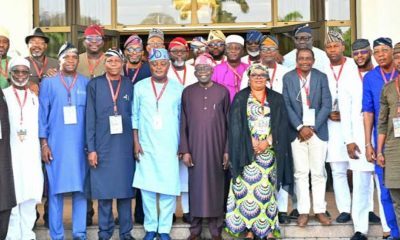
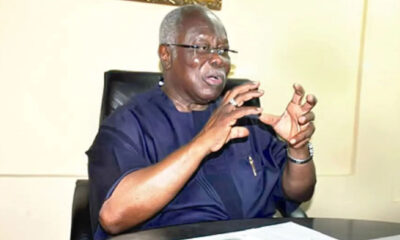
As Obasa took to going to court to invalidate his removal, a high powered committee was set up by Tinubu to resolve the crisis. The committee which was led by former Osun State Governor and ex-National Chairman of the All Progressives Congress, Bisi Akande, had former Ogun State Governor, Olusegun Osoba, former APC National Vice Chairman, South-West, Pius Akinyelure, and others as members.
While Tinubu reportedly wanted Obasa back, majority of the Lagos lawmakers stood their ground, vowing there was no going back on their decision. However, they could not sustain their position as they bowed to the wish of the President and other political strongmen who wanted a return to the status quo.
At the plenary which held on Monday March 3rd, Meranda and her deputy, Mojeed Fatai resigned their positions, and were thereafter elected Deputy Speaker and Chief Whip respectively. This paved the way for Obasa to be nominated and re-reinstated as the Speaker.
READ ALSO:
- Driver, motor boy burnt to death as fire consumes petrol station in Ibadan
- How to practise healthy Ramadan fast — Experts
- NNPC Ltd reduces price of petrol to N860 per litre
While giving her resignation speech, Meranda in an emotion-laden voice, said she was leaving her position as a personal sacrifice “towards resolving the leadership crisis rocking the Lagos State House of Assembly.”
She said, “I took this decision carefully and with firm consideration. On one hand, I accepted the position of Speaker on January 13, 2025, and on the other hand, I resigned the position as it is threatening the democracy of this House.
“As good people of Lagos, our mandate is to protect the good people of Lagos State and ensure good governance.
“I feel that I have demonstrated leadership and selfless sacrifice by resigning in order to protect these resources that we have suffered to build. With your unwavering support, I take this step to step down as the Speaker of the House of Assembly.
“I cherish the solidarity that I have enjoyed and that has been given to me by my honorable members. I do not leave out the management and staff of the Lagos State House of Assembly. I want to thank you for your support and collaboration.
“As short as it is, this is a memorable event. I need you to permit me to resign as the Rt. Honorable Speaker, and I shall continue to serve my good people of Apapa Constituency 1 in particular and the entire Lagos State in general.
“Thank you for finding me worthy to lead this distinguished and honourable Assembly. I am not a quitter; however, I took this bold decision in order to save this legislative institution from further unnecessary conflict and embarrassment.
“Accordingly, I have agreed to yet again make a personal sacrifice by stepping down as the Speaker of this great Assembly.
“Dear distinguished and gallant honourable members of this 10th Assembly, occasionally, we are confronted by overwhelming challenges and conflicts, but as responsible leaders, we must not break down the legislative House that we collectively built in pursuit of justice and fairness.
“For those who have been unfairly referred to for standing on the side of fair play, kindly take note that there will always be an opportunity to right any wrong.
“I appreciate the spectrum of solidarity that I received through phone calls, messages, and visits throughout my short tenure.
“I sincerely thank you for your understanding and support, just as we know that party decisions are supreme.
“At this point, I take a bow as your Speaker, and I step down as your Speaker for this great House.”
Obasa on his own part after he had been sworn-in again, said it was not time for speech making but appreciated “our colleagues who have put a lot into this gathering today” as well as party leaders who played a role at resolving the crisis.
The intriguing power play behind Obasa’s resurrection
Source: PM News







metro
Shettima Blasts States Over Power Woes, Says Govs Must Stop Waiting for Abuja
Shettima Blasts States Over Power Woes, Says Govs Must Stop Waiting for Abuja
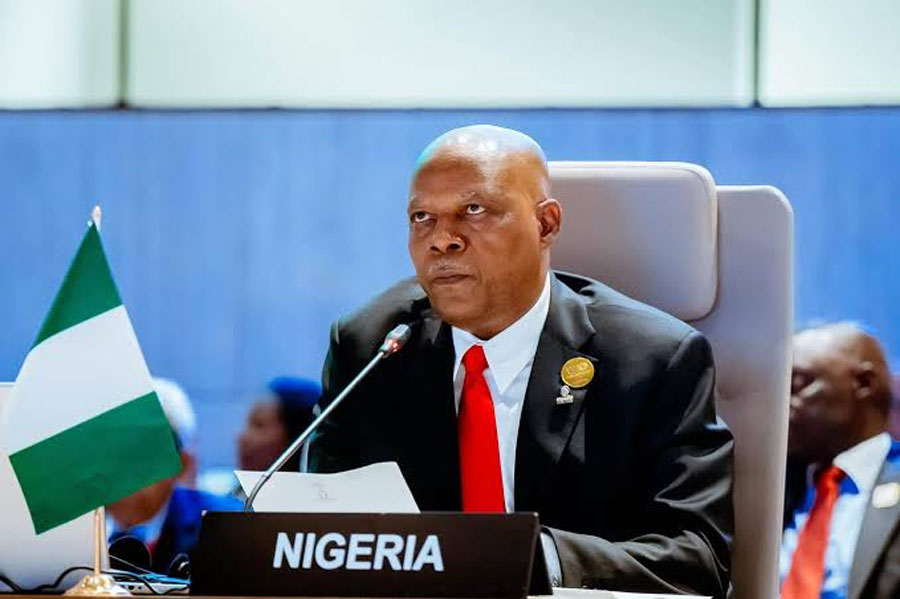
Vice-President Kashim Shettima has challenged state governments to take responsibility for addressing electricity problems in their jurisdictions, urging them to stop depending on the Federal Government for solutions and establish functional power markets.
Shettima made the call on Wednesday while declaring open the National Stakeholders’ Workshop on the Electricity Act 2023 at the State House Banquet Hall, Presidential Villa, Abuja.
Represented by the Deputy Chief of Staff to the President, Senator Ibrahim Hadejia, the Vice-President said Nigeria’s ambition to build a competitive industrial economy would remain constrained unless electricity reforms delivered reliable power to businesses, households and public institutions.
He said the Electricity Act 2023 had created an opportunity for states to decentralise electricity governance and develop power markets that reflect their economic needs and available energy resources.
“Electricity supply must become a shared responsibility, pursued with innovation and accountability across the Federation. Our States must shed the habit of waiting for Abuja to provide every answer,” he said.
Shettima identified the country’s diverse energy resources as an opportunity for states to expand electricity access and attract investment. He cited the solar energy potential of Sokoto, Borno and Katsina states, the gas resources of Delta, Rivers and Bayelsa states, and the hydroelectric opportunities in Niger and Kebbi states.
READ ALSO:
- Fourth Gas Leak in Six Months: Over 100 Ogun Pupils Hospitalised, Schools Shut as Parents Panic
- Nigerian Journalist Sentenced to 4 Years Over Facebook Post Criticising Police
- Hyundai Unveils Mufasa, Grand Creta SUVs to Strengthen Nigeria Line-up (Updated)
He urged governors to harness these resources to support agriculture, manufacturing, healthcare, education and other economic activities.
The Vice-President also warned that passing laws alone would not improve electricity supply, insisting that states must establish the institutions needed to regulate and manage their electricity markets effectively.
“Legislation cannot implement itself. States yet to act must begin their legislative and institutional preparations promptly. They need to establish functional electricity regulatory bodies with technical competence and capacity,” he said.
To accelerate implementation, Shettima proposed a voluntary National Electricity Reform Peer Review and Implementation Framework involving the Nigerian Electricity Regulatory Commission (NERC), the Federal Ministry of Power, the Nigeria Governors’ Forum and state electricity regulators.
The proposed framework would allow states to exchange experiences, strengthen regulatory capacity and assess their progress in electricity market development, investment readiness, consumer protection and access to electricity.
He said periodic reviews would help identify implementation challenges, encourage technical assistance and enable states to learn from jurisdictions that had made progress, without undermining their constitutional powers.
Shettima further stressed that government funding alone could not finance the transformation required in the electricity sector, calling for greater participation by private investors.
He said transparent licensing procedures, predictable regulations, commercially viable electricity markets, investment safeguards and credible dispute-resolution mechanisms would help build investor confidence.
The Vice-President also called for stronger consumer protection, warning against arbitrary billing, poor service delivery and unfair commercial practices. He maintained that electricity operators must be held accountable for the quality of service provided to consumers.
“The final verdict on this law will be delivered wherever a Nigerian reaches for a switch,” he said, stressing that the success of the reforms should ultimately be measured by improvements in electricity supply and the daily lives of Nigerians.
Meanwhile, the Director-General of the Nigeria Governors’ Forum, Abdulateef Shittu, said the forum was working on a standard tariff framework for state electricity markets, with the aim of protecting consumers while encouraging investment.
The Head of Compliance at NERC, Hauwa Yakubu, disclosed that the commission had issued regulatory transfers to 17 states, allowing them to assume regulatory responsibilities for electricity markets within their territories.
She said the commission was supporting emerging state regulators through technical engagement and peer-to-peer training.
Signed into law by President Bola Ahmed Tinubu in June 2023, the Electricity Act 2023 provides a framework for states to regulate electricity generation, transmission and distribution within their jurisdictions, subject to the applicable constitutional and statutory provisions. The national regulator retains oversight of electricity matters that fall within federal jurisdiction.
The law is expected to encourage competition, attract investment and expand electricity access. However, its impact will depend on effective implementation, functioning regulatory institutions and the ability of state governments to develop sustainable electricity markets.
Shettima Blasts States Over Power Woes, Says Govs Must Stop Waiting for Abuja
metro
Fourth Gas Leak in Six Months: Over 100 Ogun Pupils Hospitalised, Schools Shut as Parents Panic
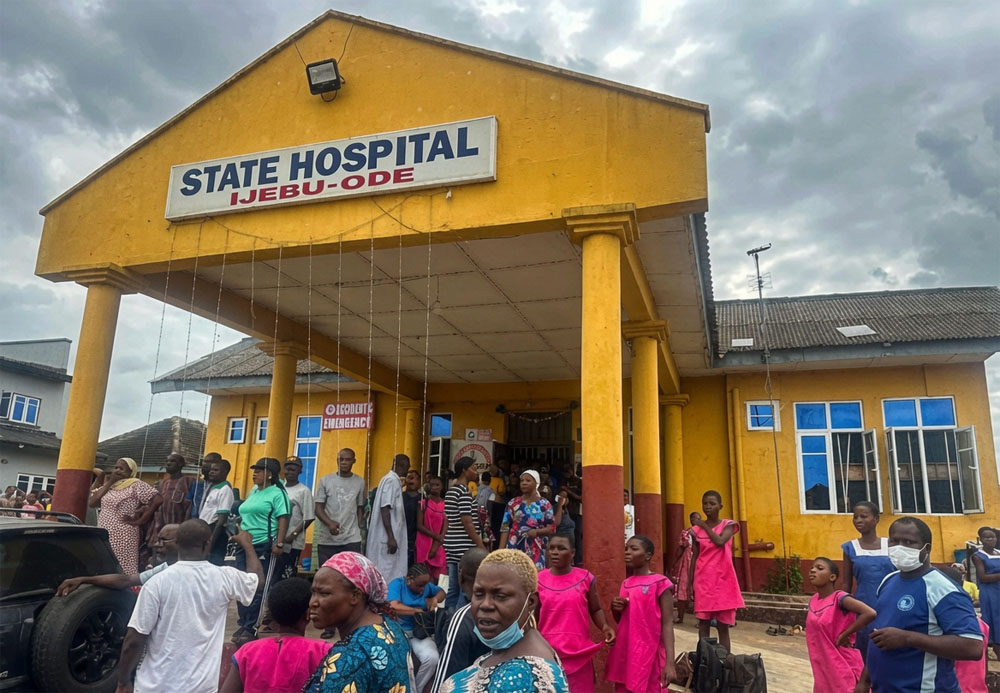
Fourth Gas Leak in Six Months: Over 100 Ogun Pupils Hospitalised, Schools Shut as Parents Panic
metro
Nigerian Journalist Sentenced to 4 Years Over Facebook Post Criticising Police
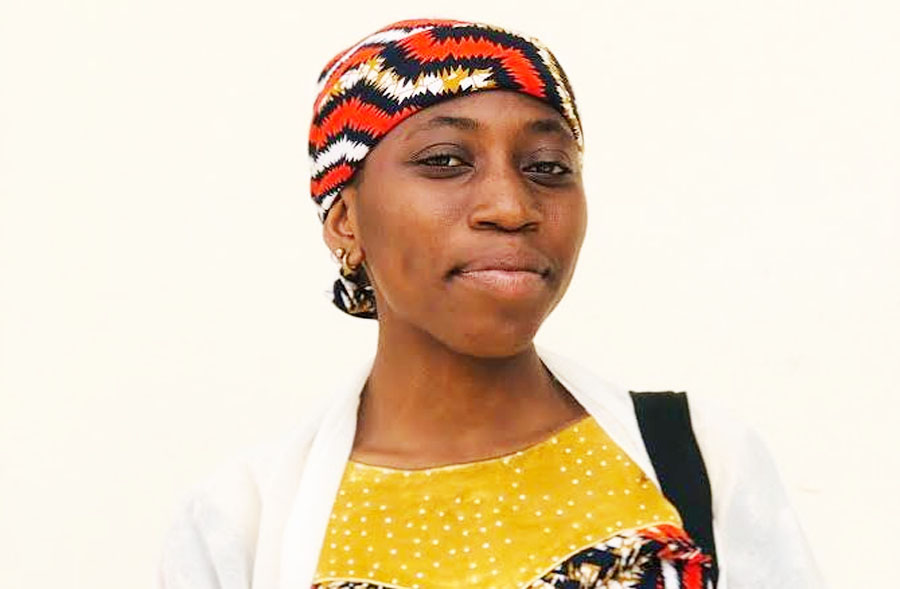
Nigerian Journalist Farida Isiak Sentenced to 4 Years Over Facebook Post Criticising Police
Amnesty International has demanded the immediate release of a 23-year-old Nigerian journalist sentenced to four years in prison — or a fine of ₦1.75 million — over a Facebook post criticising police in Kaduna State, describing the case as a “travesty of justice” and a weaponisation of the courts to silence free speech.
The case of Farida Isiak, a reporter with Nagarta Radio in Kaduna, began not with journalism but with a minor neighbourhood quarrel. According to Amnesty International, a dispute broke out between Isiak’s mother and a neighbour over ₦100 in change from a charcoal sale. Police reportedly arrested Isiak’s mother — and then detained her father when he went to the station to secure her release. Amnesty says the couple’s detention was used as leverage to pressure Isiak to report to the police station. When she arrived, officers accused her of defaming the police in a Facebook post in which she had criticised their treatment of her parents. Isiak deleted the post and apologised, according to Amnesty. Despite that, she was taken before a Sharia Court in Kawo, where she was convicted of defamation and sentenced to four years’ imprisonment or a ₦1.75 million fine.
READ ALSO:
- NAFDAC Busts Illegal Herbal Factory in Lagos, Arrests Manager Over Fake Registration Number
- NELFUND Warns Schools: Student Loans Are Voluntary, Not Compulsory
- ‘I Never Asked Them to Abandon Loved Ones’ — Obi Clarifies Diaspora Remarks
The human rights organisation did not mince words. Amnesty International described the proceedings as a “sham” and a “travesty of justice,” arguing that the arrest, detention and hasty sentencing amounted to “a flagrant abuse of power by the police and weaponization of the judicial system to silence free speech and intimidate journalists.” The organisation has called on the Kaduna State Police Command and Nigerian judicial authorities to immediately release Isiak, on authorities to drop all charges and cancel the fine, and on the Nigeria Police Force to launch an independent investigation into the officers involved.
The case has reignited concerns about press freedom in Nigeria and the use of criminal defamation-type proceedings against journalists and citizens alike. Critics argue that using detention of family members as leverage — and fast-tracking a case through court within days — sets a chilling precedent for free speech online. It is important to note that the account above is drawn largely from Amnesty International’s statements and reporting. As of publication, the Kaduna State Police and the court had not offered substantive public responses to the specific allegations in the available reporting, and the case may yet be subject to appeal or review.
A young journalist’s Facebook post criticising police has cost her four years of liberty — or a fine she may struggle to pay. Whether Nigerian authorities respond to Amnesty’s demands will be a test of the country’s commitment to freedom of expression and the protection of journalists.
Nigerian Journalist Farida Isiak Sentenced to 4 Years Over Facebook Post Criticising Police
-

 metro2 days ago
Army Major, Soldiers Killed in ISWAP Ambush in Yobe State
-

 metro1 day ago
‘We Don’t Know What Else to Do’ — Mother Begs for Release of Abducted Children
-
 metro1 day ago
Atiku: US Lobbying Firm Raises Alarm Over Alleged Assassination Plot
-
 metro2 days ago
Breaking: Afenifere Leader Pa Fasoranti Dies at 100
-

 metro22 hours ago
Five Arraigned Over Kidnapping of 20 Prospective NYSC Members in Imo
-
 metro2 days ago
‘I Never Asked Them to Abandon Loved Ones’ — Obi Clarifies Diaspora Remarks
-

 Auto1 day ago
Beyond the Showroom: Why After-Sales Service Will Define Auto Industry Winners
-
 News23 hours ago
Mexico Clears Reno Omokri as Nigeria’s Ambassador After Eight-Month Wait