

News
Tinubu Orders Crackdown on Plateau Killers, Approves ₦2bn Relief Package
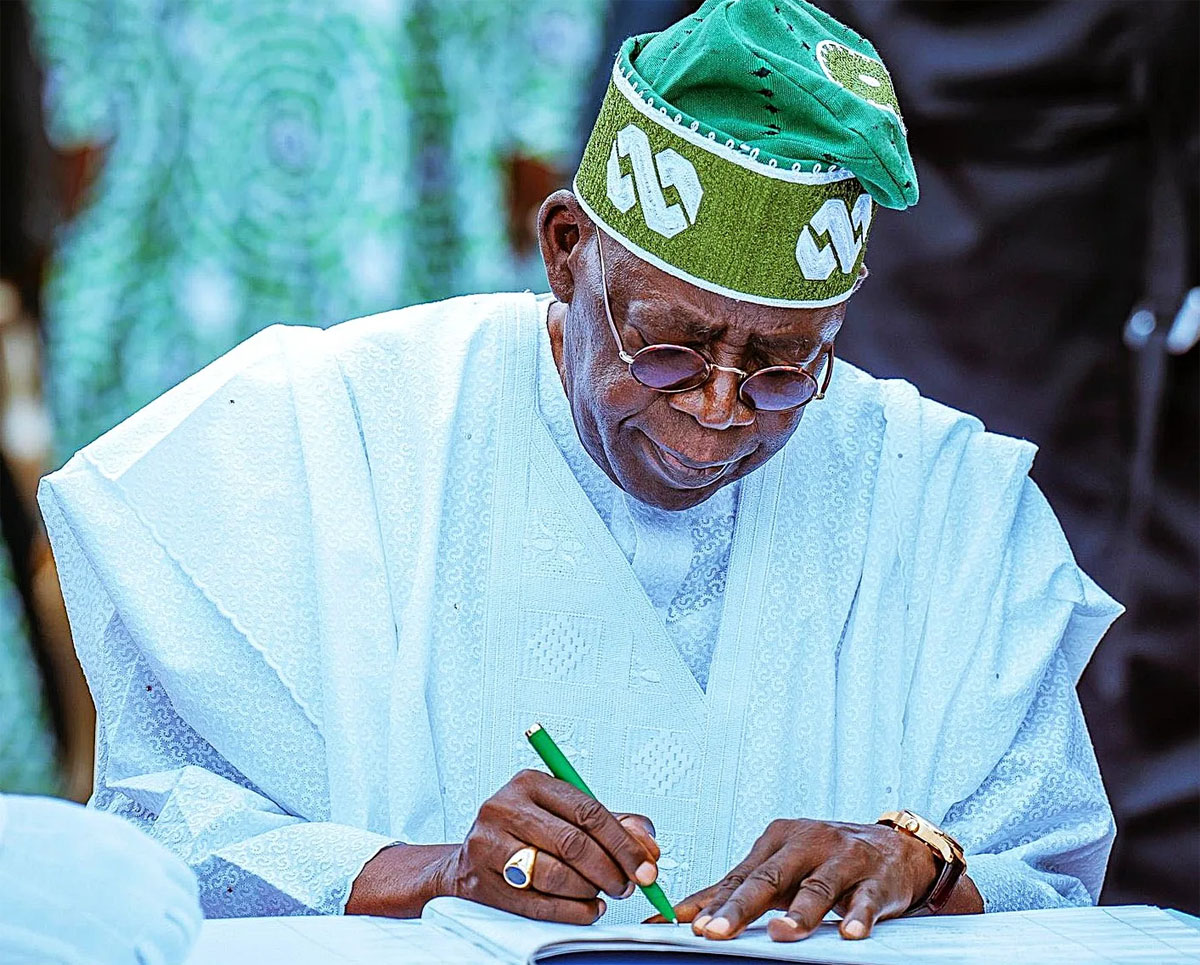
Tinubu Orders Crackdown on Plateau Killers, Approves ₦2bn Relief Package
President Bola Tinubu has pledged to deploy the full instruments of federal authority against individuals and groups responsible for the recurring violence in Plateau State, warning that those identified as instigators or sponsors of unrest will face decisive government action.
The President made the declaration on Tuesday evening during a high-level meeting with Plateau State leaders and stakeholders at the Presidential Villa in Abuja, where he also approved a ₦2 billion humanitarian relief package for victims of the March 29 attack in Angwan Rukuba, Jos North Local Government Area.
The meeting, which lasted several hours and ended around 8 p.m., brought together Governor Caleb Mutfwang, all living former governors of Plateau State, traditional rulers, religious leaders, and political stakeholders, including the APC National Chairman, Prof. Nentawe Yilwatda.
According to the Presidency, Tinubu told the delegation that his administration would no longer tolerate cycles of violence, urging leaders in the state to take responsibility in identifying those fueling conflict.
“No protocols, no obstacles; we are here to speak our minds and find a permanent solution to a recurring conflict and chaos,” the President said.
He stressed that tolerance, unity, and accountability among leaders were essential to ending decades of recurring communal clashes in the state.
Tinubu also issued a strong directive to state authorities to identify individuals allegedly responsible for instigating violence, warning that they would face firm government action.
READ ALSO:
- Tinubu Appoints Bianca Ojukwu as Minister of Foreign Affairs
- Ronaldo Fires Al Nassr to Crucial Win Over Al Ahli
- How Nigerian Army Uncovered Alleged Plot to Overthrow Tinubu
“If you identify and you know the names of troublemakers, agents provocateurs who want to continue killing or instigate killing, let us know. We will use the instrument of office to deal with them,” he warned.
The President added that anyone found to be recruiting or inciting violence would face the full weight of federal power.
He further called for fairness, justice, and ethnic inclusiveness in governance, insisting that peace-building efforts must be rooted in equity and mutual respect among communities.
At the meeting, the Federal Government approved ₦2 billion in humanitarian assistance for victims of the March 29 attack in Angwan Rukuba, where over 27 people were reportedly killed in a violent assault on returning worshippers.
The funds, according to officials, will be used to support displaced families, rebuild damaged property, and provide emergency relief to affected communities through the Ministry of Humanitarian Affairs and Poverty Reduction.
The approval follows Tinubu’s earlier promise during his visit to Jos on April 2, shortly after the incident.
Tinubu reiterated his support for the establishment of state police, describing it as a necessary reform to address Plateau’s persistent security challenges.
He urged federal lawmakers present at the meeting to work toward constitutional backing for decentralized policing, arguing that local security structures would improve response times and enforcement.
The President also directed the newly constituted Plateau peace committee—made up of all living former governors of the state—to review existing white papers on past conflict resolutions and present consolidated recommendations.
He encouraged flexibility in restructuring previous peace frameworks, stressing that ineffective committees should be dissolved or merged for better results.
“Forget those committees you mentioned to me; if it’s not working, it’s not working. Consider this group as the committee until we find a lasting solution,” he said.
The Gbong Gwom Jos, Da Jacob Gyang Buba, urged the Federal Government to strengthen security deployments in the state, noting that existing forces were overstretched and required better equipment and manpower.
He also reiterated the need for the promised installation of thousands of AI-enabled surveillance cameras across Plateau State to enhance monitoring and early warning systems.
Governor Caleb Mutfwang described the meeting as historic, noting that it was the first time all living former governors of Plateau State were gathered together in a unified peace initiative.
He pledged full cooperation with the Federal Government’s peace efforts and emphasized the need to rebuild trust across ethnic and religious divides.
Former Deputy Speaker Idris Wase also highlighted drug abuse as a growing driver of insecurity in the state, calling for stronger enforcement measures.
Tinubu concluded the meeting by urging stakeholders to prioritize unity, warning that continued violence would only deepen poverty and instability in the region.
He also proposed expanded inclusion of non-indigenous communities in governance structures as part of broader reconciliation efforts.
The President reaffirmed that his administration is committed to ending violence in Plateau State and across Nigeria, stressing that peace and stability remain central to national development.
Tinubu Orders Crackdown on Plateau Killers, Approves ₦2bn Relief Package







News
NDLEA Arraigns Two Mexicans, Four Nigerians Over Secret Meth Lab in Oyo Forest
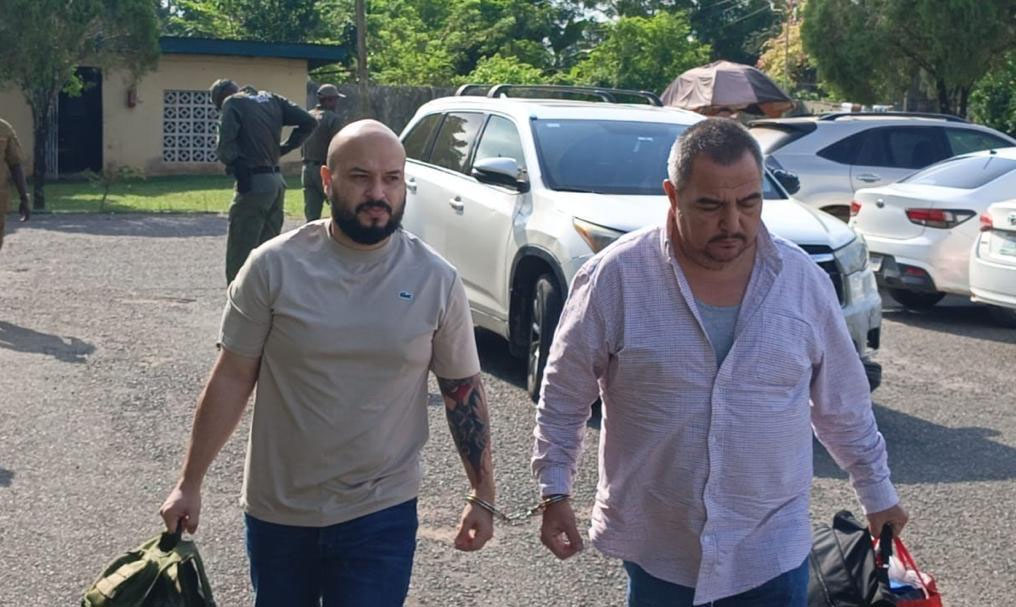
NDLEA Arraigns Two Mexicans, Four Nigerians Over Secret Meth Lab in Oyo Forest
The National Drug Law Enforcement Agency (NDLEA) has arraigned two Mexican nationals and four Nigerians before the Federal High Court in Ibadan, Oyo State, over their alleged involvement in the establishment and operation of a clandestine methamphetamine laboratory in the state.
The six defendants were arraigned before Justice Nkeonye Evelyn Maha on a four-count charge bordering on conspiracy, the establishment of an illegal drug laboratory and the unlawful transportation and distribution of chemicals intended for the production of methamphetamine, a highly addictive psychotropic substance.
The defendants were identified as 56-year-old Mexican national Jose Villa Ochoa; another Mexican, 40-year-old Carrera Loaiza Arturo; and four Nigerians, Maxwell Uche Nevoh, 30; Olatunji Yusuf, 37; Bankole Akeem Owolabi, 45; and Ganiu Monsiu, 43.
According to the NDLEA, Ochoa and the four Nigerian defendants were arrested on June 17, 2026, in a forested area of Tapa village, Ibarapa North Local Government Area of Oyo State, where operatives uncovered the clandestine laboratory.
READ ALSO:
- Tinubu’s Visit: One Feared Dead, Several Injured as APC Women’s Bus Collides With Security Vehicle in Uyo
- ADC Leadership Crisis: Why Two Federal High Court Judgments Do Not Conflict – Obono-Obla
- 2027: Atiku Defies Court Ruling, Vows to Remain in Presidential Race
The second Mexican suspect, Arturo, was subsequently tracked down and arrested on August 19, 2026, while allegedly attempting to flee Nigeria through the Lagos airport.
The agency disclosed that the defendants were accused of conspiring to operate a drug trafficking organisation and establishing a secret laboratory for the production of methamphetamine between December 2025 and June 2026 at different locations in Lagos and Oyo states.
They were also accused of unlawfully transporting and distributing chemical substances for the manufacture of the prohibited drug, contrary to Section 20(1)(f) and punishable under Section 20(2)(a) of the NDLEA Act.
When the charges were read to them in a language they understood, all six defendants pleaded not guilty.
Following their pleas, Justice Maha ordered that they be remanded at the Correctional Centre in Ibadan pending the commencement of their trial.
The court subsequently fixed January 26, 27, 28 and 29, 2027, for the trial.
In a related development, the NDLEA disclosed that three other Mexican nationals and seven Nigerian collaborators arrested over the alleged operation of a similar clandestine methamphetamine laboratory in a forest hideout in Ogun State on May 16, 2026, had also been arraigned before a Federal High Court in Lagos.
The court reportedly rejected their bail application and ordered an accelerated hearing of the case.
The latest development underscores the NDLEA‘s ongoing efforts to dismantle suspected international drug trafficking networks and prevent Nigeria from becoming a hub for the illicit manufacture of dangerous narcotic substances.
The agency’s Director of Media and Advocacy, Femi Babafemi, announced the arraignment in a statement issued on Friday, November 6, 2026.
NDLEA Arraigns Two Mexicans, Four Nigerians Over Secret Meth Lab in Oyo Forest
News
Tinubu’s Visit: One Feared Dead, Several Injured as APC Women’s Bus Collides With Security Vehicle in Uyo
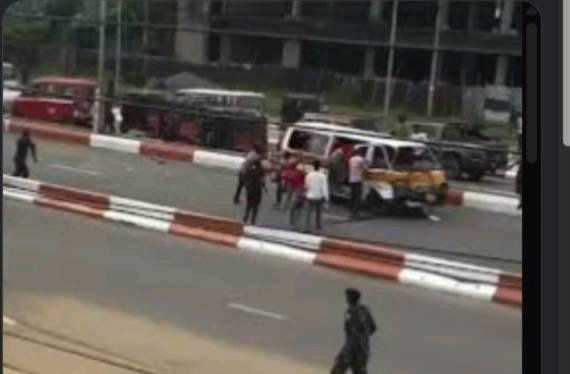
Tinubu’s Visit: One Feared Dead, Several Injured as APC Women’s Bus Collides With Security Vehicle in Uyo
UYO, Akwa Ibom State – A tragic road accident involving a bus conveying supporters of the All Progressives Congress (APC) has reportedly claimed one life and left several others injured in Uyo, Akwa Ibom State.
The accident occurred on Friday, November 6, when the bus, reportedly conveying APC women to participate in activities marking President Bola Ahmed Tinubu’s visit to the state, collided with a security vehicle along Oron Road.
The incident happened amid heightened security arrangements for the President’s visit to Akwa Ibom, where he was scheduled to commission several projects executed by Governor Umo Eno’s administration and attend political activities.
According to reports, the bus, identified as belonging to the Akwa Ibom State Transport Corporation (AKTC), was conveying the women towards the reception venue when it collided with a Toyota Hilux security vehicle.
The impact reportedly left the bus badly damaged, triggering panic as passers-by, motorists and security personnel rushed to assist the victims.
A video circulating on social media showed the wreckage of the bus at the accident scene, with people gathering around the damaged vehicle as rescue efforts continued.
The injured victims were reportedly evacuated and taken to hospitals in Uyo for medical attention.
The Guardian reported that one person had died in the accident, while several others sustained injuries. However, another local media report said no death had been confirmed as of the time of its publication.
The exact casualty figure and the identities of the victims had yet to be officially established.
The accident has raised concerns about the safety of transportation arrangements for political supporters mobilised to participate in high-profile presidential events.
President Tinubu arrived in Akwa Ibom on Friday as part of a two-state visit to Akwa Ibom and Rivers states. His itinerary included the inauguration of major infrastructure projects and engagement with political stakeholders.
As of the time of filing this report, further details about the circumstances surrounding the collision and the condition of the injured victims were still emerging.
Tinubu’s Visit: One Feared Dead, Several Injured as APC Women’s Bus Collides With Security Vehicle in Uyo
News
Sex Trafficking: ‘They Took Us To Native Doctor, Shaved Our Private Parts Before Leaving Edo’ – Survivor

Sex Trafficking: ‘They Took Us To Native Doctor, Shaved Our Private Parts Before Leaving Edo’ – Survivor
A survivor of human trafficking, Piana Shua Kimari, has recounted how she was subjected to disturbing traditional rituals before being trafficked out of Nigeria at the age of 15.
Kimari, who shared her experience during a media appearance, disclosed that she and other young girls were taken to a traditional practitioner in Ekpoma, Edo State, where parts of their bodies were shaved before they were transported out of the country.
Recounting the frightening experience, she said the traffickers subjected them to the rituals before leaving Ekpoma.
“Before we left Ekpoma in Edo State, they took us to a powerful native doctor. They shaved our armpits, private parts and head hair,” she recalled.
Her revelation has brought renewed attention to the disturbing methods allegedly employed by human trafficking syndicates to recruit, intimidate and control vulnerable young women and girls.
The practice of subjecting trafficking victims to traditional oaths and rituals is a recognised method of psychological intimidation used by some trafficking networks, particularly in cases involving cross-border sexual exploitation.
In some instances, victims are made to believe that revealing the identities of their traffickers, escaping or refusing to repay alleged trafficking debts could expose them or their families to spiritual attacks, madness or death.
Such threats often leave victims traumatised and afraid to seek help, even when they have opportunities to escape.
Kimari further recounted how their journey took them beyond Nigeria, with movements through areas around the Seme border and towards Mali, before she fully understood the dangerous situation she had found herself in.
According to her account, what initially appeared to be an opportunity turned into a nightmare when she realised she had fallen into the hands of human traffickers.
Her experience highlights the vulnerability of young girls to trafficking networks that exploit poverty, unemployment, deception and the desire for better opportunities abroad.
Nigeria, particularly Edo State, has long been identified as an important source area for victims of human trafficking, with some victims recruited and transported through international routes for sexual and other forms of exploitation.
The survivor’s account also underscores the importance of community awareness, early intervention and effective collaboration among security agencies, anti-trafficking organisations and relevant authorities.
There are growing calls for stronger efforts to identify and prosecute individuals involved in trafficking networks, including recruiters, transporters and collaborators who facilitate the exploitation of vulnerable persons.
Beyond rescuing victims, human rights advocates have consistently stressed the need for rehabilitation, psychological support, vocational training and reintegration programmes to help survivors rebuild their lives.
Kimari’s testimony serves as another reminder of the dangers confronting vulnerable Nigerian girls and the need for families and communities to remain vigilant against deceptive offers of overseas employment and travel opportunities.
Sex Trafficking: ‘They Took Us To Native Doctor, Shaved Our Private Parts Before Leaving Edo’ – Survivor
-

 News3 days ago
Omoda and Jaecoo Race Past 1.4m Sales, Expand Push into AI, Electrification
-

 International3 days ago
Abdul El-Sayed, Seven Other Muslims Make History In US Midterm Elections
-

 Politics3 days ago
Appeal Court Upholds INEC’s Recognition of Wike-Backed PDP Leadership, Dismisses Turaki Faction’s Suit
-

 metro2 days ago
₦50,000 Relief Fund: FG Reveals Criteria for Selecting Beneficiaries
-
 News2 days ago
Sultan Honours MURIC Founder Ishaq Akintola for Decades of Religious Rights Advocacy
-
 News1 day ago
ADC Heads to Appeal, Insists Mark, Aregbesola Remain Party Leaders Despite Court Ruling
-

 Politics2 days ago
Trouble in ADC as Momodu, South-West Leaders Raise Alarm Over Atiku Campaign
-

 News2 days ago
BREAKING: Court Sacks David Mark-Led ADC Exco, Nullifies Atiku’s 2027 Presidential Candidacy