

metro
Tinubu to establish credit firm to bring down food, drug prices

Tinubu to establish credit firm to bring down food, drug prices
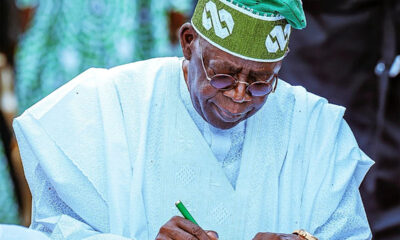
President Bola Tinubu said yesterday the Federal Government hopes to bring down the price of food and promote local manufacturing of essential drugs and other medical supplies through the establishment of a National Credit Guarantee Company in the new year.
Tinubu, who disclosed this in his New Year nationwide broadcast to the nation, also asked states to key into the federal government’s Compressed National Gas, CNG, programme to reduce the cost of transportation for Nigerians.
The President equally said the youth confab he promised in the aftermath of the #EndBadGovernance protests across the country, would begin in the first quarter of 2025, as a testament of his government’s commitment to youth inclusiveness and investment as nation-builders.
This is as the main opposition party, the Peoples Democratic Party, PDP, charged the President not to taint the new year with an address that will not proffer immediate and concrete steps to reduce the price of fuel and address widespread hunger.
New coy to partner BOI, NSIA, others
According to the President, the new company, which is expected to begin operations before the end of the second quarter of the new year, is a partnership of government institutions, including the Bank of Industry, BOI, Nigerian Consumer Credit Corporation, the Nigerian Sovereign Investment Agency, NSIA, the Ministry of Finance Incorporated, the private sector and multilateral institutions.
Tinubu, who noted that the initiative will strengthen the confidence of the financial system, expand credit access and support under-served groups such as women and youth, said the new company will help expand risk-sharing instruments for financial institutions and enterprises.
READ ALSO:
- Naira exchanges N1,650/$ in parallel market
- Tension as Anambra community union asks monarch to stop Ofala Festival
- Exchange rate ends 2024 at N1,535/$1, marking a 40.9% depreciation
The President said: “As the new year dawns, it brings many hopes, aspirations, and prospects for better days. By the grace of God, 2025 will be a year of great promise in which we will fulfil our collective desires.
“Though 2024 posed numerous challenges to our citizens and households, I am confident that the New Year will bring brighter days. Economic indicators point to a positive and encouraging outlook for our nation.
“Fuel prices have gradually decreased, and we recorded foreign trade surpluses in three consecutive quarters. Foreign reserves have risen, and the naira has strengthened against the US dollar, bringing greater stability.
“The stock market’s record growth has generated trillions of naira in wealth, and the surge in foreign investment reflects renewed confidence in our economy. Nevertheless, the cost of food and essential drugs remained a significant concern for many Nigerian households in 2024.
“In 2025, our government is committed to intensifying efforts to lower these costs by boosting food production and promoting local manufacturing of essential drugs and other medical supplies. We are resolute in our ambition to reduce inflation from its current high of 34.6% to 15%. With diligent work and God’s help, we will achieve this goal and provide relief to all our people.
“In this new year, my administration will further consolidate and increase access to credit for individuals and critical sectors of the economy to boost national economic output.
Company to expand risk-sharing instruments for banks, businesses
“To achieve this, the Federal Government will establish the National Credit Guarantee Company to expand risk-sharing instruments for financial institutions and enterprises.
The company, expected to start operations before the end of the second quarter, is a partnership of government institutions, such as the Bank of Industry, Nigerian Consumer Credit Corporation, the Nigerian Sovereign Investment Agency, and Ministry of Finance Incorporated, the private sector, and multilateral institutions.
READ ALSO:
- Lagos govt clears traders from rail tracks at Bolade, Oshodi
- Four countries that won’t celebrate New Year
- Social media abuzz over Fayose claim of N50m donation to VeryDarkMan’s NGO
“This initiative will strengthen the confidence of the financial system, expand credit access, and support under-served groups such as women and youth. It will drive growth, re-industrialisation, and better living standards for our people.
“On a personal note, thank you for placing your confidence in me as your president. Your trust humbles me, and I promise to continue serving you diligently and wholeheartedly.
“We will continue to embark on necessary reforms to foster sustainable growth and prosperity for our nation.
‘’I seek your co-operation and collaboration at all times as we pursue our goal of a one trillion-dollar economy. Let us stay focused and united.
‘’We are on the right path to building a great Nigeria that will work for everyone. Let us not get distracted by a tiny segment of our population that still sees things through the prisms of politics, ethnicity, region, and religion.
‘’To achieve our national goals and objectives, we must become better citizens and uncompromising in our devotion and allegiance to Nigeria.
‘’Citizens’ moral rectitude and faith in our country are fundamental to the success of the Renewed Hope Agenda. In 2025, we will commit to promoting adherence to ethical principles, shared values, and beliefs under the National Identity Project.
‘’I will unveil the National Values Charter, already approved by the Federal Executive Council, in the first quarter of 2025. I will launch an ambitious national orientation campaign that fosters patriotism and love for our country and inspires citizens to rally together.
‘’The Charter will promote mutual commitments between the government and citizens and foster trust and cooperation among our diverse population and between the government and the citizens.
Youth confab for the first quarter of 2025
‘’The Youth Confab will begin in the first quarter of 2025, a testament to our commitment to youth inclusiveness and investment as nation-builders. The Ministry of Youth will soon announce the modalities for selecting the conference’s representatives from our diverse, youthful population.
‘’Let me use this New Year’s message to urge our governors and local council chairpersons to work closely with the central government to seize emerging opportunities in agriculture, livestock, and tax reforms and move our nation forward.
‘’I commend governors who have embraced our Compressed Natural Gas initiative by launching CNG-propelled public transport. I also congratulate those who have adopted electric vehicles as part of our national energy mix and transition. The Federal Government will always offer necessary assistance to the states.
“To all citizens, your sacrifices have not been in vain over the past 19 months. I assure you they will not be in vain, even in the months ahead. Together, let us stay the course of nation-building.
The New Year will bring us closer to the bright future we all desire and the Nigeria of our dreams.
Tinubu to establish credit firm to bring down food, drug prices









metro
How Bandits Killed Two, Abducted 18 in Kaduna Village Raid

How Bandits Killed Two, Abducted 18 in Kaduna Village Raid
Two residents have been killed while at least 18 others, including women and children, were abducted after armed bandits attacked Akwando community in Kuturmi, Kachia Local Government Area of Kaduna State.
The attack reportedly occurred around midnight on Wednesday, November 4, 2026, when the gunmen stormed the community and launched an assault on residents in their homes.
A resident, who spoke on condition of anonymity, said the attackers killed two people before taking several villagers away to an unknown destination.
A security source familiar with the incident also confirmed the attack, telling Daily Trust that 18 residents were abducted while two people were killed.
“Yes, 18 villagers were abducted but two people were killed,” the source reportedly said.
The attack has heightened concerns over the worsening security situation in communities across the Kuturmi area, where residents have repeatedly suffered bandit attacks, killings and mass abductions.
The attackers had reportedly not contacted the families of the abducted residents or made any ransom demands as of the time the incident was reported.
READ ALSO:
- Nasarawa Murder: Two Arrested as Police Recover Burnt Body from Dry Well
- Kunle Afod Breaks Silence on Marriage Crisis, Cheating Allegations, Sex Toys
- NDLEA Arraigns Two Mexicans, Four Nigerians Over Secret Meth Lab in Oyo Forest
The deceased were identified as Irimiya Galadima, 41, and Benjamin Danlami, 32, by the Kuturmi Unity Development Association (KUDA).
However, the association gave a higher figure of 20 abducted residents, releasing their names in a statement jointly signed by its President, Dr Joseph Ariko, and Publicity Secretary, Manasseh Samuel Akwando.
Those listed include Usman Galadima, La’a’zarus Genesis, Madalin Markus, Happy Stephen, Lovet Ishaya, Afiniki Irimeya, Amina Ahmadu, Miracle Genesis, Hellen Irimeya and Musa Genesis.
Others are Janet Irimeya, Gloria Markus, Zila Stephen, Alis Ahmadu, Haske Ahmadu, Great Isiac, Hanatu Irimeya, Desmon Ishaya, Siam Shagari and Nansy Genesis.
The association expressed concern over repeated attacks on communities in Kuturmi land, recalling that an Easter Sunday attack on Ariko community reportedly killed five people at the scene, while another 17 victims subsequently died in captivity.
It also cited an attack on Awon community, where two people were reportedly killed and 11 others abducted.
According to KUDA, five of the abducted residents regained their freedom on November 3, but one reportedly died the following day. Another victim escaped, while five others died in captivity.
The association said the recurring attacks had forced residents to abandon their homes and farmlands, disrupted economic activities and created widespread fear across affected communities.
It further alleged that armed groups had restricted residents’ access to their ancestral lands, demanding levies before allowing them to cultivate their farms or harvest agricultural produce.
KUDA appealed to the Federal Government and the Kaduna State Government to urgently deploy adequately equipped security personnel to Akwando, Ariko, Awon and other vulnerable communities.
It also called for coordinated security operations to rescue the abducted residents, the establishment of permanent security posts, regular patrols and effective early-warning systems.
Meanwhile, some residents of Babban Saura PW in Millennium City, Chikun Local Government Area of Kaduna State, abducted since October 1, were still being held captive.
Among them are Hafsat Sikiru and her son, Abdulsalam. Her husband and the boy’s father, Sikiru Shuaibu, was reportedly killed while attempting to protect his family during the attack.
Their continued captivity comes despite the recent rescue of eight kidnap victims by security operatives during a forest operation. One of those rescued was a pregnant woman abducted from her residence in Millennium City on October 6.
Kaduna State Police Command spokesperson, Mansir Hassan, could not be reached for comment on the Akwando attack, while the state Ministry of Internal Security and Home Affairs had yet to issue an official statement at the time of reporting.
How Bandits Killed Two, Abducted 18 in Kaduna Village Raid
metro
Church Growth Is Not About Numbers’: Bishop Smith Champions Training for Small Churches

‘Church Growth Is Not About Numbers’: Bishop Smith Champions Training for Small Churches
Concerned about the leadership challenges confronting independent and grassroots churches, Bishop James G. Smith, a veteran missionary with nearly three decades of international experience, is stepping up efforts to strengthen smaller congregations through ministerial training, mentorship and leadership development.
Smith, founder of Life and Power Global Ministry, Liberia, and owner of St. James Revival Assemblies, said the initiative was designed to equip church leaders with the spiritual knowledge, administrative skills and institutional capacity required to build sustainable ministries, regardless of their congregation’s size.
He made this known at a two-day ministers’ conference organised by his ministry on October 23 and 24, 2026, at Foursquare Gospel Church, Iba Housing Estate, Lagos.
The conference, tagged “Strength for the Journey of Ministry,” with the theme “Raising Strong and Effective Church,” brought together pastors, bishops, church leaders and ministers for spiritual enrichment, leadership development and capacity-building.
Smith disclosed that the initiative attracted representatives of about 68 churches and ministries, while the event report documented 64 participants.
Explaining the motivation behind the programme, the cleric said many independent and grassroots churches struggle with inadequate mentorship, weak administrative structures and limited access to the resources available to larger denominations.
Originally from Delta State, Smith spent 11 years pastoring in Nigeria before relocating to Liberia for missionary work about 29 years ago. His ministry has since focused on church planting, evangelism, leadership development and training ministers, with plans to extend the initiative to more countries.
He expressed concern that smaller congregations sometimes struggle to retain their members and maintain their identity, particularly when larger churches establish a presence in their communities.
However, he argued that the true strength of a church should not be determined by its numerical strength, physical structures or financial resources, but by the spiritual maturity of its members, the quality of its leadership and its commitment to evangelism.
“We are all working for one God, one purpose, one kingdom. All of the churches, whether a small church, grassroots church or giant church, we are all doing the same thing,” he said.
Smith therefore called for greater cooperation among Christian leaders, insisting that the growth of the Church required collective commitment rather than competition among congregations.
Discipleship, the foundation of sustainable growth
A central message of the conference was the need for churches to move beyond attracting worshippers to deliberately nurturing spiritually mature believers capable of sustaining their ministries.
Smith maintained that bringing people into the church was only the beginning of the responsibility of Christian leadership, stressing that members must receive proper biblical instruction, mentorship and practical guidance to enable them to contribute meaningfully to the growth of their congregations.
Drawing lessons from the ministry of Jesus Christ and His disciples, he urged pastors to invest in developing committed believers who could reproduce the values and teachings of Christianity across generations.
“If you have three members, and you disciple them, you have a church. If you have 20 members, and the 20 members are properly discipled, they can turn the city upside down,” he said.
He warned that large congregations without effective discipleship programmes risk producing spiritually immature members who could easily become vulnerable to misleading teachings.
The cleric also advocated functional leadership structures and administrative systems that would ensure continuity in church operations, even when the presiding pastor was unavailable.
Accountability, integrity in church administration
On church administration, Smith stressed the importance of transparency, integrity and accountability, particularly in the management of financial contributions and other resources.
He said church leaders must ensure that donations made for specific projects were used for their intended purposes, while members should be adequately informed about how church funds were managed.
“If the people give their money for a particular purpose, that purpose should be achieved,” he emphasised.
He equally urged ministers to demonstrate discipline in time management, programme coordination and their relationships with members, noting that effective leadership required both spiritual commitment and sound administrative practices.
Beyond administration, Smith highlighted the importance of prayer, evangelism, biblical teaching, fasting and spiritual preparedness in equipping ministers for the challenges of contemporary society.
Speaking on “The Necessity of Power in the Last Days,” he referenced Ephesians 6:10 and 2 Corinthians 10:3, encouraging ministers to remain spiritually grounded and steadfast in confronting the challenges of their calling.
He emphasised the need for a consistent relationship with God through prayer and the study of His Word, while cautioning against elevating personal convictions, traditions and preferences into doctrines unsupported by Scripture.
The bishop also reminded ministers that their physical well-being was important to effective service, urging them to get adequate rest and seek medical attention whenever necessary.
Christian leaders, ministers endorse initiative
The conference attracted several Christian leaders, including Rev. Dr. Mike Adeleke, PFN Chairman of Ojo Province; Bishop Vincent Paye Bagnoon; Apostle Veronica Ujah; Apostle Dr. Eddo Sylvanus of Foursquare Gospel Church, Iba Housing Estate; Pastor Iboro Promise Freedom; Bishop Kingsley Azuka of City of Priests Mega Church; Bishop-Elect James Esuku; and international gospel artist Praise Eddo.
Other ministers and church workers also participated in the programme.
Smith expressed appreciation to the host pastor, Apostle Dr. Eddo Sylvanus, for providing the venue and supporting the conference, as well as the facilitators and participants whose contributions enriched the sessions.
Speaking with journalists, Apostle Mrs. Dorcas Okonye Azuka of City of Priests Mega Church commended the initiative and encouraged female ministers to maintain humility in their homes and create sufficient time for their families.
She stressed the need for women in ministry to strike a healthy balance between their spiritual responsibilities and family commitments.
Similarly, Bishop-Elect James Esuku addressed concerns about transactional approaches to Christianity and perceptions that the power of God was diminishing.
He maintained that God’s ways remained unchanged, urging Christians to develop personal relationships with Him rather than allow the misconduct of some individuals to undermine their faith.
Expanding the grassroots ministry network
Smith also expressed concern about religious teachings that promise quick success without adequately emphasising discipline, diligence, repentance and commitment to God’s Kingdom.
Reflecting on his return to Nigeria after years of missionary service abroad, he called for balanced Christian teachings that promote spiritual maturity, responsible living and genuine commitment to faith.
He particularly urged Nigerian youths to deepen their relationship with God and participate actively in church activities.
The Lagos conference, he explained, was part of a broader effort to reach grassroots churches and ministers across different locations.
According to him, the initiative had earlier taken him to Bayelsa and Port Harcourt in 2026, while another ministers’ conference was being planned for Lekki, Lagos, in March 2027.
The long-term ambition, he said, was to establish a network of ministers who could share knowledge, exchange experiences, strengthen their congregations and collectively contribute to the development of Christianity.
For Smith, the campaign goes beyond organising religious gatherings. It is an effort to build a stronger foundation for grassroots Christianity through properly trained ministers, accountable leadership, sustainable administrative structures and effective discipleship.
His central message is that the future strength of the Church will depend less on the size of its congregations and more on the quality, spiritual maturity, integrity and preparedness of the people leading and sustaining them.

Bishop James Smith at the middle, with Officials of PFN IBA estate,at the Ministers conference in Lagos, Nigeria.
metro
ADC Leadership Crisis: Why Two Federal High Court Judgments Do Not Conflict – Obono-Obla

ADC Leadership Crisis: Why Two Federal High Court Judgments Do Not Conflict – Obono-Obla
By Newstrends Correspondent
A former Special Assistant to the President and legal practitioner, Okoi Obono-Obla, has dismissed claims that two recent Federal High Court judgments on the leadership crisis rocking the African Democratic Congress (ADC) are conflicting, insisting that the cases involved different plaintiffs, legal issues and reliefs.
Obono-Obla said the reaction of the ADC National Publicity Secretary, Mallam Bolaji Abdullahi, to the judgment delivered by Justice Peter Lifu on November 5, 2026, had introduced what he described as a misleading narrative into the public domain.
In a legal commentary titled “No Conflict of Judgments: Setting the Record Straight on the Two Federal High Court Decisions on ADC Leadership,” Obono-Obla argued that the judgment in the suit filed by Nafiu Bala Gombe against the ADC and four others was fundamentally different from an earlier ruling delivered by Justice Musa Liman.
The controversy followed a statement by the ADC, titled “Lifu Judgment: APC Wants to Set Nigeria on Fire,” in which the party reportedly questioned the latest judgment on the grounds that another Federal High Court had previously ruled on the party’s leadership dispute.
However, Obono-Obla maintained that the two cases were separate legal proceedings and should not be treated as contradictory decisions.
He explained that the first case, Suit No. FHC/ABJ/CS/1637/2025, was instituted by Hon. Leke Joseph Abejide, a serving member of the House of Representatives, who challenged the emergence of Senator David Mark and Ogbeni Rauf Aregbesola as the ADC National Chairman and National Secretary, respectively.
According to him, Justice Liman, in his judgment delivered on July 2, 2026, dismissed Abejide’s suit for lacking merit, holding that the matter concerned the internal affairs of the political party.
Obono-Obla said the second case, Suit No. FHC/ABJ/CS/1819/2025, was instituted by Nafiu Bala Gombe, who was the ADC’s elected National Deputy Chairman (North-East).
He explained that Gombe’s argument was based on the party’s constitution, particularly the succession procedure following the resignation of its former National Chairman, Chief Ralph Nwosu.
According to Obono-Obla, Gombe contended that the ADC constitution provided a mechanism through which he should have assumed the position of Acting National Chairman following Nwosu’s resignation.
He said Gombe consequently challenged the process that produced a caretaker committee led by Senator David Mark, describing it as unconstitutional and unlawful.
Obono-Obla noted that the Independent National Electoral Commission (INEC) was also joined in the suit because of its role in recognising and maintaining records of political party leadership.
He said Justice Lifu, after hearing the parties, found merit in Gombe’s arguments and declared the Mark-led caretaker committee illegal, while nullifying actions taken under it.
Explaining why the two judgments could not be regarded as conflicting, Obono-Obla said the legal principles governing res judicata and conflicting judgments required the parties, issues and reliefs involved in the cases to be substantially the same.
He argued that these requirements were absent in the ADC leadership cases because Abejide’s challenge was different from Gombe’s claim of a constitutional right to succeed the former party chairman.
He further maintained that the evidence and reliefs presented before the two judges were also different.
The former presidential aide also argued that judges of coordinate jurisdiction, such as two judges of the Federal High Court, were not bound by one another’s decisions in the same way that lower courts were bound by decisions of superior courts.
According to him, Justice Lifu was therefore not legally obligated to follow Justice Liman’s earlier decision, particularly as the two cases involved different facts and legal questions.
“To therefore claim that the judgment of 5th November 2026 conflicts with the judgment of 2nd July 2026 is to misunderstand the doctrine of precedent,” Obono-Obla stated.
He advised the ADC to pursue an appeal if it was dissatisfied with Justice Lifu’s decision, rather than relying on political statements questioning the circumstances surrounding the judgment.
Obono-Obla further cautioned against statements capable of creating the impression that the judiciary was being intimidated, insisting that the appropriate legal avenue for challenging a court decision was the appellate process.
He maintained that the Federal High Court had not contradicted itself, but had simply determined two different cases based on their peculiar facts and circumstances.
“The narrative of conflicting judgments should be discarded,” he added.
Obono-Obla, who writes from Abuja, is a legal practitioner and former Special Assistant to the President.
ADC Leadership Crisis: Why Two Federal High Court Judgments Do Not Conflict – Obono-Obla
-

 metro3 days ago
Bandits Demand Over ₦100m Ransom for 15 Abducted Islamiya Students in Niger
-

 metro3 days ago
FG’s N50,000 Relief: OPay Details Eligibility Check Process, Issues Strong Warning Against Scams
-

 International3 days ago
Musk Breaks Silence After $458M Gamble Backfires in Historic Democratic Sweep
-

 News3 days ago
Omoda and Jaecoo Race Past 1.4m Sales, Expand Push into AI, Electrification
-

 Politics3 days ago
Appeal Court Upholds INEC’s Recognition of Wike-Backed PDP Leadership, Dismisses Turaki Faction’s Suit
-

 International3 days ago
Abdul El-Sayed, Seven Other Muslims Make History In US Midterm Elections
-
 News3 days ago
Tinubu Reveals How He Worked As Taxi Driver In US Before Becoming Nigeria’s President
-

 Politics3 days ago
Rufai, Abati Clash Over Natasha’s Cash Empowerment Programme in Kogi