

metro
Tomato farmers attribute price hike to Sallah, low production

Tomato farmers attribute price hike to Sallah, low production
The Tomato Growers and Processors Association of Nigeria (TOPAN) has attributed the hike in the price of tomatoes to high demand during the Sallah celebration and low production output.
TOPAN Chairman, Kaduna State chapter, Mr Rabiu Zuntu, said this in an interview with the News Agency of Nigeria (NAN) on Wednesday in Lagos.
Zuntu, however, assured a drop in the price of tomatoes in the next couple of weeks.
“The reason for the hike in the price of the produce can be closely linked to the increased demands during the festivities and the low production output of farmers.
“The main reason for the consistent rise in the price of tomatoes in recent times is the high demand for the produce and low productivity level of the farmers.
READ ALSO:
- Akpabio vs Natasha: Senate President loses, Appeal Court fines him
- Floods sink fully loaded school bus, bodies of pupils found
- Canada now allows foreign workers to change jobs without permit
“With the just-concluded festivities for the Sallah celebration and other high demands we have witnessed in recent times and with the Easter celebration, the price of tomatoes has been high this period.
“After the festivities, in a week or two everything will go back to normal; expect the price of tomatoes to normalise then,” Zuntu said.
He also noted that prior to the Sallah festivities, tomato prices were within normal ranges, while blaming transportation costs as a factor for the price hike.
“Before the Sallah festivities, a raffia basket of tomatoes sold for between N10,000 and N15,000 up north; however, on the week, the same basket sold for N30,000 and above.
“We, however, cannot say anything about the price of pepper; the price keeps increasing. Peppers are actually not in season presently.
“We need to increase productivity to meet the growing demands of this produce. The cost of logistics is also a factor in the price hike of the produce,” the chairman said.







metro
NNPCL Slashes Petrol Price By Up To ₦80, Sells At ₦1,325 Per Litre In Abuja
NNPCL Slashes Petrol Price By Up To ₦80, Sells At ₦1,325 Per Litre In Abuja
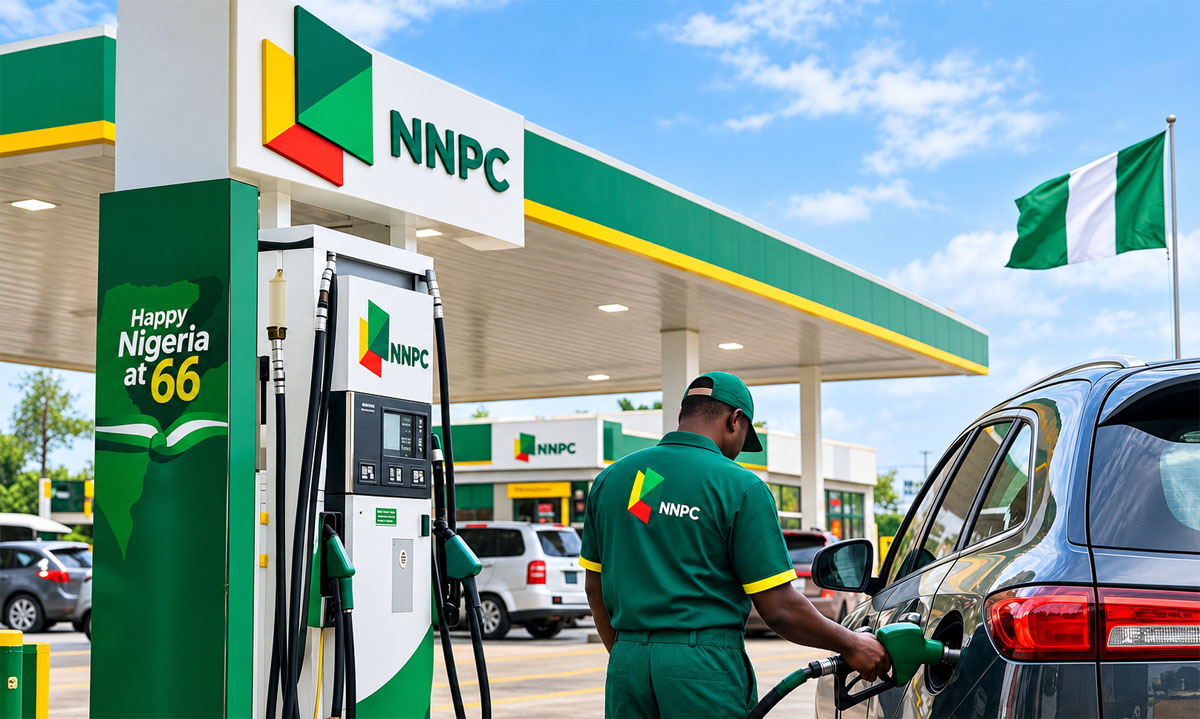
ABUJA — Motorists in Abuja have received some relief following a downward adjustment in petrol pump prices by the Nigerian National Petroleum Company Limited (NNPCL), with its retail outlets now dispensing the product at ₦1,325 per litre in parts of the Federal Capital Territory.
The reduction, which followed a recent adjustment in the petrol pricing structure by the Dangote Petroleum Refinery, represents a decrease of between ₦45 and ₦80 per litre compared with the previous prices charged by NNPCL retail outlets.
According to a report by DAILY POST published on Wednesday, November 4, 2026, a market survey showed that NNPCL filling stations in Abuja and neighbouring areas had adjusted their pump prices from between ₦1,370 and ₦1,405 to ₦1,325 per litre.
The new price was reportedly implemented at the company’s retail outlets in Gwarimpa and along the Kubwa Expressway.
A fuel attendant at one of the affected NNPCL filling stations confirmed the development, explaining that the downward adjustment took effect on Wednesday afternoon.
The latest reduction comes amid renewed movements in Nigeria’s downstream petroleum market, where changes in the prices of petrol supplied by domestic refineries and depot operators continue to influence retail pump prices.
Barely two days before the adjustment, Dangote Petroleum Refinery reportedly reduced its petrol gantry price to ₦1,215 per litre, prompting expectations that filling stations would review their retail prices downward.
The development had raised hopes among motorists that the reduction in the refinery’s wholesale price would translate into cheaper petrol at filling stations across the country.
However, the impact has not been uniform across locations, as petrol prices continue to fluctuate among different marketers.
In Lagos, for instance, separate market checks reported by Vanguard showed that NNPCL and MRS filling stations were selling petrol at approximately ₦1,360 per litre, while some independent marketers charged between ₦1,365 and ₦1,370.
The differing prices highlight the competitive and changing nature of Nigeria’s deregulated downstream petroleum market.
Although the latest adjustment offers some relief to motorists patronising the affected NNPCL outlets in Abuja, it remains unclear whether the company will extend the new price to all its filling stations nationwide.
For now, motorists in Abuja can take advantage of the reduced price at the affected outlets, while consumers elsewhere will have to monitor developments in their respective locations as petroleum marketers continue to adjust their pump prices.
NNPCL Slashes Petrol Price By Up To ₦80, Sells At ₦1,325 Per Litre In Abuja
metro
Dogo Gide Throws Spanner in Islamic State’s Expansion Plans, Forces Terrorists to Retreat in North-West Nigeria
Dogo Gide Throws Spanner in Islamic State’s Expansion Plans, Forces Terrorists to Retreat in North-West Nigeria
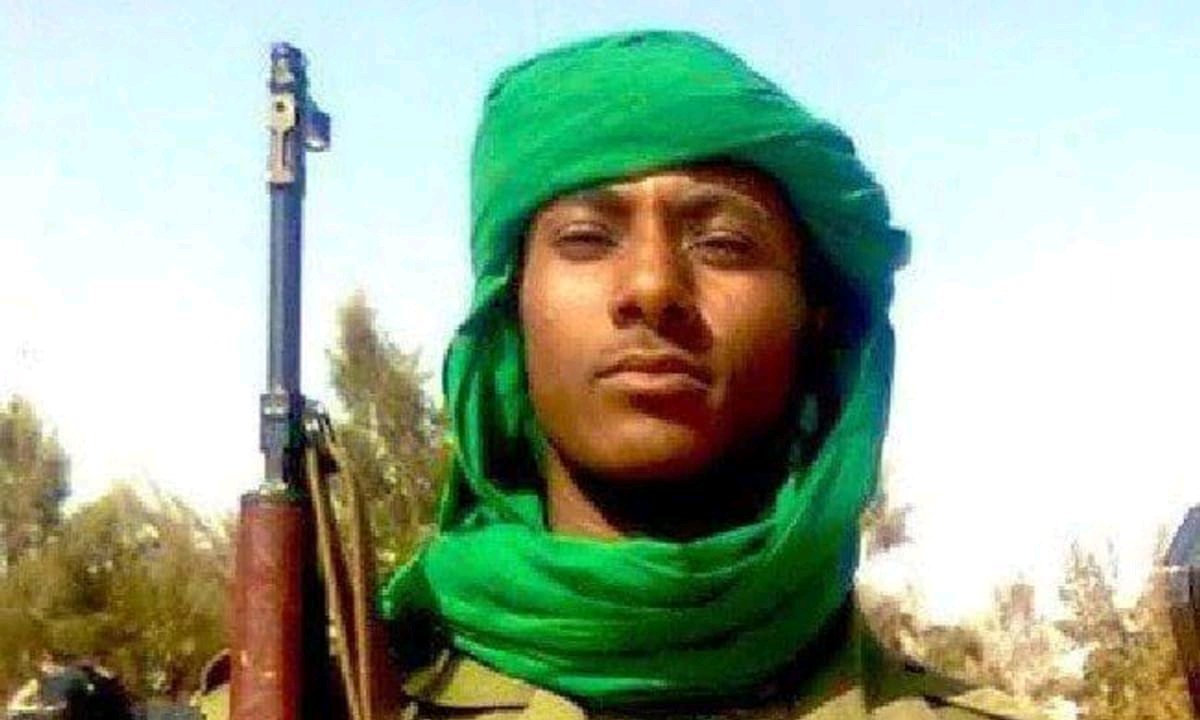
A notorious Nigerian bandit kingpin, Dogo Gide, has reportedly emerged as a major obstacle to the expansion of the Islamic State Sahel Province (ISSP) in north-western Nigeria, after confronting the terror group over attempts to establish control in territories dominated by armed bandit groups.
The development represents another significant dimension of the increasingly complicated security situation in northern Nigeria, where criminal bandit groups and internationally affiliated terrorist organisations are competing for territorial influence, recruits and control of local communities.
According to a report published by Daily Post on Wednesday, November 4, 2026, security analyst Brant Philip disclosed that Dogo Gide had frustrated the Islamic State’s expansion efforts following a confrontation with its fighters around the middle of 2026.
Philip, in an analysis shared on X, reportedly explained that ISSP had spent the past two years attempting to establish stronger relationships with armed groups operating across Sokoto, Zamfara and Niger states.
The organisation reportedly approached several bandit groups, seeking to persuade their members to abandon their existing criminal networks, embrace its extremist ideology and become part of its wider terrorist campaign.
While some groups in Zamfara and Sokoto reportedly accepted the overtures and joined the Islamic State’s network, others resisted the attempts to bring them under its control.
Philip further disclosed that ISSP fighters had defeated several bandit groups in northern Zamfara, subsequently taking over their camps, weapons and vehicles.
However, the group’s expansion reportedly encountered a formidable challenge when its fighters came into confrontation with Dogo Gide, one of the most influential bandit warlords operating in north-western Nigeria.
According to the analyst, Gide’s resistance presented one of the most significant obstacles to the Islamic State’s efforts to extend its influence into the region.
Dogo Gide’s confrontation with ISSP is particularly significant given his previous associations with jihadist groups operating in Nigeria.
A January 2026 research publication by the Combating Terrorism Center (CTC) at the United States Military Academy, West Point, examined the complicated relationship between powerful bandit leaders and jihadist organisations seeking to expand their influence in Nigeria.
The study, titled Kachallas and Kinship: Understanding Jihadi Expansion and Diffusion in Nigeria, identified Dogo Gide as an influential warlord whose relationship with extremist groups had historically been opportunistic rather than based on firm ideological commitment.
Researchers explained that Gide had previously maintained relationships with jihadist factions, including Ansaru and the faction led by Sadiku, while using such associations to strengthen his influence among fellow bandits and in his dealings with local communities.
However, the relationship eventually deteriorated as the jihadist groups attempted to extend their authority over territories controlled by his fighters.
The research documented confrontations between Gide’s group and Ansaru in 2024, as well as clashes with Sadiku’s faction in early 2025.
According to accounts cited by the researchers, the jihadists wanted Gide to embrace their ideology and surrender control of his territory, but he rejected the demands, insisting that outsiders could not take over areas controlled by local armed groups.
The study further explained that Gide had become increasingly determined to protect his territorial influence against jihadist encroachment.
The Islamic State Sahel Province is an affiliate of the global Islamic State terrorist organisation, with its traditional operational strongholds across parts of Mali, Niger and Burkina Faso.
However, the group has increasingly sought to extend its activities into north-western Nigeria, exploiting insecurity, weak border controls and existing networks of armed groups.
Security assessments by the Centre for Strategic and International Studies (CSIS) have also identified the growing activities of ISSP in Nigeria, particularly through its connections with militant networks operating around the Niger-Nigeria border.
The group’s activities have raised concerns about the possible convergence of Sahel-based terrorist organisations and Nigeria’s longstanding banditry crisis.
Research by the Combating Terrorism Center has similarly highlighted how jihadist organisations attempt to establish relationships with local armed groups to gain access to territory, recruits, resources and logistical support.
However, the researchers cautioned that powerful bandit leaders are not necessarily willing to surrender their independence or territorial authority to foreign or externally based extremist organisations.
The reported confrontation involving Dogo Gide illustrates the complex relationship between banditry and terrorism in Nigeria’s north-west.
Although both criminal bandits and jihadist organisations engage in armed violence, kidnapping and attacks on communities, their objectives and interests are not necessarily identical.
For powerful warlords such as Gide, maintaining territorial control and influence over local armed networks remains a major consideration.
Consequently, attempts by jihadist organisations to impose ideological authority or absorb independent bandit groups can trigger violent resistance.
Nevertheless, resistance from powerful bandit leaders does not automatically eliminate the threat posed by jihadist organisations.
The January 2026 West Point study specifically cautioned that although Dogo Gide has the capacity to complicate jihadist expansion in core bandit territories, extremist networks could continue establishing themselves in other parts of western Nigeria.
For Nigeria’s security agencies, the emerging situation presents another challenge in the fight against insecurity: confronting criminal banditry while preventing internationally affiliated terrorist organisations from exploiting existing armed networks to establish deeper roots in the country.
The reported confrontation between Dogo Gide and ISSP therefore underscores an important reality: the battle for influence in north-western Nigeria is no longer simply between security forces and bandits, but increasingly involves competing armed organisations seeking control of the region.
Dogo Gide Throws Spanner in Islamic State’s Expansion Plans, Forces Terrorists to Retreat in North-West Nigeria
metro
₦50,000 Relief Fund: FG Reveals Criteria for Selecting Beneficiaries
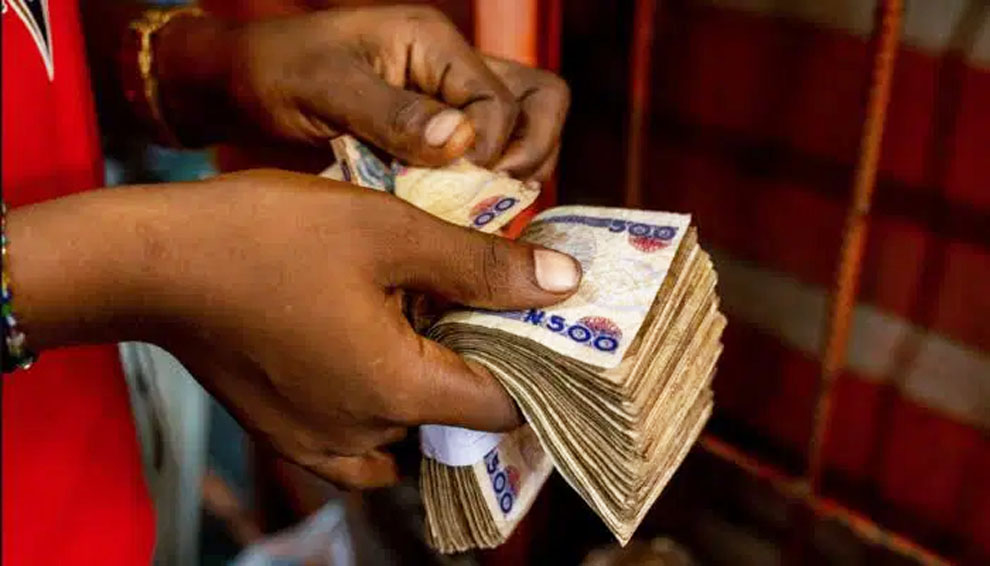
₦50,000 Relief Fund: FG Reveals Criteria for Selecting Beneficiaries
The Federal Government has explained how beneficiaries will be selected for its ₦50,000 cash relief programme, clarifying that the intervention is targeted at poor and vulnerable households identified through verified national identity records and the National Social Register (NSR).
The programme, known as the National Emergency Relief and Stabilisation Intervention (NERSI), is being implemented by the Federal Ministry of Humanitarian Affairs and Poverty Reduction to provide financial support to households struggling with rising living costs.
Under the initiative, selected beneficiaries will receive a one-off grant of ₦50,000 directly into mobile wallets operated by approved payment providers.
According to the government, the selection process involves screening information from verified national identity records and the National Social Register to identify households that meet the programme’s vulnerability requirements.
The National Social Register is a database of poor and vulnerable households across the country, while national identity records are used to verify the identities of prospective beneficiaries.
The government said the exercise is based on need and is designed to cover Nigerians across the six geopolitical zones, irrespective of their religion, ethnicity or political affiliation.
READ ALSO:
- Iran Unveils ‘We Will Kill Trump’ Billboard in Tehran Amid Rising Tensions With US
- Tinubu’s Re-election: Osun APC Leaders Reject Oyebamiji-Led Campaign Council
- Tragedy: Spanish Footballer Jesús de Miguel Dies at 30 After On-Field Collision
However, it stressed that inclusion in the relevant databases does not automatically mean that everyone will receive the payment in the first phase, as disbursement will be carried out in batches.
The government also clarified that there is no public application process for the ₦50,000 grant. Individuals cannot independently register or pay to be included in the beneficiary list, and no official or intermediary is authorised to sell access to the programme.
How selected beneficiaries will receive the ₦50,000
The Federal Government outlined a four-step process through which selected Nigerians will access the financial support.
First, beneficiaries will receive an SMS notification from one of the five approved payment providers: ALAT by Wema Bank, MoMo PSB, NairaGram, OPay or Moniepoint.
Recipients will then be required to confirm their willingness to participate by following the instructions in the message. The government said payment will not be made without the beneficiary’s consent.
After confirmation, a mobile wallet will be opened and linked to the beneficiary’s phone number and National Identification Number (NIN).
The sum of ₦50,000 will subsequently be credited to the wallet, after which the recipient can withdraw the money through a Point of Sale (POS) agent, access it at a bank where applicable, or spend it directly from the wallet.
The government said beneficiaries do not need a smartphone or internet connection to access the funds, as the approved providers have USSD options that work on basic mobile phones.
The designated codes include 94523# for ALAT, 6710# for MoMo PSB, 72600# for NairaGram, 95520# for OPay and 557327# for Moniepoint.
Beneficiaries are expected to follow the instructions sent by their respective providers.
FG warns Nigerians against fraud
The government has warned Nigerians to be wary of fraudsters seeking to exploit the relief programme by demanding money or sensitive personal information.
It emphasised that participation in the programme, acceptance of the grant and receipt of the ₦50,000 payment are free.
According to the official guidelines, genuine notifications will come from the approved payment providers and will not ask recipients to pay a fee, disclose their Personal Identification Number (PIN), share a One-Time Password (OTP), or click suspicious links.
The government urged Nigerians never to disclose their PINs, OTPs or passwords to anyone, including payment agents or individuals claiming to be programme officials.
It also warned that anyone offering to add a person to the beneficiary list, speed up payment or release the grant in exchange for money is attempting to defraud them.
Beneficiaries who are unsure about the authenticity of a message have been advised to contact the programme’s official helpline on 0700-022-2222.
Why some Nigerians may not have received the money
The government explained that the payments are being made in phases, meaning selected beneficiaries will not necessarily receive their notifications at the same time.
It also clarified that the programme is supporting a limited number of households in each phase, so not everyone will be selected immediately.
Those who have not received an SMS should therefore not automatically conclude that they have been excluded from every future phase.
The Federal Government said the full ₦50,000 grant would be credited to selected beneficiaries without deductions. The money is a grant, not a loan, and recipients are not required to repay it.
The intervention is part of the government’s efforts to provide direct financial assistance to vulnerable households amid continuing economic pressures.
₦50,000 Relief Fund: FG Reveals Criteria for Selecting Beneficiaries
-

 International3 days ago
Iran Unveils ‘We Will Kill Trump’ Billboard in Tehran Amid Rising Tensions With US
-

 Auto3 days ago
EXEED Sets Sights on Nigeria’s Luxury Car Market, Showcases Technology, Design Vision
-

 Politics3 days ago
Tinubu’s Re-election: Osun APC Leaders Reject Oyebamiji-Led Campaign Council
-
 metro2 days ago
FG’s N50,000 Relief: OPay Details Eligibility Check Process, Issues Strong Warning Against Scams
-

 metro2 days ago
Bandits Demand Over ₦100m Ransom for 15 Abducted Islamiya Students in Niger
-

 International3 days ago
Tourist Killed, Three Injured as Two Helicopters Collide Near Mount Everest in Nepal
-
 International3 days ago
Trump Shocks Israel, Announces End To $4bn Annual US Military Aid
-

 International2 days ago
Australia Under Pressure To Scrap $368bn US-UK Nuclear Submarine Deal As Inquiry Warns Of China War