

International
Trump invokes Alien Enemies Act, deports over 200 gang members
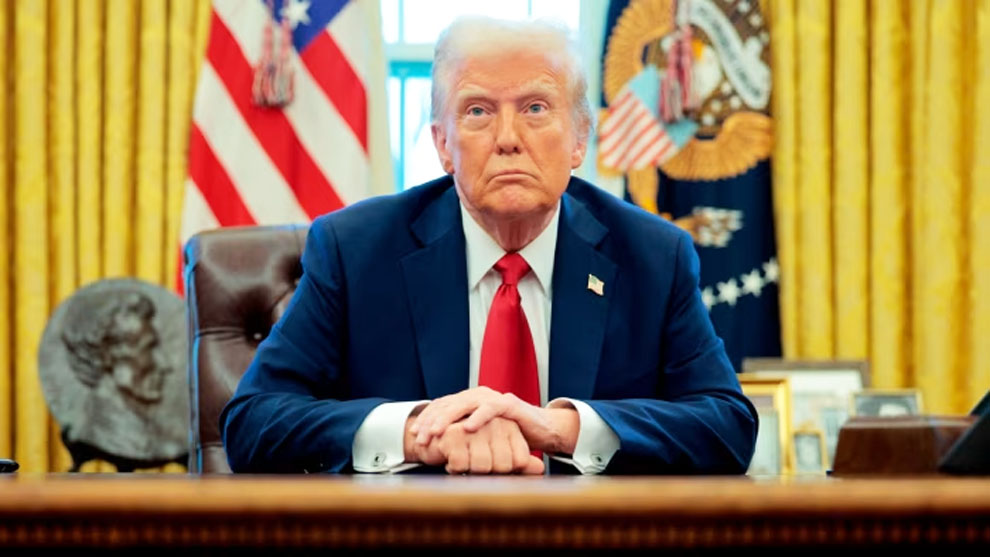
Trump invokes Alien Enemies Act, deports over 200 gang members
US President Donald Trump issued a proclamation invoking the Alien Enemies Act of 1798, accusing Tren de Aragua of “perpetrating, attempting, and threatening an invasion of predatory incursion against the territory of the United States.”
He announced that members of the gang will be deported for engaging in “irregular warfare” against the United States. The Alien Enemies Act was last used during WWII to imprison Japanese-American civilians.
On Saturday evening, US District Judge James Boasberg in Washington, DC, issued a 14-day freeze to deportations covered by Trump’s proclamation, pending more legal arguments.
After lawyers informed him that planes carrying deportees had already taken off, Judge Boasberg issued a verbal order for the planes to return, according to US media, though this command was not included in his written ruling.
According to Reuters, the written notice was filed in the court docket at 19:25 EDT on Saturday (00:25 GMT on Sunday), but it is unknown when the flights carrying the alleged gang members left the United States.
In a court filing on Sunday, Department of Justice lawyers stated that the order did not apply since the deportees “had already been removed from United States territory”.
The Justice Department has appealed the judge’s decision.
The American Civil Liberties Union, which was participating in the case against the Trump administration, stated that the court order may have been breached.
READ ALSO:
- Newcastle stun Liverpool to secure Carabao Cup victory
- 1,319 died of Diphtheria in Nigeria, says NCDC
- TUC backs NYSC member for criticising Tinubu administration
The case presents constitutional issues because, under the US system of checks and balances, government entities are expected to follow a federal judge’s decision.
Venezuela denounced Trump’s use of the Alien Enemies Act, claiming it “unjustly criminalises Venezuelan migration” and “evokes the darkest episodes in the history of humanity, from slavery to the horror of Nazi concentration camps.”
Rights organisations blasted Trump, accusing him of utilising a 227-year-old legislation to sidestep due process.
Amnesty International USA commented on X that the deportations were “yet another example of the Trump administration’s racist targeting” of Venezuelans “based on sweeping claims of gang affiliation”.
Bukele, a Trump ally, stated that the detainees were promptly taken to El Salvador’s renowned mega-jail, the Terrorism Confinement Centre (Cecot).
The Salvadoran president stated that they will be imprisoned there “for a period of one year,” which might be “renewable.”
El Salvador’s Cecot jail is part of Bukele’s efforts to combat organised crime in the country.
Human rights groups have accused the newly built maximum-security institution, which can accommodate up to 40,000 people, of mistreating inmates.
The agreement between the United States and El Salvador is an indication of improved diplomatic relations.
El Salvador was the second country Rubio visited as the US’s top diplomat.
During that trip in February, Bukele made an initial offer to accept US deportees, claiming it would help finance the enormous Cecot facility.
The newest deportations during Trump’s second term are part of the president’s long-standing campaign against illegal immigration in the United States.
In January, Trump signed an executive order designating Tren de Aragua and MS-13 as foreign terrorist organisations.
He won over voters during the campaign, in part, by threatening to carry out the greatest deportation operation in US history.
While illegal border crossings have dropped to their lowest levels in decades since Trump took office, the Republican president has allegedly been upset by the slow pace of deportations thus far.
Trump invokes Alien Enemies Act, deports over 200 gang members









International
North Korea Fires 10+ Missiles Hours After Trump Signals Fresh Kim Summit
International
Ecuador Intelligence Chief, 5 Americans Killed in Kenya Helicopter Crash
Ecuador Intelligence Chief, 5 Americans Killed in Kenya Helicopter Crash
International
US indicts 17 Iranians over $20m cyber-theft campaign targeting 322 global institutions
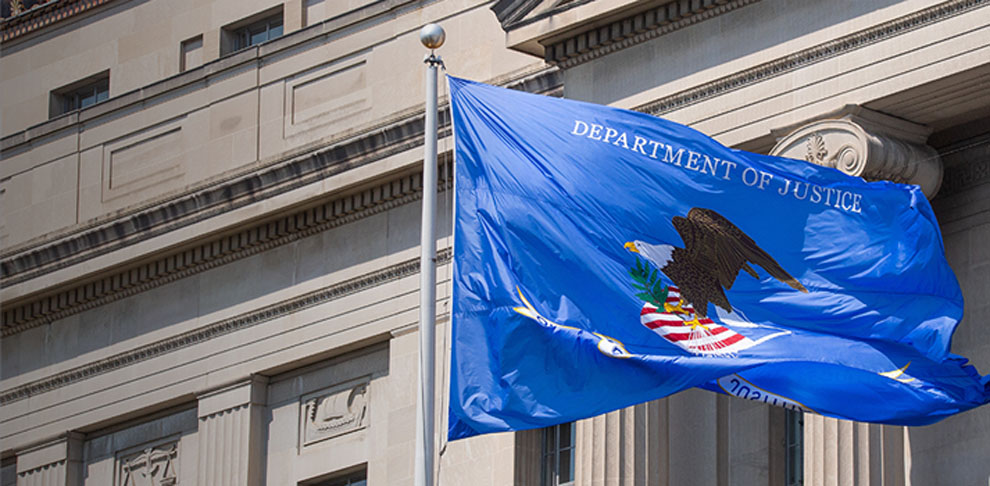
US indicts 17 Iranians over $20m cyber-theft campaign targeting 322 global institutions
Justice Department Unseals 14-Count Superseding Indictment Alleging Massive Hacking Operation Conducted on Behalf of Iranian Government and IRGC
The United States has charged 17 Iranian nationals in connection with an alleged massive cyber-theft campaign that targeted hundreds of universities, private companies, government agencies, and non-governmental organisations across the globe. The US Department of Justice announced on Tuesday that a 14-count superseding indictment had been unsealed against members of the Mabna Institute, an Iran-based company accused of conducting coordinated cyber intrusions since at least 2013, according to multiple reports.
The indictment, which has been assigned to US District Judge Jesse M. Furman in the Southern District of New York, represents one of the most extensive cyber-related prosecutions ever brought against Iranian actors. Nine of the 17 defendants were previously charged in a seven-count indictment announced in March 2018, while Tuesday’s superseding indictment adds eight additional defendants to the case, expanding the scope of the alleged criminal enterprise.
Assistant Attorney General for National Security John Eisenberg stated that the defendants allegedly hacked universities and research institutions worldwide at the behest of entities including Iran’s Islamic Revolutionary Guard Corps (IRGC), stealing large volumes of information and intellectual property. The Federal Bureau of Investigation (FBI) also stated that the defendants allegedly operated a “hacking-for-hire” network targeting intellectual property belonging to American and allied universities, companies, and government agencies for the benefit of the Iranian government. The US authorities stressed that an indictment is merely an allegation and that all defendants are presumed innocent until proven guilty beyond a reasonable doubt.
READ ALSO:
- Police Nab 49-Year-Old With Pump-Action Rifle, 50 Ammunition Rounds In Anambra
- WMotors takes Jetour Africa Expedition to Lagos, Puts SUVs to Off-Road Test
- ‘No Electoral Agreement with ADC’ – Adeleke Rejects Collaboration Claims, Credits God
The alleged hacking campaign targeted a staggering number of victims globally, including 144 US-based universities and 178 foreign universities, totalling 322 academic institutions worldwide. The hackers are alleged to have targeted more than 100,000 university professor accounts globally and successfully compromised about 8,000 accounts across the identified universities. The campaign, which began around 2013 and continued through at least December 2017, targeted academic research and intellectual property across fields including science and technology, engineering, social sciences, and medicine.
The Justice Department said the hackers stole at least 31.5 terabytes of academic data and intellectual property, including journals, theses, dissertations, and electronic books. Some of the stolen material was allegedly sold through websites operated or affiliated with members of the conspiracy, transforming stolen academic resources into a profitable underground enterprise. Beyond universities, the defendants allegedly compromised employee email accounts at at least 42 US-based private companies, 11 foreign companies, and several government agencies and non-governmental organisations.
The alleged hacking campaign extended beyond academic institutions to include several high-profile government and non-governmental organisations. The Justice Department identified the following entities as among those targeted: the US Department of Labor, the Federal Energy Regulatory Commission (FERC), the states of Hawaii and Indiana, the United Nations, and the United Nations Children’s Fund (UNICEF). The superseding indictment also alleges that members of the group targeted HBO and were involved in hacking private companies and government entities, causing victims to incur more than $20 million in investigation and remediation costs.
A central element of the indictment is the alleged connection between the Mabna Institute and Iran’s Islamic Revolutionary Guard Corps (IRGC). The Justice Department alleged that many of the cyber intrusions were conducted on behalf of the IRGC and other Iranian government and university clients. The Mabna Institute was founded around 2013 by Gholamreza Rafatnejad and Ehsan Mohammadi, according to the Justice Department. The organisation allegedly assisted Iranian universities and research institutions in obtaining unauthorised access to scientific resources outside Iran while also providing hacking services to Iranian government and private entities.
This mirrors actions taken by the US Treasury Department in March 2018, when it announced sanctions against the Mabna Institute and 10 individuals, stating that the group had been acting at the behest of the IRGC. The Treasury Department had also noted that one of the hackers involved had attempted to extort $6 million from a US media company and was previously indicted in November 2017, demonstrating a pattern of aggressive cyber-operations and financial extortion.
The US Department of State’s Rewards for Justice programme is offering up to $10 million for information leading to the location of five of the defendants: Behzad Mesri, Mojtaba Galekuhi, Arman Kahzadian, Keyvan Fayaz, and Saber Shahbazi Ballojeh. This substantial reward reflects the seriousness with which US authorities view these alleged cyber-operations and their commitment to bringing the perpetrators to justice.
The case highlights the persistent challenge of state-sponsored cyber-operations and the ongoing efforts by US authorities to hold perpetrators accountable through legal and financial measures. With the charged individuals believed to be outside the United States and no extradition treaty with Iran, their apprehension remains uncertain. However, the US continues to pursue international cooperation and legal avenues to bring them to justice, signalling that such cyber-operations will not go unanswered.
US indicts 17 Iranians over $20m cyber-theft campaign targeting 322 global institutions
-

 metro3 days ago
Palliative Care, Not Abandonment: Doctor Clears the Air on Ogogo’s Stage-Four Cancer Treatment
-

 Insurance2 days ago
NAICOM revokes Universal Insurance licence over ₦15bn capital shortfall
-
 Education3 days ago
WAEC 2026 results: Schools raise alarm over alleged grading anomalies
-

 Entertainment3 days ago
Veteran Nollywood Actor Ogogo Battles Stage-4 Cancer as Daughters Beg for Treatment
-

 metro3 days ago
Lagos Pensioners Give Sanwo-Olu 19-Day Ultimatum: Implement Wage Award or Face ‘Mother of All Protests’
-
 Politics3 days ago
‘No Electoral Agreement with ADC’ – Adeleke Rejects Collaboration Claims, Credits God
-

 Politics3 days ago
Osun guber: APC rejects Adeleke’s victory, begins audit of INEC results
-

 metro3 days ago
Over 50 Killed, Scores Injured as Gunmen Attack Mangu Communities in Plateau