

Auto
TSS Motors showcases superb features of new Asiastar luxury bus
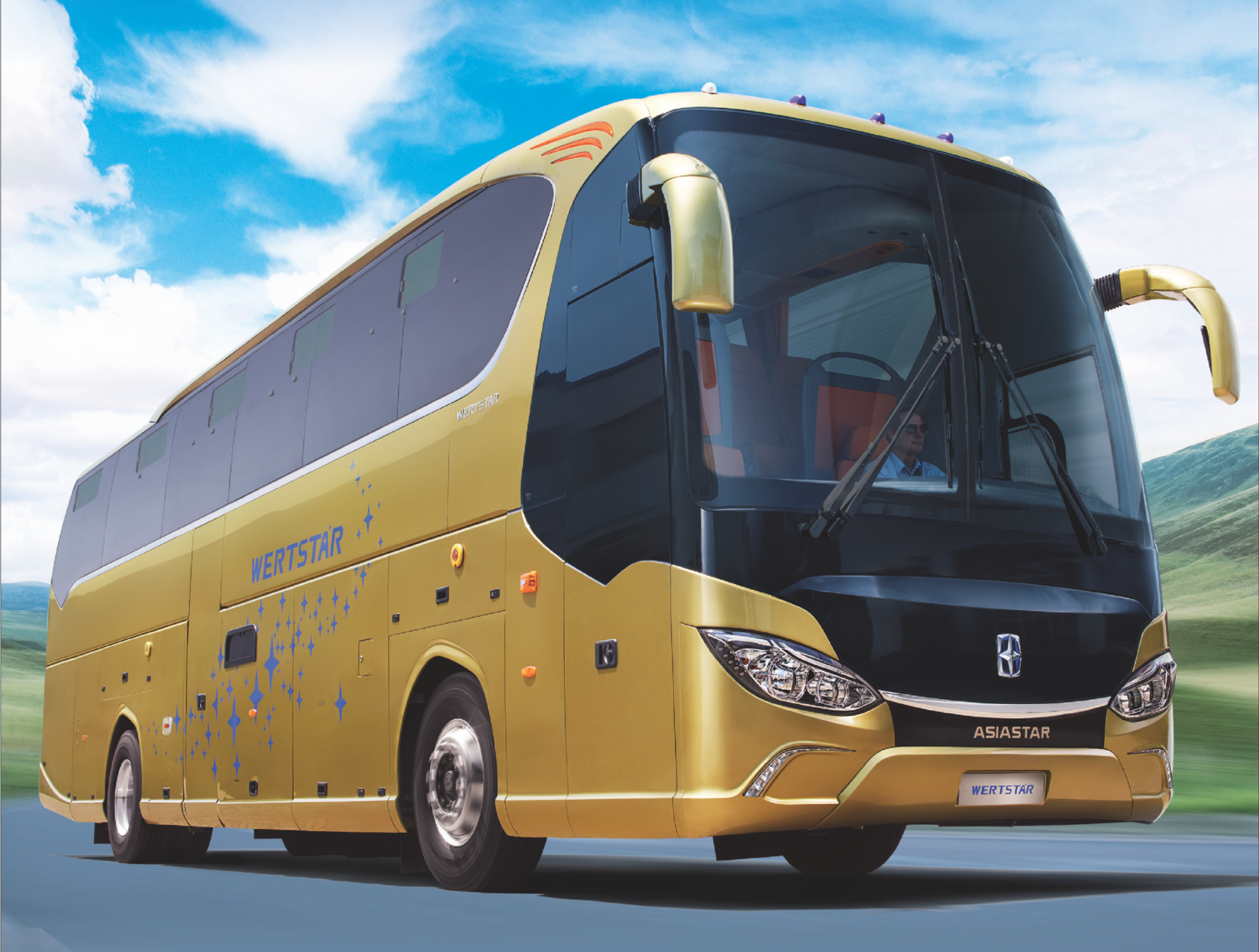
Transit Support Services Limited (TSS Motors), has showcased its newly introduced Asiastar luxury bus as combining ruggedness with comfort and smooth ride throughout every journey and the entire life of the vehicle.
The auto assembler says this in a statement by its Head of the Public Relations and Media team, Iyere Ikhide.
It states that the new product brand and models unveiled in November 2020, at the Ikeja Sheraton Hotels, Lagos, comes with 53-passenger seater, non-independent air-conditioned luxury coach found suitable for commercial passenger transport, football club and sports teams’ transportation, government executive shuttle services, with an advanced concept in body design and architecture.
According to TSS, the luxury bus has been equipped with adjustable soft passenger seats with USB charger, LCD TV (front, middle), DVD, and a modern ambient lighting design on the roof.
It says, “The U-beam body structure of the Asiastar luxury bus has length, width and height of 12000, 2550 and 3860 (mm) respectively.
“It is equipped with WP10.336N/WD615 engine models, fast 6DS (Benz GO230-6 as optional) gearbox, a Pneumatic double circuit air brake system, and air suspension shock absorbers.
“It comes with a unique set of headlamps which are divided into two parts, with full LED lighting, making the front view elegant and very beautiful.
The statement quotes the General Manager, TSS Motors, Mr Dave Chukwudulue, as saying, “TSS Motors is known for her state of the art, top of the line products which conform to the latest design trends in the automobile industry.
“With the Asiastar luxury coaches, the operators and passengers of these coaches will not be disappointed on any point of our standard offerings before now.”
The GM also says, “And as with our other products, our key selling points for the Asiastar luxury coaches are effective and efficient after-sales service and parts support backup, cost-effective, durable, robust, rugged, comfortable and smooth luxury ride, all through the distance and operational life of the vehicle.
“And no matter the operational application: as commercial passenger luxury coach, government executives’ group shuttle, football club and sports teams’ logistics medium, the Asiastar is configured and built to deliver, and even surpass on all, expectations, without fail.
“Furthermore, the vehicles are on the ground for immediate delivery on receipt of payment. It’s cash and carry. No delivery lead time, with attendant costs on capital outlay prior to operations.”


Auto
Modern Vehicles, Smarter Technology: Why After-Sales Support Must Keep Pace

Modern Vehicles, Smarter Technology: Why After-Sales Support Must Keep Pace
As vehicles become increasingly sophisticated, the ability to maintain and repair them is emerging as a major test of automotive dealers’ capacity and commitment to customers. Beyond selling modern vehicles, dealers must invest in the technical expertise, diagnostic equipment and workshop infrastructure required to keep them running efficiently throughout their lifespan.
Today’s vehicles are equipped with electronic control units, advanced safety systems, digital instrument panels, sensors and increasingly complex powertrain technologies. While these innovations enhance performance, safety, comfort and convenience, they have also made vehicle maintenance more specialised and technically demanding.
Consequently, having experienced mechanics is no longer sufficient. Technicians must undergo continuous training to understand the specific technologies, electronic systems and mechanical configurations of the models they service.
Access to appropriate diagnostic equipment is equally critical. Modern diagnostic tools enable technicians to identify faults accurately, interpret vehicle system data and follow manufacturer-recommended repair procedures. Without the right equipment, troubleshooting can become time-consuming, less accurate and potentially more expensive for vehicle owners.
However, effective technical support goes beyond initial training and the provision of diagnostic tools. As vehicle models, electronic systems and software continue to evolve, technicians must have regular access to updated technical information, specialist guidance and opportunities to upgrade their skills.
This is particularly important in Nigeria, where the automotive market is gradually embracing increasingly sophisticated internal-combustion engine vehicles, hybrids and electric vehicles. The growing diversity of vehicle technologies presents fresh challenges for dealers, workshops and independent service providers.
For prospective buyers, assessing a dealer’s technical capacity should therefore form part of the vehicle purchasing decision.
Customers need to establish whether technicians are adequately trained to service their preferred models, whether manufacturer-approved diagnostic equipment is available and whether the workshop has the capacity to handle specialised electronic and mechanical repairs.
Dealers, on their part, must communicate their technical capabilities transparently, particularly where certain repairs require specialised facilities, manufacturer intervention or external technical support.
Ultimately, a comprehensive after-sales proposition must go beyond warranty coverage. It should encompass the human expertise, diagnostic technology, genuine spare parts and technical infrastructure required to support vehicles throughout their ownership lifecycle.
As automotive technology advances, investment in technical training and workshop capabilities must receive as much attention as the expansion of sales networks and the development of modern showrooms.
The future of automotive after-sales service in Nigeria will depend not merely on the sophistication of vehicles entering the market, but also on the industry’s ability to build the technical capacity and infrastructure needed to maintain them, ensure reliability and sustain customer confidence.
Auto
Dangote Sinotruk Unveils Nigeria’s First Locally Assembled Electric Truck, Targets West African Market

Dangote Sinotruk Unveils Nigeria’s First Locally Assembled Electric Truck, Targets West African Market
…Milestone positions Nigeria as emerging hub
Nigeria has taken a significant step towards clean-energy transportation and advanced automotive manufacturing with the rollout of its first locally assembled electric heavy-duty truck by Dangote Sinotruk West Africa Limited.
The historic development, which also marks the assembly of what Sinotruk described as the first new-energy truck on the African continent, signals the entry of Nigeria’s commercial vehicle industry into a new phase of electric mobility and reinforces the country’s ambition to become a major automotive manufacturing hub in West Africa.
The electric truck was unveiled at the company’s assembly facility in Ikeja, Lagos, at an event attended by senior officials of the Dangote Group, Sinotruk Group, Lagos State Government, industry stakeholders, customers and business partners.
The development represents a major expansion of the Dangote-Sinotruk joint venture beyond conventional commercial vehicle assembly into new-energy mobility, adding electric heavy-duty trucks to its existing range of trucks, tippers, pickups, light commercial vehicles and buses.
Speaking at the event, Group Vice-President of Dangote Industries Limited, Devakumar V.G. Edwin, described the rollout as another important milestone in the evolution of the partnership, reaffirming the group’s commitment to technological innovation, environmental sustainability and local industrial development.
He said the introduction of electric trucks followed the company’s earlier investment in compressed natural gas (CNG) technology and reflected its determination to keep pace with the changing dynamics of the global automotive industry.
“Today, we are taking an important further step as the global economy is looking for sustainable business, that is, vehicles which will also be protective of the environment. So, we went into CNG technology and now we are going into the electric technology. This is a technology which is revolutionising the whole world,” Edwin said.
According to him, electric commercial vehicles offer considerable opportunities for transport and logistics operators, particularly through reduced operating costs and lower tailpipe emissions, depending on electricity tariffs, vehicle applications and the availability of charging infrastructure.
“The electric commercial vehicle offers the potential for lowering the operating cost and reducing the tailpipe emissions. Depending on the application, the electricity cost and the charging infrastructure, it is going to be highly beneficial to the people,” he added.
Edwin acknowledged that the successful adoption of electric trucks would depend on the availability of reliable charging facilities, technical expertise, spare parts and efficient after-sales services.
He said the company was already putting the necessary structures in place, including developing its technical support team and preparing to assist customers with charging infrastructure and other requirements for operating electric commercial vehicles.
“We recognise that this successful adoption will also require reliable charging facilities, technical expertise and spare parts and a strong after-sales support. So, we are already getting ready with a strong after-sales support. We are setting up our team,” he said.
Beyond the introduction of electric trucks, Edwin said the Dangote Group’s broader ambition was to transform the joint venture into one of West Africa’s leading automotive assembly and manufacturing businesses.
He explained that the partnership was established to strengthen local production capacity, facilitate technology transfer, develop Nigerian technical expertise and create employment opportunities while reducing dependence on imported vehicles.
Edwin recalled that the Dangote Group undertook extensive assessments of Chinese truck manufacturers before selecting Sinotruk as its technology partner.
He said the company would continue to deepen local assembly, increase local content and equip Nigerian engineers and technicians with the skills required to participate in advanced vehicle manufacturing.
As part of the technology-transfer programme, Sinotruk is expected to provide specialised training for Nigerian personnel, including opportunities for selected engineers and technicians to receive practical exposure at its facilities in China.
“This is more than a launch of new vehicles. It’s a statement of our commitment to innovation, our commitment to green energy, and the future of mobility,” Edwin said.
Africa’s first new-energy truck
President of Sinotruk Group, Liu Wei, described the rollout as a historic achievement for Nigeria, the joint venture and the wider African automotive industry.
He said the electric heavy-duty truck represented a practical contribution to Nigeria’s energy-transition objectives and a major step towards localising the production of new-energy commercial vehicles on the continent.
“Today, we gather in the beautiful city of Lagos to witness the official roll-off of the first electric heavy-duty truck from the joint venture. More importantly, it represents a substantial step forward for Nigeria and West Africa in driving localised manufacturing and the green transition of new-energy commercial vehicles,” Liu said.
He noted that the initiative aligned with Nigeria’s long-term carbon-neutrality objectives and efforts to modernise its energy mix, reduce transportation emissions and strengthen domestic industrial capacity.
Tracing the evolution of the partnership, Liu said the relationship between Sinotruk and the Dangote Group began in 2010, while the joint venture was formally established in 2014.
The first heavy-duty truck rolled off the assembly line in 2017, while the commissioning of a commercial vehicle welding and e-coating paint line in 2024 marked another significant advancement in the company’s local manufacturing capabilities.
He disclosed that the joint venture had so far assembled more than 8,000 vehicles in Nigeria, adding that the company would continue investing in production technology, skills development and local manufacturing to serve the Nigerian and wider West African markets.
Liu also emphasised the importance of developing local technical capacity, particularly by providing Nigerian engineers and young people with opportunities to acquire the specialised skills required in electric vehicle manufacturing and maintenance.
Lagos Government hails milestone
The Lagos State Government welcomed the development, describing it as a defining moment for Nigeria’s industrial and transportation sectors.
A representative of the Commissioner for Transportation said the locally assembled electric truck demonstrated Nigeria’s growing capacity to participate in the global transition towards cleaner transportation rather than remain dependent on imported automotive technologies.
The government representative highlighted the potential of electric commercial vehicles to reduce transportation-related emissions, lower long-term operating costs for logistics operators and create new employment opportunities in engineering, vehicle assembly and technical services.
The government also commended Dangote Sinotruk for combining international automotive technology with local industrial capacity, urging the company to sustain its investment in local manufacturing and skills development.
The rollout marks another important phase in the growth of Dangote Sinotruk West Africa Limited, which has progressively expanded its product range and manufacturing operations to meet the demands of Nigeria’s transportation, construction and logistics sectors.
With electric heavy-duty trucks now added to its portfolio, the company is positioning itself at the intersection of commercial transportation, automotive industrialisation and the emerging green-energy economy.
For the Dangote Group, the development reinforces its broader industrialisation strategy of building local production capacity, transferring technology, creating jobs and developing Nigerian businesses capable of competing in regional markets.
As Nigeria’s first locally assembled electric heavy-duty truck prepares to enter the commercial transportation market, the milestone offers a glimpse into the future of the country’s automotive industry, where global technology, local manufacturing and cleaner energy could combine to reshape the movement of goods across Nigeria and West Africa.
Auto
Osanipin, FRSC Corps Marshal to Lead Dignitaries at 19th NAJA Auto Awards

Osanipin, FRSC Corps Marshal to Lead Dignitaries at 19th NAJA Auto Awards
The Director-General of the National Automotive Design and Development Council (NADDC), Chief Joseph Oluwemimo Osanipin, and the Corps Marshal of the Federal Road Safety Corps (FRSC), Shehu Mohammed, are among the high-profile dignitaries expected at the 19th Nigeria Auto Journalists Association (NAJA) International Auto Awards scheduled for December 3, 2026, in Lagos.
The two senior government officials have confirmed their attendance at the prestigious annual event, which will bring together leading automobile manufacturers, vehicle assemblers, distributors, policymakers, industry executives and other stakeholders to celebrate excellence and innovation in Nigeria’s automotive sector.
The ceremony will take place at the Civic Centre, Victoria Island, Lagos.
Osanipin’s participation is expected to add significant weight to the occasion, considering NADDC’s pivotal role in implementing the Federal Government’s automotive industrialisation policy and driving the development of the local automotive industry.
The council is at the forefront of initiatives aimed at promoting local vehicle assembly, developing indigenous automotive technology, building technical capacity and attracting investments into the sector, particularly as Nigeria explores opportunities in electric mobility and other alternative-energy solutions.
Similarly, the confirmation of the FRSC Corps Marshal as a Special Guest highlights the critical relationship between road safety and the growth of the automotive and transportation industries.
The FRSC plays a central role in road safety enforcement, driver education, vehicle safety advocacy and the promotion of responsible motoring practices across the country.
Chairman of the 2026 NAJA Awards Planning Committee, Frank Kintum, expressed satisfaction with the confirmation of the two government officials, saying their participation would further elevate the profile of the ceremony.
He said preparations were progressing steadily to deliver a memorable event that would recognise outstanding contributions, innovation and professionalism across the automotive value chain.
NAJA Chairman, Theodore Opara, said the awards had remained a credible platform for identifying and celebrating individuals and organisations whose contributions were advancing Nigeria’s automotive industry.
Now in its 19th edition, the NAJA International Auto Awards has grown into one of the industry’s major annual gatherings, recognising excellence among automobile manufacturers, vehicle assemblers, distributors, after-sales service providers and other key players.
This year’s awards will cover several segments of the industry, including Car of the Year, SUV of the Year, Bus of the Year, Pickup of the Year, automotive distribution, alternative-energy mobility, after-sales services and outstanding individual contributions.
The Car of the Year category is expected to be one of the major highlights of the evening, with established automotive brands and emerging players likely to compete for the coveted industry recognition.
The event is expected to attract leading personalities and corporate organisations whose investments, innovations and professional contributions continue to shape the future of Nigeria’s automotive industry.
-

 metro3 days ago
Hoodlums Descend on Tinubu’s Praise Singer Rarara at Abuja Mosque, Tear His Clothes
-

 metro1 day ago
Chibok Girl Escapes After Eight Years in Boko Haram Captivity, Reveals 20 Classmates Still Held
-
 Education2 days ago
UNILAG Gets 10 CNG Buses as FG Expands Campus Transport Scheme to 60 Institutions
-

 metro2 days ago
Jimmy Odukoya Sues Sister, Church Trustees Over Removal as Senior Pastor
-

 Politics15 hours ago
Kwankwaso Made Me Swear on Qur’an to Join APC After Election Victory — Gov Yusuf Reveals Tinubu Deal
-
 Politics2 days ago
2027: Tinubu Urges Oyo Voters to Stick With APC, Promises More Development
-

 metro3 days ago
Tinubu’s Chicago University Row Deepens as Fresh Findings Cast Doubt on Pearse’s Lecturer Claims
-

 Politics2 days ago
‘Makinde Should Call Wike Uncle, Not Me’ – Ogun Fires Back