

metro
Two-year-old rescued as police uncover alleged N15m staged kidnapping plot
Two-year-old rescued as police uncover alleged N15m staged kidnapping plot
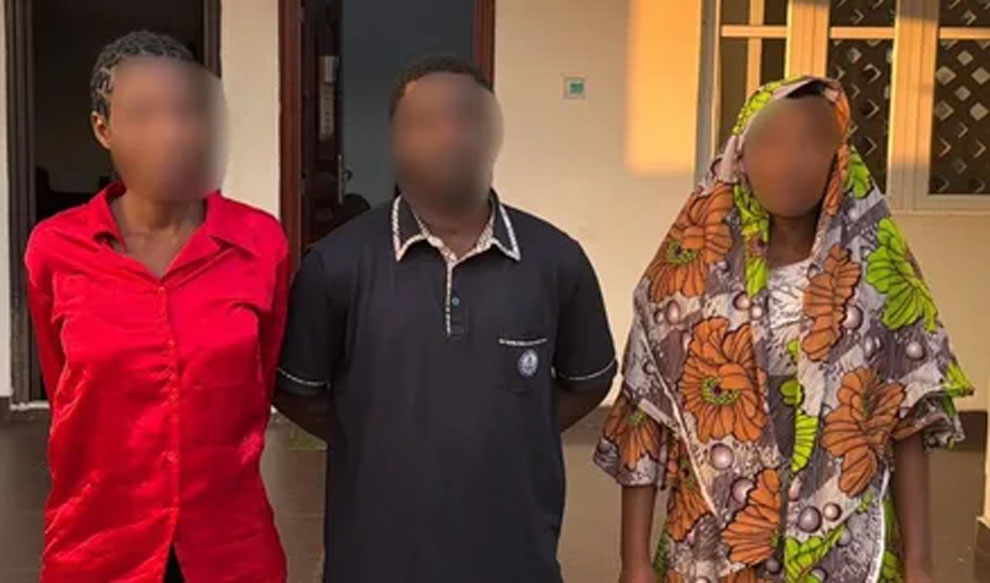
The Nigeria Police Force has arrested several suspects over an alleged staged kidnapping involving a two-year-old child in Plateau State and rescued the child after investigators uncovered a ransom scheme allegedly involving people known to the family.
The arrests were made by operatives of the Intelligence Response Team (IRT) during an intelligence-led investigation into kidnapping and other criminal activities.
In the case involving the child, police identified a 34-year-old suspect, Nansik Wuyep Sule, who was arrested over the reported abduction of two-year-old Rito Jesse Davou.
According to the police, preliminary investigations indicated that the alleged kidnapping may have been deliberately staged to create the impression that the child had been abducted by unknown criminals.
Investigators alleged that Sule worked with the child’s biological mother, Catherine Davou, as part of the scheme.
Police said the alleged plan initially involved a N7 million ransom demand, which was later increased to N15 million.
As investigators intensified their efforts to locate the child, they reportedly discovered information indicating that the two-year-old was being kept at Sule’s residence.
Another suspect, Luka Emmanuel Butdam, was also arrested over allegations that he made ransom-related calls to the child’s grandmother.
Police operatives subsequently located the child and rescued him safely.
The rescued child was reportedly given medical attention before being reunited with his biological father.
The investigation is continuing as police seek to establish the full circumstances surrounding the alleged staged abduction and determine whether other individuals were involved.
The case highlights the complexities investigators can face in kidnapping investigations, particularly where alleged ransom demands are made by individuals who may have prior knowledge of the victim or family.
READ ALSO:
- EFCC secures jail terms for two fraudsters as Lagos court orders asset forfeiture
- My love for my wife affected my work, earnings — Husband begs court to save marriage
- Simon Ekpa challenges six-year terrorism sentence as Finland seeks longer jail term
Police investigate separate kidnapping and robbery cases
In a separate investigation, the IRT also arrested Idris Mohammed, popularly known as Yellow, and Mohammed Bello Adams over their alleged involvement in kidnapping and armed robbery.
According to the police, the suspects allegedly targeted a commercial driver, Idris Zakari Baba, after arranging for him to transport Mohammed from Abuja to Zaria.
Investigators alleged that the driver was intercepted by armed men after picking up Mohammed and was taken into the bush, where he was held until a N3 million ransom was reportedly paid.
The victim’s 2012 Toyota Corolla was later traced to Bauchi State and recovered while Mohammed was allegedly attempting to sell the vehicle.
Further investigation allegedly linked the suspects to another kidnapping case involving Pastor David Dahni and his driver, Abdullahi Abubakar.
Police said a ransom of approximately N10.5 million was reportedly paid in connection with that incident.
The Force said investigations into the cases remain ongoing, with operatives working to identify other suspects and establish the full extent of the alleged criminal activities.
The latest arrests form part of ongoing efforts by the Nigeria Police Force to disrupt kidnapping networks, investigate ransom-related offences and recover property allegedly taken during criminal operations.
Police have continued to encourage members of the public to provide credible information that could help security agencies prevent kidnappings and identify suspected criminal networks.
The suspects remain under investigation, and allegations against them have not been finally determined by a court. Any prosecution will be subject to the outcome of the investigation and the decision of the relevant prosecuting authorities.
Two-year-old rescued as police uncover alleged N15m staged kidnapping plot







metro
VIDEO: Outrage as Indian National Assaults Nigerian Truck Drivers in Lagos
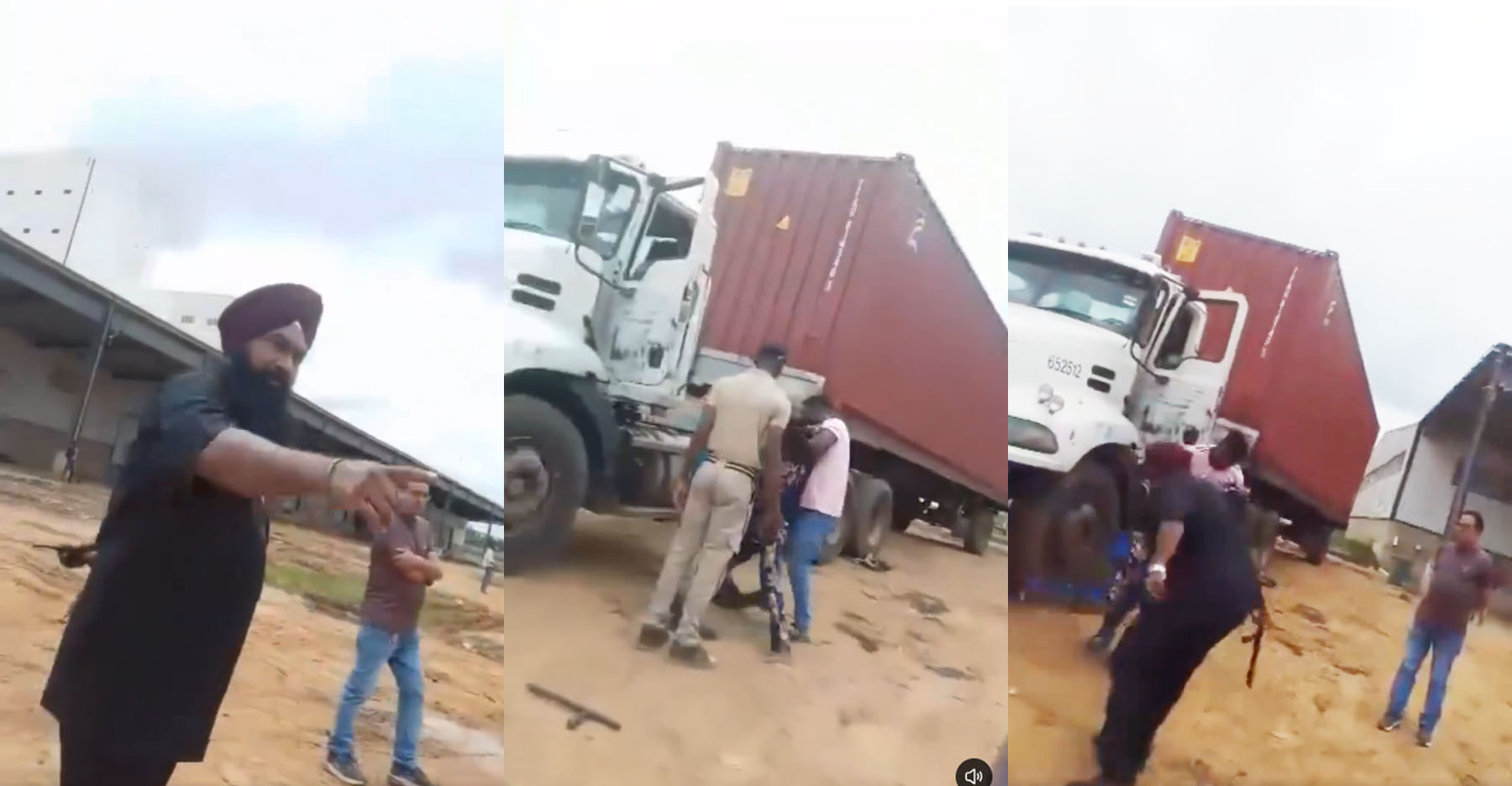
A viral video showing an Indian national allegedly assaulting two Nigerian truck drivers at a company’s premises along the Lagos-Ibadan Expressway has sparked outrage, with transport stakeholders demanding justice and calling for an investigation.
The incident reportedly occurred on Saturday, October 10, 2026, at the premises of Karma Agric Feed & Foods Ltd, around Km 12 of the Lagos-Ibadan Expressway, opposite the old Ratcoc Quarry. The footage circulated widely on social media on Monday, October 12.
The two transport workers were identified as Rilwan Olajide, a truck driver, and Taiwo Yinusa, his motor boy. The video appears to show a confrontation between the drivers and individuals at the company’s premises, with the disagreement reportedly involving truck keys and a demand for demurrage compensation.
The situation allegedly escalated when a man identified in media reports as an Indian national struck one of the drivers with a stick. Another worker appeared to be restrained by other individuals and kicked while on the ground.
However, the full circumstances leading to the confrontation remain unclear, and the allegations have yet to be conclusively established.
The Association of Maritime Truck Owners (AMATO) condemned the alleged assault, describing the reported treatment of the workers as unacceptable. The association said the available video footage and other materials raised concerns about the alleged involvement of individuals connected with the company.
READ ALSO:
- Forgery Probe: Police Arrest Ex-Imo Governor Rochas Okorocha in Abuja
- INEC Demands Formal Complaints as Missing Candidates Rock 2027 Election List
- Tragedy in Ibadan as Truck Kills Female Corps Member, Injures Others
AMATO stressed that disagreements over payments, truck keys or other commercial matters should be resolved through lawful means rather than violence or intimidation. It also emphasised that every person in Nigeria is entitled to dignity and protection under the law, regardless of nationality or occupation.
The association called on the relevant police authorities to conduct a thorough and impartial investigation, preserve available evidence and identify everyone involved. It urged the authorities to prosecute anyone found culpable in accordance with the law.
AMATO also appealed to the management of Karma Agric Feed & Foods Ltd to cooperate with investigators and take appropriate steps to prevent a recurrence. It maintained that accountability should be based on the actions of individuals and should not be used to stigmatise Indian nationals generally.
In a separate response, the Lagos State Trucks and Cargo Committee (LASTCOC) reportedly directed truck owners and drivers to suspend the delivery and collection of consignments to and from the company pending further action over the incident.
The directive could affect cargo movement involving the company while transport operators await the outcome of efforts to address the allegations. LASTCOC also warned that operators who disregarded the directive could face sanctions.
The reported suspension underscores the growing tension between transport stakeholders and the company following the circulation of the video.
The incident has renewed concerns about the safety and treatment of Nigerian truck drivers and motor boys, who play a critical role in moving goods across the country. Transport stakeholders have insisted that workplace and commercial disputes must be handled through established procedures, with violence and intimidation investigated and addressed appropriately.
As of the latest available reports, there was no confirmed public announcement of an arrest or a formal police finding on the incident. The company’s response was also not available. The allegations therefore remain subject to investigation, and the responsibility of each person involved must be determined through due process.
VIDEO: Outrage as Indian National Assaults Nigerian Truck Drivers in Lagos
metro
$1bn Arms Fund: Buratai Challenges Defence Ministry to Account for Money

$1bn Arms Fund: Buratai Challenges Defence Ministry to Account for Money
Former Chief of Army Staff, Lieutenant General Tukur Buratai (retd.), has challenged the Ministry of Defence to explain how the $1 billion approved for military equipment procurement during his tenure was spent, insisting that neither he nor the Nigerian Army, Navy and Air Force handled the funds.
Buratai made the demand on Monday at the third conference of the Defence Correspondents Association of Nigeria (DECAN) in Abuja, where he called for greater transparency in Nigeria’s defence spending and accountability for public funds allocated to national security.
The retired army chief said the National Economic Council (NEC) approved the $1 billion for defence procurement, but the money was released to the Ministry of Defence, which he said managed the procurement process.
“Not a single dollar of that fund passed through my hands or through the accounts of the Nigerian Army, Navy, or Air Force,” Buratai said.
He maintained that the armed services did not receive any portion of the money to initiate procurement directives, arguing that responsibility for explaining how the funds were disbursed and which contracts were awarded rested with the ministry that managed them.
Buratai described allegations surrounding the money as “political and malicious”, saying they first emerged during the 2019 general election period, when opposition figures alleged that the funds had been diverted for political purposes.
According to him, the Federal Government publicly denied the allegation at the time, but the controversy continued to damage the reputations of military service chiefs.
He faulted the Ministry of Defence for failing to publicly provide a detailed account of the disbursements and contract awards, insisting that accountability should rest with the institution responsible for managing the funds.
READ ALSO:
- Forgery Probe: Police Arrest Ex-Imo Governor Rochas Okorocha in Abuja
- INEC Demands Formal Complaints as Missing Candidates Rock 2027 Election List
- Tragedy in Ibadan as Truck Kills Female Corps Member, Injures Others
“The $1 billion arms procurement controversy festered because the institution that managed the funds, the Ministry of Defence, remained silent while Service Chiefs absorbed criticism,” he said.
Buratai called for the establishment of a Defence Procurement Transparency Portal to publish information on contracts awarded, contractors and delivery timelines, subject to legitimate national security restrictions.
He said the proposed platform would help the public understand how defence procurement funds were utilised without exposing sensitive operational information.
“When the media asks where the money went, the answer should come from the ministry that spent it, not from military officers who never touched it,” he said.
The former army chief also called for quarterly accountability bulletins summarising court-martial outcomes involving alleged human rights violations and operational misconduct.
He said such disclosures should protect the rights of accused personnel and avoid compromising ongoing military operations.
On allegations of human rights violations by security personnel, Buratai said credible complaints should be investigated and prosecuted where evidence substantiated wrongdoing.
“The military is not above the law,” he said, stressing the need for transparent disciplinary procedures capable of addressing misconduct at all levels.
At the same conference, former Senate President and Chairman of the Senate Committee on Defence, Ahmad Lawan, called for more predictable funding for the Armed Forces and other security agencies.
Lawan proposed dedicating a portion of national revenue to defence and security spending, alongside making military and security agency budgets a first-line charge to reduce delays in releasing funds.
He argued that troops could not be expected to achieve better operational results without adequate weapons, equipment and other resources.
Lawan said the National Assembly had consistently supported executive requests for security funding, adding that improved funding arrangements could help the military procure equipment in bulk and plan operations more effectively.
Meanwhile, Minister of Information and National Orientation Mohammed Idris said military force alone could not resolve Nigeria’s security challenges.
Idris, represented by Voice of Nigeria Director-General Jibrin Ndace, said military operations needed to be supported by reliable intelligence, modern technology, coordination among security agencies and cooperation with local communities.
He said the Federal Government was pursuing military modernisation, improved surveillance and intelligence-led operations to address terrorism, banditry and other security threats.
Idris also disclosed that President Bola Ahmed Tinubu had directed the preparation of a comprehensive National Threat Assessment and a rolling five-year Strategic Defence Operations Plan in August 2026.
According to the minister, the initiatives were intended to establish security priorities, improve coordination and guide the deployment of resources.
He said the President had also approved salary increases of between 30 and 80 per cent for Armed Forces personnel, effective September 2026, to recognise their sacrifices and improve welfare.
Idris urged journalists to verify information and report responsibly on security operations, while emphasising that responsible reporting should not shield the government or security agencies from scrutiny.
He said the media must continue asking difficult questions and holding public institutions accountable while respecting legitimate operational sensitivities.
Buratai’s demand has renewed attention on the management of the $1 billion defence procurement fund, with the former army chief insisting that the Ministry of Defence should provide an account of how the money was spent. His remarks do not, on their own, establish that the funds were misappropriated.
$1bn Arms Fund: Buratai Challenges Defence Ministry to Account for Money
metro
Forgery Probe: Police Arrest Ex-Imo Governor Rochas Okorocha in Abuja

Forgery Probe: Police Arrest Ex-Imo Governor Rochas Okorocha in Abuja
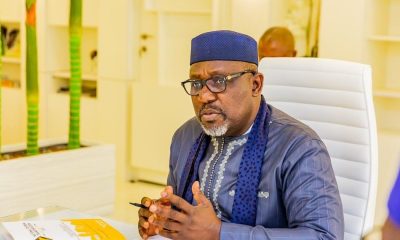
Former Imo State Governor Rochas Okorocha has been arrested by the Nigeria Police Force over allegations of criminal conspiracy, forgery and impersonation linked to the disputed All Progressives Congress (APC) Imo West senatorial primary.
Okorocha was reportedly arrested on Monday night, October 12, 2026, at REIZ Continental Hotel in Abuja, following a court order authorising his arrest after he allegedly failed to honour previous police invitations.
However, the former governor was released on bail after approximately one hour of interrogation and was directed to return to the Force Headquarters on Tuesday for further questioning, according to reports citing the Imo State Police Command.
The police reportedly invited Okorocha for questioning on September 2, but the appointment was rescheduled to September 8 at the request of his lawyers. He allegedly failed to attend the rescheduled meeting, prompting further action by the authorities.
The investigation centres on a disputed document purporting to show that Okorocha won the APC senatorial primary for Imo West, also known as Orlu Zone, ahead of the 2027 general elections.
The Independent National Electoral Commission (INEC) has disowned the document, insisting that its official records identify Imo State Governor Hope Uzodimma as the winner of the May 18, 2026, primary election and the party’s duly submitted candidate for the senatorial district.
In letters dated October 8, the commission reportedly asked the police and the Department of State Services (DSS) to investigate the disputed primary results, describing the document naming Okorocha as the winner as fictitious.
READ ALSO:
- INEC Demands Formal Complaints as Missing Candidates Rock 2027 Election List
- Tragedy in Ibadan as Truck Kills Female Corps Member, Injures Others
- French Students Return to Streets as Anger Over School Conditions Grows
INEC reportedly attached copies of the official primary report and the disputed document to its correspondence with the security agencies, requesting an investigation into the document’s origin and authenticity.
A Senior Magistrate Court in Abuja had also issued bench warrants for the arrest of Okorocha, former senator Ifeanyi Araraume, Timothy Ama Chuks and Amen Okorocha over allegations of criminal conspiracy, forgery and the tendering of false documents.
The allegations concern the purported alteration or presentation of APC primary results to show Okorocha as the winner despite the party’s official submission naming Uzodimma.
Before news of his arrest emerged, Okorocha had publicly denied reports that a court issued a warrant for his arrest, challenging those making the claims to publish the relevant court documents.
He also disputed suggestions that INEC had indicted him, arguing that the commission’s correspondence requested an investigation into a document in circulation rather than establishing his guilt.
The former governor has maintained that the controversy should be addressed through due process.
The latest arrest report marks a new stage in the dispute over the APC’s Imo West senatorial ticket, which has become a point of contention ahead of the 2027 elections.
Okorocha, who governed Imo State from 2011 to 2019 and later represented Imo West in the Senate, has also pursued legal action relating to the primary election and INEC’s recognition of Uzodimma.
The police have not publicly disclosed all the details of the investigation, and the allegations against Okorocha and the other individuals remain subject to judicial determination.
His release on bail does not amount to a determination of the allegations, while further questioning and investigation are expected to clarify the circumstances surrounding the disputed document.
Forgery Probe: Police Arrest Ex-Imo Governor Rochas Okorocha in Abuja
-
 metro2 days ago
Tension in Kano as Phone Traders Confront Chinese Sellers Over Cheaper Phones
-
 metro3 days ago
Police Launch Manhunt After Fresh Attacks, Kidnappings Rock Four Nigerian States
-
 metro3 days ago
EFCC Wins ₦132m Money Laundering Case as Court Orders Forfeiture of Lagos Properties
-

 Business3 days ago
NNPC Petrol Discount: Motorists Must Download App to Save ₦66 Per Litre
-

 Sports3 days ago
Ronaldo Hits 980th Career Goal as Al-Nassr Win After Portugal Fallout
-

 Entertainment2 days ago
‘My Wife Fed Actresses I Was Dating Despite Knowing About Our Affairs’ – Yinka Quadri
-
 Politics3 days ago
INEC Raises Alarm Over Fake APC Result Naming Okorocha, Seeks DSS, Police Probe
-
 metro3 days ago
Hardship: ACF Gives Tinubu Three Months to Deliver Relief, Demands Clear Timelines