

International
UK, China, others reject Trump’s bid to take over Gaza

UK, China, others reject Trump’s bid to take over Gaza
Palestinians have rejected a proposal by U.S. President, Donald Trump, to take over the war-torn Gaza Strip and permanently resettle its residents.
Trump, during a news conference with Israeli President, Benjamin Netanyahu at the White House on Tuesday, hinted that it would be a “long-term ownership position” as Gaza will become the “Riviera of the Middle East”
He said, “The US will take over the Gaza Strip, and we will do a job with it too. We’ll own it and be responsible for dismantling all of the dangerous unexploded bombs and other weapons on the site.
“We will Level the site and get rid of the destroyed buildings and create an economic development that will supply unlimited numbers of jobs and housing for the people of the area.
“(Palestinians) Just can’t go back. If you go back, it’s going to be the same way it has for 100 years,” Trump stated.
Responding, Palestinian President Mahmoud Abbas criticized Trump’s proposed action and called on the United Nations (UN) to “protect the Palestinian people and their inalienable rights,” saying what Trump wants to do would be “a serious violation of international law.”
Rewaa Mohsen, a nurse in the city of Deir al-Balah, central Gaza, said, “I don’t give a damn about what he is saying… he will not force us to go or leave,” she told BBC.
READ ALSO:
- Police probe murder of father, son in Rivers
- Police confirm 10 killed, many injured in Sweden school shooting
- Kenya Airways apologises to Nigeria for mistreating passenger
“The Israeli army killed us but we remain in our destroyed houses. We don’t need life outside our land and we will not move one metre away from it so he can say whatever he wants – he can’t beat us,” Mohsen said.
Another resident, Jamalat Wadi speaking to the BBC said, “I am waiting to rebuild our house and live in it, and neither Trump nor anybody else matters to us.
“If there is only one drop of blood left in our children, we won’t go out of Gaza, and we won’t give up on it,” she said, adding that “We will live on our rubble as if nothing happened, and Gaza will be rebuilt,” Wadi said.
UK’s Foreign Secretary David Lammy said it would support a two-state leadership in Gaza and not a resettlement.
“We’ve always been clear in our belief that we must see two states. We must see Palestinians live and prosper in their homelands in Gaza and the West Bank”, Lammy said.
French Foreign Ministry said displacing Palestinians in Gaza ″would constitute a grave violation of international law, an attack on the legitimate aspirations of the Palestinians, a major threat to the two-state solution and a factor of major destabilization for our close partners Egypt and Jordan as well as the entire region.″
According to the ministry, France will support a two-state solution under the Palestinian Authority, stating that ″Hamas should be disarmed and have no part in the governance of this territory.″
Turkish Foreign Minister Hakan Fidan Described Trump’s comments as “unacceptable,” stating that the past displacement of Palestinians and the settlement of Israelis in those areas was the root cause of the conflict.
“The issue of deportations from Gaza is not something that either the region or we would accept. Even thinking about it, in my opinion, is wrong and absurd,” he said.
Fidan also called for a two-state solution, with East Jerusalem as the capital of a sovereign Palestinian state.
On their part, Chinese Foreign Ministry spokesperson, Lin Jian said, said the country opposes the forced relocation of people in Gaza, reiterating Beijing’s support of a two-state solution in resolving the conflict.
“China has always believed that Palestinian rule is the basic principle of post-war governance in Gaza,” said spokesperson Jian said.
Also responding, the Palestinian Jihad group Hamas, in a statement, denounced Trump’s proposal as “racist,” vowing to fight the U.S. president’s plans in Gaza.
“Our Palestinian people always have the resistance option, which they have practised for more than a century,” it said.
The group said Trump will only “pour fuel on the fire” in the Middle East, condemning his proposed action “in the strongest terms”.
“Such remarks are hostile to our people and our cause, and will not benefit stability in the region,” the group says.
“We call on the American administration and President Trump to walk back from these irresponsible remarks that contradict international law and the basic rights of our Palestinian people on their land,” they added.
The group also called on the Arab League and UN to hold urgent meetings to address the “dangerous remarks” and take a “strong stance” that preserves Palestinian rights.
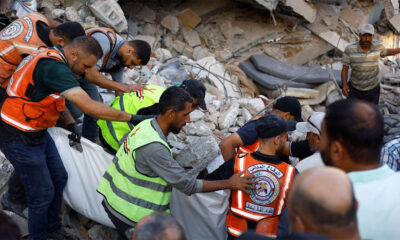
The ceasefire deal resumed on January 19, but 15 months of fighting have devastated the coastal Palestinian territory, displacing about 90% of its residents and causing extensive infrastructural damage.
The death toll is above 46,000, as reported by the Hamas-run health ministry. Aside from this, the UN Environmental Programme (UNEP) has warned it will take 21 years just to clear the debris and explosive remnants of war
“The significant and growing environmental damage in Gaza risks locking its people into a painful, long recovery,” UNEP executive director Inger Andersen said.
UK, China, others reject Trump’s bid to take over Gaza








International
Asian Games Organisers Apologise After Blunder Broadcasts North Korean Anthem for South Korea

Asian Games Organisers Apologise After Blunder Broadcasts North Korean Anthem for South Korea
A mistaken stadium audio track following South Korea’s 5-0 hockey win over Bangladesh triggers protests amid wider logistical issues in Japan.
Organisers of the Asian Games in Japan issued a formal apology on Friday after mistakenly playing the North Korean national anthem for South Korea’s men’s hockey team.
The embarrassing mix-up occurred shortly after South Korea secured a commanding 5-0 victory over Bangladesh, leaving players standing perplexed on the pitch as the wrong national anthem echoed through the stadium speakers.
Following the initial blunder, venue operators played the national anthem of Bangladesh before finally broadcasting South Korea’s proper anthem, prompting a stadium announcer to issue an immediate apology over the public address system.
However, South Korea coach Min Tae-seok condemned the oversight as an inexcusable operational failure. Min stated that while tournament officials blamed an individual operator for selecting the wrong audio file, an international competition must never tolerate errors of such sensitive political magnitude.
Furthermore, the anthem blunder compounds wider operational difficulties facing Japanese host venues ahead of Saturday’s official opening ceremony. Several delegations have voiced strong frustration over logistical arrangements, with visiting teams reporting airport delays lasting up to six hours.
In addition, members of South Korea’s basketball squad published videos showing water pouring from broken pipes into their athlete village rooms, intensifying pressure on local organisers to resolve village infrastructure and technical coordination before mainstream competitions begin.
Asian Games Organisers Apologise After Blunder Broadcasts North Korean Anthem for South Korea
International
BREAKING: Bloodbath at Pakistan Mosque as Suicide Blast Kills 21, Injures 103
BREAKING: Bloodbath at Pakistan Mosque as Suicide Blast Kills 21, Injures 103
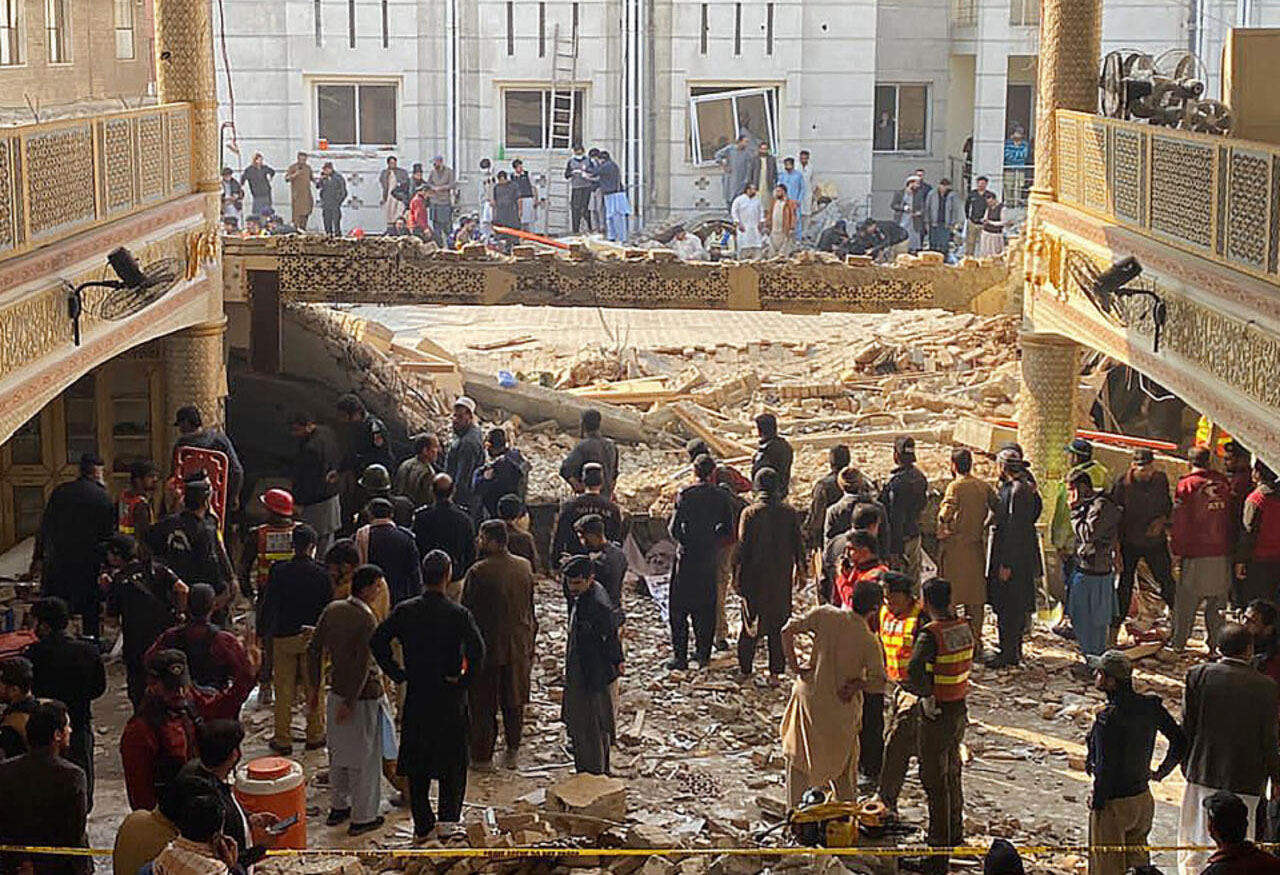
KOHAT, Pakistan — Friday prayers turned into a scene of horror in Pakistan on Friday as a powerful suicide attack ripped through a mosque inside a police compound in Kohat, leaving at least 21 people dead and 103 others injured.
The devastating attack, which struck the Old Police Lines in Kohat, Khyber Pakhtunkhwa province, claimed the lives of 15 police personnel and six civilians, while 73 policemen and 30 civilians were injured, according to health officials.
The attack occurred at about 1:20pm local time, when worshippers had gathered for the weekly Friday prayers at the mosque located inside the heavily guarded Police Lines compound.
Eyewitness accounts and initial reports described scenes of panic as a massive explosion tore through the facility, sending debris flying and trapping victims beneath damaged sections of the mosque and surrounding buildings.
According to Khyber Pakhtunkhwa Inspector-General of Police Zulfiqar Hamid, an explosives-laden vehicle was rammed into the gate of the old Police Lines before detonating, unleashing the devastating blast.
The explosion caused extensive damage to the police facility and mosque, with parts of the structure collapsing as worshippers and police officers were caught in the blast.
But the nightmare did not end with the explosion.
As rescue workers rushed to evacuate the wounded, gunfire erupted inside the compound after armed militants reportedly attempted to force their way deeper into the police facility.
A further suicide explosion was also reported near the Special Branch building during the ensuing confrontation between the attackers and security forces.
READ ALSO:
- Xenophobia: FG Brings 33 More Nigerians Home From South Africa
- Falconets Thrash England 3-0, Face Colombia in U-20 World Cup Quarter-Finals
- Replace Fuel Subsidy With Vehicle Credit to Drive Mobility, Jobs,LCCI, Ilekuba tell FG
Police said seven armed attackers had entered the compound following the initial assault, triggering a fierce firefight involving police and Counter-Terrorism Department personnel.
Security forces eventually killed the attackers, including a suicide bomber and a sniper, as they battled to regain control of the compound.
The scale of the casualties overwhelmed medical facilities in Kohat, forcing the District Headquarters Hospital to declare an emergency.
Ambulances raced to the scene as doctors and medical workers treated scores of victims suffering blast injuries, gunshot wounds and injuries caused by collapsing structures.
Health authorities put the number of injured at 103, with 73 police personnel and 30 civilians among those receiving treatment.
Some of the wounded were reportedly in critical condition, while rescue teams continued searching the damaged compound for possible survivors trapped under debris.
The heavy police casualties were attributed to the location and timing of the attack, with officers among those gathered inside the mosque for Friday prayers.
Among those reportedly killed were SP Traffic Akbar Shinwari and Dr Israel Orakzai, head of the children’s department at DHQ KDA Kohat, according to Pakistani media reports.
Security forces subsequently cordoned off the area and restricted movement around the Police Lines as investigators began examining the scene and searching for explosives or possible accomplices.
The Kohat-Hangu Road was also closed temporarily as security and rescue operations continued.
The attack triggered widespread outrage across Pakistan, with President Asif Ali Zardari and Prime Minister Shehbaz Sharif condemning the bombing and mourning the victims.
Sharif directed authorities to ensure that the injured received immediate and adequate medical treatment while security agencies were ordered to investigate the attack.
Khyber Pakhtunkhwa Chief Minister Sohail Afridi also condemned the assault and directed officials to mobilise available resources for the treatment of the wounded.
Interior Minister Mohsin Naqvi expressed solidarity with the families of those killed and injured, as condemnation poured in from within and outside Pakistan.
Countries including Saudi Arabia, the United Kingdom, Russia, Poland, Australia and Jordan also condemned the attack and expressed sympathy with the victims and their families.
The Kohat bombing comes against the backdrop of an escalating militant threat in Khyber Pakhtunkhwa, one of Pakistan’s most violence-prone regions.
The province, which shares a border with Afghanistan, has witnessed repeated attacks targeting police, soldiers and civilians.
The latest bloodshed also came shortly after a roadside bombing in neighbouring Hangu district reportedly killed six soldiers, further raising security concerns in the region.
Pakistan has repeatedly accused militants linked to the Tehrik-e-Taliban Pakistan (TTP) of using hideouts in Afghanistan to launch attacks inside Pakistan. Afghanistan’s Taliban authorities have consistently rejected allegations that they permit their territory to be used for attacks against Pakistan.
Responsibility for the Kohat attack remained disputed in the immediate aftermath.
While later reports attributed a claim to a faction associated with the TTP, other reports said the TTP denied involvement. Security authorities have therefore continued investigations to establish the identity of those behind the attack and determine whether others assisted the attackers.
The deadly incident has also drawn painful memories of the January 2023 Police Lines mosque bombing in Peshawar, in which more than 100 people, mostly police officers, were killed.
For residents of Kohat, Friday’s attack once again turned a place of worship into a battlefield, leaving families searching for loved ones and hospitals struggling to cope with the influx of casualties.
As security agencies combed through the wreckage and investigators worked to establish the circumstances surrounding the assault, the death toll and number of injured remained subject to further updates.
At least 21 people are confirmed dead and 103 injured in the latest official figures, with fears that the casualty figures could change as authorities complete rescue and medical operations.
BREAKING: Bloodbath at Pakistan Mosque as Suicide Blast Kills 21, Injures 103
International
Teen Gunman Kills Two Students, Injures Eight in Philippine School
Teen Gunman Kills Two Students, Injures Eight in Philippine School
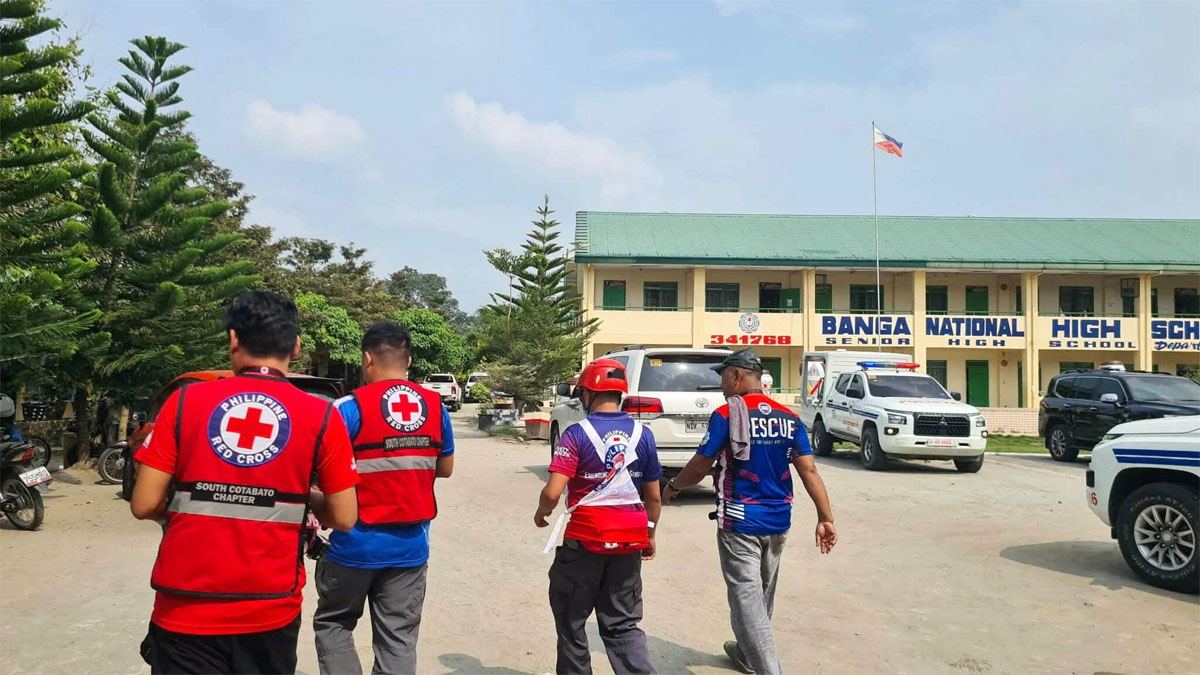
A school shooting in the Philippines has left two 14-year-old students dead and eight others injured after a 16-year-old student opened fire at Banga National High School in South Cotabato before taking his own life.
The incident happened at about 1:30 p.m. on Friday, September 18, in Banga town on the southern island of Mindanao, sending students fleeing from the school as emergency responders moved in to attend to the victims.
South Cotabato Governor Reynaldo Tamayo said the two students killed were a boy and a girl, both aged 14. The suspected shooter, a Grade 9 student at the school, also died after shooting himself following the attack.
Banga Mayor Albert Palencia said the teenager opened fire inside a classroom neighbouring his own, hitting 10 students. Two of the victims died while eight others were wounded. Four of those injured were reported to be in critical condition.
The mayor said the teenager had reportedly warned some of his friends before the shooting that he intended to carry out a plan after lunch and advised them to go home because they could become involved. His friends reportedly dismissed the warning, believing he was joking.
After lunch, the teenager reportedly left his classroom and entered a neighbouring classroom, where he began shooting at fellow students. He then changed the magazine of the firearm before shooting himself.
Authorities are investigating how the teenager obtained the firearm and brought it into the school.
According to local officials, the gun belonged to the teenager’s father, an employee of the Philippine Department of Education. The firearm had reportedly been kept in a secured vault, which the teenager allegedly broke open before taking the weapon to school.
The circumstances surrounding the weapon have become a major focus of the investigation, particularly because the suspected shooter was a minor.
South Cotabato Governor Tamayo urged gun owners and parents to ensure that firearms are securely stored and inaccessible to children, stressing that school security personnel alone cannot prevent every possible threat.
Authorities are also investigating reports about the teenager’s involvement in an online True Crime Community, described by officials as an internet group where young people discuss violent crimes and, in some cases, glorify school shooters.
READ ALSO:
- Xenophobia: FG Brings 33 More Nigerians Home From South Africa
- Falconets Thrash England 3-0, Face Colombia in U-20 World Cup Quarter-Finals
- Replace Fuel Subsidy With Vehicle Credit to Drive Mobility, Jobs,LCCI, Ilekuba tell FG
Authorities have not established that the online activity caused or directly motivated the attack, and investigations into the teenager’s background and possible motive remain ongoing.
The teenager’s mother had reportedly expressed concern about him and was considering taking him for psychiatric assistance, according to information cited by local officials. The circumstances surrounding his behaviour and possible motive remain under investigation.
Emergency responders took the injured students to hospitals in the area, including the South Cotabato Provincial Hospital and Surallah Community Hospital.
The Philippine Department of Education said the safety and wellbeing of students, teachers and school personnel remained its immediate priority. In-person classes in the affected area were suspended, while authorities coordinated medical assistance and psychosocial support for students and staff affected by the incident.
President Ferdinand Marcos Jr. ordered a thorough investigation into the shooting, particularly how a minor was able to obtain a firearm and bring it inside a school.
Marcos also expressed condolences to the families of the victims and directed relevant authorities to establish the circumstances surrounding the incident.
The shooting has renewed concerns over school security, gun storage and minors’ access to firearms in the Philippines, particularly as the country has experienced several deadly school attacks in recent months.
The Banga incident is the third deadly school shooting in the Philippines since June.
In June, a shooting at a public high school in Tacloban City left three students dead and about 20 others injured after two students reportedly opened fire on the campus.
In August, another student in Zamboanga reportedly livestreamed the killing of a fellow student before taking his own life.
The incidents have prompted increased attention to school security and emergency preparedness. The Philippine Department of Education conducted nationwide school safety drills earlier this month as part of efforts to improve responses to armed attacks and other emergencies.
Authorities are now expected to examine not only the circumstances of the Banga shooting but also how the teenager gained access to the weapon, how it was taken into the school and whether any online activity contributed to his actions.
Early reports from authorities gave different casualty figures as emergency teams responded to the shooting. Later reports from local officials, police and national news agencies converged around two student deaths, the death of the 16-year-old suspected gunman and eight injured students, although some reports continued to carry different figures while the investigation was ongoing.
The Banga community is now mourning the two young students killed in the attack, while the injured students remain under medical care and authorities continue their investigation into the country’s latest deadly school shooting.
Teen Gunman Kills Two Students, Injures Eight in Philippine School
-
 metro3 days ago
Niger Mosque Abductions: Terrorists Execute 30 of 500 Captive Muslim Worshippers
-
 Business2 days ago
Fuel Prices Climb to ₦1,500 per Litre Across Nigeria, Sparking Calls for Urgent Action
-

 News3 days ago
Blue Line Rail, Hospitals Get Boost as Lagos Approves ₦200bn Bond and Budget Reordering
-
 News2 days ago
OAU Investigates Death of Final-Year Student as Police Begin Probe
-
 News1 day ago
ECOWAS Biometric Card Expands as Seven Countries Begin Rollout
-
 metro3 days ago
US-Based Nigerian Lawyers Disbarred: Full List of Fraud, Theft and Misconduct Cases
-
 Interview2 days ago
He Does Not Lose Elections”: Abdulmumin Jibrin Predicts 65% Landslide for Tinubu in 2027
-
 Politics2 days ago
Aisha Buhari Visits Atiku Amid Opposition Coalition Activities