
Business
UK S’Court Okays Suit against Shell over Oil Spills

The ruling of the United Kingdom Supreme Court yesterday paved the way for a group of 42,500 Nigerian farmers and fishermen to sue Royal Dutch Shell (RDS) in English courts after years of oil spills in the Niger Delta contaminated land and groundwater.
In a major decision that is bound to have far reaching implications for multinationals operations in their host countries, Senior judges said UK-domiciled Shell, one of the world’s biggest energy companies, did have a common law duty of care, in the latest case to test whether multinationals can be held to account for the acts of overseas subsidiaries.
The ruling comes almost two years after a seminal ruling by the Supreme Court in a case involving mining company, Vedanta. The judgment allowed nearly 2,000 Zambian villagers to sue Vedanta in England for alleged pollution in Africa.
That move was seen as a victory for rural communities seeking to hold parent companies accountable for environmental disasters. Vedanta ultimately settled out of court in January.
Nigeria’s Ogale and Bille communities of Rivers State allege their lives and health had suffered because repeated oil spills had contaminated the land, swamps, groundwater and waterways and that there had been no adequate cleaning or remediation.
Represented by law firm Leigh Day, they argued that Shell owed them a duty of care because it either had significant control of, and was responsible for, its subsidiary SPDC. Shell countered that the court had no jurisdiction to try the claims.
“(The ruling) also represents a watershed moment in the accountability of multinational companies. Increasingly impoverished communities are seeking to hold powerful corporate actors to account and this judgment will significantly increase their ability to do so,” Daniel Leader, partner at Leigh Day, said.
SPDC is the operator of oil pipelines in a joint venture between the Nigerian National Petroleum Corporation which holds a 55 per cent stake, Shell which holds 30 per cent, France’s Total with 10 per cent, Italy’s Eni with 5 per cent.
A Shell spokesman said the decision was disappointing.
“Regardless of the cause of a spill, SPDC cleans up and remediates. It also works hard to prevent these sabotage spills, by using technology, increasing surveillance and by promoting alternative livelihoods for those who might damage pipes and equipment,” Shell said.
Shell has blamed sabotage for oil spills. It said in its annual report published last March that SPDC, which produces around 1 million barrels of oil per day, saw crude oil spills caused by theft or pipeline sabotage surge by 41 per cent in 2019.
Shell CEO Ben van Beurden said last week that the firm would take “another hard look at its onshore oil operations” in the West African country.
The ruling is the second judgement against Shell this year regarding claims against its Nigerian operations. In a landmark Dutch ruling two weeks ago, an appeals court held Shell responsible for multiple oil pipeline leaks in the Niger Delta and ordered it to pay unspecified damages to farmers, in a victory for environmentalists.
Leigh Day said that the amount of compensation sought would be quantified as the case enters the trial stage.
In 2015, Shell agreed to pay out 55 million pounds ($83.4 million) to the Bodo community in Nigeria in compensation for two oil spills, which was the largest ever out-of-court settlement relating to Nigerian oil spills.








Business
Naira Strengthens to ₦1,359.31/$ as CBN Data Shows Further Gain in Official Market
Naira Strengthens to ₦1,359.31/$ as CBN Data Shows Further Gain in Official Market
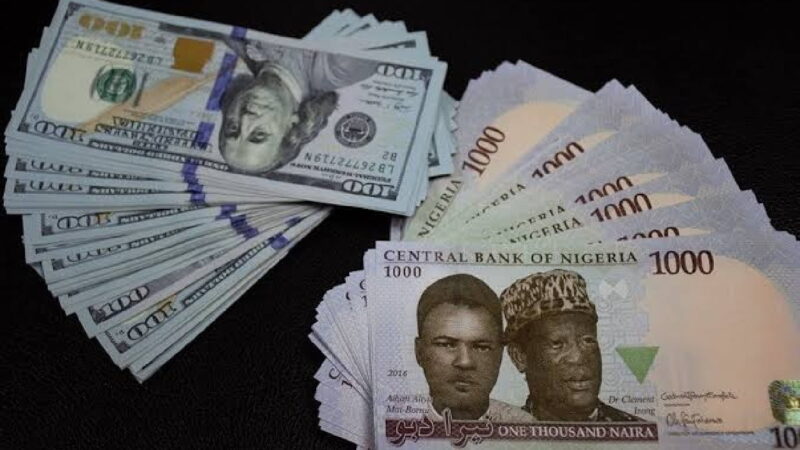
The Naira continued its positive performance on Thursday, appreciating further in the official foreign exchange market to close at ₦1,359.31 per US dollar, according to data published by the Central Bank of Nigeria (CBN).
The latest figure represents an improvement of ₦12.50 compared to the previous trading day, reflecting a 0.9 percent gain from Wednesday’s closing rate of ₦1,371.82/$.
The appreciation highlights continued stability in the official foreign exchange window, where recent policy measures have helped improve liquidity and reduce pressure on the local currency.
Market analysts attribute the naira’s relative strength to ongoing foreign exchange reforms by the CBN, increased dollar supply in official channels, and tighter regulation aimed at narrowing the gap between official and parallel market rates.
READ ALSO:
- Nigeria May Face ₦2,000 Petrol Price Without Intervention, TUC Warns FG
- US Embassy Suspends Abuja Visa Appointments Over Security Concerns
- ADC Crisis: Mark-Led Faction Sues INEC Over Party Leadership Removal
The CBN has in recent months intensified efforts to stabilise the currency through measures such as improved FX market transparency, better coordination with market participants, and steps to attract foreign portfolio inflows.
Despite the gains in the official market, traders note that the parallel market remains more volatile, with rates still influenced by strong demand for foreign currency from importers, travellers, and businesses outside official allocation channels.
Economists say the recent appreciation could help ease short-term inflationary pressure, particularly on imported goods, fuel pricing, and manufacturing inputs, although they caution that sustained stability will depend on broader macroeconomic fundamentals.
These include stronger foreign reserves, improved export earnings—especially from crude oil—and continued investor confidence in Nigeria’s economic policy direction.
The naira’s performance also comes amid renewed attention on Nigeria’s broader economic outlook, with stakeholders closely monitoring the impact of monetary tightening and ongoing fiscal reforms.
As of the latest trading sessions, market participants expect the CBN to maintain its current policy stance in the near term as it works to consolidate recent gains in the foreign exchange market in Nigeria.
Naira Strengthens to ₦1,359.31/$ as CBN Data Shows Further Gain in Official Market
Business
Nigeria May Face ₦2,000 Petrol Price Without Intervention, TUC Warns FG
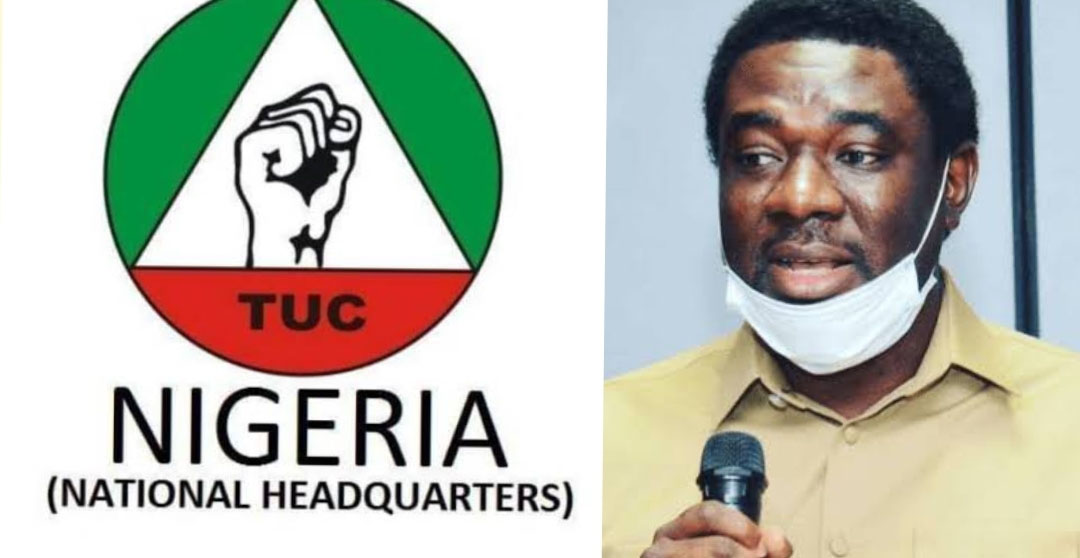
TUC Warns Petrol May Hit ₦2,000/Litre, Proposes Crude Revenue Subsidy Plan to FG
DETAILS:
The Trade Union Congress of Nigeria (TUC) has warned that petrol prices in Nigeria could rise to as high as ₦2,000 per litre if urgent economic measures are not introduced to stabilise the country’s energy and currency markets.
TUC President, Festus Osifo, issued the warning during a press briefing in Abuja, citing the combined impact of rising global crude oil prices and continued depreciation of the naira as major drivers of worsening fuel costs.
Osifo said Nigerian workers are already under severe economic pressure, noting that in some parts of the country, fuel pump prices are already approaching the ₦2,000 threshold due to market volatility and transportation differentials.
He explained that the 2026 national budget benchmarked crude oil at about $64.85 per barrel, while current international prices hover around $100 per barrel, creating what he described as significant “excess revenue” for the government.
The TUC is proposing that the Federal Government allocate about 60% of this excess crude revenue to support local production by subsidising crude supply to domestic refineries, including the Dangote Refinery and other modular refineries.
According to Osifo, this approach would be more transparent and harder to manipulate than the previous fuel subsidy regime, while also helping to reduce the cost of petrol, diesel, and aviation fuel within a short period.
READ ALSO:
- US Embassy Suspends Abuja Visa Appointments Over Security Concerns
- ADC Crisis: Mark-Led Faction Sues INEC Over Party Leadership Removal
- Dangote Sugar Warns Staff Over Chewing Sugarcane, Threatens Arrest
He argued that targeted support at the refinery level could reduce pump prices within two weeks if implemented, stressing that the current cost structure is unsustainable for households and businesses.
The TUC president also criticised the slow expansion of Compressed Natural Gas (CNG) infrastructure, noting that although CNG adoption is being promoted as an alternative to petrol, the absence of refuelling stations along major highways limits its practicality for long-distance transport.
Beyond economic issues, Osifo also raised concerns over worsening insecurity in parts of the country, particularly recent killings in Plateau State, urging the government to strengthen military response capabilities with modern technology and intelligence tools.
He warned that failure to address rising fuel costs could reverse recent gains in inflation control, arguing that high petrol prices directly impact inflation, transport fares, and food costs across Nigeria.
Osifo further suggested that the naira’s fair value should ideally be within the ₦800–₦900 per dollar range to ease pressure on fuel pricing and broader economic stability.
The TUC stated that it will formally present its proposal to the Federal Government ahead of upcoming federation revenue distributions, insisting that urgent intervention is necessary to prevent further economic hardship.
As of the time of filing this report, the Federal Government has not issued an official response to the proposal or the ₦2,000-per-litre warning.
Nigeria May Face ₦2,000 Petrol Price Without Intervention, TUC Warns FG
Business
Dangote Sugar Warns Staff Over Chewing Sugarcane, Threatens Arrest
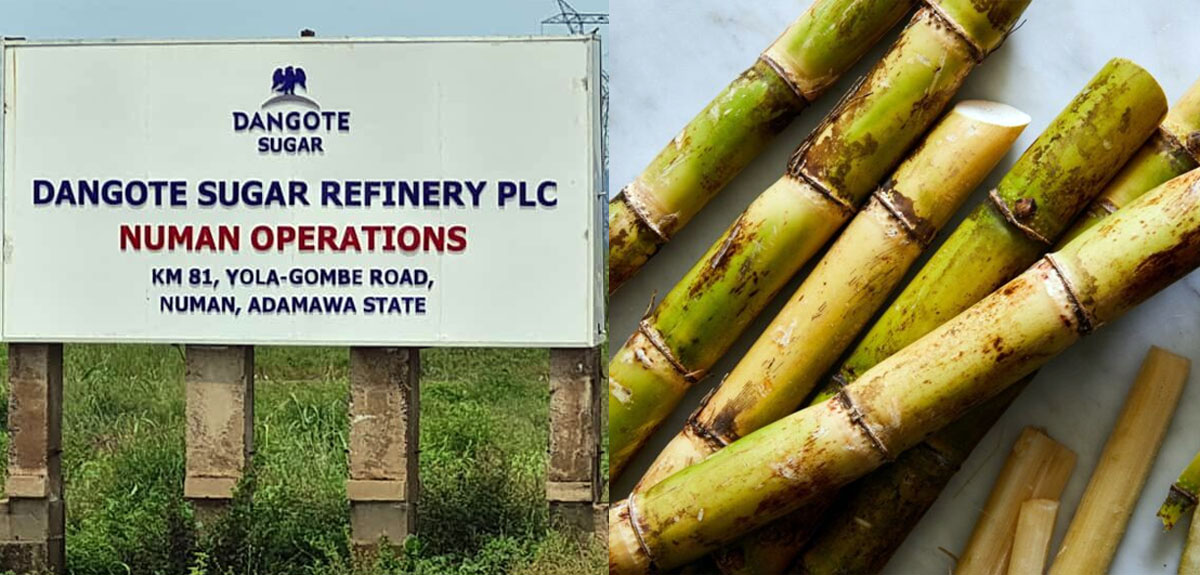
Dangote Sugar Warns Staff Over Chewing Sugarcane, Threatens Arrest
Dangote Sugar Refinery Plc has issued a stern and final warning to employees at its Numan operations in Numan, banning the chewing of company sugarcane within its premises and threatening severe disciplinary actions, including arrest and prosecution, for defaulters.
The directive, contained in an internal memo dated April 7, 2026, and signed by the Head of Human Resources, Ikechukwu Okorie, categorised the act as “gross misconduct”. The company stressed that any staff caught engaging in the practice risks summary disciplinary measures, which may extend to legal consequences.
According to the memo, the sugarcane cultivated and processed at the facility is a valuable company asset, and unauthorised consumption amounts to misuse of resources. Management noted that beyond the economic implications, the habit of chewing cane and discarding chaff indiscriminately undermines hygiene and sanitation standards required in a food processing environment.
The circular further emphasised that maintaining strict housekeeping is critical to operations at the Numan plant, warning that littering the premises with cane residue violates established workplace standards. As part of enforcement, security personnel have been placed on high alert and directed to apprehend any employee found violating the directive, with offenders facing both internal disciplinary action and possible prosecution aimed at recovering losses.
READ ALSO:
- Jetour set to ignite Lagos with four-day automotive experience
- Making Up for Lost Sleep Might Be Healthier Than Experts Once Believed — What Science Says
- Sleeping Positions: How They Affect Your Health and Which Ones to Avoid
The strongly worded memo ended with a clear warning — “BE WARNED FOR THE LAST TIME!!!” — underscoring the company’s zero-tolerance stance on the issue.
The development comes amid ongoing expansion efforts by Dangote Sugar, particularly under its backward integration programme designed to boost local sugar production. The company is scaling up operations through large-scale cultivation and processing projects across multiple states.
As part of its broader financial strategy, Dangote Sugar recently announced a proposed ₦500 billion rights issue to reduce debt, strengthen its balance sheet, and fund expansion projects. These include upgrades at its Numan facility and new developments in Nasarawa State and Taraba State.
Since the memo surfaced online, it has sparked mixed reactions on social media, with some supporting the company’s strict stance on discipline and hygiene, while others consider the threat of arrest excessive for what appears to be a minor infraction. As of the time of filing this report, the company has not released an official public statement addressing the leaked circular.
Dangote Sugar Warns Staff Over Chewing Sugarcane, Threatens Arrest

-

 Entertainment3 days ago
Veteran Nollywood Actor Davis Ofor ‘Clarus’ of New Masquerade Dies at 85
-

 Africa1 day ago
ECOWAS Recruitment 2026: Over 30 Job Vacancies Open for Nigerians (How to Apply)
-

 metro2 days ago
2026 NYSC Batch A Stream II: Registration, Swearing-In Dates Announced
-

 Entertainment2 days ago
Saheed Osupa Defends Juju Use Amid Backlash From Islamic Clerics
-

 Politics1 day ago
Court Stops ADC Congress, Orders Status Quo in Leadership Row
-

 metro1 day ago
Boko Haram Attack in Borno: Brigadier-General, Soldiers Killed as ISWAP Overruns Military Base
-
 metro1 day ago
US Evacuates Embassy Staff in Nigeria, Lists 23 States as ‘Do Not Travel’
-

 Health23 hours ago
Sleeping Positions: How They Affect Your Health and Which Ones to Avoid
You must be logged in to post a comment Login