

International
US-Iran MoU Details Emerge: $300bn Reconstruction Aid, Sanctions Relief in 14-Point Deal

US-Iran MoU Details Emerge: $300bn Reconstruction Aid, Sanctions Relief in 14-Point Deal
The United States and Iran have signed a landmark 14-point memorandum of understanding that outlines a path to ending hostilities, lifting economic sanctions, and launching a $300 billion reconstruction plan for Iran. The agreement, dubbed the “Islamabad MoU,” was read out by a senior US official to journalists on Wednesday and sets the stage for a comprehensive final deal within 60 days. The digital signing has already taken place between President Donald Trump and Iranian parliamentary speaker Mohammad Bagher Ghalibaf, with a formal in-person ceremony scheduled for Friday in Switzerland. The Iranian government has released its own version of the text, which largely mirrors the US readout, though with slightly different emphases on certain provisions such as the centrality of Lebanon’s sovereignty and the operational mechanics of sanctions relief.
The Full 14-Point US-Iran Memorandum of Understanding Text
Below is the complete text of the memorandum as read by the senior US official, beginning with the preamble stating that “The United States of America and Islamic Republic of Iran have jointly agreed in good faith on [a date yet to be determined], on the following:”
Paragraph 1 – Permanent Cessation of Hostilities
The first paragraph declares an immediate and permanent termination of military operations on all fronts, including in Lebanon. The United States and Iran, along with their respective allies in the current war, undertake from now on not to initiate any war or any military operation against each other and to refrain from the threat or use of force against one another, while also ensuring the territorial integrity and sovereignty of Lebanon. The final deal will confirm the permanent termination of the war on all fronts, including in Lebanon, and other provisions of this paragraph. A senior US official emphasized that Iran bears responsibility for restraining Hezbollah, stating that “they have to get a collar on their dog in Hezbollah; they’ve got to hold them back,” making clear that Washington views this as a critical test of Tehran’s good faith.
Paragraph 2 – Mutual Sovereignty
The second paragraph commits both parties to respect each other’s sovereignty and territorial integrity and to refrain from interfering in each other’s internal affairs. This provision is designed to establish a baseline of mutual non-aggression that extends beyond the immediate military cessation, addressing long-standing Iranian grievances about US support for regime change and American concerns about Iranian influence across the Middle East.
Paragraph 3 – 60-Day Negotiation Window
The third paragraph establishes a maximum 60-day timeline for negotiating and achieving the final deal, a period that can be extended with mutual consent. This tight deadline reflects the urgency both sides feel to capitalize on the current diplomatic momentum while also creating a sense of pressure that could force difficult compromises during the negotiations. The clock is now ticking on this critical window, with the formal signing in Switzerland set to trigger the countdown.
READ ALSO:
- Former Minister Diezani Speaks on Emotional Toll of 11-Year Battle
- Iyabo Obasanjo Secures PDP Senate Ticket After Party Switch
- P-Square Feud: Peter Okoye’s Absence Delays Jude Okoye’s N1.3bn Fraud Trial
Paragraph 4 – US Naval Blockade Removal
The fourth paragraph requires the United States to begin removing its naval blockade and any disturbances or impediments against Iran immediately upon signing, with full removal within 30 days. During this period, the traffic of vessels will be in proportion to the numbers of pre-war traffic being restored by Iran. The United States further undertakes to remove its forces from the proximity of Iran within 30 days after the final deal. This represents a significant military de-escalation, as the US naval presence in the Persian Gulf and the Strait of Hormuz has been a major point of tension and a primary tool of economic pressure against Iranian oil exports.
Paragraph 5 – Strait of Hormuz Passage
The fifth paragraph places obligations on Iran to make arrangements using its best efforts for the safe passage of commercial vessels with no charge for 60 days only, from the Persian Gulf to the Sea of Oman, and vice versa. The traffic of commercial vessels will immediately start, and considering the need for removing technical and military obstacles and de-mining by Iran, will be instated within 30 days. Iran will also conduct dialogue with the Sultanate of Oman to define the future administration and maritime services in the Strait of Hormuz, in discussion with other Persian Gulf littoral states, in line with applicable international law and the sovereign rights of coastal states of the Strait. This provision is crucial for global energy markets, as the Strait of Hormuz is a vital chokepoint through which roughly 20% of the world’s oil passes.
Paragraph 6 – $300 Billion Reconstruction Fund
The sixth paragraph commits the United States to work with regional partners to develop a definitive mutually agreed plan with at least USD 300 billion for the reconstruction and economic development of Iran. The mechanism for implementation will be finalized as part of a final deal within 60 days, and all required licenses, waivers, and permissions needed for the relevant financial transactions will be granted by the United States. A critical detail is that the US will not directly contribute to this fund. Instead, it serves as a framework for regional partners—particularly Gulf states—to invest in Iran’s reconstruction with US approval and sanctions waivers, representing a significant geopolitical shift that could reshape the Middle East’s economic landscape.
Paragraph 7 – Comprehensive Sanctions Termination
The seventh paragraph is perhaps the most consequential for Iran’s economy, as the United States undertakes to terminate all types of sanctions against Iran, including United Nations Security Council resolutions, IAEA Board of Governors resolutions, and all unilateral US sanctions, both primary and secondary, on an agreed-upon schedule as part of the final deal. Both parties acknowledge the critical importance of the sanctions termination issue and express their intentions to immediately address these issues in the negotiations in order to achieve mutual agreement on them. The Iranian version of the text reportedly places stronger emphasis on this provision as a fundamental pillar of the agreement, reflecting Tehran’s view that sanctions relief is the primary benefit it seeks from the deal.
Paragraph 8 – Nuclear Commitments
The eighth paragraph addresses the most sensitive aspect of the negotiations: Iran’s nuclear program. Iran reaffirms that it shall not procure or develop nuclear weapons, and both parties agree to resolve the disposition of stockpiled enriched material pursuant to a mechanism that will be mutually agreed upon in accordance with the schedule mentioned in Paragraph 7, with the minimum methodology to be down-blending on site under the supervision of the IAEA. The two parties also agreed to discuss the issue of enrichment and other mutually agreed matters related to Iran’s nuclear needs, based on a satisfactory framework being agreed upon in the final deal. The final deal will confirm the provisions of this paragraph, and both parties acknowledge the critical importance of the nuclear issues and express their intention to immediately address them in the negotiation. A US official described this provision as a “major, major win” for the United States, as it commits Iran to verifiable steps that roll back its nuclear program.
READ ALSO:
- Grand Chief Imam Denies Involvement in Prayer Event for Oyo APC Governorship Candidate
- 2027: I’ll Negotiate With Bandits Who Seek Peace, Fight Those Who Choose Violence — Peter Obi
- Ivory Coast Footballer Arrested Over Spot-Fixing Allegations
Paragraph 9 – Status Quo Maintenance
The ninth paragraph establishes a freeze on the current situation pending the final deal. Iran will maintain the current status quo of its nuclear program, and the United States will not impose any new sanctions and will not deploy additional forces in the region. This “standstill” provision is designed to prevent either side from taking actions that could undermine the negotiations or escalate tensions during the 60-day window, creating a stable environment for the difficult talks ahead.
Paragraph 10 – Immediate Oil Export Waivers
The tenth paragraph provides for immediate economic relief, as the United States undertakes that immediately upon signing the MOU, and until the termination of sanctions, the US Department of Treasury will issue waivers for the export of Iranian crude oil, petroleum products and derivatives, and all associated services, including banking transactions, insurances, and transportation. This provision allows Iran to begin ramping up its oil exports immediately, providing a tangible economic benefit that can be presented to the Iranian public as a concrete achievement of the diplomatic process.
Paragraph 11 – Release of Frozen Assets
The eleventh paragraph addresses the billions of dollars in Iranian assets that have been frozen or restricted in various jurisdictions around the world. The United States undertakes to make these funds fully available for use upon implementation of the MOU, with the procedures related to the release to be mutually agreed upon during the negotiations. Such funds, whether retained in the original account or transferred, shall be made fully usable for payment to any ultimate beneficiary designated by the Central Bank of Iran, and the United States undertakes to issue all necessary licenses and authorizations accordingly. This represents a significant financial windfall for Iran, though the exact amount and the timeline for access remain to be determined in the negotiations.
Paragraph 12 – Monitoring Mechanism
The twelfth paragraph establishes that an executive mechanism will be created to monitor the successful implementation of the MOU and the future compliance with the final deal. This monitoring body will be critical for building trust between the two sides and providing verification that each party is meeting its commitments, particularly on the nuclear front and on sanctions relief.
Paragraph 13 – Performance-Based Sequencing
The thirteenth paragraph contains the operational logic of the entire agreement, establishing that after signing the MOU and subject to the beginning of the implementation of Paragraphs 1, 4, 5, 10 and 11, and the continuing implementation of these measures, the United States and Iran will start negotiations regarding the final deal exclusively on the other paragraphs. This is the “performance-based” core of the agreement. Negotiations on the comprehensive final deal only commence after Iran begins implementing its commitments on the ceasefire, maritime security, and the US begins delivering economic relief. A senior US official described the logic: “If the Iranians dial up their good behavior, we respond by dialing up the kind of economic and sanctions relief that can make them a more prosperous country.”
Paragraph 14 – UN Security Council Endorsement
The fourteenth and final paragraph provides for international legitimacy, as the final deal will be endorsed by a binding UN Security Council resolution. This would give the agreement the force of international law and make it more difficult for future US administrations to unilaterally withdraw from the deal, addressing a key Iranian concern following the US withdrawal from the 2015 JCPOA under the first Trump administration.
Analysis: What This Means for US-Iran Relations
The Islamabad MoU represents the most significant diplomatic breakthrough between Washington and Tehran in decades, and several key themes emerge from a close reading of the document. The agreement is structured as a “performance-based” roadmap where Iran’s compliance unlocks specific US actions, creating a dynamic where both sides have ongoing incentives to fulfill their commitments. The $300 billion reconstruction framework, while not a direct US financial commitment, signals a broader realignment in the Middle East where Gulf states may be willing to invest heavily in Iran’s economy as part of a regional stabilization effort. On the nuclear front, Iran has agreed to on-site down-blending of enriched uranium under IAEA supervision, a provision US officials have hailed as a major victory, though the final deal will still need to resolve the broader question of Iran’s enrichment program and the extent to which it will be allowed to continue. The MoU provides for immediate oil export waivers and a phased removal of the naval blockade, but the comprehensive termination of all US sanctions will only come as part of the final deal within 60 days, creating a clear sequence of benefits tied to continued compliance. With provisions addressing Lebanon’s sovereignty, the Strait of Hormuz, and dialogue with Gulf states, the MoU signals a broader effort to stabilize the entire region beyond just the bilateral US-Iran relationship.
What Happens Next?
The 60-day clock is now ticking. Implementation of the initial provisions—ceasefire, naval de-escalation, maritime passage, oil waivers, and access to frozen assets—must begin before negotiations on the final deal can formally start. The final agreement, if reached, will be enshrined in a binding UN Security Council resolution, giving it international legal weight and making it more durable against future political changes in either country. All eyes are now on Friday’s formal signing ceremony in Switzerland and the subsequent negotiations that will determine whether this diplomatic breakthrough leads to a lasting transformation of US-Iran relations or proves to be another temporary pause in a long history of hostility. The coming weeks will test whether both sides can translate the framework of the MOU into a comprehensive agreement that addresses the full range of issues dividing them, from nuclear enrichment to regional influence to economic integration.
US-Iran MoU Details Emerge: $300bn Reconstruction Aid, Sanctions Relief in 14-Point Deal










International
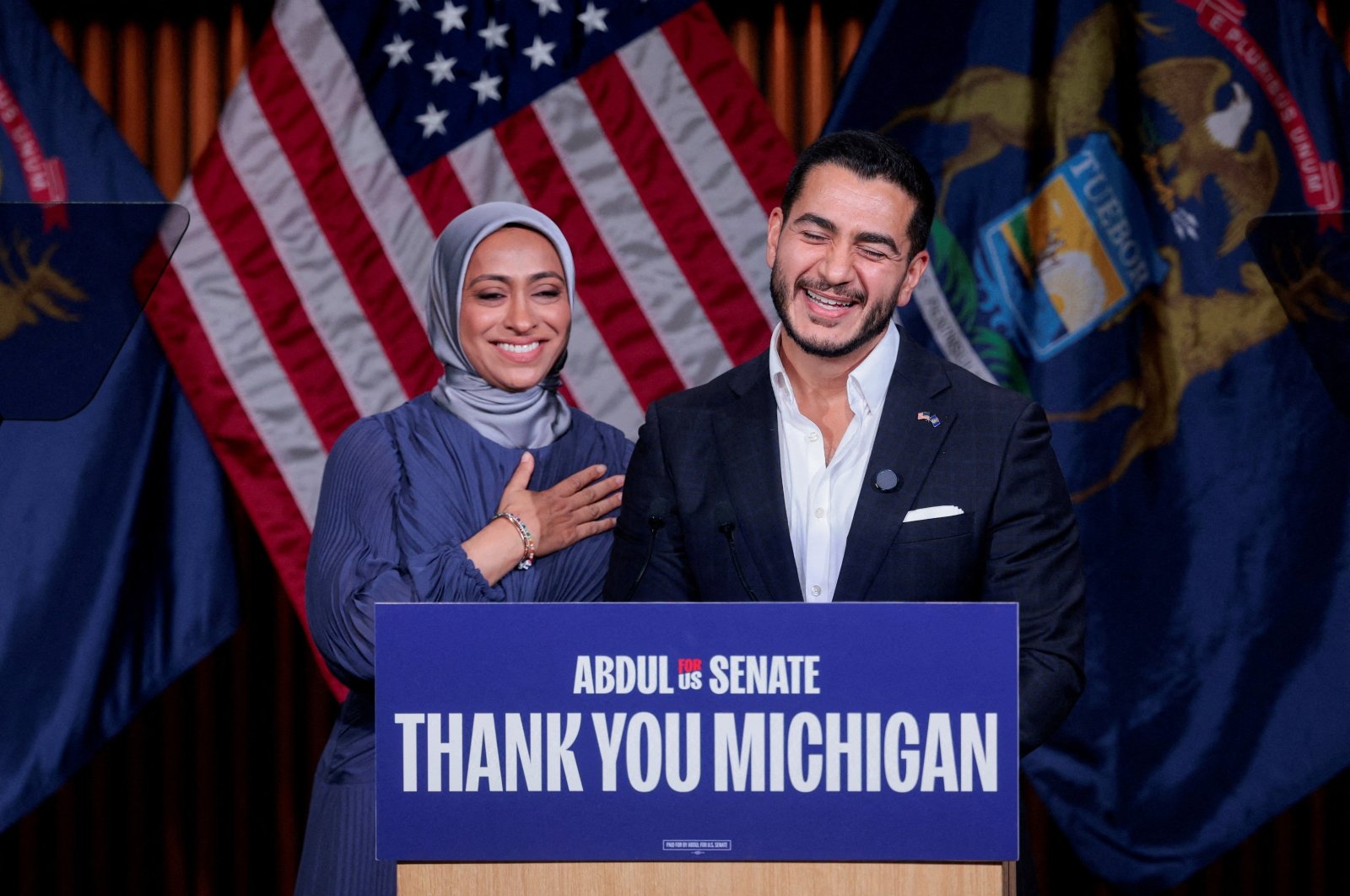
Abdul El-Sayed, Seven Other Muslims Make History In US Midterm Elections
Abdul El-Sayed, Seven Other Muslims Make History In US Midterm Elections
Muslim Candidates Also Secure State Senate Seats In New York, Illinois And Georgia
WASHINGTON, United States — Muslim candidates have recorded significant electoral victories in the November 3, 2026, United States midterm elections, with Democrat Abdul El-Sayed making history as the first Muslim elected to the US Senate, while at least seven other Muslim candidates secured seats in the House of Representatives.
The electoral successes, which also saw Muslim politicians win state legislative positions across different parts of the country, represent a significant development in the political participation and representation of Muslim Americans.
El-Sayed’s victory in Michigan’s Senate election stands out as one of the most remarkable achievements of the elections, breaking a longstanding barrier for Muslim representation in the upper chamber of the US Congress.
The physician and former public health official defeated Republican challenger Mike Rogers in the contest, securing a seat in the Senate and making history as the first Muslim American elected to the institution.
His victory adds a new dimension to the growing influence of Muslim politicians in American public life, particularly at a time when debates over immigration, civil rights, healthcare and US foreign policy continue to shape the country’s political landscape.
Beyond El-Sayed’s historic achievement, Muslim candidates also recorded notable victories in the House of Representatives.
Among them is Congresswoman Ilhan Omar, who secured re-election in Minnesota’s 5th Congressional District.
Omar, one of the most prominent Muslim politicians in the United States, has remained a major voice in congressional debates involving immigration, healthcare, civil rights and American foreign policy.
Another incumbent, Rashida Tlaib, also retained her seat representing Michigan’s 12th Congressional District.
Tlaib, who has consistently advocated Palestinian rights and criticised US military support for Israel, remains one of the most recognisable Muslim lawmakers in the American legislature.
Democratic Congressman André Carson equally secured another term representing Indiana’s 7th Congressional District, extending his presence as one of the longest-serving Muslim members of the US Congress.
In California, Lateefah Simon won re-election in the 12th Congressional District, while Adam Hamawy secured victory in New Jersey’s 12th Congressional District.
Hamawy’s victory is particularly significant because he becomes the first Muslim to represent New Jersey in the US Congress.
Another notable winner was Darializa Avila Chevalier, who secured New York’s 13th Congressional District.
The congressional victories bring the number of Muslim candidates elected to the US House of Representatives to at least six, in addition to El-Sayed’s historic Senate victory.
Muslim women also recorded significant achievements in state legislative elections.
In New York, Aber Kawas won the State Senate’s 12th District, marking an important milestone for Palestinian-American political representation.
Similarly, Nabeela Syed secured victory in Illinois State Senate District 26, defeating Republican incumbent Darby Hills.
In Georgia, Palestinian-American politician Ruwa Romman also won the State Senate District 7 contest, further strengthening Muslim representation in the state’s political institutions.
The victories came amid a major political shift in Washington, with Democrats recording significant gains in the midterm elections, creating fresh political challenges for President Donald Trump’s Republican administration.
The elections were contested against the backdrop of intense debates over the economy, immigration, healthcare, civil liberties and America’s foreign policy, particularly its relationship with Israel and the Palestinian question.
Muslim candidates have increasingly become visible in these debates, with several advocating policies involving civil rights, humanitarian assistance, healthcare access, immigration and social justice.
Reports published after the elections indicated that at least 36 Muslim candidates had won or were leading in various federal, state and local contests, although some results remained subject to further counting and verification.
The Council on American-Islamic Relations (CAIR) had earlier tracked more than 160 Muslim-American candidates seeking elective positions across different levels of government.
The latest victories therefore represent another important chapter in the political participation of Muslim Americans, whose representation has continued to expand in America’s democratic institutions.
With El-Sayed’s historic Senate victory, the successes of Muslim congressional candidates and the emergence of other Muslim lawmakers in state legislatures, the 2026 midterm elections have delivered a significant boost to Muslim political representation in the United States.
However, unofficial election projections and results remain subject to formal certification by the relevant electoral authorities.
Abdul El-Sayed, Seven Other Muslims Make History In US Midterm Elections
International
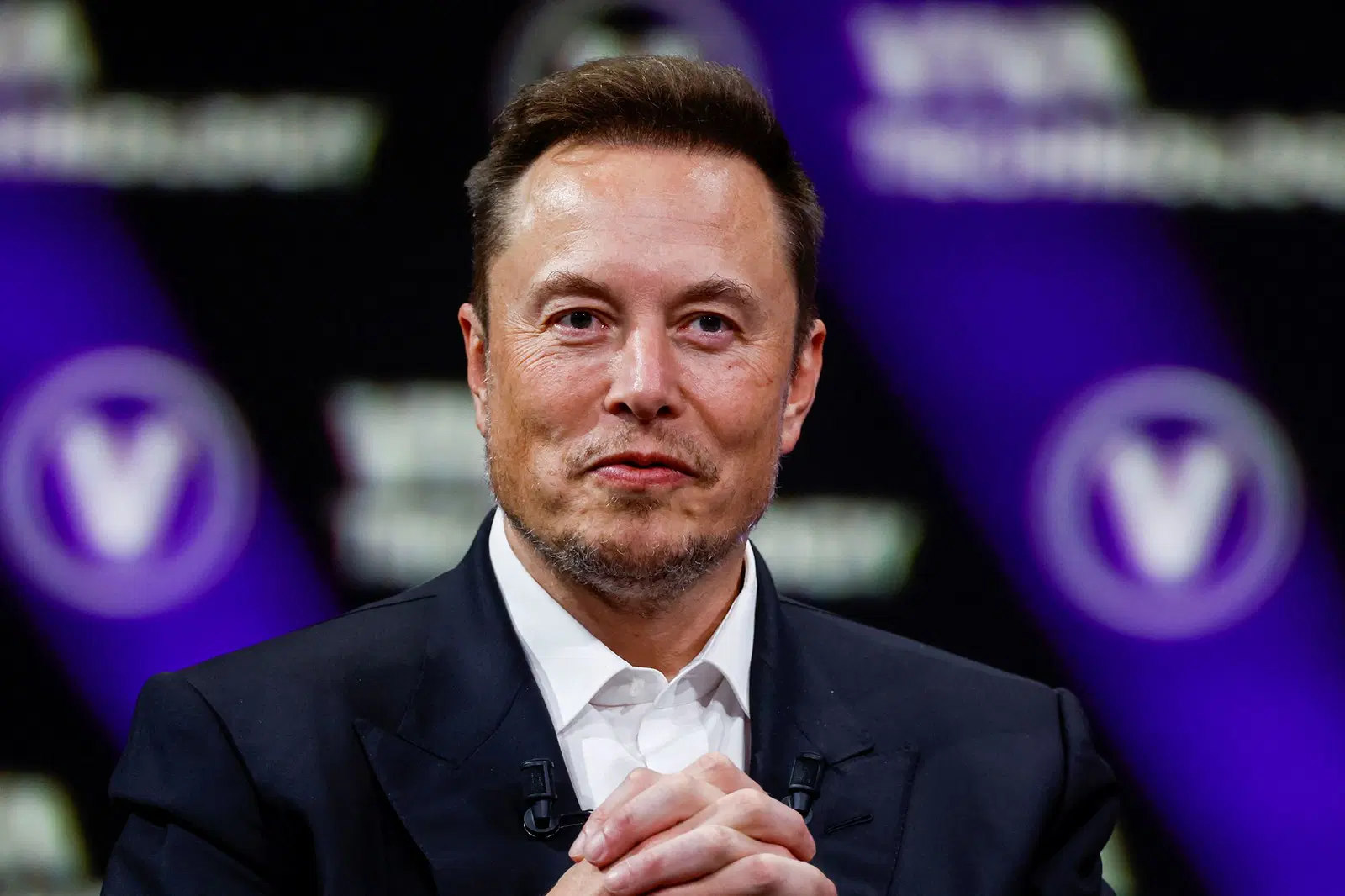
Musk Breaks Silence After $458M Gamble Backfires in Historic Democratic Sweep
Musk Breaks Silence After $458M Gamble Backfires in Historic Democratic Sweep
WASHINGTON, D.C. — Billionaire technology entrepreneur Elon Musk has broken his silence following a stunning Democratic victory in the 2026 United States midterm elections, making sarcastic remarks after spending hundreds of millions of dollars to support Republican candidates who suffered major electoral setbacks.
Musk, the world’s richest man and founder of SpaceX and Tesla, reportedly committed approximately $458 million to political groups and candidates backing Republicans in the elections, making him the biggest individual political donor in the 2026 election cycle.
However, the massive financial investment failed to prevent Democrats from securing a sweeping victory, taking control of both chambers of Congress and recording significant gains in several traditionally Republican strongholds.
Reacting to the outcome on Tuesday night, Musk took to his social media platform, X, where he appeared to make light of the electoral setback.
“Data centers in space looking pretty appealing right now,” he wrote.
In another post, the billionaire added: “Guess my election-interfering space lasers didn’t work this time.”
The comments, which attracted considerable attention online, appeared to reflect his frustration with the outcome, although they were delivered in his characteristic sarcastic style.
Musk’s political investment had been directed towards strengthening Republican chances of retaining control of Congress, with substantial financial backing going to political action committees and groups supporting candidates across several states.
One of the most expensive political battles involved Texas, where Musk reportedly spent more than $200 million supporting Republican Senate candidate Ken Paxton.
Despite the enormous financial backing, Democratic candidate James Talarico defeated Paxton, delivering a major blow to the Republican campaign and another setback for Musk’s political influence.
Other Republican-backed candidates also suffered significant defeats, reinforcing the scale of the Democratic resurgence.
The results have raised fresh questions about the influence of wealthy political donors in American elections, particularly whether massive campaign spending can overcome voter dissatisfaction with government policies and political leadership.
Meanwhile, Musk appeared to acknowledge the significance of the election outcome when he reacted with a brief “Interesting” to exit polling data suggesting that although Republican voters remained supportive of President Donald Trump’s immigration policies, the ongoing conflict involving Iran had become a major electoral liability for the party.
The election results suggest that economic concerns, rising living costs and dissatisfaction with the Trump administration, alongside the Iran conflict, played significant roles in shaping voters’ decisions.
The Democratic victories have also created a major political challenge for Trump, whose administration is expected to face increased congressional scrutiny during the remaining two years of his presidency.
With Democrats now controlling both chambers of Congress, the party will have greater power to obstruct Republican legislative proposals, scrutinise government activities and investigate policies of the Trump administration.
For Musk, the outcome represents a significant setback after his unprecedented financial involvement in the election cycle.
Although political donations do not automatically translate into electoral victories, the results have reignited debate over the limits of billionaire influence in American democracy.
His latest comments also suggest that the billionaire may be turning his attention back to his ambitious space technology projects as the political consequences of the Democratic victory begin to unfold.
Musk Breaks Silence After $458M Gamble Backfires in Historic Democratic Sweep
International
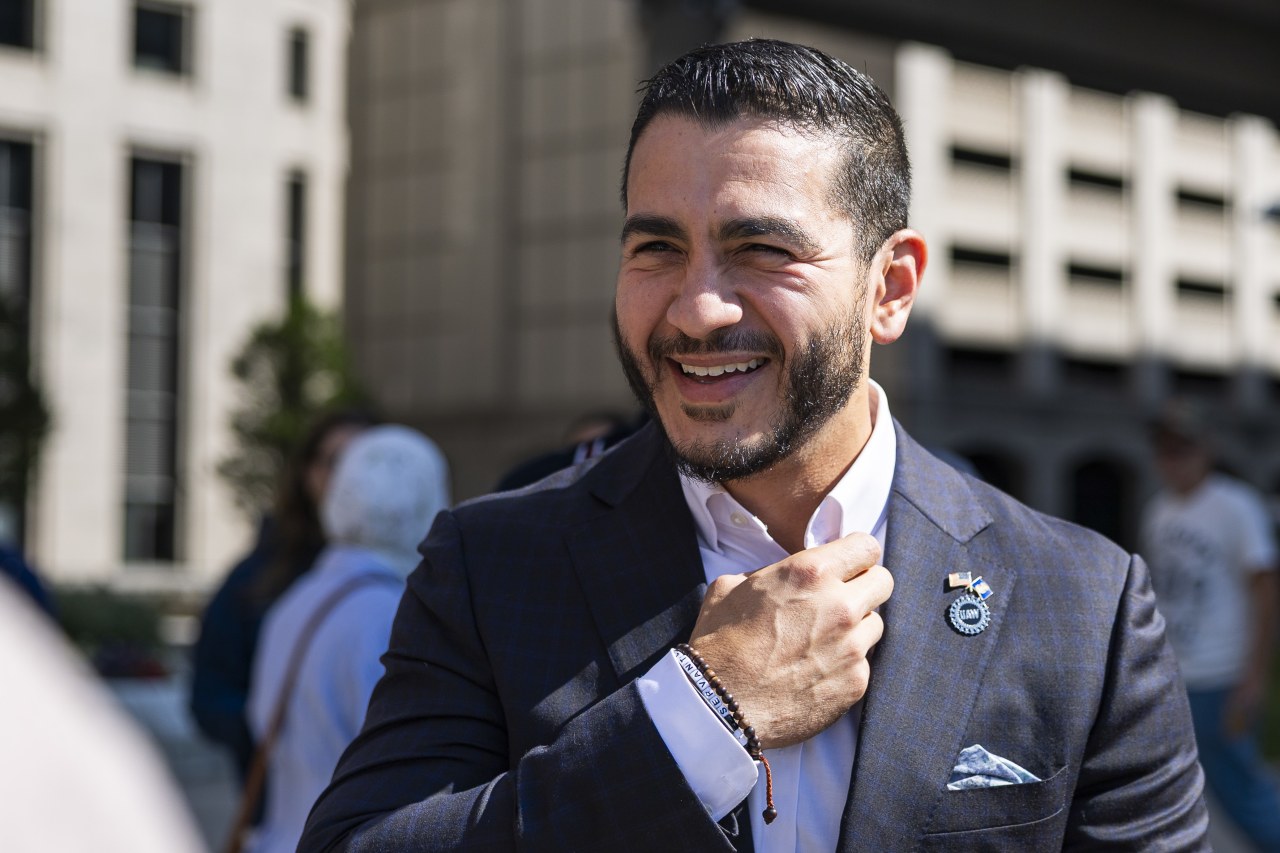
Abdul El-Sayed Makes History, Defeats Republican Rival To Become First Muslim US Senator
Abdul El-Sayed Makes History, Defeats Republican Rival To Become First Muslim US Senator
Democrat Abdul El-Sayed has won Michigan’s closely watched United States Senate election, making history as the first Muslim to be elected to the US Senate.
El-Sayed defeated Republican candidate Mike Rogers in the November 3, 2026, midterm elections, according to projections by the Associated Press.
His victory marks a historic milestone for Muslim representation in American politics and brings an end to more than two centuries without a Muslim serving in the US Senate.
The election was one of the most closely watched contests in the country, as Democrats and Republicans battled for control of the Senate.
According to Michigan Advance, the Associated Press called the race for El-Sayed with approximately 85 per cent of the votes counted. He was leading Rogers with 51.9 per cent against 46.1 per cent.
The victory means El-Sayed will succeed retiring Democratic Senator Gary Peters, who did not seek re-election.
Born on October 31, 1984, in Rochester Hills, Michigan, El-Sayed is the son of Egyptian immigrants.
The 42-year-old politician built his career around public health before venturing into electoral politics.
He graduated from the University of Michigan in 2007, earning degrees in biology and political science. He subsequently obtained a doctorate in public health from the University of Oxford as a Rhodes Scholar and later earned a medical degree from Columbia University in 2014.
In 2015, at the age of 30, he was appointed Detroit’s health director, making him one of the youngest officials to occupy the position.
He later served as head of Wayne County’s health department from 2023 to 2025.
Although he previously contested the Michigan governorship in 2018, he lost the Democratic primary to Gretchen Whitmer.
His election to the Senate therefore represents a significant turning point in his political career.
During the campaign, El-Sayed promoted an ambitious progressive agenda, including universal healthcare, popularly known as Medicare for All.
He also advocated measures to address medical debt, increase taxes on billionaires, reduce corporate influence in politics and limit the role of wealthy interest groups in election financing.
On foreign policy, he called for an end to the war involving Iran and a reassessment of America’s relationship with Israel, particularly over the conflict in Gaza.
His positions attracted support from prominent progressive politicians, including Senator Bernie Sanders and Congresswoman Alexandria Ocasio-Cortez.
Former President Barack Obama and former Vice President Kamala Harris also campaigned in Michigan in support of his candidacy.
El-Sayed’s campaign was marked by controversies surrounding his Muslim faith, Egyptian heritage and criticism of Israel.
President Donald Trump and other Republican figures questioned his loyalty to the United States and made allegations linking him to extremist organisations.
El-Sayed rejected the allegations, while the Associated Press reported that there was no evidence supporting claims of terrorist links.
His Democratic primary opponent, Congresswoman Haley Stevens, also endorsed Republican candidate Mike Rogers shortly before election day, following disagreements over El-Sayed’s positions.
Despite the divisions, El-Sayed secured the Democratic Party’s support and went on to defeat Rogers in the general election.
El-Sayed’s election is particularly significant for Muslim representation in the United States Congress.
Although Muslims have previously served in the House of Representatives, including Keith Ellison, Ilhan Omar and Rashida Tlaib, no Muslim has ever served in the US Senate.
His victory will therefore open a new chapter in the representation of Muslims in America’s highest legislative chamber.
He is expected to assume office in January 2027, succeeding retiring Senator Gary Peters.
His victory also gives progressive Democrats a prominent new figure in Washington as the party prepares for future political contests.
For El-Sayed, the historic achievement marks the culmination of a political journey that began with public health advocacy and has now taken him to the United States Senate.
Abdul El-Sayed Makes History, Defeats Republican Rival To Become First Muslim US Senator (more…)
-
 International3 days ago
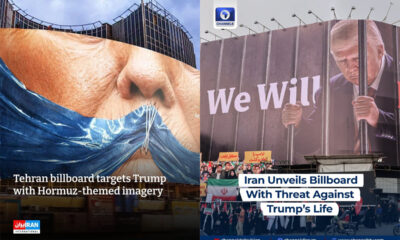
Iran Unveils ‘We Will Kill Trump’ Billboard in Tehran Amid Rising Tensions With US
-

 Politics3 days ago
Tinubu’s Re-election: Osun APC Leaders Reject Oyebamiji-Led Campaign Council
-

 metro2 days ago
Bandits Demand Over ₦100m Ransom for 15 Abducted Islamiya Students in Niger
-
 metro2 days ago
FG’s N50,000 Relief: OPay Details Eligibility Check Process, Issues Strong Warning Against Scams
-
 International3 days ago
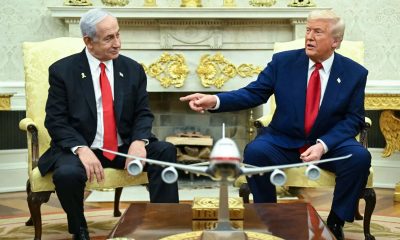
Trump Shocks Israel, Announces End To $4bn Annual US Military Aid
-

 International3 days ago
Tourist Killed, Three Injured as Two Helicopters Collide Near Mount Everest in Nepal
-

 International2 days ago
Australia Under Pressure To Scrap $368bn US-UK Nuclear Submarine Deal As Inquiry Warns Of China War
-
 Politics3 days ago
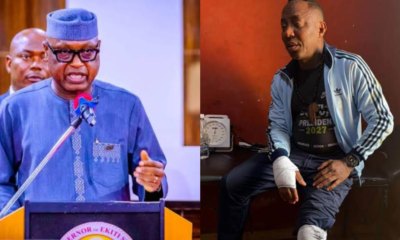
2027: ‘Oyebanji Seized Our Phones’ – Sowore Accuses Ekiti Gov of Withholding Recovered Devices