

Health
‘We Are Ignorant, We Don’t Read’ — NAFDAC DG Raises Food Safety Concerns

‘We Are Ignorant, We Don’t Read’ — NAFDAC DG Raises Food Safety Concerns
The Director-General of the National Agency for Food and Drug Administration and Control (NAFDAC), Prof. Mojisola Adeyeye, has said poor understanding of food safety guidelines and regulatory responsibilities remains a major challenge in Nigeria.
Adeyeye made the remarks while explaining the roles of government agencies in regulating food products and agricultural practices across the country.
“We are ignorant in this country. We are very ignorant. We don’t read. We don’t understand,” the NAFDAC DG said.
She explained that several government agencies are responsible for different stages of the food chain, from production on the farm to consumption, stressing that NAFDAC’s mandate primarily covers processed and semi-processed foods.
According to Adeyeye, the Federal Ministry of Agriculture has the primary responsibility for fresh agricultural produce sold in markets.
“NAFDAC mandate is for processed or semi-processed foods. So the oranges you buy in the market, we don’t control the oranges you buy in the market,” she said.
However, she said NAFDAC has regulatory responsibilities when pesticides are used in agricultural production because the agency approves, regulates and controls such products.
Adeyeye said NAFDAC works with the Ministry of Agriculture to train farmers on the proper use of pesticides, including the quantity to apply and the appropriate period between treatment and harvesting.
READ ALSO:
- 2027: Galadima Alleges APC Offering N50m, N200m to Lawmakers to Step Aside
- ‘No Decent Wages, No Credible Elections’ — Sowore Threatens 2027 Boycott
- NSITF Exposes Fake Recruitment Scam, Warns Nigerians Against Fraudsters
She said some farmers may misuse agricultural chemicals because they do not fully understand instructions on pesticide labels.
“We have about 56 per cent illiteracy. If it’s a literate country, they will read: ‘Put one teaspoon in one gallon.’ Sometimes our people don’t understand. And they think the more you put, the better,” she said.
The NAFDAC chief said the agency’s Veterinary Medicine and Allied Products Directorate also trains farmers and other stakeholders on the appropriate use of pesticides.
She, however, noted that NAFDAC cannot independently reach the entire farming population because of the number of farmers across the country.
“We cannot go to one million farmers in Nigeria. NAFDAC cannot do that. It is the Ministry of Agriculture that should be doing that,” Adeyeye said.
She added that while NAFDAC has an obligation to support farmer education because of its role in regulating pesticides, the Ministry of Agriculture should take the lead in educating farmers on fresh produce and agricultural practices.
Adeyeye also said many Nigerians do not understand the specific responsibilities of government agencies involved in food regulation, resulting in misplaced expectations about what NAFDAC can regulate.
The comments come amid continuing concerns over food safety, pesticide misuse, counterfeit products and consumer protection in Nigeria.
Adeyeye disclosed that NAFDAC receives more than 200 complaints from Nigerians through its complaint channels each month. The agency also reported receiving 225 complaints involving suspected counterfeit products in August.
She said complaints from consumers provide important leads for NAFDAC’s investigations and enforcement activities.
The agency has continued to urge Nigerians to pay attention to product information, follow safety instructions and report suspected counterfeit, substandard or unsafe products through its established channels.
‘We Are Ignorant, We Don’t Read’ — NAFDAC DG Raises Food Safety Concerns









Health
WHO Declares Nigeria Ebola-Free, 52 Contacts Remain Under Surveillance

WHO Declares Nigeria Ebola-Free, 52 Contacts Remain Under Surveillance
The World Health Organisation has declared Nigeria free of active Ebola cases after the evacuation of country’s lone confirmed patient to Switzerland.
Health authorities however continue to monitor 52 contacts to prevent a possible spread of the deadly disease.
The WHO Regional Director for Africa, Dr Mohamed Janabi, announced this in a statement posted on his verified X handle on Monday, confirming that Nigeria would retain responsibility for monitoring 52 contacts, while Switzerland would take over the patient’s continued medical care and follow up with her husband.
Janabi said the patient was clinically stable after Nigerian medical teams successfully managed her through the acute phase of the illness and stabilised her condition before her evacuation.
“Nigeria is now Ebola-free following the evacuation of the index patient to Switzerland,” he said.
He added that Nigeria would maintain close follow-up of the 52 contacts, while Switzerland would assume responsibility for the continued management of the patient and the monitoring of contact number 53, her husband.
The development follows an earlier confirmation by the Nigeria Centre for Disease Control and Prevention that the country had recorded an imported Ebola case involving a patient from Uganda.
Following the confirmation, the NCDC placed 53 contacts under surveillance in Abuja as part of measures to track possible exposure and prevent further transmission.
Although the evacuation of the patient has removed the confirmed case from Nigeria, health authorities are expected to sustain surveillance of the identified contacts in line with established public health protocols.
The monitoring exercise remains critical to ensuring that any potential emergence of symptoms among those exposed is detected promptly and managed appropriately.
Ebola is a severe and often fatal disease that can spread through direct contact with the blood and other bodily fluids of an infected person or someone who has died from the disease.
Public health authorities typically rely on early detection, contact tracing, isolation and appropriate medical care to contain outbreaks and prevent further transmission.
With the index patient now receiving continued care in Switzerland, Nigeria’s immediate focus remains on monitoring the 52 contacts and ensuring that the outbreak does not lead to further infections.
Health
NAFDAC Busts Illegal Herbal Factory in Lagos, Arrests Manager Over Fake Registration Number
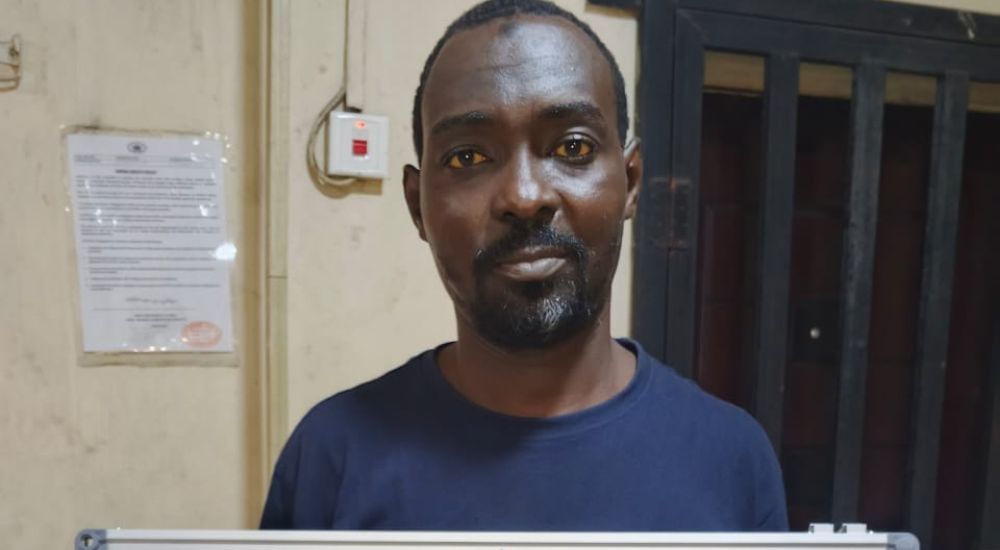
LAGOS — The National Agency for Food and Drug Administration and Control (NAFDAC) has uncovered a suspected illegal herbal product manufacturing facility in Agege, Lagos State, and arrested its manager over the alleged use of a falsified registration number on herbal products.
The agency disclosed the development on Wednesday, October 21, 2026, following an investigation triggered by a report published by The Guardian on October 10 concerning herbal products allegedly carrying fake NAFDAC registration numbers.
According to NAFDAC, its investigative team conducted surveillance before discovering three variants of Asheitu Adams Bitters bearing registration number A7-1827L.
However, checks through the agency’s NAFDAC Automated Product Administration and Monitoring System (NAPAMS) revealed that the registration number belonged to Greentol Cough Syrup, rather than the herbal bitters.
The agency said the discovery confirmed the fraudulent use of the registration number on the products.
During the operation, the company’s managing director and chief executive officer was reportedly absent, while the manager was arrested for further interrogation as investigations continued.
The Sun identified the arrested manager as 39-year-old Abdullazeez Saidu from Kano State. NAFDAC had not announced any court charges against him as of Wednesday.
READ ALSO:
- NELFUND Warns Schools: Student Loans Are Voluntary, Not Compulsory
- ‘I Never Asked Them to Abandon Loved Ones’ — Obi Clarifies Diaspora Remarks
- FG Confirms Ebola Case in Abuja, Identifies 44 Contacts
The agency urged members of the public to provide credible information about suspected illegal manufacturing activities to help strengthen enforcement efforts and protect consumers from potentially unsafe products.
NAFDAC provided the following channels for reporting suspected violations: its call centre numbers, 0800-1-623322 and 0700-1-623322, and the email address reforms@nafdac.gov.ng.
The discovery comes amid a series of enforcement operations by the agency against suspected counterfeit and adulterated products in Lagos and other parts of the country.
On October 14, NAFDAC reported uncovering a suspected facility at the International Trade Fair Complex in Lagos where expired alcoholic and non-alcoholic beverages were allegedly being repackaged for sale. The agency also reported seizures of suspected counterfeit alcoholic drinks in other operations.
The latest operation highlights concerns about the misuse of regulatory registration numbers, which consumers often rely on when assessing whether products have been registered for sale in Nigeria.
NAFDAC has repeatedly urged consumers to verify product registration details and report suspicious products or manufacturing activities.
The agency’s investigation into the Agege facility is ongoing, and further details about the products recovered, their distribution and any potential health effects have not been publicly disclosed.
NAFDAC Busts Illegal Herbal Factory in Lagos, Arrests Manager Over Fake Registration Number
Health
FG Confirms Ebola Case in Abuja, Identifies 44 Contacts

FG Confirms Ebola Case in Abuja, Identifies 44 Contacts
The Federal Government has confirmed a case of Ebola virus disease (EVD) in the Federal Capital Territory (FCT), Abuja, after laboratory tests returned positive for a woman who recently arrived in Nigeria from Uganda.
The Coordinating Minister of Health and Social Welfare, Professor Muhammad Ali Pate, announced the development on Tuesday, October 20, 2026, saying health authorities had identified 44 close contacts and commenced contact tracing to prevent further transmission.
According to the minister, the patient was admitted to a private hospital in Abuja, where she received medical attention for several days before the infection was confirmed. She is currently in isolation and receiving medical care.
The Federal Ministry of Health and Social Welfare is coordinating the response with the Nigeria Centre for Disease Control and Prevention (NCDC), the FCT Health Services Secretariat and other relevant authorities.
Public health teams are tracing and monitoring people who may have been exposed to the patient, including healthcare workers, other patients, caregivers and people who travelled with her.
The government said surveillance had been intensified, while the hospital where the woman received treatment was receiving support to strengthen infection prevention and control measures.
The minister urged public and private healthcare facilities across Nigeria to remain on high alert and promptly identify, isolate and report suspected cases to the appropriate public health authorities.
READ ALSO:
- Breaking: Afenifere Leader Pa Fasoranti Dies at 100
- Army Major, Soldiers Killed in ISWAP Ambush in Yobe State
- Chaos in Abeokuta as Algerian Fans Attack Coach, Vandalise Stadium After Rangers Defeat
Healthcare workers were also directed to maintain strict infection prevention and control practices to reduce the risk of exposure and protect patients and medical personnel.
Pate appealed to Nigerians to remain calm, vigilant and cooperative with health officials, stressing that early detection and prompt reporting were essential to containing the infection.
He noted that Nigeria had successfully contained an Ebola outbreak in 2014 and had experience and public health systems to respond to the current situation.
The government also urged anyone contacted during the tracing exercise, including passengers who may have travelled with the patient, to provide the necessary information and comply with official public health guidance.
Ebola virus disease is a serious illness that can spread through direct contact with the blood or other body fluids of an infected person who has developed symptoms, or through contaminated objects and materials.
Symptoms may include fever, severe weakness, headache, vomiting and diarrhoea. The incubation period ranges from two to 21 days.
Anyone who believes they may have been exposed and subsequently develops symptoms should contact public health authorities for guidance and avoid close contact with others while awaiting advice.
The NCDC operates a toll-free call centre on 6232, available 24 hours a day, seven days a week, for information and reports of suspected cases.
Nigeria’s latest case comes amid a wider Ebola outbreak affecting parts of Africa, including the Democratic Republic of the Congo and countries in East Africa. The NCDC had previously warned of the risk of imported infections and strengthened national preparedness measures.
The Federal Government said investigations and contact tracing were continuing, with further updates expected through the NCDC and the Presidential Task Force on Ebola Virus Disease.
Authorities have urged the public to rely on verified information, follow official health advice and avoid spreading unconfirmed reports as efforts continue to contain the infection.
FG Confirms Ebola Case in Abuja, Identifies 44 Contacts
-

 metro2 days ago
FG’s ₦100,000 Family Grant: Eligibility, How to Apply and Payment Procedure Revealed
-

 Sports2 days ago
Ex-Super Eagles Captain Segun Odegbami Survives Death as Three Assailants Machete Him in Abeokuta Home
-

 Business3 days ago
NNPCL, MRS, Other Marketers Slash Petrol Prices Across Nigeria As Motorists Get Fresh Relief
-

 metro2 days ago
Cleveland Girl, 11, Gets 7-Year Juvenile Sentence Over Rape, Attempted Murder of 5-Year-Old
-

 News3 days ago
Agunbiade Proposes Council of Grand Chief Imams for Yorubaland, Edo, Delta
-

 metro1 day ago
Hoodlums Descend on Tinubu’s Praise Singer Rarara at Abuja Mosque, Tear His Clothes
-

 metro2 days ago
Honesty Cost Lagos Taxi Driver His Job, Marriage After Returning ₦21,000 Passenger Left in His Cab
-

 metro3 days ago
‘My Wife and I Are Parallel’: Peter Obi Makes Candid Revelation About Margaret’s Spending Habits