

Politics
We will deliver Tinubu as your successor, APC govs tell Buhari

-Islamic body endorses Tinubu for President
-Nigerians won’t accept your lies, APC tells PDP
State governors elected on the platform of the All Progressives Congress (APC) pledged yesterday to deliver the party’s flag bearer in the February 25,2023 election , Asiwaju Bola Tinubu as Nigeria’s next president.
Tinubu’s victory, according to the Progressive Governors’ Forum (PGF),will be its special birthday gift to Buhari who turned 80 yesterday.
He added: “Leaders and members of our party, All Progressives Congress (APC) are grateful to have your inspiring leadership role. Accordingly, our party has continued to evolve and both management of party administration and processes of candidates’ emergence are improving, which is responsible for the higher electoral advantages we have compared to other parties in the country. This accounts for the massive support of Nigerians for all our candidates for the 2023 elections at all levels.
READ ALSO:
- NAF special forces rescue seven kidnapped Chinese citizens
- Kanu mustn’t die in prison, IPOB warns FG
- Updated: Trading on highways endangers lives, obstructs traffic, FRSC warns
“As we wish you a happy birthday and say a big thank you for your selfless service to our dear country, we reaffirm our commitment to work for the electoral victory of all our candidates for the 2023 elections.
”We are working hard with abiding faith and belief to ensure that Asiwaju Bola Ahmed Tinubu, our Presidential Candidate emerges victorious and succeeds you.
“Your patriotically inspiring leadership remains the source of our massive support across every part of Nigeria.”
The Jam’iyatul Ansarul Deeni Attijjaniya,during its 5th annual national world Maulud of the Prophet Muhammad held in Minna,Niger State,threw its weight behind Tinubu ahead of the February presidential election.
Sheikh Halifa Mohammed led other sheikhs of the influential sect in making the endorsement. They said Tinubu would be able to improve the economic development of Nigeria and improve the social status of Nigerians.
Halifa Mohammed is the grandson of the founder of the group, Shehu Ibrahim Inyass.
Tinubu appreciated the endorsement of the Jam’iyatul Ansarul Deeni Attijjaniya and assured the leaders and members that he would not disappoint them if he became president.
The Emir of Minna, Dr Farouk Bahago prayed for the successful conduct of the 2023 general elections as he urged the people to shun violence and electoral misconduct.
Niger State Governor, Alhaji Abubakar Sani Bello who spoke in the same vein urged politicians to call their supporters to order and discourage them from engaging in electoral violence.
He noted that every transition period comes with a lot of difficulties, challenges, backbiting and rumor mongering, stressing that the 2023 elections would be peaceful if everyone in the electoral process played his role well.
Special prayers were said for Tinubu and the successful conduct of the 2023 elections by the Imams during the Maulud.
READ ALSO:
- Asake grieves as woman dies after crush at London concert
- Qatar 2022: Croatia win third place match, beat Morocco 2-1
- I understand South-East challenges, Atiku tells Ndigbo in Imo
- BREAKING: Gunmen set ablaze Imo High Court, destroy files
The event which took place at the Polo ground ,Minna ,had in attendance Tinubu, Niger State Governor Abubakar Sani Bello, Kano State Governor Abdullahi Umar Ganduje, Minister of State for Foreign Affairs, Ambassador Zubairu Dada, the Senator representing Niger East Senatorial District, Alhaji Sani Musa, the Emir of Minna, Dr Farouk Bahago, former Speaker of the National Assembly, Mr. Oladimeji Bankole, Niger APC governorship candidate, Honorable Umar Bago and others.
Tinubu had arrived in Minna on Friday evening ahead of the ceremony.
Nigerians won’t accept your lies, APC tells PDP
The Presidential Campaign Council (PCC) of the APC said yesterday that attempts by the Peoples Democratic Party (PDP) and its flag bearer, Atiku Abubakar to de-market the achievements of the governing party would not work, as Nigerians won’t give in to their lies.
The council also said that all surreptitious moves by the opposition to rewrite what it called an ugly past that plundered the country into the abyss of suffering would hit the rocks.
The Director, Media and Publicity of the campaign council, Bayo Onanuga, in a statement in Abuja said recent slanderous utterances by PDP leaders and its presidential candidate against the APC and President Muhammadu Buhari were not only insulting but an abuse of the collective intelligence of Nigerians.
His words:”Having consistently shown a lack of capacity for introspection, PDP leaders have been going about the country slandering the All Progressives Congress-led government of President Muhammadu Buhari, believing that as Nigerians we have forgotten their atrocious era and that we are unappreciative ignoramuses.
“Notably Atiku Abubakar, the presidential candidate of the party that once contemplated changing its brand name because of its atrocious record, has been emboldened by our assumed forgetfulness as a nation, mounting podiums and trying to deodorise and beautify the party’s ugly era.”
It faulted Atiku blaming the APC for the emergence of Boko Haram, and argued that the insurgents emerged in 2009 under the watch of the PDP.
”He (Atiku) blamed Buhari over the economic challenges, forgetting that he opportunistically joined the coalition that toppled the clueless PDP government of President Jonathan when the economy was nose-diving,” he said.
“Atiku has now been joined by Abubakar Saraki, the failed Senate President who in his latest comment in Ilorin, urged Nigerians to ‘go back to the PDP at both the state and the national levels’. In the famous words of Dino Melaye, we say ‘PDP: God forbid’ “.
The APC PCC argued that in a sane society, PDP should not be canvassing for votes to be returned to office, when during their 16 years in power, they laid the foundation for the challenges we face today.
”Let us not forget what the party of looters did to our treasury, depleting foreign reserves to $28 billion by May 2015, even though a record N75 trillion flowed into the treasury from oil sales alone, with almost nothing to show.
“Let us not forget that the party of looters nurtured the conditions that led to the emergence of Boko Haram on our soil and it was so clueless about how to deal with the menace as our cities and people were bombed and maimed by Boko Haram terrorists.
”Let us not forget that for six years, the PDP allowed the insurgents to declare a Caliphate on our soil, controlling 17 local governments in Borno State and four in Adamawa, making Atiku unable to go to Jada, his hometown.
READ ALSO:
- Court halts confirmation of Onochie, Ogbuku as Chairman, MD of NDDC respectively
- Aregbesola breaks silence over debt impasse between Oyetola, Adeleke; says Account General knows the facts
- Nnamdi Kanu: IPOB dissolved, de-registered as United Kingdom organization
”Let us not forget that the PDP left our infrastructure decrepit, highways impassable after allotted money to contractors had been shared by party stalwarts.
”Let us not forget that this party now posing as recovery agents had already grounded our country and made our economy comatose before Buhari took over on 29 May 2015.
”Let us not forget that the two poorest states in our country, Sokoto and Bayelsa are states being governed by the PDP in the last 8 years.”
However, the APC-PCC noted that in the past seven and a half years, the Buhari-led administration has been trying to clear the mess left by the PDP predecessors.
The council said, “Despite the challenges faced on the economic front, among which is dwindling revenue exacerbated by oil theft, the government has been able to showcase many game-changing projects.
”One of them, which temporarily opened on 15 December, is the Second Niger Bridge. The PDP promised the Southeast states and Ifeanyi Okowa’s Delta State that it would do the bridge. For 16 years, the party made one empty promise after another. Muhammadu Buhari in 2018 decided to take on the project. He awarded it all over again and in record time the 1.6 kilometres long bridge is ready. And it comes with other ancillary infrastructure including a 10.3 km highway, a bypass to Owerri and a toll station at Obosi.”
The campaign council promised Nigerians that its presidential candidate, Asiwaju Bola Tinubu, would build on Buhari’s legacy, improve the economy and the security situation, declaring to PDP that, “Nigerians have rejected you (PDP) and our people will not buy your lies again!”






Politics
Obasanjo Blames Tinubu’s Economic Policies for Rising Poverty
Obasanjo Blames Tinubu’s Economic Policies for Rising Poverty
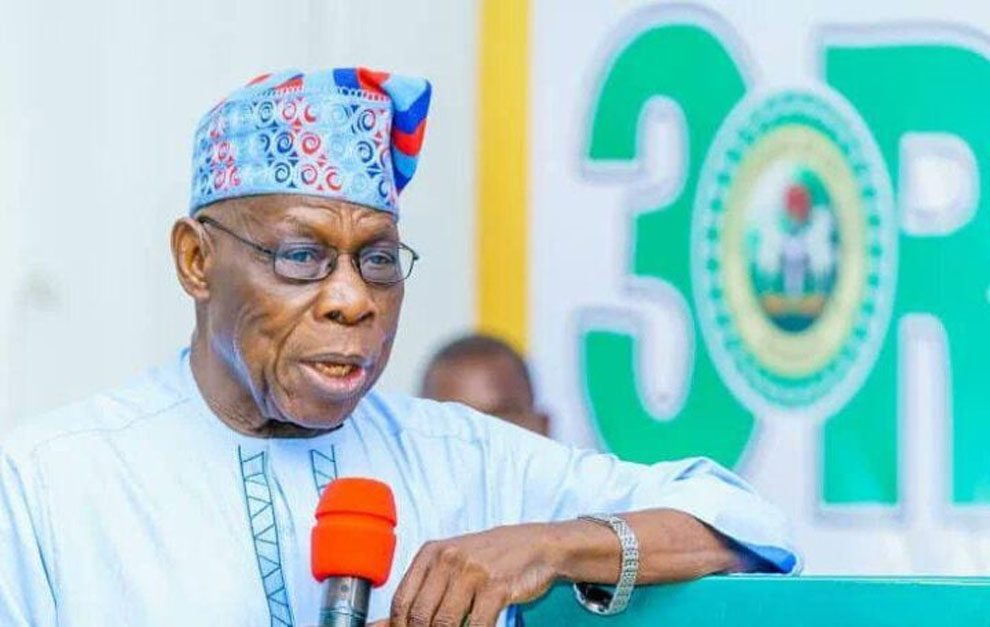
Former President Olusegun Obasanjo has criticised President Bola Ahmed Tinubu’s economic reforms, saying the sharp depreciation of the naira has reduced Nigerians’ purchasing power and worsened poverty across the country.
Obasanjo made the remarks on Wednesday, October 21, 2026, during the Financial Times Africa Summit in London, United Kingdom, where he questioned the economic consequences of the administration’s policies, particularly its foreign exchange reforms and the removal of the petrol subsidy.
The former president argued that the naira’s decline against the United States dollar had significantly weakened the financial position of Nigerian households, making it more difficult for citizens to afford essential goods and services.
He said the exchange rate had moved from approximately ₦500 to the dollar to about ₦1,500, a development he described as a major loss in the value of Nigerians’ money.
“We do not live in isolation as a country. We interact with the rest of the world. And overnight, you devalue the currency by 300 percent. The naira went from N500 to a dollar to N1,500 to a dollar,” Obasanjo said.
He added that the depreciation had made Nigerians poorer and contributed to the country’s severe poverty challenge.
“What that meant was that every Nigerian is made poor by 300 percent. That made Nigeria become the poverty capital of the world, which means Nigeria has the largest number of poor people in the world,” he said.
Obasanjo questioned the benefits of the currency adjustment, insisting that a policy that substantially eroded citizens’ purchasing power could not be considered beneficial to the country without examining its consequences for ordinary people.
“You cannot say to me that that is good for Nigeria. You cannot say to me that that is good for us in any sense,” he added.
The former president’s comments have added to the ongoing debate over the impact of the Tinubu administration’s economic reforms on inflation, living standards, business costs and poverty.
Tinubu announced the removal of the petrol subsidy shortly after assuming office in May 2023. His administration subsequently introduced foreign exchange reforms that allowed the naira to trade more freely against other currencies.
READ ALSO:
- Nigerian Journalist Sentenced to 4 Years Over Facebook Post Criticising Police
- Hyundai Unveils Mufasa, Grand Creta SUVs to Strengthen Nigeria Line-up (Updated)
- NAFDAC Busts Illegal Herbal Factory in Lagos, Arrests Manager Over Fake Registration Number
The government has defended the measures as necessary to address longstanding economic distortions, reduce pressure on public finances, improve the efficiency of the foreign exchange market and attract investment.
However, the reforms coincided with a sharp depreciation of the naira and increases in the cost of imported goods, transportation and other essential commodities, placing considerable pressure on household budgets.
Obasanjo also challenged the argument that the removal of the petrol subsidy was the only viable option available to the government, contending that corruption accounted for a substantial portion of the costs associated with the previous subsidy arrangement.
He argued that tackling corruption within the petroleum subsidy system could have reduced the financial burden on the government and limited the amount of support required.
The former president’s position differs from that of the Tinubu administration, which has maintained that ending the subsidy was necessary to reduce government expenditure and free up resources for development.
Obasanjo questions Tinubu’s second-term bid
Obasanjo also questioned the argument that Tinubu should be given a second term to consolidate his economic reforms, asking what specific policies were being sustained if the outcome was greater hardship for citizens.
He criticised the suggestion that Nigerians should continue to endure the consequences of the reforms without clearer evidence that their living conditions were improving.
The former president maintained that his criticism was directed at the administration’s economic policies and their impact on the public.
He also expressed doubts about the direction of the economy, saying he could not identify clear signs that conditions were improving for Nigerians.
Calls for production and anti-corruption measures
Despite his criticism, Obasanjo outlined measures he believes could help improve Nigeria’s economic prospects, identifying corruption, wasteful spending and unnecessary luxury as areas requiring urgent attention.
He argued that public resources must be managed more responsibly, while government expenditure should be directed towards priorities capable of improving citizens’ welfare.
Obasanjo also stressed the need to strengthen domestic production, saying Nigeria must produce more goods and services rather than depend heavily on imports.
His recommendations centred on reducing corruption, curbing waste and increasing productivity as part of a broader strategy to improve the economy.
The former president also referred to Ghana’s currency performance as a point of comparison, arguing that developments in the neighbouring West African country raised questions about Nigeria’s economic management.
However, exchange-rate movements alone do not provide a complete measure of economic performance, as inflation, export earnings, foreign reserves, productivity and other factors also influence a country’s financial position.
Tinubu, in his Independence Day address on October 1, 2026, defended his administration’s reforms, describing them as difficult but necessary measures to address longstanding weaknesses in the economy. He argued that the government was moving from economic adjustment towards broader prosperity.
The disagreement between the two leaders reflects the wider national debate over whether the reforms will eventually deliver improved living standards or whether changes to their implementation are needed to reduce the burden on households.
As Nigerians continue to contend with the cost of living, the central question remains whether economic growth, currency stability and government revenue gains can translate into affordable food, transportation, housing and other basic necessities.
Obasanjo Blames Tinubu’s Economic Policies for Rising Poverty
Politics
‘People Are Hungry’ Is Not a Manifesto, Nya-Etok Tells Atiku, Obi

‘People Are Hungry’ Is Not a Manifesto, Nya-Etok Tells Atiku, Obi
The Executive Director of the Federal Housing Authority, Arch. Ezekiel Nya-Etok, has challenged former Vice-President Atiku Abubakar and former Anambra State Governor Peter Obi to present concrete policy proposals for tackling hunger and economic hardship, insisting that describing Nigerians as hungry is not a solution.
Nya-Etok, who made the remarks during an interaction with journalists in Uyo, Akwa Ibom State, said politicians seeking to lead Nigeria must explain how they intend to address the country’s challenges rather than merely highlighting the suffering of citizens.
According to a report by National Witness published on October 20, 2026, the housing agency executive argued that acknowledging hunger and hardship was only a description of the situation, not a practical plan for resolving it.
“People are hungry is a situation report and not a solution,” he said, urging opposition politicians to explain how their proposed policies would improve the lives of Nigerians.
He added that political parties and candidates should provide clear explanations of their plans, including how they intend to implement their promises and achieve their economic objectives.
The comments come as political activities gather momentum ahead of the 2027 presidential election, with candidates and political parties increasingly debating the economy, poverty, insecurity and the cost of living.
READ ALSO:
- Police Arrest Man Over Fake Presidency Number Plate in Abuja
- Shettima Blasts States Over Power Woes, Says Govs Must Stop Waiting for Abuja
- Fourth Gas Leak in Six Months: Over 100 Ogun Pupils Hospitalised, Schools Shut as Parents Panic
Atiku, the presidential candidate of the African Democratic Congress (ADC), has repeatedly criticised President Bola Ahmed Tinubu’s administration over the rising cost of living and what he described as worsening poverty.
In an October 1, 2026, address marking Nigeria’s Independence Day, Atiku accused the All Progressives Congress-led administration of deepening the economic difficulties facing Nigerians. He called for measures to make essential goods and services more affordable and outlined a proposal for a targeted subsidy on locally refined petroleum products.
Obi, the presidential candidate of the Nigeria Democratic Congress (NDC), has also identified hunger, poverty and insecurity as major challenges confronting the country.
Speaking in Abuja in September, Obi called on political leaders to shift their attention from political disagreements to finding solutions to the difficulties facing ordinary Nigerians. He argued that political competition should focus on improving citizens’ welfare and reducing poverty.
Nya-Etok’s criticism appears to centre on the need for candidates to go beyond identifying these problems and explain the policies through which they intend to solve them.
Nya-Etok defends Tinubu’s economic reforms
The Federal Housing Authority executive also defended the Tinubu administration, arguing that increased revenue allocations to state governments had helped them meet financial obligations, including the payment of salaries, pensions and gratuities.
He maintained that reversing the removal of the petrol subsidy would return Nigeria to a period when many state governments struggled to meet their financial responsibilities.
Nya-Etok also expressed support for Tinubu’s re-election bid, predicting that the president would secure victory in 2027.
He argued that the current political situation offered the incumbent an advantage, while expressing concerns about the implications of a possible return to power by Atiku.
He also questioned the expectations surrounding Obi’s presidential ambition, arguing that the demands placed on an Obi-led administration could prove difficult to meet within a four-year term.
On corruption, Nya-Etok expressed scepticism about promises to eliminate the practice, arguing that addressing it would require confronting deeper problems within Nigerian society and governance.
His comments add to the growing political debate over whether the country’s next administration should prioritise reversing existing economic policies, introducing targeted relief measures or pursuing alternative strategies to increase production, create jobs and reduce poverty.
With the 2027 election approaching, the debate is likely to place greater emphasis on the economic proposals of presidential candidates, their funding arrangements and the practical steps they intend to take to improve the living conditions of Nigerians.
‘People Are Hungry’ Is Not a Manifesto, Nya-Etok Tells Atiku, Obi
Politics
Tinubu’s Second-Term Denial Could Trigger Political Crisis, Ex-NAHCON Chairman Warns
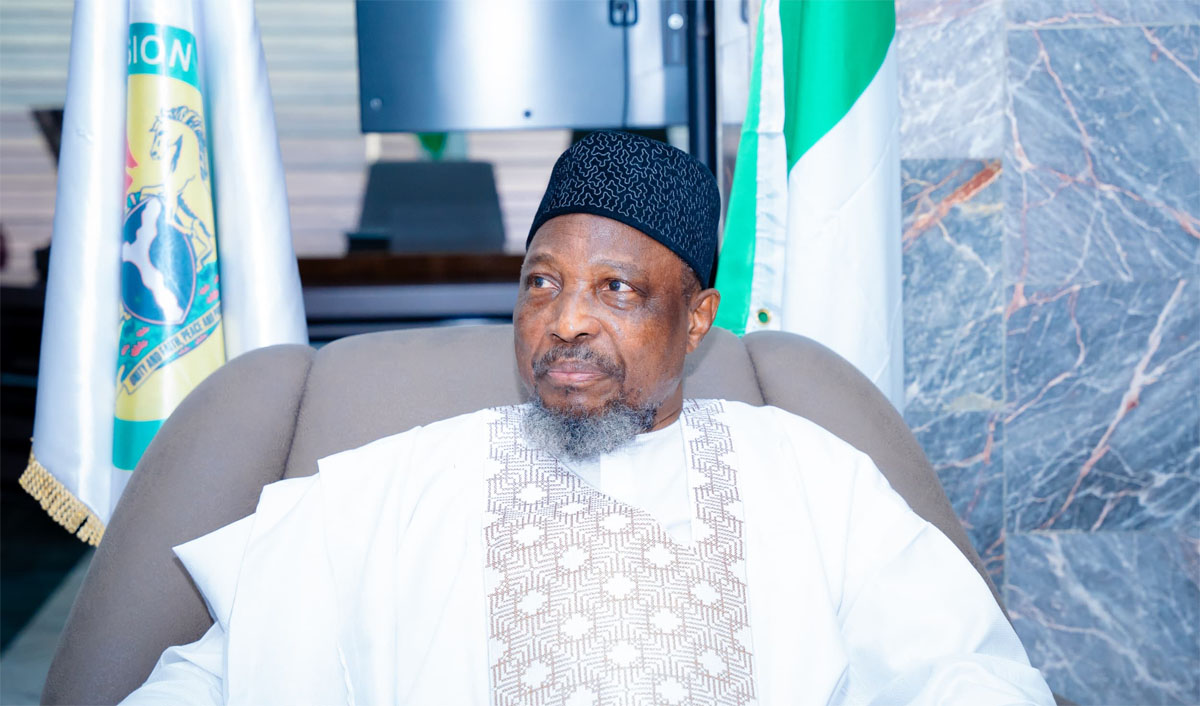
Tinubu’s Second-Term Denial Could Trigger Political Crisis, Ex-NAHCON Chairman Warns
Former Hajj commission chairman urges fairness in power rotation, cites security gains and lower food prices
The immediate past chairman of the National Hajj Commission of Nigeria (NAHCON), Sheikh Abdullahi Saleh Pakistan, has warned that denying President Bola Ahmed Tinubu a second term in office could plunge Nigeria into a political crisis.
Pakistan said allowing Tinubu to complete two terms, as former President Muhammadu Buhari did, would help sustain the informal understanding of power rotation between the North and South and prevent future political tensions.
The former NAHCON chairman made the remarks while addressing youth groups at his residence in Kano, where he argued that political leaders should not be rejected primarily because of their regional origins.
He warned that attempts to deny Tinubu re-election on such grounds could create a dangerous precedent for future presidential contests, particularly for northern politicians seeking to serve two terms.
“We have to be fair to Tinubu. The type of politics we are playing where we reject somebody because of the region he came from is dangerous. If we sustain this, we will suffer in the future,” he said.
Pakistan recalled Tinubu’s support for Buhari’s second-term ambition, arguing that the former Lagos State governor had stood by the late president and insisted that he should complete his two terms despite concerns about his health.
According to him, it would be unfair for political actors to oppose Tinubu’s second-term bid after Buhari, who came from the North, was allowed to serve eight years.
He warned that denying a southern president the opportunity to complete two terms could undermine the informal power-sharing arrangement between the two regions.
“The way Tinubu supported late Muhammadu Buhari and insisted that he completed his two terms, even though he was ill, and now some people are working hard to deny Tinubu a second term, we will fling the country into a political crisis in the future. Nobody will allow any northerner to take two terms,” he said.
The former NAHCON chairman’s position comes amid growing political discussions over zoning, regional representation and the 2027 presidential election.
Although Nigeria’s Constitution does not require presidential power to rotate between the North and South, the practice has remained an important political consideration in the country’s party negotiations and presidential contests.
However, the decision on who becomes president ultimately rests with the electorate through the constitutional electoral process.
Pakistan also defended the Tinubu administration’s handling of insecurity, arguing that the president inherited significant security challenges from previous administrations.
He identified the Boko Haram insurgency and banditry as major problems confronting the country, claiming that the former began before Buhari assumed office, while banditry expanded during the latter’s administration.
The cleric argued that the security situation should be assessed in the context of the challenges inherited by the Tinubu government rather than being used solely as a political weapon against the president.
He particularly cited the Abuja-Kaduna highway, which experienced serious security concerns during Buhari’s administration, as an example of what he described as an improvement under Tinubu.
“Up to the time Buhari finished his second term in office, a journey from Abuja to Kaduna was suicidal. You only heaved a sigh of relief when you arrived in Kaduna. But now you can leave Abuja at 12am and arrive at Kaduna safely. It means there is an improvement,” Pakistan said.
He also recalled attacks on the Abuja-Kaduna railway, which heightened fears among passengers and disrupted confidence in train travel along the route.
According to him, the security situation has improved compared with the period when kidnappers and armed groups posed serious threats to travellers.
His assessment, however, represents his own view of the security situation, and the extent of any improvement would require a broader examination of security incidents and official data across affected locations.
On the economy, Pakistan argued that the prices of some food commodities had declined under the Tinubu administration, citing rice and millet as examples.
He claimed that a bag of rice, which he said sold for about ₦120,000 under Buhari, now cost approximately ₦57,500.
“Under Buhari, a bag of rice sold for ₦120,000, but today it is ₦57,500. It is less than half the amount under Tinubu,” he said.
The former commission chairman, who identified himself as a farmer, also compared millet prices, saying he sold a bag for about ₦85,000 under Buhari, while the commodity now sells for approximately ₦30,000.
The figures were cited by Pakistan to support his argument that the current administration had recorded improvements in some areas of the economy.
However, food prices vary by location, quality, season and market conditions. The figures he provided were not accompanied by details establishing a uniform nationwide price decline, and they should be understood as his personal comparison rather than a comprehensive assessment of the cost of living.
Nigeria’s economic conditions, including food affordability, inflation and household purchasing power, remain important issues in the debate over the performance of the Tinubu administration.
Pakistan maintained that political disagreements over the president’s re-election should not be driven by regional considerations, warning that the consequences could extend beyond the 2027 election.
He urged Nigerians to consider the long-term implications of their political decisions, arguing that fairness in the treatment of political leaders was necessary to preserve stability and confidence in the country’s power-sharing arrangements.
His comments add to the ongoing debate over Tinubu’s second-term ambition, with supporters emphasising continuity and regional balance, while political opponents continue to assess the administration’s performance and prospects ahead of the next general election.
Whether Tinubu secures another term will ultimately be determined by the electoral process and the decisions of Nigerian voters.
Tinubu’s Second-Term Denial Could Trigger Political Crisis, Ex-NAHCON Chairman Warns
-
 metro3 days ago
Atiku: US Lobbying Firm Raises Alarm Over Alleged Assassination Plot
-

 metro3 days ago
‘We Don’t Know What Else to Do’ — Mother Begs for Release of Abducted Children
-
 metro3 days ago
Five Arraigned Over Kidnapping of 20 Prospective NYSC Members in Imo
-

 Auto2 days ago
Hyundai Unveils Mufasa, Grand Creta SUVs to Strengthen Nigeria Line-up (Updated)
-

 Auto3 days ago
Happening now: Hyundai unveiling of Mufasa and Grand Creta
-
 Education2 days ago
NELFUND Warns Schools: Student Loans Are Voluntary, Not Compulsory
-

 Auto3 days ago
No 5% Petrol Tax Plan, Oyedele Says, Amid Public Concerns
-
 News3 days ago
Mexico Clears Reno Omokri as Nigeria’s Ambassador After Eight-Month Wait