

Africa
Xenophobia: Ramaphosa Warns Anti-Immigrant Groups, Unveils Tough New Migration Measures
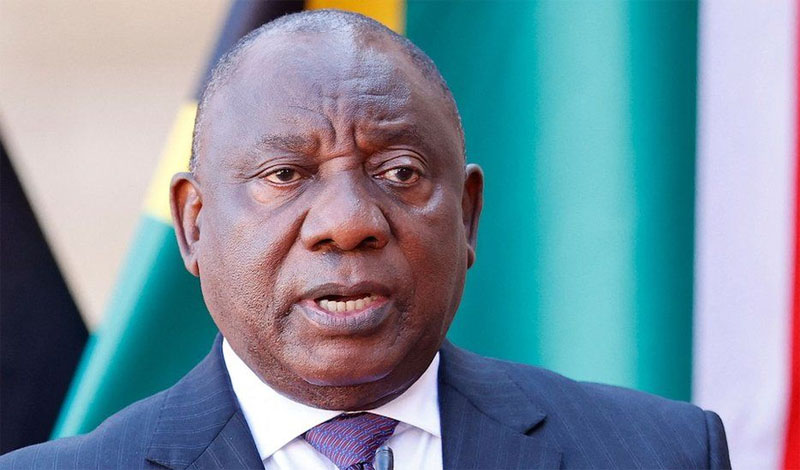
Xenophobia: Ramaphosa Warns Anti-Immigrant Groups, Unveils Tough New Migration Measures
South African President Cyril Ramaphosa has warned anti-immigrant groups against inciting violence and taking immigration enforcement into their own hands, insisting that the government will act decisively against individuals and organisations exploiting public concerns over illegal immigration for political, personal or criminal gain.
In a national address on Sunday, Ramaphosa acknowledged growing public frustration over illegal immigration in South Africa, but stressed that such concerns must be addressed through lawful channels rather than vigilante actions, xenophobic attacks or misinformation campaigns.
“We will act against forces who are exploiting the concerns of our people about illegal immigration to further their own political, personal and criminal agendas,” the president said.
“We will not be fooled or influenced by social media campaigns that spread misinformation.”
The warning comes amid rising tensions across South Africa, where anti-immigrant groups have intensified protests and some have reportedly issued a June 30 deadline for undocumented migrants to leave the country. Authorities have repeatedly stated that such ultimatums have no legal standing.
As part of efforts to address the growing concerns surrounding migration, the South African government unveiled a five-point action plan aimed at strengthening the country’s immigration management system.
The plan includes the development of a more advanced population register supported by biometric technology, expanded biometric screening at airports and major land border posts, and a renewed crackdown on corruption within the Department of Home Affairs.
The government also plans to tighten enforcement of immigration laws by prosecuting employers who knowingly hire undocumented migrants, accelerating deportation processes, and closing legal loopholes that have hindered effective migration management.
According to the presidency, the reforms are intended to ensure that all individuals entering South Africa do so legally while protecting the integrity of the country’s immigration system.
READ ALSO:
- I Wept for Kidnapped Oriire Pupils Before My Daughter Was Abducted— Adelabu’s Mother
- Ogbomoso Chief Imam Denies Terrorism Allegations, Threatens Legal Action Against Defamers
- Katsina Confident of Rescue as Search Intensifies for Retired General, Wife
Ramaphosa stressed that the enforcement of immigration laws remains the responsibility of government agencies and security authorities, not private citizens or self-appointed groups.
The presidency specifically condemned incidents where individuals have reportedly stopped people on the streets to demand identification documents or proof of nationality.
The government also warned against intimidation, violence and discrimination targeting foreign nationals, describing such actions as unacceptable and contrary to South Africa’s constitutional values.
Authorities further stated that access to essential services such as hospitals, schools and clinics must not be obstructed based on nationality or immigration status.
The president urged South Africans to reject misinformation and inflammatory rhetoric on social media, warning that false narratives were contributing to tensions and undermining national unity.
The latest developments have sparked concern across Africa, particularly among countries whose citizens live and work in South Africa.
Recent reports of xenophobic violence in South Africa have prompted some African governments, including Nigeria, Ghana, Malawi and Mozambique, to assist citizens seeking to return home amid fears for their safety.
The South African government has maintained that while it is committed to strengthening border security and enforcing immigration laws, it will not tolerate violence or discrimination against foreign nationals.
To improve regional cooperation, Ramaphosa said South Africa would continue working through the Southern African Development Community (SADC), the African Union (AU) and bilateral partnerships to better manage migration flows across the continent.
Ramaphosa attributed part of the public anger over immigration to South Africa’s economic challenges, including high unemployment, poverty and inequality.
However, he cautioned against blaming migrants for the country’s socio-economic problems, arguing that such frustrations should not be allowed to fuel xenophobia or lawlessness.
“We want a South Africa where every person who enters the country does so lawfully. A South Africa where immigration laws are respected and enforced. A South Africa where businesses compete fairly,” he said.
The president’s remarks underscore the government’s attempt to balance tougher immigration enforcement in South Africa with efforts to prevent further xenophobic violence and preserve social cohesion in Africa’s most industrialised economy.
As tensions continue to rise, authorities face mounting pressure to address concerns about illegal immigration while ensuring the safety and rights of both citizens and foreign nationals living in the country.
Xenophobia: Ramaphosa Warns Anti-Immigrant Groups, Unveils Tough New Migration Measures








Africa
Nairobi Mother Says Husband Abandoned Her During Childbirth, Paid Dowry for Another Woman

A Kenyan mother has recounted the emotional and financial hardship she allegedly endured after her husband left her struggling to pay hospital bills following childbirth, only for her to later discover signs that he was preparing to marry another woman.
Salome Wambui, a mother of two from Njoro in Nakuru County, Kenya, said she moved to Nairobi in 2024 to build a home with her husband after dating him for about a year. However, she told Kenyan news outlet TUKO.co.ke that their relationship deteriorated during her pregnancy, leaving her increasingly isolated and struggling to meet basic needs.
According to Salome, her husband began spending less time at home after taking up work driving public service vehicles along the Kitengela route. She said he eventually visited only about once a week and declined her suggestion that they relocate closer to his workplace.
The situation became more difficult when Salome was five months pregnant and lost her grandmother, who had raised her following her mother’s death. She said her husband did not attend the burial and later told her he intended to move out.
Having left her job in Nakuru when she relocated to Nairobi, Salome said she had no steady income to support herself as her pregnancy progressed. Her sister became an important source of assistance, helping her with food and other basic needs.
Salome said she began experiencing frequent bleeding when she was pregnant, raising concerns about her health and that of her unborn child. She eventually gave birth about a month before her expected delivery date after doctors induced labour.
READ ALSO:
- Akpabio Under Fire as Senators Move to Secure His Return as Senate President in 2027
- Lamine Yamal Shines as Barcelona Thrash Real Betis 5-2
- Tinubu Scraps Recruitment Waiver Requirement for Federal Universities
The most distressing experience, according to her account, came when she needed money to pay the hospital admission deposit. She said she contacted her husband, but he claimed he had been arrested in Athi River and did not provide the money she needed.
With the hospital bill still outstanding, Salome said she approached a woman who operated an M-Pesa shop in the building and borrowed money to pay the deposit. She gave birth that night.
Her husband reportedly visited the following day, saw the newborn and left without providing money for the immediate expenses.
Salome said she subsequently had to borrow more money to settle the discharge bill and meet basic needs for herself and the baby. She also discovered that some household belongings, including a television, gas cylinder and cooker, were missing from their home.
According to her account, her husband returned when the baby was about six weeks old and brought back the television. They lived together for approximately another month before he left again, later taking the television away.
As the debts accumulated, Salome said she eventually sold her refrigerator to repay people who had assisted her during her hospital stay. She recalled that her husband questioned her decision to sell the appliance without consulting him, despite the financial difficulties she said she had faced.
Her suspicions about another woman reportedly grew after she noticed that her husband was protective of his phone. Salome said she later saw messages between him and another woman’s mother that appeared to indicate money was being sent following requests.
She contrasted the alleged financial support with what she received during her pregnancy, saying her husband gave her about KSh150 a day and did not buy supplies for the expected baby.
Salome said she sometimes skipped meals to save money for baby clothes, relying on her sister and other people for assistance.
The situation took another turn about a month after her husband left for good. Salome said she came across a photograph he had posted showing him dressed in matching outfits with another woman. She suspected that a dowry ceremony had taken place, although the details of the reported ceremony were not independently established in her account.
She also said she later learnt that her husband had converted to Islam and changed his name.
Salome, who had worked in different jobs in Nakuru before moving to Nairobi, said she had expected marriage to offer stability and an opportunity to raise a family. Instead, she said, she was left to care for her children while depending heavily on her sister’s support.
Despite the experience, Salome said she did not want to resume the relationship, explaining that the future she had hoped to build with her husband had not materialised.
Her account highlights the financial pressure, emotional distress and practical challenges she says she experienced during pregnancy, childbirth and the breakdown of her marriage. She is now focused on raising her children and rebuilding her life.
‘Nairobi Mother Says Husband Abandoned Her During Childbirth, Paid Dowry for Another Woman
Africa
Djibouti Boat Disaster: 139 Migrants Dead, Dozens Missing
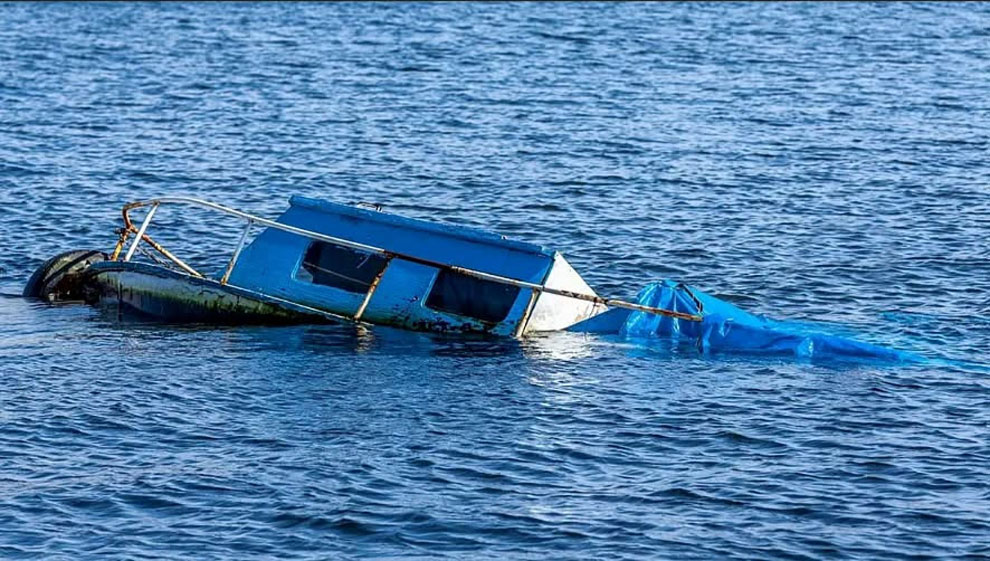
Djibouti Boat Disaster: 139 Migrants Dead, Dozens Missing
At least 139 migrants, including 15 children, have died after an overcrowded boat capsized off the coast of Djibouti while carrying passengers towards Yemen, in one of the deadliest recent disasters along the migration route to Gulf countries.
The International Organization for Migration (IOM), a United Nations agency, said the vessel was carrying more than 300 people when it overturned near Guhere, north of Obock, during the night of October 8–9, 2026.
Initial reports put the death toll at 109, including 15 children, with more than 116 people missing. Subsequent reporting by Reuters and the Associated Press cited an updated toll of at least 139 dead, with about 84 people still missing. The figures may continue to change as authorities verify recoveries and survivors.
The boat was reportedly carrying around 305 people, according to the IOM’s later account. At least 82 people survived the disaster, although early reports gave a slightly different survivor count.
The 15 children among the initially reported dead comprised nine girls and six boys. The IOM also reported that 52 of the bodies recovered were men and 42 were women.
The vessel capsized shortly after setting out on the perilous journey across the waters separating Djibouti and Yemen. Survivors said the boat was overcrowded, while the IOM described the incident as a devastating reminder of the dangers confronting people attempting the crossing.
The agency’s Chief of Mission in Djibouti, Alexandre Coissac, said its teams were working with local authorities to provide emergency assistance to survivors and affected families.
READ ALSO:
- Oshiomhole Accuses Umahi of Bias in Road Projects, Demands Repairs Before New Construction
- 2027: Pantami Breaks Silence as INEC Excludes Him From Final Gombe Governorship List
- US Names 24 More Nigerians in Fresh Fraud, Money Laundering Crackdown
- How Bauchi Court Jailed Three 21 Years Each for Abducting Seven Children
Djiboutian authorities continued search-and-rescue operations as concerns mounted over the fate of those still missing. Local authorities were also providing medical care and arranging burials for recovered bodies.
The IOM said survivors were receiving assistance at its migrant response centre in Obock, including healthcare, food and psychosocial support.
The tragedy highlights the risks faced by migrants travelling along the Eastern Route, which connects the Horn of Africa to Yemen and, for many, onward destinations in the Gulf region.
Many people undertaking the journey are from Ethiopia and Somalia. They seek employment and better living conditions, while others are fleeing insecurity, conflict, drought and other hardships.
Despite the dangers, migrants continue to cross the Bab el-Mandeb Strait in the hope of reaching wealthier Gulf countries. The journey exposes them to shipwrecks, trafficking, exploitation and other serious threats.
The risks have been compounded by instability in Yemen, where fighting continues between the internationally recognised government and Houthi forces, alongside wider regional tensions. Meanwhile, renewed conflict and difficult living conditions in parts of Ethiopia have added to the pressures driving people to leave.
According to the IOM, more than 900 migrants died or went missing along the Eastern Route in 2025, as the number of people attempting the journey increased.
The UN agency has called for greater support for Djibouti’s response, including search-and-rescue operations and emergency assistance for migrants.
The latest shipwreck has renewed calls for safer and legal migration pathways, as humanitarian agencies warn that people will continue to risk dangerous sea crossings while seeking security and economic opportunities.
As recovery operations continue, the final death toll may rise further as authorities verify missing-person reports and establish the number of people who were aboard the vessel.
Djibouti Boat Disaster: 139 Migrants Dead, Dozens Missing
Africa
FBI Raids Ghana Scam Centre, Detains Over 130 in $10m Fraud Probe
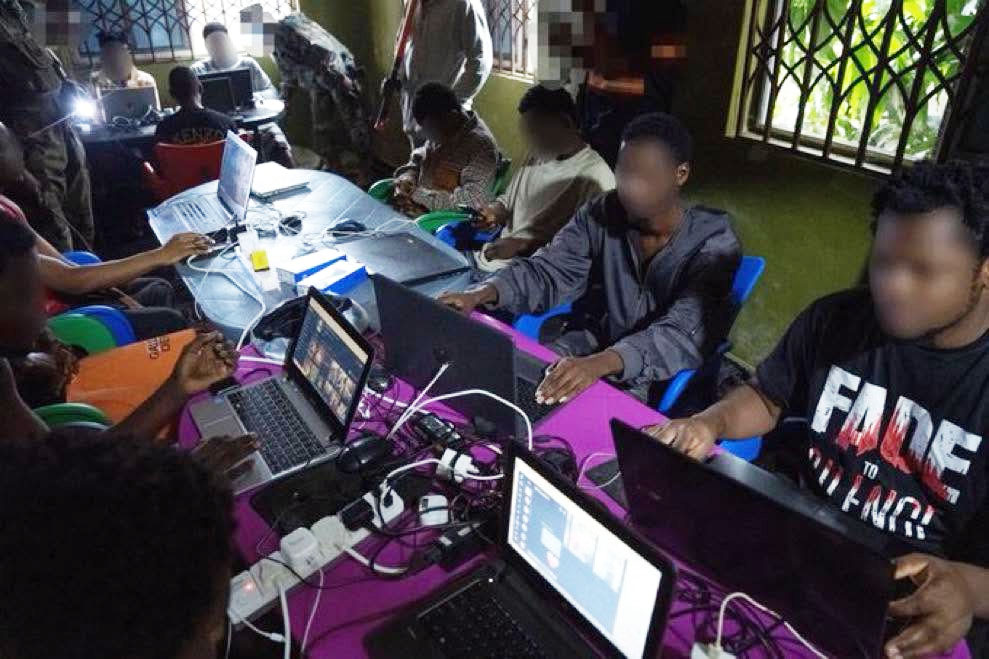
FBI Raids Ghana Scam Centre, Detains Over 130 in $10m Fraud Probe
The Federal Bureau of Investigation (FBI) has raided a suspected scam centre in Ghana, detaining more than 130 people and uncovering nearly $10 million in identified losses linked to an international fraud operation targeting Americans.
The operation, carried out under the FBI’s Operation Blackout, also led to the seizure of more than 300 electronic devices, while investigators identified 89 victims, FBI Director Kash Patel said.
Patel announced the operation on Thursday, saying the Ghana raid was part of the FBI’s wider campaign against transnational scam networks operating through so-called scam compounds.
However, the FBI has not classified everyone detained as a suspected fraudster.
Patel specifically said the more than 130 people arrested or detained included victims who are expected to be repatriated to their home countries, suggesting that some people found at the facility may have been trafficked into the operation rather than involved in running the scams.
The FBI has not disclosed the exact location of the Ghana operation, the identities or nationalities of those detained, or the Ghanaian agencies that participated in the raid.
It also remains unclear how many of those detained will face criminal charges in Ghana or possible prosecution or extradition proceedings in the United States.
Patel said the investigation was continuing, warning that scam compounds are increasingly being used to target American citizens and inflict substantial financial losses.
READ ALSO:
- Court Grants Alleged Fake JAMB Registrar N50m Bail, Sets Strict Conditions
- NESREA to Honour Lagos Baale After Dramatic Rescue of Endangered Sea Turtle
- How Six Members of a Family Were Murdered in Oyo
The Ghana operation is the latest action under Operation Blackout, which the FBI says is targeting organised fraud networks around the world.
According to Patel, the broader operation has so far resulted in roughly $17 billion in assets seized, hundreds of alleged scammers arrested and thousands of trafficked workers freed.
More than 10,000 Americans have also reportedly been warned before losing money, with the FBI estimating that about $670 million in losses were prevented.
The Ghana raid comes amid growing concern over the international expansion of online fraud and scam compounds, with law-enforcement agencies increasingly reporting links between cyber-enabled fraud and human trafficking.
In such operations, workers can be recruited through false employment offers and allegedly transported or coerced into participating in online fraud against victims in other countries.
Ghana has previously cooperated with U.S. authorities in investigations involving transnational fraud.
In July 2026, Ghanaian national Frederick Kumi, also known as Abu Trica, was extradited to the United States after being arrested in Ghana in December 2025. U.S. prosecutors accused him of participating in a romance-fraud network that allegedly targeted more than 80 elderly Americans and caused losses exceeding $8 million.
The extradition involved cooperation between Ghanaian authorities and several U.S. and Ghanaian law-enforcement bodies, including the FBI’s Legal Attaché Office in Accra.
The latest FBI operation also comes as international enforcement agencies increase pressure on scam networks operating outside traditional fraud hotspots in Southeast Asia.
The FBI has not released further details about the Ghana raid, and the investigation remains ongoing.
The bureau is expected to provide additional information as investigators establish the roles of those detained and determine which individuals, if any, will face prosecution.
Those accused of criminal offences are presumed innocent unless proven guilty in court.
FBI Raids Ghana Scam Centre, Detains Over 130 in $10m Fraud Probe
-

 metro18 hours ago
Army Major, Soldiers Killed in ISWAP Ambush in Yobe State
-

 News2 days ago
FG Challenges World Bank’s 124% Debt-to-Revenue Warning, Cites Rising Income
-

 metro2 days ago
NAFDAC Probes Corps Member’s Death at Enugu Camp as Fake Drug Claims Emerge
-

 Politics2 days ago
Buhari Feared Tinubu Presidency, Resisted Pressure to Back Him – Baba-Ahmed Claims
-

 metro2 days ago
Ogun House Fire Horror: Husband Arrested After Wife Dies Following Domestic Dispute
-

 Entertainment2 days ago
Nollywood Mourns as Actress, Beauty Queen Tenia Abraham Dies at 32
-

 News3 days ago
Nigerian Universities Have Not Expired, Only Teaching Methods, Professor Tells Ojuolape
-

 News2 days ago
NLC, Falana Mobilise Nigerians Against Petrol Price Hike, Mount Pressure on Tinubu Govt