
News
2021 Hajj: Saudi announces strict conditions, allows only 60,000 pilgrims
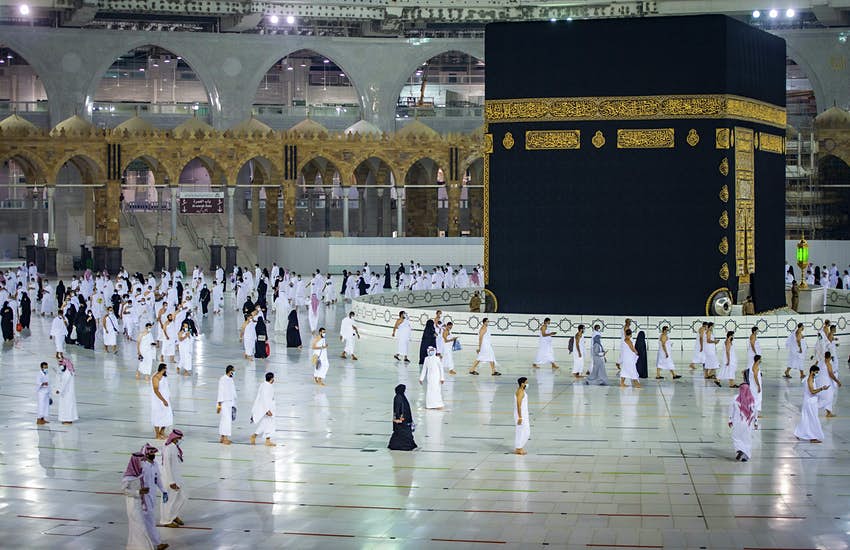
Saudi Arabia has announced a number of strict conditions for the 2021 Hajj, which it says will be performed only by 60,000 Muslims globally.
The conditions, which were aimed at preventing the spread of COVID-19, include limiting the pilgrimage to only those within 18 and 60 years, who have not been to hospital over any ailment six months before the journey for the Hajj rites.
The Saudi health ministry said they are allowing overseas Hajj pilgrims for the annual event in July but it would be on a smaller scale compared to the pre-pandemic time.
The Saudi health ministry said 45,000 pilgrims would come from outside the country and 15,000 from inside the Kingdom.
A report from one of the multiple online reports, Siasat, gives the highlights of conditions as follows:
Key points for the Hajj 2021:
Only 60,000 Hujjaj will be scheduled to perform Hajj this year which includes local and foreign pilgrims.
Those performing Hajj must be between the age of 18-60 years of Age.
Those performing Hajj must be in a good stated of health.
Those performing Hajj must not have been in hospital for any illness within the past six months prior to travelling for Hajj. (proof Is required)
The pilgrims must have had both doses of the vaccine with a vaccination card provided by the individual countries Health Organisation / Hospital / Ministry. (proof required)
The vaccine taken must be on the approved list that is recognised by the ministry of health within the Kingdom of Saudi Arabia.
The pilgrims must quarantine for three days if they are classed as foreign pilgrims as soon as they arrive in the Kingdom of Saudi Arabia.
The first dose of the vaccine must have been taken by the 1st Shawaal 1442. Note: This day has passed and was the day of the Eid Ul Fitr 1442.
The second dose of the vaccine must be taken by the 14th day before arriving within the Kingdom of Saudi Arabia.
The conditions of social distancing and the wearing of the mask and other precautionary measures will continue to protect pilgrims.
When a pilgrim arrives at their residence:
The pilgrims will undergo thermal screening.
The accomodation and hotels pilgrims will stay at must comply with the ministry of tourism, the ministry of Hajj, and other bodies.
There will be an implementation of precautionary measures to prevent crowding inside the rooms and hotels.
They will therefore provide catering services for every pilgrim in their room without the need to gather in dining halls and prevent open buffets.
All international pilgrims must quarantine for three days and will also conduct PCR Swabs at the place of residence.
Pilgrims will be educated that if they have symptoms, they are to go consult a doctor directly, in order to ensure their own safety and the safety of others.
The Hajj pilgrims will be dispatched in less batches compared to previous years in order to comply with social distancing. There will be meeting points for groups in all areas in fewer numbers compared to previous years.
All baggage for pilgrims must be disinfected & workers will be given the role to ensure this.
Security personnel have been assigned to organise the entry & exit of pilgirms according to the time allotted to them.
The protocol accommodation facilities
For Arafah
A bus will be specified for each group and a seat number will be assigned to each pilgrim during the entire trip, with follow-up on the implementation of precautionary measures when getting on and off the buses.
Pilgrims will not be allowed to stand during the journey.
Families will be allowed to sit together.
If a pilgrim has COVID-19 the bus will be disinfected and other procedures will follow.
The number of passengers will not exceed 50% of the total capacity.
In the bus, there will be an empty seat between each passenger.
Passengers must carry their luggage.
Food should only be prepackaged.
Preventing of gatherings and maintain social distancing.
The number of pilgrims will not exceed 50 per 50 square metres of the area of the tents.
Pilgrims will be provided with stones in sterilised bags packed by the organizer.
The pilgrims departure to and from the Jamarat facility must be scheduled so that the number does not exceed 50 pilgrims for each floor of the Jamarat facility.
For Al Haram mosque in Mecca
Pilgrims must have a permit to perform the Hajj from the electronic Hajj portal or via an electronic application.
Pilgrims must ensure social distancing and prevent over crowding issues.
Thermal imaging cameras are in place to measure the temperature at the entrances.
In the event of high temperatures or suspicions, the pilgrim will be prevented from entering and referred to the specialists at the Ministry of Health.
Carpets at Masjid Al Haram will be removed.
Stickers are marked on floors allowing 2 metres Social Distancing between pilgirms.
Food will be prevented from being allowed in the Mosque.
Educational lessons will continue to be suspended inside the Mosque.
Educational material however will be distributed.
Cleaning and disinfecting will take place around the clock.
Earlier this week, the Kingdom of Saudi Arabia announced that it would allow pilgrims from outside the country to perform Hajj this year.
Last week, Saudi Arabia warned citizens against traveling to 13 countries including India without permission due to security concerns and instability in several countries, while the COVID-19 pandemic continued and new strains of the virus spread to some other countries.
Earlier in March, the kingdom of Saudi Arabia health ministry said that will only allow people who have been vaccinated against COVID-19 to attend the Hajj this year.
The Corps Marshal of the Federal Road Safety Corps (FRSC), Dr Boboye Oyeyemi has advised, that the only solution to the problems of Nigeria’s transportation challenges is to adopt a multi-modal system, stressing that the pressure on the road system is too high.
Dr Boboye also decried the non-implementation of the National Transport Policy (NTP), 29 years after it was drafted.
Speaking on the topic: “Improving Nigeria Transportation Systems: The Way Forward” at the 8th Nigeria Annual Transport Lecture held recently at Sheraton Hotel, Dr Oyeyemi said there is need for improvement of the inter-modal transport system.
Boboye warned that the road system is not only dominant but its preference, totalling 95 per cent of all modes, has serious road safety concerns in the form of traffic crashes and infrastructure decays
Noting that road crashes have increased, the Corps Marshal said “the pressure is too much on the road. Fatality has been on the high. We used to have an average of 100 lives lost on the roads weekly. Speed is a major aspect we need to address”.
The FRSC boss maintained that utilising other modes of transport, including air, water, road, pipeline and rail as an alternative will decongesting traffic gridlocks in coastal cities in the country, and also has the potential to boost the economy from travel tourism perspective.
According to him, there has not been a balanced development of the country’s transportation system, pointing out that increase in road construction activities and some developmental challenges being experienced by the other sectors of transportation, the movement of people, goods and services is dominated by road transport.
Proffering solutions for the intermodal transport system to work, Boboye said “government should expand and upgrade existing air travel infrastructures so as to boost confidence in the industry with respect to air safety; encourage more investments to bring about healthy competition such that more people can opt for the mode as against the road especially for long-distance travel. This will largely reduce ‘fatigue’ induced and tyre related crashes on the road”.
According to him, greater investments as a follow up of the MoU between NIWA, NEXIM and Sealink Promotional Co. Ltd should be activated.
He also canvassed for the dredging of identified potential waterways in the country to improve safety and enhance navigation amongst others.
Commending the efforts of the present government, Boboye said “government should continue to improve on existing security framework to enhance investors and customers confidence in all modes of transportation in the country. The current state of transportation in the country is an improvement on what it used to be”.
FAAC disbursement drops N63bn to N616bn in May
The three tiers of government shared a total of N616.886 billion received from the federation accounts allocation committee (FAAC).
This is the revenue from April as allocation for May.
Henshaw Ogubike, director of information, press and public relations, at the office of accountant general of the federation (OAGF), disclosed this in a statement on Friday.
Of the total revenue derived in April, the federal government, in May, received N244.011 billion, while the state and local government councils got N193.432 billion and N143.298 billion, respectively.
This figure shows a decline of N63.45 billion when compared to FAAC disbursements for revenue accrued in March.
With increased revenue in March, the sum of N680.33 billion was shared among the three tiers of government in April.
In March, gross statutory revenue was N466.687 billion, value added tax revenue was N181.712 billion and exchange gain was N2.931 billion.
But according to the statement, gross statutory revenue fell to N429.733 billion in April.
Revenue from the value added tax also reduced to N164.340 billion while revenue from the exchange gain dipped to N2.250 billion.
The OAGF said the excess bank charges recovered was N0.563 billion, while revenue from non-oil was N20 billion.
For non-oil revenue, the federal government received N10.536 billion, the state government got N5.344 billion and the local governments was allocated N4.120 billion.
“In April 2021, the sum of N79.468 billion was the total deductions for cost of collection, statutory transfers and refunds,” the statement reads.
“The balance in the Excess Crude Account was $72.413 million.”
It noted that oil-producing states received the sum of N36.145 billion as 13 percent derivation revenue.
The statement also noted that from the gross statutory revenue, N207.477 billion was given to the federal government, the state governments received N105.235 billion while the local government councils received N81.132 billion.
“The Federal Government received N24.651 billion from the gross Value Added Tax (VAT) revenue of N164.340 billion, the state governments received N82.171billion and local government councils received N57.519 billion,” it reads.
The statement added that the federal government received N1.051 billion, the state governments receive N0.533 billion, the local government councils received N0.411 billion and N0.255 billion was given to the relevant states as 13 percent derivation revenue from the exchange gain revenue.
It added that petroleum profit tax and excise duty recorded a significant increase, while companies income tax, oil and gas royalties, VAT and import duty suffered a declin








News
U.S. Congress Submits Report to Trump on Alleged Christian Persecution in Nigeria
U.S. Congress Submits Report to Trump on Alleged Christian Persecution in Nigeria
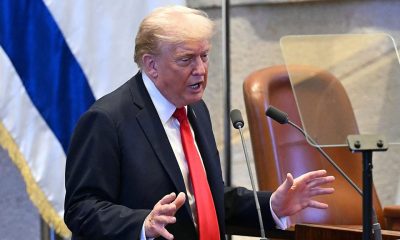
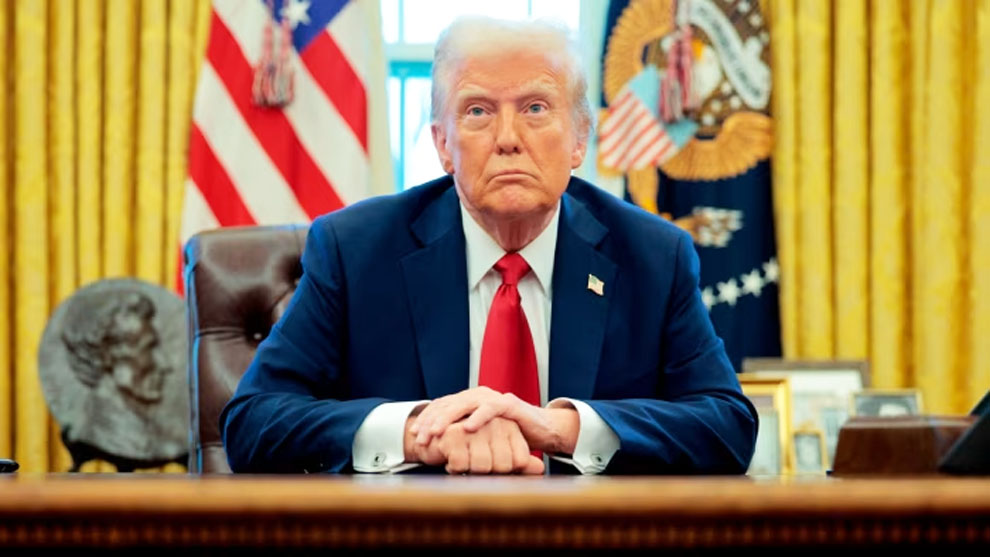
The United States House Committees on Appropriations and Foreign Affairs have formally submitted a comprehensive report to President Donald Trump detailing their findings and recommendations on the alleged persecution of Christians in Nigeria and ongoing security challenges in the country.
The report follows President Trump’s redesignation of Nigeria as a “Country of Particular Concern” (CPC) under U.S. religious freedom criteria and was the result of months of investigation led by Congressman Riley Moore and House Appropriations Committee Chairman Tom Cole. The investigation involved hearings, expert testimonies, and bipartisan fact-finding missions to Nigeria.
Congressman Moore confirmed the submission on his X handle (@RepRileyMoore), noting that the report draws on on-the-ground assessments, interviews with internally displaced persons, meetings with government officials led by National Security Adviser Nuhu Ribadu, and consultations with religious leaders.
During the Nigeria visit, congressional delegates visited IDP camps in Benue State, assessed the impact of terrorist attacks, and observed first-hand the security risks facing Christian communities. Moore emphasized that the findings provide a clear picture of the threats in Nigeria, including attacks by Boko Haram, ISWAP, and armed militias, which have led to killings, abductions, and widespread displacement.
“This report underscores the urgent need for Nigeria to address these pressing security challenges and protect vulnerable communities,” Moore said. He also urged the Nigerian government to strengthen ties with the United States to jointly combat violence and ensure the safety of civilians.
READ ALSO:
- 15 Killed as Peruvian Military Helicopter Crashes During Flood Relief Mission
- Nigeria Allegedly Paid Boko Haram to Free Abducted Schoolchildren, Teachers – AFP Report
- Ijebu Ruling House Appeals to Tinubu to Resolve Awujale Stool Deadlock
Key Recommendations in the Report
The report contains specific recommendations aimed at protecting civilians and promoting security, including:
- Establishing a bilateral U.S.–Nigeria security agreement to safeguard Christian communities and dismantle jihadist networks.
- Conditioning U.S. aid on measurable actions by the Nigerian government to prevent violence against civilians.
- Implementing sanctions and visa restrictions on individuals or groups responsible for religious persecution.
- Providing technical and strategic support to Nigerian security forces to counter attacks by Fulani militias and other armed groups.
- Encouraging reforms of restrictive laws, including Sharia and blasphemy statutes, that may contribute to discrimination.
- Collaborating with international partners such as France, Hungary, and the United Kingdom to coordinate security and humanitarian responses.
Moore described the report as a blueprint for action, reflecting firsthand observations and expert consultations. “We hope this report will guide policy to protect innocent civilians, strengthen bilateral relations, and promote long-term stability in Nigeria,” he said.
The report has drawn attention to the complex security landscape in Nigeria, where religious and ethnic tensions, terrorism, and armed banditry continue to threaten communities, particularly in the northern and central regions.
The Nigerian government has previously rejected allegations of genocide or targeted persecution of Christians, describing such claims as misinformation, while reaffirming its commitment to combating terrorism and ensuring the security of all citizens.
U.S. Congress Submits Report to Trump on Alleged Christian Persecution in Nigeria
News
Tinubu to Governors: State Police Must Begin Now
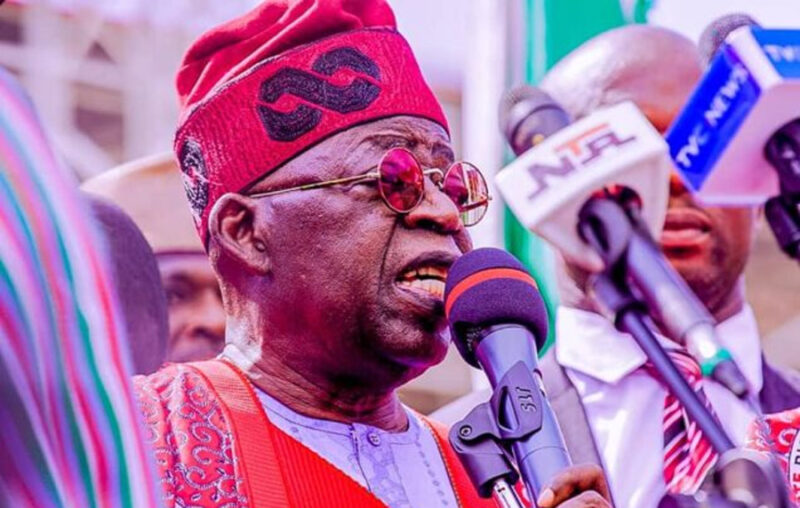
Tinubu to Governors: State Police Must Begin Now
President Bola Ahmed Tinubu has declared that the establishment of state police in Nigeria can no longer be delayed, stressing that urgent action is required to tackle rising insecurity, banditry, terrorism and kidnapping across the country.
The President spoke on Monday night after breaking the Ramadan fast (Iftar) with state governors at the Presidential Villa, where he said all levels of government must work together to reclaim ungoverned spaces being exploited by criminal groups.
“What I promised you will not be postponed. We will establish state police to combat insecurity. Start looking around you,” Tinubu told the governors, emphasising that Nigeria’s security challenges had reached a point where decentralised policing could no longer be ignored.
He reminded the governors that they had all, through deliberations at the National Economic Council (NEC), agreed on the need to create state police as a strategy to curb insecurity and protect communities. According to him, the consensus underscored the urgency of addressing widespread criminality that has disrupted livelihoods and instilled fear across many parts of the country.
Tinubu, however, acknowledged that critical issues such as funding, command structure, oversight, accountability and coordination with the Nigeria Police Force and other security agencies were still being worked out. He noted that these modalities must be carefully designed to ensure professionalism, prevent abuse and guarantee effective collaboration.
The President also urged governors to intensify grassroots development, saying neglect, unemployment and poverty at the local government level often fuel criminal activities. He appealed to state leaders to embrace inclusiveness and ensure that development opportunities reached the most vulnerable.
READ ALSO:
- Ten Killed in Coordinated Bandit Attacks in Plateau
- Police Dislodge Bandit Camps, Arrest Gunrunners in Kaduna
- BREAKING: Panic at MMIA as Fire Breaks Out at Old Terminal
- ADC Leadership Clash: Oyegun Bars Owie from Caucus Meeting in Edo
“Be all-encompassing. Let’s spread development opportunities to the grassroots and embrace the downtrodden, the young ones and all our supporters,” he said.
Describing the coincidence of the Muslim Ramadan fast and the Christian Lenten season as symbolic, Tinubu said the period reflected shared values of discipline, sacrifice and unity, urging Nigerians to continue to pray together and support one another.
Addressing internal political tensions, the President advised members of his party to exercise tolerance during ongoing congresses, stressing that unity and harmony were essential for national stability.
“Tolerate everybody. Let the young ones breathe. Build structures anchored on unity, harmony and sacrifice,” he said.
Acknowledging that criticisms and commendations would continue to trail his administration, Tinubu expressed optimism about Nigeria’s trajectory, saying the country was emerging from economic uncertainty.
“We are out of the dark tunnel of uncertainty. The economy is picking up. Let’s help those who are unemployed,” he added.
Responding on behalf of the governors, Imo State Governor Hope Uzodimma described the gathering as a symbol of religious harmony, unity and partnership between the federal and state governments. He praised the President for fostering political stability and strengthening collaboration with governors, pledging continued support for ongoing reforms.
The dinner was attended by Vice President Kashim Shettima, members of the Federal Executive Council, several state governors and senior government officials, including Chief of Staff to the President, Femi Gbajabiamila.
Tinubu to Governors: State Police Must Begin Now
News
U.S. Court Orders ICE to Release Nigerian Detained Since 2012

U.S. Court Orders ICE to Release Nigerian Detained Since 2012
A U.S. District Court in Minnesota has ordered U.S. Immigration and Customs Enforcement (ICE) to release Michael Opeoluwa Egbele, a Nigerian national who entered the United States illegally in 2003 and had been held under immigration detention since his arrest in 2012. The court ruled that his detention was unlawful due to prolonged enforcement delays and lack of proper legal notice.
Senior U.S. District Judge John M. Gerrard delivered the ruling on February 18, 2026, giving ICE until February 20 to free Egbele and file a status report confirming his release. The judge highlighted that ICE had no legal grounds to hold him, noting the unique circumstances of his long-standing supervision arrangement.
Egbele’s legal troubles began in 2012 after his arrest on a drug-related offence, which triggered deportation proceedings. At the time, he applied for asylum and requested that his removal be withheld, but his claim was denied, and he was issued a final deportation order in July 2012. However, ICE did not enforce the removal, and Egbele did not appeal.
Instead, he was released on supervision in December 2012, under which he was required to report regularly to ICE. This arrangement continued for more than a decade until January 2026, when ICE detained him during a routine check-in.
READ ALSO:
- Anambra Govt Shuts NASPA Market Over Sit‑At‑Home Defiance
- 2027: Bashir Ahmad Rules Out Kwankwaso as Peter Obi’s Running Mate
- EFCC Nabs 20, Seizes ₦17m Over Vote Buying in FCT Elections
Egbele argued in court that he was never notified of any revocation of his pre-existing order of supervision and was not given a legal explanation for his detention. ICE claimed the supervision was revoked partly because Egbele failed to obtain a travel document to Nigeria, as required under his supervision.
Following his arrest, Egbele was unable to contact his wife, a U.S. citizen, or his lawyer for several days. He was initially held at an ICE facility in Montana and later transferred to a detention center in New Mexico, with his location undisclosed for days.
The federal government argued that the Minnesota court lacked jurisdiction because Egbele was held outside the state, but the judge rejected this, stating that ICE could not unilaterally terminate a decades-long supervisory arrangement without due process. The court emphasized that Egbele’s right to proper notice and legal protections had been violated.
Judge Gerrard ordered that Egbele be released immediately under the conditions of his original supervision and directed ICE to file a compliance report by February 20, 2026.
Legal experts say the ruling highlights broader concerns about long-term immigration detention, due process rights, and the enforcement of removal orders in the U.S., particularly when individuals have established long-term ties or arrangements with immigration authorities.
U.S. Court Orders ICE to Release Nigerian Detained Since 2012

-

 Business2 days ago
Dangote Opens Refinery Investment to Nigerians With Public Share Sale Plans
-

 Education3 days ago
UTME: JAMB Clarifies Position on Hijab During Biometric Capture
-
 Politics2 days ago
Tinubu Hails Wike as APC Dominates 2026 FCT Area Council Elections
-

 Entertainment2 days ago
Regina Daniels Takes Delivery of ₦150m 2026 GAC Trumpchi M8 SUV
-
 Politics3 days ago
ADC Defeats APC to Win First Polling Unit in FCT Area Council Election
-

 Politics2 days ago
FCT Council polls: APC Wins Four Chairmanship Seats as PDP Takes Gwagwalada
-
 News2 days ago
Yoruba Muslim Group Dismisses Viral Ramadan Date Claim, Reaffirms Sultan of Sokoto’s Authority
-

 Politics2 days ago
Opposition Weakens as Another Governor Eyes APC Move