

metro
Makinde speaks on Sharia court controversy in Oyo

Makinde speaks on Sharia court controversy in Oyo
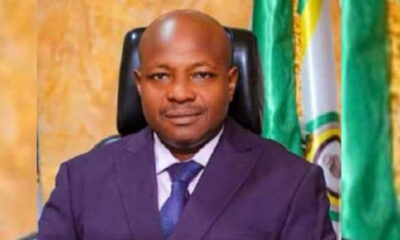
Oyo State Governor, Seyi Makinde, has addressed concerns about plans to set up a Sharia court in Oyo Town, promising to respect the law and follow the Nigerian Constitution.
The governor’s stance follows reports that the Oyo State chapter of the Supreme Council for Shari’ah in Nigeria plans to establish a Shariah court in the state and surrounding areas.
In a video shared on X on Tuesday by Olorundare Olamide, the Senior Special Assistant on New Media to the Governor, Makinde emphasised that while individuals or groups may advocate for initiatives like the Sharia Court, such actions must adhere to the law.
A flier widely circulated from the group today invited Nigerians to the inauguration of a Shariah court scheduled for January 11, 2025, at the Muslim Community Islamic Centre in Oyo town, but the event has now been postponed indefinitely.
READ ALSO:
- Wedding guests abducted on Kwara highway
- Hardship: Tinubu’s media chat confirms FG’s insensitivity, says PDP
- Brother of late Nollywood actor shot dead in Johannesburg
The statement read, “On behalf of the Oyo Muslim indigenes, this is to inform the general public that the inauguration ceremony of the Supreme Council for Shari’ah in Nigeria (Oyo branch) previously scheduled for January 11th, 2025, at the Muslim Community Islamic Centre, Oba Adeyemi High School Road, Mobolaje Area, Agbongangan, Oyo, has been suspended until further notice. Islam portrays peace!”
Reacting to these developments, Makinde stressed that he will make sure the Nigerian Constitution is fully upheld in this matter.
He said, “They have brought up the issue of Sharia in Oyo, they demanded the establishment of a Shariah court. I say that people may try but for me, in Oyo State, our law is the constitution of Nigeria, which is what I swore to uphold.
“And if they are within the law, fine. But if they are not, they should expect that I will insist the law is being followed.”
Makinde speaks on Sharia court controversy in Oyo








metro
No One Can Live on N70,000, Not Even a Newborn – Sowore
No One Can Live on N70,000, Not Even a Newborn – Sowore
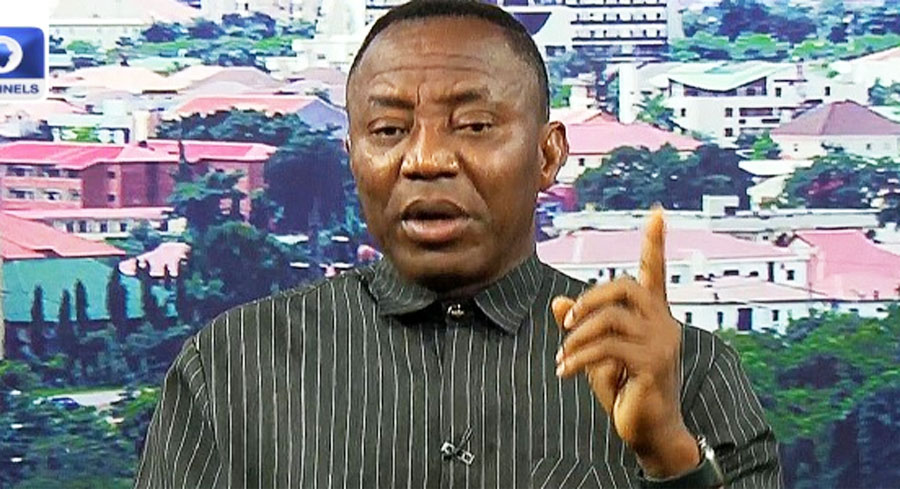
The African Action Congress (AAC) presidential candidate for the 2027 general election, Omoyele Sowore, has declared that no Nigerian can realistically survive on the current N70,000 minimum wage, insisting that even his proposed N500,000 wage would be inadequate amid the country’s soaring cost of living.
Sowore made the remarks on Friday morning while appearing as a guest on Rapid FM in Rivers State. The activist and former presidential candidate was defending his long-standing proposal for a N500,000 minimum wage when the presenter questioned whether increasing workers’ salaries could worsen inflation by putting more money into circulation without a corresponding increase in productivity. Sowore firmly rejected this argument, stating that Nigeria’s inflation was primarily being driven by the rising cost of production and government policies rather than workers’ wages. He said the N70,000 minimum wage was grossly inadequate for workers to meet their most basic needs, including food, transportation, accommodation and clothing.
“There’s nobody technically, or realistically, that can live on N70,000 a month, even a newborn baby,” Sowore said. He added that his proposed N500,000 minimum wage should not be regarded as excessive given current economic realities. “Even the N500,000 I’m proposing, in my view, it’s too small. But just for the sake of argument, say, okay, let’s pay people just enough to be able to make a living. That’s what the proposal is about,” he said.
READ ALSO:
- Defence Minister Musa accuses El-Rufai of deliberately planning Southern Kaduna killings
- Kano Rainstorms: Nine Lives Lost, Over 4,500 Displaced
- Atiku, X user clash over Almajiri crisis, street begging
Sowore argued that Nigeria was experiencing what economists describe as “cost-push inflation”, which occurs when rising production and input costs drive up the prices of goods and services. “It’s driven by cost. The type of inflation we have is called cost-push inflation. And it is because the cost of production is very high,” he said. According to him, rising electricity tariffs have contributed significantly to the increase in the cost of production across the country. “You know how much electricity tariffs have jumped in the last three years,” he said. He also linked the rising cost of transportation to the removal of the petrol subsidy by the Federal Government, noting that the increase in fuel prices had translated into higher transportation costs for workers, businesses and consumers.
“It is caused by transportation cost. As a result of the removal of fuel subsidy, wherever you were going for N500 before, it became N2,000. That’s the cost of your inflation,” he said. He further blamed the depreciation of the naira and Nigeria’s heavy dependence on imported goods for worsening the economic situation. “When they just came and floated the naira, at the same time they removed subsidy. That’s the cause of inflation,” he said. Sowore argued that reducing inflation would require the government to tackle the high cost of electricity, transportation and production rather than suppressing workers’ wages. “If you want to change the direction of that inflation, you have to deal with this. You have to reduce electricity tariff. You have to bring back fuel subsidy. That would then force down the cost of transportation and reduce the cost of production,” he said.
The AAC candidate illustrated his argument by comparing Nigeria’s domestic production costs with those of other countries, warning that high energy and transportation costs could eventually make it cheaper to import basic commodities than produce them locally. “It is easier for you to import garri – I just want to be ridiculous by saying from China, than to produce it in Rivers State now because the cost of production of garri in China is lower,” he said. He said Nigeria must make its productive sector more competitive by reducing energy and transportation costs while providing reliable infrastructure for businesses and industries.
Sowore also rejected the argument that higher wages should be tied to concerns over workers’ productivity. He said workers enter into contractual relationships with employers to provide labour in exchange for adequate compensation, while employers and supervisors should be responsible for monitoring productivity. “As long as you come to work as a contract, and you work from, say, 8 o’clock to 2pm or 4pm, I’m going to pay you enough money to enable you to survive,” he said. “The argument as to whether the civil servants are doing work or not is not the argument we are having. That one is regulatory. That is the job of the supervisor,” he added.
READ ALSO:
- Court restrains Lizzy Anjorin from posting Priscilla Ojo’s son’s photos
- NBA controversy: VDM apologises to security agencies over ‘unknown gunmen’ remarks
- LASU: Mother allegedly assaults daughter’s roommate, student rushed to LASUTH with eye injury
Sowore also questioned the disparity between the earnings of ordinary workers and the allowances, security details, convoys and other benefits enjoyed by political office holders. He argued that government could afford to improve workers’ wages by reducing what he described as wasteful spending and the high cost of governance. “What has the Nigerian worker done wrong to you that you cannot take a little bit now?” he asked. He criticised the use of large convoys by governors and other public officials, questioning the necessity of some government expenditure. “I don’t understand till tomorrow why a governor who is living in his house in Port Harcourt, to go to his office needs an outrider,” Sowore said. “I don’t know why a governor should commission a project in the first place. If a project is completed, it should be commissioned by use,” he added. The presidential candidate also questioned the large security votes allocated to governors, saying such expenditure should be scrutinised and redirected where necessary. “We waste so much money,” he said.
Using food costs as an example, Sowore demonstrated why the current minimum wage was already insufficient to cover workers’ daily meals. “If you eat three times a day, and you are eating N500 food, you eat N1,500. When you go to work or not, you will eat,” he said. “Multiply N1,500 by 30 days in a month. Are we not already past N70,000? Are you not going to transport yourself? Are you not going to wash your clothes?” He said the debate should therefore focus on whether workers could actually survive on their salaries rather than whether N500,000 was too much. “That is the argument. It’s very simple,” he said. Sowore insisted that reducing the cost of governance could help fund better wages and improve workers’ ability to remain productive. “If you don’t want people to work, you don’t want them to go to work, then don’t hire people to work for you. But the moment you have that contract, there’s so much work for you,” he said. “The moment you have that contract, you must ensure that their living conditions are at least able to support their motivation or their ability to get to work and back,” Sowore added.
Sowore’s remarks come amid growing calls from labour unions for a comprehensive wage review. At the Nigeria Rights of Workers Summit 2026 held in Birnin Kebbi in early August, the Nigeria Labour Congress (NLC) and Trade Union Congress (TUC) formally demanded a N500,000 minimum wage, aligning with Sowore’s long-standing position. The unions argued that the current N70,000 wage had been overtaken by economic realities. NLC Deputy President Adewale Adeyanju stated that the current N70,000 minimum wage “can no longer adequately respond to the realities confronting Nigerian workers, particularly with the rising cost of living.” The NLC and TUC said the period agreed for the last minimum wage review had expired in July, making it necessary to commence fresh negotiations with the Federal Government.
Additionally, the Federal Workers Forum has written to President Bola Tinubu and the National Assembly, demanding an immediate increase in the federal minimum wage from N70,000 to N300,000, arguing that the current salary structure can no longer sustain civil servants amid Nigeria’s cost-of-living crisis. The forum also proposed a maximum salary of N1.5 million for Level 17 officers, describing the current wage structure as “suicidal” for federal workers. According to a recent BudgIT report, workers in Nigeria’s most expensive states are left with as little as N7,261 a month after meeting the minimum cost of a healthy diet. The report showed that in Ekiti State, an estimated N62,739 of the N70,000 monthly wage was required to feed an adult adequately, exposing the weakness of judging wage adequacy simply by whether monthly income exceeds the cost of food.
No One Can Live on N70,000, Not Even a Newborn – Sowore
metro
Defence Minister Musa accuses El-Rufai of deliberately planning Southern Kaduna killings
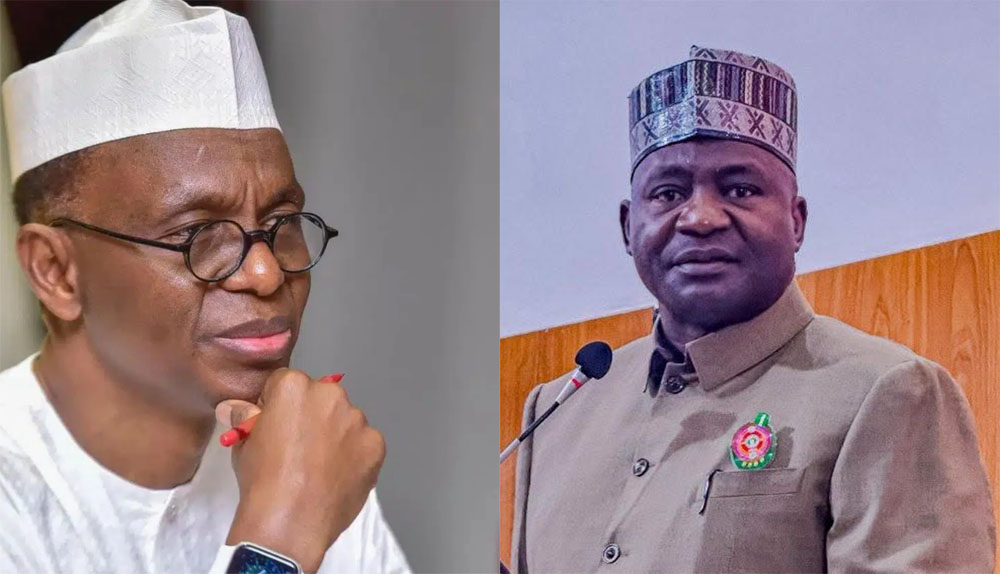
Defence Minister Musa accuses El-Rufai of deliberately planning Southern Kaduna killings
The Minister of Defence, Christopher Musa, has accused former Kaduna State Governor Nasir El-Rufai of deliberately planning the killing of people in Southern Kaduna, making one of the strongest allegations yet against the former governor over the violence and communal tensions that affected parts of the state during his eight-year administration.
Musa made the allegation on Thursday, September 3, 2026, while appearing on Channels Television’s Politics Today, where he criticised the former governor’s handling of security and governance in Kaduna State.
The Defence Minister described the situation in Kaduna during El-Rufai’s tenure as “toxic”, alleging that the former administration deepened divisions between communities in the northern and southern parts of the state.
Musa claimed the divisions became so severe that residents from Southern Kaduna could not freely live in northern parts of the state, while some residents from northern Kaduna moved towards the southern part of the state.
“We know how it was when El-Rufai was there; it was toxic,” Musa said.
“El-Rufai did a lot of terrible things in Kaduna State. He divided the state into two. If you are from the south, you cannot go to the north to live. Those ones from the north were moving to the south.”
The minister’s comments come against the background of years of deadly violence in Southern Kaduna, where communities have experienced killings, kidnappings, displacement and destruction of property.
Musa said the impact of the violence remains deeply felt among residents of the region, particularly families who lost loved ones during the period.
Responding to questions about whether people in Southern Kaduna remained unhappy with El-Rufai, Musa said the anger went beyond ordinary political disagreement.
“I think if there’s anything worse than unhappy, we can never be happy with somebody who has deliberately planned for the killing of our people,” he said.
READ ALSO:
- Kano Rainstorms: Nine Lives Lost, Over 4,500 Displaced
- Atiku, X user clash over Almajiri crisis, street begging
- Court restrains Lizzy Anjorin from posting Priscilla Ojo’s son’s photos
The Defence Minister did not, during the interview as reported, provide specific evidence to substantiate his allegation that El-Rufai deliberately planned the killings. The claim therefore remains an allegation made by Musa and has not been established as a fact by a court or independent investigation cited in the reports reviewed. (Nigeria Info, Let’s Talk!)
Musa also alleged that El-Rufai had previously spoken publicly about payments allegedly made to bandits and other measures adopted by his administration to address insecurity.
“He told us he paid bandits. He told us he did this, he did that. He didn’t hide it,” Musa alleged.
The minister said the former governor had discussed such actions in public speeches and videos and suggested that affected communities remained angry over the approach taken by the administration.
Musa further argued that the scale of killings recorded in Southern Kaduna during the previous administration was significantly higher than what is being witnessed in the area under the current government.
“The Southern Kaduna people are still very pained. Of course, definitely. I mean, if you look at the number of killings that was done there and what is going on now, you can’t compare at all,” he said.
The minister also credited incumbent Governor Uba Sani with making efforts to rebuild relationships between communities and reduce the divisions he said existed during El-Rufai’s tenure.
According to Musa, the situation has not been completely resolved, but residents now have greater freedom to move and participate in the affairs of the state.
“Governor Sani within one year has been able to dissolve all that. You see now, everybody is free, everybody has a say. It’s not 100 per cent, let me tell you, it’s not 100 per cent, but you can see that he’s making deliberate effort in uniting the state,” Musa said. (Vanguard News)
Musa also extended his criticism beyond the Southern Kaduna crisis, accusing El-Rufai of policies and actions that he said affected people across different parts of the state.
He alleged that some residents, including people from El-Rufai’s own area, were denied opportunities during the former governor’s administration.
The minister also referred to demolitions carried out during the former governor’s tenure, alleging that some residents lost properties following disagreements with El-Rufai.
“I can tell you people what he has done to people living in Kaduna State from his own area. He had just personal [issues] with friends. The next thing, he sends a bulldozer to bulldoze your house down. He’s done it,” Musa alleged.
He maintained that his criticism was not driven by ethnic considerations, despite his own Kaduna background, but by what he described as a concern for the country and the consequences of divisive politics.
Musa urged Nigerians to reject politicians who exploit religion, ethnicity or regional differences to gain political advantage.
“We should get politicians that want to unite Nigeria,” he said.
“Anybody who is using religion or tribe or whatever to divide Nigeria is an enemy of the state.”
The minister’s comments have revived broader questions about the security crisis in Kaduna State during El-Rufai’s tenure, which lasted from 2015 to 2023.
During those years, Southern Kaduna witnessed repeated attacks involving armed groups and communal violence. Human rights organisations have documented significant loss of life and displacement in the region, while successive governments have faced criticism over their handling of insecurity.
The controversy surrounding El-Rufai’s security policies has also included his administration’s controversial approach to negotiations with bandits and other armed groups.
El-Rufai has previously defended his administration’s handling of insecurity and has frequently argued that his government took steps to protect residents while calling for stronger federal security intervention.
The former governor has also remained politically active after leaving office, while his relationship with his successor, Governor Uba Sani, has deteriorated considerably.
Sani was previously regarded as a political ally of El-Rufai and succeeded him as governor in 2023. Their relationship has since become strained, with both camps engaging in disagreements over governance, the finances of Kaduna State and the legacy of the former administration.
Musa’s latest comments add another dimension to the political dispute because they come from a serving federal minister responsible for Nigeria’s defence apparatus and a former senior military officer.
The allegations are also likely to attract further political reactions, particularly as political activities ahead of the 2027 elections intensify.
For now, however, Musa’s claim that El-Rufai deliberately planned killings in Southern Kaduna remains an allegation. While the violence and deaths suffered by communities in the region are extensively documented, the specific accusation of deliberate planning by the former governor would require further evidence or an authoritative investigation to establish it as fact.
El-Rufai and his media team had not publicly responded to Musa’s latest allegations in the reports reviewed as of Friday morning.
Defence Minister Musa accuses El-Rufai of deliberately planning Southern Kaduna killings
metro
Kano Rainstorms: Nine Lives Lost, Over 4,500 Displaced
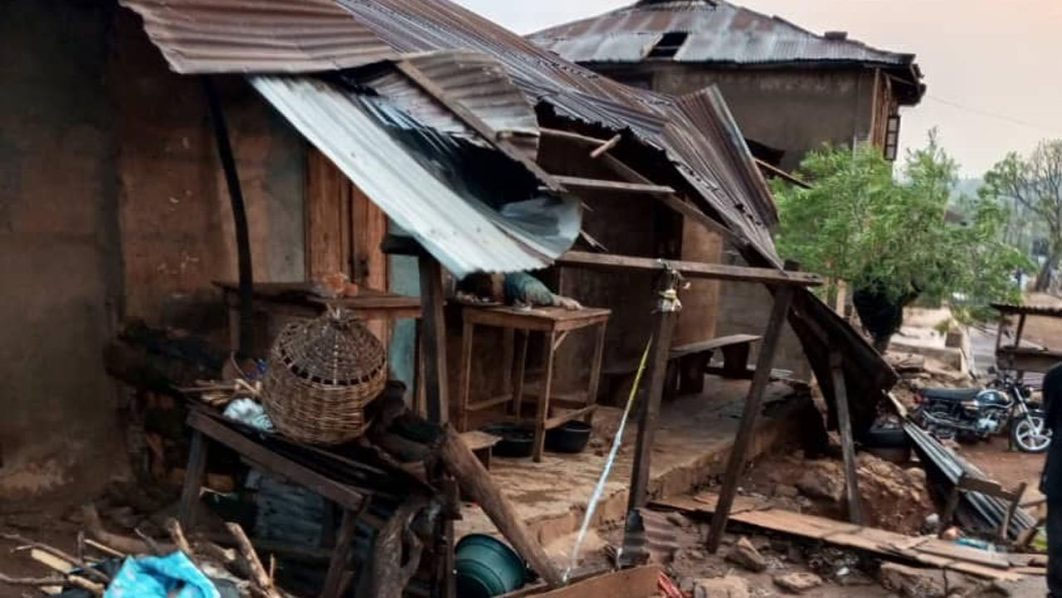
Kano Rainstorms: Nine Lives Lost, Over 4,500 Displaced
Kano, Nigeria – Between January and August 2026, severe rainstorms and windstorms ravaged eight local government areas in Kano State, claiming nine lives and displacing 4,524 residents, the Kano State Emergency Management Agency (SEMA) has confirmed.
The agency’s Executive Secretary, Isyaku Kubarachi, disclosed the figures in an interview, noting that 49 other individuals sustained injuries of varying degrees during the eight-month period. The storms represent the most destructive among the six major disasters recorded across the state within this timeframe, according to Kubarachi, who emphasized the severity of this year’s rainy season compared to previous years.
The affected local government areas are Gaya, Ajingi, Rimin Gado, Minjibir, Kabo, Bichi, Shanono, and Kibiya. Bichi recorded the highest number of victims with 775 affected persons, followed closely by Minjibir with 712 and Kibiya with 630. Shanono recorded 530 victims, while Ajingi had 415. Gaya recorded 342 affected persons, Rimin Gado had 233, and Kabo recorded 102 victims, making it the least affected among the eight LGAs.
READ ALSO:
- Atiku, X user clash over Almajiri crisis, street begging
- Court restrains Lizzy Anjorin from posting Priscilla Ojo’s son’s photos
- NBA controversy: VDM apologises to security agencies over ‘unknown gunmen’ remarks
The latest figures follow a particularly devastating rainstorm in Bichi on July 22, 2026, which initially generated conflicting reports about the death toll. SEMA later clarified that five people died in that specific incident, correcting earlier media reports that had placed the number at eight. The storm destroyed numerous houses and property valued at millions of naira, leaving many families without shelter and basic necessities in the Bichi area.
In the wake of the Bichi disaster, the Kano State House of Assembly adopted a motion of urgent public importance. Sponsored by Lawan Shehu, the member representing Bichi Constituency, the motion called on the state government to provide immediate relief materials and humanitarian assistance to the victims. The motion was passed during a plenary session presided over by Speaker Jibril Falgore, with lawmakers expressing concern over the recurring nature of such disasters and the need for proactive measures.
SEMA has completed comprehensive on-the-ground assessments of all affected communities and submitted detailed reports to the Kano State Government to facilitate intervention. Kubarachi assured that the agency is ready to begin distribution as soon as relief materials are received, stating, “The agency had compiled comprehensive reports and submitted them to the state government for assistance to victims. As soon as we receive relief materials, they will be distributed to them.” He also urged residents in flood-prone areas to heed weather warnings and take necessary precautions as the rainy season continues.
Kano Rainstorms: Nine Lives Lost, Over 4,500 Displaced
-

 Auto2 days ago
Uber exits Nigeria after 12 years
-

 Politics2 days ago
Atiku, Obi Unite in Fresh Bid to Unseat Tinubu as 2027 Election Campaign Heats Up
-
 News3 days ago
Ogogo’s N25m Surfaces After Death, Ilaro Chief Imam Returns Actor’s Money
-
 metro3 days ago
Lagos Businesswoman Stabbed to Death by Her Security Guard Just Two Weeks After Employment
-

 Entertainment3 days ago
Nollywood Actress Atinuke Kareem Dies After Brave Battle with Breast Cancer
-
 metro2 days ago
We were offered $3m to drop Tinubu records campaign — US firm
-
 Politics3 days ago
Nigeria’s Opposition Coalition Faces Critical Test as Key Leaders Skip Unity Summit
-
 Education3 days ago
2027: Atiku vows to review NELFUND, forgive qualifying student loans