

Sports
NFF crisis: FIFA delays approval of Normalisation Committee, plans Nigeria visit
NFF crisis: FIFA delays approval of Normalisation Committee, plans Nigeria visit
The crisis in the Nigeria Football Federation (NFF) has entered a new phase after FIFA withheld immediate approval for Nigeria’s proposed Normalisation Committee, opting instead to send a delegation to the country for further consultations and assessment.
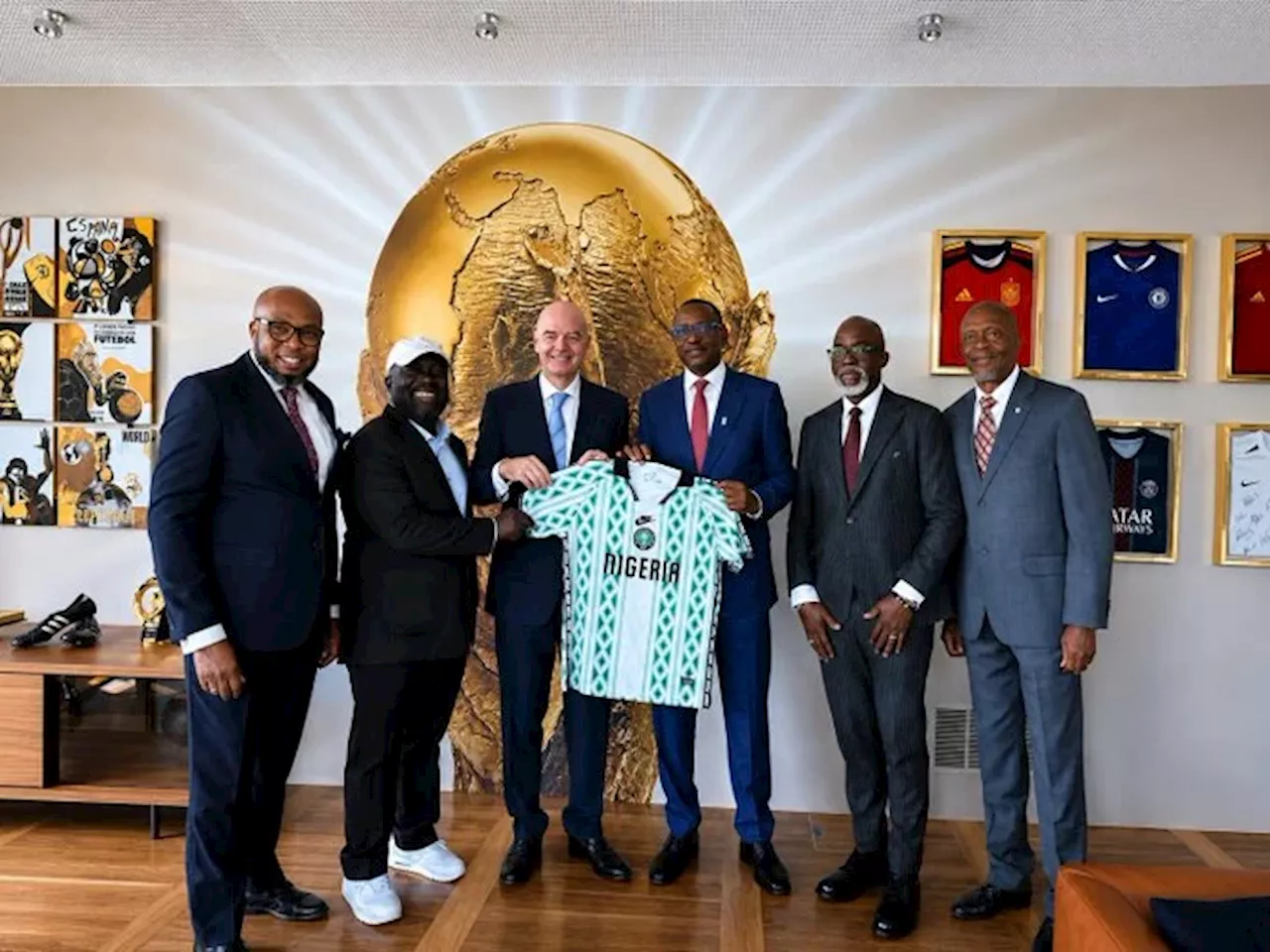
The development followed a high-level meeting between a Nigerian delegation led by National Sports Commission (NSC) Chairman Mallam Shehu Dikko and FIFA President Gianni Infantino at the FIFA headquarters in Zurich, Switzerland, on Tuesday.
The meeting was convened against the backdrop of the mass resignation of the Ibrahim Musa Gusau-led NFF board, following mounting pressure over the state of Nigerian football.
Gusau, NFF General Secretary Mohammed Sanusi and members of the federation’s Executive Committee resigned from their positions on August 27, creating a leadership vacuum at the country’s football governing body.
The resignations came after a difficult period for Nigerian football, including the Super Eagles’ failure to qualify for the 2026 FIFA World Cup and the Super Falcons’ failure to qualify for the 2027 FIFA Women’s World Cup, ending their record of appearing at every edition of the women’s tournament since its inception in 1991.
The setbacks triggered widespread calls for fundamental reforms of the administration of Nigerian football.
President Bola Ahmed Tinubu subsequently directed the relevant authorities to undertake a comprehensive reform of the sector, with the NSC taking the lead in developing proposals for restructuring the NFF and improving the governance of Nigerian football.
One of the key proposals was the establishment of a Normalisation Committee to temporarily administer the affairs of the NFF, implement agreed reforms and organise a fresh election for a new leadership.
That proposal formed a major part of the Nigerian delegation’s discussions with FIFA in Zurich.
READ ALSO:
- Two Grandfathers Among Five Arrested Over Alleged Motorcycle Theft Syndicate in Calabar
- Mama G Advises Parents: Don’t Shield Children from Life’s Struggles
- Atiku Vows to Scrap NELFUND, Offers Student Debt Forgiveness if elected
The delegation included NSC Director-General Bukola Olopade, NFF Acting General Secretary Emmanuel Ikpeme and NFF Director of Legal Affairs Okey Obi. Former NFF President and former FIFA Council member Amaju Pinnick also participated in the meeting in his capacity as Special Adviser to the CAF President and Deputy Chairman of the FIFA Men’s National Teams Competitions Committee.
CAF Second Vice President Kurt Okraku and FIFA Director of Member Associations for Africa Gelson Fernandes were also involved in the discussions.
Although the talks were described as fruitful, FIFA did not immediately ratify the proposed Normalisation Committee.
Instead, FIFA and the Nigerian delegation agreed to continue discussions on a comprehensive reform roadmap covering the short, medium and long term.
A FIFA delegation is expected to visit Nigeria as part of the next stage of the process. The visit is expected to enable the world football governing body to engage more directly with Nigerian football stakeholders and assess the proposed reform structure before taking a final position on the Normalisation Committee.
The decision means that the committee remains a proposal under consideration and has not yet become an officially ratified FIFA intervention.
FIFA is also expected to have significant input into the eventual selection of members of the committee if the proposed arrangement is approved.
Potential members would be expected to undergo integrity and eligibility checks consistent with the standards applicable to officials and administrators within the FIFA football family.
The involvement of FIFA in the selection process is expected to be particularly important because any transitional arrangement must operate within the framework of FIFA statutes and regulations governing the autonomy and administration of national football associations.
The proposed duration of the Normalisation Committee also remains uncertain.
Initial reports suggested that the committee could remain in place for approximately three months, primarily to stabilise the NFF, implement urgent reforms and organise fresh elections.
However, emerging reports indicate that the transition could last considerably longer if FIFA, CAF and Nigerian authorities determine that the reform process requires additional time. Some reports have suggested a possible period of between six months and one year.
READ ALSO:
- Ogun Pastor Dies in Crash Hours After Allegedly Killing Wife in Domestic Dispute
- Edo Police Arrest Cleric Accused of Making ‘Protective Charms’ for Kidnap Gangs
- Reps Panel Traces 58 Bank Accounts, 12 Illegal Entities in PFIPC Fraud Network
There is, however, no official confirmation that FIFA has approved a six-month or one-year tenure. The duration is still expected to form part of the discussions surrounding the final reform roadmap.
Attention has also turned to the possible leadership of the proposed committee.
One of the names being widely mentioned is AbdulHakeem Uthman Mustapha, SAN, a Nigerian lawyer with experience in football administration and international football structures.
Mustapha has been reported as one of the leading candidates for the chairmanship of the proposed Normalisation Committee, although FIFA and the NFF have not officially confirmed his appointment.
His involvement in FIFA’s committee structure could strengthen his credentials for a transitional role. Mustapha is a member of FIFA’s Anti-Racism and Anti-Discrimination Committee, giving him direct exposure to the organisation’s international football administration framework.
He has also previously served as President of the CAF Appeal Committee, further linking him to the judicial and administrative structures of African football.
Other names have reportedly been mentioned in connection with the proposed committee, including former NFF General Secretary Mohammed Sanusi, former Nasarawa State Deputy Governor Silas Agara and Rivers State Attorney-General Chris Green.
The circulation of several names highlights the fact that the final composition of the proposed committee remains unsettled.
The focus of the reform process is also expected to go beyond replacing the officials who resigned.
The proposed transition could involve a review of the NFF electoral system, governance structures and administrative processes, with the broader objective of creating a more transparent, accountable and stable football administration.
There have also been discussions about whether future elections should be reorganised to strengthen grassroots participation, including possible changes to the sequence and structure of elections at local, state and national levels.
Any significant changes to the NFF electoral framework would require careful consultation with FIFA and CAF to ensure that they comply with international football regulations.
The latest FIFA-Nigeria engagement has also helped ease concerns about a possible immediate suspension of Nigeria from international football.
A purported FIFA letter had recently circulated, claiming that the world football governing body was demanding explanations over the circumstances surrounding the NFF leadership resignations and threatening possible sanctions.
The NFF dismissed the document as fake, insisting that it did not emanate from FIFA.
The federation subsequently confirmed that FIFA had accepted the resignations of Gusau, Sanusi and the other principal officers and Executive Committee members.
FIFA’s decision to continue discussions with Nigerian authorities instead of immediately imposing sanctions has further shifted attention towards the reform process.
For Nigerian football stakeholders, the forthcoming FIFA visit could therefore be decisive.
The delegation is expected to examine the proposed reform framework and provide further clarity on the NFF Normalisation Committee, including its composition, mandate, duration and relationship with the existing football administration.
Until FIFA formally approves the arrangement, however, individuals being mentioned for positions on the committee should not be regarded as confirmed appointees.
The situation also means that the previously planned NFF electoral process is likely to remain subject to the outcome of the reform discussions.
The ultimate objective of the exercise is to use the current leadership crisis as an opportunity to rebuild Nigerian football administration, restore confidence among stakeholders and establish stronger structures capable of supporting the development of the country’s national teams and domestic game.
With FIFA now directly involved in the reform discussions, the coming weeks could determine the direction of Nigerian football and whether the proposed Normalisation Committee becomes the vehicle for a broader restructuring of the NFF.
For Nigeria, the challenge will be to ensure that the reform process produces not only a new leadership but also lasting institutional changes that can improve governance, development and performance across the country’s football system.
NFF crisis: FIFA delays approval of Normalisation Committee, plans Nigeria visit







Sports
Portugal Beat Denmark 4-2 Without Ronaldo in Nations League Clash
Portugal Beat Denmark 4-2 Without Ronaldo in Nations League Clash
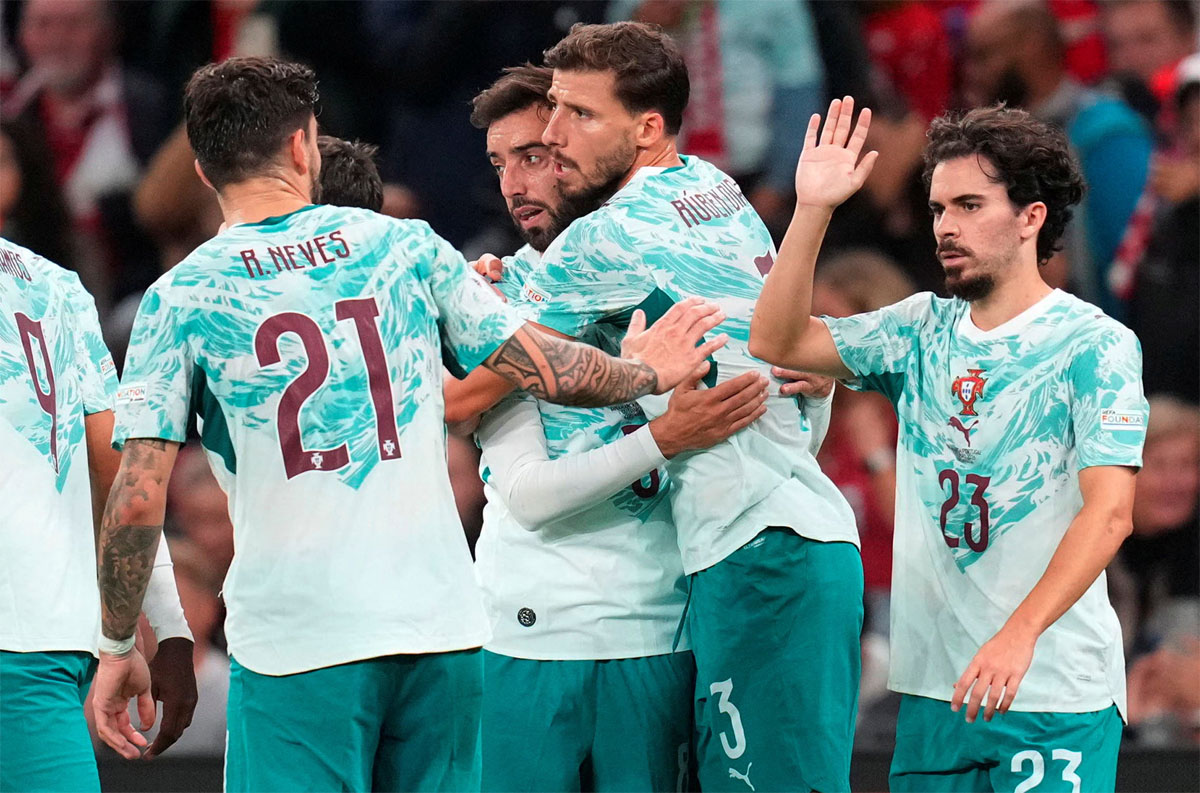
Portugal defeated Denmark 4-2 in the UEFA Nations League on Thursday, producing a strong performance despite the absence of captain Cristiano Ronaldo.
The result extended Portugal’s perfect start under head coach Jorge Jesus, who has now overseen three victories from three matches since taking charge of the national team.
Playing in Copenhagen, Portugal took the lead in the 13th minute when João Cancelo finished from close range after Denmark struggled to clear the ball.
The hosts responded when Mikkel Damsgaard produced a composed finish to level the score.
Portugal regained the advantage shortly afterwards through Gonçalo Ramos, who found the net at the near post to make it 2-1.
Denmark refused to surrender and drew level again early in the second half through Rasmus Højlund.
READ ALSO:
- Military Personnel Begin Receiving FG-Approved Salary Increase
- Trump Threatens Iran With ‘Very Hard’ Response Over Flydubai Attack
- Phyna Knocks Out Nkechi Blessing in Fourth Round, Wins ₦50m, New Car
Portugal then regained control of the contest, with Vitinha heading home in the 57th minute to restore the visitors’ lead.
João Félix completed the scoring three minutes from full time, finishing a counter-attack to secure the 4-2 victory.
The match was played against the backdrop of Ronaldo’s absence after the veteran forward left Portugal’s training camp before the game.
Ronaldo’s departure followed a decision by Jesus not to start him against Denmark. The 41-year-old subsequently said in a social media post that he would explain the circumstances surrounding his exit at a later time.
With Ronaldo unavailable, Jesus handed Ramos the responsibility of leading the attack, and the Paris Saint-Germain forward responded with Portugal’s second goal.
The victory moved Portugal to nine points from three matches in the competition and maintained their winning run under Jesus.
Denmark, meanwhile, were left to reflect on another match in which they twice came from behind but were unable to prevent Portugal from taking all three points.
Portugal will continue their Nations League campaign against Norway, while attention is expected to remain on Ronaldo and his future involvement with the national team.
Portugal Beat Denmark 4-2 Without Ronaldo in Nations League Clash
Sports
Why Ronaldo Left Portugal Camp Ahead of Denmark Clash
Why Ronaldo Left Portugal Camp Ahead of Denmark Clash
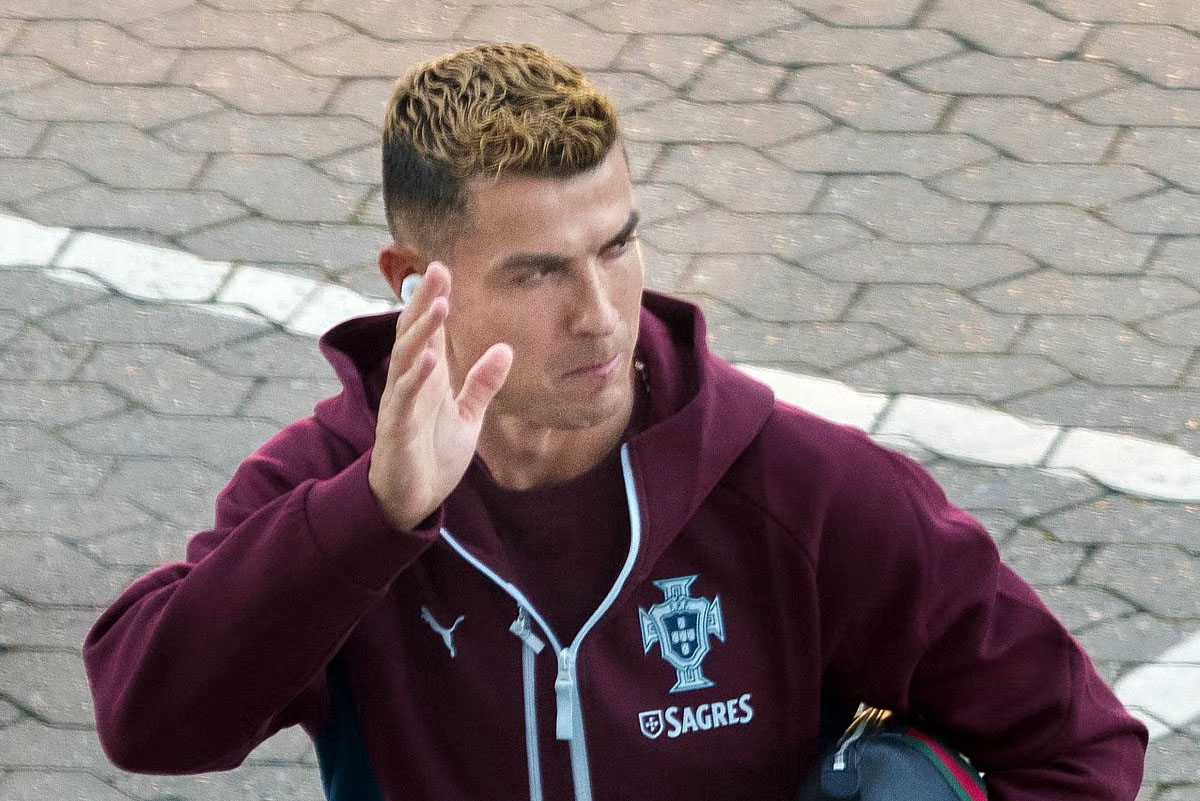
Cristiano Ronaldo has left the Portugal national team camp ahead of the country’s UEFA Nations League meeting with Denmark, following reports of tension over his role in the team.
Ronaldo’s departure came after Portugal coach Jorge Jesus confirmed that the 41-year-old forward would not start against Denmark.
The situation reportedly followed Portugal’s 2-1 victory over Norway, when Ronaldo remained on the bench throughout the match despite warming up during the game.
According to reports, Ronaldo was unhappy after he was not introduced and went straight to the dressing room at the final whistle rather than joining his teammates in acknowledging the Portuguese supporters.
Jesus later addressed the issue and acknowledged that Ronaldo was unhappy with the decision, but denied that there had been a major confrontation between the two.
The Portugal coach also dismissed reports that Ronaldo had refused to train, explaining that the forward had instead completed individual mobility and strengthening exercises.
READ ALSO:
- 2027: Amaechi Vows to Resign If Nigeria Fails to Change Within One Year
- Dangote Sets 40-Month Deadline for $16bn East Africa Refinery in Kenya
- Nigeria at 66: Tinubu Unveils Fresh Push for Lower Costs, Jobs, Prosperity (Full Text)
The situation intensified after Jesus confirmed that Ronaldo would again not be in the starting lineup for the Denmark vs Portugal fixture, with Gonçalo Ramos expected to lead the attack.
Jesus said Ronaldo could still be introduced as a substitute depending on how the match developed.
Ronaldo subsequently held a conversation with Portuguese Football Federation president Pedro Proença before leaving the national team camp in Copenhagen.
The Portugal captain later posted a statement on social media confirming his departure and indicating that he would explain the circumstances behind the decision at a later time.
He did not directly accuse Jesus or the Portuguese federation of wrongdoing in the statement.
The episode has nevertheless generated renewed questions about Ronaldo’s role in the Portugal national team, particularly as he approaches the later stages of his international career.
Ronaldo remains Portugal’s record goalscorer and one of the country’s most decorated players. He has also previously indicated that his playing career is approaching its final stage.
For now, the confirmed sequence is that Ronaldo was left unused against Norway, Jesus subsequently announced that he would not start against Denmark, Ronaldo met with the federation president and then left the training camp.
Portugal’s immediate focus remains its Nations League campaign, while further details about Ronaldo’s decision are expected to emerge if the player follows through on his promise to explain the circumstances.
Why Ronaldo Left Portugal Camp Ahead of Denmark Clash
Sports
Super Eagles Suffer Bissau Nightmare as Guinea-Bissau Smash Nigeria 3-0
Super Eagles Suffer Bissau Nightmare as Guinea-Bissau Smash Nigeria 3-0
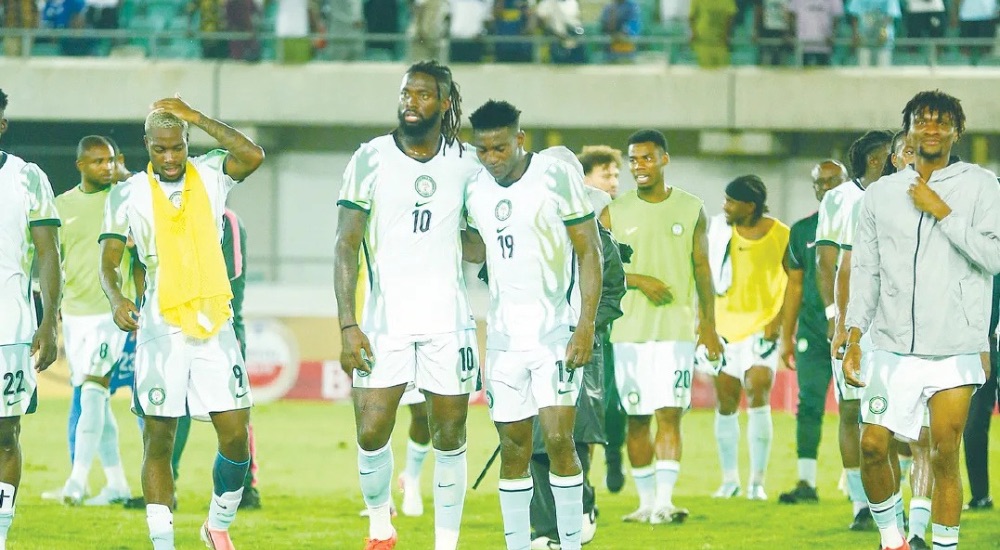
Nigeria’s Super Eagles suffered a stunning 3-0 defeat to Guinea-Bissau on Tuesday night, as their 2027 Africa Cup of Nations (AFCON) qualifying campaign suffered a major setback in Bissau.
The hosts produced a dominant display at the Estádio Nacional 24 de Setembro, scoring once in the first half and twice after the break to move to the top of Group L with six points from two matches.
Franculino Djú put Guinea-Bissau ahead in the 15th minute after receiving a long pass from Renato Nhaga. He worked his way into the Nigerian penalty area before curling a left-footed effort beyond goalkeeper Stanley Nwabali.
The Super Eagles struggled to find their rhythm after conceding and failed to create enough clear chances to trouble the hosts before the interval.
Coach Eric Chelle responded at the start of the second half by introducing Moses Simon and Moses Usor for Taiwo Awoniyi and Frank Onyeka.
READ ALSO:
- Trump Denies Offering Iran Sanctions Relief, Release of Frozen Funds
- Nigeria XI vs Guinea-Bissau: Awoniyi, Lookman, Adams Lead Super Eagles Attack
- Federal Workers Back N500 Petrol Demand, Threaten Three-Day Warning Strike
The changes did little to alter the pattern of the match, with Guinea-Bissau continuing to pose the greater attacking threat.
The hosts doubled their advantage in the 66th minute through Mama Baldé, who collected a pass from Mamadi Camará before cutting into the Nigerian box and firing a low shot past Nwabali.
Chelle subsequently brought on George Ilenikhena and Raphael Onyedika for Akor Adams and Wilfred Ndidi, while Tolu Arokodare replaced Ademola Lookman.
Ilenikhena came close to reducing the deficit late in the game, but Guinea-Bissau goalkeeper Embadjé made another important save to preserve his side’s two-goal advantage.
Nigeria’s miserable night was completed in the fifth minute of stoppage time when Álvaro Djaló finished a through ball from Tamble Monteiro to make it 3-0.
The result leaves Nigeria with three points from two matches, following their opening 2-1 victory over Madagascar.
Guinea-Bissau, meanwhile, have six points after beating Tanzania 2-0 in their opening fixture before defeating Nigeria.
Madagascar and Tanzania drew 1-1 in the other Group L match.
With Tanzania already guaranteed a place at the 2027 AFCON as one of the tournament co-hosts, Nigeria, Guinea-Bissau and Madagascar are competing for the qualifying position available to the highest-ranked non-host nation in the group.
The Super Eagles will have an opportunity to respond when they face Tanzania in a double-header during the November international window.
For Chelle and his players, however, the 3-0 defeat in Bissau leaves little room for another disappointing performance as the AFCON 2027 qualifying race continues.
Super Eagles Suffer Bissau Nightmare as Guinea-Bissau Smash Nigeria 3-0
-

 Politics3 days ago
2027: Oshiomhole Dares Opposition Over ₦500 Petrol Promise, Says APC Will Take Argument to Nigerians
-
 metro3 days ago
NYSC Kidnap: Abductors Demand N950m for 19 Prospective Corps Members in Imo
-

 metro2 days ago
‘I Thought I Was Dead’ — Hairstylist’s Daring Escape From Kidnappers After Benin-Ore Ambush
-
 metro3 days ago
Amaechi: Tinubu’s Policies Made My Mother’s Drugs Unaffordable
-
 metro3 days ago
Tension as Kidnappers Threaten to Kill Abducted Oyo Corps Members
-
 metro3 days ago
N500 Petrol, Wage Award: Public Sector Workers Begin Warning Strike
-

 Entertainment3 days ago
Less Than Four Months After Wedding, Jarvis Threatens Peller With Lawsuit Over Second-Wife Plan
-

 Politics3 days ago
Wike to Amaechi: What Did You Bring to Rivers After 24 Years in Power?