

metro
DSS arraigns five suspected Ansaru members over Oyo school abduction, alleged killings

DSS arraigns five suspected Ansaru members over Oyo school abduction, alleged killings
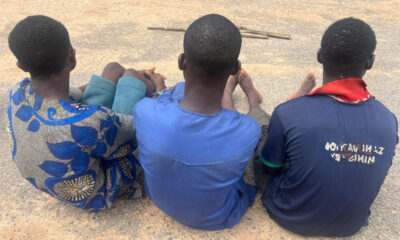
The Department of State Services (DSS) has arraigned five suspected members of the Jama’atu Ansarul Muslimina fi-Biladis Sudan (Ansaru) before the Federal High Court in Abuja over the May 15 abduction of pupils and teachers in Oriire Local Government Area of Oyo State and the alleged killing of two victims.
The five defendants — Mahmud Muhammad, also known as Abu Bara’a and Abbas Mukhtar; Abubakar Abbas, also known as Isah Adam and Mallam Mahmuda Al-Nigeri; Abdulrazak Umar, also known as Abu Khalifa or Abu Khalid; Yunusa Musa, also known as Abu Yunusa Bin Musa; and Shamsu Adamu Sani, also known as Abu Itisar — pleaded not guilty to the charges brought against them.
They are facing a six-count charge bordering on alleged terrorism, conspiracy, aiding terrorist activities and concealing information connected to the attack.
According to the charge marked FHC/ABJ/CR/438/2026, the Federal Government alleged that Muhammad and Abbas directed members of the Ansaru group to carry out kidnappings and killings in different parts of the country if they were arrested.
The prosecution alleged that the planned attacks were intended to pressure the government into meeting demands linked to the defendants’ alleged detention.
The Federal Government further accused the defendants of involvement in the Oriire school abduction, which occurred on May 15, 2026, when armed attackers invaded schools in the affected Oyo community and abducted pupils, teachers and other residents.
The affected schools included Community Grammar School, Baptist Nursery and Primary School, and L.A. Primary School.
The attack raised renewed concerns about school security and the safety of pupils, teachers and communities, particularly in rural areas facing growing security challenges.
The prosecution also alleged that the abduction resulted in the deaths of Michael Oyedokun and Deacon John Olaleye, who were among the victims taken during the attack.
According to the charge, the two victims were allegedly killed while in captivity.
The DSS further accused the defendants of concealing information about the planned attack and failing to disclose intelligence that could have assisted security agencies in preventing or responding to the alleged terrorist operation.
READ ALSO:
- PFIPC probe: HoS admits failure to verify recruitment documents
- Cristiano Ronaldo ranked 10th among Manchester United’s greatest players
- Father-in-law arrested after allegedly locking out 28-year-old widow eight days after husband’s death
Umar, Musa and Sani were separately accused of conspiracy and aiding the alleged kidnapping and killings.
Following the defendants’ not-guilty pleas, counsel for the prosecution, Dr Caliatus Eze, asked the court to remand them in the protective custody of the DSS pending trial.
Justice Salim Ibrahim granted the application and ordered that the five defendants remain in DSS custody.
The judge also directed that the defendants be granted unhindered access to their lawyers and two members of their immediate families, while receiving adequate medical care.
Justice Ibrahim subsequently adjourned the case until September 25, 2026, for the commencement of trial.
The Oriire school attack occurred on May 15, 2026, when armed attackers invaded schools in the community and abducted about 46 pupils, teachers and other victims.
The victims spent nearly two months in captivity before security agencies carried out an intelligence-led operation that led to the rescue of most of those abducted.
The rescue operation reportedly involved coordinated efforts by security and intelligence agencies, supported by local security groups and community stakeholders.
The Federal Government has linked the attack to Ansaru, a proscribed terrorist group believed to have ties to Al-Qaeda.
The arraignment followed earlier convictions involving other suspects connected to terrorism-related offences. Earlier in July, a Federal High Court in Abuja sentenced senior Ansaru commanders to life imprisonment after they pleaded guilty to multiple offences, including terrorism financing, kidnapping and related crimes.
Meanwhile, retired and serving staff members of the University of Ibadan (UI) have donated about ₦6 million to rescued pupils and teachers, as well as families who lost relatives during the Oriire school attack.
The donation was presented at the Office of the Inspector-General of Education, Ogbomoso Zone, as part of efforts to support survivors and bereaved families.
Chairman of the University of Ibadan ad hoc committee on support for the rescued victims, Prof Ezekiel Ayoola, said the intervention reflected the academic community’s solidarity with those affected by the attack.
He explained that the funds were raised through voluntary contributions from members of the academic community, including former University of Ibadan Vice-Chancellor Prof Kayode Adebowale, Bowen University Vice-Chancellor Prof Jonathan Babalola, professors and early-career academics.
Ayoola said the donation was intended to complement ongoing rehabilitation efforts and assure the survivors and bereaved families that they had not been forgotten.
He noted that although the victims had regained their freedom, some were still dealing with the psychological and emotional effects of their experiences.
According to him, sustained mental health support, educational assistance and financial intervention would be important in helping the survivors recover and rebuild their lives.
The academic community also commended the Federal Government, Oyo State Government and security agencies for the coordinated operation that led to the rescue of the victims.
The Inspector-General of Education, Ogbomoso Zone, Mr Olubunmi Adisa, described the donation as a significant demonstration of compassion and social responsibility.
The symbolic presentation was made to rescued teachers, pupils and bereaved families by members of the University of Ibadan delegation.
The case remains before the court, and the five defendants are presumed innocent unless proven guilty by a court of competent jurisdiction.
DSS arraigns five suspected Ansaru members over Oyo school abduction, alleged killings








metro
Tinubu Heads to Saudi Arabia for Umrah, Seeks Allah’s Blessings for Nigeria
Tinubu Heads to Saudi Arabia for Umrah, Seeks Allah’s Blessings for Nigeria
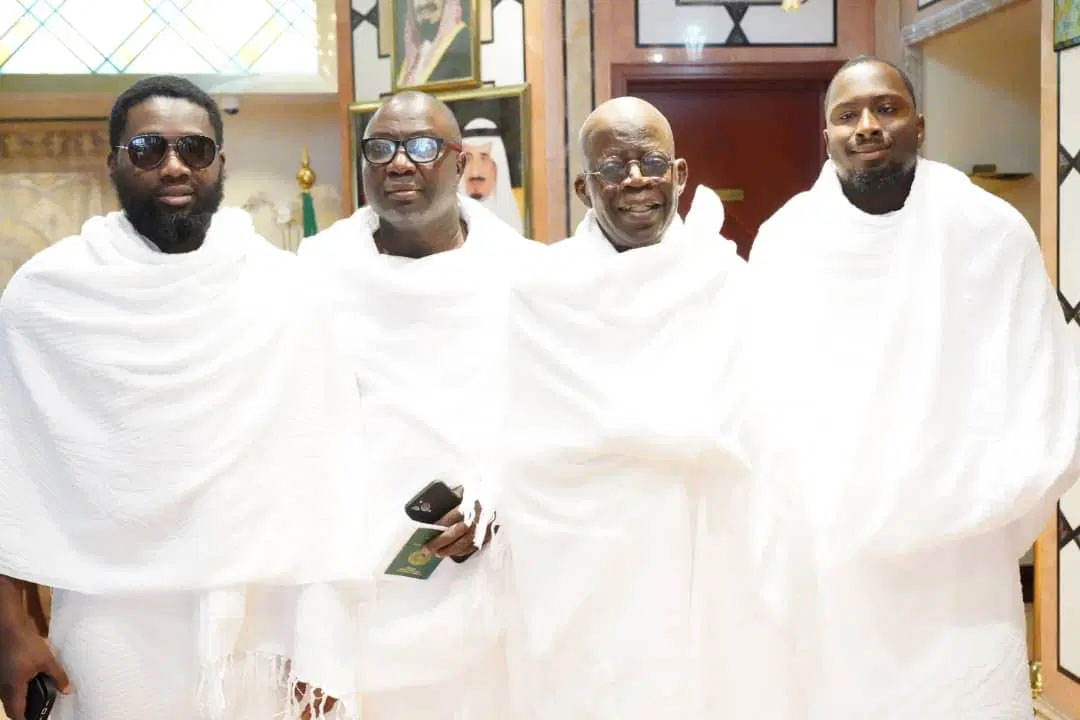
President Bola Ahmed Tinubu will travel to Makkah, Saudi Arabia, on Thursday to perform Umrah, the Islamic lesser pilgrimage, and pray for Nigeria’s peace, unity, stability and progress.
The planned trip was announced on Wednesday by the President’s Special Adviser on Information and Strategy, Bayo Onanuga.
According to the announcement, Tinubu will use the spiritual journey to seek Allah’s guidance and blessings for Nigeria and its citizens as the country continues to grapple with economic and security challenges.
Umrah is a voluntary Islamic pilgrimage to Makkah that can be performed at any time of the year, unlike Hajj, which takes place during a specific period in the Islamic calendar.
READ ALSO:
- Cocaine Trafficking: Court Denies KC Luxury Bail Over Missing Medical Certificate
- After AfDB Tenure, Adesina Offers to Help Tinubu Drive Nigeria’s Growth
- Why Nigeria Needs Fresh $21.7bn Loan Despite Rising Debt Burden – Finance Minister
Before departing Abuja, the President is expected to commission equipment acquired by the Nigerian Air Force to support its operations. The ceremony is scheduled to take place at the Presidential Wing of the Nnamdi Azikiwe International Airport.
Tinubu is expected to return to Nigeria next week after completing the religious exercise in Saudi Arabia.
The planned visit comes as his administration continues to pursue economic reforms and address security concerns across the country.
The Presidency said the pilgrimage would provide the President with an opportunity for spiritual reflection and devotion, including prayers for Nigeria’s continued peace, unity and development.
The announcement did not provide further details about the President’s travel delegation or the precise date of his return.
Tinubu Heads to Saudi Arabia for Umrah, Seeks Allah’s Blessings for Nigeria
metro
State Police: Gbajabiamila Warns States Must Prove Funding Capacity Before Take-Off
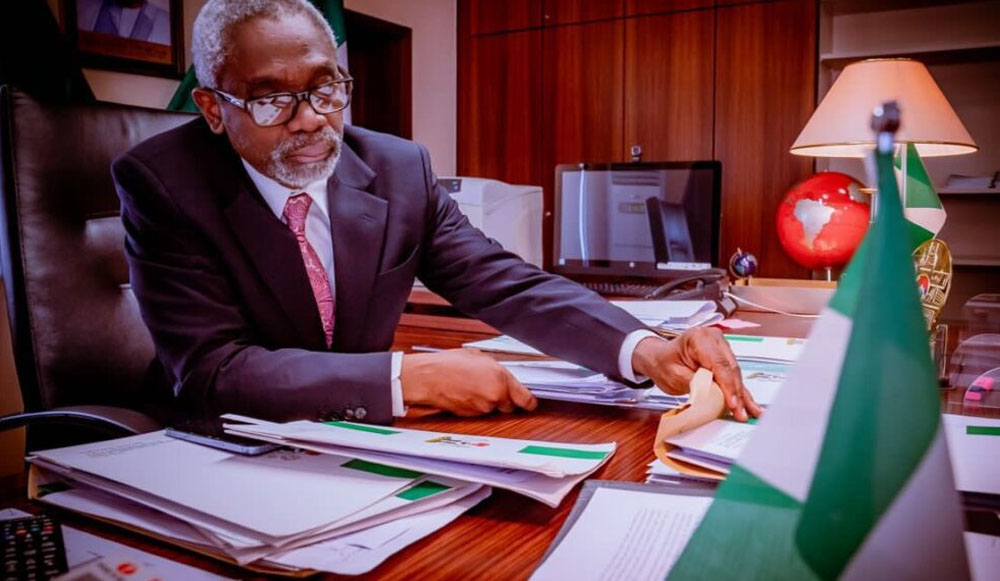
Chief of Staff to President Bola Ahmed Tinubu, Femi Gbajabiamila, has said states seeking to establish their own police forces must demonstrate the financial capacity to sustain their operations, warning that inadequate funding could undermine professionalism and expose officers to improper influence.
Gbajabiamila said the proposed state police system would require more than the initial purchase of patrol vehicles, uniforms and equipment, stressing that state governments must be able to pay salaries regularly, provide continuous training and cover operational expenses.
He spoke on Monday during a session on security, stability and economic resilience at the 32nd Nigerian Economic Summit in Abuja.
According to the presidential aide, states must make credible financial provisions for the long-term running of their police services before the new arrangements begin operations.
“A state taking on policing must be able to sustain the service after the initial purchase of vehicles and uniforms,” he said.
Gbajabiamila warned that police institutions unable to meet their financial obligations could become vulnerable to private interests and unlawful demands, potentially compromising officers’ independence and the protection of citizens.
He added that federal policing would remain available in states that were not financially or institutionally ready to establish their own police services.
READ ALSO:
Why Nigeria Needs Fresh $21.7bn Loan Despite Rising Debt Burden – Finance Minister
Emeka Ike Loses ₦10bn Privacy Suit Against Wike’s Aide, INEC
2027: APC Chieftain Boasts Tinubu Will Defeat Atiku Even in His Polling Unit
The proposed reform forms part of the Federal Government’s broader efforts to decentralise policing, improve local intelligence gathering and strengthen responses to insecurity across the country.
Gbajabiamila argued that military operations alone could not provide the sustained presence required to prevent crime, investigate offences and restore normal life in communities affected by violence.
He said effective local policing could help reduce response times, improve cooperation between security personnel and residents, and enable displaced communities and businesses to return to areas affected by insecurity.
However, he stressed that the Nigeria Police Force would remain essential in addressing crimes that cross state boundaries and threats requiring specialised national capabilities.
The presidential aide also acknowledged concerns that state governors could use local police formations to intimidate political opponents or target vulnerable communities.
He said the proposed framework would incorporate enforceable limits on police powers, independent oversight and mechanisms through which citizens could seek redress for abuses.
“The concern that police powers could be used against political opponents or vulnerable communities is serious. Our answer is to place enforceable limits on those powers and provide remedies when they are abused,” he said.
Gbajabiamila maintained that access to police protection must not depend on a citizen’s political affiliation, background or place of origin.
Private sector urged to support state police funding
The Chief of Staff also called on the organised private sector, including the Nigerian Economic Summit Group, chambers of commerce and business associations, to develop practical proposals for financing and implementing the proposed state police system.
He said insecurity had increased business costs through disrupted supply chains, delayed investments, abandoned projects and additional spending on private security.
According to him, businesses have a direct interest in ensuring that communities where their workers, suppliers and customers live are safe.
He urged business leaders to engage governors and lawmakers on sustainable financing arrangements, institutional management and accountable partnerships.
However, Gbajabiamila cautioned that private sector contributions must not give companies or wealthy individuals influence over police investigations or access to preferential treatment.
He said public funding must remain dependable, while private contributions should be transparently recorded, publicly accounted for and subjected to independent scrutiny.
24 state assemblies approve constitutional amendment
Providing an update on the process, Gbajabiamila disclosed that 24 State Houses of Assembly had approved the constitutional amendment required for state police as of October 23, 2026, meeting the two-thirds threshold for state legislative approval.
He also said the Presidential Working Group on the National Policing Bill had submitted a draft National Policing Bill and 29 consequential amendment bills to the Federal Ministry of Justice on October 19 for review.
The proposals are expected to be presented to President Tinubu before being transmitted to the National Assembly for consideration.
The legislative process remains a key step towards establishing the legal framework for decentralised policing.
If adopted, the proposed arrangement would give willing and financially capable states greater responsibility for local security while retaining a federal police institution to handle national and cross-border threats.
Gbajabiamila said the success of the reform would depend on sustainable funding, professional standards, effective oversight and safeguards against political interference.
State Police: Gbajabiamila Warns States Must Prove Funding Capacity Before Take-Off
metro
TUC Rejects Tinubu’s ₦70,000 Transport Allowance, Demands ₦300,000 Salary
The Trade Union Congress of Nigeria (TUC) has rejected the Federal Government’s proposed ₦70,000 monthly transport allowance for workers, demanding an immediate salary increase and the full implementation of outstanding agreements with health workers.
The labour centre said temporary financial relief would not adequately address the rising cost of living, insisting that Nigerian workers needed sustainable wage increases rather than allowances that could be inconsistently implemented.
In a statement issued on Wednesday, October 28, 2026, and signed by its President, Festus Osifo, and Secretary-General, N.A. Toro, the TUC urged President Bola Ahmed Tinubu to review workers’ salaries without waiting for negotiations on another national minimum wage.
The union’s position followed President Tinubu’s announcement of a six-month transport allowance for workers, scheduled to begin in November 2026, after a meeting with the leadership of the Nigeria Labour Congress (NLC).
The TUC said it had communicated its demands to the Federal Government in a letter dated October 8, following a meeting of its National Administrative Council in Abuja. It added that subsequent consultations with government officials, including the Secretary to the Government of the Federation, had not changed its opposition to the proposed allowance.
The congress argued that the government could increase salaries without waiting for a new minimum wage agreement, noting that there was no legal ceiling on the amount employers could pay their workers.
READ ALSO:
- Emeka Ike Loses ₦10bn Privacy Suit Against Wike’s Aide, INEC
- 2027: APC Chieftain Boasts Tinubu Will Defeat Atiku Even in His Polling Unit
- Awujale Succession: Abiodun Promises New Ijebuland Monarch Before May 29, 2027
It proposed raising the salary of the lowest-paid federal worker from the current ₦70,000 to ₦300,000, with corresponding adjustments for other salary grades.
The TUC said the proposed increase was necessary to help workers cope with rising food prices, transportation costs, healthcare expenses and other essential household needs.
It also pointed to some state governments that have introduced minimum wages above ₦100,000, arguing that the Federal Government should consider a more substantial and lasting adjustment to workers’ earnings.
The congress maintained that negotiations over a new national minimum wage should not be used as a reason to delay an immediate salary review.
Why TUC rejected the transport allowance
The labour organisation cited the incomplete implementation of the ₦40,000 wage award agreed upon by the Federal Government and organised labour in October 2023 as a major reason for rejecting another temporary payment arrangement.
According to the TUC, some workers were still owed one or two months of the previous award, while others allegedly received nothing. It also complained that payments to some beneficiaries were irregular, with intervals of one or two months.
The congress further claimed that more than 80 per cent of states and workers in the informal sector had not benefited from any form of wage award.
It questioned why workers should trust another temporary arrangement when, according to the union, previous commitments had not been fully honoured.
The TUC argued that a permanent salary increase would provide more predictable financial support and help workers plan their household expenses more effectively.
TUC demands implementation of JOHESU agreement
Beyond the salary dispute, the congress called on the Federal Government to implement its outstanding agreement with the Joint Health Sector Unions (JOHESU), particularly the adjustment of the Consolidated Health Salary Structure (CONHESS).
The TUC said its president had led an organised labour delegation, including JOHESU representatives, in negotiations aimed at resolving the union’s prolonged industrial dispute.
The discussions culminated in a conciliation meeting at the Federal Ministry of Labour and Employment, where both parties agreed on measures to address outstanding issues affecting health workers.
According to the TUC, JOHESU suspended its industrial action in good faith after the agreement was reached, but the government had yet to implement the agreed CONHESS adjustment seven months later.
The congress described the delay as a failure to honour a formal commitment and warned that it could undermine confidence in collective bargaining.
It called for the immediate implementation of the adjustment, publication of a clear timetable, adequate budgetary provisions and consultations with the affected unions to resolve outstanding matters.
The TUC said health workers should not be expected to continue providing essential services while agreed improvements to their conditions of service remained outstanding.
Union seeks broader measures to ease economic hardship
The congress also urged the Federal Government, state governments and local government authorities to introduce measurable interventions to reduce the cost of essential goods and services.
It said economic hardship affected not only federal employees but also state and local government workers, pensioners, private-sector employees and people working in the informal economy.
The union called for timely payment of salaries and pensions, protection of existing jobs, action against exploitative labour practices and renewed investment in productive sectors capable of generating decent employment.
It stressed that government interventions should be inclusive, adequately funded and supported by clear implementation timelines.
The TUC said it was awaiting the outcome of its scheduled meeting with the Federal Government before deciding on its next course of action.
The dispute highlights continuing tensions between organised labour and the government over workers’ purchasing power, wage adjustments and the implementation of previously negotiated agreements.
The proposed ₦70,000 transport allowance is a temporary measure planned for six months, while the TUC’s demand for a ₦300,000 salary floor remains a proposal and has not been approved by the Federal Government.
TUC Rejects Tinubu’s ₦70,000 Transport Allowance, Demands ₦300,000 Salary
-

 metro2 days ago
Cancelled Wedding: Man Sues Ex-Fiancée’s Father Over Unpaid ₦70,000 Dowry
-

 Auto2 days ago
Car of the Year, other top honours up for grabs as NAJA Awards race begins
-

 Sports2 days ago
KANE ENDS 25-YEAR WAIT! England Captain Wins 2026 Ballon d’Or After Stunning 73-Goal Season
-

 metro3 days ago
School Bus Driver Turns Kidnapper, Collects ₦503,000 Ransom, Rapes 14-Year-Old Delta Student
-

 metro2 days ago
IKEDC Blames National Grid for Two-Week Power Crisis in Ishaga, Oke-Ayo
-
 metro1 day ago
Nigerian Navy Recruitment 2026: October 31 Deadline, Full Requirements and How to Apply
-

 metro3 days ago
Massacre in Taraba: Death Toll Soars to 48 as Fleeing Villagers Drown in Desperate Escape
-

 metro2 days ago
EFCC Busts Four Illegal Lithium Plants in Ogun, Arrests 14 Chinese Nationals