

News
After AfDB Tenure, Adesina Offers to Help Tinubu Drive Nigeria’s Growth
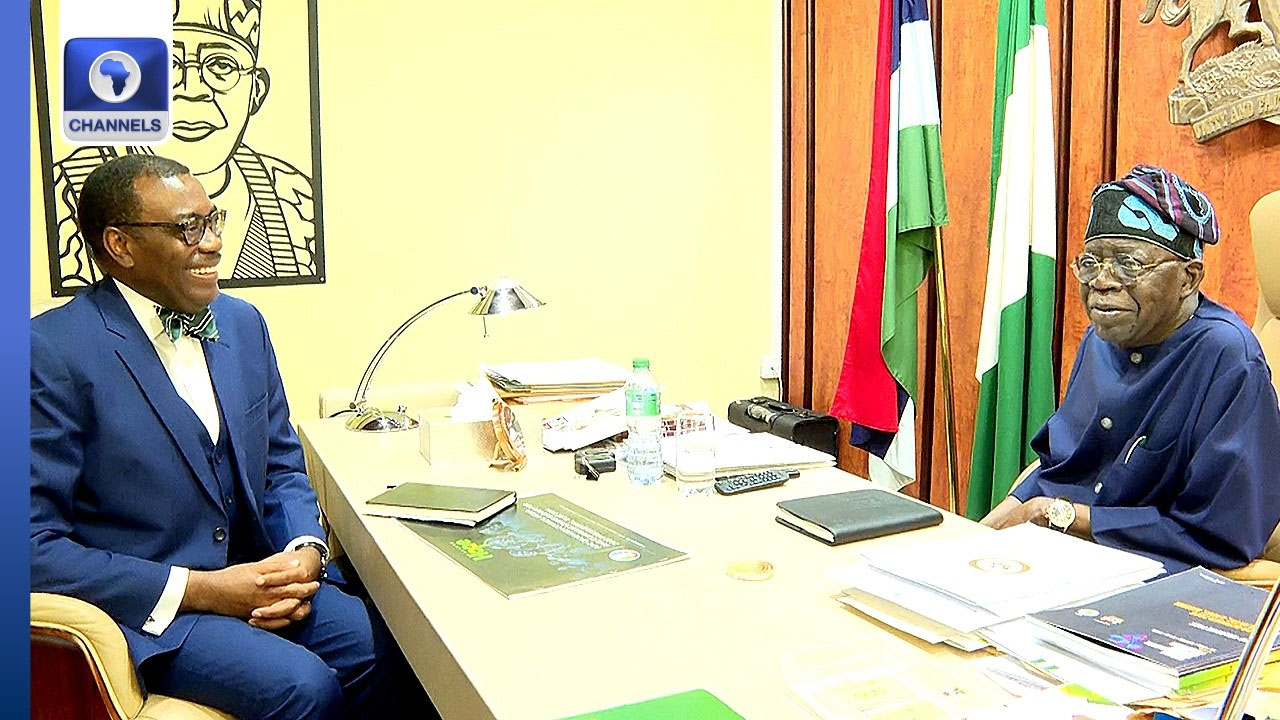
Former President of the African Development Bank (AfDB), Akinwumi Adesina, has declared his readiness to contribute to Nigeria’s development in any capacity deemed appropriate by President Bola Ahmed Tinubu, while clarifying that he is not seeking a government appointment.
Adesina made the declaration on Tuesday after meeting Tinubu at the Presidential Villa in Abuja, where he briefed the President on his 10-year tenure at the continental development finance institution and its financial support for Nigeria.
The former AfDB president said his willingness to serve was motivated by patriotism and a sense of responsibility to his country, rather than a desire to secure a political position.
“I’m fully able to help Nigeria in any capacity. I’ve always had that. My heart is always at home,” he told journalists after the meeting.
He added that he was prepared to contribute wherever the President considered his experience and expertise useful.
“In any capacity that His Excellency feels I can help, I can help in anything. I’m not looking for a job. I’m not looking for anything. I’m just here to help,” Adesina said.
“It’s my country. I have a duty, an obligation and a responsibility to do so, and I will.”
Adesina briefs Tinubu on AfDB achievements
Adesina explained that the visit was an opportunity to formally inform Tinubu that he had completed his two terms as AfDB president and to present an account of the bank’s achievements during his leadership.
READ ALSO:
- Why Nigeria Needs Fresh $21.7bn Loan Despite Rising Debt Burden – Finance Minister
- Emeka Ike Loses ₦10bn Privacy Suit Against Wike’s Aide, INEC
- 2027: APC Chieftain Boasts Tinubu Will Defeat Atiku Even in His Polling Unit
He said the bank provided approximately $7 billion in financing to Nigeria between 2015 and 2025, compared with total financing of $11.1 billion since it began operations in Nigeria in 1971.
According to him, the financing provided during his decade at the helm represented approximately 63 per cent of the bank’s cumulative support to Nigeria over the period.
Adesina said Tinubu expressed satisfaction with the bank’s contributions and the projects supported during his tenure.
The former Nigerian minister of agriculture led the AfDB from 2015 until September 2025, completing two terms as the institution’s president. He was the first Nigerian to occupy the position.
Adesina commends Tinubu’s economic reforms
During the meeting, Adesina also commended Tinubu’s economic reforms, particularly the removal of the petrol subsidy and the harmonisation of foreign exchange windows.
He described the measures as difficult but important decisions, arguing that they were beginning to produce results in some areas of the economy.
According to him, foreign exchange availability had improved, portfolio investors were returning to the country, and inflation was trending downwards.
However, he acknowledged that prices remained high, meaning many Nigerians continued to face pressure from the cost of living.
Adesina also cited improved assessments from some international credit-rating agencies, which he said reflected changing perceptions of Nigeria’s economic outlook.
Despite these developments, he cautioned that economic stabilisation was only the beginning of a broader transformation process.
“You have to also now move from the issue of the reforms and stabilisation straight into structural transformation and also growth and prosperity,” he said.
He argued that Nigeria must now focus on translating economic reforms into stronger productivity, expanded economic opportunities and improved living standards.
Former AfDB chief urges focus on growth and prosperity
Adesina’s remarks place emphasis on the need to move beyond macroeconomic adjustments towards policies that deliver tangible benefits for households and businesses.
His comments come amid continuing debate over the impact of the Tinubu administration’s reforms, including the removal of fuel subsidies and changes to the foreign exchange market.
While the government has defended the measures as necessary to stabilise public finances and improve economic efficiency, higher living costs have remained a concern for many Nigerians.
Adesina did not announce any specific government role he was prepared to take up, and the Presidency did not announce an appointment following the meeting.
Instead, the former AfDB president reiterated his willingness to contribute his experience in development finance, agriculture and economic transformation whenever the President considered his services necessary.
After AfDB Tenure, Adesina Offers to Help Tinubu Drive Nigeria’s Growth








News
Why Nigeria Needs Fresh $21.7bn Loan Despite Rising Debt Burden – Finance Minister
Why Nigeria Needs Fresh $21.7bn Loan Despite Rising Debt Burden – Finance Minister
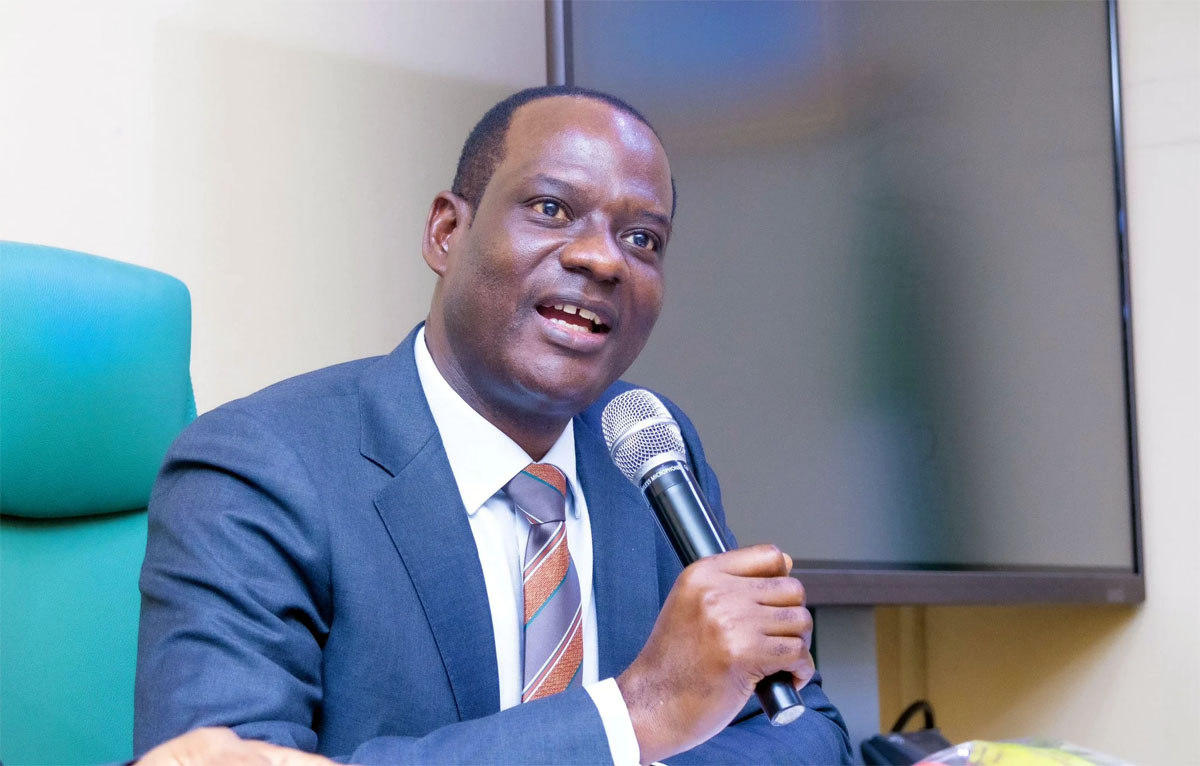
The Federal Government has defended its plan to secure about $21.7 billion in fresh external loans, saying additional financing is needed to bridge Nigeria’s infrastructure funding gap, support economic growth and finance critical development projects across the country.
The proposed borrowing plan, covering 2026 and 2027, comprises $20.52 billion and €1.045 billion, equivalent to approximately $21.7 billion.
President Bola Ahmed Tinubu submitted the request to the National Assembly, arguing that Nigeria requires substantial investment to address infrastructure shortages and sustain economic development.
The proposed facilities would support projects and programmes in power, transportation, healthcare, education, agriculture, water supply, security and employment generation, as well as reforms to public financial management.
According to the President, the projects underwent technical and economic evaluations and are expected to create jobs, promote skills acquisition and entrepreneurship, reduce poverty and strengthen food security.
He said external borrowing had become necessary because the financial resources required to close Nigeria’s infrastructure deficit exceeded what the government could adequately provide from existing funding sources.
The request is subject to legislative approval and has not yet received final authorisation.
Why the government says Nigeria needs more loans
The administration’s main argument is that inadequate infrastructure continues to constrain productivity, investment and economic growth. It maintains that borrowing can provide the capital needed to finance projects that would otherwise face funding delays.
READ ALSO:
- Emeka Ike Loses ₦10bn Privacy Suit Against Wike’s Aide, INEC
- 2027: APC Chieftain Boasts Tinubu Will Defeat Atiku Even in His Polling Unit
- Awujale Succession: Abiodun Promises New Ijebuland Monarch Before May 29, 2027
Electricity, transport networks, healthcare facilities, education and water infrastructure are among the sectors expected to benefit from the proposed financing.
The government also argues that investment in these areas could stimulate economic activities, improve access to essential services and generate employment across the 36 states and the Federal Capital Territory.
However, the economic benefits will depend on whether the projects are completed on schedule, remain within budget and deliver returns sufficient to justify their financing costs.
Nigeria’s debt profile raises concerns
The proposed borrowing comes amid growing scrutiny of the country’s public debt.
Figures from the Debt Management Office show that Nigeria’s total public debt stood at ₦166.79 trillion at the end of June 2026, compared with ₦87.38 trillion in June 2023.
The increase has intensified debate over the government’s borrowing strategy, although the rise in the naira value of external debt has also been influenced by exchange-rate depreciation.
If the proposed facilities are fully approved and disbursed, they would add to Nigeria’s existing obligations, with the eventual impact depending on exchange rates, repayment terms and other changes in the debt stock.
Economists and business groups have therefore called for greater transparency about the individual projects to be financed, their costs, expected returns and repayment arrangements.
The Association of Small Business Owners of Nigeria has warned that new borrowing should be tied to projects capable of generating measurable economic benefits, including jobs, productivity and government revenue.
Questions over previous borrowing
The latest request has also prompted questions about the implementation of projects funded by earlier loans and the government’s outstanding obligations to contractors.
Senator Victor Umeh, who represents Anambra Central, questioned why contractors executing capital projects were still awaiting payment despite previous legislative approvals for borrowing.
He argued that the government needed to demonstrate how earlier facilities had been used and explain why budgeted projects remained underfunded.
Former Vice-President Atiku Abubakar, the presidential candidate of the African Democratic Congress, also urged the National Assembly to suspend consideration of the request until the government provides comprehensive information about the projects, contractors, costs, loan terms and repayment obligations.
The concerns centre on whether additional borrowing will produce sufficient economic returns or increase the pressure on public finances without delivering commensurate development benefits.
National Assembly to scrutinise request
The President’s proposal has been referred to the relevant National Assembly committees for consideration.
The legislative review is expected to examine the proposed facilities and their intended uses before lawmakers decide whether to approve the request.
The government maintains that the financing is necessary to address infrastructure shortages and support development, while critics insist that the administration must demonstrate the value of previous loans and provide clearer details of the new projects.
Ultimately, the justification for the proposed $21.7 billion borrowing plan will depend not only on the infrastructure needs identified by the government but also on the terms of the loans, the transparency of project selection, the effectiveness of implementation and Nigeria’s ability to meet its repayment obligations.
Why Nigeria Needs Fresh $21.7bn Loan Despite Rising Debt Burden – Finance Minister
News
NSCDC Evidence Scandal: Tunji-Ojo Says Officers Tampered With Evidence in Miners’ Deaths
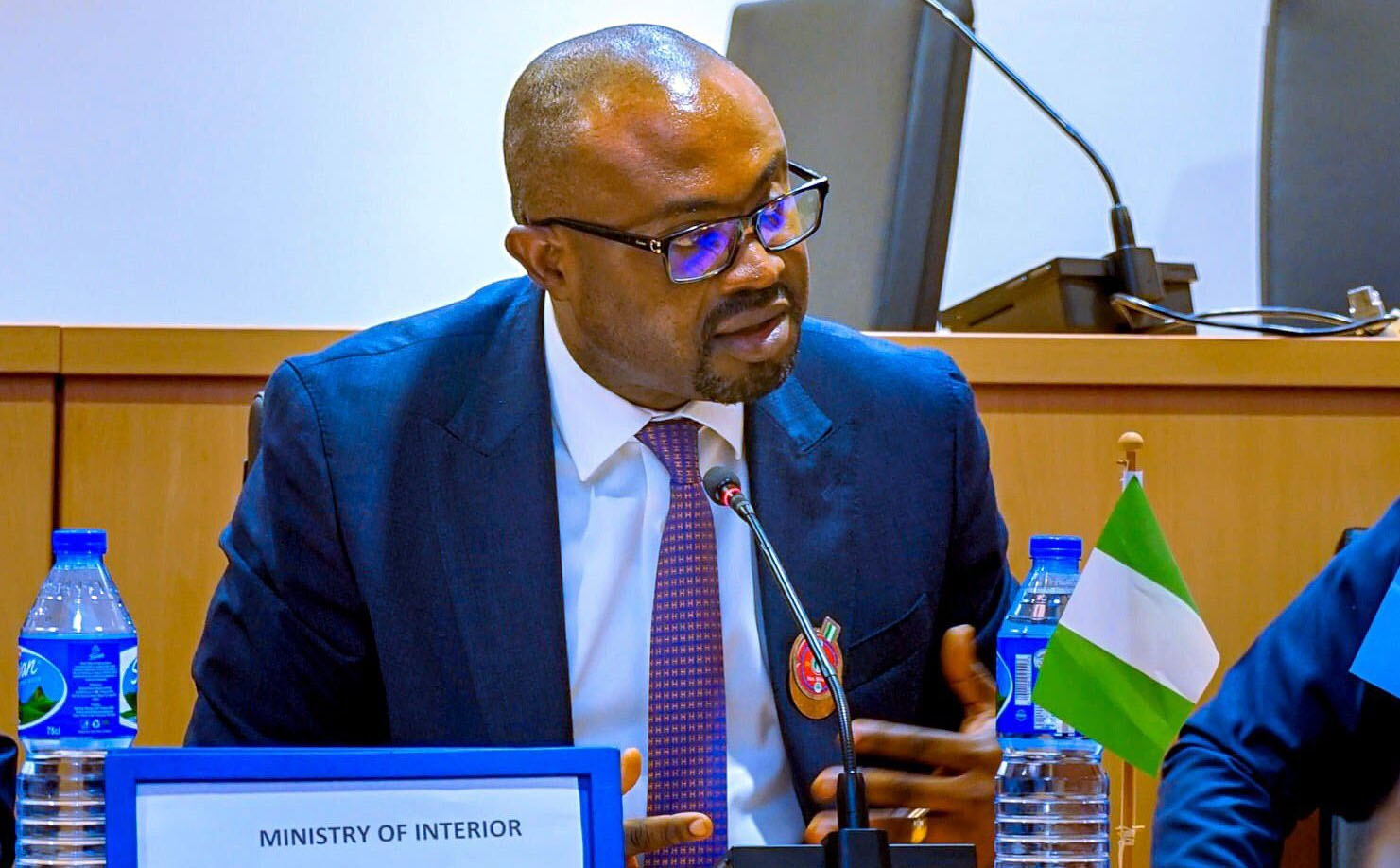
Nigeria’s Interior Minister, Olubunmi Tunji-Ojo, has raised concerns over alleged evidence tampering by officers of the Nigeria Security and Civil Defence Corps (NSCDC) during investigations into the deaths of suspected illegal miners in custody in Minna, Niger State.
The development emerged as a Federal Government investigative panel submitted its report on the incident on Tuesday, October 27, 2026, recommending disciplinary action against personnel found responsible and a ₦1.4 billion compensation package for bereaved families and survivors.
The panel found that the detainees had been held in a severely overcrowded cell, where poor ventilation, extreme heat and dehydration contributed to the deaths. It said the incident was preventable and identified failures in supervision, detention procedures and the duty of care owed to people in custody.
According to the committee, the operation that led to the arrests was conducted without an operational order from the NSCDC national headquarters. It also found that the corps’ specialised Mining Marshals Unit was not involved in the operation.
The panel recommended the dismissal of personnel whose actions directly contributed to the deaths, as well as prosecution where the evidence supports criminal charges. It called for administrative sanctions against officers whose failures did not directly cause the fatalities.
READ ALSO:
- Why Nigerians’ Data Finishes So Fast: MTN Reveals the Hidden Data Drains
- 21 Dead, 40 Injured as Drone Hits Market in Sudan’s Darfur Region
- Ansaru Claims Killing of Katsina Cleric Masussuka as Police Launch Manhunt
The proposed ₦1.4 billion compensation package includes ₦30 million for each of the 33 bereaved families and ₦10 million for each of the 41 survivors. Other recommendations include educational support for the dependants of deceased detainees, medical rehabilitation for survivors, psychological support for affected families and a formal government apology.
The deaths followed the arrest of suspected illegal miners during enforcement operations in Minna in September. The incident sparked public outrage and calls for accountability, prompting President Bola Ahmed Tinubu to order a comprehensive investigation.
The reported death toll has varied: initial accounts referred to 33 deaths, while the Niger State Government and subsequent federal investigation reports referred to 37. The figures should therefore be distinguished when reporting the panel’s findings.
The panel’s recommendations are not criminal convictions. Any prosecution must follow due process, and responsibility must be established through the appropriate legal proceedings.
NSCDC Evidence Scandal: Tunji-Ojo Says Officers Tampered With Evidence in Miners’ Deaths
News
INEC Under Fire as Missing Voters’ Register Sparks 2027 Election Transparency Row
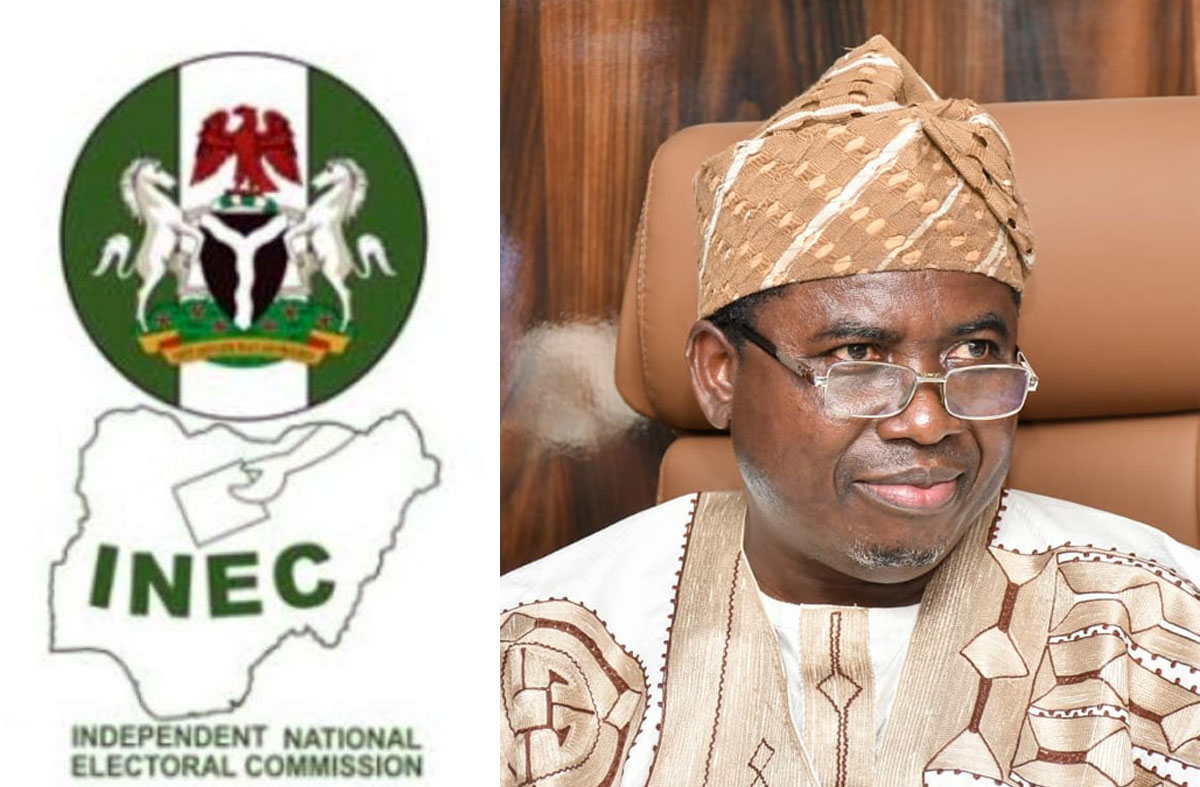
INEC Under Fire as Missing Voters’ Register Sparks 2027 Election Transparency Row
The Independent National Electoral Commission (INEC) has come under scrutiny after explaining why Nigeria’s preliminary voters’ register was not uploaded to its official website during the period scheduled for public scrutiny, despite being displayed physically at registration areas across the country.
The development has triggered concerns about transparency and compliance with the Electoral Act 2026 as preparations gather momentum for the 2027 general elections.
INEC National Commissioner and Chairman of the Information and Voter Education Committee, Mohammed Haruna, reportedly explained that the register had been made available at the wards but was not uploaded to the commission’s website.
“The voter register has been published, but in the wards. It just wasn’t published on our website,” Haruna was quoted as saying by *The PUNCH*.
The explanation followed complaints that the commission’s online portal did not provide access to the preliminary register during the period designated for voters to check their registration details and raise objections where necessary.
INEC had announced that the preliminary voters’ register would be displayed nationwide from October 9 to 15, 2026, to enable registered voters to verify their details and submit claims or objections concerning errors, omissions or questionable entries.
The controversy has raised questions about whether physical display alone satisfies the legal requirements for the exercise, particularly for voters who cannot easily travel to their registration areas.
In a separate explanation reported by *Premium Times*, Haruna said the commission was receiving and compiling claims and objections arising from the physical display of the register.
According to the report, INEC planned to prepare a clean copy for publication by December 15, 2026.
However, the proposed date has not, by itself, resolved concerns about why the preliminary register was unavailable online during the stipulated period for public scrutiny.
Section 19(1) of the Electoral Act 2026 requires INEC to designate a seven-day period for public scrutiny of the voters’ register, with copies made available at registration areas and on its official website or another website established for that purpose.
The provision is designed to give registered voters and other interested persons an opportunity to identify errors, omissions and questionable entries before the register is finalised. It also provides a framework for claims and objections concerning the inclusion or omission of names and the correction of personal details.
Section 19(5) prescribes a penalty for an INEC official who fails to display or publish the register as required. The provision specifies a fine of ₦100,000, imprisonment for up to six months, or both.
The central legal question is whether displaying the register physically without making it available online during the stipulated period satisfies the requirements of the law. The controversy has therefore placed the commission’s handling of the exercise under renewed scrutiny.
Former Vice-President Atiku Abubakar has also criticised INEC over the absence of the preliminary register from its website, calling for the list to be made accessible so that voters can verify whether their names and personal details have been properly captured.
Atiku’s position is that announcing the total number of registered voters is not sufficient to enable individuals to determine whether their names appear correctly on the register. Voters need access to the detailed list to identify omissions and other discrepancies and take appropriate steps to address them.
The controversy has added to concerns among political stakeholders and election observers about the accessibility of electoral information ahead of the 2027 polls.
It comes after INEC announced that Nigeria’s national register of voters had exceeded 103 million following the completion of the three phases of the Continuous Voter Registration exercise and subsequent biometric checks.
INEC Chairman, Professor Joash Ojo Amupitan, disclosed the figure during an engagement with media executives in Abuja in early October. The registration exercise recorded more than 10.7 million new registrants across its three phases, subject to the commission’s verification processes.
Although the aggregate figure provides an indication of the size of Nigeria’s voting population, it does not enable individual voters to confirm whether their names and personal details have been correctly captured. That is why the preliminary display is an important safeguard against errors, omissions and questionable entries.
The absence of online access has practical implications for voters who live far from their registration areas or cannot easily visit INEC offices. Making the register available online would allow them to check their details more conveniently and identify corrections that may be required.
Online publication would also provide political parties, election observers and other stakeholders with an additional means of scrutinising the register and raising concerns through the appropriate procedures.
Although INEC maintains that the preliminary register was displayed physically at registration areas, questions remain about the failure to upload it to the website during the announced period and the implications for public access and electoral transparency.
With preparations for the 2027 general elections gathering momentum, the commission faces pressure to clarify the circumstances surrounding the omission and explain how affected voters will be able to exercise their rights to scrutiny and objection.
INEC’s reported plan to publish a clean copy by December 15, 2026, is expected to attract close attention from political parties, civil society organisations and the public.
However, the planned publication does not automatically settle questions about whether the earlier exercise complied with the law. The commission’s explanation, the timing of online publication and the practical access available to voters remain central to the debate over the credibility and transparency of Nigeria’s electoral process.
INEC Under Fire as Missing Voters’ Register Sparks 2027 Election Transparency Row
-

 metro2 days ago
Cancelled Wedding: Man Sues Ex-Fiancée’s Father Over Unpaid ₦70,000 Dowry
-

 Auto2 days ago
Car of the Year, other top honours up for grabs as NAJA Awards race begins
-

 metro2 days ago
School Bus Driver Turns Kidnapper, Collects ₦503,000 Ransom, Rapes 14-Year-Old Delta Student
-

 Sports2 days ago
KANE ENDS 25-YEAR WAIT! England Captain Wins 2026 Ballon d’Or After Stunning 73-Goal Season
-

 metro2 days ago
IKEDC Blames National Grid for Two-Week Power Crisis in Ishaga, Oke-Ayo
-

 metro1 day ago
Nigerian Navy Recruitment 2026: October 31 Deadline, Full Requirements and How to Apply
-

 metro2 days ago
Massacre in Taraba: Death Toll Soars to 48 as Fleeing Villagers Drown in Desperate Escape
-

 metro2 days ago
EFCC Busts Four Illegal Lithium Plants in Ogun, Arrests 14 Chinese Nationals