

Education
2027: Atiku vows to review NELFUND, forgive qualifying student loans
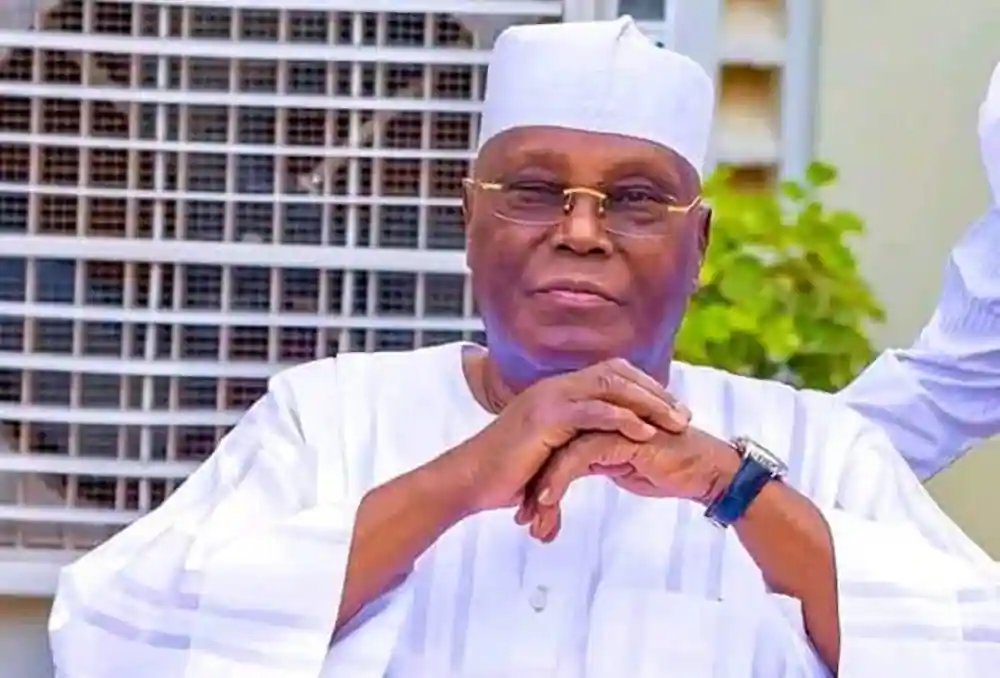
2027: Atiku vows to review NELFUND, forgive qualifying student loans
Presidential candidate of the African Democratic Congress (ADC), Atiku Abubakar, has promised to review the Nigerian Education Loan Fund (NELFUND) policy and introduce debt forgiveness for qualifying Nigerian students if elected president in the 2027 general election.
Atiku’s position was disclosed by his Senior Special Assistant on Public Communication, Phrank Shaibu, in a statement issued on Tuesday evening while responding to President Bola Ahmed Tinubu’s comments on the economy and the Federal Government’s student loan scheme.
Shaibu said Atiku’s proposed approach would focus on reducing the underlying cost of education rather than relying mainly on loans to help students cope with rising education expenses.
According to him, Atiku believes Nigerian students should not be forced to graduate from higher institutions and immediately begin their working lives under the weight of substantial education-related debts.
“His approach will reduce the underlying cost of education and, after review, provide forgiveness for qualifying student debts so that young Nigerians can graduate with hope rather than repayment burdens. Education should open doors, not mortgage the future,” Shaibu said.
The proposal comes as NELFUND has become one of the major education policies of the Tinubu administration and a significant issue in the emerging policy debate ahead of the 2027 presidential election.
The current student-loan framework was established under the Student Loans (Access to Higher Education) Act, 2024, which replaced the earlier student-loan law and expanded the mechanism for providing financial assistance to Nigerian students in tertiary institutions and vocational and skills-acquisition programmes.
NELFUND was created to administer the loans and provide financial support to eligible Nigerian students for institutional charges and other approved education-related expenses.
The programme is designed as an interest-free student loan scheme, with repayment obligations beginning after beneficiaries complete their studies and the applicable grace period.
READ ALSO:
- Nollywood Actress Atinuke Kareem Dies After Brave Battle with Breast Cancer
- Two Teenagers Drown in Kaduna as Heavy Flooding Submerges Communities
- Nigeria’s Opposition Coalition Faces Critical Test as Key Leaders Skip Unity Summit
Under the existing framework, beneficiaries are expected to repay their loans after the specified repayment period. The system also provides mechanisms for recovering outstanding debts from beneficiaries who fail to meet their repayment obligations.
The expansion of NELFUND has made the programme an increasingly important component of the Federal Government’s education policy, with a growing number of students receiving financial assistance for tuition, institutional charges and upkeep.
President Tinubu has repeatedly presented the scheme as one of the major initiatives of his administration aimed at removing financial barriers to higher education and expanding access for students from different economic backgrounds.
However, Atiku’s camp has rejected the argument that the availability of loans necessarily means that education has become more affordable.
Shaibu argued that providing loans should not be presented as evidence of affordability when students and their families are already struggling with higher tuition fees and increased living expenses.
“Celebrating NELFUND as proof that education has become affordable under your government is like setting school fees on fire and then boasting that you lent students a bucket of water. What exactly is the wisdom in presiding over dramatic increases in school fees in some institutions, only to turn around and celebrate loans as the solution?” he queried.
The Atiku camp described the policy approach as “witchcraft economics”, arguing that government should not increase the financial pressure on students and subsequently offer loans as a remedy.
“You make education more expensive, lend students money to survive the increase, and then demand applause for the rescue. That is not affordability. It is witchcraft economics: create the burden with one hand, offer debt with the other, and demand applause for the intervention,” Shaibu said.
According to him, Atiku has reviewed the existing student-loan framework and believes young Nigerians should not be forced to begin their working lives with significant education-related debts.
“The good news for Nigerian students is that Atiku has reviewed the current student-loan policy,” Shaibu said.
He added that Atiku’s proposed approach would reduce the underlying cost of education and, following a review of the existing system, provide forgiveness for qualifying student debts.
The proposal is therefore not being presented as an automatic cancellation of every outstanding NELFUND loan. Rather, Atiku’s camp has specifically referred to qualifying debts, suggesting that eligibility conditions would be established under the proposed policy.
Shaibu maintained that the distinction between a student loan and a scholarship should remain clear, arguing that a loan creates a financial obligation for the beneficiary while a scholarship does not carry the same repayment burden.
He said the success of an education policy should instead be measured by whether ordinary Nigerian families can afford to keep their children in school without being forced into borrowing.
READ ALSO:
- Lagos Businesswoman Stabbed to Death by Her Security Guard Just Two Weeks After Employment
- FBI confirms Tinubu was subject of US criminal investigation in 1990s
- 16-year-old in police custody over alleged killing of 20-year-old in Cross River
“A student loan is not a scholarship. It is a liability,” Shaibu said.
He argued that government should not “parade the loan itself as evidence that the system is working” when the rising cost of education has placed additional pressure on students and their families.
According to Shaibu, Atiku’s proposed education policy would seek to ensure that young Nigerians graduate with greater opportunities rather than substantial financial liabilities.
“Education should open doors, not mortgage the future,” he said.
The political disagreement has also expanded into the wider debate over energy costs, fuel prices and the purchasing power of Nigerian workers.
Shaibu accused the Presidency of attempting to create fear among students and workers over Atiku’s proposal to reduce energy costs through an intervention involving Nigerian crude supplied for domestic refining.
He challenged the Federal Government to publish its calculations showing how Atiku’s proposed energy policy would affect NELFUND funding, workers’ salaries and other government programmes.
“If your government has the arithmetic, Bola, publish it. Show Nigerians, line by line, how a transparently budgeted subsidy tied to Nigerian crude and domestic refining suddenly empties NELFUND or workers’ pay packets,” he demanded.
Shaibu said Atiku’s energy proposal would instead seek to ease the cost of living by reducing energy and transportation expenses.
“Reduce the cost of energy so that salaries buy more. Reduce transport costs so that less of a worker’s wage disappears merely getting to work,” he said.
He argued that lower energy costs could help households retain more of their income and reduce some of the financial pressures affecting students and their families.
The Atiku camp further argued that the rising cost of transportation, food, accommodation and other basic needs has made it increasingly difficult for families to finance higher education without borrowing.
Shaibu therefore maintained that government should address the underlying causes of financial hardship rather than simply provide loans to help Nigerians cope with the consequences.
“You cannot make life painfully expensive, push students towards debt to survive the consequences, and then frighten those same students that cheaper fuel will take their loans away,” he declared.
The controversy highlights a broader policy difference between the Tinubu administration’s NELFUND model and Atiku’s proposed approach.
While the Federal Government presents NELFUND as a mechanism for expanding access to higher education by providing financial assistance to students who may otherwise struggle to pay for their studies, Atiku’s camp argues that the government should focus more heavily on reducing the cost of education itself.
Atiku is also proposing a review of the existing loan framework and debt forgiveness for beneficiaries who meet conditions that would be determined under the proposed policy.
The proposal could become a significant issue in the 2027 presidential election campaign, particularly as political parties seek to attract students, young graduates and families facing increasing education and living costs.
However, Atiku’s camp has yet to provide a detailed implementation framework explaining exactly which NELFUND beneficiaries would qualify for debt forgiveness, how much debt would be cancelled, the criteria that would be used to determine eligibility or the estimated cost of the proposed programme.
Those details are likely to come under increased scrutiny as the 2027 election campaign progresses and rival political parties present competing economic and education policies.
For now, Atiku’s position is that Nigeria should move beyond simply giving students loans and instead reduce the underlying cost of education, review the existing NELFUND policy and provide debt forgiveness for qualifying beneficiaries.
The proposal puts student loans, education affordability and debt forgiveness firmly on the political agenda ahead of the 2027 presidential election, with Atiku positioning his proposed policy as an alternative to the current approach of financing higher education through repayable loans.
This version has no sources, citations or source list, as requested.
2027: Atiku vows to review NELFUND, forgive qualifying student loans












Education
World Teachers’ Day: Ogun Residents Demand Better Pay, Equipped Schools for Teachers

World Teachers’ Day: Ogun Residents Demand Better Pay, Equipped Schools for Teachers
As Nigeria marked the 2026 World Teachers’ Day, residents of Ogun State have called on the government to improve teachers’ welfare, increase remuneration and provide adequate facilities in public schools, insisting that celebrating educators must translate into tangible improvements in their working conditions.
The demand was made by callers on Eagle 102.5 FM’s Frontline programme on Monday, October 5, during a discussion on teachers’ welfare and their contributions to education and community development. The programme featured the Chairman of the Ogun State Teaching Service Commission (TESCOM), Apostle Abiodun Sanyaolu.
Contributors stressed that teachers remain central to the development of children and the nation’s human capital, arguing that their responsibilities deserve better financial rewards, improved working conditions and a more conducive teaching and learning environment.
A caller from Ilese-Ijebu described teachers as the foundation of society, noting that their influence extends beyond the classroom to shaping children’s character, knowledge and future prospects.
Describing teachers as “the pillar of everything in life,” the caller urged the government to prioritise their welfare, arguing that educators must be adequately supported to deliver on their responsibilities.
“The welfare of the teachers is very, very important. The government should look at it and make sure that teachers are given a good welfare system so that they will be proud of doing what they are doing,” she said.
She also called for increased investment in school facilities, warning that constructing classrooms without providing the necessary equipment and learning materials would leave schools ill-equipped to deliver quality education.
“It’s not just only the structure alone. They should put in the necessary things that are supposed to be in the school,” she added.
The caller’s remarks highlighted the need for a comprehensive approach to educational development, encompassing not only physical infrastructure but also the resources required by teachers and students for effective teaching and learning.
Another contributor, Olu Ogunike, called for better remuneration for teachers, arguing that their salaries and conditions of service should reflect the critical role they play in national development.
“Teaching should be one of the well-paying work in the country,” Ogunike said, stressing that teachers lay the foundation for virtually every other profession.
He argued that the quality of a country’s workforce depended significantly on the quality of its teachers, adding that improved financial rewards would help enhance the status and attractiveness of the profession.
The contributions reflected growing public expectations that governments should match their recognition of teachers with practical measures to improve their welfare and the quality of education.
Speaking on the programme, TESCOM Chairman Sanyaolu described teachers as important stakeholders in community development, noting that their influence extends beyond academic instruction to shaping the moral, social and intellectual development of children.
According to him, every child taught by an educator eventually becomes part of the wider community, making teachers indispensable to the social and economic advancement of Ogun State.
Sanyaolu acknowledged, however, that more work remained to be done in the state’s education sector, despite the reforms and interventions introduced by the government.
“We still have a lot to do. There is a lot that is still ongoing, and we will continue to work to ensure that the gains recorded in the education sector are sustained,” he said.
His remarks underscored the continuing challenge of consolidating improvements in education while addressing concerns about teachers’ welfare, school infrastructure and the resources available for effective learning.
The callers’ demands also highlighted the connection between teachers’ working conditions and students’ educational outcomes.
They argued that better remuneration could boost teachers’ morale, while well-equipped classrooms, adequate learning materials and modern teaching resources would strengthen their ability to deliver quality education.
Similarly, improved welfare could help make teaching more attractive to qualified professionals and encourage greater commitment to the profession, particularly at a time when schools require skilled and motivated educators to prepare young people for the demands of a changing economy.
The 2026 World Teachers’ Day celebration therefore provided an opportunity to reflect on both the contributions of educators and the challenges confronting the profession.
For the contributors on Eagle 102.5 FM’s Frontline programme, the message was clear: public recognition of teachers must go beyond annual celebrations to include improved pay, better welfare packages, adequate school facilities and sustained investment in professional development.
They maintained that supporting teachers was not merely a reward for their service but also a necessary investment in the future of Ogun State and the country at large.

Education
Madonna University expels final-year nursing student, suspends 14 over dance video

Madonna University expels final-year nursing student, suspends 14 over dance video
The National Association of Nigerian Students (NANS) has appealed to the management of Madonna University to reconsider the expulsion of a final-year nursing student and the suspension of 14 others over a viral dance video recorded within a hospital environment.
The controversy began after a video showing a group of nursing students dancing at different locations at Madonna University’s Elele campus in Rivers State surfaced online and attracted widespread attention.
The footage showed the students dancing in areas including a hospital waiting area, staircase and a university bus. It was reportedly linked to a social media trend involving young nurses and students.
The video generated criticism because some of the scenes were filmed within a healthcare environment, where students undergoing professional training are expected to observe standards relating to professional conduct, discipline and patient care.
Following the controversy, Madonna University took disciplinary action against the students involved. One final-year nursing student was expelled, while 14 others were suspended.

Madonna University expels final-year nursing student, suspends 14 over dance video
The university’s Director of Communications and Public Affairs, Chima Achu, confirmed that disciplinary measures had been imposed and indicated that the institution would provide further details on the matter.
READ ALSO:
- JUST IN: WAEC appoints Suleiman Kum as new Nigeria National Office head
- Ojudu Reveals How Tinubu, He Narrowly Escaped Death In Third Mainland Bridge Crash
- ‘I Thought I Was Dead’ — Hairstylist’s Daring Escape From Kidnappers After Benin-Ore Ambush
The sanctions have, however, attracted criticism from student groups, with NANS urging the university to reconsider the expulsion.
NANS National President, Akinteye Babatunde Afeez, appealed to the university to “temper justice with mercy”, arguing that the affected students had spent several years pursuing their education and professional training.
He called for the expelled student’s punishment to be reviewed and suggested that a stern warning, undertaking or other corrective disciplinary measure could be considered instead.
According to NANS, disciplinary action should correct inappropriate behaviour while giving students an opportunity to learn from their mistakes, rather than permanently ending their education where a less severe sanction may be appropriate.
The Nigerian Universities Nursing Students’ Association (NUNSA) has also reportedly intervened in the matter and is engaging relevant stakeholders over the sanctions imposed on the students.
The controversy has generated divided reactions. While some Nigerians have backed the university’s decision, arguing that students preparing for careers in healthcare must maintain high standards of professionalism, others have questioned whether expulsion was a proportionate response to the incident.
The case has also revived concerns about social media conduct among students, particularly when videos are recorded inside hospitals, clinics and other professional environments.
For healthcare students, such concerns extend beyond ordinary campus rules because their training involves responsibilities relating to patient privacy, dignity, safety and public trust.
At the same time, the NANS intervention has brought renewed attention to the question of whether university disciplinary measures should place greater emphasis on rehabilitation and corrective education.
The university has not indicated that the students were involved in any harm to patients, and the available reports do not establish such a claim.
The focus of the disciplinary action is the conduct displayed in the video and the circumstances in which it was recorded.
Madonna University is expected to provide further clarification on the disciplinary process, the specific regulations breached and the possibility, if any, of reviewing the sanctions.
Until then, the expulsion of the final-year student and suspension of the other 14 students remain the subject of an ongoing appeal by student representatives.
Madonna University expels final-year nursing student, suspends 14 over dance video
Education
JUST IN: WAEC appoints Suleiman Kum as new Nigeria National Office head

JUST IN: WAEC appoints Suleiman Kum as new Nigeria National Office head
The West African Examinations Council (WAEC) has appointed Suleiman Danlami Kum as the new Head of its Nigeria National Office (HNO), following the elevation of Dr Amos Josiah Dangut to Registrar and Chief Executive Officer of the examination body.
Kum’s appointment was announced on Sunday, October 4, 2026, by WAEC Nigeria’s Head of Public Affairs, Moyosola Adesina.
He takes over from Dangut, who served as Head of the WAEC Nigeria National Office from October 2023 before assuming the position of Registrar and CEO of WAEC on October 1, 2026.
Kum, 56, joined WAEC on July 17, 1998, as an Assistant Registrar II and has risen through several positions during his more than two decades with the organisation.
Before his appointment as HNO, he served as Deputy Registrar in the Nigeria National Office and as Senior Deputy Registrar and Head of Test Administration.
His career has included assignments in several WAEC offices across Nigeria, including Awka, Yola, Makurdi, Gusau, Kano, Port Harcourt and Ikeja. He has also served as Director of Administration and Head of the Security Printing Department.
WAEC said Kum has extensive experience in test development, examination administration, examination security, branch management and zonal operations.
The council also credited him with contributing to innovations aimed at improving examination security and administration. These include the introduction of Variable Data Printing, enhanced security codes in examination materials, facial-recognition biometric attendance systems and the use of computer-based examinations for Achievement Tests.
READ ALSO:
- Ojudu Reveals How Tinubu, He Narrowly Escaped Death In Third Mainland Bridge Crash
- ‘I Thought I Was Dead’ — Hairstylist’s Daring Escape From Kidnappers After Benin-Ore Ambush
- ‘We Can’t Raise N1bn’ — Parents of Abducted Corps Members Beg Olubadan
Kum is from Langtang North Local Government Area of Plateau State. He studied Agriculture, specialising in Animal Production, at the University of Agriculture, Makurdi, now Joseph Sarwuan Tarka University, where he graduated with Second Class Upper Division.
He later obtained a Postgraduate Diploma in Education from the National Open University of Nigeria and is pursuing a master’s degree in Educational Administration and Planning.
Before joining WAEC, Kum worked in the education sector and also completed his National Youth Service Corps programme at Ahmadu Bello University, Zaria.
His appointment comes as WAEC Nigeria continues to expand the use of technology in the conduct of secondary-school examinations.
The council has been gradually moving towards computer-based testing (CBT) while retaining paper-based examinations in centres without the infrastructure required for a full transition to digital testing.
The 2026 West African Senior School Certificate Examination (WASSCE) involved nearly two million candidates in Nigeria, with CBT introduced in selected centres as part of the council’s gradual digital transition.
Kum therefore assumes leadership of the Nigeria National Office at a time when examination security, digital testing, result processing and the protection of the integrity of WASSCE remain key priorities for the council.
Dangut, his predecessor, became WAEC’s 14th Registrar and CEO after his appointment was ratified by the council’s International Governing Board. He is expected to oversee the operations of the examination body across its member countries from the council’s headquarters in Accra, Ghana.
Under Dangut’s leadership in Nigeria, WAEC advanced initiatives including computer-based WASSCE, digital electronic marking, the Digital Certificate Portal and the WAEC E-Study Platform.
With Kum now taking charge of the Nigeria National Office, his immediate responsibilities will include overseeing the council’s examination administration in Nigeria and sustaining efforts to strengthen examination security, digital innovation and the credibility of WAEC results.
JUST IN: WAEC appoints Suleiman Kum as new Nigeria National Office head
-

 Politics3 days ago
2027: Oshiomhole Dares Opposition Over ₦500 Petrol Promise, Says APC Will Take Argument to Nigerians
-

 metro3 days ago
NYSC Kidnap: Abductors Demand N950m for 19 Prospective Corps Members in Imo
-

 metro3 days ago
Amaechi: Tinubu’s Policies Made My Mother’s Drugs Unaffordable
-

 metro3 days ago
Tension as Kidnappers Threaten to Kill Abducted Oyo Corps Members
-

 metro2 days ago
‘I Thought I Was Dead’ — Hairstylist’s Daring Escape From Kidnappers After Benin-Ore Ambush
-

 metro3 days ago
N500 Petrol, Wage Award: Public Sector Workers Begin Warning Strike
-

 Entertainment3 days ago
Less Than Four Months After Wedding, Jarvis Threatens Peller With Lawsuit Over Second-Wife Plan
-

 Politics3 days ago
Wike to Amaechi: What Did You Bring to Rivers After 24 Years in Power?