

Politics
2027: Atiku’s suit seeking Tinubu’s disqualification meets deadline, faces procedural hurdle
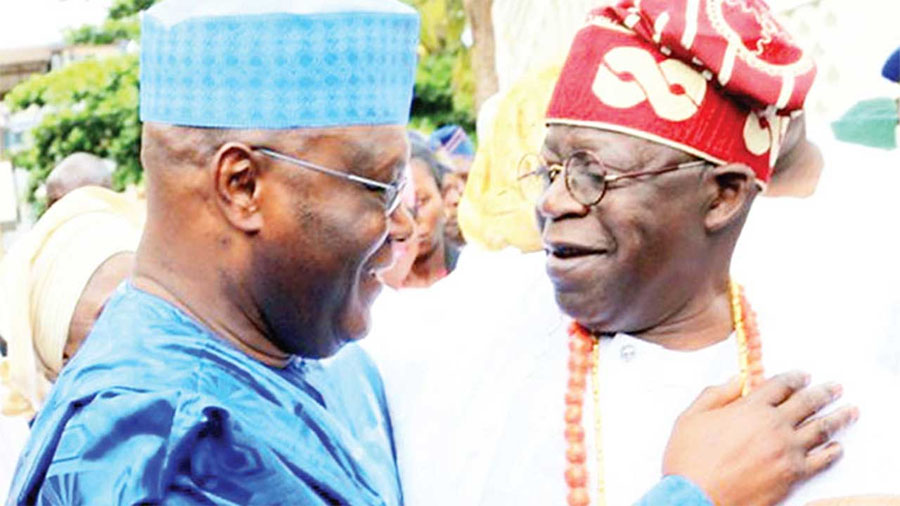
2027: Atiku’s suit seeking Tinubu’s disqualification meets deadline, faces procedural hurdle
Former Vice President’s certificate forgery challenge may be “dead on arrival” due to choice of Originating Summons, legal experts say
The suit filed by former Vice President Atiku Abubakar seeking President Bola Ahmed Tinubu’s disqualification from the 2027 presidential race met the constitutional deadline for pre-election matters, but the procedure used to bring the case may expose it to a strong legal challenge, according to a review of the filing and established case law. Atiku personally appeared at the Federal High Court registry in Abuja on Friday, August 14, 2026, to depose to an affidavit backing the suit, which he filed alongside his party, the African Democratic Congress (ADC) , against Tinubu, the All Progressives Congress (APC) and the Independent National Electoral Commission (INEC) . The action rests on Sections 137(1)(j), 139(1)(a)(i) and 285(14)(c) of the 1999 Constitution as amended, along with relevant provisions of the Electoral Act 2026. At its core is an allegation that the NYSC discharge certificate Tinubu submitted to INEC bears a name that differs from his own—”Tinubu Bola Adekunle” rather than “Bola Ahmed Tinubu”.
Legal analyst Ekene Aninze, reviewing the timing of the filing, noted that Atiku fell squarely within the 14-day window set by Section 285(9) of the Constitution for pre-election matters. INEC had displayed the personal particulars of presidential candidates, including Tinubu’s, on Saturday, August 1, 2026, in line with its published election timetable. Counting from that date, Atiku’s filing on August 14 came on the 13th day, within the statutory limit. This timing is critical, as Nigerian courts have repeatedly dismissed pre-election cases filed outside the 14-day window. In the Edo State governorship dispute, the Court of Appeal held that a case challenging candidate credentials was statute-barred when filed beyond the stipulated period. Similarly, courts have affirmed that the reckoning date is the occurrence of the event complained of, not when the aggrieved person became aware of it.
READ ALSO:
- APC Humiliates Aregbesola, Wins His Polling Unit in Osun Governorship Election
- Oyo Police Smash Human Parts Syndicate: 10 Arrested, Heart, Skull Recovered
- Heavy Security, Long Queues, Massive Turnout Mark Osun Governorship Election in Ede
Where the case may run into difficulty, according to Aninze, is the format in which it was brought. The suit was filed by way of Originating Summons, a procedure typically reserved for disputes over the interpretation of documents rather than contested facts. Nigerian courts have repeatedly held that allegations bordering on forgery cannot be resolved on affidavit evidence alone and require a Writ of Summons, which allows for oral testimony and cross-examination. That principle traces back to the Supreme Court’s handling of the Delta State PDP governorship tussle between Sheriff Oborevwori and David Edevbie, where the apex court held that Edevbie’s forgery allegations against Oborevwori could not be resolved through Originating Summons and ought to have been commenced by Writ of Summons, since only oral and documentary evidence tested in open court could settle such claims. Justice Tijani Abubakar, who delivered the judgment of the panel, held that the grievous allegations of supply of false information and certificate forgery brought against the Speaker cannot be proved beyond reasonable doubt with the use of Originating Summons. A similar reasoning shaped the Court of Appeal’s earlier intervention in the same dispute, which faulted Edevbie for not calling the institution alleged to have issued the disputed document as a witness. The same logic featured in the long-running feud between Godwin Obaseki and his APC rivals, where the University of Ibadan had to be drawn into proceedings to speak to the authenticity of a contested credential, and in Bashir Machina’s dispute with the APC over the Yobe North senatorial primaries, often cited as a cautionary tale on the risks of using Originating Summons for a contentious matter. Applying that pattern to the Atiku suit, Aninze argued that questions over the authenticity of the NYSC certificate would likely require testimony from the NYSC itself to confirm or deny that it issued the document, something an Originating Summons process, built on affidavits, is not designed to accommodate. Activist lawyer Maduabuchi Idam went further, describing the suit as “dead on arrival.” He explained that the judicial system lacks the courage to allow justice to be done in such a matter, adding that “whether the action succeeds or fails, it will continue to expose the weaknesses of our institutions, lampoon the system, and subject it to public scorn and ridicule.”
Atiku’s decision to personally appear at the court registry was deliberate, according to his Senior Special Assistant on Public Communication, Phrank Shaibu. The former vice president stated: “I came here personally because the issues before the court go to the heart of our Constitution and the integrity of the office of President. I cannot ask Nigerians to respect the Constitution while treating a matter of this magnitude casually. I have therefore put my name, my signature and my oath behind the facts we are presenting to the court. Now it is President Tinubu’s turn to answer them.” Atiku emphasized that the matter should be settled through evidence rather than political arguments or social media exchanges. “We are not asking Nigerians to decide this matter on social media,” he said. “We are asking the institution holding the records to produce them and the judiciary to examine the evidence and pronounce on it.” He added: “If the certificate belongs to Bola Ahmed Tinubu, let that be established before the court. If ‘Tinubu Bola Adekunle’ and ‘Bola Ahmed Tinubu’ are one and the same person for the purpose of that certificate, let the evidence establish it. These are questions that deserve answers, not political insults or presidential silence.”
READ ALSO:
- Protest in Osogbo Over Ballot Paper Shortage, Missing Voter Names
- Osun Guber: APC Candidate Oyebamiji Casts Vote, Commends BVAS, Voter Turnout As Voting Continues
- Osun Guber 2026: Adeleke Alleges Police Aiding APC to Rig Election
Beyond the certificate dispute, Atiku and the ADC are also challenging provisions of the Electoral Act 2026 which, according to their written address, effectively restrict who may challenge the qualification of a candidate at pre-election stage and the removal of qualification as a ground for questioning an election as envisaged by Section 139(a)(i) of the Constitution. Their argument is that legislation cannot be used to shut the door against enforcement of an express constitutional provision. They contend that where an Act of the National Assembly conflicts with the Constitution, the Constitution must prevail. “This case therefore raises a fundamental question for our democracy,” Atiku said. “Can an Act of the National Assembly be used as a shield against an express provision of the Constitution? Can we write into ordinary legislation an escape route from a constitutional standard applicable to everyone seeking the Presidency? Our position is that the Constitution remains supreme.”
In a parallel development, a legal counsel and chieftain of the ADC, Kalu Agu, submitted a petition against Tinubu to the European Commission in Brussels, Belgium, for allegedly submitting a forged certificate to INEC. Agu was captured in a video shared on X by Paul Ibe, Atiku’s media aide, while submitting the petition. He alleged that Tinubu presented false academic credentials to INEC as part of the constitutional requirements for the 2027 election, asking the EU to intervene over what he described as the alleged subversion of constitutional order in Nigeria.
Reacting to the suit, the APC described it as an exercise in futility. The National Secretary of the APC, Ajibola Basiru, said: “Atiku should go and brace for another defeat in the general election. The President is qualified to contest the election; nothing is disqualifying him, and the matter has been settled by the Supreme Court.” Basiru added: “Atiku has nothing to offer Nigerians, and he knows that he will be rejected at the poll. That is why he is looking for a shortcut. But there’s no shortcut to power. He should go and mobilise for the poll, where he will be rejected by Nigerians as usual. That will end his political misadventure into the presidency.”
Neither Tinubu’s legal team nor the APC had filed a response to the suit as of the time of this report. The originating summons asks the Federal High Court to determine whether the statutory restrictions complained of can prevent the plaintiffs from invoking Section 137(1)(j), and ultimately whether Tinubu and the APC should be disqualified from participating in the 2027 presidential election if the plaintiffs’ case is established. Among the substantive reliefs sought is an order disqualifying Tinubu and the APC from participating in the 2027 presidential election on the grounds pleaded by the plaintiffs. Atiku has also placed INEC on notice to produce Tinubu’s Form CF001 submitted in connection with the 2023 and 2027 presidential elections. The affidavit states that Atiku had applied for certified true copies of the relevant form before filing the suit but had received no response at the time the processes were prepared. Atiku concluded: “Nobody should misunderstand what is at stake. Nigerian graduates cannot complete NYSC documentation with one identity and simply ask employers to ignore discrepancies. Young Nigerians seeking ordinary jobs are subjected to rigorous scrutiny of their certificates. The Presidency is not an immunity certificate against constitutional scrutiny.”
2027: Atiku’s suit seeking Tinubu’s disqualification meets deadline, faces procedural hurdle










Politics
Pantami Re-emerges as PDP Governorship Candidate in Gombe After Fresh Primary
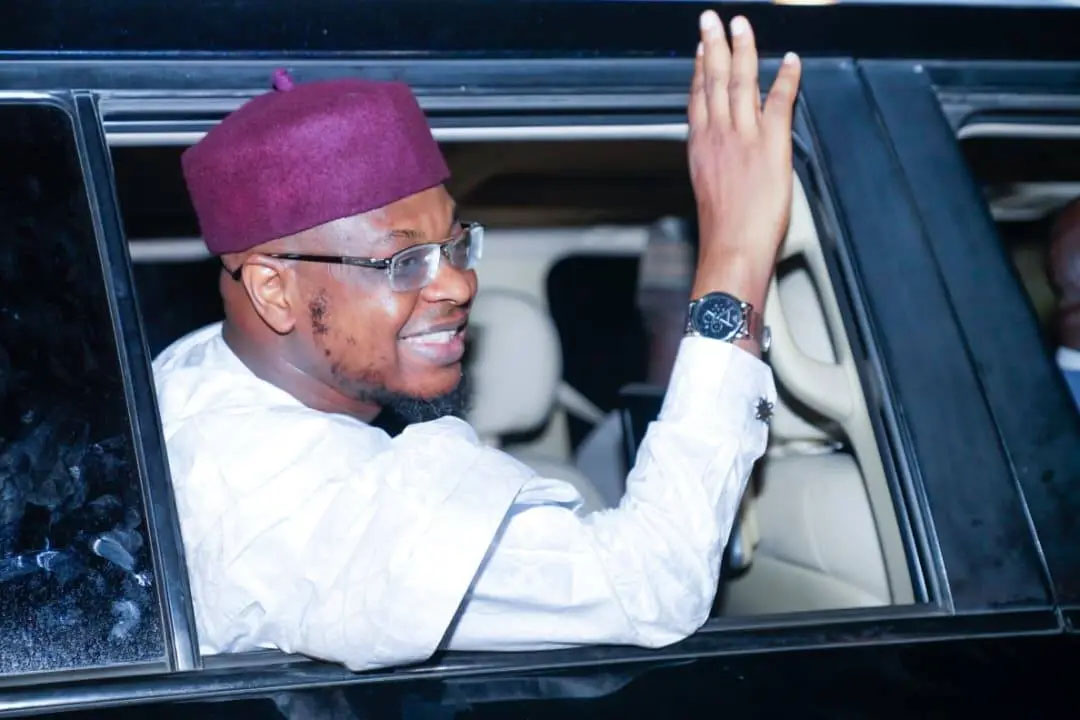
Pantami Re-emerges as PDP Governorship Candidate in Gombe After Fresh Primary
Former Minister of Communications and Digital Economy, Isa Ali Pantami, has re-emerged as the Peoples Democratic Party (PDP) governorship candidate in Gombe State for the 2027 election, after winning the fresh primary ordered by the Federal High Court.
Pantami secured 2,054 votes in the rerun conducted across the 11 local government areas of Gombe State on Tuesday, September 29, defeating Khamisu Ahmed Mailantarki, who polled 389 votes, and Aliyu Usman Garry, who scored 112 votes.
The result was announced at the Gombe State PDP Secretariat by the chairman of the party’s Governorship Primary Election Committee, Johnbull Shekarau.
The fresh primary became necessary after the Federal High Court in Gombe nullified Pantami’s earlier emergence as the PDP candidate.
In a judgment delivered on September 24, Justice Amina Aliyu Mohammed ordered the PDP to conduct another governorship primary within 30 days, holding that the earlier process did not comply with the party’s internal rules and relevant provisions of the Electoral Act 2026.
READ ALSO:
- NMDPRA Moves Against Fuel Pump Fraud, Threatens Licence Revocation
- $2.1m Land Suit: Court Orders Wike’s Son to Produce American Passport
- Two Nigerians Jailed 15 Years Over $2.4m US Cyber Fraud
Pantami had initially emerged as the PDP governorship candidate at the party’s May 26 primary through a voice affirmation. That process was challenged by Mailantarki and Garry, who questioned the procedure through which he was selected.
The court subsequently nullified the original primary rather than simply restoring or confirming Pantami’s first ticket. It ordered the PDP to conduct a fresh exercise in which eligible aspirants could compete.
The court also declined a request to disqualify Pantami or remove him as a PDP member over allegations concerning his previous membership of the All Progressives Congress (APC). Pantami had joined the PDP after withdrawing from the APC governorship contest, following the emergence of Jamilu Isiyaku Gwamna as the APC’s consensus candidate in Gombe.
Following the judgment, the PDP cleared Pantami, Mailantarki and Garry to participate in the fresh primary held on September 29.
The rerun was conducted across 114 wards in the state’s 11 local government areas, with the three aspirants contesting for the party’s ticket.
Pantami’s latest victory therefore gives him a new PDP mandate to contest the Gombe governorship election, rather than a restoration of the ticket produced by the earlier, nullified primary.
However, the legal issues surrounding the contest may not be completely over. Lawyers representing some of the aspirants had previously notified the PDP of an appeal against aspects of the Federal High Court judgment and sought further legal relief. (Channels Television)
With the fresh primary concluded, Pantami is now the PDP’s declared governorship candidate in Gombe, subject to the completion of the applicable electoral and legal processes.
The development marks another stage in the PDP’s preparations for the 2027 Gombe governorship election, after the party was forced to repeat its earlier primary following the court judgment.
Pantami Re-emerges as PDP Governorship Candidate in Gombe After Fresh Primary
Politics
Obi Drops Bombshell, Vows to Bring Back Petrol Subsidy
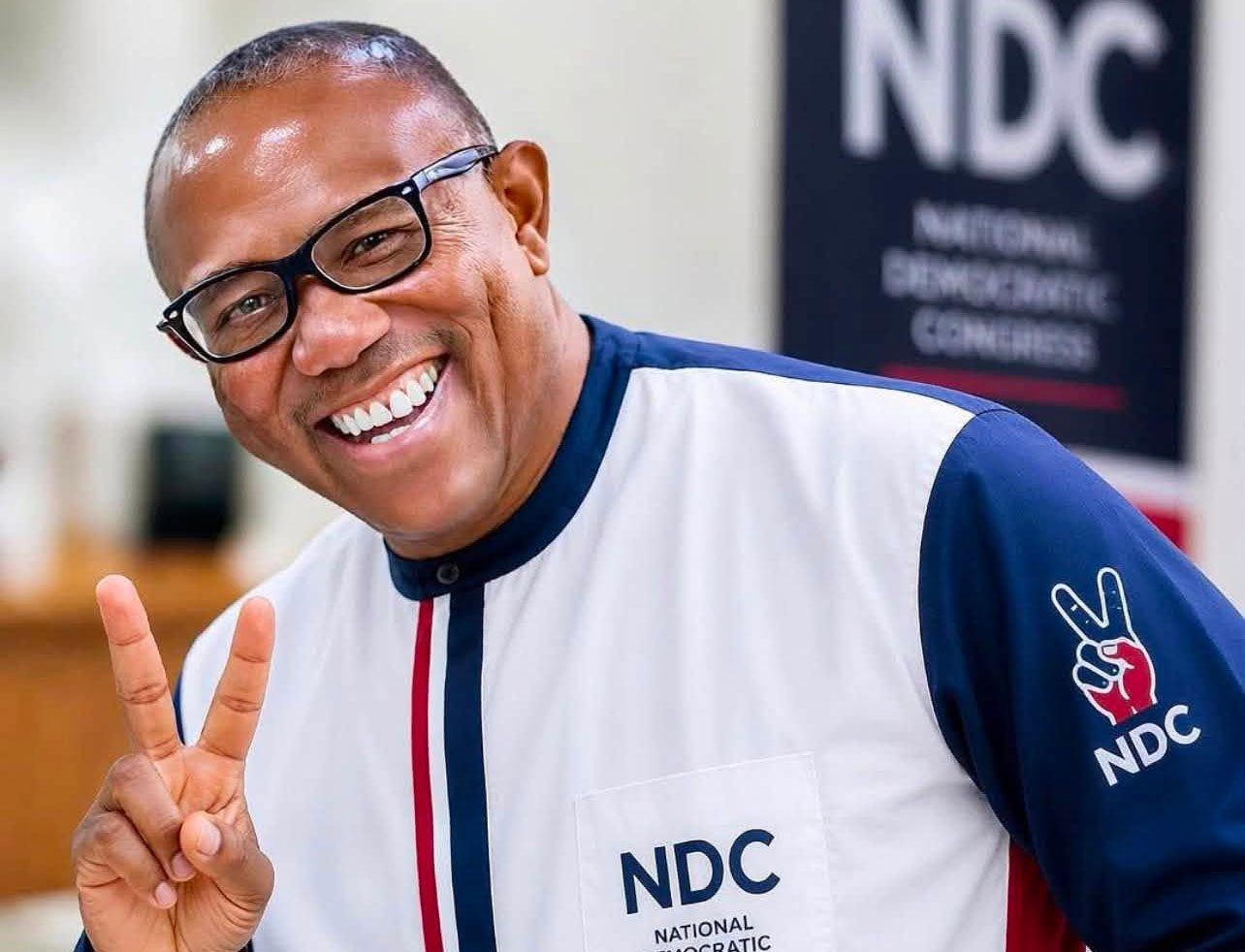
Obi Drops Bombshell, Vows to Bring Back Petrol Subsidy
Peter Obi, presidential candidate of the Nigeria Democratic Congress (NDC), has pledged to restore petrol subsidy if elected president in the 2027 general elections, saying his administration would first tackle corruption in the system.
Obi made the declaration on Monday, September 28, 2026, at an NDC town hall meeting in Sokoto attended by his running mate, Rabiu Kwankwaso, party leaders and supporters.
He said the major problem associated with the fuel subsidy system was corruption, insisting that his administration would address the loopholes that had allegedly allowed public funds meant for the sector to be mismanaged.
Obi said his government would eliminate corruption and ensure that any subsidy provided by the state directly benefits Nigerians.
The pledge represents a change from a position Obi expressed earlier in 2026, when he supported the removal of petrol subsidy and argued that mismanagement of savings from the policy should not be used as a reason to restore it.
His latest position came shortly after Kwankwaso proposed that an NDC administration would reintroduce fuel subsidy in a different form if elected.
Obi subsequently backed the proposal, explaining that the planned arrangement would be accompanied by greater transparency in the petroleum sector.
He said an NDC government would establish mechanisms for monitoring crude oil production, petroleum transactions, imports, exports and government revenues to ensure that government intervention in the sector was transparent and beneficial to Nigerians.
READ ALSO:
- FG Releases 2026–2028 Approved Textbooks, Introduces QR Codes for Tracking
- 24 Hours in Darkness: Iju Ishaga Residents, Businesses Count Losses as Ikeja Electric Fails to Restore Power
- TCAN Honours Dangote Cement Transport for Safety, Logistics Excellence
The proposed policy comes against the background of the petrol subsidy removal implemented by President Bola Ahmed Tinubu’s administration in 2023.
The removal has remained one of Nigeria’s most contentious economic policies, with its supporters arguing that it freed government resources for other purposes, while critics have pointed to the impact of higher petrol prices and living costs.
The issue has also become a major subject of debate ahead of the 2027 presidential election, with opposition candidates putting forward different proposals on how to reduce fuel costs.
Atiku Abubakar, the African Democratic Congress (ADC) presidential candidate, has also proposed a form of subsidy focused on supporting locally refined petroleum products.
Obi, however, said his proposed system would be different from the previous arrangement because it would be backed by stronger monitoring and transparency.
Beyond the fuel subsidy debate, Obi used the Sokoto engagement to outline other priorities of a potential NDC administration.
He listed education, security and national unity among his key priorities and said education would receive particular attention.
He also pledged greater investment in job creation, poverty reduction, vocational training, healthcare and the empowerment of young people and women.
On infrastructure, Obi promised to connect all Nigerian state capitals by railway, saying improved rail transportation would facilitate the movement of people and goods and stimulate economic activity.
Kwankwaso, while addressing the gathering, highlighted the security challenges facing communities in the North-West, particularly kidnapping and banditry.
The former Kano State governor said security would be a major focus of an NDC administration.
The delegation also visited the Sultan of Sokoto, Muhammad Sa’ad Abubakar, who urged politicians and their supporters to maintain peace as preparations for the 2027 elections intensify.
Obi’s subsidy proposal leaves several policy questions to be answered, including the structure of the proposed intervention, its projected cost, how it would be funded and the specific safeguards that would prevent the corruption he identified as a major problem with the previous system.
For now, the NDC’s position is that a future subsidy would be accompanied by stronger monitoring of the petroleum value chain, rather than simply returning to the exact arrangement that existed before the 2023 subsidy removal.
Obi Drops Bombshell, Vows to Bring Back Petrol Subsidy
Politics
2027 Presidency: Atiku Asked Me to Make Obi His Running Mate — Babachir Lawal

2027 Presidency: Atiku Asked Me to Make Obi His Running Mate — Babachir Lawal
Former Secretary to the Government of the Federation, Babachir Lawal, has disclosed that former Vice President Atiku Abubakar once sent him to persuade Peter Obi to accept the vice-presidential slot on the African Democratic Congress (ADC) platform ahead of the 2027 presidential election.
Lawal made the disclosure during an interview with Diaspora Digital Media, while recounting the negotiations among opposition figures before the coalition eventually fractured.
According to the former SGF, Atiku wanted Obi to return to the political arrangement and become his running mate under the ADC.
Lawal said Atiku’s proposal was not limited to a conventional president-vice-president arrangement. He claimed that Atiku envisaged serving for four years and then working towards an amendment of the Constitution to introduce a single six-year presidential term, with provisions for rotational leadership.
He said Atiku specifically asked him to approach Obi because of his relationship with the former Anambra State governor.
Lawal recalled that he travelled to meet Obi despite heavy rainfall.
“They say you have influence against Peter Obi, I want Peter Obi to come back and be my vice presidential candidate,”
Lawal quoted Atiku as telling him, adding that he subsequently explained the proposal to Obi.
According to Lawal, however, Obi was not enthusiastic about the arrangement and declined to accept the proposal.
Obi previously disputed the account
The latest disclosure comes against the background of a previous statement by Obi in which he denied that he had rejected a formal vice-presidential offer from Atiku.
During an interview with Arise TV earlier in September, Obi said he did not know where the claim originated and maintained that he was not in a position where such an offer had formally been made to him and rejected.
Obi said discussions about a possible opposition alliance had moved beyond individual politicians and would have to involve the political parties themselves.
The differing accounts mean that Lawal’s latest recollection represents his account of the discussions, while Obi has publicly disputed the characterization that he received and rejected a formal VP offer.
Coalition split
The disclosure also provides another glimpse into the political negotiations that preceded the breakdown of the opposition coalition ahead of the 2027 election.
Atiku eventually emerged as the ADC’s presidential candidate, while Obi subsequently became the presidential candidate of the Nigeria Democratic Congress (NDC).
Lawal himself left the ADC in June after alleging that the party’s presidential primary had been manipulated in Atiku’s favour. The allegations were rejected by Atiku’s camp.
In September, Lawal joined the NDC and publicly backed the Obi-Kwankwaso ticket, further marking his movement away from the political camp led by Atiku.
The latest revelation is therefore likely to attract fresh attention to the behind-the-scenes negotiations that preceded the eventual emergence of separate presidential tickets for Atiku and Obi ahead of the 2027 election.
2027 Presidency: Atiku Asked Me to Make Obi His Running Mate — Babachir Lawal
-

 metro1 day ago
Osogbo Food Bonanza Turns Nightmare as Discount Vendor Vanishes With Customers’ Millions
-

 metro2 days ago
24 Hours in Darkness: Iju Ishaga Residents, Businesses Count Losses as Ikeja Electric Fails to Restore Power
-

 metro3 days ago
Passenger Dies After Jumping From Moving Bus In Lagos
-
 Politics3 days ago
APC Sweeps Enugu LG Election, Wins All 17 Chairmanship, 260 Councillorship Seats
-

 News2 days ago
Agbede Mourns Baba Alado, Says Mushin Has Lost Pillar of Peace
-
 Education1 day ago
FG Releases 2026–2028 Approved Textbooks, Introduces QR Codes for Tracking
-

 Sports24 hours ago
Nigeria XI vs Guinea-Bissau: Awoniyi, Lookman, Adams Lead Super Eagles Attack
-

 metro24 hours ago
Hamzat Clarifies Lagos Traffic ‘Lifestyle’ Remark After Backlash