

Politics
2027 Elections: Atiku Raises Alarm Over Outdated BVAS Software, Warns of Manipulation Risks
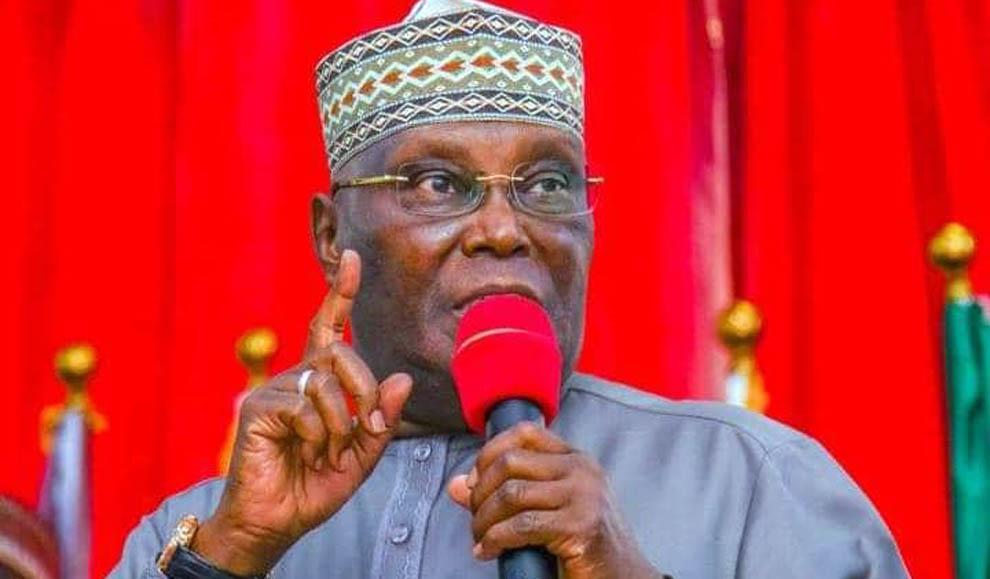
2027 Elections: Atiku Raises Alarm Over Outdated BVAS Software, Warns of Manipulation Risks
Former Vice President and African Democratic Congress (ADC) presidential candidate Atiku Abubakar has raised serious concerns over the continued use of an outdated operating system on the Bimodal Voter Accreditation System (BVAS), warning that the technology could expose Nigeria’s 2027 electoral process to cybersecurity threats and manipulation. Atiku’s concerns follow the recent mock accreditation exercise conducted in Osun State on August 1, 2026, and comments by the Independent National Electoral Commission’s (INEC) Director of ICT, Dr Lawrence Bayode. During an interview on Arise TV, Bayode disclosed that the BVAS devices, first introduced into Nigeria’s electoral process in 2021, currently operate on Android version 10.
In a statement issued by his Media Office in Abuja on Tuesday, Atiku pointed out that Android 10 reached its end-of-life status in 2023 and no longer receives regular security updates or patches. He argued that running critical electoral infrastructure on an end-of-life operating system creates a broad attack surface that could be exploited by cybercriminals. The ADC presidential candidate questioned why INEC, despite what he described as its substantial budget, had failed to upgrade the BVAS software ahead of the 2027 general elections. He also asked why upcoming off-cycle elections, including the Osun governorship election, could not be used as an opportunity to test an upgraded system.
Describing INEC’s handling of the matter as “suspicious,” Atiku alleged that continued reliance on outdated technology could undermine public confidence in the electoral process. He warned that vulnerabilities in the legacy operating system could potentially be exploited to gain unauthorised access to BVAS devices and tamper with stored voter accreditation information or polling unit result data before transmission. The former Vice President also expressed concern over the transmission of polling unit results through public telecommunications networks to the INEC Result Viewing Portal (IReV). He argued that outdated security and cryptographic components could expose the transmission process to cyber threats, including attempts to intercept, block, or manipulate electoral data. He specifically warned of the risk of Man-in-the-Middle attacks, through which sophisticated actors could intercept, block, or manipulate data packets over the air.
READ ALSO:
- Nigerian Army Opens 2026/2027 Short Service Combatant Commission Recruitment – Apply Now
- US, Iran Nearing Peace Agreement, Pakistan Defence Minister
- Jingir Defends Muslim-Muslim Ticket Stance, Insists Position Predates Tinubu Administration
Atiku further raised questions about the biometric functions of BVAS, which rely on fingerprint and facial recognition technologies for voter accreditation. He argued that an outdated biometric framework could affect the accuracy and reliability of the accreditation process and potentially make the system more vulnerable to attempts to bypass its verification mechanisms. He also warned that software defects associated with legacy systems could result in application crashes, particularly during periods of heavy usage, leading to delays in voter accreditation at polling units. Against this backdrop, Atiku backed calls by cybersecurity experts for an independent and comprehensive audit of the BVAS hardware and software before the 2027 elections. He maintained that deploying critical national infrastructure on an end-of-life operating system could widen the system’s attack surface and expose Nigeria’s electoral process to avoidable risks.
In a related development, a coalition of civil society organisations under the aegis of the Nigerian Civil Society Situation Room has raised concerns over INEC’s introduction of an electronic EC8A on the BVAS and a new backend validation process before results are published on IReV. The groups warned that the validation process is not visible to the public, polling agents, or election observers, while INEC has yet to explain what is being validated, who conducts the review, or how long the process should take. The CSOs argued that the introduction of the electronic EC8A could create multiple versions of the same polling-unit result, potentially generating confusion in the event of discrepancies. They urged INEC to abolish the backend validation of transmitted results before publication on IReV or, at the very least, subject the process to public and independent scrutiny.
However, INEC has previously stated that upgrades have been introduced to the BVAS system to curb manipulation of results transmitted to IReV. INEC Chairman Prof. Joash Amupitan disclosed that the BVAS system now performs internal validation checks to ensure that the total votes entered do not exceed the number of accredited voters, with over-voting automatically flagged. Amupitan noted that these upgrades were tested during the FCT Area Council election and found to work correctly, with an average of 97 per cent of results uploaded to IReV. The commission has also indicated it is considering conducting a comprehensive audit of its electoral technology systems and staging a mock presidential election as part of efforts to strengthen preparations for the 2027 general elections.
2027 Elections: Atiku Raises Alarm Over Outdated BVAS Software, Warns of Manipulation Risks







Politics
2027: Fayemi Denies Galadima’s Claim He Is Coordinating Opposition Group Against Tinubu
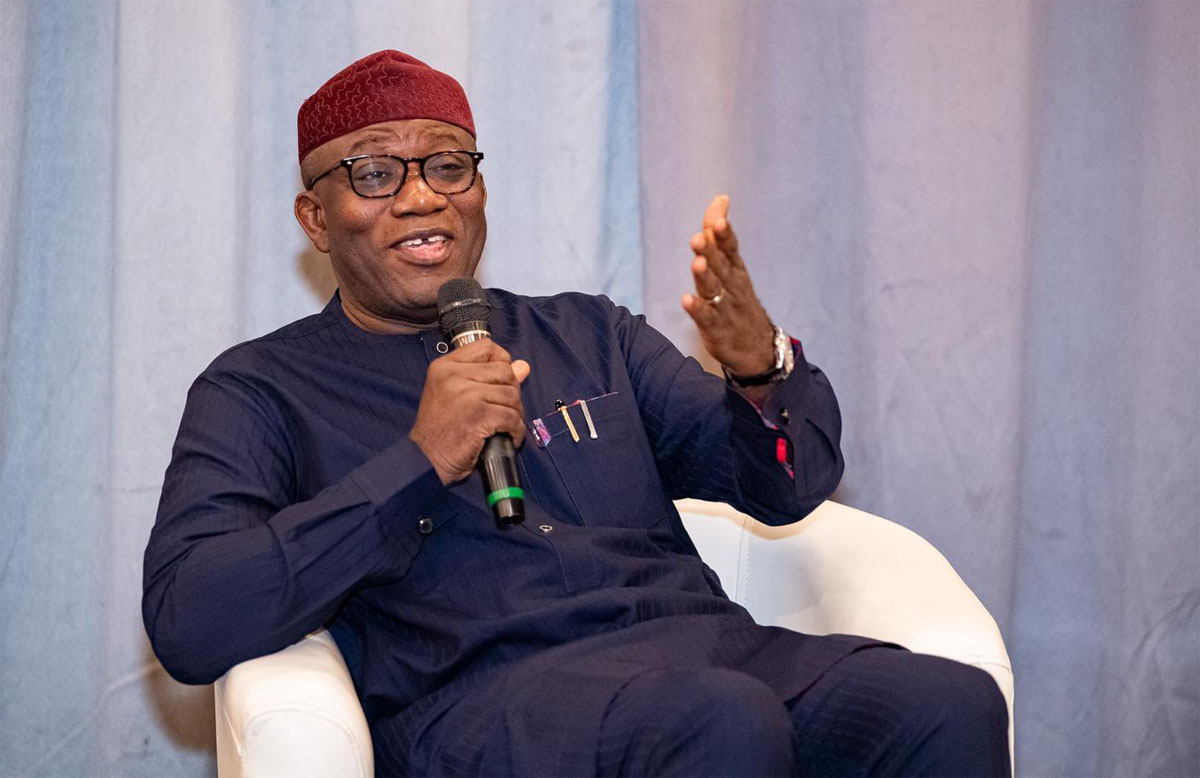
2027: Fayemi Denies Galadima’s Claim He Is Coordinating Opposition Group Against Tinubu
Former Ekiti State Governor Kayode Fayemi has rejected a claim by Nigeria Democratic Congress (NDC) chieftain Buba Galadima that he is coordinating a seven-member opposition group working towards challenging President Bola Ahmed Tinubu in the 2027 presidential election.
Galadima made the allegation during an appearance on Channels Television’s Politics Today, where he discussed possible strategies by opposition politicians ahead of the 2027 election.
According to Galadima, he is one of seven opposition figures meeting under Fayemi’s coordination to develop a strategy for challenging Tinubu.
“I am part of the group of the opposition candidates, seven of us meeting under the coordination of ex-Governor Kayode Fayemi of Ekiti State to try to work on that. And we are making progress,” Galadima said.
When asked what the group was working towards, Galadima responded that its objective was “defeating Tinubu.” He did not publicly identify the other members of the alleged seven-person group.
Galadima also outlined his preferred strategy for the 2027 election, arguing that opposition parties should field their own candidates rather than attempt to place a single candidate on the ballot through a joint arrangement at this stage.
He suggested that opposition supporters could subsequently be encouraged to back one candidate if, close to the election, the opposition reached a consensus about which candidate should receive broader support.
READ ALSO:
- Appeal Court Upholds Two-Year Jail Term for Ex-UNICAL Dean Ndifon
- Ogun Man Arrested Over Alleged Killing of Neighbour After ‘Rough Play’ With Child
- Viral Anti-Obi Video: Lagos Police Move Against Inspector Osumah Frank
However, Fayemi has denied that he is coordinating the group described by Galadima.
Julius Ogunro, a media aide to the former governor, told TheCable that there was “no truth” in the allegation and referred to an earlier denial issued by Fayemi’s media office.
The latest denial follows a similar claim made in August by Rotimi Amaechi, the African Democratic Congress (ADC) vice-presidential candidate.
Amaechi had said he and Fayemi were involved in initial discussions that later expanded to include other political stakeholders interested in creating a broader opposition platform.
Fayemi’s media office rejected that claim at the time.
Ahmad Sajoh, head of the Fayemi Media Office, said the former governor remained a committed member and leader of the All Progressives Congress (APC) in Ekiti State.
Sajoh said Fayemi had consistently affirmed his commitment to the APC and was working within the party to address its challenges and advance what he described as its progressive ideals.
Fayemi served two non-consecutive terms as Ekiti State governor on the APC platform between 2010 and 2022. He also served as Minister of Solid Minerals Development under former President Muhammadu Buhari.
The latest controversy comes amid continuing efforts by opposition politicians and groups to explore possible cooperation ahead of the 2027 presidential election.
Political actors opposed to the APC administration have held discussions about possible alliances, cooperation and strategies for presenting a stronger challenge at the polls. Different proposals have emerged, including arrangements in which parties retain their individual candidates while coordinating support around a candidate considered acceptable to a wider section of the opposition.
Galadima’s comments form part of that broader discussion, but his claim about Fayemi’s role has not been independently confirmed.
The identities of the other six people allegedly involved in the group have also not been publicly disclosed by Galadima.
Fayemi’s position, as communicated through his media aides, remains that he is committed to the APC and that the claim that he is coordinating the alleged seven-man opposition group is untrue.
The disagreement therefore leaves two conflicting accounts: Galadima says Fayemi is coordinating a group of opposition figures working towards a common strategy against Tinubu, while Fayemi’s representatives reject the claim and maintain that he remains committed to the ruling party.
As political activities ahead of the 2027 general election intensify, further developments will determine whether the reported opposition discussions translate into a formal political arrangement or remain informal consultations among politicians and political groups.
2027: Fayemi Denies Galadima’s Claim He Is Coordinating Opposition Group Against Tinubu
Politics
2027: Otti Explains Why He Supports Tinubu Despite Remaining in Labour Party
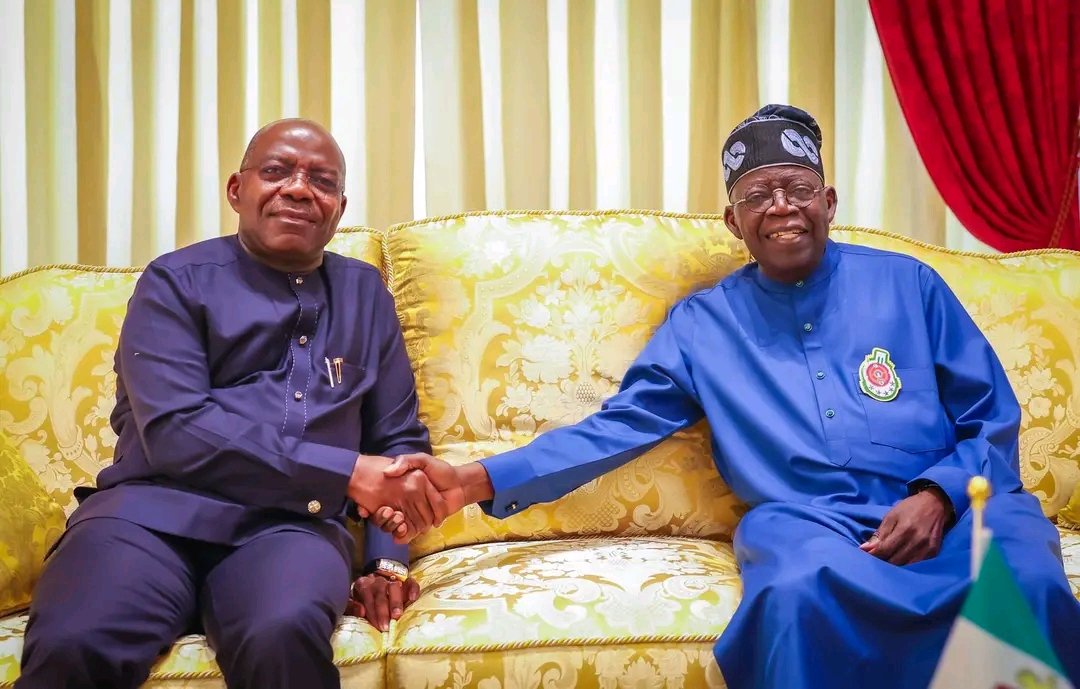
2027: Otti Explains Why He Supports Tinubu Despite Remaining in Labour Party
Abia State Governor Alex Otti has clarified his position on President Bola Ahmed Tinubu’s 2027 re-election bid, saying his support for the President is linked to his responsibilities as a governor and member of the National Economic Council (NEC).
Otti made the clarification during a televised interview after questions emerged over his political relationship with Tinubu and his continued membership of the Labour Party (LP).
The governor said he could not reasonably oppose Tinubu while serving as a state governor and participating in the Federal Government’s decision-making process through the NEC.
According to Otti, his position is based on his role in government and should not be interpreted as an abandonment of the Labour Party or its presidential candidate for the 2027 general election.
Otti explained that he supports Tinubu as the President of Nigeria, while maintaining that he has a separate position regarding the presidential candidate he supports in the 2027 election.
When asked whether Tinubu was his preferred presidential candidate, Otti indicated that he has a candidate within the Labour Party, separating that choice from his support for Tinubu in his capacity as President.
The clarification effectively draws a distinction between Otti’s role as a governor working with the Federal Government and his political position ahead of the next presidential election.
Otti was elected Abia State governor in 2023 on the Labour Party platform and has remained associated with the party despite the departure of former Anambra State governor Peter Obi, who was the Labour Party’s presidential candidate in the 2023 election.
READ ALSO:
- EFCC Chairman Raises Alarm Over Alleged Theft of Nigeria’s Public Funds
- Abia Police Arrest 20-Year-Old, Recover Gun, Suspected Cannabis, Three Motorcycles
- Anambra Releases ₦473m Salary Arrears Document as Obi’s Debt Claim Sparks Fresh Dispute
Obi has since left the Labour Party and is now the presidential candidate of the Nigeria Democratic Congress (NDC) for the 2027 election.
Otti previously said he would remain in the Labour Party despite Obi’s departure, explaining that his decision to stay was independent of Obi’s political movement.
The governor’s latest comments come amid growing political realignment ahead of the 2027 presidential election, with Tinubu seeking another term and several opposition parties preparing their candidates.
The issue became particularly prominent after Minister of the Federal Capital Territory Nyesom Wike said Otti was backing Tinubu’s re-election.
At the time, Otti’s Commissioner for Information, Okey Kanu, acknowledged the governor’s cordial relationship with Tinubu but said an explicit confirmation of Otti’s political position would have to come from the governor himself.
Otti has now publicly explained that his support for Tinubu is connected to his responsibilities as governor and NEC member.
He also argued that the President has a constitutional right to seek another term and suggested that disagreements over government policies should be handled through the appropriate government channels rather than public confrontation.
The Abia governor further pointed to areas where he agrees with some policies of the Tinubu administration, including the removal of the petrol subsidy, which he said is consistent with his own economic thinking.
Despite his relationship with the Presidency, Otti has continued to identify with the Labour Party.
The party has also continued to publicly associate itself with the governor. On September 23, Labour Party presidential candidate Dr Sunday Chibuzo Okereke led a solidarity roadshow in Arochukwu, Abia State, where he mobilised support for Otti and other Labour Party candidates ahead of the 2027 elections.
The development is significant because Otti’s position could otherwise have been interpreted as a political break with the Labour Party following Obi’s departure.
However, his latest clarification does not amount to an announcement that he has defected to the All Progressives Congress (APC) or abandoned the Labour Party.
Otti remains a Labour Party governor, while maintaining a working relationship with the Tinubu administration at the federal level.
The governor has also previously ruled out seeking the presidency himself after completing his tenure in Abia, saying he does not intend to pursue another major elective political office after leaving the governorship.
His latest comments therefore place his position ahead of 2027 in two separate contexts: his institutional relationship with Tinubu as President and his stated support for a Labour Party presidential candidate in the forthcoming election.
2027: Otti Explains Why He Supports Tinubu Despite Remaining in Labour Party
Politics
Osun APC Warns Adeleke Govt Over Alleged Victimisation of Local Govt Workers
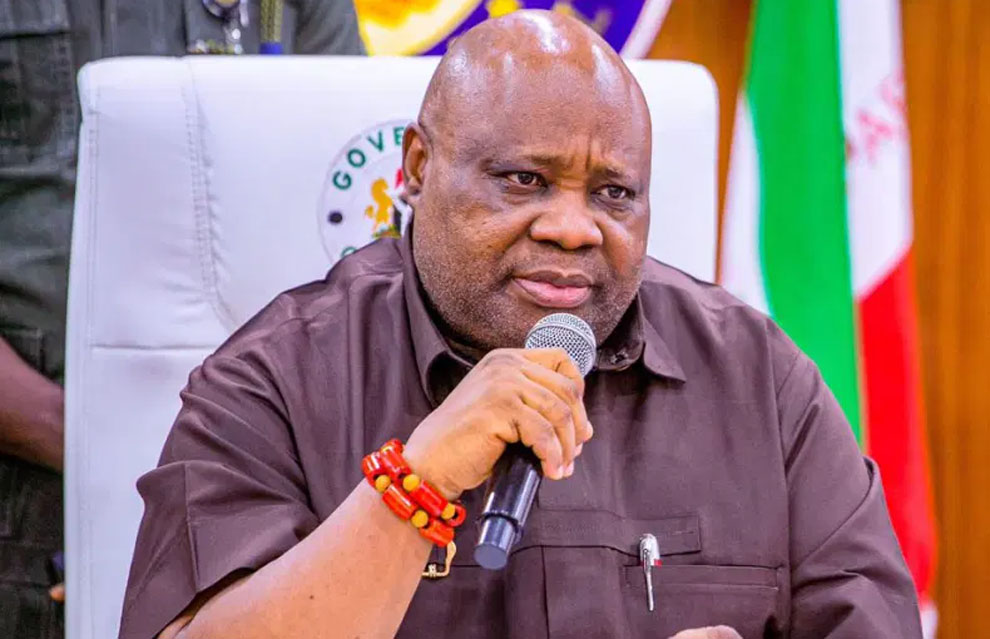
Osun APC Warns Adeleke Govt Over Alleged Victimisation of LG Workers
The Osun State chapter of the All Progressives Congress (APC) has issued a fresh warning to the administration of Governor Ademola Adeleke over allegations that some local government workers are being subjected to investigation and disciplinary proceedings because of their perceived political affiliations.
The party alleged that the Osun State Local Government Service Commission had constituted a committee to investigate council employees suspected of supporting the APC during the August 15, 2026 governorship election.
The allegation was contained in a statement signed by the APC Director of Media and Information, Kola Olabisi, who accused the state government of using the ongoing exercise to target workers believed to have supported the party’s candidate, Bola Oyebamiji.
According to the APC, some affected workers have been summoned before an investigative and disciplinary panel at the Local Government Service Commission premises in the state Secretariat, Abere, Osogbo.
The party further alleged that some of the workers were questioned about their political activities and contacts before and during the election.
It also claimed that some workers were asked to submit their mobile phones for scrutiny, with the alleged objective of checking their communications with APC members and supporters.
The APC additionally alleged that some workers’ banking transactions were examined and that some employees had been threatened with suspension, dismissal or other disciplinary measures.
The party described the alleged actions as unacceptable and called on the Adeleke administration to reactivate any salary accounts that had been deactivated and dissolve the committee.
READ ALSO:
- 18 Suspected Bandits Killed as Security Forces Foil Mass Kidnap in Katsina
- Police Arrest Two Arms Dealers, Recover 300 Rounds of Ammunition in Kaduna
- Petrol Depot Prices Fall as Dangote, Marketers Cut Rates, Pump Price Reduction Looms
The opposition party argued that public servants should not be punished for their political choices, noting that elections in Nigeria are conducted through a secret ballot.
However, the Osun State Government has rejected the allegation that the workers are being investigated because of their political affiliations.
Commissioner for Information and Public Enlightenment, Kolapo Alimi, said the workers under investigation were being questioned over alleged double salary payments, rather than their political activities.
According to the commissioner, the investigation followed a petition alleging that some local government employees were receiving salaries from two sources.
Alimi said the government was investigating claims that some workers were allegedly collecting salaries from the state government while also receiving payments from the APC-backed local government officials involved in the prolonged council administration dispute.
He maintained that the exercise was focused on alleged financial infractions and not political affiliation.
The governor’s spokesperson, Olawale Rasheed, also dismissed the APC’s allegation of political victimisation, saying the administration had no policy of targeting local government employees because of their political choices.
The latest dispute comes amid the long-running controversy over the control of Osun’s 30 local government councils, which has pitted the Adeleke administration against APC-backed council officials.
The council dispute has also had implications for local government finances and workers’ salaries. Earlier in the year, the Osun Government said local government workers’ core salaries had continued to be paid despite what it described as the withholding or diversion of local government allocations. (Osun State Official Website)
The competing claims over the latest investigation have therefore added another layer to the broader political and administrative dispute between the APC and the Adeleke administration.
While the APC maintains that the affected workers are being targeted because of their political affiliations, the state government says the investigation concerns alleged financial misconduct, particularly claims of workers receiving salaries from more than one source.
As of the latest reports, there is no independently established evidence showing that the investigation was instituted solely because the affected workers supported the APC. The allegations remain disputed between the opposition party and the state government. (Osun)
Osun APC Warns Adeleke Govt Over Alleged Victimisation of LG Workers
-

 metro2 days ago
Lagos Arrests Man Over Viral Video of Toddler Being Flogged
-
 metro2 days ago
Police Probe Alleged Self-Kidnapping of Adeleke’s Aide in Osun
-

 Sports2 days ago
Former Super Eagles Captain Troost-Ekong Embraces Islam, Recites Shahadah in Doha
-

 Politics2 days ago
Osun APC Warns Adeleke Govt Over Alleged Victimisation of Local Govt Workers
-
 metro2 days ago
Tinubu, Fani-Kayode Face Proposed $36m US Lawsuit Over Alleged Threats
-

 News1 day ago
Anambra Releases ₦473m Salary Arrears Document as Obi’s Debt Claim Sparks Fresh Dispute
-

 News16 hours ago
Keyamo: ₦70,000 Minimum Wage No Longer Enough as Cost of Living Soars
-

 metro2 days ago
Kwara Police Deny Shooting Motorcyclist at Oyun Bridge, Explain Viral Video